On the night I turned eighteen, my parents told me there would be no
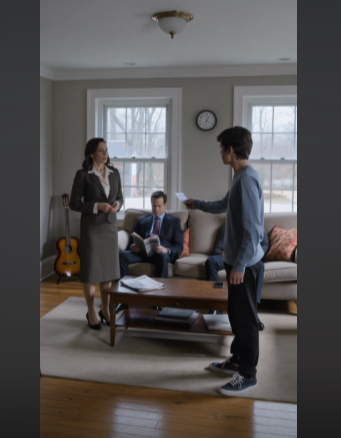
My Parents Forbade Me From Celebrating My 18th Birthday Because My…
My Parents Forbade Me From Celebrating My 18th Birthday Because My Brother ‘Didn’t Feel Special Enough.’ So I Moved Out That Night. A Year Later, Their Golden Boy Saw How Successful I’d Become – And His Jealous Meltdown Shattered The Family.
THE BIRTHDAY THEY CANCELLED
My name is Owen Mercer, and the night I turned eighteen, I left my parents’ house with twelve hundred dollars, one duffel bag, and a guitar I had bought with money from a grocery-store job.
Technically, I left at twelve-oh-three in the morning.
I waited until the date on my phone changed because some stubborn part of me wanted to know that the first decision of my adult life belonged completely to me.
The street outside was cold and gray under winter streetlights. February had crusted old snow along the curb. My breath came out white as I stood at the end of the driveway and looked back at the house where I had spent eighteen years learning how easily a quiet child can become invisible.
I did not leave a dramatic note.
I did not slam the door.
I did not wake anyone.
I simply walked away.
To understand why, you have to understand my brother Caleb.
Caleb was two years older and, according to my mother, gifted before anyone had actually measured the gift.
He was the son people asked about at church.
The future doctor.
The one with “leadership.”
If he got an A, we went out to dinner.
If I got an A, Dad said, “Good job, buddy,” and the conversation moved on.
If Caleb joined a volunteer program for one Saturday, Mom told family friends he had “dedicated himself to hospital service.”
If I worked twenty hours a week after school, nobody called it dedication.
It was simply expected.
My parents were not monsters.
That is important.
My father, Mark Mercer, worked in insurance claims and believed stability mattered above almost everything. My mother, Denise, ran our home like an organization she never officially named. Bills on time. Dinner at six. Christmas photographs color coordinated. Apologies delivered quickly enough that nobody outside the family ever noticed how uneven things were inside it.
Caleb fit their idea of success.
Confident.
Social.
Interested in medicine.
Comfortable taking up space.
I did not.
I liked drawing.
Reading.
Music.
I could spend an hour listening to the same guitar line and trying to understand why three notes in the right order could hurt more than a paragraph.
When I was sixteen, I saved for seven months to buy a used acoustic guitar from a music shop across town.
It had a repaired crack near the lower bout and a finish worn smooth where somebody else’s arm had rested for years.
I loved it immediately.
I carried it into the kitchen expecting, foolishly, that my family might recognize what it meant.
Mom looked up from chopping vegetables.
“That’s nice.”
Then:
“You should really put this much energy into something practical, like your brother.”
Like your brother.
It became a family phrase.
Not always spoken.
Always present.
Caleb was the son.
I was the comparison.
Still, I spent most of high school telling myself favoritism was just another word insecure kids used when they did not like reality.
Maybe Caleb really was more impressive.
Maybe I was too sensitive.
Maybe if I worked harder, spoke louder, chose something more respectable, eventually I would become equally visible.
I worked at a neighborhood grocery store after school.
Stocking shelves.
Bagging groceries.
Closing shifts.
Every dollar I could spare went into savings.
I planned to attend community college while working, then transfer if I could afford it.
Music would remain mine whether or not it ever became a career.
By the time my eighteenth birthday approached, I had built one small plan entirely for myself.
Dinner at my favorite diner.
Five friends.
I would pay.
No party.
No expensive gifts.
Just pancakes at night, bad coffee, and the feeling that one day in my life might be organized around me without anyone needing to apologize for it.
Two days before my birthday, Mom called me into the living room.
Dad sat behind a newspaper.
Caleb sprawled across the couch scrolling on his phone.
The arrangement already told me the decision had been made somewhere else.
“Owen,” Mom began, “we’ve been thinking.”
That phrase never ended well.
“Maybe it’s better if you don’t make a big deal out of your birthday this year.”
I stared.
“What big deal?”
“The dinner.”
“Mom, it’s five people at a diner.”
She sighed as though I was forcing her to explain basic empathy.
“It’s not about the money.”
“I’m paying for it.”
“I know.”
She lowered her voice.
“Caleb’s having a difficult time.”
My brother did not look up.
“He didn’t get into his first-choice medical program.”
“And?”
Dad lowered the newspaper.
“Watch your tone.”
Mom continued.
“We don’t think it’s kind to make a big celebration out of your birthday while your brother is feeling low.”
For a second, I honestly believed this was some test of whether I understood sarcasm.
“You’re canceling my eighteenth birthday dinner because Caleb got rejected from one school.”
Dad folded the newspaper.
“You can celebrate later.”
Later.
As though adulthood could be rescheduled until the preferred son felt better.
Caleb kept scrolling.
The corner of his mouth moved.
Not quite a smile.
Enough.
I tried again the next morning.
“I already told everyone.”
“The reservation is made.”
Mom was putting dishes away.
“Life isn’t always fair.”
“You should understand that by now.”
“I do.”
“Apparently not.”
She closed the cabinet harder than necessary.
“Caleb is your brother.”
“Don’t you care how he feels?”
The question almost worked.
That was the family system in one sentence.
My feelings proved selfishness.
His feelings created obligation.
I canceled the reservation.
Told my friends something came up.
Then went for a long walk in the cold because I did not trust myself to remain polite in the house.
When I returned, Mom was on the phone with Aunt Linda.
“Yes,” she said brightly, “Owen understood. He’s being very mature about it.”
Caleb sat at the kitchen counter eating pancakes.
He waited until Mom turned away.
Then looked at me.
“Guess I’m still the favorite.”
He laughed.
Something in me became quiet.
Not broken.
Finished.
That afternoon, I packed.
Work clothes.
Two pairs of jeans.
Laptop.
Guitar.
Books.
Toiletries.
Cash.
Important documents I could find.
I arranged a cheap room in a shared house near the community college through a coworker’s cousin.
Nothing glamorous.
One bedroom.
Shared bath.
Month-to-month.
At midnight, I turned eighteen.
At twelve-oh-three, I left.
Standing at the end of the driveway, I expected fear.
What I felt was cold air and relief.
I looked back once.
Then told myself something I was not yet strong enough to fully believe.
This is the last time they get to decide what belongs to you.
Then I walked toward the bus stop.
The first months away from home were hard in ordinary ways.
Rent.
Groceries.
Bus schedules.
Trying to take online classes while working late shifts.
The heating in the shared house was terrible.
My mattress came from a thrift store.
The kitchen faucet leaked into a bucket for almost three weeks before the landlord replaced it.
And I loved almost every minute.
Not because poverty is romantic.
It is not.
There is nothing poetic about checking your bank balance before buying toothpaste.
But every problem in that little room belonged to a life I had chosen.
Nobody canceled my plans because Caleb felt bad.
Nobody told me what emotion was allowed at dinner.
Nobody compared my guitar to medical school.
I worked more hours at the grocery store.
Picked up weekend inventory shifts.
Enrolled in two community-college courses online.
Then three.
I kept practicing guitar at night with a cloth mute over the strings so I would not annoy the people in the rooms beside mine.
Eventually I found a studio apartment on the edge of town.
Cheap.
Small.
One bedroom if you were generous with language.
The kitchen and living room shared one wall.
The bathroom door only opened halfway because of the sink.
It was mine.
The day I moved in, I bought a folding table, two mismatched chairs, and a secondhand microphone.
Then I started uploading music online.
At first, the videos were terrible.
Poor lighting.
Room echo.
My phone balanced on a stack of books.
Fifty views.
Then eighty.
Then five hundred on one cover.
I wrote original songs quietly because originals felt more dangerous.
A cover can fail and blame the arrangement.
An original song fails as you.
Still, the comments started changing.
“You wrote this?”
“This line hit.”
“Keep going.”
Nothing viral.
Enough.
I did not post about my family.
I barely posted my last name.
For almost a year, they stayed mostly out of my life.
Mom sent occasional texts.
We miss you.
Your room is still here.
Dad wrote once:
Hope you’re being smart with money.
Caleb sent memes as though nothing had happened.
I ignored all of them.
Then one Thursday after work, Mom texted:
Can we talk?
I did not answer.
Dad followed an hour later.
Your brother is having a hard time.
Maybe you can help since you’re doing well now.
Doing well.
The phrase irritated me enough to make me laugh.
They knew nothing about my life and had already decided whatever stability I built should be reassigned toward Caleb.
Two days later, I discovered how they knew anything at all.
Caleb had found my public Instagram.
Nothing secret there.
Photographs of the apartment.
A used desk I was proud of refinishing.
Clips from my music videos.
One picture holding a cheap cake with coworkers after my nineteenth birthday.
Apparently that was enough to convince him I had resources.
He arrived at my door on Saturday afternoon.
Three hard knocks.
Not polite.
Declarative.
When I opened it, he stood in the hallway wearing a dark jacket and the same expression he had used throughout childhood whenever he believed he had entered a room above me.
He did not say hello.
He looked past me.
“So this is where you’ve been hiding.”
“Hiding?”
“You disappeared.”
“I moved out.”
“Same difference.”
It was not.
But arguing with Caleb had always been like throwing stones into fog.
I stepped aside anyway.
That was my mistake.
He walked through the apartment slowly.
Touched the table.
Looked at the dishes drying beside the sink.
Stopped at the guitar by the window.
“Not bad.”
Then:
“Small.”
“It’s mine.”
He chuckled.
“Independent Owen.”
“I told Mom you’d be back after a month.”
I crossed my arms.
“Why are you here?”
His smile faded.
“Mom and Dad are worried.”
“You left without a note.”
“That was selfish.”
The word hit something old.
“Selfish.”
“Yes.”
I looked at him.
“Like canceling someone’s eighteenth birthday because you didn’t get into one school?”
He frowned.
“That again?”
“It was the night I left.”
“You’re still mad?”
I almost laughed.
“You sat there eating pancakes while they told everyone I chose to cancel.”
He shrugged.
“It’s not my fault they cared about me more.”
That was Caleb.
Not cruel enough to invent the favoritism.
Cruel enough to enjoy it.
I walked to the door.
“You should go.”
His face tightened.
“You sound jealous.”
“I sound done.”
For a moment, real anger flashed.
Then the grin returned.
“Fine.”
He stepped into the hallway.
“Don’t be surprised when Mom calls.”
“She misses you.”
He said it like a warning.
A week later, Mom appeared outside my building carrying a paper grocery bag.
“Owen.”
She smiled as though we had planned lunch.
I stopped on the sidewalk.
“How did you get my address?”
“Caleb told me.”
“Of course.”
“Do not be dramatic.”
She lifted the bag.
“I brought food.”
I should have refused entry.
Instead, exhaustion won.
Inside, Mom looked around.
Her face softened with pity.
“You shouldn’t be living like this.”
“Like what?”
“So plain.”
“It’s what I can afford.”
She unpacked containers.
Lasagna.
Chicken parmesan.
Chocolate pie.
Caleb’s favorite foods.
I stared.
“You know I don’t like most of this.”
Mom looked honestly confused.
“You love lasagna.”
“No.”
“You always ate it.”
“Because that is what you made.”
The distinction seemed to trouble her more than it should have.
We sat.
Mom told me how difficult everything had been since I left.
Dad was stressed.
Caleb had received another rejection.
The house felt empty.
People were asking questions.
Every sentence contained someone else.
Finally, she looked at me.
“You seem happy.”
I waited.
“I didn’t think you’d last this long.”
There it was.
Not pride.
Surprise.
“You were always sensitive.”
I sat back.
“You mean I stopped letting you decide things for me.”
“Don’t start.”
She lifted one hand.
“We are trying to fix this.”
I wanted to believe that.
Then she said:
“Your brother may stay with you for a while.”
I stared.
“What?”
“Just until he gets back on his feet.”
“You have clearly figured out how to live independently.”
“You can help him.”
“No.”
Mom blinked.
“I’m sorry?”
“No.”
“This is a one-bedroom apartment.”
“He can use the couch.”
“No.”
Her expression changed.
“Owen.”
“He’s your brother.”
“Family helps family.”
I laughed.
It came out ugly.
“What did family do when I needed something that belonged only to me?”
“That is not the same.”
“Why?”
“Because Caleb is going through a difficult period.”
“I was eighteen.”
“You were being dramatic.”
There it was again.
Same family.
New apartment.
Same script.
I stood.
“Mom, you should go.”
Her mouth fell open.
“We gave you everything.”
I looked around the room.
Secondhand sofa.
Used microphone.
Folding table.
Rent receipt clipped to the fridge.
“No.”
I said.
“I gave me this.”
“You gave Caleb everything else.”
Mom left furious.
Dad called three days later.
“You owe your mother an apology.”
“She tried to move Caleb into my apartment.”
“He needs somewhere.”
“So am I family or housing?”
Dad sighed.
“You always make things complicated.”
I closed my eyes.
“Dad.”
“Yes?”
“You haven’t asked me one question about how I’m doing.”
Silence.
Then:
“If you don’t want to help, fine.”
“But don’t expect us to support you when things go south.”
That should have scared me.
Instead, it clarified everything.
“You haven’t supported me in years.”
I hung up.
Caleb arrived again a few days later with a suitcase.
He did not call first.
Of course he did not.
I opened the door and found him standing in the hallway with a duffel at his feet.
“Don’t freak out.”
That was his greeting.
I looked at the bag.
“No.”
He laughed.
“I didn’t even ask yet.”
“You brought luggage.”
“Mom said you’d let me crash here.”
“She lied.”
His smile vanished.
“Owen.”
“No.”
“It’s two weeks.”
“No.”
“My roommate kicked me out.”
“You have a job.”
He hesitated.
“Not exactly.”
I stared.
“I quit.”
“Why?”
“Bad environment.”
Of course.
Caleb had always treated discomfort as proof a situation was beneath him.
I stepped into the hallway enough that he could no longer pretend the doorway was an invitation.
“You are not staying here.”
His face hardened.
“You really think you’re better than everyone now.”
“No.”
“Big man with a little YouTube channel.”
“My channel has nothing to do with this.”
“It has everything to do with it.”
He leaned closer.
“You left and suddenly you’re too good for your family.”
I felt the old reaction beginning.
Defend.
Explain.
Prove.
Instead:
“Go home, Caleb.”
“I don’t have one right now.”
“Then solve that.”
His eyes narrowed.
“You’re going to regret this.”
He picked up the suitcase.
Then, before leaving, lifted his phone and photographed the inside of my apartment.
“What are you doing?”
“Nothing.”
He walked away.
I should have understood the photograph was not nothing.
A few days later, Aunt Linda texted.
Are you okay?
Your mother says you’re struggling and refusing help.
Then a cousin:
No shame in coming home if things aren’t working.
Then another relative:
We’re praying you get through this prideful phase.
The photograph had become a story.
My cheap furniture.
Small apartment.
Used equipment.
Evidence, apparently, that I was failing.
Caleb and my parents told people I was barely surviving but too proud to return.
I did not answer.
That restraint was partly maturity.
Mostly exhaustion.
I worked.
Recorded.
Studied.
A local instrument company offered me a small sponsorship after one of my videos passed fifty thousand views.
Not life-changing.
Free strings.
A modest monthly payment.
The kind of first deal nobody outside a niche community would care about.
I cared.
It proved the work could become more than therapy.
Then my family came together.
All three.
Mom.
Dad.
Caleb.
Standing outside my apartment like an intervention nobody had asked for.
I almost did not open the door.
Then I thought:
Maybe this is the conversation.
The one where somebody finally hears the sentence before preparing the reply.
I let them in.
Dad sat at the folding table.
Mom took the sofa.
Caleb leaned against the wall.
Nobody touched the food Mom had brought last time because I had donated most of it to a neighbor.
Dad began.
“We need to discuss your attitude.”
I laughed once.
“What attitude?”
Mom clasped her hands.
“You have become distant.”
“Disrespectful.”
“We keep trying to help.”
“You tried to move Caleb into my home without asking.”
“That was an idea.”
“He arrived with a suitcase.”
Caleb shrugged.
“You really love being the victim.”
The old Owen would have gone quiet.
That night, something else happened.
Maybe adulthood was finally becoming real.
Maybe independence had built a muscle they never allowed me to use.
I looked at each of them.
“You canceled my eighteenth birthday because Caleb got rejected from a school.”
Mom frowned.
“We asked you to be considerate.”
“You told Aunt Linda I chose to cancel.”
Dad waved one hand.
“Ancient history.”
“You came here after a year of almost no contact because Caleb needs housing.”
“We miss you.”
“Then why has every conversation been about him?”
Nobody answered.
Mom’s eyes filled.
“We think you should come home.”
“What?”
“This living-alone thing has gone too far.”
“You’re isolating yourself.”
“No.”
“You’re being prideful.”
“No.”
“You need family.”
“I have friends.”
Dad’s face tightened.
“Do not be childish.”
“I’m nineteen.”
“You still need guidance.”
“Guidance or obedience?”
The question angered him.
“You would not even have this apartment without us.”
I stared.
“What does that mean?”
He looked at Mom.
Mom took over.
“We put some money into your savings when you were seventeen.”
“A safety net.”
“That money was part of what helped you move.”
I shook my head.
“No.”
“I saved twelve hundred dollars from work.”
“That’s what I left with.”
Mom’s voice softened into the tone she used when explaining something to a child.
“Owen, you had more than that in the account.”
“We helped.”
“How much?”
Neither answered immediately.
Dad said:
“The amount is not the point.”
“It is exactly the point.”
“We contributed to your start.”
“And now?”
He leaned forward.
“Now we expect some respect.”
There it was.
Gift as ownership.
Help as leverage.
I took out my phone and opened the old bank statements I had already downloaded when I moved.
I had started documenting my finances carefully after living alone.
The opening balance at eighteen contained two deposits I did not recognize.
One hundred fifty dollars.
Then two hundred.
Birthday and graduation money, apparently.
Not rent money.
Not thousands.
Not the foundation of my life.
Three hundred fifty dollars.
I looked up.
“You put three hundred fifty dollars in my account.”
Mom flushed.
“It was still help.”
“Yes.”
“And I appreciate it.”
Dad looked relieved for half a second.
Then I continued.
“It does not buy decision-making rights over my home.”
Caleb laughed.
“You’d be nowhere without them.”
I looked around.
Rent.
Secondhand furniture.
Guitar.
Laptop.
All paid through work I had done.
“Actually, I know exactly how I got here.”
Dad stood.
“We are trying to help you.”
“No.”
I walked to the door.
“You are trying to restore the version of this family where Caleb needs and I provide.”
“Owen—”
“Leave.”
Mom gasped.
“Do not speak to your father like that.”
“Leave.”
Dad glared.
“Don’t make us regret helping you.”
I held the door open.
“You already should.”
They left.
Caleb last.
He stopped in the hallway and looked at me.
“You’re going to learn what happens when people stop rooting for you.”
The sentence sounded theatrical.
A week later, it became practical.
I woke to hundreds of notifications.
Comments.
Messages.
Mentions.
At first, I thought one of my songs had finally traveled farther than usual.
Then I saw the video.
THE TRUTH ABOUT OWEN MERCER.
Anonymous account.
Fifteen minutes.
Screenshots from my social media.
Clips from livestreams.
Photographs of the apartment.
A distorted male voice narrating a story in which I had stolen money from my parents, abandoned a loving family, lied about being self-made, manipulated followers with a fake poverty narrative, and used family conflict for attention.
I recognized Caleb’s speaking patterns immediately.
The pauses.
The emphasis.
The smug little laugh after a sentence he considered clever.
But recognition was not proof.
I forced myself to remember that.
The video had twenty thousand views by nightfall.
Some viewers defended me.
Others did not.
A few sponsors paused communication.
One brand representative wrote:
We’re reviewing reputational concerns before continuing the partnership.
My stomach dropped.
I called Mom.
“Did you know about this?”
Pause.
“Owen, calm down.”
“Did you know?”
“Your brother wanted to tell his side.”
Dad’s voice came from somewhere behind her.
“You brought this on yourself.”
I closed my eyes.
“You let him accuse me publicly of stealing from you.”
Mom said:
“You should have come home.”
That sentence told me the video was leverage.
Not truth.
Not even revenge alone.
Return to the family and the pressure might stop.
I hung up.
That night, Caleb texted.
Sorry about the video.
I’ll ask for it to come down if you apologize to Mom and come talk.
I stared at the message.
Then screenshot it.
Saved the URL.
Downloaded a lawful copy of the public video for preservation.
Saved comments from Caleb’s personal account where he had echoed claims from the anonymous upload.
For the first time, I understood silence could be more than avoidance.
It could be evidence preservation.
I did not know what to do with the evidence yet.
So I did something less cinematic than revenge.
I called a lawyer.
Her name was Marissa Vale.
She handled defamation, online harassment, and small-business disputes.
A friend from community college knew her through a tenant case and gave me the number.
Marissa listened without interrupting.
Then asked questions I had not expected.
“Did the video identify you by legal name?”
“First and last in some screenshots.”
“Which statements are factually false?”
“That I stole money.”
“That my parents paid my bills.”
“That I fabricated hardship to manipulate followers.”
“Can you document those points?”
“Yes.”
“Do you know who uploaded it?”
“I believe Caleb did.”
“Belief is not proof.”
“I know.”
“Good.”
She told me to preserve everything.
No retaliatory posts.
No threats.
No naming Caleb publicly unless evidence justified it and strategy supported it.
Platform reports first.
A narrowly written preservation letter where possible.
Then evaluate whether the harm justified litigation.
“Defamation cases are expensive.”
She said.
“Winning can still cost you.”
“What do I do now?”
“Tell your audience only what you can support.”
So I posted one short statement.
Recent claims that I stole money from family members or misrepresented my financial history are false. I have preserved documentation and am addressing the matter privately. I appreciate people giving me space while I do that.
No family history.
No tears.
No accusations.
It did not stop the comments.
But it gave reasonable people something stable to hold.
Then my apartment was broken into.
I came home from an evening shift and noticed the door before I touched it.
Not wide open.
Just wrong.
The latch sat slightly away from the frame.
Wood around the strike plate scratched.
I did not enter.
That mattered.
I backed down the hallway and called police.
Two officers arrived.
They cleared the apartment first.
Only then did I walk inside.
Drawers opened.
Mail scattered.
Closet disturbed.
My laptop remained.
Television remained.
Cheap speaker remained.
The guitar was gone.
That narrowed the meaning without proving the person.
My old guitar.
The used one I had saved for at sixteen.
The instrument Mom called impractical.
The instrument I carried out at eighteen.
Gone.
On the kitchen counter sat a childhood photograph.
Caleb and me.
Matching sweaters.
Ages maybe ten and twelve.
I had not owned a copy.
Police photographed it.
Bagged it.
One officer asked whether a family member had recently threatened me.
I showed him Caleb’s text about making me apologize.
The officer did not say:
Your brother did this.
He said:
“We’ll add that to the report.”
Correct.
Evidence first.
The building had no hallway cameras.
A neighboring store’s exterior camera covered part of the parking lot, but footage was blurry.
A dark sedan.
Possible plate fragment.
Not enough for identification.
The officers gave me a case number.
Recommended changing the lock.
Suggested a door camera.
I did both the next morning.
No hidden microphones.
No illegal surveillance.
A visible camera facing my own front door and entry area.
I also moved important documents to a safe-deposit box and added two-factor authentication to every account I cared about.
The guitar remained missing.
That loss hurt more than the apartment damage.
I bought it myself.
It had been the first thing in my life no one could claim credit for.
For three nights, I barely slept.
Every hallway noise sounded intentional.
Work became automatic.
My manager, Rick Alvarez, found me staring at cereal boxes without stocking them.
“You good?”
“Fine.”
He waited.
Rick was in his fifties and had supervised enough young employees to know fine sometimes meant exactly the opposite.
He did not pry.
He only said:
“You’re one of the reliable ones.”
“Do not let unreliable people convince you that makes you responsible for them.”
I looked at him.
He shrugged.
“Old-guy advice.”
Then went back to inventory.
The sentence stayed.
My channel lost momentum.
One sponsor ended the relationship citing uncertainty around the public dispute.
Others simply stopped replying.
Subscriber growth slowed.
A few people unsubscribed.
Nothing catastrophic.
Enough to hurt.
I tried one longer response video.
Bad idea.
The more I explained, the more strangers dissected every word.
Some believed me.
Some called me manipulative.
Others did not care which version was true as long as conflict continued.
I deleted the response after consulting Marissa.
“You do not litigate credibility in a comment section.”
She said.
That may have been the most useful sentence anyone gave me that year.
I closed the old channel temporarily.
Started a new one under a stage name.
Noah West.
Not because I wanted to disappear forever.
Because I needed a room where the first question was the song, not my family.
I used a backup guitar.
Cheap microphone.
Same laptop.
The first uploads received a few hundred views.
Fine.
I had stopped measuring my worth in analytics because analytics had just taught me how quickly attention can become a weapon.
I wrote differently now.
Before, my songs tried to sound like musicians I admired.
After the break-in, I stopped hiding the ugly parts.
The first song was called Glass Houses.
Not about Caleb directly.
About growing up inside a family story everyone protects because admitting the truth would make the walls transparent.
Another song was called Second Son.
Another:
February Door.
I wrote late at night after the grocery shift.
Then added morning work at a café owned by a woman named Claire Dorsey.
She hired me after a ten-minute interview.
“You show up?”
“Yes.”
“You steal?”
“No.”
“You can make coffee?”
“I can learn.”
“Good enough.”
The hours were brutal.
Cafe early.
Classes online.
Grocery some evenings.
Music at night.
But work created structure.
And structure gave fear fewer places to sit.
For almost a month, my family went quiet.
Then a note appeared taped to my apartment door.
No envelope.
Dad’s handwriting.
We want to make things right.
Family meeting tomorrow, six.
Do not ignore us again.
I photographed it.
Sent it to Marissa.
She wrote back:
You are not legally obligated to attend a family meeting.
That made me laugh.
Of course not.
Still, part of me wanted to go.
Maybe Mom would apologize.
Maybe Dad had finally understood the break-in was serious.
Maybe Caleb would return the guitar.
Maybe the entire family would become what I had spent eighteen years imagining it could be.
At five-thirty the next evening, I stood in my apartment holding my coat.
Then put it back.
I did not go.
At seven-fifteen, Mom texted:
We waited.
This was your chance to fix things.
Dad followed:
Do not call until you are ready to act like family.
I read both.
Then put the phone down.
Something ended quietly.
No argument.
No confrontation.
The version of me who believed every family invitation might finally contain love without conditions.
I mourned him.
Then made coffee.
Two days later, Claire handed me an envelope after closing.
“Guy dropped this off.”
“What guy?”
“Said he was your brother.”
My body went cold.
Inside:
One photograph.
Me sitting near my apartment window with the cheap guitar in my lap.
Taken from outside.
The note read:
You didn’t show up, so I showed them the truth.
No signature.
I did not need one emotionally.
Legally, I still did.
This time, I did not go home alone.
Claire let me stay in the back office until police arrived.
I gave them the photograph and note.
The first break-in report.
The prior threats.
Marissa joined by phone.
The officer asked whether I wanted help arranging temporary safe housing.
“Yes.”
That answer was harder than it should have been.
I spent two nights at Claire’s guest room.
The police opened a harassment investigation connected to the burglary case.
No instant arrest.
No certainty.
But this time I was not alone with fear.
I installed a second camera facing the window from inside my apartment, angled only toward my own glass and entry area.
Changed routines.
Stopped posting locations in real time.
Told Rick enough that work security knew not to disclose my schedule.
Told Claire everything.
Told Aunt Linda when she called unexpectedly after recognizing my voice on the new channel.
For the first time, privacy did not mean isolation.
It meant choosing who had access.
Glass Houses changed my life slowly, then all at once.
For the first month, it behaved like every other song I uploaded.
Three hundred views.
A few comments.
One person asked for chords.
Then a small channel that featured independent artists shared it.
The next morning, the video had twenty-eight thousand views.
Three days later, seventy thousand.
By the end of the week, more than one hundred thousand.
Not celebrity.
Not enough to quit everything.
Enough to prove strangers heard something real in the song.
Messages arrived from people I did not know.
A college student in Canada wrote:
My family stopped speaking to me after I moved out. I played this ten times tonight.
Someone in Ohio:
Second Son feels like my childhood.
A woman in Ireland:
Thank you for not making the song end with forgiveness.
I read every message.
Not because I wanted validation.
Because the songs had transformed private pain into something useful without requiring me to expose every private fact.
That mattered.
By month three, independent producers emailed.
One licensing agency asked permission to pitch Glass Houses for a streaming drama.
The fee was modest.
The paperwork was real.
Marissa referred me to an entertainment lawyer named Aaron Bell.
He reviewed contracts and said:
“Do not sign anything because you are excited someone noticed you.”
Apparently lawyers all carried the same disease.
Caution.
Good disease.
The placement happened.
A short instrumental section under a scene in a teen drama.
The royalty statement was not life-changing.
It covered rent and more.
I reduced grocery hours.
Kept the café part time because Claire had become family in the way family should work.
She did not ask for my money.
Did not demand access.
Did not tell me what apartment size proved adulthood.
She made coffee.
Asked whether I had slept.
Let me play rough mixes after closing.
One evening, she sat across from me and said:
“You look lighter.”
“I think I am.”
“Success?”
“Distance.”
She nodded.
“Better.”
Aunt Linda found the new channel around the same time.
She emailed rather than calling.
I recognized your voice.
I will not tell anyone unless you want me to.
I always knew you would find your own road.
That one email repaired something small in me.
Not the family.
The belief that nobody had noticed.
I wrote back.
Thank you.
Please keep it private for now.
She did.
Then Caleb found me anyway.
Anonymous message on Instagram:
Nice song.
Shame Mom and Dad don’t know it’s you.
I read it.
Screenshot it.
Sent it to Marissa.
Did not reply.
A year earlier, silence would have been fear.
Now it was refusal.
The harassment investigation remained open.
No definitive evidence tied Caleb to the break-in yet.
The childhood photograph and note were suggestive, not enough alone.
Then investigators obtained a useful piece from the building across the street.
Not a perfect video of Caleb carrying my guitar.
A camera captured a vehicle matching his registered car entering the area during the likely burglary window and leaving less than an hour later.
Still circumstantial.
Then police found a pawn-shop record.
My guitar had not been sold.
It had been used as collateral on a short-term loan at a shop two towns away.
The transaction required identification.
The ID belonged to Caleb Mercer.
That changed everything.
The guitar serial number matched the purchase record I still had from the music store.
For once, being the kid who saved receipts paid off.
Police recovered the instrument.
The neck had a new scratch.
One tuning machine bent.
Otherwise intact.
I cried when Detective Hall returned it.
Not gracefully.
He waited.
Then said:
“We are referring burglary and property-theft charges for review.”
“What about the note?”
“Handwriting can support the case.”
“The pawn record is stronger.”
“And the photo?”
“Still investigating where it came from.”
Again:
Evidence hierarchy.
The state later charged Caleb with burglary-related and theft offenses tied to the apartment entry and guitar.
Not because I pressed some magical button.
Because the recovered property connected him to the crime.
The online smear became mostly a civil matter.
Marissa sent preservation demands and a cease-and-desist based on the false statements and Caleb’s coercive text offering to remove the video if I apologized.
The platform removed the original anonymous upload after repeated reports and documentation.
Copies remained elsewhere.
The internet does not erase cleanly.
I learned to live with that.
My former sponsor never returned.
Another brand did.
A better one, eventually.
Reputation recovery was slow.
That made it real.
My parents reacted to Caleb’s arrest exactly as expected.
Mom called from a new number after I had blocked the old one.
“How could you do this to your brother?”
I almost answered the old way.
Defensive.
Emotional.
Instead:
“I reported a burglary.”
“He pawned my guitar.”
“He is responsible for what follows.”
“He made a mistake.”
“He broke into my home.”
“He was upset.”
“So was I.”
“Owen, family does not send family to jail.”
I took a breath.
“I did not sentence him.”
“The prosecutor will decide charges.”
“Stop using the word family as if it changes facts.”
Mom cried.
I ended the call.
Dad sent one text.
You have gone too far.
I saved it.
Then returned to work.
The criminal case moved slowly.
Caleb’s lawyer challenged the identification.
Argued he received the guitar from someone else.
Then the pawn-shop clerk identified him.
Phone-location records placed his device near my building during the relevant window, obtained through lawful process after investigators had sufficient basis.
The burglary charge remained.
The harassment allegations were harder.
Not every anonymous message could be attributed.
That was okay.
We did not need to turn every bad act into a charge.
Enough truth already existed.
The case eventually resolved through a plea to burglary and theft-related offenses, probation conditions, restitution, and a no-contact order.
No dramatic decade in prison.
No life destroyed by one night.
A conviction serious enough to matter.
Restrictions serious enough that he could no longer come to my apartment or contact me directly.
For me, the no-contact order mattered more than the sentence.
The law finally stated something my family never had.
My door was mine.
Meanwhile, Noah West kept growing.
The subscriber count passed half a million by the end of the year.
An independent label approached.
Not a giant contract.
A small album deal with distribution, marketing support, and creative control subject to standard approvals.
Aaron negotiated.
I signed only after understanding recoupment, royalty splits, publishing, masters, and termination rights.
My parents had spent years calling music impractical.
Music taught me contracts faster than family ever had.
The label wanted me to reveal my identity publicly.
I said no at first.
Then changed my mind.
Not because I wanted fame.
Because hiding had stopped feeling like protection.
We planned a controlled reveal around the album announcement.
No family story.
No scandal details.
Just:
Noah West is Owen Mercer, a nineteen-year-old independent songwriter from the Midwest.
The article described Glass Houses.
Community college.
Grocery shifts.
Cafe work.
Nothing about Caleb.
Still, family found it immediately.
Mom texted:
We saw the article.
We are so proud.
Maybe we can come to a show.
Dad:
You really made something of yourself.
Let’s put the past behind us.
The same people who had declared music impractical now spoke as though they had been waiting supportively in the wings.
Aunt Linda warned me they had started telling church friends about their “musician son.”
I felt anger.
Then something quieter.
They could tell any story they wanted.
My life no longer depended on correcting every room I was not in.
Then a thick invitation arrived.
Cream paper.
Mom’s handwriting.
CELEBRATING CALEB’S GRADUATION AND NEW CAREER OPPORTUNITY.
At the bottom:
It would mean the world if you came.
I laughed.
Not because it was funny.
Because of course.
The same family that had canceled my eighteenth birthday for Caleb now wanted me back when my success could help decorate his new beginning.
I placed the invitation on my desk.
For an entire day, I ignored it.
Then called Aunt Linda.
“Should I go?”
She was quiet.
“What do you want?”
“I want them to stop rewriting what happened.”
“That is not the same as wanting a relationship.”
“I know.”
“If you go, do not go to win.”
“What does that mean?”
“Go only if you can leave without getting the apology you want.”
I hated the advice.
Which meant it was probably good.
I decided to attend.
But this time, preparation did not mean hidden microphones or a spy camera.
It meant calling Marissa.
Reviewing the no-contact order.
Confirming Caleb could be at a family gathering if I voluntarily attended only if the order’s terms were modified or expired—which they had not yet fully expired.
That fact changed the entire plan.
I could not legally attend a dinner with him simply to stage a confrontation while a protective no-contact condition remained.
So I did not.
I declined the invitation.
Two months later, after Caleb completed the restricted-contact period and his counsel formally confirmed there was no bar to voluntary presence at the same public family event, Mom invited me again.
This time, I said yes.
Not to ambush anyone.
To see whether the family had changed at all when law was no longer forcing distance.
The second invitation came almost a year and a half after I left home.
By then, Caleb’s criminal case had resolved.
The no-contact terms had ended, though I still controlled whether there was personal contact.
He had completed a health-sciences post-baccalaureate certificate after abandoning the original medical-school path.
My parents called it a graduation.
They also called the small healthcare consulting venture he hoped to join a “practice,” which was generous marketing for a business that had not yet opened.
The invitation said:
Celebrating Caleb’s graduation and new career.
I knew exactly why the timing mattered.
My first EP under the Noah West name was scheduled for release two weeks later.
The independent label had announced a regional tour.
Music blogs had begun covering the identity reveal.
Suddenly I was useful as family again.
I called Aunt Linda.
“You going?”
“Yes.”
“You sure?”
“No.”
“Better answer.”
She promised to be there.
Marissa’s advice was simpler.
“No secret recording unless you have a clear legal basis and reason.”
“I wasn’t planning one.”
“Good.”
“No threats.”
“Good.”
“If they repeat defamatory claims, leave.”
“And document afterward.”
“Exactly.”
I drove to my parents’ house on a Saturday evening.
Same white shutters.
Same trimmed lawn.
Same porch where I had stood at eighteen with a duffel bag.
But the house no longer felt like authority.
It felt like an old building where people I knew happened to live.
Mom opened the door.
“Owen.”
She hugged me immediately.
Too quickly.
Her perfume was exactly the same.
For one second, my body remembered childhood before my mind caught up.
I stepped back gently.
“Hi, Mom.”
The house was full.
Relatives.
Neighbors.
A few of Caleb’s friends.
A banner congratulating him hung over the fireplace.
Photos covered one wall.
School.
Sports.
Certificates.
The family’s preferred biography of its preferred son.
One photograph stopped me.
Caleb and me in matching sweaters as children.
The same image left on my kitchen counter after the burglary.
Police had returned the copy used in evidence.
I knew the original still existed at my parents’ house.
Seeing it displayed made my stomach turn anyway.
Caleb noticed.
He approached with a practiced smile.
“Well.”
“The prodigal son.”
“Congratulations.”
“Thanks.”
His eyes moved over me.
I had dressed simply.
Black jeans.
Dark button-down.
No label wardrobe.
No attempt to perform success.
He said:
“Music treating you well?”
“Yes.”
“Still doing the sad-family thing?”
My pulse changed.
I reminded myself:
You can leave.
“Still writing songs.”
He smiled.
“Some of us prefer real careers.”
Aunt Linda appeared beside me before I answered.
“Some of us prefer appetizers.”
She handed me a plate.
Perfect intervention.
Dinner began an hour later.
Formal enough to look important.
Mom at one end.
Dad at the other.
Caleb near the center.
I sat across from him.
Halfway through the meal, Mom raised her glass.
“We are proud of both our boys.”
That sentence almost made me choke.
“Caleb for finishing his program and preparing this exciting new venture.”
Then she looked toward me.
“And Owen for his music hobby turning into something more.”
Hobby.
Aunt Linda closed her eyes briefly.
I smiled.
“To Caleb.”
We drank.
Dessert arrived.
Then Dad began.
“We have been meaning to discuss an opportunity.”
There it was.
I placed my fork down.
“What opportunity?”
Caleb leaned back.
He wanted to look casual.
Mom answered.
“The group Caleb is working with wants to open a wellness and patient-navigation consultancy.”
“Not medical practice.”
I said.
Dad frowned.
“Healthcare services.”
“Okay.”
“Startup costs are higher than expected.”
Mom smiled.
“And given your success…”
I laughed once.
Not mean.
Disbelief.
“You invited me here to ask for money.”
“No.”
Mom looked offended.
“Of course not.”
Dad continued:
“We are talking about family investing in family.”
“How much?”
Caleb spoke for the first time.
“Fifty thousand would make a meaningful difference.”
I stared.
“You want me to invest fifty thousand dollars in your business.”
“It is not charity.”
“You would get equity.”
“What are the financials?”
Caleb paused.
“Still being finalized.”
“Operating agreement?”
“Drafting.”
“Who owns the existing company?”
“The group.”
“Who is the group?”
His irritation surfaced.
“This is not Shark Tank.”
“No.”
“It is due diligence.”
Dad cut in.
“You are making this harder than it needs to be.”
“No.”
“I am asking questions anyone investing fifty thousand dollars should ask.”
Mom’s face tightened.
“After everything that happened, this could be a chance to bring the family back together.”
I looked at her.
“So the investment is reconciliation.”
“No.”
“Then what happens if I say no?”
Nobody answered.
That was the answer.
Caleb leaned forward.
“You know, aligning with something respectable would probably help you.”
I stared.
“What?”
“The internet remembers.”
“The whole family drama.”
“Your image got messy.”
“A healthcare venture could make you look more serious.”
For one second, the room disappeared.
He still believed he was offering me legitimacy.
After the burglary.
After the plea.
After the guitar.
After the anonymous video.
He still believed his version of success sat above mine.
I did not get angry.
That surprised me.
I got tired.
“Caleb.”
“Yes?”
“I am not investing.”
His face changed.
Dad said:
“Owen.”
“No.”
Mom whispered:
“Family helps family.”
I turned toward her.
“We have already tested that sentence.”
The table became quiet.
Several relatives did not know the full history.
My parents had apparently described the criminal case as a “family property dispute that got out of hand.”
Caleb’s conviction was public record, but families are very good at surviving on the assumption nobody will look.
Uncle David asked:
“What exactly happened with the apartment?”
Dad immediately said:
“This is not the time.”
I looked at Aunt Linda.
She gave me nothing.
No encouragement.
No warning.
My choice.
I said:
“Caleb entered my apartment without permission and took my guitar.”
Caleb’s chair moved.
“It was more complicated.”
“The guitar was recovered from a pawn shop where your ID was used.”
Mom snapped:
“Owen, enough.”
I looked at her.
“No.”
“Not this time.”
I did not pull out a hidden recording.
Did not play a humiliation reel.
I took one folded document from my jacket.
Certified public disposition from Caleb’s case.
I had brought it because Marissa advised me not to rely on memory if the family tried rewriting the legal outcome.
I placed it beside my plate.
No passing it around.
No dramatic display.
“This is the court record.”
“That is all I will say about it.”
Aunt Linda looked at Mom.
“You told people he was never charged.”
Mom’s face went pale.
“I said it was misunderstood.”
“That is different.”
Dad pushed his chair back.
“You came here to embarrass us.”
“No.”
“I came because you invited me.”
“You asked me for fifty thousand dollars.”
“Caleb told me partnering with him would clean my image.”
“I corrected one fact.”
Caleb stood.
“You think you’re better than me now.”
There it was.
The oldest accusation.
I looked at him.
“No.”
“I think I am responsible for me.”
“And you are responsible for you.”
He laughed bitterly.
“You ruined my life.”
“No.”
“The police did.”
“The court did.”
“You did.”
I shook my head.
“You broke into my home.”
“You pawned my guitar.”
“You posted false things online.”
“I documented what I could.”
“That is not the same as ruining you.”
He looked around the table, searching for the room to return to him.
For once, it did not.
Mom started crying.
Dad stared at the wall.
Aunt Linda remained still.
I stood.
“I am leaving.”
Mom looked at me.
“You always leave.”
I almost answered sharply.
Then something changed.
“Because staying used to cost too much.”
No one followed me out.
That was the confrontation I had imagined for years.
It felt nothing like victory.
It felt like finally setting down a box I had forgotten I was carrying.
The fallout from that dinner was quieter than the source-story version people later preferred to tell.
Nobody’s career vanished overnight.
No employer issued a public statement because of one uncomfortable family gathering.
No local community collectively decided who the villain was by breakfast.
Real consequences were slower and less theatrical.
Caleb’s healthcare venture had not yet launched.
Its prospective partners performed due diligence after learning he had a recent conviction involving burglary and property theft.
One investor withdrew.
Another asked for additional disclosure.
The venture was postponed.
Not destroyed by me.
Delayed because people lending money or reputation to a business care about unresolved risk.
That distinction mattered.
Mom called three days later from another number.
I answered because I wanted to know whether anything had changed.
Her voice sounded exhausted.
“Owen.”
“Yes.”
“You humiliated us.”
There it was.
Not:
I am sorry we lied.
Not:
I understand why you refused the investment.
Humiliation.
“You told relatives Caleb was never charged.”
“We were trying to protect him.”
“From the public record?”
“From judgment.”
“He needed support.”
I closed my eyes.
“Mom.”
“Yes?”
“That sentence has controlled our whole family.”
“What sentence?”
“He needs support.”
She said nothing.
I continued.
“When he was disappointed, my birthday disappeared.”
“When he needed housing, my apartment became available in your mind.”
“When he needed his reputation protected, mine became disposable.”
“When he needed money, my success became family property.”
“That is not support.”
“That is hierarchy.”
Mom began crying.
“We never meant to make you feel less loved.”
“I know.”
I surprised myself saying it.
“I believe you loved me.”
“That was not the problem.”
She became quiet.
“Then what was?”
“You trusted his needs more than mine.”
That sentence ended the call.
Not angrily.
Mom simply had no response.
For several months, I blocked family numbers except Aunt Linda.
Not as punishment.
As relief.
Caleb moved to another city after the healthcare venture stalled.
He found work through a small medical-equipment distributor.
Not glamorous.
Honest work.
Aunt Linda occasionally heard about him through Mom.
I told her not to update me unless there was an emergency that truly required my involvement.
That boundary saved us both.
My parents downsized later that year.
Not because I destroyed their finances.
Dad wanted fewer expenses after retirement planning became real.
Mom resisted, then agreed.
They moved to a smaller house forty minutes away.
Aunt Linda said Dad’s blood pressure improved.
I was glad.
Distance does not require wishing people harm.
My own life became louder in the right ways.
The first EP performed modestly but steadily.
Glass Houses remained the song people found first.
The label scheduled small venues.
Two hundred people.
Then four hundred.
Then one venue sold out at six hundred fifty.
Not arenas.
Enough that a room full of strangers knew the chorus before I sang it.
The first time that happened, I forgot the next line.
Everyone laughed.
So did I.
Afterward, Claire hugged me behind the stage.
“You look terrified.”
“I am.”
“Good.”
“That means it matters.”
Rick came to one show with three grocery-store coworkers.
They made a homemade sign:
AISLE SEVEN BELIEVED FIRST.
I nearly cried on stage.
Aunt Linda came too.
She stood near the back because she said she did not want to embarrass me.
She embarrassed me anyway by singing off-key.
That felt like family.
The album became possible the following spring.
Not because one song made me rich.
Because enough songs performed consistently that the label agreed to a larger recording budget.
I called it Glass Houses.
The final track was 18.
I rewrote it four times.
The first version blamed everyone.
The second blamed myself.
The third tried too hard to forgive.
The final version did none of those things.
It described a kid standing at the end of a driveway after midnight, realizing freedom could be terrifying and still be his.
No names.
No medical-school rejection.
No family scandal.
Just a door closing and winter air.
That version stayed.
The album did well enough to change my finances.
Not millionaire money.
Enough to clear credit-card debt.
Build an emergency fund.
Upgrade recording equipment.
Move to a safer apartment with better security and actual sound insulation.
Buy another guitar.
I kept the recovered old one too.
The scratch from the burglary remained near the edge.
I could have repaired it.
I did not.
Some damage does not need hiding to become usable again.
Part of the first meaningful royalty check went to a youth transitional-housing program near my old neighborhood.
Not as symbolic revenge.
Because I knew what it felt like to turn eighteen and discover independence cost rent immediately.
The program helped young adults leaving foster care or unstable homes secure short-term housing, job support, and documents.
The director asked why I chose them.
I said:
“Because eighteen is a terrible age to discover freedom without a safety net.”
That was enough.
One year after the family dinner, Caleb wrote.
Actual letter.
Not a text.
The envelope went through Marissa first because I still had boundaries around direct contact.
She called.
“It appears non-threatening.”
“Do you want it?”
I thought.
“Yes.”
The letter began badly.
You got what you wanted.
I almost stopped.
Then the next sentence changed.
At least that’s what I kept telling myself because it was easier than admitting I built most of what happened.
I continued.
Caleb wrote about the apartment.
The burglary.
The pawn shop.
The video.
He admitted the anonymous upload was his.
Marissa already suspected that based on platform records produced in civil discovery connected to the defamation claim.
Caleb confirming it mattered emotionally more than legally.
He wrote:
I wanted you to come back smaller.
I thought if your channel failed and your apartment stopped feeling safe, you would return home and the family would become normal again.
Normal meant I was still ahead of you.
I didn’t understand how ugly that was until I had to explain it to a probation officer out loud.
That line made me sit down.
Then:
Mom and Dad made me the favorite, but I learned how to use it.
That part is mine.
When your birthday was canceled, I could have said no.
I didn’t.
I liked winning even when there was nothing to win.
No excuses.
Finally:
I am sorry about the guitar.
I am sorry about the video.
I am sorry I made your home unsafe.
I don’t expect contact.
I wanted one truthful thing to reach you without asking you for anything back.
I read the letter twice.
Then put it in a drawer.
Did not answer.
For three months.
When I finally did, the message was short.
I received your letter.
I believe you mean it.
I am not ready to rebuild a relationship.
Please respect that.
He replied through Marissa:
I will.
And he did.
That may have been the first apology from Caleb I trusted.
Not because the words were perfect.
Because his behavior afterward matched them.
Mom began therapy around the same time.
Aunt Linda told me without detail.
I asked her not to report progress like a scoreboard.
Dad did not go.
That was his choice.
Months later, Mom sent one letter.
No guilt.
No request to come home.
She wrote about the birthday I turned eighteen.
She admitted she had framed canceling dinner as kindness toward Caleb because confronting his disappointment felt harder than disappointing me.
That sentence was painful because it was so ordinary.
Not hatred.
Convenience.
She wrote:
You were easier to ask to give something up because I trusted you would survive it.
I see now that I punished you for being the more resilient child.
I cried after reading that.
Because yes.
That was it.
Quiet children are often given more pain because adults assume they can carry it.
Responsibility becomes reward and punishment at once.
I replied once.
Thank you for understanding that.
I need more time.
She did not push.
That was new.
Dad never wrote an apology.
He sent one birthday card the following February.
Happy birthday, Owen.
Hope you are well.
Dad.
No advice.
No Caleb comparison.
No demand.
I kept it.
Not because it repaired anything.
Because restraint can be progress too.
The anniversary of the birthday I never celebrated became complicated.
The first year after leaving home, I ignored it.
Worked.
Uploaded a song.
Bought myself pie from the diner where my canceled dinner had once been reserved.
The second year, Claire refused to let me ignore it.
“You are not working the morning shift.”
“I am scheduled.”
“You were scheduled.”
“You can’t just change it.”
“I own the café.”
“That is abuse of authority.”
“Report me.”
Aunt Linda arrived at noon.
Rick came after work.
Two friends from community college brought a cake with nineteen candles and one enormous candle shaped like the number eighteen.
“That math is wrong.”
I said.
“Emotionally correct.”
Claire answered.
We ate cake in the back room after closing.
No formal dinner.
No gift pile.
No one asked whether Caleb was sad.
They sang badly.
I laughed so hard I could barely blow out the candles.
When somebody asked what I wished for, I surprised myself.
“Nothing.”
Not because I had everything.
Because wishes had stopped feeling like requests for permission.
Later, I walked home carrying the recovered guitar in its case.
Cold night.
Same month.
Different street.
I thought about the eighteen-year-old at the end of my parents’ driveway.
He believed freedom meant never needing anybody again.
I wanted to tell him he had that part wrong.
Freedom is not the absence of dependence.
It is choosing what kind of dependence is healthy.
Claire depended on me to open the café some mornings.
I depended on her when fear made my apartment impossible to sleep in.
Rick depended on me at the store.
I depended on him for references when I first applied for a new apartment.
Aunt Linda depended on me to call her computer “ancient” every time she complained about it.
I depended on her to remind me that one family member seeing me had mattered even when the rest did not.
That was different from control.
Healthy people can need one another without turning need into ownership.
The album released that spring.
Reviews were kind.
Not universal.
One critic called the production uneven.
He was right.
Another called the lyrics “almost painfully direct.”
I took that as praise.
Glass Houses gained more listeners.
Second Son became a fan favorite.
But 18 was the song people wrote to me about.
At one small venue after a show, a girl waited near the merch table holding a folded sheet of paper.
Seventeen, maybe eighteen.
Her hands shook.
“Are you Noah?”
“Yes.”
She unfolded the page.
Lyrics to 18.
One line underlined.
You do not become real when they finally see you.
You become real when you stop disappearing for them.
She pointed.
“This helped me leave somewhere I wasn’t safe.”
My throat tightened.
I had learned enough not to turn that into a dramatic speech.
“Are you safe now?”
“Yes.”
“With someone?”
“My aunt.”
“Good.”
She smiled.
Then:
“Thank you.”
I looked at the line again.
“Then the song did what it was supposed to do.”
After she left, I sat backstage alone for a while.
That was the first time I understood what success meant to me.
Not subscribers.
Not royalty statements.
Not proving my parents wrong.
Something I made had reached someone who needed language.
Pain had become useful without becoming necessary.
That distinction mattered.
I never called what happened a gift.
I would have preferred a normal eighteenth birthday.
I would have preferred a brother who returned my guitar because he respected me rather than because police recovered it.
I would have preferred parents who knew how to love two sons without arranging a hierarchy.
Growth does not retroactively justify harm.
It only means harm did not get the final word.
The youth housing program invited me to visit after the donation from my royalties.
I almost declined because I did not want to become the musician telling teenagers everything works out if you believe in yourself.
Everything does not always work out.
Rent still exists.
Jobs disappear.
Families reject people.
Talent does not guarantee income.
Instead, I spoke about practical things.
Documents.
Bank accounts.
Credit.
Emergency contacts.
How to read a lease.
Why not to give family access to your passwords just because they say they are helping.
How to build one month of savings before buying equipment.
The program director laughed afterward.
“You gave a budgeting seminar.”
“I am very rock and roll.”
The teenagers liked it more than I expected.
One asked whether I regretted leaving with only twelve hundred dollars.
“Yes.”
He looked surprised.
“I regret that I had to.”
“Would you do it again?”
“With what I knew then?”
“Yes.”
“With what I know now?”
“I would plan better.”
“Get documents first.”
“Find stable housing.”
“Tell one trustworthy adult.”
“Freedom is safer when it has logistics.”
That became another lesson.
At eighteen, walking out felt like pure courage.
Years later, I understood how much luck had been involved.
A coworker knew a room.
I had a job.
I was healthy.
I had savings.
Not every young person can leave safely at midnight.
So when fans wrote asking whether they should “do what I did,” I stopped romanticizing the driveway.
I told them:
If you are unsafe, build a plan with someone qualified.
If you are a minor, contact a trusted adult or service.
If you are financially dependent, understand what leaving will cost.
Boundaries are not stronger because they are reckless.
That clarity would have embarrassed younger me.
Good.
He needed growing up too.
Three years after I left, I saw Caleb again.
Not at my door.
Not in the rain.
At Aunt Linda’s retirement party.
Public restaurant.
Lots of people.
Safe.
He arrived alone.
He had gained a little weight.
Cut his hair shorter.
No smirk.
We noticed each other across the room.
Neither moved at first.
Then he approached.
“Hey.”
“Hey.”
“How are you?”
“Good.”
“You?”
“Working.”
“Where?”
“Medical equipment company.”
“How is it?”
“Boring.”
I smiled.
“Boring is underrated.”
He nodded.
There was no apology speech.
He had already written one.
No demand to forgive.
No reference to the case.
Then he said:
“I heard the album.”
My body tightened automatically.
He noticed.
“I’m not going to ask if anything is about me.”
“Good.”
“Glass Houses is good.”
“Thank you.”
He looked toward Aunt Linda laughing at another table.
“I was awful to you.”
I said nothing.
“I know saying that doesn’t fix it.”
“No.”
He nodded.
“Okay.”
Then he walked away.
That was enough.
Not reconciliation.
A moment that did not require either of us to perform the old roles.
Months later, I allowed occasional email contact.
Then one phone call.
Slow.
If the relationship grows, it grows from current behavior.
Not childhood entitlement.
Mom and I began with letters too.
Then therapy once.
Terrible session.
Useful.
She cried when I described the birthday dinner she canceled.
I expected that.
What I did not expect was her answer when the therapist asked why Caleb’s disappointment mattered more than my milestone.
“Because Owen was always the one I thought would be okay.”
There it was again.
Resilience punished with more burden.
I looked at her.
“I wasn’t okay.”
“I know now.”
“That matters.”
It did.
Not enough to erase anything.
Enough to change the next decision.
Dad remained hardest.
He believed apology should be implied through ordinary contact.
A birthday card.
A text about weather.
A link to an article about music royalties.
I stopped translating gestures into words he refused to say.
One day I wrote:
Dad, I am open to a relationship, but not one where we pretend nothing happened.
If you ever want to talk honestly, let me know.
He did not respond for two months.
Then:
I favored Caleb.
I thought pushing you made you stronger.
I was wrong.
I am sorry.
Four sentences.
The most emotionally expensive thing my father may ever have written.
I saved it.
We still are not close.
Close is not the only successful outcome.
Respect can be progress.
Distance can remain part of respect.
At twenty-two, I moved into a slightly larger apartment.
One bedroom.
Small studio corner.
Good lock.
Cameras facing my own entrances.
A table that did not fold.
The recovered guitar hung on the wall beside the newer one.
Not as evidence.
Instrument.
Sometimes I played it.
Sometimes I left it alone.
One February night, I came home after rehearsal and noticed the date.
My birthday.
I had nearly forgotten.
There were messages from Claire.
Rick.
Aunt Linda.
My label team.
Two from Caleb.
One from Mom.
One from Dad.
No comparison.
No request.
No mention of anybody else’s disappointment.
Just:
Happy birthday, Owen.
I bought a small cake on the way home.
One candle.
Not eighteen.
Not twenty-two.
One was enough.
I placed it on the table.
Lit it.
Sat alone for a minute.
Then friends began arriving because apparently Claire had planned something without violating my autonomy, a skill my mother could have studied.
We ate pizza.
Played music badly.
Aunt Linda joined by video call.
Nobody asked me to make a wish.
Good.
I already knew what I wanted.
A life where love did not require shrinking.
A life where help did not become debt.
A life where a closed door meant privacy, not punishment.
A life where quiet was something I chose, not the role assigned to me.
I had built most of it.
Not perfectly.
Not alone.
That last part mattered most.
At eighteen, I thought freedom meant walking away from everyone who could hurt me.
At twenty-two, I understood freedom better.
It meant having the right people close enough to help without trying to own the outcome.
When the last friend left, I cleaned plates and turned off the lights.
The old guitar remained on the wall.
The front door locked behind them with one clean click.
I stood in the quiet apartment and thought about the house where my birthday had once been canceled because my brother was disappointed.
I no longer needed to hate that house.
Or love it.
It was simply where I learned the wrong definition of family.
Everything afterward had been the long work of replacing it.
Not with revenge.
With consent.
With boundaries.
With work.
With songs.
With people who showed up because they wanted me there, not because they needed something from me.
And for the first time in my life, growing older felt like something that belonged entirely to me.
There was one final thing I did with the song called 18.
I stopped explaining it.
During the first tour, interviewers kept asking what had happened on my eighteenth birthday.
Some had found fragments online.
Old comments.
Deleted clips reposted elsewhere.
Public records from Caleb’s case.
They wanted the dramatic version.
“Was your brother jealous?”
“Did your parents really cancel your birthday?”
“Is the album revenge?”
At first, I answered too much.
Then I heard myself repeating the family story in every city and realized I had built a new kind of dependence.
I had escaped being the forgotten son only to risk becoming the wounded son professionally.
So I changed the answer.
“The song is about becoming an adult before the people around you recognize that you already are.”
That was true.
Enough truth.
My private life did not owe the audience a police file just because they bought a ticket.
Aaron, the entertainment lawyer, approved.
Claire approved more strongly.
“Finally.”
She said.
“You’re learning not everything needs to become content.”
“Says the woman who tells customers my embarrassing stories.”
“Those are public service.”
The music became broader after that.
Love songs.
Songs about work.
A ridiculous one about a late bus.
One about Claire’s café that she hated because I rhymed espresso with confession.
Life expanded beyond the injury that launched the first record.
That felt important.
I kept donating a portion of royalties from 18 to the youth housing program.
Not every song.
Not every check.
A defined percentage from that track.
Clean.
Sustainable.
No dramatic promise that I would save anyone.
Just support for an organization doing work I respected.
Years later, one of the program staff told me a young man had used part of the emergency fund to pay the deposit on his first room after leaving an unsafe home.
I never learned his name.
I did not need to.
That felt like the right kind of circle closing.
My parents eventually came to one show.
Not backstage.
Not VIP.
Regular seats purchased through the venue.
I knew because Mom emailed first and asked whether attending would be okay.
Asked.
The word itself made me stare at the screen.
I answered:
Yes.
Please come as audience, not as representatives of me.
She replied:
Understood.
They sat somewhere in the middle.
I did not point them out.
Did not dedicate a song.
Afterward, Dad sent one text.
Good show.
Proud of you.
I let the words be what they were.
Not enough to rewrite childhood.
Enough for one night.
Caleb never became my best friend.
That would have been another fantasy.
We learned to speak occasionally without turning every conversation into a trial.
He built a steady career in medical equipment sales and later operations.
Nothing glamorous.
Something he had earned.
Once, years later, he called after receiving a promotion.
“I almost texted Mom first.”
He said.
“Then I thought maybe I should tell you.”
“Why?”
“Because I wanted to.”
Not because he needed praise.
Not because I owed him money.
Wanted to.
That was new.
“Congratulations.”
I said.
“Thanks.”
No comparison.
No winner.
The call lasted four minutes.
Healthy relationships are sometimes surprisingly boring.
I have come to value boring.
The old house was eventually sold when my parents downsized.
I did not attend the final walk-through.
Mom mailed me one box from my old room.
Sketchbooks.
A school trophy.
The first cheap capo I bought for the guitar.
And a diner receipt from the birthday reservation I had canceled at eighteen.
I had no idea she kept it.
On the back, in her handwriting, she had written only:
I should have let this day be yours.
I sat with that for a long time.
Then put the receipt inside the guitar case.
Not as evidence.
Not as forgiveness.
As history.
The difference matters.
I still have that receipt.
Every February, when the date comes around, I notice it without letting it control the day. Sometimes there is cake. Sometimes there is a show. Sometimes I work and celebrate later.
That freedom is small enough that nobody else would photograph it.
For me, it is the whole point.
My birthday no longer belongs to Caleb’s disappointment, my parents’ priorities, or the night I left.
It belongs to me because I finally stopped waiting for anyone else to give it back.
