One week after my wife passed away, I finally found the courage to clean out her car.
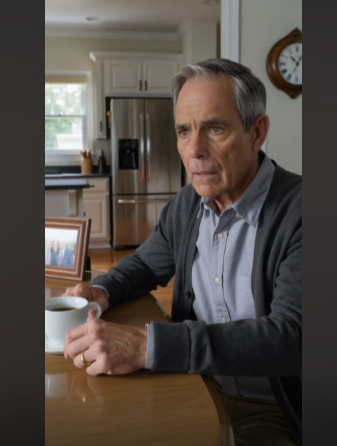
A Week After My Wife Died, I Found A Hidden Envelope In Her Car — The Note Inside Shocked Me…
ONE WEEK AFTER MY WIFE PASSED AWAY, I CLEANED OUT HER CAR. UNDER THE FLOOR MAT, I FOUND AN ENVELOPE WITH A $60,000
CHECK AND A NOTE: “DON’T TRUST WHAT OUR SON TELLS YOU. GO TO SAFE DEPOSIT BOX #8.
YOU’LL UNDERSTAND.” THE NEXT MORNING, I WENT TO THE BANK… AND WHAT I FOUND SHOCKED ME
One week after my wife died, I finally found the courage to clean out her car.
Under the rear floor mat, taped flat against the carpet, I found a sealed envelope.
Inside was a bank check made out to me for sixty thousand dollars.
And a note in Eleanor’s handwriting.
Walter,
Don’t trust what Marcus tells you.
Go to safe deposit box number eight.
You’ll understand.
I read it three times.
Then I sat on the concrete floor of our garage and wondered what my wife had discovered before she died.
Because Marcus was our son.
And Eleanor had never been careless with words.
Especially not her last ones.
My name is Walter Mitchell.
I was sixty-one when Eleanor died.
She was sixty-seven.
We had been married thirty-four years.
For most of my adult life, I had worked in internal audit and financial control.
My profession was built around one principle:
Most large problems begin as one small thing that does not belong.
One transaction.
One signature.
One number.
One sentence.
You notice it.
Then you resist the urge to explain it away.
That Sunday morning, the sentence that did not belong was written by my dead wife.
Don’t trust what Marcus tells you.
So I didn’t.
Not yet.
I photographed the envelope where I found it.
The tape.
The check.
The note.
Then I locked everything in the small fireproof safe in my office.
And for the first time since Eleanor’s funeral, grief moved aside just enough for something colder to enter.
Attention.
The next morning, I went to the bank.
Alone.
I told no one.
Especially not Marcus.
The safe deposit box was at a branch in Westwood we had never used together.
The branch manager took my identification and reviewed the records.
Then he said something that immediately made me sit straighter.
“Mr. Mitchell, your wife rented this box about ten months ago.”
“Only her?”
He looked at the screen.
“You were listed as an authorized co-renter.”
“I never signed anything.”
He frowned.
That could have become a problem.
Fortunately, the file contained a signed authorization Eleanor had completed in person with the bank.
My actual signature was not required to make me a beneficiary of access after her death; the agreement simply allowed me to present the key, identification, and proof of her death once the bank’s legal department cleared it.
Eleanor had arranged that clearance before she died through her estate attorney.
Meaning she expected me to come.
Meaning this was not panic.
It was a plan.
The manager escorted me downstairs.
Two keys opened the box.
His.
Mine.
Then he left me alone in a private room.
Inside the metal box were only four things.
A USB drive.
Three bank statements.
A small brass key.
And a family photograph.
Christmas three years earlier.
Eleanor and me on either side.
Marcus in the middle.
His arm around his mother.
All three of us smiling.
Eleanor had circled Marcus in red ink.
On the back, she had written:
Start with $9,800.
Don’t start with the big number.
I stared at that sentence for a long time.
Then at the statements.
That was how Eleanor thought.
She had watched me work for thirty years.
She knew I never started with the dramatic conclusion.
You start with the transaction that can be verified.
Then you follow the chain.
So I did.
The statements belonged to a savings account in Eleanor’s name.
I had never seen it.
Over fourteen months, money had moved out repeatedly.
Amounts between roughly ninety-four hundred and ninety-eight hundred dollars.
Seventeen transfers.
Total:
A little more than one hundred sixty thousand dollars.
All going to an LLC called Mesa Crown Consulting.
My first instinct was to think of federal reporting thresholds.
Then my training corrected me.
Electronic transfers just below ten thousand dollars do not automatically mean illegal “structuring.” The cash-reporting rules people hear about are more specific than that.
What mattered here was not the number by itself.
It was the pattern.
The destination.
The authorization.
And whether Eleanor understood why her money was moving.
I searched the California business registry.
Mesa Crown Consulting existed.
The registered business address was an apartment in Silver Lake.
The registered agent was Diana Reyes Mitchell.
My daughter-in-law.
I stopped moving.
Diana had used Reyes professionally before marrying Marcus.
The address was her old apartment.
I poured a glass of water.
Drank half.
Then called Janet Okafor.
Janet had been our estate attorney for eleven years.
She also handled elder financial exploitation cases.
When she answered, I said:
“I need to see you.”
She heard my voice.
“When?”
“Today.”
“My three o’clock canceled. Come at two-thirty.”
Then she asked:
“Has Marcus contacted you?”
“Yes.”
“What did he ask?”
I looked at my phone.
He had left a voicemail that morning.
Warm.
Concerned.
Dad, I know mornings are hard right now. I can come help sort Mom’s papers. Financial things, accounts, anything unusual she might have left behind. You shouldn’t deal with that alone.
I told Janet.
She became quiet.
Then:
“Don’t call him back.”
“Why?”
“Because Eleanor came to see me three weeks before she died.”
My hand tightened around the phone.
“What?”
“She gave me instructions.”
“What instructions?”
Janet chose her words carefully.
“She said if you called me on your own after her death, I should tell you not to deposit any check she left you until we spoke.”
I looked toward the safe.
I had not told Janet about the check.
“She knew.”
“Yes.”
“What else?”
“Come in.”
At two-thirty, I laid everything on Janet’s conference table.
The statements.
Photographs.
The USB.
The family picture.
The note.
She studied the transfers.
Then Mesa Crown.
Then Diana’s name.
Finally she looked at me.
“Walter, Eleanor told me she had been concerned about Marcus for more than a year.”
I felt as if my body had remained in the chair while everything inside it fell.
“Concerned how?”
“He had been bringing her financial documents to sign.”
“What kind?”
“He described them as family tax planning and investment paperwork.”
“Why didn’t she tell me?”
“She was afraid she might be wrong.”
That sounded exactly like Eleanor.
Not timid.
Precise.
She would rather carry a burden herself than accuse someone she loved without proof.
Janet continued.
“She also thought that if Marcus learned you were aware, he would change his behavior before she understood the full picture.”
“Our son.”
“I know.”
“She was investigating our son.”
“Yes.”
My eyes burned.
“She did it alone.”
“For a while.”
Janet reached across the table.
“She eventually came to me.”
That mattered.
I needed it to matter.
Because the idea of Eleanor carrying this completely alone while making pot roast on Tuesdays and asking whether I wanted coffee was almost unbearable.
Janet pointed to the USB.
“Go home. See what’s on it.”
“Can you open it?”
“Probably. But she labeled it for you.”
The USB required a password.
Our anniversary failed.
Her birthday failed.
Marcus’s birthday failed.
The name of our old beagle failed.
Then I looked at the photograph.
Eleanor wore a silver bracelet I had given her when we bought our house.
Eight beads.
One for each room, although the house technically had seven.
She always teased me about liking even numbers.
We had closed on the house on October eighth.
I entered eight followed by the closing date.
The drive opened.
A folder appeared.
For Walter only, after I am gone.
I sat staring at it.
Then clicked.
More than forty files.
Photographs of documents.
Spreadsheets.
Notes.
PDFs.
And a journal.
Eleanor had never kept a journal before.
The first entry was fourteen months old.
Marcus brought more papers today. He says they are part of family tax planning. I signed similar documents before because I trusted him. I am not signing anything else until I understand it.
Another entry:
I found the Glendale account transfer today. $9,800. I don’t remember authorizing it. Marcus says I must have forgotten. I don’t think I forgot.
Then:
Diana called two days after I moved money between my own accounts. Asked whether I needed help simplifying things. I never told them I moved it.
Another:
I transferred another test amount today. Marcus called four days later.
I stopped.
Read that again.
Test amount.
Then I understood.
The transfers I had seen were not necessarily the theft.
Some were Eleanor’s bait.
She had noticed suspicious access to her finances.
Instead of confronting Marcus, she moved small amounts through accounts she controlled and watched who reacted.
When Marcus or Diana suddenly called asking whether she was “confused” about money she had never discussed with them, Eleanor learned they were monitoring accounts they should not have been watching so closely.
She had been testing information flow.
The woman I had married had turned herself into an auditor because she had spent three decades watching one.
I laughed once.
Then started crying.
I read for two hours.
Near the end of the journal, one name appeared repeatedly.
Lily.
Marcus’s daughter from his first marriage.
Our granddaughter.
Two years earlier Marcus told us Lily wanted nothing to do with the family.
He said she changed her number.
Needed space.
Did not want contact.
Eleanor never believed him.
One entry read:
I’ve been sending Lily tuition money. Marcus doesn’t know. I cannot let him cut her off completely.
I pushed back from the desk.
Lily had not abandoned us.
Marcus had separated us from her.
The brass key from safe deposit box number eight suddenly mattered.
The next morning, with Janet’s advice, I identified it through the number stamped on its head.
A storage facility in Van Nuys.
Unit 113.
I did not go alone.
That was one of several places where I chose not to behave like a man in a thriller.
Janet arranged to meet me there.
We documented entry with the facility manager.
Inside were seven file boxes.
Tax records.
Insurance.
Copies of investment documents.
Medical records.
And one box labeled:
Lily.
Inside were tuition receipts from Cal State Los Angeles.
Notes about Lily’s classes.
A printout showing she had made the dean’s list.
Letters.
Cards.
And a revocable trust document prepared through Janet’s office.
Eleanor had placed a designated investment account into trust for Lily.
Not because doing so made it magically immune from challenge.
Any estate instrument can be questioned under the right circumstances.
But because she wanted a clear, properly documented plan handled by independent counsel instead of leaving Lily’s future to Marcus.
At the bottom of the box was a greeting card.
Inside, Lily had written:
Thank you for not giving up on me, Grandma.
Some days knowing you’re out there is the only reason the rest feels manageable.
I sat down hard.
Janet remained standing beside me.
“She knew,” I said.
“Yes.”
“She knew all this time.”
“Yes.”
“And I believed Marcus.”
“You believed your son.”
That was kinder.
I appreciated the distinction.
The card listed Lily’s current workplace in one of Eleanor’s notes.
A restaurant in Santa Monica.
I did not show up immediately.
Janet made me wait until she confirmed there was no legal reason I should stay away and until we discussed what I could safely tell Lily about the financial investigation.
Two evenings later, I went.
Lily was twenty-two.
Dark hair.
Eleanor’s jaw.
Same way of pressing her lips together before saying something difficult.
When she saw me, she froze.
“Mr. Mitchell?”
“Walter is fine.”
She stood clutching an order pad.
“Can you sit?”
She glanced toward the kitchen.
“I only have five minutes.”
“That’s enough.”
We sat.
I did not start with Marcus.
Or the money.
I started with Eleanor.
“Your grandmother died eight days ago.”
Lily stopped breathing.
Then covered her mouth.
Her crying was immediate.
Uncontrolled.
The kind a person does when grief arrives after being delayed by bad information.
“I didn’t know.”
“I know.”
“I kept trying to reach her.”
“I know.”
“Marcus said she was tired.”
I reached into my jacket.
Put her card on the table.
Lily stared at it.
Then held it with both hands.
“She kept this?”
“Yes.”
Her face collapsed.
“She never gave up.”
“No.”
That was when I understood Eleanor’s real reason for leaving me Lily’s trail.
Not evidence.
Relationship.
She wanted somebody to go get her granddaughter.
After Lily calmed, she told me why Marcus had cut contact.
Two years earlier, she had overheard Marcus and Diana arguing in their Brentwood kitchen.
Diana had said:
“If your mother looks into that company, we’re finished.”
Lily told Eleanor.
Three weeks later, Marcus told Lily that Eleanor wanted distance.
Then Marcus called Lily directly.
Said she was creating family problems.
That she needed to stay out of things she did not understand.
He never explicitly threatened her.
He did not need to.
Lily was twenty.
Financially dependent.
Afraid.
She withdrew.
Eleanor found her again months later and maintained secret contact.
I returned home that night furious.
That was dangerous.
Anger creates shortcuts.
Eleanor had left me records because she knew that.
The next thing I found was worse.
My home office had been disturbed.
No broken window.
No forced door.
Nothing stolen that I could immediately identify.
But a folder had moved.
A desk drawer was not in its usual position.
Someone had searched.
My first impulse was to say nothing and set a trap.
That would have been the Walter of a worse story.
Instead, I called Janet.
She said:
“Leave the room.”
I did.
“Call police.”
I did.
We documented the possible unauthorized entry.
Changed locks.
Reviewed who had keys.
Installed exterior security.
Preserved the USB somewhere safer.
No fake documents.
No unlocked windows.
No homemade sting.
Because if Marcus had entered my house—or sent someone—we did not need to encourage a second crime.
We needed the first one investigated.
That decision slowed everything down.
It also kept the evidence clean.
Three days later, Marcus came to see me.
He brought food from Eleanor’s favorite Oaxacan restaurant.
Mole negro.
Rice.
Black beans.
For half an hour, we could almost pretend we were father and son grieving together.
Then he placed a folder on the kitchen table.
“I need to show you something about Mom.”
My stomach tightened.
He produced bank statements.
Documents bearing Eleanor’s actual signatures.
Records from accounts I had never seen.
“Mom was moving money.”
He spoke softly.
Carefully.
“I didn’t want to tell you while she was alive because I didn’t want to embarrass her.”
I looked at the pages.
Some were genuine.
That was what made the story effective.
“She had accounts you didn’t know about.”
“Yes?”
“I think she became confused toward the end.”
There it was.
The first attempt to make Eleanor unreliable.
I said:
“What makes you think that?”
“She was making strange transfers.”
“How do you know?”
He paused.
“I was helping her.”
“With permission?”
“Yes.”
“Written?”
“Some.”
I nodded.
“Leave these with me.”
“Dad, I can take over anything financial if this is too much.”
“No.”
He smiled.
“Of course.”
Then:
“I only meant temporarily.”
“I know what you meant.”
His smile changed.
Just slightly.
He left.
I immediately gave the folder to Janet.
We compared Marcus’s version to Eleanor’s records.
Within days, a forensic accountant joined the matter.
Her name was Priya Shah.
She had spent twenty years tracing hidden ownership, unauthorized transfers, and disputed family-business transactions.
Unlike me, she had no emotional reason to see Marcus as innocent or guilty.
That was exactly what we needed.
Priya’s first conclusion surprised me.
“Your wife was not simply losing money.”
She projected the transactions onto a screen.
“Some transfers cycle back.”
“How?”
“Different accounts. Different descriptions. But the net position is stable on certain tests.”
She pointed.
“These appear to be the transactions Eleanor initiated herself.”
“The bait.”
“Yes.”
Then she highlighted a separate group.
“These are different.”
Larger.
Irregular.
Supported by documents Eleanor had photographed before signing.
Money moved from accounts associated with Eleanor and me into Mesa Crown.
Then from Mesa Crown into several real-estate LLCs.
Companies connected to Marcus’s development projects.
Priya said:
“This is where we need source documents.”
Bank records.
Operating agreements.
Authorization forms.
Loan documents.
We could not simply access those ourselves.
Janet initiated the civil discovery process available through the claims she was preparing.
Where appropriate, financial institutions received subpoenas.
Regulators and law enforcement were consulted as evidence developed.
The picture took months to become clear.
Marcus had three development projects in serious trouble.
Cost overruns.
Debt.
Delayed sales.
A lender demanding additional collateral.
He had borrowed from us legitimately in earlier years.
Six loans totaling sixty thousand dollars.
He told us every one had been repaid.
Eleanor’s records suggested otherwise.
The sixty-thousand-dollar bank check hidden in her car was not some mysterious gift.
It represented money she had managed to trace and recover into an account she controlled after determining that the loans Marcus claimed to have repaid had instead been shifted through related entities.
She wanted me to preserve the funds until the accounting could establish ownership.
That was why Janet told me not to deposit it immediately.
The check was evidence of a transaction.
Not free money.
Eventually, investigators and accountants traced far more than sixty thousand.
The one-hundred-sixty-thousand-dollar figure related to transfers through Mesa Crown.
But even that was not the entire financial exposure.
Some transfers had authorization forms.
Some signatures were real.
The question was what Eleanor had been told when she signed.
That distinction became the heart of the case.
Marcus’s position was simple.
His parents had invested in family projects.
The developments failed.
That was unfortunate.
Not fraud.
Our position was also simple.
If someone obtains your consent by materially misrepresenting where money will go, what risks exist, or what authority a document grants, the signature alone does not end the inquiry.
So we investigated what had been represented.
That was when Diana began to matter.
At first, I blamed her as much as Marcus.
Mesa Crown carried her name.
Her old address.
Her signatures.
Then she came to my house one morning with soup.
I nearly refused to let her in.
Instead, I remembered Eleanor.
Patience before conclusion.
Diana looked terrible.
Thin.
Exhausted.
I asked:
“Why is your name on Mesa Crown?”
Her expression changed.
“Marcus told me it was a family investment vehicle.”
“Did you understand what funds passed through it?”
“No.”
“Did you sign the documents?”
“Yes.”
“Did you read them?”
She looked ashamed.
“Some.”
“That isn’t an answer.”
“No.”
She swallowed.
“He handled everything.”
I knew how convenient that sounded.
So did she.
Then I said:
“Get your own attorney.”
Her eyes lifted.
“Not Marcus’s.”
Silence.
“If what you’re saying is true, you need someone whose only client is you.”
She left ten minutes later.
That may have been the single most useful conversation I had during the entire case.
Three weeks later, Diana’s lawyer contacted Janet.
She was cooperating.
Not because she had become noble overnight.
Because her lawyer showed her what her signatures meant.
And what Marcus had failed to tell her.
Diana produced emails.
Many incriminated her too.
She had known money was coming from Eleanor.
She had questioned it.
Complained.
Benefited from the lifestyle surrounding Marcus’s projects.
She was not an innocent bystander.
But one thread became crucial.
Marcus wrote:
Keep each transfer below the internal review level if possible. Mom asks fewer questions that way.
Another:
Dad does not need to know until the Palisades project closes. We repay everything then.
Not federal cash-reporting evasion.
Something more straightforward.
Avoiding parental scrutiny.
Concealing risk.
Using family money to keep failing projects alive until he hoped a sale would rescue him.
That was easier to understand.
And easier to prove.
The most painful document came from Dolores Vasquez.
Eleanor’s closest friend.
I found her because Eleanor mentioned her repeatedly in the journal.
Dolores had kept a sealed envelope for me.
Inside was a copy of a letter Marcus sent his mother.
He asked Eleanor to transfer management authority over one investment account to him.
His stated reason:
To streamline family financial management during a period of reduced capacity.
Then, in a handwritten note beside the sentence, Eleanor had written:
Reduced capacity?
He has never once asked my doctor whether I lack capacity.
Below that:
Walter does not need to know yet.
Marcus had actually written that line to her.
The request instructed Eleanor not to “burden” me until the transfer was completed.
That letter told me something larger than money.
Marcus was trying to create a world in which each parent believed the other was too vulnerable to be included.
Isolation disguised as efficiency.
I sat in Dolores’s kitchen holding the letter.
“She was afraid?” I asked.
Dolores shook her head.
“Not of Marcus.”
“Then what?”
“Time.”
My throat tightened.
“She said she was afraid she wouldn’t live long enough to finish.”
And she hadn’t.
Eleanor had been ill.
More ill than she let me understand.
She knew.
I did not.
That hurt too.
But by then I had learned that love and secrecy are sometimes mixed for reasons that are not cruel.
I still wished she had trusted me sooner.
I could also see why she wanted a complete record before breaking our family apart.
Several months into the investigation, I finally watched the video on the USB.
I had avoided it.
I knew Eleanor would be speaking directly to me.
I was not ready.
Then one night, I was.
She sat in the green armchair in our living room.
Afternoon light behind her.
Tired.
Thin.
Completely herself.
“Walter,” she began, “if you’re watching this, I’m probably gone.”
I stopped the video.
Walked into the kitchen.
Cried.
Returned.
Pressed play.
“I’m sorry I kept this from you. I needed to be sure before I changed how you saw Marcus.”
She breathed carefully.
“I kept hoping I had misunderstood something.”
Then:
“If I know our son, he will do three things after I’m gone.”
I leaned forward.
“He’ll ask you about money before you ask him.”
Marcus’s voicemail.
“He’ll try to convince you that what I left behind is confused or unreliable.”
His folder at my kitchen table.
“And if he thinks you know too much, he will try to control the story before you can finish reading it.”
My office search.
The professional complaint that came later.
All of it.
Eleanor looked directly into the camera.
“I didn’t leave you one piece of proof because one thing can disappear.”
Then she explained the sequence.
The box.
The bank statements.
Mesa Crown.
Diana.
The storage unit.
Lily.
Dolores.
The check.
“Each part leads to the next.”
A small smile.
“That way, the truth doesn’t depend on one file.”
Then:
“I knew you would follow it slowly.”
I started crying again.
“Because that’s who you are.”
She paused.
“I love you.”
Another pause.
“I’m sorry I ran out of time.”
The screen went black.
For the first time since her funeral, I did not feel simply abandoned by death.
I felt accompanied.
That difference saved me.
The case moved slowly after that.
Civil claims first.
Protective orders around disputed assets.
Formal accountings.
Subpoenas.
Regulatory referrals where the evidence supported them.
Law enforcement opened its own investigation.
I did not sit Marcus down in my living room and trick him into confessing.
Janet would not allow it.
Neither would I, eventually.
We had enough facts to let professionals ask questions properly.
Marcus retained counsel.
Good.
Diana retained separate counsel.
Also good.
Lily provided a statement about what she overheard and how Marcus cut her off.
Dolores provided Eleanor’s preserved letter.
The banks produced transaction records.
The real-estate entities produced ledgers.
The accountants reconstructed the flow.
For months, nobody knew exactly how it would end.
That was reality.
Evidence can be strong without making outcomes certain.
Marcus’s first explanation was that everything had been voluntary family investment.
Then documents showed Eleanor repeatedly questioning transactions.
So he shifted.
He argued she had been confused.
Then medical records showed no diagnosis of cognitive impairment.
So he shifted again.
He said he planned to repay everything once the developments recovered.
That may even have been true.
But intending to repay money later does not make every method of obtaining it honest now.
Eventually, the issue became narrower.
What had Marcus told Eleanor?
What had he concealed?
Which documents had been misleading?
What money had moved without valid informed authorization?
Which transfers were legitimate investments?
Which were not?
The final accounting was less dramatic than Eleanor’s notes made it initially feel.
That did not make it small.
A substantial amount had been improperly obtained or diverted.
Enough to support civil liability.
Enough for prosecutors to pursue criminal charges based on specific conduct.
Diana cooperated.
Her cooperation did not erase her involvement.
She entered a civil settlement requiring repayment of funds she had received and provided records investigators otherwise might have spent months obtaining.
Her marriage to Marcus did not survive.
I did not celebrate that.
There had already been enough broken family.
Marcus ultimately entered a plea agreement.
The charges reflected financial exploitation, fraud-related conduct, and false representations tied to the transfers.
I will not give you a neat prison number because it was never the point.
He served time.
He was ordered to pay restitution.
His professional life changed permanently.
Several development interests were liquidated or restructured.
Some creditors were paid.
Some were not.
Nobody emerged untouched.
Especially not me.
Marcus called before sentencing.
I almost declined.
Then answered.
“Dad.”
His voice sounded different.
No warm executive tone.
No careful competence.
Just tired.
“I need you to understand something.”
“Go ahead.”
“I didn’t start out planning to steal from anyone.”
I said nothing.
“The projects went bad.”
Silence.
“I borrowed money.”
“You hid losses.”
“Yes.”
“You told your mother documents were one thing when they were another.”
He closed his eyes.
I could hear it in the silence.
“Yes.”
“You separated Lily from her grandmother because Lily heard too much.”
His voice broke.
“Yes.”
“Why?”
“I thought I could fix everything before anyone knew.”
That was the first completely honest sentence he gave me.
“I thought I had time.”
I looked through the kitchen window.
Eleanor’s flowers had begun fading along the back fence.
“Your mother thought she had time too.”
Silence.
“The difference was what she did with hers.”
He began crying.
So did I.
Not because the case vanished.
Because he was still my son.
That is one of the cruelest things about consequences.
They do not automatically erase love.
Sometimes they force love to coexist with judgment.
Marcus whispered:
“She built a case against me.”
“No.”
I said it more sharply than I intended.
“She built a record.”
“What’s the difference?”
“A case exists to defeat someone.”
I looked toward the flowers.
“Your mother wanted the truth to survive her.”
Marcus said nothing.
Neither did I.
Then he asked:
“Do you hate me?”
“No.”
The answer surprised him.
It surprised me too.
“I’m angry.”
“Yes.”
“I don’t trust you.”
He made a small sound.
“I’m grieving what you did to your mother.”
Silence.
“And to Lily.”
Another silence.
“But you’re still my son.”
He cried harder.
“That does not mean I will protect you from consequences.”
“I know.”
“No.”
I said quietly.
“You’re beginning to.”
Months later, Janet called with the final resolution.
I was in the backyard pulling dead stems from the soil.
Marcus had accepted the negotiated outcome.
Restitution.
Criminal penalties.
Supervision afterward.
Diana had resolved her civil exposure and moved closer to her family.
Lily’s trust had been administered according to Eleanor’s documents after the estate disputes were reviewed.
Nothing happened instantly.
Nothing was “untouchable.”
It took lawyers, notices, accounting, and patience.
But Lily eventually received what Eleanor intended.
She left the restaurant.
Entered a nursing program.
The first time she told me, I laughed.
“Your grandmother would approve.”
“I know.”
“She would also tell me I’m studying too late.”
“She definitely would.”
Then Lily became quiet.
“Grandpa?”
“Yes?”
“I think about her all the time.”
“So do I.”
“Not always sadly.”
I understood.
“She’ll say something in my head.”
My throat tightened.
“You sound like her when you say that.”
“Good.”
Lily and I began meeting every few weeks.
Coffee.
Lunch.
Nothing forced.
No attempt to replace the two lost years.
You cannot recover stolen time by rushing what remains.
We just started where we were.
That seemed to be what Eleanor wanted.
Seven months after I found the envelope, I finally sat inside her car again.
I had refused to sell it.
Marcus had been the one urging me to.
Now I understood why that had bothered Eleanor enough to hide the envelope there.
Maybe he only wanted me to move on.
Maybe part of him feared she had left something in the car.
I no longer needed to know.
I sat in the passenger seat.
Her side.
The smell was faint now.
Hand lotion.
Peppermint.
Lavender.
I took her note from my wallet.
The original had been preserved properly by then; what I carried was a copy.
I read the front again.
Don’t trust what our son says.
Go to safe deposit box number eight.
You’ll understand.
Then I turned it over.
For months, the back had looked blank.
That afternoon, low October sunlight came through the windshield at an angle.
There were faint marks on the paper.
Not invisible ink.
Nothing theatrical.
Just indentations and very light handwriting I had never noticed.
I tilted the page.
Slowly, I could read it.
Walter,
Don’t try to beat him with anger.
Let the records speak before you do.
I sat there for a long time.
Then I laughed.
Not because anything was funny.
Because of course.
Of course that was what she had written.
Eleanor knew me.
Knew my temper.
Knew my profession.
Knew I would want to confront Marcus the moment I understood.
So she gave me the most important instruction last.
Not because she wanted to manipulate me.
Because she trusted me to discover it only after I had already done what she hoped.
Follow the record.
Not rage.
I folded the paper.
Put it back into my wallet.
Then looked at the pegboard in the garage.
Her gardening tools still hung in their places.
The trowel.
Pruning shears.
Small rake.
The bed along the back fence was empty now.
I had spent weeks wondering what Eleanor would plant next.
Finally I knew.
Tulips.
She always claimed tulips were too optimistic.
Which was how I knew she secretly loved them.
I planted them in February.
Lily helped.
We worked for three hours.
She complained about my spacing.
I told her Eleanor had trained me.
“That makes it worse,” she said.
In March, they came up.
Yellow.
Red.
White.
Uneven in places because apparently I am a better auditor than gardener.
Lily took a picture.
Then stood looking at them.
“Grandma would fix that crooked row.”
“Immediately.”
“She’d wait until we went inside.”
“Then pretend it grew that way.”
Lily laughed.
And for a second, Eleanor was everywhere.
Not as a ghost.
As influence.
That is different.
I have thought often about what she left me.
People would say:
Evidence.
Money.
A granddaughter.
Those things mattered.
But the inheritance I carry most carefully is simpler.
She reminded me that truth does not become stronger because you shout it first.
Sometimes the strongest thing you can do is preserve it.
Name it accurately.
Let independent people examine it.
Refuse to destroy evidence by mixing it with revenge.
And accept that the person who betrayed you may still be someone you love.
That last part was the hardest.
Marcus and I correspond now.
Rarely.
Carefully.
I do not send him money.
I do not solve legal problems for him.
I do not pretend his mother would want us to “move on” simply because moving on would make everyone more comfortable.
He asks about Lily sometimes.
I tell him only what she has authorized me to share.
That boundary hurts him.
It should not be my reason for keeping it.
Lily owns that relationship.
Not me.
Not Marcus.
Not even Eleanor anymore.
That is another thing our family had to learn.
Love does not equal access.
One afternoon, Marcus wrote:
I spent years believing if I could keep every problem under control long enough, no one would have to know who I had become.
I read that sentence several times.
Then answered:
Your mother knew.
He replied the next day.
I know.
That was all.
Sometimes two words are enough progress for one year.
I still keep Eleanor’s coffee cup on the kitchen shelf.
For months I could not wash it.
Eventually I did.
Then put it back in exactly the same place.
People talk about “letting go” as though grief is an object cluttering the house.
I don’t think that anymore.
Some things do not need to be thrown away.
They simply need to stop controlling the room.
The cup stays.
The car stays for now.
The flowers return every spring.
And safe deposit box number eight is empty.
I closed it after the estate was settled.
The manager asked if I wanted to keep the number available.
“No.”
I smiled.
“One number eight was enough.”
He had no idea what I meant.
That was fine.
Not every ending needs witnesses.
The first morning I found Eleanor’s note, I thought she had left me a warning about our son.
She had.
But that was only the surface.
What she really left was a path.
A path to Lily.
A path to the truth.
A path through grief that gave me something to do besides drown in it.
Most of all, she left me evidence that even in the final months of her life, frightened and running out of time, she had not become small.
She had planted flowers.
Paid her granddaughter’s tuition.
Consulted a lawyer.
Saved copies.
Asked questions.
Built a record.
Then trusted me to finish what she could not.
For thirty-four years, I believed I was the financial expert in our marriage.
Eleanor never challenged that.
She did something much more characteristic.
She paid attention.
And in the end, attention saved everything that could still be saved.
Not the marriage.
Death had already taken that.
Not the family we thought we had.
Marcus had damaged that himself.
But the truth.
Lily.
My ability to look at my wife’s memory without wondering whether I had failed her completely.
Those survived.
Because Eleanor made sure they would.
Sometimes, late in the afternoon, I sit in the backyard beside the tulips and think about the note under the floor mat.
One envelope.
One check.
A few sentences.
Such a small beginning.
That is the strange thing about betrayal.
And about truth.
Neither usually arrives looking as large as it will become.
They begin with something slightly out of place.
A signature.
A transfer.
A phone call asked too early.
A granddaughter who supposedly stopped loving you.
A safe deposit box you never knew existed.
A wife who writes:
Pay attention.
So I did.
And because I did, the last thing Eleanor left me was not revenge.
It was certainty.
She had known the truth.
She had protected what she could.
And when her time ran out, she trusted me with the rest.
