Six years after my brother ended up with the woman I had once planned
6 Years Ago, My Brother Stole The Love Of My Life — The Woman I Was…
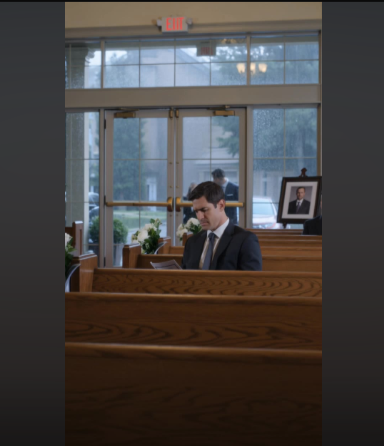
6 Years Ago, My Brother Stole The Love Of My Life -The Woman I Was About To Propose To. Now, At Our Father’s Funeral, He Walked In Holding Her Hand And Said, ‘Some Guys Just Finish First.’ I Just Smirked, Turned To Him, And Said, ‘You Still Working That Office Job?’ Then My Wife Stepped Out Of The Limo… And When He Saw Who She Was, He Nearly Dropped Her Hand…
THE BROTHER WHO ALWAYS FINISHED FIRST
My name is Ryan Whitmore.
I was thirty-two when my father died, which was old enough to understand grief and still young enough to discover that grief does not make families kinder.
Six years earlier, I had almost proposed to Elise Carter.
I had the ring.
I had a reservation at a small Italian restaurant near the waterfront where we had celebrated our first anniversary.
I had rehearsed the speech until it sounded natural.
Then Elise asked me to meet her at our favorite coffee shop.
She chose the quietest table in the back.
That should have warned me.
She kept both hands around her cup even after the coffee went cold.
“Ryan, I need to tell you something.”
I remember the condensation on the window more clearly than I remember the first sentence.
Rain outside.
People passing under umbrellas.
Normal life continuing while mine shifted.
She said she had feelings for someone else.
When I asked who, she hesitated just long enough for my stomach to drop.
“Drew.”
My brother.
Three years older.
Louder.
Funnier.
The son my parents introduced first at parties.
Drew had spent our entire childhood turning comparison into oxygen.
He was the soccer captain.
I was “good with computers.”
He got Dad’s old BMW at seventeen.
I got told insurance was too expensive.
He failed a college course and Dad called it a learning experience.
I brought home a B-plus in calculus and Mom asked why it was not an A.
None of this made Drew responsible for the way our parents treated us.
But he learned from it.
He learned that if he reached first, adults called it confidence.
If I waited, they called it weakness.
Elise moved in with him three months later.
I did not attend the engagement party.
Mom called.
“Family is family.”
I heard the real sentence beneath it.
Your pain is less important than the appearance of unity.
So I stopped arguing.
I stopped answering Drew’s messages.
I ignored Elise’s two emails asking whether we could talk.
I changed apartments.
Worked.
Then worked more.
At the time, I was in IT security for a regional healthcare company.
Quiet job.
Good salary.
Very little glamour.
I liked that.
Computers do not care who enters a room first.
Access either exists or it does not.
Credentials either authenticate or they fail.
Systems can be unfair, but they are usually unfair in ways that leave logs.
People are harder.
Over the next six years, I built a life that had nothing to do with Drew.
I moved to Seattle.
Shifted from healthcare security into infrastructure consulting.
Eventually joined a small cybersecurity firm that worked with logistics and supply-chain companies.
That was where I met Sabrina DeWitt.
She was not famous when I met her, despite what family gossip later made her into.
She was a founder running a fast-growing enterprise software company that optimized industrial transport networks.
Smart.
Private.
Precise.
She had been on a business magazine’s young-founder list, spoken at technology conferences, and built a reputation large enough that people recognized her in certain rooms.
But she still forgot where she left her keys twice a week.
We met during a security review.
Our first argument lasted forty minutes and concerned whether one of her engineers should retain administrative access to a production environment.
She thought I was overly cautious.
I thought she was recklessly optimistic.
We both turned out to be partly right.
Two years later, we married quietly in Vancouver.
My family received photographs afterward.
Mom said she wished we had included them.
I did not remind her that she had skipped my civil ceremony because Drew and Elise were hosting an anniversary dinner the same weekend.
I had stopped collecting those debts.
Then Dad got sick.
Lung cancer.
By the time doctors named it, treatment was about time rather than cure.
I visited when I could.
Not every week.
Not enough to satisfy guilt.
Enough that Dad and I eventually learned how to talk without Mom or Drew in the room.
He apologized badly.
That was his style.
“I probably missed some things with you.”
Some things.
Years of favoritism compressed into two words.
Still, I took what he could give.
Near the end, he asked about my work.
Not surface questions.
Real ones.
What I was building.
What Sabrina was doing.
What I thought about the family logistics company he had run for thirty years.
Whitmore Logistics was privately held.
Regional freight, warehousing, distribution, specialized industrial transport.
Not glamorous.
Solid.
Dad owned a controlling interest through trusts and holding entities.
Drew had worked there briefly in his twenties, then left after clashing with almost everyone who expected him to document decisions.
I had never worked there.
Dad once asked why.
“Because you never asked me.”
He had no answer.
He died on a Tuesday morning.
The call came from Mom.
“It happened.”
That was all.
I sat on the edge of our bed and cried until I could not breathe properly.
Grief does not check whether the relationship was fair first.
The funeral was Saturday.
Gray sky.
Wet pavement.
Church full of people I remembered from childhood and barely knew anymore.
I arrived early and sat near the back.
Sabrina had a client meeting that morning and planned to join me before the service began.
I did not mind.
Then Drew arrived twenty minutes late.
Elise beside him.
He saw me before I looked at him.
I felt it.
That old awareness.
He passed my row and leaned close enough that the people behind us could hear.
“Some guys just finish first.”
Six years earlier, that sentence would have wrecked me.
At thirty-two, I looked at him.
Smiled.
“You still doing that office consulting thing?”
His smirk changed slightly.
Then the church doors opened behind us.
Sabrina walked in.
Not from a limousine staged for effect.
A black town car from the airport service dropped her at the curb because she had come directly from a meeting across town.
She wore a navy coat.
Hair pinned back.
No theatrical entrance.
The room still noticed.
Drew did too.
He recognized her.
Not because she was a celebrity.
Because he had spent years trying to move in startup circles where her company was known.
His posture changed.
Elise followed his gaze.
Sabrina reached me.
Took my hand.
Kissed my cheek.
“Sorry I’m late.”
“You’re not.”
She sat beside me.
That should have been the end of it.
But Drew kept looking over.
The service began.
For once, I did not care what he thought.
That was the first shift.
The wake was held at my parents’ house.
I had always thought of it as Dad’s house even though Mom had chosen almost everything inside it.
The study smelled the way it had when I was twelve.
Leather.
Old paper.
Scotch.
The living room filled with people telling stories about Dad as if death had simplified him into one agreeable version.
Drew worked the room.
Of course he did.
Handshakes.
Shoulder squeezes.
A laugh at exactly the right volume.
He told a story about fishing with Dad that I knew had happened once, twelve years earlier.
He told it like they had been inseparable.
Elise stayed close to him.
Every so often, her eyes moved toward Sabrina.
Not jealousy.
Something more complicated.
Comparison, perhaps.
That was not my problem anymore.
I went into the kitchen for water.
Mom stood at the stove stirring gravy nobody needed.
“I saw who you brought.”
I waited.
She sighed.
“Ryan, this is your father’s funeral.”
“Yes.”
“It isn’t a competition.”
“I didn’t make it one.”
Her spoon stopped.
“You are still bitter about Elise.”
I laughed once.
“I was going to propose to her.”
“You were barely together a year.”
“Eighteen months.”
“Whatever.”
She turned.
“Drew loved her too.”
I stared at my mother.
There it was.
Six years and she still thought desire settled ownership.
“He knew I was with her.”
Mom’s expression tightened.
“You were always cautious.”
“Drew goes after what he wants.”
“Maybe if you had moved faster—”
“Thank you.”
She frowned.
“For what?”
“For finally saying it without pretending.”
I walked out.
Later, on the back porch, Drew cornered me.
He had rolled his sleeves up.
Glass of Dad’s Scotch in hand.
For a minute, neither of us spoke.
Then:
“You really married her.”
“Yes.”
“Wild.”
I drank water.
He looked through the window toward Sabrina.
“She’s worth what now?”
I turned.
That was his first real question.
Not:
Are you happy?
How did you meet?
How long have you been married?
What is she like?
Worth.
“I don’t know her personal balance sheet.”
He scoffed.
“Come on.”
“She sold part of her company in a secondary transaction last year.”
“Has equity.”
“Investments.”
“She does fine.”
“Fine.”
He laughed bitterly.
“You always were lucky.”
“No.”
“What?”
“You always thought charm and shortcuts were the same thing as work.”
His face changed.
“That is not luck.”
Before he could answer, Mom called from inside.
“The lawyer is here.”
Drew straightened immediately.
The will.
I had forgotten it would be read that afternoon.
Dad’s attorney, Martin Hale, set up in the sitting room with a worn leather briefcase and a stack of folders.
Most families do not actually need ceremonial will readings.
Dad had requested one.
Probably because he knew we would otherwise turn private documents into competing stories.
Martin began with a personal letter.
Dad’s voice came through badly even in writing.
Short sentences.
No poetry.
To my family,
If Martin is reading this, I am gone.
I know I avoided difficult conversations.
Avoidance is not neutrality.
It becomes a decision in favor of whoever speaks loudest.
I have spent the last year paying attention to who showed up, who worked, who cared for the business, and who treated family as entitlement.
I should have paid attention earlier.
The room went still.
Mom pressed her lips together.
Drew leaned back as if he already knew where this was going.
He did not.
Martin moved to the estate.
Dad’s residence was not simply handed to me in one line.
It sat inside a revocable trust that became irrevocable at death.
Under the new trust amendment, I received the right to purchase the property from the trust at a preferential valuation, with a substantial specific bequest applied toward the purchase.
If I declined, the house would be sold and the net proceeds divided under the residuary plan.
Drew had expected outright ownership.
So had Mom.
The legal reality was less cinematic and more consequential.
Dad had removed Drew’s special right to receive the residence.
Martin explained.
Drew stood.
“No.”
Mom said:
“Harold promised him that house.”
Martin remained calm.
“There was an earlier draft.”
“It was revoked.”
Drew looked at me.
“What did you do?”
“Nothing.”
“You talked to him.”
“Yes.”
“Behind my back.”
“He was my father too.”
That sentence seemed to offend him.
Then Martin reached the company.
Whitmore Logistics was the asset that mattered.
Dad owned fifty-one percent of voting shares through a family holding trust.
The rest belonged to employees, early investors, and a management stock plan.
The revised estate plan did not give those shares outright to Sabrina.
That would have been irresponsible and, given her outside business interests, an immediate governance problem.
Instead, Dad created a voting trust for the family block.
Three trustees.
Martin Hale.
An independent former board chair named Evelyn Grant.
And Sabrina.
Sabrina’s role was not to “own the company.”
It was to serve as one fiduciary voice within the trust, with an explicit mandate to prioritize long-term company health over family preference.
I was named principal family beneficiary of the trust and designated successor family representative subject to board qualification requirements.
Drew retained a smaller non-voting economic interest through a separate trust, but no automatic management authority.
The structure was careful.
Dad had spent the last year thinking about exactly what he did not want to repeat.
Still, Drew heard only one thing.
Sabrina had a seat he did not.
“What?”
His voice cracked.
“She’s not even a Whitmore.”
“She is.”
I said.
“My wife.”
Martin continued.
“Mr. Whitmore left a letter explaining his reasoning.”
Mom stood.
“I do not care what it says.”
Martin read anyway.
Margaret,
You spent thirty years telling me which son deserved more.
I let you.
That was cowardice.
I watched what happened after Elise left Ryan for Drew.
I watched you defend the betrayal because conflict made you uncomfortable.
I watched Drew treat the company as something he would eventually inherit without earning a place in it.
I watched Ryan build a career without asking us for anything.
Sabrina understands companies as living systems, not trophies.
That is why she is one of the trustees.
Ryan may lead if the board believes he is qualified and if he wants the work.
Drew may benefit economically from the trust, but he will not control it merely because he is my son.
You may dislike this.
That is not a reason to change it.
Mom looked as if someone had removed the floor beneath her.
Drew’s hands shook.
Then he pointed at me.
“You manipulated him.”
“No.”
“You and her.”
He pointed toward Sabrina.
“This is some strategy.”
Sabrina stood between us when he stepped closer.
“Don’t.”
One word.
No threat.
No performance.
Drew stopped.
For the first time in my life, I saw fear in his face.
Not fear of me.
Fear of a world where he could not convert confidence into authority.
That was the second shift.
The room emptied slowly after the reading.
Relatives disappeared in clusters.
People who had spent hours telling stories about Dad suddenly discovered early flights, long drives, children waiting at home.
Martin packed his papers.
Mom closed herself in the kitchen.
Drew left through the garage hard enough that the door rattled.
Elise followed him.
Sabrina waited until we were alone in the sitting room.
Then she leaned toward me.
“He contacted me last week.”
I looked at her.
“Who?”
“Drew.”
The answer did not surprise me as much as it should have.
“How?”
“Through a mutual client.”
“He asked the client to pass along his number.”
“Said he wanted to discuss a business opportunity.”
“Did you call him?”
“No.”
“I had counsel document it.”
That was Sabrina.
Not dramatic.
Document first.
Interpret later.
“Why didn’t you tell me?”
“I was going to.”
“When?”
“When I knew whether it was business or provocation.”
I looked toward the garage.
“Now?”
“Now I think it was both.”
The discovery should have made me furious.
Instead, I felt tired.
Six years earlier, Drew had taken something because he wanted to prove he could.
Now he was reaching toward my wife’s business network for reasons I did not yet understand.
Different object.
Same reflex.
That night, I went upstairs to my childhood bedroom.
The posters were gone.
The trophies were gone.
The walls had been repainted beige.
One old photograph remained on the bookshelf.
Drew and me at a summer lake trip.
Teenagers.
Shirtless.
Arms over each other’s shoulders.
Grinning.
I picked it up.
There had been a time when we were brothers before we became competitors.
Or maybe I only remembered it that way.
Sabrina found me sitting at the desk.
She did not ask whether I was all right.
She placed one hand on my shoulder.
“I don’t want to fight them anymore.”
“You don’t have to.”
“I also don’t want Drew turning this into another story where I stole something from him.”
“Then don’t fight the story.”
She sat on the edge of the bed.
“Build a record.”
That sentence stayed with me.
At two in the morning, unable to sleep, I went into Dad’s study.
His notebooks were practical things.
Budget notes.
Meeting lists.
Printed emails with handwritten comments.
I found one folder labeled SUCCESSION.
Inside, a note in Dad’s handwriting stopped me.
Ryan isn’t loud, but he is solid.
I do not say that enough.
If the company ever needs steadiness more than charm, he is the one I would trust to learn the job.
I sat in Dad’s chair.
Pride arrived first.
Then anger.
Why write it here?
Why not tell me?
Dead people become honest at the most inconvenient time.
The next morning, I met with Martin, Sabrina, and Evelyn Grant.
Not the board.
The voting-trust trustees.
Martin explained the mechanics carefully.
Dad’s death did not make me chief executive.
The existing CEO remained in place.
The board remained independent.
The family trust controlled the largest voting block, but fiduciary duties still mattered.
If I wanted a formal operational role, I would need to be evaluated like any other senior candidate.
Good.
I did not want to inherit a title I had not earned.
I told them exactly that.
Evelyn smiled for the first time.
“That was your father’s test.”
“What?”
“He expected you to say either I don’t want it or make me earn it.”
“And Drew?”
“He expected the office by Monday.”
I laughed despite myself.
Then we discussed governance.
Legacy credentials.
Family access.
Old vendor relationships.
Dad had run Whitmore Logistics for decades.
That creates administrative debris.
Former executives with old distribution lists.
Consultants whose accounts were never fully closed.
Family members who once had portal access for reporting purposes.
My cybersecurity instincts woke immediately.
“Who has legacy credentials?”
The answer was not good.
Several former managers.
Two retired advisers.
And Drew.
He had retained limited access to a historical reporting portal from his brief management stint.
Supposedly read-only.
Supposedly harmless.
Sabrina looked at me.
I looked at Martin.
“Revoke anything not operationally necessary.”
Martin nodded.
“Through IT and compliance.”
“No special family exceptions.”
That became our first action.
Not against Drew.
Against sloppy governance.
I returned to Seattle two days later.
My life did not transform because Dad’s will changed.
I still had my consulting work.
Sabrina still had her company.
Whitmore Logistics still had an experienced chief executive named Daniel Hsu and a board that knew the business better than I did.
For the first month, I listened.
Warehousing margins.
Fuel exposure.
Customer concentration.
Labor contracts.
Fleet maintenance.
Technology debt.
Dad had built a resilient company.
He had also delayed modernization because he distrusted systems he could not physically inspect.
That was where I could help.
The board invited me to join a strategic technology committee as a non-executive family representative.
No CEO title.
No victory lap.
Work.
I said yes.
Sabrina remained a trustee but recused herself from decisions involving vendors where her own company had interests.
Again:
Governance.
Not family theater.
The first board meeting surprised me.
I expected suspicion.
Instead, several directors looked relieved.
One pulled me aside.
“Your brother used to come in here acting like he already owned the place.”
I did not respond.
Another said:
“Your father wanted him involved for years.”
“Then stopped.”
“Why?”
I asked.
The director smiled without humor.
“Drew liked strategy decks.”
“He disliked follow-through.”
That sounded familiar.
Over the next six weeks, we hired Natalie Shaw as chief financial officer after the prior CFO retired.
She had spent years in transportation finance and possessed no patience for family myths.
Perfect.
We reviewed systems.
Closed stale accounts.
Segmented sensitive bid data.
Introduced stronger vendor-access controls.
Started due diligence on a small software company that automated inventory movement inside industrial distribution centers.
Not a deal that would “double valuation in a year.”
A real strategic acquisition.
Potentially valuable.
Potentially expensive.
Worth studying.
For the first time, I understood why Dad had been afraid of technology and attracted to it at the same time.
Systems expose weakness before people are emotionally ready to admit weakness exists.
Then Elise called.
I almost let it go to voicemail.
Something made me answer.
“Hey.”
Her voice was softer than I remembered.
“Hi.”
“I wanted to say congratulations.”
“On?”
“Everything.”
I waited.
“Drew is having a hard time.”
“That is not surprising.”
“He thinks you manipulated your father.”
“I didn’t.”
“I know.”
That word surprised me.
She continued.
“He can’t accept that your dad changed his mind without someone cheating him.”
“It doesn’t fit the way he understands things.”
I thought about that.
Drew always needed a winner and loser.
If he lost, someone must have rigged the game.
Elise hesitated.
“Can I ask you something?”
“You can ask.”
“Are you happy?”
I looked through my office glass wall.
Sabrina sat two rooms away on a video call, gesturing at something on her screen.
Our life was not perfect.
We argued about work boundaries.
I forgot anniversaries of small things.
She overbooked herself.
We had learned how to apologize without turning apology into negotiation.
“Yes.”
I said.
“I am.”
Elise went quiet.
Then:
“I’m sorry.”
“For Drew?”
“For my choice.”
I breathed.
“That chapter is closed.”
She did not argue.
After the call ended, Sabrina appeared with two coffees.
She raised one eyebrow.
“Elise.”
“Everything okay?”
“Yes.”
That was all she asked.
Trust does not demand a transcript.
That was another thing I had learned outside my family.
The envelope arrived six weeks after Dad’s funeral.
No return address.
My name handwritten across the front.
Inside were printed emails.
A partial text thread.
A screenshot from a rival logistics firm’s business-development inbox.
Drew’s name appeared repeatedly.
At first, I thought someone was trying to provoke me.
Then I read more carefully.
The messages offered information about Whitmore Logistics clients.
Bid ranges.
Vendor pressure points.
Renewal timing.
Operational weaknesses.
Some details were old enough to have come from Drew’s legitimate past involvement.
Others looked recent.
That distinction mattered.
I did not start tracing IP addresses myself.
I did not log into company systems looking for him.
I called Natalie.
Then company counsel.
Then compliance.
The anonymous packet went into an evidence bag.
Original envelope preserved.
Digital copies created.
No one forwarded the material casually.
We engaged an outside forensic firm because I did not want my own cybersecurity background contaminating the investigation.
That decision frustrated me.
I could have understood the logs faster than most lawyers in the room.
But expertise does not eliminate conflict of interest.
Sometimes knowing enough means knowing when not to touch the evidence.
The outside investigators began with account inventory.
Drew’s old portal credential had been disabled after Dad’s death as part of our access cleanup.
Good.
But authentication history showed the account had been used repeatedly in the months before revocation.
Read-only did not mean harmless.
It had access to archived performance dashboards and portions of bid reporting that should have been narrowed years earlier.
The investigators found downloads.
Client summaries.
Historical pricing.
One current bid analysis available because an old group permission had survived a system migration.
That was our failure.
Not Drew’s alone.
The company had left a door open.
Someone appeared to have walked through it.
We notified the board’s audit committee.
The chief executive.
Insurer.
Outside counsel.
The affected client where contract-sensitive information might have been exposed.
No press release.
No family confrontation.
Then the rival firm’s general counsel called ours.
The anonymous sender had been an executive there.
He had received outreach from Drew weeks earlier.
At first, he treated it as networking.
Then Drew offered internal Whitmore information in exchange for a consulting arrangement and help positioning against one of our bids.
The executive refused.
Kept the messages.
Eventually sent them anonymously because he did not want to become a family witness.
Our lawyers convinced him to provide a formal statement under confidentiality.
That changed the case.
The loss of one contract—almost four million dollars in projected gross revenue—could not automatically be blamed on Drew.
Competitors win business for many reasons.
Still, timing showed he had accessed bid-related data shortly before the rival submitted a surprisingly precise counterproposal.
Enough for investigation.
Not enough for a speech about sabotage.
We brought in the client relationship team.
Reviewed who knew what.
Examined email.
Compared proposal versions.
The forensic report concluded that Drew’s credential had accessed and downloaded confidential bid materials from an IP range associated with his home internet provider.
Device fingerprinting was consistent with a laptop previously registered to him during his time at Whitmore.
Could someone else have used it?
Possible.
Then came the emails from his personal account.
That narrowed things substantially.
He wrote:
I can give you visibility into how Whitmore prices the lane.
And:
They’re vulnerable because the new people don’t understand Dad’s customer relationships.
And:
If you help me establish a consulting platform, I can keep feeding market intelligence.
There was no family interpretation required.
Only language.
Compliance recommended a formal investigation.
Counsel recommended preservation notices and notification to appropriate authorities concerning potential unauthorized access and misuse of confidential business information.
The board audit committee approved.
I recused myself from deciding whether Drew had committed misconduct.
Sabrina recused herself too.
We were too close.
Independent directors oversaw the findings.
That mattered.
Because if the company took action, I wanted it to survive the accusation Drew was certain to make.
Ryan set me up.
The technology acquisition we were considering made the audit even more necessary.
Any partner performing diligence would ask about information security.
So we widened review beyond Drew.
Stale accounts.
Access groups.
Former contractors.
Vendor permissions.
Privileged credentials.
We found six other control weaknesses unrelated to him.
Fixed all of them.
That was the real value of the crisis.
A security incident should improve the system, not merely produce a villain.
Dad’s company had been built on trust and personal relationships.
At a certain scale, trust without modern controls becomes technical debt.
I wrote that sentence into the board report.
Natalie underlined it.
Then Drew’s lawyer contacted company counsel.
Drew denied wrongdoing.
Claimed he had been discussing legitimate consulting opportunities based on personal industry knowledge.
Claimed the account access was authorized when it occurred.
The first claim was arguable.
The second was not.
Policy had prohibited use of confidential company information for outside purposes even when the credential itself remained technically active.
He had signed that policy years earlier.
Still, the board did not “forfeit his shares” on the spot.
His economic interest sat in a trust.
The trust contained a misconduct clause allowing suspension of certain discretionary distributions if an independent process found material intentional harm to the company.
Not confiscation.
Not erasure.
Due process inside a private trust.
Martin initiated the review according to the document.
Separate from company discipline.
Separate from any criminal question.
Every issue in its own lane.
That was how I wanted it.
Drew had spent our whole childhood collapsing every conflict into one contest.
Who won.
Who lost.
Who Mom loved more.
Who Dad respected.
I refused to run a company that way.
The special board meeting happened on a Monday morning.
Drew attended with counsel.
Not because he was entitled to a board seat.
Because the investigation implicated a former family manager and trust beneficiary whose conduct could affect company claims and trust administration.
He arrived late.
Of course.
Dark suit.
No Elise.
He looked around the conference room and smiled at me.
“Enjoying the throne?”
“I don’t have one.”
That annoyed him more than a boast would have.
The audit-committee chair ran the meeting.
Not me.
Outside counsel presented the findings.
Timeline.
Credential history.
Downloads.
Email communications.
Rival executive statement.
Control failures on our side.
Remediation already completed.
No exaggerated word like espionage.
No claim of criminal guilt.
Only unauthorized use of confidential company information supported by the available evidence.
Drew listened with his arms crossed.
When the emails appeared on screen, his jaw tightened.
“This is selective.”
His lawyer asked to respond.
He argued Drew had historical access.
That the data was partly stale.
That business-development conversations were exploratory.
That no one could prove the rival used the information to win the lost contract.
All reasonable points.
The chair acknowledged them.
Then asked Drew one question.
“Did you provide nonpublic Whitmore information to an outside competitor while seeking a paid consulting relationship?”
Drew looked at me.
Not the chair.
Me.
“This is what you wanted.”
“No.”
I said.
“This is what the logs show.”
His lawyer touched his arm.
Too late.
Drew leaned forward.
“You think because Dad changed a will and married you to some billionaire-adjacent tech queen—”
“Sabrina is not the subject.”
I said.
“She always is with you.”
He laughed.
“You finally found a way to beat me.”
I looked at him.
There it was.
The whole family history compressed into one sentence.
Beat me.
I had thought for years that Drew stole Elise because he loved her more.
Maybe he did love her.
But competition had always been woven into his affection.
If I wanted something, possessing it proved something about him.
The board chair interrupted.
“This is not a family proceeding.”
Drew sat back.
Good.
The company’s decision came three days later.
Whitmore Logistics issued a formal cease-and-desist concerning confidential information.
Drew was permanently barred from company systems, nonpublic facilities, and internal communications absent counsel approval.
The firm referred the evidence to law enforcement and pursued civil remedies for misappropriation and breach of confidentiality obligations.
Whether prosecutors filed charges would be their decision.
Not mine.
The trust’s independent review later found material intentional misconduct and suspended Drew’s discretionary distributions for a defined period while preserving the core economic interest Dad had left him.
That outcome disappointed people who wanted poetic justice.
No total forfeiture.
No industry blacklist.
No magical destruction of his ability to work.
Just consequences tied to documents he had signed and conduct investigators could support.
It was enough.
The rival firm ended discussions with him.
Other companies became cautious once the civil filing became public.
Some doors closed.
Others stayed open.
Reputation is not a formal blacklist.
It is accumulated judgment.
Drew had spent years assuming he could charm his way past damaged trust.
This time, diligence teams asked for explanations.
Explanations are harder than jokes.
The family trust review also clarified something important for me.
Dad had not named me to run Whitmore Logistics.
He had created a path.
The board eventually asked whether I would consider joining management permanently as chief strategy and technology officer while Daniel Hsu remained CEO.
That made sense.
It matched my skills.
I accepted after negotiating clear authority and performance standards.
No family title.
A job.
Sabrina’s company stayed separate.
She advised me privately because she was my wife, but formal consulting required board approval and market terms.
Most of the time, we avoided it.
Marriage already has enough conflict without procurement reviews.
The inventory-automation startup deal closed five months later.
Not transformative overnight.
Useful.
We integrated slowly.
Warehouse processing time improved.
Error rates fell.
Several customers expanded contracts.
Revenue grew modestly in the first year.
Employee morale improved after years of uncertainty around Dad’s illness and succession.
That mattered more to me than headlines.
A trade publication eventually profiled the transition.
The title was boring.
WHITMORE LOGISTICS MODERNIZES AFTER FOUNDER SUCCESSION.
Perfect.
No silent sun.
No empire.
No revenge.
Just work.
Mom called during that period.
I let the first call go to voicemail.
Then the second.
Her message said:
“Ryan, I don’t know what to say.”
Then she found exactly the wrong thing.
“Drew is devastated.”
“He is still your brother.”
“You did not have to let the company go this far.”
I deleted the message.
Not in anger.
Recognition.
She still understood consequence as something I controlled.
If Drew suffered, I must have chosen the suffering.
The idea that his own actions could create an outcome outside family negotiation remained foreign to her.
I did not return the call.
Months later, she wrote instead.
A letter.
Not about Drew.
About me.
She apologized for the funeral conversation.
For Elise.
For comparing us as children.
For treating quietness as lack of ambition.
For assuming Drew’s confidence meant he deserved more.
I read the letter twice.
Then called.
Our relationship did not repair instantly.
But it began.
Slowly.
With fewer comparisons.
No requirement that I restore Sunday dinners immediately.
No demand that I reconcile with Drew.
That was progress.
Elise left Drew about four months after the board investigation.
I learned through a mutual friend.
Not because she chose me.
Not because she suddenly discovered I had been the better man all along.
Their relationship had problems that belonged to them.
I refused to turn her departure into a verdict on our old triangle.
We saw each other once at a technology conference the following year.
She stood near the coffee station.
I nodded.
She nodded.
No scene.
No regret performance.
That chapter remained closed.
Drew sent one handwritten note.
You got what you wanted.
Hope it was worth it.
I kept it for a month.
Then shredded it.
Not because the words hurt.
Because I finally understood the premise was false.
I had not wanted his house.
His girlfriend.
His inheritance.
His failure.
I had wanted the right to live outside comparison.
Dad’s death forced the family to confront how much comparison had shaped us.
That was painful.
Also useful.
One evening, almost a year after the funeral, Sabrina and I stood on our balcony overlooking Puget Sound.
She had a blanket around her shoulders.
I held coffee.
No champagne.
No victory toast.
She leaned against me.
“You know what I like most?”
“What?”
“You stopped checking whether they understand you.”
I thought about it.
She was right.
For most of my life, I had measured peace against whether Drew or Mom finally admitted I was not second best.
Then I built a career.
A marriage.
A role in a company that needed me for specific skills.
Not because I had beaten anyone.
Because I had stopped entering every room as if someone were keeping score.
My father came to that realization late.
Too late to say most of it aloud.
But he left structures instead of speeches.
A voting trust.
Independent trustees.
A path for me to participate without inheriting a crown.
A limit on Drew without pretending he was no longer his son.
Even in death, Dad was learning nuance.
I wish he had learned sooner.
So do I.
There is one photograph I kept from childhood.
The lake trip.
Drew and me with our arms over each other’s shoulders.
I used to look at it and wonder when he became my enemy.
Now I see something else.
Two boys raised inside a competition neither of them invented.
One adapted by becoming louder.
The other by disappearing into quiet.
Neither response was healthy.
Drew later made choices that belonged entirely to him.
So did I.
Understanding the system does not excuse the person.
It simply keeps hatred from becoming your identity.
I do not know whether Drew and I will ever speak again.
Maybe.
Maybe not.
That uncertainty no longer feels unfinished.
Some relationships do not need a final courtroom, board meeting, or apology.
They need distance and time.
Whitmore Logistics is still running.
Better in some ways.
Messier in others.
Companies are like families in that sense.
You do not fix them once.
You build controls.
Correct mistakes.
Replace assumptions with evidence.
Teach people that titles are responsibilities, not birthrights.
Then repeat.
Sabrina still jokes that I am the quietest person in any room until somebody violates access control.
She is not wrong.
But quiet no longer means invisible.
It never did.
That was the mistake my family made.
Drew believed being first meant winning.
Mom believed being loud meant deserving.
Dad believed silence kept peace.
I believed I needed all of them to recognize me before my life counted.
We were all wrong.
The life counted while they were looking somewhere else.
That is what I know now.
Some men spend their lives trying to stand in front of the sun.
I stopped fighting for the light.
I built somewhere else.
Six months after I took the strategy role, I found one more note in Dad’s files.
Not a confession.
Not another grand statement.
A yellow legal pad page clipped behind a warehouse-expansion budget.
Ryan asks questions before he acts.
Drew acts before he understands the question.
I rewarded the wrong trait for too long because confidence was easier to admire than discipline.
I read the lines once.
Then again.
The old version of me would have wanted to frame them.
Proof.
Finally.
Evidence that Dad had seen me.
Instead, I put the page back into the succession archive.
The words mattered.
They did not need to become a trophy.
Later that week, I took the ferry home instead of driving around the sound.
Sabrina met me at the terminal.
No town car.
No board packet.
She had walked from a nearby restaurant carrying two paper bags of takeout.
“Successful executive transport solution,” she said, holding up the food.
“Very high-tech.”
I laughed.
We ate on a bench overlooking the water.
Nobody recognized her.
Nobody knew my last name mattered to a logistics company.
No one cared who inherited what.
For twenty minutes, we were just two people eating noodles while ferries moved through gray evening light.
That was the life I had wanted all along.
Not a bigger spotlight.
A life where love did not require competition.
Where work could be measured by what it built rather than how loudly it announced itself.
Where family, if it returned, returned without a scoreboard.
I still think about Drew sometimes.
Not often.
Enough to remember that I once loved him before I learned to brace around him.
Enough to hope he eventually builds something that does not require taking from someone else.
Hope is not reconciliation.
It is simply refusing to make another person’s failure part of your daily diet.
When people ask what Dad really left me, they usually expect the house or the trust or the company role.
Those were assets.
The more important inheritance was a correction.
Too late, but still useful.
He taught me through his final choices what he should have taught me alive:
Being quiet is not the same as being weak.
Being cautious is not the same as being afraid.
And finishing first means very little if you spend your life running someone else’s race.
I had spent years behind Drew because I thought the path had only one lane.
There never was one path.
I just needed to stop following his.
There never was one path.
I just needed to stop following his.
That distinction followed me into every boardroom afterward.
I stopped reading silence as defeat and volume as competence.
When a manager needed time before answering, I waited.
When someone arrived with certainty but no data, I asked for the data.
When junior employees challenged senior people with better evidence, I protected the challenge rather than the hierarchy.
Whitmore Logistics changed slowly because companies always do.
So did I.
The best proof was not a rising valuation or another contract.
It was the day a young analyst disagreed with me in a meeting, showed me why, and walked out still employed and respected.
Dad had spent years building a company around his authority.
I wanted to build one strong enough to survive mine.
