That evening, while I was still at the hospital, my son called and s
My Son Called Me Tonight, “I’m Getting Married Tomorrow, Your Car And House Are Sold, Bye!”
MY SON CALLED ME IN THE
EVENING, “I’M GETTING MARRIED TOMORROW, YOUR CAR AND HOUSE ARE SOLD, BYE!” I WAS IN THE
HOSPITAL AT THIS POINT AND REPLIED, “OKAY, BUT YOU LEFT OUT ONE THING.”
HE REPLIED, “WHAT DO YOU MEAN? I LAUGHED OUT LOUD BECAUSE THE HOUSE HE
SOLD ACTUALLY…
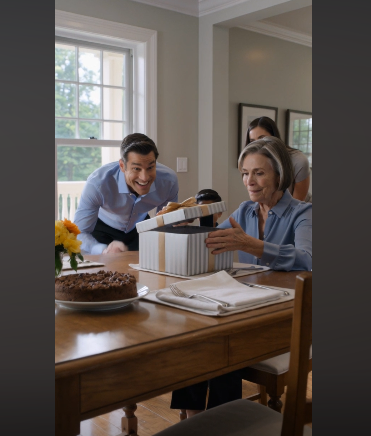
On my sixty eighth birthday, my son handed me a beautifully wrapped box.
When I opened it, there was nothing inside.
Then my son laughed.
My daughter in law laughed.
My sixteen year old granddaughter lifted her phone and started recording.
Even my twelve year old grandson joined in because everyone else was doing it.
My son wiped tears from his eyes and said, “It suits you, Mom.”
I looked at him.
“What does?”
“The box.”
He laughed again.
“Empty.”
My daughter in law Tabitha covered her mouth, delighted with herself.
“An empty box for an empty woman. Perfect.”
For several seconds, I could not move.
I had spent two days cooking their favorite food.
Eggplant lasagna for my son.
Chocolate pecan cake.
A vegetarian salad because I remembered my granddaughter had stopped eating meat.
Chocolate chip cookies because my grandson had loved them when he was little.
I had cut my hair the day before.
Bought a blue blouse because my late husband Frank used to tell me blue made my eyes look brighter.
I had stood at the window since one thirty, afraid they might cancel.
And they had come.
They had actually come.
To laugh at me.
I looked at my granddaughter’s phone.
“Octavia, are you recording this?”
She smiled.
“Come on, Grandma. It’s funny.”
My grandson Fletcher repeated, “Empty Grandma.”
That was when my son finally noticed I was no longer smiling.
“Mom, don’t make this dramatic. It’s just a joke.”
I closed the lid of the box.
Slowly.
Then I stood.
“I think you should leave.”
The laughter stopped.
Tabitha blinked.
“Excuse me?”
“You said you have a meeting.”
I looked at the clock.
“I wouldn’t want you to be late.”
My son reached for my hand.
“Mom.”
I stepped away.
“It was a stupid joke. Fine. We get it.”
“No.”
I picked up the box.
“I get it.”
They expected tears.
Or shouting.
Or the old version of me saying, “It’s all right,” because I was terrified that if I objected, they might visit even less.
Instead, I opened the front door.
“Happy birthday to me.”
My son stared at me.
Then walked out.
Tabitha followed.
Octavia slipped her phone into her pocket.
Fletcher would not look at me.
Just before leaving, my son turned.
“We’ll call this weekend.”
I said, “Don’t.”
Then I closed the door.
My name is Merl Hadley.
For forty years, I taught mathematics at Lakewood High School.
I taught children that numbers did not care about excuses.
An equation either balanced or it did not.
A proof either worked or there was an error somewhere.
People are harder.
We can spend decades looking at something obviously unbalanced and still convince ourselves it is close enough.
I had been doing that with my family for years.
My husband Frank died ten years before that birthday.
Heart attack.
Sudden.
One evening we were discussing whether to visit Maine that summer.
The next morning I was a widow.
Frank had been a civil engineer.
Patient.
Practical.
The sort of man who kept old screws because “you never know.”
He built shelves.
Repaired furniture.
Planted roses.
When our only son Garrett was born, Frank stood beside the hospital bassinet and whispered, “There goes retirement.”
Then he cried.
We adored that boy.
Maybe too much.
Garrett was bright and difficult.
At sixteen he found friends we did not like.
His grades fell.
He smoked marijuana at school once and nearly got suspended.
We did what parents do when fear disguises itself as control.
More tutoring.
Sports.
Curfews.
Conversations.
Arguments.
Second chances.
Eventually he straightened out.
College.
Finance degree.
Good job.
I thought we had made it through the dangerous part.
Then he met Tabitha.
I do not blame Tabitha for everything that happened afterward.
That would make the story simpler than it was.
Garrett was an adult.
He made choices.
But Tabitha understood relationships differently than Frank and I did.
Her family came first.
Always.
Her parents had front row seats at every school performance.
We received invitations when there was room.
Her parents spent holidays with them.
We were offered alternate weekends.
At Fletcher’s christening, she introduced Eleanor and Thomas as “the grandparents.”
Then looked toward Frank and me and said, “And these are Garrett’s parents.”
Frank laughed about it later.
I did not.
“Let him build his own family,” he told me.
“I am his family.”
“I know.”
“Does he?”
Frank kissed my forehead.
“He does. He’s just young.”
Frank always believed time would correct things.
Then he ran out of time.
After his funeral, Garrett was wonderful for several weeks.
He handled paperwork.
Fixed a leaking gutter.
Called every evening.
Then gradually he returned to his own life.
I understood.
At least that is what I kept telling myself.
Last Christmas, I asked whether I could join them for dinner.
Tabitha said, “Of course.”
The words were welcoming.
Everything else was not.
I sat at one end of the table while her parents discussed a cruise they were all taking together.
I had not known about it.
Octavia spent most of dinner on her phone.
Fletcher answered questions with one word.
Garrett looked at his watch six times.
I left early and told myself everyone had simply been tired.
That is what I was good at.
Translating indifference into something less painful.
The morning after my birthday, I found the empty box in the trash.
I pulled it out.
Not because I wanted to keep it.
Because I wanted to understand why it had hurt so much.
It was only cardboard.
What hurt was the planning.
Somebody had bought the box.
Wrapped it.
Added ribbon.
Brought it into my home.
Everyone knew the joke in advance except me.
My humiliation had been a family activity.
I sat at the kitchen table and called Robert Fischer.
He had handled several matters for Frank and later helped me settle the estate.
“Robert Fischer.”
“Robert, it’s Merl Hadley.”
There was a pause.
“Merl. Of course. Is everything all right?”
“No.”
That one word felt wonderful.
For years, every answer had been “fine.”
This time I said no.
“I need to review my estate plan.”
“Is this urgent?”
I looked at the empty box.
“Yes.”
Robert saw me the next morning.
His office had changed since I last visited.
New carpet.
New receptionist.
Same smell of coffee and paper.
Robert himself had more gray in his beard.
He shook my hand and said, “Tell me what happened.”
So I did.
Not only the birthday.
The canceled visits.
Forgotten calls.
The school performances I learned about afterward.
The way Tabitha spoke to me.
The way the grandchildren had learned from their parents that ignoring Grandma carried no cost.
When I finished, Robert was silent for a moment.
Then he said, “And what do you want to do?”
“I want to change my will.”
“All right.”
“I want Garrett removed.”
He studied me carefully.
“Completely?”
“Yes.”
“What about the grandchildren?”
My answer was ready.
Then it stopped in my throat.
Octavia’s phone.
Fletcher laughing.
I wanted to say, “Them too.”
But I had spent forty years teaching teenagers.
If there was one thing I knew, it was that young people could be cruel and still become decent adults.
I said, “I don’t know.”
Robert nodded.
“Good.”
I frowned.
“Why is that good?”
“Because you are angry, Merl.”
“I have a right to be.”
“Absolutely.”
“But?”
“But estate planning is a poor place to stage a punishment.”
That irritated me.
“I am not punishing anyone.”
Robert looked at the empty box I had brought with me.
I had placed it beside my chair.
He said nothing.
I sighed.
“Fine. Part of me wants them to understand what they threw away.”
“That is punishment.”
“Maybe.”
“It is human.”
That helped.
I asked, “What would you suggest?”
He folded his hands.
“First, we decide what you want your money to accomplish. Not whom you want it to hurt.”
That sentence stayed with me.
Frank had left more than Garrett knew.
Much more.
Our house was paid off.
There was an investment portfolio worth a little over two million dollars.
Retirement accounts.
Cash reserves.
And a lakefront parcel Frank had bought before his death.
Garrett believed I had the house and enough savings to live modestly.
He had never asked for details.
Years earlier, I decided not to volunteer them.
At thirty two, he was earning well.
Married.
Building a career.
Frank and I had spent decades helping him.
I wanted to see whether he could stand without knowing a large inheritance might eventually arrive.
I planned to leave almost everything to him anyway.
Then came ten years of increasing distance.
And one empty box.
Robert said, “You can change beneficiaries. You can create charitable gifts. You can establish trusts for the grandchildren. You can sell the lake property if you no longer want it. You can also wait.”
“I don’t want to wait.”
“Then we still do this carefully.”
We did.
Not that day.
Not from anger alone.
I met with Robert twice more.
I met with my financial adviser.
An independent physician documented that I was cognitively healthy because Robert said good records were sensible whenever an older person made a significant estate change after family conflict.
We reviewed every asset.
Every beneficiary designation.
Every account.
It turned out my old will was outdated anyway.
Frank and I had written it when Garrett was younger and the children were small.
I had kept postponing the update.
Loneliness makes paperwork feel strangely unimportant.
Eventually, I made my decisions.
Garrett would not receive my estate outright.
I did not reduce his inheritance to zero simply to create a dramatic ending.
Instead, I created specific charitable gifts substantial enough to matter.
The Lakewood Teachers Foundation.
The public library.
A local animal rescue where I had fostered cats for years.
And the Frank Hadley Memorial Scholarship for students pursuing civil engineering.
I smiled when Robert read that part back to me.
Frank would have complained about having his name on anything.
Which was exactly why I liked it.
For Octavia and Fletcher, I created education trusts managed by an independent trustee.
Tuition.
Training.
Books.
Reasonable living expenses while studying.
Money meant to help them build lives, not reward them for loving me.
Garrett would have no control over those funds.
Neither would Tabitha.
The remainder of my estate would primarily support the scholarship and charitable organizations.
Robert asked, “Does this feel right?”
I thought for a long time.
“Yes.”
“Even if Garrett becomes the most attentive son in America next month?”
“Yes.”
“Good.”
That mattered.
I did not want my money to become a leash.
The lake property was different.
Frank had bought it because he dreamed of building a summer cottage there.
We used to drive out on Sundays with coffee and stand near the water imagining where the deck would go.
After he died, I could not bear to sell it.
I also could not bear to build the cottage without him.
For ten years, it simply sat there carrying a dream no one was living.
I asked Robert, “Would selling it dishonor him?”
He smiled.
“That is not a legal question.”
“I know.”
“What do you think Frank would say?”
I could hear him perfectly.
“Land needs somebody to use it.”
Robert laughed when I told him.
“So use the value.”
I listed the property.
Not secretly.
Not for revenge.
Not below market value because I was desperate to prove something before dinner Sunday.
Proper appraisal.
Qualified broker.
Normal sale.
A developer eventually purchased it for just over one million dollars, subject to the usual closing costs and taxes.
I kept part of the net proceeds invested.
Funded the scholarship.
And began considering something I had not allowed myself to imagine seriously.
Leaving Lakewood.
My friend Dorothy had been saying it for years.
“You don’t have to die in the same town where everyone remembers what you looked like at forty.”
Dorothy was seventy two and treated aging as a competitive sport.
She had three children scattered around the country, seven grandchildren, and more opinions than any reasonable person should store in one body.
Her sister Eleanor lived in Santa Barbara.
When I mentioned I might move, Dorothy stared at me.
Then said, “I’m coming.”
I laughed.
“No, you’re not.”
“Why not?”
“Your house.”
“Sell it.”
“Your children.”
“They own airplanes.”
“Your book club.”
“They’ll survive.”
I realized she was serious.
Six months after my birthday, we flew to California to look around.
Santa Barbara was ridiculous.
Sun.
Ocean.
Flowers everywhere.
People drinking coffee outside in February.
I hated it immediately because I knew I wanted to stay.
I bought a small cottage.
One story.
Two bedrooms.
A terrace garden.
Enough room for guests but not enough for anybody to assume they could move in.
Dorothy found a condo three blocks away.
We began planning the move.
I did not announce any of this to Garrett.
Not because it was a trap.
Because adulthood had finally taught me that not every decision required family approval.
He called occasionally.
Our conversations were short.
“How are you, Mom?”
“Good.”
“Everything okay?”
“Yes.”
“Kids say hi.”
“Tell them hello.”
That was usually it.
Then one evening he said, “Tabitha thinks you’re still angry about your birthday.”
“I am.”
Silence.
“Mom, it was a joke.”
“No.”
“What do you mean, no?”
“I mean calling something a joke doesn’t make it funny.”
He sighed.
“Are we really still doing this?”
I almost returned to the old pattern.
“No, no, it’s fine.”
Instead I said, “Garrett, why did you give me an empty box?”
He was quiet.
“Tabitha thought it would be funny.”
“Did you?”
“At the time.”
“Why?”
Another pause.
“I don’t know.”
“You called me an empty woman.”
“Mom.”
“You said it.”
“I was kidding.”
“Would you say it to your boss?”
“Obviously not.”
“Tabitha’s mother?”
“No.”
“Someone you respected?”
Silence.
There it was.
I said, “I don’t think the problem was the joke.”
“What was it?”
“You knew there was no cost to hurting me.”
He did not answer.
I said good night.
Two months later, just before I moved, Octavia called.
Not Garrett.
Not Tabitha.
My granddaughter.
“Grandma?”
“Hello, sweetheart.”
She sounded nervous.
“Can I ask you something?”
“Of course.”
“Are you really moving to California?”
“Yes.”
“Why?”
Because your family drove me away would have been satisfying.
It also would have made a sixteen year old responsible for adult failures.
So I answered differently.
“Because I want to see what my life looks like somewhere new.”
“Oh.”
“Why?”
“No reason.”
Then, quietly, “I didn’t mean what happened on your birthday.”
I sat down.
“What part?”
“The video.”
“You were recording me.”
“I know.”
“Why?”
She whispered, “Mom said it would be funny.”
There it was again.
No one in that family seemed to have independently developed a sense of humor.
I asked, “Did you think it was funny?”
“At first.”
“And when I started crying?”
“I deleted the video.”
I closed my eyes.
I had not known she saw me cry.
“I should have apologized.”
“Yes.”
“I’m sorry.”
Her voice shook.
I believed she meant it.
That did not mean everything was fixed.
I said, “Thank you.”
“Are you mad at me?”
“Yes.”
She sounded startled.
Adults lie to children too often about forgiveness.
I continued.
“But I love you.”
“Both?”
“Both.”
“Oh.”
“You can love someone and still be hurt by what they did.”
She was quiet.
Then said, “I think I’d like to visit you sometime.”
“If your parents agree, we can talk about that.”
That was our beginning.
I moved to Santa Barbara in October.
The hardest part was leaving the Lakewood house.
Not because Garrett had grown up there.
Because Frank had.
His coffee mug was still in the back of a cabinet.
His handwriting was on the basement wall where he once measured shelves.
The garden bench still leaned slightly to the left because Frank refused to admit he had cut one leg shorter.
I walked room to room.
Touched the walls.
Then stood in our bedroom.
“I loved you here,” I said aloud.
The house answered with silence.
“I can love you somewhere else too.”
I sold that property several months later.
Again, no secret fire sale.
No dramatic surprise.
It took time.
Inspections.
Showings.
Repairs.
Closing.
The proceeds became part of my own retirement assets.
The fact that Garrett might once have expected the house did not make it his.
It was mine.
I was alive.
That distinction turned out to be important.
My first months in California were awkward.
People imagine reinvention as something glamorous.
Mostly it involves finding a new dentist.
Learning which grocery store has decent produce.
Figuring out trash collection.
Getting lost.
Standing in a pharmacy wondering why the layout makes no sense.
Dorothy and I explored.
Joined a library group.
Took watercolor lessons.
Walked near the ocean.
Complained about our knees.
Met people.
One of them was Gordon Parker.
Seventy one.
Widower.
Retired literature professor.
The first time we met, he asked what I had taught.
“Mathematics.”
His face lit up.
“Wonderful.”
Most people said, “I hated math.”
Gordon said, “I have always envied people who can recognize elegance in a proof.”
I liked him immediately.
Not romantically.
At first.
We became friends.
Concerts.
Coffee.
Books.
Walks.
Arguments about whether literature and mathematics were more alike than different.
For ten years after Frank died, I had treated loneliness as loyalty.
Gordon helped me understand those were not the same thing.
Nothing dramatic happened.
No whirlwind marriage.
No declaration that Frank had merely been preparation for my true love.
Frank was my husband.
I still loved him.
Gordon became something new.
There was room for both truths.
Almost a year after I moved, a letter arrived.
Real envelope.
Handwritten address.
From Octavia.
I made tea before opening it.
“Dear Grandma,
I don’t know if you want to hear from me.
I wouldn’t blame you if you don’t.
I’ve been thinking about your birthday a lot.
I watched the video once before I deleted it.
I thought I would laugh again.
I didn’t.
I saw your face when Dad gave you the box.
I had never really looked at you before.
That sounds horrible, but it’s true.
You were just Grandma.
Someone who was always there.
Someone we didn’t think we could lose.”
I stopped reading.
That sentence hurt because it was true far beyond Octavia.
People are careless with whatever they believe is permanent.
I continued.
“Things have been bad here.
Mom and Dad fight all the time.
Dad blames Mom for making him distant from you.
Mom says Dad is blaming her because he doesn’t want to admit he chose it too.
I think Mom is right about that part.
They argued about your money once.
I heard them.
That made me feel sick.
I didn’t know you had money.
I also didn’t know people could care more about an inheritance than whether the person was alive and happy.
I’m graduating this year.
I got into San Diego State.
I want to study psychology.
Maybe that’s predictable considering this family.
I’m sorry for laughing.
I’m sorry for filming you.
I’m sorry I treated you like being old meant your feelings mattered less.
I don’t expect you to forgive me.
I just wanted to tell you the truth.
Love,
Octavia.”
I read it twice.
Then called Dorothy.
She came over.
Read it.
Handed it back.
“Well?”
“Well what?”
“Are you going to answer?”
“Yes.”
“Tonight?”
“No.”
“Good.”
She poured herself tea.
“Make the girl sweat for twenty four hours.”
I laughed.
Then cried.
A week later, I wrote back.
“Dear Octavia,
Thank you for telling the truth without asking me to make it easier for you.
What happened hurt me.
You were old enough to know humiliation was not kind.
You were also sixteen and following the example of adults you trusted.
Both things can be true.
I love you.
That was true before the birthday.
It remained true after.
Love does not mean pretending nothing happened.
It means there may be enough reason to see what happens next.
If you want to visit after graduation, you may.
We will not discuss money.
We will not discuss what you might inherit.
We can discuss college, books, the ocean, your life, mine, and whether anyone in this family can finally learn to bake a decent chocolate pecan cake.
Love,
Grandma.”
Octavia came that summer.
Alone.
The first hour was painfully polite.
Then Dorothy arrived and destroyed the tension by asking, “Are you the one who filmed your grandmother crying?”
Octavia nearly choked.
“Dorothy.”
“What?”
She looked at me.
“Everyone was thinking it.”
By the end of the week, Octavia was helping me in the garden.
She met Gordon.
Went with me to the library.
Asked questions about Frank.
For the first time, she wanted to know who I had been before becoming Grandma.
That mattered.
Garrett took longer.
For nearly two years, our relationship remained a monthly phone call.
Then he visited without Tabitha.
I met him at a café near the beach.
He looked older than I remembered.
Forty four.
Tired.
We hugged awkwardly.
He said, “You look good.”
“So do you.”
“I don’t.”
“No.”
That made him laugh.
We sat.
He stirred coffee he did not drink.
Finally he said, “I owe you an apology.”
I waited.
“Not for the box.”
I raised an eyebrow.
“Well, yes, for the box. But that’s not the whole thing.”
Good.
He continued.
“I spent years treating you like an obligation.”
I felt my throat tighten.
“I told myself I was busy.”
“You were.”
“I told myself you understood.”
“I did.”
“That made it easier.”
“Yes.”
He rubbed his hands together.
“After Dad died, I stopped seeing you as my mother.”
I stared at him.
He looked horrified by his own words.
“That came out wrong.”
“No.”
I shook my head.
“Keep going.”
“I saw you as someone I was responsible for checking on.”
That was exactly it.
“Calls. Holidays. Birthdays. Things I needed to remember.”
“Yes.”
“Tabitha didn’t want you around much, and I let that become convenient.”
I said nothing.
He continued.
“The birthday joke was my idea.”
That surprised me.
“I told everyone it was Tabitha’s.”
“She went along with it.”
“Yes.”
“But it was mine.”
“Why?”
His eyes filled.
“I thought you were boring.”
Honesty can be more painful than cruelty.
I waited.
“I thought you’d become this lonely old woman whose whole life was waiting for us to visit.”
“I had.”
He looked down.
“But instead of wondering why, I despised you for it.”
There it was.
Something clean.
Terrible.
True.
“I am sorry.”
I looked toward the ocean.
“What changed?”
“You left.”
Not the answer I expected.
“I kept thinking you’d come back.”
“To Lakewood?”
“To us.”
He swallowed.
“Then you didn’t.”
“And that taught you something?”
“It taught me you had a life when I wasn’t looking.”
That sentence almost made me smile.
“I should have known that already.”
“Yes.”
He nodded.
“You should have.”
We did not hug dramatically.
I did not say, “I forgive you.”
We ordered lunch.
Talked for two hours.
It was enough.
Tabitha and I never became close.
She sent an apology eventually.
Specific enough that I believed some of it.
She acknowledged treating me as competition.
Acknowledged excluding me from the grandchildren.
Acknowledged the birthday.
I replied politely.
That relationship settled into distance.
Distance can be healthy.
Garrett and Tabitha stayed married, though they entered counseling.
I was almost disappointed.
The revenge version of the story would have been more satisfying if their marriage collapsed.
Real life did something less cinematic.
They tried to repair it.
Sometimes successfully.
Sometimes not.
I stayed out of it.
My estate plan remained unchanged.
That surprised Garrett when I told him.
By then our relationship was improving.
We spoke every week.
He visited.
I met him occasionally in Lakewood or California.
One afternoon he asked, “If we’re okay now, why doesn’t the will change?”
I appreciated the directness.
“Because the will is not a report card.”
He frowned.
“I don’t understand.”
“I changed my estate plan because I decided what I want my money to do.”
I explained the scholarship.
Library.
Teachers Foundation.
The trusts for Octavia and Fletcher.
He listened.
“So I’m still not the beneficiary.”
“Not of most of it.”
He nodded slowly.
Years earlier, he might have become angry.
Now he asked, “Is that what you want?”
“Yes.”
“Then okay.”
That answer meant more to me than any inheritance I could have left him.
Fletcher changed too.
More slowly.
He had been twelve on my birthday.
Old enough to hurt me.
Young enough that the meaning of what he did was still partly borrowed from adults.
At sixteen, he called and said, “Grandma, I barely remember the box.”
“I do.”
“I know.”
Then after a pause, “I’m sorry I laughed.”
“Thank you.”
“Can I ask you something?”
“Yes.”
“Was Grandpa Frank really good at swimming?”
I smiled.
“He was terrible.”
“Dad said you told me he was great.”
“I was trying to make conversation.”
Fletcher laughed.
That became our beginning.
Years passed.
The empty box stayed with me.
I had almost thrown it away after my birthday.
Instead, I packed it.
For a long time, it sat in a closet in Santa Barbara.
Then one afternoon Gordon found it while helping me rearrange storage.
“What is this?”
I told him.
He stared at the box.
Then at me.
“Do you want to keep it?”
I thought.
“No.”
We recycled it.
No ceremony.
No flames.
No speech.
Cardboard into the bin.
That felt exactly right.
My seventy second birthday was very different.
Dorothy organized lunch.
Gordon brought flowers.
Octavia called from graduate school.
Fletcher mailed me a terrible homemade card with a drawing of an empty box overflowing with cupcakes.
Garrett flew in for the weekend.
He handed me a package.
I stared at him.
He immediately raised both hands.
“There’s something inside. I swear.”
Everyone laughed.
This time I did too.
I opened it.
A framed photograph.
Me at twenty nine.
Standing beside the first group of students I ever taught.
Young.
Dark hair.
Chalk dust on my skirt.
I had forgotten the photograph existed.
Garrett said, “I found it in a box in the garage.”
I touched the glass.
“I thought you should have it.”
“Thank you.”
He looked nervous.
Then added, “Octavia helped me choose the frame.”
“Good.”
“Mom?”
“Yes?”
“I’m glad you’re here.”
Four words.
No grand apology.
No money.
No inheritance.
No guilt.
Just presence.
I believed him.
That night, after everyone left, I sat on the terrace with Earl Grey tea.
No sugar.
A little milk.
Exactly the way I had drunk it for decades.
I thought about the birthday when my family gave me nothing and called it a joke.
For a long time, I believed the lesson was that I needed to show them I was not empty.
Sell property.
Change my will.
Move away.
Build a new life.
Prove my value.
I was wrong.
The point was never proving the box was inaccurate.
I did not need evidence that I contained something.
Forty years of students.
A marriage.
A son.
Friendships.
Grief.
Anger.
Mistakes.
Curiosity.
A new city.
A scholarship carrying Frank’s name.
Grandchildren slowly becoming adults.
A man who brought me flowers at seventy two because he liked the way I argued about Shakespeare.
My life had always been full.
The problem was that I had spent too long asking people who barely looked at me to confirm it.
That stopped on my sixty eighth birthday.
Not when I changed my will.
Not when I sold land.
Not when I moved across the country.
It stopped when I stood at my own front door holding an empty box and told my family, “I think you should leave.”
For the first time in years, I chose being alone over being treated as though my presence had no value.
And strangely, that was the choice that made room for people who eventually learned how to stay.
