The morning after our first anniversary, Arthur came h
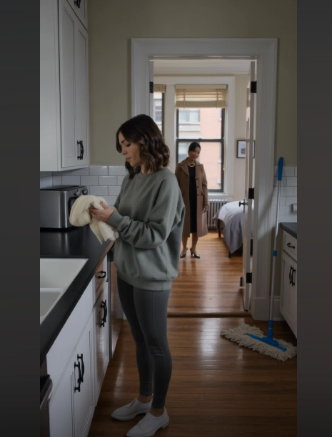
On Our First Anniversary, My Husband Spent The Night With His Ex And Joked That I Was Crying, But When He Came Home To An Empty Apartment, One Quiet Line On The Cake Finally Took His Smile Away And Showed Him I Was Done Waiting
Arthur came home the morning after our first anniversary wearing the same gray suit he had left in the day before, except now the collar was bent, his tie was missing, and another woman’s perfume had settled into the fabric like a confession.
He pushed the apartment door open with the lazy confidence of a man who believed every room in his life would rearrange itself for him. His smile came first. Then his shoes stopped on the bare hardwood.
The sofa was gone. The rug was gone. The wedding photo was gone. The curtains were gone from the tall Brooklyn Heights windows, so the morning light hit the empty room with no mercy at all.
Only the dining table remained.
I sat beside it in my dark blue dress, the one he once told me made me look beautiful. In the center of the table was the anniversary cake I had bought the morning before, its white frosting still smooth, its sugared roses still perfect. The original message on the chocolate plaque said, Thank You For This Year.
Beside it, in my own handwriting, I had added two words.
Goodbye, Stranger.
Arthur looked at the cake first, then at me, then back at the empty room. The joke he had carried home from Allison’s hotel suite slowly drained out of his face.
He had laughed the night before because he thought I was crying.
He had no idea I had already finished waiting.
My name was Catherine Walker, though most people called me Kate, and for almost one full year of marriage I had practiced the art of becoming smaller than I was.
Before Arthur, that would have sounded impossible. I was thirty-two, raised by parents who believed gentleness and strength were not opposites. My mother had been a public school librarian in Connecticut, my father a civil engineer who could repair a stair railing, bake bread, and sit through a hard conversation without trying to win it. In our house, love sounded like someone asking whether you had eaten. It looked like a person noticing when your shoulders were tired.
I moved to New York in my twenties and worked my way into corporate law the hard way. I was not famous, and I was not flashy, but I was good. I read contracts the way other people read weather. I could see what a careless sentence might cost six months later. I had learned to be precise, calm, and useful in rooms where people tried to make panic sound like strategy.
Arthur met me at a client reception downtown. He worked in sales for a large software company, and he had the kind of confidence that filled the space before he entered it. He remembered everyone’s name, laughed easily, and wore expensive shirts with his cuffs rolled up just enough to look relaxed. The first time he talked to me, he asked what I did, then smiled like my answer delighted him.
“A lawyer who knows when not to argue,” he said. “That’s rare.”
I thought it was charming then.
He sent flowers to my office after our second date. He called my mother ma’am. He held doors, carried groceries, and told my father he respected women who built their own lives. When he looked at me across restaurant tables, I felt seen in a way that made me lower my guard.
Looking back, I understood that he liked my competence when it reflected well on him. He liked my calm when it soothed him. He liked my patience when it cost him nothing.
We married in early October at a small inn outside New Haven. Nothing grand, just white flowers, string lights, and our families gathered under a clear autumn sky. Arthur cried during his vows. His mother, Linda, dabbed at her eyes and told every guest that her son had finally chosen “a steady girl.” I decided steady was a compliment. I decided everything was a compliment because I wanted so badly for the day to be clean.
A month later, we moved into a brownstone apartment in Brooklyn Heights. The lease was in my name because my credit was stronger, though Arthur told his friends he had found the place. I did not correct him. I had already learned that small corrections made him sulk.
The apartment had tall windows, warm floors, and a narrow kitchen that overlooked the street. I loved it immediately. On our first night there, we ate takeout on the floor because the furniture had not arrived yet, and Arthur pulled me against his side.
“This place is ours,” he said.
I believed him.
I set the silver cake knife in a kitchen drawer with the wedding gifts, still wrapped in tissue from my aunt. Back then, I imagined taking it out for birthdays, holidays, maybe a child’s first cake one day. I imagined ordinary happiness, the kind that looked boring from the outside because it did not need an audience.
For the first few weeks, I was almost embarrassingly happy. I woke early to make coffee. Arthur liked his eggs soft, his toast dark, his shirts steamed instead of ironed. I learned his preferences because learning the person you loved felt like devotion, not labor.
My own workdays were long. I left before eight, spent hours in conference rooms and on calls, reviewed documents late into the evening, then rode the subway home with my mind still full of clauses and deadlines. Still, I cooked because I liked cooking. I cleaned because a peaceful home mattered to me. I kept flowers in a small vase near the entry because the apartment felt gentler when something living greeted us.
Arthur praised me at first.
“Look at you,” he said one night, coming home to rosemary chicken and potatoes. “My wife does it all.”
I smiled because I did not hear the warning inside the compliment.
By winter, his praise shifted. It stopped sounding grateful and started sounding proprietary. If dinner was late, he said I was disorganized. If I ordered takeout because a deal had kept me at work, he looked around the kitchen and said it was sad how quickly women gave up after marriage. If I mentioned my own fatigue, he laughed softly, as if my job were a hobby I had confused for responsibility.
“You sit in an office reading paper,” he told me once while loosening his tie. “Try carrying a quota for a quarter. Then talk to me about stress.”
I almost explained, again, that my work involved more than paper. I almost told him that three of his largest deals had come through after I helped him spot problems in the contracts he brought home. But I had already seen the way his face changed when I sounded too capable.
So I swallowed the sentence.
That became our rhythm. He expanded. I folded.
The first real pattern began with waiting.
Arthur’s work had always been busy, but after the wedding, late nights became his personality. He missed dinner once, then twice, then often enough that I stopped plating his food until his key turned in the lock. He would text, Running late. Then nothing for hours.
At first, I answered with softness.
No problem. I’ll keep it warm.
Then I learned not to expect an answer.
I ate alone at the dining table while his plate sat covered on the stove. I heard neighbors laughing through the walls. I watched steam fade from food I had seasoned carefully. At eleven or midnight, Arthur would come in smelling of bourbon, cold air, and restaurants where I had not been invited.
“Big client night,” he would say.
I would ask whether he wanted dinner.
He would shrug. “I already ate.”
I became familiar with the humiliation of scraping untouched food into containers at one in the morning. I told myself marriage had seasons. I told myself ambitious people made sacrifices. I told myself that supporting him now would mean a deeper partnership later.
The second pattern was his mother.
Linda Walker wore pearls to grocery stores and disappointment like a fragrance. She lived in Westchester and treated our apartment as if it were an extension of her own hallway. She came by unannounced, carrying opinions in both hands.
The first time, I opened the door in leggings and an old college sweatshirt because I had been cleaning the bathroom.
Linda’s eyes moved from my hair to the mop behind me.
“Oh,” she said. “Arthur works so hard, and this is what he comes home to.”
I laughed awkwardly, thinking she was joking.
She was not.
She inspected baseboards, opened the refrigerator, lifted the lid on a pot of soup, and sighed.
“My son grew up with standards,” she said. “A wife should make a house feel complete.”
“I work full-time too,” I said gently.
She looked at me with pity. “Of course, dear. But some jobs are just jobs.”
When Arthur came home, I expected him to tell her she had been unkind. Instead, he kissed her cheek and listened while she listed my failures like maintenance issues.
Kate leaves laundry folded instead of put away.
Kate keeps too many books near the bed.
Kate works too late for a woman trying to build a family.
Arthur glanced at me, embarrassed not by her behavior but by the possibility that I might defend myself.
“Mom means well,” he said after she left. “Don’t be sensitive.”
Sensitivity became the word he used whenever I noticed pain.
The third pattern was money.
Arthur earned well, and he wanted everyone to know it. He paid for rounds at bars, upgraded airline seats, tipped extravagantly in front of colleagues, and complained about every household expense in private. I earned more than he did, though I had never made a ceremony of it. Before marriage, my savings had been quiet and orderly. After marriage, I deposited a generous amount into our shared account because I believed we were building something together.
Arthur deposited less but spoke as if he funded everything.
“Do you know what this apartment costs,” he said one evening when I asked him to put his dishes in the dishwasher.
“Yes,” I replied. “I pay the rent from the account every month.”
“With money I bring in too,” he snapped. “Don’t split hairs.”
He called my salary “nice extra padding.” He called my career “your little law thing.” When his coworkers came over, he introduced me as “the calm one who keeps me alive,” which sounded affectionate until he added, “She has no idea how brutal real business gets.”
I smiled in front of them. Later, I stood in the kitchen with my hands in soapy water and wondered when I had become a supporting character in my own home.
The fourth pattern was Arthur’s ex.
Allison Monroe existed first as a name I heard too often.
They had dated before me, dramatically and loudly, according to Arthur. He described her as “a firecracker” and “too much chaos for marriage,” but always with a private smile that made the warning sound like admiration. I did not want to be insecure. I had promised myself I would not punish a man for having a past.
Then her name began appearing in the present.
A restaurant receipt from a place in the West Village where Arthur claimed he had met clients.
A new cologne I had not bought him.
A Sunday afternoon “urgent office meeting” that left him returning home cheerful and freshly showered.
A slip of the tongue after midnight when he looked at the tea I had made and said, “Allison would never drink something that plain.”
He corrected himself immediately.
“I said anyone,” he muttered.
I looked down at the cup so he would not see my face.
That night, I lay awake beside him and listened to his breathing. Marriage had made me skilled at silence, but silence had not made me blind.
The fifth pattern was how he turned every wound into my flaw.
If I asked where he had been, I was clingy.
If I asked why he had not called, I was needy.
If I looked hurt, I was dramatic.
If I said nothing, I was cold.
Once, I found a receipt from a Fifth Avenue jewelry store in the pocket of a suit jacket he had asked me to take to the cleaner. It was dated on a Sunday when he had supposedly been in the office handling a client emergency. The purchase was diamond earrings, far more expensive than anything he had ever bought me.
I stood in the bedroom holding the receipt while Arthur brushed his teeth in the bathroom.
For a moment, I saw two possible futures. In one, I marched into the bathroom, demanded the truth, and gave him a chance to rearrange facts into a trap. In the other, I put the receipt back exactly where I found it and paid attention.
I chose the second future.
Arthur came out wiping his mouth with a towel.
“Something wrong,” he said.
I folded his jacket over my arm. “No.”
He studied me for a second, decided I was still harmless, and walked away.
That was the night my hope changed shape. It did not die loudly. It simply stopped standing at the door with its coat on.
I began keeping a private record, not because I wanted a dramatic showdown, but because I needed proof for myself. Not proof to show the world. Proof that I was not inventing my own unhappiness. I wrote down what happened, how I felt, what he said, and what I did afterward. I had spent months letting him revise reality in real time. On paper, the pattern stopped moving.
I also began protecting my practical life.
I redirected part of my pay into an account only I used. I moved sentimental things to my parents’ house little by little. A framed photo from college. My grandmother’s quilt. My first-edition books. A ceramic bowl my mother had given me. Arthur did not notice because Arthur rarely noticed anything that was not already serving him.
I spoke with a colleague I trusted, not about revenge, but about leaving cleanly. She was older, divorced, and allergic to melodrama.
“Quiet is not weakness,” she told me over coffee. “Sometimes quiet is how you keep the steering wheel.”
I held on to that.
Three months before our anniversary, Arthur came home after two in the morning, drunk enough to be cruel but sober enough to aim.
I had waited on the sofa with a blanket over my knees, a plate in the oven, and a headache behind my eyes. When he stumbled in, I could smell perfume before I could see his face.
“Welcome home,” I said automatically.
He looked around as if disappointed the apartment had not applauded.
“Food,” he said.
I went to the kitchen.
He followed me, leaning in the doorway while I heated stew.
“You know what your problem is,” he said.
I did not answer.
“You make everything feel like homework. Other women know how to be fun.”
Other women.
The phrase landed between us with the weight of a name.
I set the bowl on the counter.
“I need you to be honest with me,” I said. “If there is someone else, I need you to say it.”
Arthur laughed. Not loudly. Worse. He laughed as if I were a child mispronouncing a word.
“Someone else,” he repeated. “You really think you’re in a position to interrogate me.”
“I’m your wife.”
“And I’m the one keeping this life moving.”
The old me would have explained the rent, the groceries, the quiet work I did on his contracts after he tossed them to me like chores. The old me would have wanted him to understand.
That night, I only watched him.
His eyes narrowed.
“You have a comfortable life,” he said. “Don’t make it ugly by pretending you’d survive better without me.”
There it was. The pressure point under every insult. He believed I stayed because I had no other place to stand.
I looked at the bowl of stew cooling between us and felt something inside me settle.
“I hear you,” I said.
He mistook that for surrender.
After that night, I stopped asking for emotional truth from a man who profited from my confusion. I asked only for practical clarity from myself.
By late summer, I had an exit plan.
Not dramatic. Not cruel. Just complete.
The apartment lease could be ended with proper notice because it was in my name. The furniture I had bought before and after the wedding could be moved. The shared account could be separated by contribution. My personal documents could be secured. The divorce petition could be prepared. I could take time off, coordinate movers, and make sure Arthur had no reason to claim I had acted recklessly.
I knew people liked to imagine leaving as a slammed door. In reality, leaving was a spreadsheet. Leaving was address changes, inventory lists, passwords, storage units, and the steady discipline of not warning someone who would use the warning to block the door.
I gave Arthur chances anyway.
That was the part I later had to forgive myself for. Not because chances were foolish, but because I kept offering them long after he had shown me what he did with them.
Two weeks before our anniversary, I found him in the bathroom mirror adjusting his hair for another “client dinner.” His phone buzzed on the sink. The screen lit up just long enough for me to see Allison’s name and the words, Can’t wait for our suite.
He snatched the phone up.
I had not moved.
He stared at me as if daring me to react.
I picked lint from the sleeve of his jacket.
“Your collar is folded,” I said.
His face relaxed. He decided, again, that I was too meek to be dangerous.
At dinner the next night, I made his favorite beef bourguignon. It had taken hours, and he ate it while scrolling his phone.
“Our anniversary is next Friday,” I said.
“Mmm.”
“I’d like us to have dinner here. Just us.”
He looked up then, not tenderly but with calculation. I recognized the expression because I had seen it in negotiations. He was measuring what promise would cost him.
“Sure,” he said. “I’ll try to get home early.”
“Please don’t just try,” I said softly. “I need this to matter.”
He leaned back in his chair.
“Kate, don’t turn a nice thing into pressure.”
“I’m not pressuring you.”
“You are. You do that sad quiet thing and make me feel like the bad guy.”
I folded my napkin in my lap.
“Then let’s make it simple. Come home for dinner on our anniversary.”
He smiled with the patience of someone agreeing to humor a difficult child.
“Fine. I’ll be here.”
That was the promise.
I did not tell him it was also the limit.
On the Monday before our anniversary, Linda came by without calling. I was home because I had taken a personal day to pack. Three sealed boxes sat near the hall closet, labeled with my mother’s address. When Linda’s voice came through the intercom, my body reacted before my mind did. My hands went cold.
I slid the boxes behind the bedroom door, pulled a throw blanket over one that still showed, and opened the apartment with a smile I could feel stretching my face.
“Catherine,” Linda said, stepping past me. “You look tired.”
“Good morning, Linda.”
“Tired wives make tired husbands.”
She carried a bakery bag, though not for us. She set it on the counter and announced she had brought scones for Arthur because “men need comfort when their homes become tense.”
I almost laughed. Instead, I made tea.
For two hours, she moved through my apartment naming my failures. Dust on a lamp. Too many files on my desk. Not enough color in the bedroom. A woman my age should be planning children, not burying herself in office work. Arthur needed admiration. Arthur needed peace. Arthur needed a wife who understood that men strayed emotionally when they were underappreciated.
That last sentence was not an accident.
I looked at her over the rim of my cup.
“Has Arthur told you he feels underappreciated.”
She blinked, then smiled.
“A mother knows.”
A mother also trains a son in what he is allowed to demand.
When she finally left, I locked the door and leaned my forehead against it. My hands trembled. Not from fear of Linda exactly, but from the close call. If she had opened the bedroom door, she would have seen the boxes. If she had called Arthur, he might have searched the apartment that night. Months of planning could have turned into chaos.
That was when I understood something important. My escape could not depend on Arthur becoming decent. It had to survive him remaining exactly who he was.
That evening, he came home early for once.
I knew immediately that he wanted something. His cheer was too bright, his kiss on my cheek too performative.
“Kate,” he said while I set dinner on the table. “We need to talk finances.”
I kept my face neutral. “All right.”
He sat, but he did not touch his fork.
“I’ve been thinking. Since I’m the head of the household, it makes sense for me to manage all the accounts.”
There was the word. Manage. A soft word for control.
“We already have a budget system,” I said.
“I’m not talking about your little household spreadsheet. I’m talking about everything. Your savings, your cards, the wedding money from your parents. Put it all where I can oversee it.”
My pulse slowed in that strange way it did when danger became practical.
“That money is in accounts connected to my income and my family gifts.”
“And now you’re married.”
“I am aware.”
His hand hit the table hard enough to make the water glasses jump.
“Do not get smart with me.”
I looked at the wine stain trembling in the bowl of his glass and thought of every woman who had been told calmness was disrespect.
He lowered his voice.
“I need access by Friday.”
By Friday. Our anniversary. The night he had promised to come home.
I knew then that Allison’s suite was not just a suspicion. It was already arranged. He wanted my savings because another woman’s evening had outgrown his credit limit.
The knowledge should have burned. Instead, it clarified.
“I can’t move the funds until Friday,” I said. “Some of it is tied up until then.”
His anger paused.
“Friday.”
“Yes.”
“All of it.”
I nodded. “Everything will be handled Friday.”
Arthur smiled. He believed he had won because I had learned to let him mistake strategy for obedience.
“Good,” he said. “That’s my girl.”
That phrase should have made me feel loved. It made me feel like property with a pulse.
The next few days sharpened around me.
At work, I wrapped up matters, handed off client files, and arranged to take leave under the vague phrase “family transition.” I did not resign from my life. I simply made room to survive it. My managing partner, Richard, called me into his office the Wednesday before our anniversary and closed the door.
“I’m not asking for details,” he said, “but I know the look of someone carrying two full-time jobs in one body.”
I stared at him, too tired to pretend.
“I’m leaving my marriage.”
He nodded once, with the simple respect of a person who did not require a performance of suffering.
“Take the time you need. We’ll cover your matters.”
“I don’t want this to affect my work.”
“Kate,” he said gently, “you have been doing excellent work while your life was actively on fire. Let us hold one bucket.”
That almost broke me.
Not Arthur’s cruelty. Not Linda’s insults. Kindness. Kindness reached places I had protected badly.
On Thursday night, Arthur threw cash at me.
He had come home loud, smelling of whiskey, wearing the grin he used when he wanted to make himself feel tall. I was folding towels in the living room. He pulled several hundred-dollar bills from his wallet and tossed them onto the coffee table, where they fanned out like an insult.
“Buy something decent for tomorrow,” he said. “If I actually make it home early, I don’t want to look at those tired work clothes.”
I picked up the bills slowly.
“Thank you.”
He laughed. “See. You can be pleasant.”
I put the money in a drawer after he went to bed. Not because I needed it. Because someday, when I doubted the ugliness of that moment, I wanted to remember the weight of bills thrown like scraps.
The morning of our anniversary dawned clear and cold. Sunlight slipped between the curtains and made bright lines across the bedroom floor. Arthur stood before the mirror knotting his tie, humming.
He was excited. Not nervous. Not guilty. Excited.
I watched him from the doorway wearing my robe, my hair still damp from the shower.
“Dinner at seven,” I said.
He met my eyes in the mirror.
“I’ll try.”
The word returned like a slap.
“You promised.”
He sighed. “Kate, don’t start the day with drama.”
“I’m not starting drama.”
“Then smile.”
So I smiled.
That was the last smile he received from the wife he thought he had trained.
After he left, the apartment became very still. I washed his breakfast plate. I dried the mug. I wiped the counter. These were ordinary movements, but that morning they felt ceremonial, like I was gently closing drawers in a room I would never enter again.
Then I began.
The movers arrived at ten. They were efficient, polite, and careful. I had labeled everything. Furniture I owned. Boxes for storage. Boxes for my parents. Items Arthur had bought before marriage were set aside in the bedroom closet for him. I was leaving him what was clearly his, though far less than he imagined. The apartment he liked to call his kingdom had been built mostly from my quiet income and my family’s wedding gifts.
The crew leader, Marcus, looked around halfway through the job.
“Ma’am,” he said, “you really do mean everything.”
“Yes,” I said. “Everything except the dining table.”
He did not ask questions. Good movers in New York had probably seen the entire range of human endings.
By noon, the sofa was gone. By one, the bookshelves were gone. By two, the bedroom looked like a staged rental waiting for strangers. The echo grew with every removed object. It should have made me sad. Instead, it made the truth visible.
This had never been Arthur’s castle.
It had been a room I kept warm for someone who treated warmth as proof of his own importance.
At three, I went to the bakery in SoHo where I had placed the anniversary order. The line ran out the door, but I stayed. People around me bought birthday cakes and pastries in pink boxes. A father held his daughter’s hand while she chose cupcakes. Two women behind me debated whether a lemon tart counted as dinner.
Life continued around heartbreak with almost rude confidence.
When the baker placed my small white cake on the counter, I stared at the chocolate plaque.
Thank You For This Year.
I had chosen those words when some stubborn part of me still wanted to honor the year despite its damage. Gratitude did not mean approval. It meant I had learned something I would not unlearn.
I carried the cake home on the subway like a fragile secret.
At five, the apartment was almost empty. The dining table stood alone in the living room because I had asked for it to be left until last. Two chairs remained for the moment, one where I sat, one across from me. The cake waited in the center. Beside it was the pot of beef bourguignon I had cooked the night before, now cooling under its lid.
I put on the dark blue dress.
That dress deserved a different memory. I had worn it on our third date, when Arthur took me to a little French place in the West Village and said, “That color makes you look like somebody in a movie.” I had blushed then. I had believed admiration was intimacy. Now I zipped it up slowly and looked at myself in the mirror propped against the wall before the movers carried it out.
I did not look like a movie. I looked like a woman at the end of a very long hallway, finally reaching the door.
At six-thirty, I set the table. One plate. One glass. One folded napkin. One cake.
At seven, Arthur did not come home.
I did not text.
At seven-thirty, the sky outside went violet over Manhattan.
At eight, I lit the candles on the cake, then blew them out because I realized I was no longer celebrating a marriage. I was marking a release.
At eight-fifteen, my phone rang.
Arthur’s name appeared on the screen.
For one wild second, I thought he might be calling to apologize, to say he had been delayed, to say he was on his way. Hope is humiliating that way. It rises even when you have already packed its belongings.
I answered.
There was rustling, music, a woman laughing. Arthur had not meant to call me. Or maybe he had answered without realizing. Either way, for eleven seconds, I heard the truth breathe.
“Forget about her,” Arthur said, his voice loose and pleased. “She’s used to waiting for me alone.”
Allison laughed.
Arthur continued, “My wife is probably crying right now.”
The call ended.
I stood in the empty living room holding the phone to my ear after silence replaced him.
There are moments when pain becomes too complete for tears. A tear requires some part of you to still be asking why. I was done asking. The answer had called me by accident.
My mother texted from downstairs.
We are nearby whenever you are ready.
I typed back, Not yet.
I placed the phone face down on the table. I went to the kitchen, uncapped a black food-safe marker I had bought for labeling cake boxes, and returned to the dessert.
My hand did not shake.
Beside Thank You For This Year, I wrote Goodbye, Stranger.
The words looked small on the white chocolate plaque. Almost polite. That was why they worked. They did not scream. They did not accuse. They did not beg him to understand.
They simply removed him from the place he had occupied in my heart.
The movers returned at nine for the last load. They took the second chair, the mirror, and the final boxes. Marcus paused near the table.
“You sure you want to stay here alone, ma’am.”
“I won’t be alone for long.”
He looked as if he understood enough not to ask the rest.
At ten, I called the building office and confirmed the lease termination for the next day. I arranged to surrender the keys after Arthur had seen the apartment, because I wanted no confusion, no stories about me vanishing in the night with his property. The superintendent agreed to be available in the morning if needed.
At eleven, I sat down at the only chair left.
The silver cake knife lay to the right of the cake, catching the city light. I had polished it that afternoon though no one would use it. It looked almost ceremonial there, a quiet witness to the last table I would ever set for Arthur.
Past midnight, the apartment grew cold. Without the rug and curtains, every sound traveled. A car passed outside. A pipe clicked in the wall. My own breathing seemed too loud.
I thought I would replay the good memories and fall apart. Instead, the bad ones came, orderly and clear.
Arthur tossing his socks beside the hamper and telling me men did not bend for chores.
Arthur accepting praise from his boss for contract language I had fixed at one in the morning.
Arthur’s mother standing in my kitchen, saying a wife should know how to keep a man from wandering.
Arthur looking at the dinner I had cooked and saying I made everything feel dull.
Arthur’s laugh through the phone.
She’s used to waiting for me alone.
That sentence did the work anger could not. It took the last soft excuse I had made for him and snapped it cleanly in half.
At one in the morning, I took off my shoes and rested my feet on the bare floor. I could have left then. My parents were still nearby. My bags were already downstairs in their SUV. But I stayed because I needed to meet the morning as myself, not as a ghost slipping out before sunrise.
At three, I dozed with my coat over my shoulders.
At six-thirty, pale light gathered at the windows.
At eight-sixteen, the elevator dinged.
I knew his walk. Even through the door, I could hear arrogance in the rhythm. Fast at first, then slower as he reached our hallway, rehearsing irritation. Arthur liked entering rooms already offended. It gave him somewhere to stand.
His key slid into the lock. I had not changed it yet.
The door opened.
He stepped inside.
For half a second, he did not understand what he was seeing. His eyes went to the empty entry wall where our coat hooks had been. Then to the bare living room. Then to the table. Then to me.
He laughed once, sharp and fake.
“What is this.”
I stood.
His gaze moved down my dress, and something smug returned to his face.
“You really did wait all night.”
That was the first wrong detail in the morning. He still thought waiting meant wanting.
I said nothing.
He walked farther into the apartment, shoes loud on the uncovered floor.
“Where is the sofa.”
I folded my hands in front of me.
“Moved.”
His smile twitched.
“Moved where.”
“To where my things are going.”
He looked toward the bedroom and strode past me. I heard closet doors slide open, then slam. He came back paler.
“My suits.”
“The suits you owned before the marriage are in the garment bags by the entry. The others were purchased on my card. They have been packed with my property.”
He stared at me as if I had begun speaking another language.
“You packed my clothes.”
“I packed what belonged to me. I left what belonged to you.”
His face reddened.
“Don’t play lawyer with me in my own house.”
“It is not your house, Arthur. It is an apartment leased in my name, paid from an account funded mostly by my income, and scheduled for surrender today.”
The words landed one by one. I watched him try to reject them, but there was nothing convenient to grab. The walls were bare. The room did not support his version of himself anymore.
He pointed toward the kitchen.
“The money. You were supposed to withdraw the money.”
“I moved my money.”
“Our money.”
“My salary. My savings. My family’s gifts. The account history is clear.”
“You sneaky little—”
I lifted one hand.
“No.”
The word surprised both of us.
For a year, I had softened every boundary so he would not have to feel its shape. That morning, the boundary was plain.
His mouth closed.
In the silence, his eyes found the cake.
At first, he saw only the frosting, the sugared roses, the neat little plaque. Then he leaned closer. I watched his lips move around the original message.
Thank You For This Year.
His expression shifted when he saw the words I had added.
Goodbye, Stranger.
The room changed then.
Not loudly. Not like a movie. No thunder. No music. Just the thin sound of Arthur breathing in and failing to turn that breath into a joke.
He looked back at me.
“That’s supposed to hurt me.”
“It was not written for pain.”
“Then what is it.”
“A correction.”
He swallowed.
I stepped to the table and rested my fingertips beside the cake.
“You thought I was crying because you still believed my life was arranged around whether you came home. It was, for too long. I waited for you to become kind again. I waited for you to remember I was a person. I waited for you to choose our marriage with the same confidence you used to dismiss it.”
He glanced toward the door, perhaps hoping someone would interrupt, rescue him, restore the room.
No one did.
“I heard you last night,” I said.
Color drained from his face.
“I heard you tell Allison I was used to waiting for you alone.”
His jaw worked.
“I was drunk.”
“You were honest.”
“That call meant nothing.”
“It meant enough.”
He laughed again, but this time there was no force behind it.
“So what. You emptied the apartment because your feelings got hurt.”
“No. I emptied the apartment because my life got clear.”
His eyes flashed.
“You are my wife.”
“I was.”
He stepped toward me, and for the first time in our marriage, I did not move backward.
“You don’t get to end this because you’re embarrassed,” he said.
“I did not end this because I was embarrassed. I ended this because you were cruel, unfaithful, dismissive, and certain I would absorb it forever.”
His hand cut through the air.
“Every marriage has problems.”
“Yes. And every person has a line.”
He stared at me for a long second. Then he tried another door, the one he always used after anger failed.
His voice softened.
“Kate. Come on. You’re upset. I can see that. We’ll talk. We’ll get breakfast. We don’t have to make this dramatic.”
It was almost impressive, how quickly he could become reasonable when consequences entered the room.
I looked at the man I had loved. The man who had once brought flowers to my office. The man who had cried during vows he later treated like theater. The man who had taught me that a promise without respect was just sound.
“I filed the petition yesterday,” I said. “You will receive everything through the proper channels. I am not discussing details with you alone.”
His softness vanished.
“You filed.”
“Yes.”
“You planned this.”
“I prepared for what you kept choosing.”
He looked around again, and this time I saw the room reach him fully. Not as an inconvenience. As a fact. There was no couch for him to collapse onto, no television to distract him, no warm kitchen organized around his hunger, no closet of clothes arranged for his image. There was only the table, the cake, the line, and the woman he had underestimated.
He pulled out the remaining chair and sat down heavily, as if his knees had forgotten their job.
“You can’t just leave me with nothing,” he said.
I almost answered with a list. I almost named the coats in garment bags, the personal account he still had, the mother who would take him in, the job he could return to if he stopped blaming other people. But I realized he did not mean nothing materially.
He meant no wife waiting to absorb the fall.
I picked up my coat from the back of the chair.
“You have exactly what you protected,” I said.
His eyes lifted.
“What does that mean.”
“It means you protected your pride. You protected your freedom to lie. You protected your right to laugh at me. You did not protect this marriage.”
The superintendent knocked once and opened the door a few inches.
“Ms. Walker,” he said carefully. “Your parents are downstairs.”
Arthur spun toward him, mortified to be witnessed in a bare room.
“Get out,” he snapped.
The superintendent looked at me, not him.
“Everything all right.”
“Yes,” I said. “Thank you.”
That small exchange cut Arthur more deeply than I expected. A man he had barely noticed had instinctively looked to me for permission in the room Arthur still called his own.
Arthur stood so fast the chair scraped.
“Kate, do not walk out that door.”
I put my coat on.
He reached for my wrist.
I stepped back before he touched me.
“No.”
There it was again. Simple. Unraised. Final.
His hand hung in the air between us, useless.
For a moment, I saw panic in him. Real panic. Not love. Not remorse. The panic of a person who had pushed against a wall for years and suddenly realized the wall was a door closing from the other side.
“You’ll regret this,” he said, but his voice shook.
I looked at the cake one last time.
“I already regret enough.”
Then I picked up my bag.
As I passed him, he whispered my name.
Not Kate the wife. Not Catherine the professional. Just Kate, small and desperate, as if the right tone could pull me back into the old script.
I paused at the doorway.
“The only thing you were right about,” I said, “was that I was used to waiting.”
He held his breath.
“So I stopped.”
I walked out before he could turn my sentence into something he could fight.
In the hallway, my father stood by the elevator with his hands clasped in front of him. My mother was beside him, crying silently, not because she wanted me to stay but because she had watched me disappear inside a marriage and was finally seeing me return.
My father did not ask if I was sure. He only held out his hand.
I took it.
The elevator doors closed on Arthur’s voice calling from the apartment, then on the echo of the empty room, then on the year I had given away one compromise at a time.
Outside, the October air felt almost painfully clean.
I expected to collapse once I reached the SUV. I expected grief to ambush me, or guilt, or the old reflex to worry whether Arthur had eaten, whether he knew where his work shoes were, whether he would be late for a meeting because I had not set the coffee machine.
Instead, I sat in the back seat between my parents and felt my body realize I was safe before my mind did. My shoulders dropped. My jaw unclenched. My hands opened on my lap.
My mother turned around from the passenger seat and gave me a tissue.
“You don’t have to talk,” she said.
That kindness again. The dangerous kind. The kind that did not demand a performance.
I cried then, but not the way Arthur imagined. I did not cry over losing him. I cried because I had let myself live so long without hearing my own needs spoken kindly. I cried because part of me had believed endurance was proof of love, and another part had known all along that love should not require me to vanish.
We spent the next few days at my parents’ house in Connecticut. I slept in my old bedroom under a quilt my grandmother had sewn. The room still had a shelf of books from college and a small dent in the desk where I had once dropped a lamp. At thirty-two, I thought returning there would feel like failure. It felt like oxygen.
Arthur called constantly. I did not answer. He texted apologies, then accusations, then apologies again.
You embarrassed me.
I was confused.
Allison meant nothing.
You took everything.
You always overreact.
Please talk to me.
I read none of them after the first day. My attorney handled communication because I did not trust my heart not to respond to familiar pain. That was another lesson. Boundaries did not become less real because they needed help standing.
Linda called my mother on the third day.
My mother put the phone on speaker only long enough for me to hear Linda’s opening sentence.
“Your daughter has humiliated my son.”
My mother, who had spent my entire marriage trying to respect my privacy, finally let her librarian voice turn to steel.
“My daughter survived your son.”
Then she ended the call.
I stared at her.
She shrugged. “I have waited a year to say one sentence.”
That made me laugh for the first time in days.
Practical consequences unfolded, but not like thunderbolts from heaven. Arthur was not destroyed by a single grand punishment. He was inconvenienced by reality.
The building would not let him stay because he was not on the lease. He spent a week in a hotel, then moved into Linda’s guest room. The credit cards he thought were ours were reissued separately. The account he thought he controlled no longer padded his spending. The bills he had ignored became his own.
At work, his performance stumbled. For months, he had handed me contracts under the casual phrase, “Just check this for typos.” I had done more than check typos. I had caught risky language, fixed ambiguous payment terms, and flagged clauses that would have embarrassed him. He had believed my help was clerical because believing that protected his ego.
Without me, mistakes reached his boss.
I heard this through mutual acquaintances, not because I asked but because New York professional circles are smaller than pride imagines. Arthur lost a major client after promising terms his company could not support. He was not fired immediately. Life was not that theatrical. But he was put under review, and the colleagues who had once laughed at his charm became less patient when charm cost them work.
Allison disappeared from his life quickly. That also did not surprise me. Their bond had thrived in expensive rooms funded by someone else’s stability. Once the hotel bills and dinners became his alone, romance apparently became less poetic.
I did not celebrate any of it.
For a while, that confused people.
A college friend took me to lunch and asked whether I felt satisfied.
“I feel free,” I said.
“That’s better.”
“It is quieter.”
She nodded. “Quiet freedom is still freedom.”
The divorce process was painful mostly because it required translating intimacy into documents. Dates. Accounts. Property. Contributions. Communications. The law had a way of making heartbreak sound like inventory. I was grateful for it and exhausted by it.
Arthur resisted at first, then discovered bluster worked poorly when every practical fact was organized. The lease. The account records. The property receipts. His own income. My own income. The separation became, in the end, less about punishment than proportion. He kept what was his. I kept what was mine. The marriage itself, the invisible thing we had both promised to protect, had already been spent.
The first time I returned to work, I wore a cream blouse, black trousers, and the diamond earrings I bought myself after the temporary orders were settled. I had walked into the Fifth Avenue jewelry store alone. For months, the memory of that receipt in Arthur’s jacket had sat under my skin. Diamond earrings for Allison. Nothing for my birthday but an excuse.
I had expected buying earrings for myself to feel petty.
It felt holy.
The saleswoman asked whether it was for a special occasion.
“Yes,” I said. “I’m becoming visible again.”
She smiled as if she understood enough.
Back at the office, Richard welcomed me with a stack of work and no pity. That was exactly what I needed. I did not want to be treated like glass. I wanted to be treated like a woman who had cracked a life open and was still capable of doing excellent work.
I worked steadily. I went to therapy on Thursdays. I learned how often I apologized before saying what I needed. I learned how my body braced when a door opened too quickly. I learned that missing the good version of someone did not mean the harmful version should be invited back.
Grief arrived in strange places.
The grocery aisle where I used to buy Arthur’s preferred coffee.
The French wine section where I no longer needed to choose Bordeaux because someone else liked it.
A Sunday afternoon with nothing to clean except my own small apartment.
I moved into a bright one-bedroom near Prospect Heights after the divorce was final. It had less space than the brownstone apartment, fewer built-ins, and a kitchen where only one person could stand comfortably. I loved it fiercely.
Every object in it had permission to be there.
I bought a small round table instead of a long rectangular one. I hung art I liked without wondering whether Arthur would call it too feminine. I kept books in the living room and shoes by the door when I was tired. I cooked elaborate meals for myself and simple meals for myself and sometimes no meal at all because freedom included cereal at ten at night.
One Saturday, while unpacking the last box from storage, I found the wedding gifts I had kept. Some I donated. Some I gave to friends. Some I held for a long time before deciding.
I wrapped the silver cake knife in a towel and placed it in my new kitchen drawer. I did not keep it because I wanted to remember Arthur. I kept it because not every object from a painful time belonged to pain. Some things deserved to be reclaimed by the hand that survived.
Six months after that empty morning, my mother came to visit. She brought tulips and a bag of peaches from a market near her house. We cooked together in my tiny kitchen, bumping elbows and laughing every time one of us had to turn sideways to open a drawer.
“You look different,” she said while slicing fruit.
“Better different or strange different.”
She gave me a look.
“Alive different.”
I leaned against the counter and let that word settle.
Alive.
For so long, I had mistaken endurance for life. I had measured my days by whether Arthur came home angry, whether Linda approved, whether dinner was good enough, whether my silence could prevent a storm. Peace had seemed like the absence of his irritation. Love had seemed like keeping myself useful.
Now peace looked like morning light on my own floor. It sounded like my phone not buzzing with demands. It tasted like coffee brewed exactly how I liked it. It felt like sleeping diagonally in a bed no one had made colder with contempt.
Arthur sent one final letter after the divorce.
Not a legal document. A handwritten note mailed to my office because he did not have my home address. I almost returned it unread. Then I decided reading it would not undo me.
The letter was five pages long. He wrote that he had been foolish. He wrote that Allison had meant nothing. He wrote that his mother had influenced him. He wrote that work stress had made him someone he did not recognize. He wrote that he missed my cooking, my calm, the apartment, the way I had believed in him.
Near the end, he wrote, I keep thinking about the cake.
I sat at my desk for a long time after that.
Not because the letter moved me back toward him. It did not. It saddened me in a distant way, like seeing a boarded-up storefront where a favorite shop once stood. He still missed what I had provided more clearly than who I had been. Even his regret circled his loss.
I folded the letter and placed it in a file with the final divorce decree. Then I washed my hands, returned to my office, and joined a call about a merger that had nothing to do with my heart.
That evening, I walked home under a soft rain. New York glowed in the wet pavement. Couples passed beneath umbrellas. Delivery bikes hissed through puddles. Somewhere, someone was probably waiting at a table for someone who would not come.
I wished I could reach every version of myself who had sat in silence and tell her the truth. Not harshly. Not with shame. Gently.
The fact that you can endure more does not mean you should.
The fact that someone expects your patience does not make them worthy of it.
The fact that you waited does not mean you have to keep waiting.
On the first anniversary of the day I left, I did not throw a party. I did not make a speech. I did not post a dramatic caption or send Arthur a message. I invited my parents and three close friends to my apartment. I made beef bourguignon again, not because it had been his favorite, but because I had learned the recipe with my own hands and I refused to surrender every beautiful thing to a bad memory.
We ate at my little round table with mismatched chairs. My father brought bread. My mother arranged flowers in a blue vase. My friends teased me for making too much food, then took leftovers home in containers.
For dessert, I bought a small cake from the same SoHo bakery.
The baker recognized me, or maybe I imagined she did. This time, the plaque said, Welcome Home, Kate.
When I placed it on the table, everyone grew quiet for a second. Not sad quiet. Reverent quiet. The kind that makes room for what words cannot hold.
My mother squeezed my hand.
I looked around at the faces of people who did not need me diminished in order to love me.
Then I cut the cake.
For years after, people would ask me when I knew my marriage was over. They expected me to say the affair. Or the receipt. Or the accidental phone call. Those were important, yes. They were facts. But the end had begun much earlier, in every small moment when Arthur treated my patience as permission.
The anniversary only showed me the pattern in its clearest shape.
A husband laughing in a hotel room.
A wife in a blue dress sitting in an empty apartment.
A cake on a table with one quiet line.
A door finally opening outward.
I did not become cruel that day. I became honest. And honesty, after a long season of pretending, can look merciless to the person who benefited from the lie.
Arthur had thought the worst thing I could do was cry.
He was wrong.
The worst thing I could do, for him, was calmly understand.
What would you have done when the person who counted on your silence finally had to face what your silence had built?
