The night before our wedding, my fiancé told me he had chosen someone from hi
On Our Wedding Eve, My Fiancé Married His First Love, Then Called Me 999 Times When His Grandfather Needed The Surgeon He Had Treated Like An Afterthought, And One Quiet Line In The Hospital Made Him Finally Understand My Silence
The first thing I noticed in the photo was not Lexi’s white sundress.
It was Carter’s hand.
His fingers were wrapped around hers outside the Manhattan City Clerk’s office, loose but familiar, the way a person holds something he has reached for a thousand times before. He wore a black button-down shirt instead of the tux hanging in our hotel suite. Lexi stood beside him with wet eyes, smiling like she had just survived something terrible and been rewarded for it.
In her other hand, she held a New York marriage certificate.
The bride was not me.
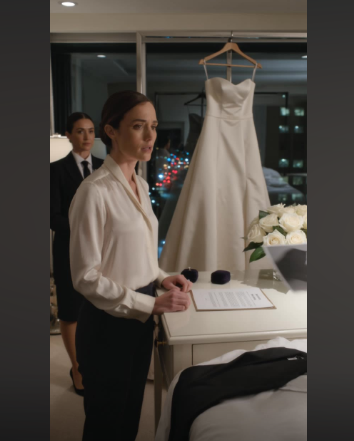
I was sitting in the bridal suite of a Manhattan hotel with my wedding dress hanging behind me like an accusation. The planner had just asked whether I wanted the childhood photo montage before or after the vows. There were white roses on every surface, the flowers Carter had insisted looked “classic,” even though white roses had never been my favorite.
They were Lexi’s.
My best friend Taylor called before I had time to move.
“Morgan,” she whispered, her voice shaky with anger, “it’s real. I checked twice. They signed today.”
I stared at the screen until my fingers went cold.
Tomorrow morning, I was supposed to marry Carter Preston in front of three hundred people. Our families, his business partners, my hospital colleagues, his grandfather’s friends, people who had watched us stand beside each other for ten years and called us inevitable.
Tonight, he had already married someone else.
The planner stood near the table, still holding the printed schedule.
“Dr. Evans,” she said carefully, “do you want me to call Mr. Preston?”
I placed my phone face down.
“No,” I said. “Put everything on pause.”
She blinked, not understanding. Outside the windows, Manhattan glowed like nothing private could ever matter inside it. I could hear traffic far below, the clink of glass in the hallway, a laugh from one of the bridesmaids two rooms away.
I did not cry.
That surprised me more than anything.
I had always thought betrayal would arrive with fire. I thought I would scream, throw something, collapse in the dramatic way people imagined women collapsed when love betrayed them. Instead, my body became very still, as if some deeper part of me had already been preparing for this moment long before my mind caught up.
Carter and I had met when I was twenty-four and in my first year of residency. He was twenty-six then, polished and serious, a man who seemed born wearing expensive cuff links and speaking in measured sentences. I had been running on vending machine coffee and four hours of sleep, my hair pinned badly at the back of my head, when he found me in the hospital lobby after a charity meeting for his family foundation.
He had said, “You look like you need food.”
I had said, “I look like I need a new body.”
He had laughed, not loudly, but enough for me to remember it.
That was how he was in the beginning. Quiet, restrained, careful with emotion, but when he gave me a piece of himself, I treated it like treasure. I was young enough to mistake scarcity for depth. If Carter called once during a thirty-hour shift, I replayed the gentleness in his voice for days. If he remembered my coffee order, I forgot the five times he had forgotten dinner.
His family loved that I was useful before they loved that I was human.
Winston Preston, Carter’s grandfather, was the exception. He had founded Preston Memorial’s charitable cardiac wing decades earlier, but he never behaved like the building made him larger than everyone else. The first time I reviewed his case, he studied me through silver-rimmed glasses and said, “You are very young to tell an old man what to do.”
I said, “Then I’ll try to be right enough to make up for it.”
He had laughed until he coughed.
From then on, he called me Dr. Morgan when he wanted to tease me and sweetheart when he wanted me to rest. His cardiac condition was complicated, and over three years I helped manage his evaluations, specialist appointments, medication changes, surgical planning, and long anxious family meetings. Carter used to say I was the only person his grandfather truly listened to.
At first, that sounded like affection.
Later, I understood it was labor.
The Preston family became comfortable calling me before they called anyone else. Carter’s aunt called when Winston’s blood pressure readings looked strange. His father called when a specialist used a term he didn’t understand. His cousins called when they needed referrals, second opinions, quiet favors, calm explanations, and the kind of medical translation no one pays for because they have decided love makes it free.
I gave it all.
I told myself that family was built by showing up.
I told myself that Carter’s quietness did not mean distance. I told myself Lexi Montgomery was just an old wound from his childhood, a name that made his jaw tighten because life had separated them before they knew how to choose each other. She had moved overseas when they were teenagers. Carter rarely talked about her, but when he did, his voice changed.
He never said he loved her.
That was almost worse.
A declared love can be challenged. A silent shrine just sits there, untouchable.
The first warning came two years before our wedding, though I refused to name it that. Carter brought flowers to the emergency department after I finished a difficult shift. Everyone cooed over him. One nurse said, “Dr. Evans, he is a keeper.”
The bouquet was full of white roses.
I smiled for everyone because I had learned that public gratitude was often easier than private honesty. Later, in the elevator, I said, “You know I like peonies.”
He looked distracted. “White roses are elegant.”
“They’re Lexi’s favorite.”
He paused just long enough to make the truth visible.
Then he said, “Don’t do that.”
“Do what?”
“Turn a nice gesture into an interrogation.”
I apologized before the elevator reached the lobby.
That was our rhythm. He shifted the floor, and I apologized for losing balance.
The second warning came on my thirty-third birthday. Carter gave me a vintage necklace in a velvet case. It was beautiful, delicate, antique, too ornate for me and completely wrong for my taste. I had seen it once before on Lexi in an old photo Carter’s cousin posted and later deleted.
I asked him where he found it.
His face closed. “Does every gift require a background check?”
I remember staring at the necklace and thinking, if I were less tired, I would fight about this.
Instead, I wore it to dinner.
His grandfather noticed. Winston leaned close and whispered, “Not your style, is it?”
I smiled. “Apparently I’m growing.”
He patted my hand and looked at Carter across the table with an expression I did not understand then.
The third warning arrived when Lexi came back to New York for the first time in years.
Carter told me casually, as if he were mentioning a weather change. “Lexi’s father is ill. She is coming back to settle some things.”
I was reviewing Winston’s medication adjustments at my kitchen island. “Are you going to see her?”
“She has no one here.”
“That isn’t what I asked.”
His eyes lifted. “Morgan.”
That was all. Just my name, spoken with disappointment, as if my question had already made me smaller.
So I did what I always did. I became reasonable. I said of course he should help. I said history mattered. I said grief made people fragile. I said I trusted him, because saying anything else would mean admitting I had been swallowing doubt for years.
Lexi’s fragility became a weather system in our relationship.
If Carter missed dinner, Lexi had called crying. If he left a hospital fundraiser early, Lexi had panicked over her father’s results. If he forgot our engagement anniversary, Lexi had needed him to drive her somewhere because she felt unsafe being alone. Each event was small enough to look cruel if I objected. Together, they formed a map.
The map always led away from me.
Whenever I tried to point that out, Carter told me I was too analytical, too sharp, too proud. He said, “You’re a surgeon. You’re built for pressure. Lexi isn’t like you.”
He meant it as praise.
It felt like a sentence.
Because I was strong, I could wait. Because I was capable, I could understand. Because I had a career, I could be left alone. Because I had dignity, I was expected not to make scenes.
Lexi, meanwhile, was allowed to need.
Need was treated like innocence. My steadiness was treated like permission.
Still, I stayed.
I stayed because ten years is a heavy thing to carry to the door. I stayed because Winston loved me. I stayed because Carter proposed on a cold December night outside the hospital after I finished a fourteen-hour surgery, and for one foolish, exhausted moment I believed he had finally chosen me clearly.
He had placed the ring on my finger and said, “It has always been you, Morgan.”
I wanted that sentence to be true so badly that I built a life on it.
Three years later, the night before our wedding, my phone showed me who he had chosen when choosing cost him something.
Carter texted two minutes after Taylor’s call.
Lexi just returned to the States under terrible stress. Her father is worse. She needed stability. I only gave her legal status on paper so she could calm down. The wedding is still on. Don’t be dramatic.
I read the message once.
Then again.
I almost laughed at the words legal status on paper. As if marriage were a parking permit. As if vows only mattered when spoken under flowers. As if the woman he planned to place at the altar tomorrow could be asked to stand there while yesterday’s wife existed quietly in the paperwork.
The planner watched me.
“Is there a problem?” she asked.
I turned the ring around on my finger. Inside the platinum band, the letters C and M were engraved. Carter had told me that meant we would never come apart. I had believed him because I still thought love was proven by surviving disappointment.
I took the ring off.
The skin beneath it looked pale.
“No problem,” I said. “Just a correction.”
I opened my laptop and began saving everything. Wedding contracts. Payment confirmations. Guest lists. The itinerary. The invitations that used my name to invite half of Preston Memorial. Carter’s text. Taylor’s photo. The hotel invoice. The florist agreement. Every carefully polished piece of tomorrow’s performance.
Not because I wanted revenge.
Because for once, I wanted a record of reality before everyone else tried to rewrite it.
Taylor texted, I’m coming to you.
I wrote back, Book me the first flight out of JFK to San Francisco.
She responded instantly. You’re leaving?
Yes.
What about the wedding?
I looked at the dress behind me. It was custom-made, ivory silk, elegant and restrained, exactly the dress Carter’s mother said suited a Preston bride.
A wedding without a bride cancels itself, I typed.
Carter called ten minutes later.
I answered because I wanted to hear what a man sounded like when he believed he had already won.
“Morgan,” he said, calm but tight. “Did you see my message?”
“Yes.”
“Good. Then don’t overreact.”
“I asked you a question earlier this week,” I said. “When I asked if you had seen Lexi, you said no.”
He exhaled through his nose. “This is exactly why I didn’t tell you. You make everything into a cross-examination.”
“You got married.”
“It is a formality.”
“You got married,” I repeated.
His voice lowered. “Lexi needed help. She was spiraling. She has no support system here.”
“So you became her support system at City Hall?”
“Morgan, stop.”
There it was again. The command disguised as reason.
He continued, “Tomorrow proceeds as planned. The Preston family has too much invested, and Grandfather has been waiting for this day. You know what it means to him.”
That was the hook he expected to catch me with.
Winston.
I closed my eyes, and for one second I saw the old man’s hand over mine, the way he had said, “Promise me you’ll be there when this old heart finally needs fixing.” I had promised. I had meant it.
But saving a life did not require surrendering mine.
“Carter,” I said, “your wife is Lexi.”
He went silent.
When he spoke again, there was frost in his voice. “Do you have to say it like that?”
“I’m using the correct word.”
“You are being intentionally cruel.”
“No,” I said. “Cruel would be asking a woman to put on a wedding dress the day after you married someone else.”
Lexi’s voice floated faintly in the background.
“Carter?”
His tone changed immediately. “It’s okay.”
The softness in those two words finished what the photo had started.
I stood, reached for my black trench coat, and asked the planner to cancel the morning makeup schedule.
She stared at me. “Dr. Evans, Mr. Preston said any major changes should be approved by him.”
I slid my laptop into my bag. “Mr. Preston approved enough today.”
In the hallway, two bridesmaids were laughing near the elevator. They stopped when they saw my face. One asked if I needed anything. I wanted to say yes, I needed back every hour I had spent teaching myself not to notice.
Instead, I said, “Go home.”
The hotel manager intercepted me near the lobby.
“Dr. Evans, we still need final confirmation for tomorrow.”
“The ceremony is canceled.”
His expression tightened with practiced hospitality. “Mr. Preston’s office said to proceed unless you both confirmed otherwise.”
“I am confirming.”
“But the family—”
“The family can call Carter’s wife.”
The words landed between us like broken glass.
Outside, the city air hit my face. Carter’s driver was waiting by the curb.
“Dr. Evans,” he said, opening the door, “Mr. Preston asked me to take you back to the Tribeca apartment.”
“No, thank you.”
“He said you must return tonight.”
I looked at him until he stepped back.
“He no longer makes plans for me.”
I ordered my own car to JFK.
During the ride, Carter texted again.
Calm down. Don’t be late tomorrow.
I typed one word.
Okay.
It was the last gift I gave him that night: the comfort of underestimating me.
At JFK, my black trench coat smelled faintly of hotel lilies, and I kept it buttoned like armor while I waited near the gate. My flight left at 1:40 a.m. I turned off location sharing. I left the wedding group chat. I muted the Preston family thread. I watched Carter call three times before takeoff.
I did not answer.
People think leaving is loud. Sometimes it is just a boarding pass, a suitcase handle, and a phone turned face down while the person who hurt you believes you are still in reach.
When the plane lifted above New York, I looked down at the lights and felt something inside me detach without ceremony.
Not heal.
Not yet.
Just detach.
By the time I landed in San Francisco, the wedding morning had already begun in Manhattan. My phone lit up with messages the moment airplane mode ended.
Where are you?
The makeup team can’t find you.
Morgan, this isn’t funny.
Grandfather is already seated.
Carter’s messages were different from everyone else’s. They were not worried. They were angry.
You are embarrassing yourself.
Come back now.
Do not do this to my grandfather.
I stood in the airport restroom, washed my hands, and stared at my reflection. I looked pale, tired, almost severe. The woman in the mirror did not look like a runaway bride. She looked like a doctor between emergencies.
Taylor sent a video from the venue.
The ballroom was full of white roses. The stage held a massive photo of Carter and me from our engagement shoot, though he looked stiff in it, one hand on my shoulder and his mouth shaped into something too controlled to be a smile. Guests whispered in clusters. Carter stood near the aisle, jaw hard, phone in hand. Winston sat at the front with a blanket over his knees and his pill case beside him, staring at the entrance like he could summon me through loyalty alone.
That image hurt.
Not Carter.
Winston.
I closed the video before tenderness could become a leash.
Taylor called.
“He’s telling people your flight was delayed.”
I laughed once. “From the bridal suite?”
“He’s scrambling. Lexi is at the hotel.”
“Of course she is.”
“She came through a side entrance. Someone saw her.”
I leaned against the sink. “Let them.”
“You’re not going to explain?”
“Not yet.”
“You’re too calm.”
“No,” I said. “I’m finally done wasting panic on people who counted on it.”
For the next few hours, my phone became a courtroom I had not agreed to enter. Preston relatives called, then texted when I didn’t answer. Carter’s aunt wrote that family reputation was not something to play with. His cousin said I should think of Winston. His mother, who had spent three years correcting my table manners while asking me for specialist referrals, sent only one line.
You are making this harder than it needs to be.
I stared at that sentence for a long time.
Harder than what?
Harder than pretending the groom had not married another woman? Harder than smiling beside him while Lexi hid in the side corridors with a marriage certificate? Harder than letting everyone praise my grace because they preferred my silence to my pain?
I blocked them one by one.
The quiet afterward felt almost violent.
San Francisco was rainy that afternoon. I had originally planned to miss a cardiology symposium there because of the wedding, then spend the week afterward with Carter in Italy. Instead, I checked into my hotel, changed clothes, and went to the conference.
I listened to surgeons discuss complex aortic repairs, hybrid approaches, risk management, and post-operative care. I took notes until my hand cramped. The act of writing steadied me. Medicine had always been the place where consequences followed facts. A vessel was compromised or it wasn’t. A plan worked or it didn’t. No one could call a dissection dramatic for existing.
During the lunch break, Carter called twelve times.
I let the phone ring in my bag.
That evening, Taylor sent me a photo taken at the Preston estate. Lexi sat at the dining table in the chair I had occupied for years. Carter had served food onto her plate. Several relatives hovered around her with the strained politeness people show when they are trying to make a scandal look like an arrangement.
Taylor wrote, The new Mrs. Preston has already taken her seat.
I looked at the photo once.
Then I closed it.
A seat can be filled by anyone. The life built around that seat cannot.
That night, Winston FaceTimed me.
I hesitated before answering. I knew I could ignore Carter. I could ignore his relatives. But Winston had treated me with a kind of flawed, old-fashioned affection that had felt real even when the rest of his family treated my usefulness like oxygen.
His face appeared on the screen, pale and tired.
“Morgan,” he said softly, “are you somewhere peaceful?”
That nearly broke me.
“I’m in San Francisco,” I said. “For the symposium.”
“Good.” He smiled faintly. “Doctors should keep learning. It frightens old men into behaving.”
I swallowed. “Have you taken your evening medication?”
“Your list is taped beside my chair. The butler checks it like scripture.”
For a few seconds, neither of us spoke.
Then he said, “Carter did something foolish.”
It was not a question.
I looked away from the screen.
“Grandpa, you need rest.”
“That bad?”
I pressed my lips together.
He sighed. “I always thought I could teach him that wanting everything is how a man ends up deserving nothing.”
I did not trust myself to answer.
He studied me through the screen. “Are you coming back?”
“To New York, yes.”
“To us?”
That question had no clean place to land.
“Please take care of yourself,” I said.
His eyes dimmed with understanding. “Don’t let their need confuse you, Morgan. Need can look like love when you have given too much.”
After the call ended, I sat in the dark hotel room until the rain blurred the window into silver lines.
On the third day, Lexi posted a photo of herself in the Preston estate garden wearing an engagement token Winston had once given me. It was an emerald brooch, vintage and heavy, pinned to her pale sweater like she had earned history by touching it.
The caption read, Grateful to be cherished.
Taylor called within seconds. “Please tell me you saw it.”
“I saw it.”
“That was yours.”
“Yes.”
“Are you furious?”
I closed my laptop. “I’m taking notes.”
“You sound terrifying.”
“I sound awake.”
Carter had once told me that token was too valuable for hospital life. He said I should store it in the Preston family safe until after the wedding. I had agreed because I was always agreeing to whatever made me seem reasonable. Now Lexi wore it in a garden I had walked through with Winston after appointments, smiling like she had inherited a place in his heart.
I saved the post.
Not to punish her.
To remember exactly how far people go when they think silence means consent.
The fourth day, Carter emailed me. The subject line was Stop Making This Worse.
I almost admired the efficiency of it.
He wrote that the canceled wedding had caused unnecessary embarrassment. He said the family was handling internal matters. He said Lexi would not threaten my “position.” He said Grandfather needed calm and that I should return to New York to explain the postponement as a health issue.
The last line said, We can still manage this if you behave rationally.
I replied once.
Resolve your marriage before contacting me about anything personal.
He called seventeen times after that.
I blocked his number.
For two days, silence returned. I attended sessions, spoke with colleagues, reviewed research, and slept badly. Each night, I woke at 3:00 a.m. expecting pain to be louder. Instead, it was quiet and precise. It sat beside me while I brushed my teeth. It followed me into elevators. It waited at restaurant tables when waiters asked if anyone else was joining me.
I did not miss Carter the way I expected to.
I missed the woman I had been trying to become for him.
On the seventh morning, before dawn, an unknown New York number called.
I answered because something in my body knew before my mind did.
“Dr. Evans?” a woman said quickly. “This is Preston Memorial. I’m sorry to wake you. Mr. Winston Preston was brought in with acute chest and back pain. Imaging suggests a serious aortic crisis. Dr. Mitchell asked us to contact you immediately because you prepared his long-term surgical plan.”
I sat upright.
“Send the imaging through the encrypted channel,” I said.
“We are doing that now. The family is requesting you return as lead surgeon.”
I pushed the blanket off and opened my laptop. “The hospital can request a consultation. The family cannot request me like a driver.”
The woman paused. Then her voice softened. “Understood.”
Within minutes, Dr. Mitchell joined the call. He had been my mentor for years, blunt, brilliant, and impossible to impress.
“Morgan,” he said, “I need your eyes on this. It’s bad.”
“I’m looking.”
“The tear has extended beyond our last evaluation. The standard plan is riskier than before.”
“I prepared a backup sequence.”
“I know. That’s why I called.”
There was noise behind him. Footsteps. Monitors. Carter’s voice, strained and close.
“Put her on,” Carter demanded. “Give me the phone.”
Dr. Mitchell ignored him. “Can you come back?”
“Yes,” I said. “As a physician.”
“I’ll issue a formal hospital invitation.”
“Thank you.”
Then another unknown number cut in.
I knew before answering that it was Carter.
His voice sounded different. Hoarse. Panicked. Stripped of polish.
“Morgan. Grandfather is critical. You need to come back.”
“I’m reviewing the images.”
“Book a flight now.”
“Carter.”
“This is not the time to punish me.”
There it was, even then. His pain, his fear, his emergency, all arranged around the assumption that my boundaries were attacks.
“I am in a medical consultation,” I said. “Give the phone back to Dr. Mitchell.”
“I am family.”
“You are not my patient’s surgeon.”
He inhaled sharply. “Morgan, please.”
The word please landed late, and it landed wrong.
Behind him, I heard someone crying softly. Lexi.
I looked at the scans loading on my screen and forced my voice to stay level.
“Your wife is there,” I said. “Ask her to comfort you.”
Silence.
Then he said, “Do you really have to say that right now?”
“Yes,” I said. “Because you keep forgetting it when it matters.”
A resident’s voice interrupted in the background. “Mr. Preston, we need the family consent discussion started immediately.”
Carter covered the phone badly. I still heard him snap, “Get Dr. Evans here.”
I said, “If you waste another thirty seconds trying to control me, the person who pays for it is your grandfather.”
The phone moved.
Dr. Mitchell came back on.
“Sorry,” he said.
“Don’t be. Let’s work.”
For the next hour, I was not a heartbroken ex-fiancée. I was a surgeon with a patient in danger. I reviewed imaging, dictated notes, adjusted the backup plan, and coordinated with the team. When the plan was uploaded, I booked the earliest flight back to New York.
Taylor answered my call half asleep and furious.
“They actually called you?”
“The hospital called.”
“And Carter?”
“He is doing what Carter does.”
“Ordering the weather to change?”
“Something like that.”
She was quiet for a moment. “Are you sure you can do this?”
“Yes.”
“I mean emotionally.”
I zipped my suitcase. “Medicine is not where I settle personal debts.”
“And outside medicine?”
“Outside medicine,” I said, “I am done pretending there are no debts.”
Taylor exhaled. “Tell me what you need.”
“Come to the hospital when I land. Stay near me. Do not let any Preston meet with me alone. And send the formal notice to end the engagement.”
“Already drafted.”
“Include reimbursement for my wedding losses and a demand that they stop using my name.”
“Done.”
“And Taylor?”
“Yeah?”
“Save every call log.”
By the time my plane approached JFK, the missed call count from Carter and every number around him had become absurd. His assistant. His aunt. His cousin. Unknown numbers. The estate line. The hospital lobby phone. Some calls were seconds apart.
The counter showed 999.
I looked at the number without satisfaction.
He had called me 999 times, but not because he had suddenly understood my loneliness. He had called because the one woman he had treated as dependable had become unreachable at the exact moment dependence mattered.
His thousandth call arrived before I reached baggage claim.
I answered.
“You’re in New York?” he asked.
“Yes.”
“I’ll send a car.”
“No.”
“Morgan, stop making this difficult.”
I stopped walking in the middle of the terminal. People moved around me with bags and coffee and sleepy impatience.
“I came back because a patient needs a doctor,” I said. “Not because you need a fiancée.”
His breath caught.
“Grandfather keeps asking for you.”
“Tell him I am doing everything I can.”
“He wants to see you.”
“Then he will see Dr. Evans when it is medically appropriate.”
“Morgan,” he said, and for once my name cracked in his mouth. “I didn’t mean to lose you.”
“That is something you should have considered before you married someone else.”
I hung up.
Taylor waited outside the terminal with her SUV. She hugged me hard before taking my suitcase.
“You look like you haven’t slept in a week.”
“I haven’t.”
“Lexi is at the hospital,” she said. “Carrying herself like Florence Nightingale with better hair.”
“Let her.”
“She told relatives she is standing beside her husband during a family crisis.”
“Then she can stand.”
Taylor glanced at me as we pulled away. “You’re colder than I expected.”
“I’m not cold,” I said. “I’m controlled. People confuse the two when they were depending on your collapse.”
Preston Memorial rose on the Upper East Side, glass and stone and reputation. I had walked through its doors hundreds of times as a doctor, a consultant, a future family member, a woman carrying coffee to an old man after rounds. That morning, photographers hovered across the street because someone had leaked enough gossip to attract them. Security moved me through a side entrance.
I changed into scrubs and a lab jacket in silence.
In the hallway outside the consultation suite, Carter stood with both hands clenched at his sides. He looked thinner, unshaven, eyes red from lack of sleep. The arrogance had not left him completely, but panic had cracked it open.
He stepped toward me.
“Morgan.”
I raised one hand before he could touch me.
“Family members wait outside unless invited.”
His face paled.
Lexi stood behind him in a cream dress, her hair carefully curled despite the hour. She gripped a small purse with both hands. Her eyes were swollen, but the tears seemed arranged rather than accidental. When I glanced at her, she lifted her chin, as if the legal fact of her marriage could shield her from the moral fact of how she got it.
I walked past them both.
Inside the consultation suite, Dr. Mitchell projected the latest imaging. Several department heads sat around the conference table. No one mentioned Carter. No one mentioned the wedding. Good doctors know when drama becomes noise.
I reviewed the scans, pointed to the relevant sections, and adjusted the sequence. We needed speed, precision, and a team that could follow changes without ego. Winston’s condition was fragile, but not hopeless.
After the plan was set, Dr. Mitchell looked at me.
“The family needs a risk explanation. You can step out if you prefer.”
“I won’t hide,” I said.
“You don’t owe them a scene.”
“I owe the patient clarity.”
He nodded once.
The pre-operative conference room felt smaller than it was because the Prestons had filled every inch with fear. Carter stood near the head of the table. Lexi sat at his right, the chair closest to him, holding herself like a woman trying to be photographed as devotion. Winston’s son sat across from her, gray-faced and trembling. Relatives crowded the walls, whispering until I entered.
Every whisper stopped.
Carter pulled out the empty chair beside him.
“Morgan,” he said softly, “sit here.”
The room watched.
The chair was angled toward him, close enough to suggest history, duty, and possession. It was the kind of small public gesture Carter used when he wanted everyone to remember what I had been without acknowledging what he had done.
I did not move toward it.
I set my folder at the physician’s side of the table, next to Dr. Mitchell.
“I’ll stand while I explain.”
Carter’s fingers tightened on the chair back.
Lexi’s mouth twitched.
I began with Winston’s current condition. I kept my voice professional. I explained that the situation was urgent, that the procedure carried serious risks, that the team had a plan but no guarantee. I avoided graphic details. I did not soften reality just to make them comfortable.
Lexi interrupted before I reached the second major risk.
“Do you have to make it sound so frightening?” she asked, voice trembling. “We’re already scared.”
I looked at her.
“This is a surgical briefing, not a reassurance speech.”
Her eyes filled.
Carter leaned forward. “Morgan, don’t take that tone with her.”
I placed both hands on the table.
“Mr. Preston, if the family cannot hear medical information without personal correction, I can ask security to clear the room and speak only to the legal next of kin.”
Several relatives looked down.
Carter flushed. “You know that isn’t what I meant.”
“I know exactly what you meant,” I said. “You meant I should make the truth more comfortable for the woman you married.”
The air tightened.
Dr. Mitchell did not rescue him.
Winston’s son cleared his throat. “Please continue, Dr. Evans.”
I continued.
When consent procedures came up, Lexi leaned forward too quickly.
“I’m Mrs. Preston now,” she said. “Can I sign whatever needs to be signed?”
The silence that followed was brutal.
Winston’s son was sitting right there. Carter’s father, the patient’s child, the man responsible for that decision. Lexi had reached for a role she did not understand because she thought the title Carter gave her worked like a master key.
Dr. Mitchell answered before I did.
“No. The patient’s son will sign after the explanation.”
Lexi’s face tightened.
“I only wanted to help.”
“Helping begins with knowing where you stand,” I said.
Carter’s eyes flashed. “Enough.”
I turned to him fully.
“No, Carter. Enough was the day before our wedding.”
His face went still.
A young resident entered then, pale and nervous, carrying updated notes from the operating team. He looked from Carter to me, then to the old family contact summary that had been copied forward from months before, back when the Preston staff regularly referred to me as Carter’s future wife and medical consultant in the same breath.
The resident swallowed.
“Mr. Preston,” he said, confused, “the note says only your wife can perform this surgery.”
The sentence froze the room.
Lexi’s eyes widened.
Carter looked as if someone had pressed a thumb into a bruise.
Dr. Mitchell took the notes from the resident and corrected him calmly. “Not his wife. Dr. Morgan Evans. The only surgeon here who built the full plan.”
No one moved.
That was the quiet line. Not shouted. Not dramatic. Not cruel. Just a correction so precise it stripped the room bare.
Not his wife.
Dr. Morgan Evans.
I picked up the blue surgical marker from the table and turned toward the transparent board. My hand was steady. I drew the revised sequence, step by step, speaking to the medical team and not to Carter.
When I finished, I capped the marker and laid it in the center of the table.
“From this moment,” I said, “I will communicate as the lead surgeon. Not as your almost-wife. Not as the family’s convenient daughter-in-law. Not as the woman expected to stand beside you after you married someone else.”
Carter’s lips parted.
I looked at the empty chair he had pulled out.
“Leave that chair empty,” I said. “It is the most honest thing in this room.”
The silence changed shape.
Before, it had been the silence of people waiting to see if I would break. Now it was the silence of people realizing I had already drawn a line they could not drag me back across.
Lexi lowered her eyes first.
Carter’s hand slid off the chair back.
Winston’s son signed the consent with shaking fingers. Dr. Mitchell collected the forms and nodded to me.
“We go in fifteen.”
I walked out before Carter could say my name again.
In the prep area, I washed my hands until the rushing water drowned everything else. My reflection in the steel surface looked focused, exhausted, almost unfamiliar. I had thought I might crumble after saying those words. Instead, my chest felt lighter, as if the room had been holding its breath for years and had finally exhaled.
Dr. Mitchell stood beside me.
“You all right?”
“I’m ready.”
“I didn’t mean for that resident to say it.”
“I know.”
“It landed hard.”
“It needed to.”
He studied me with the rough kindness of someone who had watched generations of doctors pretend they were made of stone.
“You can still step back.”
“No,” I said. “The patient did not betray me.”
The surgery lasted eight hours.
I will not describe the details because some things deserve the privacy of the operating room. There was tension. There were adjustments. There were moments when the monitors forced everyone to move faster. There were stretches when my entire world narrowed to timing, pressure, and the steady voices of people who understood that panic helps no one.
Inside that room, Carter did not exist.
Lexi did not exist.
The canceled wedding did not exist.
Only Winston existed, and the promise I had made as a doctor.
When the final stage stabilized, Dr. Mitchell let out a slow breath.
“Good work,” he said.
“No celebrating yet,” I answered. “ICU monitoring will decide the next twenty-four hours.”
But we both knew the worst doorway had been crossed.
When I stepped out, the Preston family rose as one. Carter moved first, then stopped himself before touching me.
“How is he?” he asked.
“The procedure went as well as it could. He is stable for now, but critical monitoring continues.”
His shoulders collapsed with relief.
“Thank you,” he whispered.
“Thank the team.”
“Morgan—”
“The patient’s family should wait for ICU updates,” I said. “Please do not block the hallway.”
I walked away.
In the physicians’ lounge, Taylor handed me black coffee and looked ready to cry.
“You scared me,” she said.
“I was fine.”
“You are not allowed to use doctor voice on me.”
I took the coffee. My hands trembled once, then steadied.
“Fine,” I admitted. “I am tired.”
She sat across from me. “While you were in surgery, things exploded.”
“Publicly?”
“Very.”
I closed my eyes.
Someone had leaked the story that I had flown back to save the Preston patriarch after running from my own wedding. Someone else had circulated the City Hall timeline. Guests had posted half-truths. Relatives had tried to make me look unstable. Lexi’s supporters whispered that I had abandoned the family and returned only after guilt caught up.
Taylor had done what Taylor did best. She had organized reality.
She showed me a draft statement.
I, Dr. Morgan Evans, returned to New York solely under formal request from Preston Memorial Hospital to participate in a medical consultation and surgical procedure for a patient whose case I had previously managed. I am not married to, engaged to, or in a personal partnership with Mr. Carter Preston. Please stop using inaccurate personal titles in relation to my professional work.
I read it twice.
“Post it,” I said.
“Now?”
“Now.”
The statement went live while I was still drinking coffee. Ten minutes later, a muffled wave of noise rose outside the lounge. Phones buzzed. Footsteps hurried. Someone in the hallway said, “She cut ties publicly.”
Taylor smiled without humor. “Good.”
Carter appeared at the doorway twenty minutes later.
He looked smaller there, stripped of the rooms that usually made him powerful. No estate. No stage. No family table. Just a hospital hallway and a woman he could no longer summon.
“Can we talk?” he asked.
Taylor stood. “This is a staff area.”
“It’s fine,” I said. “Stay where you are.”
Carter looked at her, then back at me.
“Can you take down the statement?” he asked.
I actually stared at him for a second because even after everything, he still managed to surprise me.
“No.”
“It’s affecting Grandfather’s recovery environment.”
“Grandfather is sedated in ICU.”
“The family is under a lot of pressure.”
“What part of the statement is false?”
He said nothing.
I set my coffee down.
“Are we married?”
“No.”
“Are we engaged?”
His jaw tightened. “We were supposed to be.”
“Are we engaged?”
“No,” he said, quieter.
“Then the statement stays.”
His eyes reddened. “I never wanted to lose you.”
“You married Lexi.”
“I made a mistake.”
“A mistake is forgetting a dinner reservation. City Hall requires identification, signatures, witnesses, and intention.”
He flinched.
“I was trying to help her.”
“You helped her become your wife on the eve of our wedding.”
“She was terrified.”
“So was I,” I said. “But my fear did not make me betray anyone.”
Taylor’s phone buzzed. She glanced down, then gave a sharp laugh.
“What?” I asked.
She turned the screen toward me.
Lexi had been recorded in the hallway telling one of Carter’s aunts, “Morgan is angry now, but she will come around once Grandfather recovers. I never wanted to hurt her. Carter has always loved me, and I will apologize when she is ready to step aside.”
The recording ended.
Carter’s face changed.
For the first time, he looked at Lexi’s fragility from the outside.
“She didn’t mean it like that,” he said automatically.
Taylor stared at him. “That reflex must be exhausting.”
I stood.
“Carter, I gave you ten years to choose me without needing disaster to teach you how. You didn’t.”
His voice broke. “What do you want me to do?”
“Stop making your regret another thing I have to manage.”
I left before he could answer.
Winston woke briefly the next day. ICU allowed only controlled visits, and Dr. Mitchell asked me to speak to him because he was agitated and trying to remove his oxygen mask.
When I entered, his eyes found me.
“Grandpa,” I said softly, “the procedure went well. You need to rest.”
His fingers shifted weakly.
I took his hand.
A tear slipped from the corner of his eye.
He tried to speak, but I shook my head.
“No speeches. You have terrible timing.”
His mouth moved behind the mask.
I understood only one word.
Wronged.
My throat tightened.
“I’m okay,” I lied.
He stared at me with the stubbornness of a man who had lived long enough to recognize a kind lie.
Outside the glass, Carter watched with bloodshot eyes. Lexi stood near him, clutching her purse. She looked at Winston, then at me, and something like fear crossed her face. She had gotten Carter’s last name. She had not gotten the place in the old man’s heart that I had earned by showing up long before anyone was watching.
That difference mattered now.
When Winston stabilized enough for a family meeting three days later, he insisted I attend. I refused at first. I had no interest in being folded back into Preston business. But his butler, Thomas, came to my office and said, “He wants you there because the apology belongs in front of witnesses.”
So I went.
The conference room at the estate was full of people who had once treated me as furniture that could diagnose. Carter stood near the fireplace. Lexi sat in a corner, eyes red, no longer central. Winston sat in a wheelchair with a nurse beside him, pale but sharp-eyed.
He motioned to the chair near him.
“Sit with me, Morgan.”
I sat in the guest section instead.
His face flickered with hurt, then understanding.
A boundary can be gentle and still be final.
Winston looked at Carter.
“Tell me what you did.”
Carter swallowed. “Grandpa, I—”
“No polish. Facts.”
Carter looked at the floor. “I married Lexi at City Hall the day before the wedding.”
Someone gasped, though everyone already knew. Facts sound different when spoken by the person who tried to bury them.
Winston’s mouth tightened. “And after Morgan found out?”
“I told her the wedding should continue.”
His aunt whispered, “Carter.”
Winston’s hand struck the arm of his wheelchair, weak but furious.
“You asked her to stand in a wedding dress while your wife sat hidden in the city?”
Carter said nothing.
Lexi began crying. “I never meant to hurt anyone. I only loved him. I was afraid that if I waited, I would lose him forever.”
Winston turned his eyes on her.
“Love is not a license to humiliate another woman.”
Lexi froze.
He looked back at Carter.
“And you. You mistook Morgan’s dignity for something you could spend.”
Carter’s face crumpled.
Winston gestured to Thomas, who placed a file on the table. It contained years of my work for the family: appointment summaries, medication calendars, emergency plans, specialist contacts, after-hours notes, and lists of favors that had quietly passed through my hands because I had been almost family.
Almost.
Winston tapped the file.
“These were never obligations. They were gifts. And you all treated them as infrastructure.”
No one spoke.
His voice lowered. “The Preston family will issue a clarification. Carter will handle the financial losses from the canceled wedding. Morgan’s name will not be used again without her permission. The engagement token will be returned. And Carter will step away from foundation duties until I trust his judgment again.”
Carter’s head snapped up.
“Grandpa—”
“I am old, not confused.”
Lexi’s face lost color. She had married into power only to watch that power shift under her feet.
I felt no triumph.
Only a quiet sadness for the years I had spent waiting for people to value what they were perfectly capable of valuing only after it left.
After the meeting, Carter followed me into the hallway.
“Morgan.”
I stopped.
“I’ll divorce her,” he said.
I looked at him.
“And then?”
He seemed startled, as if that should have been enough. “Then we can talk.”
“No.”
His eyes filled. “Just like that?”
“No, Carter. Not just like that. After the flowers that were never for me. After the necklace returned by someone else. After every dinner you missed because Lexi needed you. After every time you called me sharp for noticing pain. After you married her and told me to stop being dramatic.”
He closed his eyes.
“I know I was wrong.”
“Knowing you were wrong does not give you the right to be forgiven.”
“I love you.”
The words arrived so late they sounded borrowed.
I almost wished they hurt more. Pain would have meant some part of me was still bargaining. Instead, I felt an exhausted tenderness for the woman who once would have lived on that sentence for months.
“I wanted you to love me when it required choosing,” I said. “Not when consequences made you lonely.”
He stepped closer. “I can’t live without you.”
“Yes,” I said. “You can.”
He shook his head.
“You just do not know who to be without someone absorbing the cost of your choices.”
That landed.
His shoulders dropped.
Behind us, Lexi’s voice rose in another room, arguing with Carter’s aunt. She said she had not forced him. His aunt said she had chosen the date on purpose. Lexi cried that she was terrified. The old script was failing because no one wanted to be cast in it anymore.
Carter looked toward the sound and, for once, did not run to rescue her.
I walked away.
The formal settlement was handled quietly. I did not want a spectacle. I wanted clean lines. My engagement ended in writing. My wedding losses were reimbursed. The Preston family sent clarifications to guests and professional contacts. The engagement token was returned to Winston’s safe, and I told him I did not want it.
He looked pained when I said that.
“It was meant for you.”
“I know.”
“Then keep it.”
I shook my head. “It belongs to the version of me who thought being chosen by this family would make me safe.”
His eyes watered.
“And now?”
“Now I choose myself.”
He closed his hand over mine. “I am sorry, Morgan.”
I believed him.
That did not mean I went back.
Carter began appearing at the hospital after my shifts. At first, he brought coffee. Then soup. Then nothing but his face, tired and hollow, waiting near the parking level like patience could undo betrayal if practiced visibly enough.
The first time, he said, “You forget to eat after long surgeries.”
“I remember now.”
The second time, he said, “It’s getting cold. You never carry enough layers.”
“I own sweaters.”
The third time, he simply said, “I don’t know what to do.”
I stopped beside him.
“Do nothing.”
His eyes widened, hurt by the simplicity.
“That’s it?”
“That’s it.”
“But I need to prove—”
“No,” I said. “You need to sit with who you became without making me the witness who absolves you.”
He looked away.
“I’m sorry.”
“I know.”
“Does that matter?”
“It matters that you said it,” I told him. “It does not change where I am going.”
A month later, I accepted a fellowship in San Francisco that I had postponed twice for Carter’s family and once for the wedding. When the offer came again, I signed before fear could dress itself as loyalty.
On my last evening in New York, I visited Winston. He was recovering slowly but stubbornly. He held my hand and told me not to work myself into an early grave just to prove people wrong.
“I’m not leaving to prove anything,” I said.
“Good.”
“I’m leaving because I want the work.”
“And because staying hurts?”
“Yes,” I said. “But hurt is not the driver anymore.”
He smiled faintly. “That sounds like something I would pretend to understand.”
Before I left, he handed me an envelope.
“Read it on the plane.”
“I hate plane letters.”
“Old men like drama.”
I tucked it into my bag and kissed his forehead.
Carter found me on the hospital roof that night.
I had gone up for air after my final shift. Manhattan spread around us, cold and bright. He stood near the door, hands in his pockets, looking like a man who had spent a month learning that regret has no shortcut.
“I heard you’re leaving tomorrow,” he said.
“Yes.”
“For how long?”
“At least a year.”
“And after that?”
“I’ll decide then.”
He nodded, swallowing hard. “The divorce is final.”
I said nothing.
“I should have ended things clearly with Lexi years ago. I should have protected you from my confusion. I should have told the truth.”
“Yes.”
He looked at me with a broken kind of hope. “Is there any part of you that still wants to try?”
I watched the skyline instead of him.
Once, that question would have pulled me apart. I would have searched myself for softness and called it destiny. I would have mistaken grief for love, history for obligation, apology for repair.
But the answer was quiet and complete.
“No.”
He flinched.
“Because of her?”
“Because of you.”
His eyes filled.
“I don’t say that to punish you,” I added. “It’s just the truth. Lexi showed me the door, but you built the hallway.”
He covered his face with one hand.
“I loved you badly,” he whispered.
“Yes,” I said. “You did.”
“And you?”
“I loved you too patiently.”
The wind moved between us.
When I turned to leave, he did not stop me.
That was the kindest thing he had done in a long time.
Months later in San Francisco, I hung the black trench coat in the back of a new closet and realized it no longer felt like armor. My apartment was small, bright, and mine. The hospital was demanding. The fellowship stretched me in ways that made me tired but alive. Some nights I missed New York with a sharpness I did not expect. Some mornings I woke before sunrise and felt free before I remembered why.
On the flight west, I opened Winston’s letter.
His handwriting was shaky.
He wrote that the Preston family had mistaken my devotion for something permanent and owed me more than reimbursement. He wrote that he had misjudged Carter, and that old age did not excuse blindness. He wrote that if I ever wanted the engagement token, it would remain mine, and if I never wanted it, he respected that too.
The final line stayed with me.
Morgan, for the rest of your life, I hope you never again have to be useful in order to be loved.
I folded the letter and pressed it against my chest.
I did not reply to Carter’s last message. It came before takeoff, simple and late.
I am sorry. I wish you freedom.
For once, I let his words exist without carrying them.
Outside the plane window, sunlight broke over the clouds. I thought of the bridal suite, the photo, the ring, the empty chair, the line in the hospital that made everyone finally name what I was and was not.
I was not his wife.
I was not his backup plan.
I was not the quiet woman who would absorb humiliation so a powerful family could remain comfortable.
I was a surgeon. I was a woman who had loved deeply and left cleanly. I had saved the life I promised to save, and I had refused to sacrifice my own in the process.
That was not revenge.
That was dignity.
And for the first time in years, dignity felt like home.
If the person who hurt you finally needed the one part of you they had taken for granted, would you still answer as yourself?
