Three days after my husband’s funeral, my son walked into his father’s study
My son tried to take my house and company – until I revealed the real owner! | family drama story
THREE DAYS AFTER MY HUSBAND’S FUNERAL, MY SON SAID, “THE FAMILY BUSINESS HAS BEEN SOLD… YOUR SHARE IS $10,000.” BUT IT WAS WORTH $13 MILLION. I LAUGHED AND ASKED, “WHO’S THE BUYER?” WHEN HE ANSWERED, HE REALIZED HE’D JUST SOLD IT… ΤΟ ΜΕ.
“The family business has been sold.”
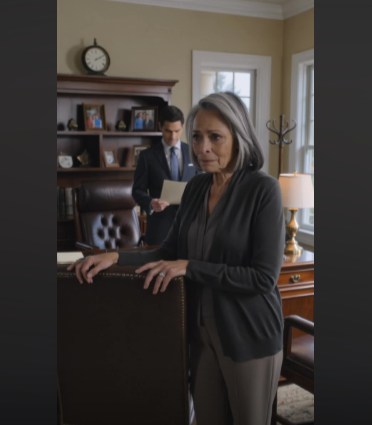
My son stood inside my late husband’s study holding a single sheet of paper.
“Your share is ten thousand dollars.”
For several seconds, I thought I had misunderstood him.
I looked down at Richard’s desk.
Forty-five years of marriage had worn a faint shine into the leather where his forearms rested while he worked.
Three weeks earlier, my husband had been sitting there.
Then came the stroke.
Hospital.
Funeral.
Silence.
And now our only son was standing in Richard’s place explaining that the company we had spent most of our adult lives building was gone.
“I’m sorry, Oliver.”
I lifted my eyes.
“What did you say?”
My voice remained steady.
At sixty-eight, I had learned composure could become a kind of armor.
Oliver slid the document across the desk.
“It’s all there, Mom.”
His fingernails were perfectly manicured.
His Italian tie probably cost more than Richard’s first month of payroll when Bradford Precision Technologies began.
“Dad had been considering offers.”
Oliver continued.
“The timing was unfortunate, obviously.”
“But the acquisition closed after his death.”
I read the page.
Very little detail.
Sale value:
Thirteen million dollars.
Proposed payment to me:
Ten thousand.
I looked up.
“Ten thousand dollars.”
“Yes.”
“For my share of a business your father and I spent forty-five years building.”
“Your share.”
Oliver emphasized the words.
“Dad’s controlling interest passed through the trust structure.”
“I inherited management authority.”
“This payment reflects the spousal provision tied to the transaction.”
He made it sound like severance for a receptionist retiring after six months.
Not a widow whose savings, labor, judgment, and patience had helped keep the company alive before it became large enough to have a fifteenth-floor boardroom.
“I see.”
I folded the paper.
“Who bought it?”
Oliver hesitated.
Only a fraction of a second.
That was enough.
“A private investment group.”
“Monarch Holdings.”
“Manufacturing acquisitions.”
“Mid-market industrial firms.”
“Very professional.”
“Monarch Holdings.”
I repeated.
“I don’t remember Richard mentioning them.”
“They approached shortly before his stroke.”
Oliver’s confidence returned.
“The deal is solid.”
“Operations continue.”
“Most employees stay.”
“It’s what Dad would have wanted.”
Was it?
In one of Richard’s final lucid moments, he had held my wrist with surprising strength.
“Amelia…”
“Protect what we built.”
Then:
“Something isn’t right.”
At the time, I blamed the stroke.
Three weeks later:
I no longer did.
“When do I meet the new owners?”
Oliver blinked.
“You don’t need to.”
“I’ve handled everything.”
“All you need to do is acknowledge the payment.”
“Then you can focus on your new circumstances.”
My new circumstances.
Widow.
Apparently poor.
Apparently irrelevant.
Excluded from the company that had occupied nearly every year of my marriage.
“How thoughtful.”
I said.
Oliver missed the irony.
“Ten thousand won’t go far.”
I added.
“Property taxes on this house nearly consume that amount annually.”
A small flicker crossed his face.
Annoyance.
Then control returned.
“We’ll discuss your living arrangements.”
“The estate is complicated.”
“For now, the payment covers immediate expenses.”
“And the valuation?”
I asked.
“Thirteen million seems low.”
“Especially after the defense contracts Richard secured.”
His eyes narrowed.
“Mom…”
“With respect…”
“You were never involved in the business side.”
There it was.
The assumption.
Amelia Blackwood:
Hostess.
Corporate wife.
Charity committees.
Dinner parties.
Christmas cards.
Nothing more.
Poor Oliver.
He had spent his entire life looking directly at me without seeing me.
“Of course.”
I said.
“You’re right.”
“Business was always your father’s domain.”
Relief softened his face.
“I’m glad you understand.”
“This is best for everyone.”
“The money will hit your account tomorrow.”
I stood.
“And Oliver?”
“Yes?”
“Who exactly controls Monarch?”
His answer arrived too smoothly.
“A private consortium.”
“Very discreet.”
“Managing director is a woman named Elizabeth Windsor.”
I smiled.
“Elizabeth Windsor.”
He became cautious.
“You know her?”
“The name sounds familiar.”
I replied.
Then opened the door.
“Thank you for handling everything so efficiently.”
After Oliver left:
I locked the study.
Returned to Richard’s desk.
Opened the concealed drawer only the two of us knew existed.
Inside:
Leather portfolio.
MONARCH HOLDINGS.
Incorporation documents.
Tax registrations.
Banking records.
Acquisition structure.
And the legal name of its sole controlling shareholder:
AMELIA ELIZABETH BLACKWOOD.
Before marriage:
Amelia Elizabeth Windsor.
Elizabeth was my middle name.
Windsor my maiden name.
Monarch Holdings was mine.
I had formed it six months earlier.
At Richard’s request.
Because six months earlier, my husband had finally admitted something he had resisted believing.
Our son was stealing from the company.
The telephone rang.
Jonathan Mercer.
Richard’s attorney for nearly forty years.
“Is it done?”
He asked.
“Yes.”
“Oliver told me the company has been sold.”
“And?”
“My life’s contribution is worth ten thousand dollars.”
Jonathan exhaled.
“Did he name the buyer?”
“Monarch Holdings.”
“And Elizabeth Windsor?”
“Yes.”
“Did he recognize it?”
“No.”
I looked toward our wedding photograph.
Twenty-three-year-old Amelia.
Twenty-six-year-old Richard.
No money.
No company.
Nothing but foolish confidence.
“He has no idea he just sold his father’s company to his mother.”
Jonathan was silent.
Then:
“Board meeting Friday.”
“Three days.”
“Are you ready?”
I thought of Richard.
Protect what we built.
“Yes.”
I said.
“I think I’ve been preparing for this for forty-five years.”
The following afternoon, I sat in Jonathan’s office.
Glass.
Steel.
Minimal furniture.
Nothing like Richard’s study.
Jonathan placed tea in front of me.
“You look remarkably calm for a woman whose son tried to cheat her out of millions.”
“Appearances can mislead.”
I replied.
“Oliver should know that by now.”
Jonathan opened a tablet.
“We have the final acquisition documents.”
“The transaction itself is enforceable.”
“Monarch negotiated through independent representatives.”
“Oliver supplied the seller-side financial package.”
“He certified the valuation data.”
“He approved the representations.”
“And he apparently failed to perform meaningful due diligence on the purchaser.”
“His mistake.”
I said.
“Among many.”
“His next argument will likely be incapacity.”
Jonathan continued.
“He’ll claim grief impaired you.”
“That I manipulated you.”
“That Monarch exists only as a device to seize control.”
I laughed softly.
“The same theory he intended to use against Richard.”
Jonathan nodded.
Then pulled up the forensic review.
What followed was worse than I expected.
Inventory values manipulated.
Supplier payments routed toward accounts connected to Oliver-controlled entities.
Intellectual property transferred below value.
Shell companies.
Unexplained payments from competitors.
Contract revenue understated to the board while separate side arrangements captured the difference.
Three years.
At least.
Jonathan opened another file.
“This is the retirement-plan problem.”
I leaned forward.
Bradford maintained an employee retirement program funded through company contributions and separately administered plan assets.
Oliver had attempted to use company obligations related to the retirement program and affiliated reserve accounts to support personal borrowing and conceal liquidity gaps.
Whatever exact criminal or fiduciary consequences ultimately followed would depend on investigators and regulators.
But one point was clear.
Employee retirement security had been placed at risk.
People Richard knew personally.
People whose children had grown up at company picnics.
People who had spent decades building aircraft components with him.
I set down my cup.
“Does Oliver know you found this?”
“No.”
“He thinks the acquisition solved his problems.”
“How?”
“He intended to sell certain remaining assets through entities he controls.”
Jonathan replied.
“The sale would give him liquidity while Monarch inherited the hollowed-out operating shell.”
I stared.
“He truly believed he could do this.”
“Fraud usually requires two beliefs.”
Jonathan said.
“That you’re cleverer than everyone else.”
“And that consequences are for other people.”
“Oliver believes both.”
I remembered Richard’s father.
Gambling.
Debt.
Charm.
Richard spent half his youth watching his father nearly destroy their family chasing easy money.
He swore Oliver would never inherit that mentality.
Life has a cruel sense of irony.
Jonathan closed the tablet.
“Two board members appear compromised.”
“Henderson.”
“Patterson.”
“They benefited from Oliver’s transactions.”
“Harold Westfield?”
“Clean.”
“Loyal to the company.”
“And cautious enough to require evidence.”
“Good.”
I said.
“That’s what Richard always liked about him.”
Jonathan leaned back.
“Employees?”
“Protected by the acquisition structure.”
He explained.
Monarch’s purchase agreement segregated identified liabilities, preserved operating capital, and retained claims against anyone responsible for misrepresentation.
Production could continue while auditors and counsel untangled what Oliver had done.
“And the pension?”
“We can restore the shortfall from protected acquisition reserves while pursuing recovery from responsible parties.”
I nodded.
“That happens first.”
“Before anything involving me.”
Jonathan looked at me.
“You’re thinking like a chairwoman already.”
“I’ve been thinking like one longer than anyone realized.”
Then he asked the question he had avoided.
“What happens to Oliver?”
My son.
Only child.
I saw:
Five-year-old Oliver with Lego towers.
Teenage Oliver pretending not to be nervous before his first dance.
Princeton acceptance letter.
Graduation.
Wedding.
Richard crying with pride.
Then:
Ten thousand dollars.
Charlotte assisted living.
Employee pensions.
Shell companies.
“I don’t know.”
I said.
“That depends on whether he has enough honesty left to recognize what he’s done.”
The next day, Oliver wanted to discuss the house.
He arrived at two.
Not alone.
Vanessa Hargrove.
Luxury real-estate agent.
Thirty-something.
Immaculate.
Confident.
Too familiar with my son.
“Mom…”
“This is Vanessa.”
“She specializes in estates like yours.”
Mine.
Interesting word.
Vanessa extended her hand.
“I understood you were ready to list immediately.”
I looked at Oliver.
“Did you?”
His expression tightened.
“Mom…”
“We discussed this.”
“I don’t remember that conversation.”
I smiled toward Vanessa.
“Perhaps you could wait in the living room.”
Once the door closed:
Oliver dropped the politeness.
“You had to embarrass me?”
“By discussing my own house?”
“This isn’t just your house.”
“It is part of Dad’s estate.”
“Costs are significant.”
“You can’t manage this alone.”
“I found an excellent assisted-living community near Charlotte.”
I stared at him.
“Charlotte.”
“Yes.”
“Six hours away.”
“Beautiful grounds.”
“Full service.”
“Excellent medical support.”
“You’ve researched it.”
“Of course.”
“Before or after your father’s funeral?”
His jaw tightened.
“The proceeds from this property would cover your care for years.”
My care.
I looked around Richard’s study.
The shelves we installed together.
The rug Oliver spilled grape juice on when he was six.
The window overlooking the garden where Richard and I drank coffee every Sunday.
“And if I prefer staying here?”
Oliver sighed.
“Be reasonable.”
“As executor, I have responsibilities.”
“These decisions aren’t entirely optional.”
I turned.
“No.”
He blinked.
“No?”
“No assisted living.”
“No sale.”
“And no more pretending your handling of your father’s affairs is acceptable.”
“You don’t have a choice.”
He snapped.
“The documents—”
“Did you read the actual will?”
“Of course.”
“The entire thing?”
“The estate passes to me with provisions for your care.”
“Not quite.”
I unlocked Richard’s drawer.
Removed the original executed estate documents held with Jonathan’s firm.
“Section fourteen.”
I said.
“Real property.”
Oliver stared.
“Paragraph C requires my written consent before this residence can be sold.”
His face changed.
“Paragraph D protects my right to occupy the home for life unless I voluntarily relinquish it.”
“No executor can remove me merely because the square footage offends his efficiency.”
Oliver reached toward the pages.
I covered them with my hand.
“Where did you get that?”
“Your father.”
“He told me where copies were kept.”
“And Jonathan holds the controlling originals.”
“This can’t be right.”
He muttered.
“Dad changed everything before we could—”
He stopped.
Before we could.
I waited.
“Before you could what?”
No answer.
“Transfer the assets?”
“Remove me from the house?”
“Finish restructuring ownership before your father realized what you were doing?”
“You have no idea what you’re talking about.”
“Perhaps.”
I said.
“Friday should clarify things.”
His eyes snapped toward me.
“What happens Friday?”
“The board meets.”
“You introduce Monarch Holdings.”
“How do you know?”
I smiled.
“Even a ten-thousand-dollar shareholder can read a calendar.”
“Mom…”
“Grief is affecting you.”
“Paranoia…”
“Not paranoia.”
I said.
“Clarity.”
Then:
“Tell Vanessa the house is not for sale.”
“This isn’t over.”
Oliver warned.
“No.”
I agreed.
“It isn’t.”
At the door, I added:
“Do give my regards to Elizabeth Windsor.”
His face went perfectly still.
That was when I knew he was afraid.
Thursday morning:
Jonathan called.
“He’s looking for Elizabeth.”
“Three law firms too.”
“He’s panicking.”
“Good.”
I said.
“Panic makes impatient people reveal themselves.”
Then:
Another development.
Oliver had scheduled an eight o’clock preliminary meeting with Henderson, Patterson, and Harold Westfield.
Two hours before the official board session.
Likely purpose:
Emergency action.
Delay acquisition.
Change company structure.
Possibly challenge my fitness.
“We go earlier.”
I said.
“Building security starts at six-thirty.”
“Then six-fifteen.”
Before that:
Marcus Torres contacted me.
Head of special projects.
Twenty years with Bradford.
Richard admired him.
Marcus arrived at the house at four.
Anxiety sat visibly inside his shoulders.
“Mrs. Blackwood…”
“Something is wrong.”
“Company sale?”
“Worse.”
Oliver had ordered engineering teams to upload proprietary technology documentation to a new external repository.
Timing:
Before ownership transferred formally under Monarch’s post-closing operational protocol.
Destination:
Outside the approved company environment.
Security controls:
Insufficient.
Marcus had delayed the transfer.
“System compatibility issues.”
He said.
“Bought us until tomorrow.”
I understood immediately.
“He’s trying to move the intellectual property.”
Relief flashed across Marcus’s face.
“Yes.”
“If he separates the designs and technical records from Bradford…”
“Monarch buys buildings and machines.”
“Oliver retains what makes the company valuable.”
Exactly.
“Who else knows?”
“Core engineering leadership.”
“We’ve seen too many inconsistencies.”
“Contract values.”
“Pension numbers.”
“Now this.”
Marcus looked at Richard’s chair.
“He treated us like family.”
“We aren’t going to let his company be stripped quietly.”
Family.
Interesting.
Employees guarding Richard’s legacy.
His own son dismantling it.
I made a decision.
“Marcus…”
“Monarch is real.”
“But Oliver doesn’t know its owner.”
He frowned.
“I don’t understand.”
“I own Monarch Holdings.”
Silence.
“My legal name includes Elizabeth.”
“Windsor is my maiden name.”
“I established the entity with Richard six months ago.”
Marcus simply stared.
Then smiled.
Slowly.
“Mr. Blackwood helped plan this?”
“Yes.”
Before the stroke.
His smile became almost boyish.
“He would have loved seeing Oliver’s face.”
Despite everything:
I laughed.
“What do you need from me?”
“Delay the transfer.”
“Preserve the request and system logs.”
“Do not alter evidence.”
“Do not confront Oliver.”
“After the board meeting…”
“Security and counsel take over.”
Marcus nodded.
“You have my word.”
Friday.
6:17 a.m.
Bradford Precision headquarters.
Fifteen stories of glass and steel overlooking manufacturing facilities below.
George, the overnight guard, recognized me.
“Mrs. Blackwood.”
Then softened.
“I am sorry about Mr. Blackwood.”
“He always remembered my kids.”
“That sounds like Richard.”
The elevator took Jonathan and me to the fifteenth floor.
Boardroom.
Twenty-foot mahogany table.
Richard’s chair at the head.
I stopped.
Jonathan noticed.
“Sit there.”
“I don’t know.”
“It’s not replacing him.”
He said.
“It’s protecting what he built.”
So I sat.
At 7:26:
Henderson and Patterson arrived.
Both froze.
“Mrs. Blackwood?”
“Good morning.”
They sat at the far end.
“I thought the meeting was at ten.”
Patterson said.
“Your meeting with Oliver is at eight.”
I replied.
“I thought we could speak first.”
Henderson stiffened.
“With respect…”
“This is sensitive company business.”
“Yes.”
I said.
“Which is why the majority owner should probably be included.”
His face went red.
Before he could respond:
Oliver stepped from the elevator.
He saw me through the glass.
Stopped.
Then rebuilt himself.
Corporate mask.
“Mom.”
He entered.
“I didn’t expect you.”
“The grief counselor mentioned routine can be useful after loss.”
I looked at him.
He was already setting the diminished-capacity argument on the table.
“How thoughtful.”
I said.
“My thinking is exceptionally clear.”
“This is confidential.”
He continued.
“Jonathan can drive you home.”
“Actually…”
I replied.
“I thought we should discuss Monarch Holdings.”
Alarm.
Instant.
Then hidden.
“These are complicated matters.”
Oliver said.
“The owner of Monarch should understand them.”
I finished.
Silence.
I removed a business card.
Slid it down the table.
ELIZABETH A. WINDSOR
MONARCH HOLDINGS
Oliver stared.
“You mentioned her.”
“Elizabeth is my middle name.”
I said.
“Windsor is my maiden name.”
His face emptied.
“No.”
Jonathan distributed incorporation records.
Monarch Holdings.
Sole controlling shareholder:
Amelia Elizabeth Blackwood.
Oliver read.
Again.
Then looked at me.
“You?”
“Yes.”
“The negotiations?”
“Conducted through authorized representatives.”
“The valuation?”
“Based substantially upon information your side supplied and certified.”
Henderson grabbed the documents.
“This can’t be legal.”
Jonathan remained calm.
“The purchaser made no false seller representations.”
“Monarch’s identity was available through normal corporate diligence.”
“Mr. Blackwood apparently chose not to investigate beyond the intermediaries conducting negotiations.”
Oliver whispered:
“You’ve been behind this.”
“Yes.”
“Why?”
The door opened.
Marcus.
Harold Westfield beside him.
Westfield looked confused.
“Amelia?”
“I didn’t expect—”
“Apparently nobody did.”
I said.
“I’m the owner of Monarch.”
Then Marcus placed evidence on the table.
“There’s more.”
He described Oliver’s directive.
External transfer.
Proprietary data.
Timing.
Attempt to remove core intellectual property before transition.
Oliver stood.
“That’s false.”
Marcus did not raise his voice.
“We preserved the instructions.”
“Destination information.”
“Authorization chain.”
“Nothing was transferred.”
“We stopped pending security verification.”
Jonathan said:
“Before ten o’clock…”
“Perhaps everyone should review the broader financial evidence.”
Oliver looked at me.
“You have no idea what you’ve done.”
“Actually…”
I replied.
“I know precisely.”
At ten:
Full board.
Seven additional members.
Secretary.
Counsel.
Executives.
I remained in Richard’s chair.
The meeting opened with condolences.
Then acquisition.
The secretary introduced Oliver.
Jonathan interrupted.
“Mrs. Blackwood will present the ownership transition.”
Confusion spread.
I stood.
“Three days after Richard’s funeral…”
“I was informed Bradford Precision had been sold to Monarch Holdings for thirteen million dollars.”
“My son offered me ten thousand dollars as my share.”
Gasps.
Then Jonathan distributed reports.
Actual contracts.
Adjusted valuation.
Questionable transfers.
Retirement-plan exposure.
Related entities.
Patent transactions.
Attempted IP transfer.
I kept my voice clinical.
Not accusatory.
“This is not a family argument.”
I said.
“It is a governance problem.”
Then:
“Monarch Holdings was created six months ago at Richard’s suggestion.”
“Once he recognized significant irregularities and became concerned that conventional confrontation would result in destruction or concealment of records.”
I displayed the incorporation documents.
“I am Monarch’s controlling owner.”
“Through Monarch…”
“I acquired Bradford Precision under the transaction Oliver negotiated.”
The room was silent.
Oliver finally spoke.
“Corporate espionage.”
I looked at him.
“No.”
“Let’s discuss actual misconduct instead.”
Kickbacks.
Supplier relationships.
Undervalued patent transfers.
Conflicted shell entities.
Pension-related transactions.
False contract figures.
Harold Westfield opened his folder.
“What happened to the McNall defense contract?”
He asked.
“The board approved twelve million.”
“Why does Oliver’s sale package show seven?”
Oliver answered:
“Accounting treatment.”
Westfield continued.
“And the four-million-dollar retirement discrepancy?”
“Temporary liquidity management.”
Marcus spoke.
“And the attempted proprietary-data transfer yesterday?”
Oliver stopped.
“You have no proof.”
“We preserved the records.”
Marcus said.
“Email.”
“Server instructions.”
“Access logs.”
Then I told Oliver:
“Your father knew.”
That finally reached him.
Not the acquisition.
Not the board.
Richard.
“The stroke affected his body.”
I said.
“Not his intelligence.”
“He saw the discrepancies.”
“He was preparing to confront you.”
Oliver’s expression changed.
For a brief moment:
Son.
Not executive.
Then the mask returned.
Westfield looked toward me.
“What happens now?”
Good question.
Bradford employed more than three hundred people.
Families.
Contracts.
Aircraft programs.
The company mattered beyond our surname.
“Operations continue.”
I said.
“Existing customer obligations remain in place.”
“Pension and retirement obligations will be restored.”
“Financial controls will be rebuilt.”
“Independent audits begin immediately.”
“And employees will receive a meaningful ownership stake.”
That surprised them.
“Thirty percent.”
I said.
“Through a properly structured employee stock ownership program.”
Richard’s idea.
Years old.
Never implemented.
Until now.
Then:
“Management will be reorganized.”
Oliver laughed bitterly.
“So I’m fired.”
“Perhaps.”
I said.
“But not automatically.”
That confused him more than termination would have.
“We’ll recess for ninety minutes.”
I continued.
“Every board member should review the evidence independently.”
“Counsel will explain legal obligations.”
“Where mandatory reporting is required, we will comply.”
“Personnel decisions do not erase legal exposure.”
That point mattered.
I could offer my son a path toward personal accountability.
I could not purchase his redemption by hiding crimes that law or fiduciary duty required us to disclose.
Board recessed.
Oliver remained.
“What game are you playing?”
“No game.”
“If you wanted to destroy me…”
“Why not call authorities immediately?”
“Because you’re my son.”
I said.
“And because your father believed consequences should leave room for change when change is possible.”
Then:
“One chance.”
Ninety minutes later:
Oliver asked to see me privately.
Jonathan advised against it.
Then sighed.
“Richard would probably tell you to hear your son.”
Ten minutes.
Executive lounge.
Oliver entered.
No arrogance.
Only exhaustion.
“I can’t explain years in ten minutes.”
“No.”
I said.
“You can’t.”
“The board has enough evidence to end my career.”
“Yes.”
“Possibly worse.”
“Possibly.”
He ran one hand through his hair.
Richard did that.
The resemblance hurt.
“I’m sorry.”
He said.
“For what?”
“Being caught?”
“Betraying your father?”
“Trying to send me six hours away?”
“Employees whose retirement you endangered?”
“Which part?”
He looked at me.
“Both.”
“What?”
“I’m sorry I was caught.”
He admitted.
Then:
“And I’m sorry I did it.”
That honesty surprised me.
Not enough.
But more honest than performance.
“My plan gives you two choices.”
I said.
“One…”
“You remain at Bradford in a non-executive capacity.”
“Complete cooperation with auditors.”
“Restitution where required.”
“No access to finance, treasury, legal, intellectual-property administration, or retirement-plan governance.”
“You begin again from operations.”
His expression tightened.
“Operations?”
“Production.”
He stared.
“You’re demoting me to the factory floor.”
“For one year.”
“Supervised.”
“Evaluated like any other employee.”
“Then possible advancement depending on performance, ethics, and the board.”
Oliver laughed.
No humor.
“Punishment.”
“Education.”
I replied.
“Your father believed nobody could lead Bradford without understanding what we actually build.”
“I’ve spent fifteen years here.”
“From conference rooms.”
“You understand margins.”
“Not necessarily work.”
Anger flashed.
“I increased profitability.”
“You also diverted value.”
Silence.
Then:
“Alternative?”
“Resign.”
“Lose any management role.”
“Face civil recovery.”
“And whatever regulatory or criminal consequences follow the evidence.”
Oliver stared toward the city.
“Some choice.”
“More than the choice you offered me.”
I said.
“Ten thousand dollars.”
“Charlotte.”
That landed.
He looked down.
Then:
“I never thought you would find out.”
There it was.
Not:
I believed it was fair.
I never thought you would find out.
“You were discarding me.”
I said.
He did not deny it.
The board was waiting.
“One minute.”
I told him.
“Production.”
“Or resignation.”
His hand moved toward his tie.
Then stopped.
“Production.”
He said.
“Under protest.”
“Noted.”
We returned.
The restructuring passed.
Unanimously.
Marcus Torres:
Chief executive officer.
Me:
Chairwoman.
Independent audit committee.
New compliance controls.
Pension remediation.
Employee ownership program.
Henderson and Patterson removed from sensitive roles pending investigation of their involvement.
Oliver:
Non-executive production assignment.
No special authority.
No hidden privilege.
No exemption from any legal process.
Three weeks later:
Six in the morning.
I watched Oliver’s luxury sedan enter the employee parking lot.
Blue coveralls.
Standard issue.
He sat inside the car for almost a minute.
Then got out.
Marcus stood beside me at the fifteenth-floor window.
“He showed.”
“He’s a Blackwood.”
I said.
“Whatever else happened…”
“He was raised not to run from consequences forever.”
Frank Donovan supervised him.
Twenty-seven years at Bradford.
No special treatment.
Same shift.
Same attendance.
Same rules.
Same safety procedures.
Oliver learned quickly.
But remained isolated.
Three weeks later:
Frank came upstairs.
“Technically…”
“He’s ahead.”
“Socially…”
“He’s alone.”
“Arrogance?”
“Maybe.”
“Embarrassment too.”
Frank scratched his chin.
“He needs a mentor.”
“Someone who won’t care that he used to be CEO.”
“Who?”
“Elena Vasquez.”
I smiled.
Of course.
Twenty-three years.
Precision assembly.
One of Richard’s protégés.
Sharpest hands in the building.
And absolutely incapable of flattering anyone.
“Assign her.”
I said.
“Treat him like any other trainee.”
That evening:
I went to Oliver’s apartment.
Penthouse.
Beautiful.
No family photographs.
Art chosen like investments.
He opened the door in jeans and an old Harvard Business School shirt.
“I spoke with Frank.”
I said.
“He says you’re technically competent.”
“Glowing review.”
Oliver replied.
“He also says you’ve built a wall around yourself.”
“The floor workers built it.”
“No.”
I said.
“They’re respecting the one you built first.”
He looked away.
“Starting Monday…”
“You train with Elena.”
That got his attention.
“She wants that?”
“Want is irrelevant.”
“She agreed.”
Then:
“This isn’t about humiliating you.”
“Could’ve fooled me.”
“Your father worked every part of that company.”
“Even after he became CEO.”
Oliver shook his head.
“I never saw that.”
“Exactly.”
Then he said:
“Dad is dead.”
“You don’t get to keep using his name to justify everything.”
“He planned the general approach with me before the stroke.”
I replied.
“You want the truth?”
“Yes.”
“Richard knew.”
Oliver became still.
“He knew about the money?”
“He knew enough.”
“The production assignment was his idea?”
“The principle was.”
“Implementation is mine.”
Something shifted.
Not forgiveness.
Pain.
Monday:
Elena Vasquez.
Precision assembly.
She did not look up when Oliver approached.
“You’re three minutes early.”
She said.
“Good.”
Then pointed toward a gyroscopic assembly.
“Your father could build this in seventeen minutes.”
Oliver stared at his hands.
“I didn’t know he still worked on the floor.”
“Once a month.”
Elena said.
“Minimum.”
“Kept him honest.”
Then:
“Today you watch.”
“Tomorrow you assemble basic units under supervision.”
“By Friday…”
“If you don’t create extra work for the quality team…”
“You might reach level one.”
Oliver looked surprised.
“Only level one?”
“There are seven.”
Elena replied.
“Sit.”
That was his education.
No speeches.
Torque specifications.
Tolerance.
Inspection.
Traceability.
The consequence of one misaligned component.
The reality that aerospace manufacturing does not care what business school you attended.
A part either meets specification or it doesn’t.
Two weeks later:
Oliver started arriving early.
Reviewing quality data.
Asking questions.
Then Marcus showed me break-room footage.
Oliver sitting alone.
Elena and several senior workers discussing a technical issue.
Oliver overheard.
Offered something.
Elena paused.
Considered.
Then motioned him toward their table.
Professional acceptance.
Earned.
Not family sympathy.
When I visited his apartment again:
Oil remained under one fingernail.
Small calluses starting on his hands.
“I assembled a G47 stabilizer.”
He told me.
“Passed first inspection.”
Pride.
Real pride.
Not stock-price pride.
Not executive-title pride.
Something he had done correctly with his own hands.
“Richard would have liked that.”
I said.
“Elena told me about the Martin incident.”
He replied.
“What happened?”
I remembered.
1997.
A component defect.
Military transport aircraft.
Nonfatal event.
Investigation.
One misaligned element.
Quality process failed.
Richard took responsibility personally.
He spent nearly a month working with engineering and production.
Redesigned the certification system.
Slept on a cot inside the engineering department for several nights.
I brought clothes.
Coffee.
Threatened divorce if he didn’t eat something besides vending-machine crackers.
Oliver listened.
“That isn’t in the company history.”
“Richard didn’t want mistakes turned into mythology.”
I said.
“He wanted them corrected.”
“Elena said he worked beside her.”
“He did.”
Oliver looked toward his own hands.
“I never knew.”
“You were always more interested in the executive floor.”
He did not argue.
“Numbers made sense.”
He said.
“People seemed inefficient.”
Then:
“Now…”
“Elena can feel a misalignment I can’t even see.”
“She’ll touch something once and know.”
“That’s experience.”
I said.
“Human knowledge that doesn’t fit neatly into a quarterly report.”
He nodded.
“I think I’m starting to understand why Dad cared about that.”
Small sentence.
Enormous distance traveled.
Not redemption.
Not yet.
Then came the summer picnic.
Bradford tradition.
Started during the company’s first year.
Thirty exhausted employees.
Richard grilling hamburgers himself after they finished the contract that kept the company alive.
Forty-three years later:
Three hundred employees.
Families.
Music.
Games.
Barbecue.
Scholarships.
Richard’s program.
Twenty annual college awards for children of employees.
One of the things he loved most.
I arrived early.
Prepared my remarks.
Did not use Richard’s old speech.
This was the first scholarship ceremony without him.
By noon:
The park was full.
I kept watching the entrance.
Would Oliver come?
At 12:30:
He appeared.
Alone.
Casual clothes.
No attempt to reclaim CEO image.
No exaggerated production-worker costume either.
Simply Oliver.
Conversations paused.
Then resumed.
Some employees looked away.
Some nodded.
Others watched.
Then Elena approached him.
Said something.
Oliver laughed.
She gestured toward the table where her team sat.
They made room.
That gesture mattered.
Marcus came beside me.
“Elena doesn’t perform.”
He said.
“If she is publicly including him…”
“He earned something.”
“How much?”
“Level three certification.”
Marcus replied.
“Two weeks ahead of schedule.”
“And…”
“He asks questions now.”
“Instead of making declarations.”
I smiled.
Fifteen minutes before the scholarship presentation:
Oliver approached.
“I wasn’t sure you’d come.”
I said.
“I wasn’t either.”
“Elena convinced me.”
“Dad never missed this.”
“No.”
“He didn’t.”
I hesitated.
Then:
“Would you stand with me?”
Oliver looked surprised.
“On stage?”
“To distribute certificates.”
“No speech.”
“Family tradition.”
He looked toward the crowd.
“Is that appropriate?”
“You’re still Richard’s son.”
I said.
“Not everything is an organizational chart.”
Then he noticed the display of past scholarship recipients.
“Lucas Donovan?”
“Frank’s son.”
“NASA engineer.”
“Maria Vasquez?”
“Elena’s daughter.”
“Finishing medical school.”
Oliver looked at the photographs longer.
The scholarship program had always appeared to him as:
Expense.
Line item.
Community relations.
Now:
Names.
Careers.
Families.
Impact.
“I’d like to help.”
He said.
The presentation began.
I stepped to the microphone.
“My husband believed education was one of the greatest investments a company could make.”
I looked across the crowd.
“He used to say…”
“We aren’t only building components.”
“We are building futures.”
One by one:
Students crossed the stage.
Oliver handed certificates.
Congratulated them quietly.
The final recipient:
Sophia Ramirez.
Her father Juan had worked maintenance more than twenty years.
She accepted the envelope.
Then looked directly at Oliver.
“Your father changed my dad’s life when he hired him.”
She said.
“And now this scholarship changes mine.”
“I hope Bradford keeps doing this for families like ours.”
Oliver seemed startled.
Then answered:
“That’s the intention.”
“Congratulations.”
“My father would have been proud of you.”
Simple.
No speech.
Yet in that moment:
He finally acknowledged legacy without claiming ownership of it.
Afterward:
Elena approached.
“Good job.”
Then to Oliver:
“Level four certification.”
“Monday.”
“Stanley is testing you.”
“Don’t be late.”
She walked away.
Oliver watched her.
“She doesn’t overdo praise.”
“No.”
I smiled.
“But she wouldn’t schedule level four if she thought you weren’t ready.”
“I’m learning the language.”
He said.
“Production?”
“People.”
That surprised me.
We walked together toward the main picnic area.
“I was always more comfortable with spreadsheets.”
Oliver continued.
“Numbers stay where you put them.”
“People don’t.”
“Maybe that was part of the problem.”
I let the admission sit.
Then:
“It’s never too late to learn a language.”
Oliver stopped walking.
“Mom?”
“Yes?”
“Do you think Dad would have forgiven me?”
The question hit harder than anything he had said since Richard died.
I considered my answer.
“Your father believed in accountability.”
I said.
“He would never have pretended what you did was acceptable.”
“He would have required repayment.”
“Consequences.”
“Evidence of change.”
Then:
“Yes.”
“I believe he eventually would have forgiven you.”
“He loved you more than you understood.”
Oliver looked away.
Emotion tightened his face.
“I am trying.”
He said.
“To understand what he built.”
“What I almost destroyed.”
“I don’t know if I can ever make it right.”
“I know.”
I replied.
That was all.
Not:
I forgive you.
Not yet.
Not:
Everything is fine.
It wasn’t.
Money still had to be recovered.
Investigators still had obligations.
Board trust remained damaged.
My trust remained more damaged still.
But Oliver had started showing up at six.
Wearing coveralls.
Listening to Elena.
Learning components.
Sitting with people whose retirement security he had once treated as an accounting variable.
That was not redemption.
It was work.
And perhaps redemption, if it ever came, would look exactly like that.
Not one apology.
Not one dramatic courtroom moment.
Repetition.
Accountability.
Service.
The scholarship recipients gathered for a photograph.
Twenty young faces.
Possibility.
Behind them:
Employees.
Parents.
Grandparents.
People whose names Richard had tried to remember.
I watched Oliver step to the edge of the group rather than the center.
A small thing.
Maybe meaningless.
Maybe not.
Richard once told me:
“Leadership isn’t where you stand when everyone is looking.”
“It’s knowing when you aren’t the person who belongs in the middle.”
For the first time in years:
Our son seemed to understand.
Bradford Precision would survive.
Employees owned a meaningful piece of it now.
Marcus would run daily operations.
I would chair the company Richard and I had quietly built together.
And Oliver?
His future remained unwritten.
He had been offered something far more difficult than punishment.
A chance to become someone better without escaping what he had done.
Whether he took that chance completely was no longer mine to control.
That was perhaps the hardest lesson motherhood had given me.
You can raise a child.
Love him.
Teach him.
Rescue him when he is young.
But adulthood eventually turns love into something else.
You must allow choices to become consequences.
Even when the person making those choices once slept against your shoulder during thunderstorms.
As we rejoined the picnic, Oliver walked toward Elena’s table.
Someone shifted a chair.
Made space.
He sat.
Not at the head.
Not apart.
Among them.
I looked toward the stage where Richard’s name remained printed beneath the scholarship-program banner.
For a moment, grief tightened around me.
Then loosened.
Richard was gone.
What he built wasn’t.
Neither was the woman he had always known I could become.
Oliver had thought he was selling his father’s company to a stranger.
Instead, he sold it back to the one person he had spent his entire life underestimating.
His mother.
But that was not the real reversal.
The company was never the most important thing I recovered.
I recovered my voice.
The employees recovered security.
Bradford recovered its purpose.
And my son, if he kept choosing the harder path, might someday recover himself.
For now:
That was enough.
It was only a beginning.
