Twenty minutes after our divorce was finalized, my ex-husb
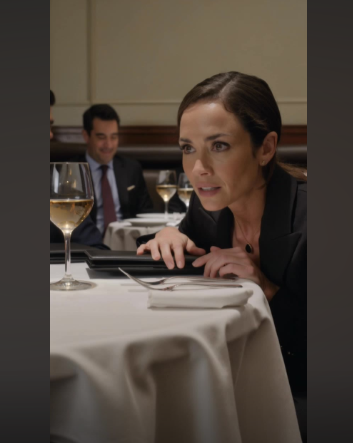
Minutes After Our Divorce, My Ex-Husband Tried To Buy His Pregnant Mistress A $1.5 Million Ring With My Card, But One Quiet Line At The Checkout Made His Face Go White While The Cashier, The Manager, And The Woman Beside Him Waited In Awful Silence
Jason pressed my card into the cashier’s hand like I hadn’t signed myself free twenty minutes earlier.
He stood under the chandelier in the fine-jewelry salon with his shoulders squared, his chin lifted, and Lily Foster tucked against his side as if the whole marble room had been built to admire them. Her green dress stretched neatly over the small roundness of her pregnancy, and one hand kept returning to her stomach in that soft, practiced way women use when they know people are watching.
The ring sat between them on a velvet tray. A clean white diamond, nearly ridiculous in its brightness, caught every light above the counter and threw it back in cold little sparks. The tag beside it had already been turned down by the cashier, but not before I saw the price.
$1,500,000.
Jason did not flinch.
“Go ahead,” he told the cashier. “Run it.”
The cashier, a young woman named Tessa according to her name tag, glanced from him to Lily, then down at the black metal card in her hand. She handled it carefully, the way people handle something expensive that does not belong to them. Jason noticed that too. He smiled wider.
I watched from beside a marble column near the entrance, my divorce papers folded in my tote and my pulse still moving too fast from the courthouse. I had not followed them in because I wanted a scene. I had followed because his laugh had come across the mall atrium like a hand closing around the back of my neck.
The terminal beeped.
Not the neat, approving chirp Jason expected.
A lower sound. A warning sound.
Tessa looked at the screen, and her smile faltered.
Jason’s hand tightened on Lily’s waist. Lily’s fingers stopped moving across her belly. I stayed exactly where I was, quiet enough to hear the ice shift in a stranger’s glass at the boutique’s champagne station.
Then the manager stepped out from the private showing room, read the screen, and looked at Jason with the polished calm of a man trained to speak gently over expensive disasters.
Before he opened his mouth, Jason turned and saw me.
For half a second, I saw the old instinct in his face. Blame her. Corner her. Make her explain herself first.
But I had already made my last explanation.
That morning had started at the Los Angeles County courthouse, in a hallway that smelled like old carpet, burnt coffee, and rain on wool coats. It had been one of those gray January mornings when the sky looked bruised and the palm trees along the curb moved like they were tired of pretending Southern California never got cold.
I stood outside Department 12 with a manila folder pressed to my ribs, listening to the elevator doors open and close behind me. Couples came out in pairs. Some whispered. Some stared at opposite walls. One woman laughed too loudly into her phone while her husband walked ten feet ahead of her with his wedding ring already in his pocket.
Jason arrived nine minutes late.
He had always arrived late when the event mattered to me and early when he wanted to be admired.
His navy suit was still beautiful. I knew because I had paid for it the year before, after he said investors treated men better when their shoulders looked expensive. It had been tailored in Beverly Hills, three fittings, horn buttons, a lining the color of dark wine. He wore it that morning with a pale blue shirt, no tie, and the air of a man inconvenienced by paperwork.
“Traffic was insane,” he said, though his hair was too perfect for him to have rushed anywhere.
I looked at his cufflinks. Silver rectangles. Mine too, in a way. I had bought those after his first product demo went badly and he spent two days telling me the room had judged his shirt sleeves.
“Good morning, Jason,” I said.
He glanced at my tote, then at my coat, then at my face. “You brought everything?”
“Yes.”
“Good. Let’s not drag this out.”
There was a time when a sentence like that would have opened a pit inside me. Three years of marriage had trained me to search his voice for weather. Warm meant I could breathe. Cool meant I should move carefully. Flat meant a storm was already in the house and I had only failed to notice the clouds.
That morning I felt the old reflex rise and then loosen.
My papers were ready. My account passwords had been changed. The housekeeper had been paid through the end of the month by me, not by him. The storage unit held the pieces I wanted. The joint utilities had been split. The financial planner had confirmed the beneficiary changes. The bank had told me exactly what would happen the moment I removed the authorized user.
All I had left to do was sign.
My attorney, Denise Alvarez, came out of the courtroom with her glasses on top of her head and a stack of copies hugged to her chest. She was in her late fifties, sharp as lemon peel, with a voice that never rose because it never had to.
“Ready?” she asked me.
Jason answered before I could. “We’re all ready.”
Denise looked at him for one polite second, then back at me. “Sophia?”
It was a small thing. My name. Not his impatience. Not his version of the room. Mine.
“Yes,” I said. “I’m ready.”
The hearing itself took less than twelve minutes. The judge confirmed our names. Denise confirmed the settlement. Jason’s attorney, a man who looked like he had been hired for speed, confirmed Jason understood the terms. Jason nodded through everything, his jaw tight, his eyes on the clock.
No one spoke about love.
No one spoke about the first apartment we rented in Pasadena, where the dishwasher leaked and Jason used to bring home tacos at midnight because he said dinner tasted better when we were both too tired to be impressive.
No one spoke about the anniversary card I found behind his car manual, still sealed, because he had forgotten to give it to me and then decided my disappointment was “dramatic.”
No one spoke about Lily Foster.
The judge signed. The clerk stamped. The sound of that stamp was smaller than I expected. A hard little thump, not a thunderclap. Three years ended with a woman in a cardigan sliding papers into a tray and calling the next case.
In the hallway, Jason exhaled like a man leaving a dentist.
“Well,” he said, “I hope you find whatever it is you think you’re missing.”
It was almost a decent sentence until his mouth bent at the corner.
I could have answered. I could have told him I had not been missing anything. I had been buried under him. Under his needs, his image, his mother’s complaints, his debts disguised as dreams, his talent for turning every wound back toward me.
Instead, I adjusted the strap of my tote. My mother’s blue scarf was knotted around the handle of my tote, soft from years of use, the only bright thing against my black coat.
“I hope you do too,” I said.
He looked annoyed that I had not given him something heavier to push against. He slid his phone from his pocket, checked the screen, and smiled before he could stop himself.
That was the first wrong detail of the day.
A smile like that did not belong on a man who had just ended a marriage unless he believed he was walking straight into a reward.
“Something funny?” I asked.
He put the phone away too fast. “Just work.”
Jason’s work had been the third person in our marriage long before Lily became the fourth.
When I met him, he was not cruel. That was the part people rarely understood. They wanted a villain to arrive wearing a sign. Jason arrived with rolled-up sleeves, cheap cologne, and a cracked phone screen. He was charming in the way ambitious men can be when they have not yet decided the world owes them more than it has given.
I was thirty-three then, already tired in a grown-up way. I had spent twelve years building a career in commercial real estate finance, first as an analyst in a windowless office, then as a partner at a small advisory firm that helped developers rescue ugly properties and turn them into useful ones. I liked balance sheets. I liked old buildings. I liked the satisfaction of making a neglected strip mall breathe again.
Jason was a founder, though the word sounded larger than his company. He and two college friends had built software that helped small retailers track inventory. At least that was the pitch. In reality, the product crashed whenever more than six people used it, and half his investors were relatives of fraternity brothers who enjoyed saying “early stage” at restaurants.
Still, he had hunger. I recognized hunger. I had lived on it in my twenties.
We met at a networking breakfast in Santa Monica, where the eggs were cold and everyone wore name tags that curled at the corners. Jason spilled coffee on the sleeve of his only blazer and laughed before anyone else could. I handed him a napkin. He looked at my name tag and said, “Sophia Sterling. That sounds like you should own a castle.”
“My castle has a mortgage and bad plumbing,” I said.
He laughed hard enough to make me laugh too.
For the first six months, he made me feel seen in a way that now embarrassed me to remember. He asked about my deals. He listened when I talked about lease structures. He sent me photos of buildings with crooked signs and wrote, You could fix this one. He came over on Sundays and helped me repaint my kitchen cabinets, even though he got more paint on the floor than the wood.
When he proposed, he did it at the Griffith Observatory at sunset, with a modest oval sapphire ring he said reminded him of the sky after rain. I cried because I thought modest meant thoughtful. Later, I learned modest meant he had used my birthday discount code from a jeweler whose mailing list I had joined.
I did not mind paying for things at first.
Money, in a marriage, is supposed to move like water between two people building the same home. Jason’s startup wobbled. Mine did not. I covered dinners. I paid off one of his cards when the interest got ugly. I helped him refinance a business loan. I introduced him to a banker who opened doors he had been pressing his face against for years.
Then came the black card.
It was not magic. It was not limitless. It was a private-client card tied to my main account, with a high limit because my firm had sold a portfolio that year and I had parked the proceeds carefully. I had used it for travel, client expenses, and emergencies. I added Jason as an authorized user after he came home one night from a pitch event and sat on the bathroom floor with his head in his hands.
“They laughed at me,” he said.
“No, they didn’t.”
“They looked at my card when I split the dinner. One guy had that black metal thing. You should’ve seen the way the waiter treated him.” He rubbed both hands over his face. “I can build the best product in the world, but nobody listens until you look like you’ve already won.”
I sat beside him on the cold tile. “A card won’t fix that.”
“It would help me get in the room.”
That was Jason’s favorite phrase. Get in the room. He said it about investors, restaurants, airport lounges, conferences, private clubs, people’s weddings. He never seemed to notice that once he got into a room, he still had to become someone worth keeping there.
I added him because I loved him and because I still believed love meant lending someone your steadiness until they found their own.
At the bank, the private-client representative slid a tablet across the desk and explained everything in patient language. Jason would have a card with his name on it. I would remain the primary account holder. I would receive statements. I would be responsible for payment. I could limit, suspend, or cancel his access at any time.
Jason nodded through the explanation while watching the representative’s hands.
“Totally,” he said. “Makes sense.”
In the elevator afterward, he held the welcome packet like a diploma.
“Can you believe it?” he said. “My own card.”
I remember turning toward him. “Authorized user, Jason.”
“Same thing.”
“No. Not the same thing.”
He kissed my temple, already bored by accuracy. “Don’t be so literal, Soph. We’re married.”
The second wrong detail came later, and it was quieter.
At a dinner with his investors in Venice, Jason waved the black card at the server before dessert and said, “Put it on mine.” The table smiled. One man raised his eyebrows. Another said, “Miller’s doing better than he lets on.”
Jason leaned back as if the chair had become a throne.
When the receipt came, I saw him sign with a flourish so large it nearly ran off the paper. Then he pushed the leather folder toward me under the table.
“Can you make sure the tip’s right?” he murmured.
I looked at the amount. He had tipped thirty percent on a dinner that cost more than my first car.
“Jason,” I said quietly.
His knee bumped mine, warning. “Not here.”
Not here became another rule. Not at dinner. Not in front of his mother. Not when he was stressed. Not after a long day. Not before a pitch. Not on his birthday. Not when I was “making it weird.” There was never a place where my concern could stand without being accused of taking up too much room.
At home, I brought it up.
He was in the kitchen, loosening his tie while the dishwasher hummed. I stood by the island with the receipt in my hand.
“You said it was your card.”
“It has my name on it.”
“It’s linked to my account.”
He opened the refrigerator and stared inside like the correct answer might be behind the orange juice. “Why do you care? It got paid.”
“Because you made it sound like your money.”
He shut the door too hard. “Do you want me to look small in front of them?”
The sentence landed strangely. Not Do you want me to lie? Not I’m sorry. Just that. Small.
I should have understood then that Jason did not want partnership. He wanted a stagehand.
I told myself he was under pressure. I told myself men raised to worship success sometimes confused support with survival. I told myself every marriage had uneven seasons.
Then his mother visited from Texas.
Carol Miller arrived with two suitcases, a church-lady perfume cloud, and a list of things she believed I was doing wrong. The sheets were too crisp. The coffee was too strong. The guest bathroom towels were “show towels,” apparently, because real towels should have more “humility.” She said this while wearing a gold bracelet Jason had given her for Christmas, one that had shown up on my statement under a boutique name she could not pronounce.
At dinner, she asked when we were giving her a grandbaby.
The word giving made my fork pause.
“We’re not rushing,” I said.
Carol looked at Jason. “That usually means the wife isn’t ready to make sacrifices.”
Jason did not defend me. He reached for the wine.
I waited for him to speak until the silence became its own answer.
Later, while I loaded the dishwasher, Jason came in and said, “You made Mom uncomfortable.”
I placed a plate carefully into the rack. “Your mother asked about my body at dinner.”
“She’s old-fashioned.”
“You let her.”
“She wants a family.”
“So did I.”
He made a sound, half laugh, half scoff. “Sophia, come on. You want control. That’s different.”
I turned then. He was leaning against the counter, arms folded, wearing the navy cashmere sweater I had bought him after he said every founder needed good basics.
“Control over what?” I asked.
“Everything.” He gestured at the kitchen, the house, the calendar, the accounts. “You make everything feel like I’m reporting to you.”
“You are using my money.”
His face closed. “There it is.”
“What?”
“The reminder. Every time. You always find a way to remind me.”
I remember drying my hands on a towel slowly because if I moved too fast I would say something I could not unsay. I remember the dishwasher steam rising between us. I remember thinking, with a clarity that frightened me, that he did not hate depending on me. He hated my knowing.
The third wrong detail was a necklace.
Not mine.
A charge appeared on the card in December from a jewelry boutique in West Hollywood. Twenty-eight thousand dollars. Jason said it was a client gift, then grew irritated when I asked which client.
“A serious one,” he said.
“Do serious clients usually wear rose-gold pendants?”
He looked up from his laptop. “Don’t start.”
“I’m asking a normal question.”
“You’re interrogating me because you’re bored.”
I had been standing in the doorway of his office with wet hair and an old sweatshirt, and I suddenly saw myself through his eyes: domestic, inconvenient, unglamorous, holding a credit-card statement like a hall monitor.
That was how he did it. He did not have to win the argument if he could make me ashamed of starting it.
Two weeks later, I saw the pendant on Lily Foster.
She was not his mistress yet, or maybe she was and I simply had not been willing to name it. She was an event consultant for one of his launch parties, a pretty woman in her late twenties with dark glossy hair, careful makeup, and the kind of laugh that always seemed to arrive half a second before the joke deserved it.
The party was at a rooftop bar downtown. Jason had insisted we go even though my flight from Denver had been delayed and I was so tired my teeth hurt. He told me it would look bad if his wife skipped it.
Lily greeted him with both hands on his arm.
“There he is,” she said. “The man of the hour.”
Jason grinned like she had plugged him into a wall.
Then Lily turned to me. “And you must be Sophie.”
“Sophia.”
“Oh, sorry.” She touched the pendant at her throat. “Jason talks so fast. I must’ve misheard.”
The necklace caught the rooftop light. Rose gold, small diamond at the center, twenty-eight thousand dollars of my silence resting against her skin.
Jason saw me looking. His expression did not change, but his hand moved to the small of my back and pressed once, hard enough to warn me.
Not here.
I smiled at Lily because there were investors ten feet away and because Jason’s hand felt like a command. “Nice to meet you.”
For the rest of the night, I watched them move around each other with the ease of people who had rehearsed being casual. He knew how she took her drink. She knew which story he liked to tell about sleeping under his desk. When a photographer asked for a group shot, Lily stepped naturally to Jason’s right. I was on his left, but the picture later appeared online cropped at the edge of my shoulder.
When I showed him, he rolled his eyes.
“It’s social media,” he said. “Why do you care?”
“Because I’m your wife.”
“You’re jealous of a vendor.”
That was the fourth wrong detail. Vendor. He used the word like a shield, and then he started hiding behind it everywhere.
Lily helped with events. Lily knew investors. Lily had a good eye. Lily understood branding. Lily could get them a better rate on flowers. Lily had connections in Newport. Lily was harmless. Lily was ambitious. Lily was young, which he did not say, because even Jason knew some truths sound uglier out loud.
By spring, my marriage had become a house where every room held a small alarm.
Jason began taking calls outside. He changed his phone password from our wedding date to something I did not know. He bought new cologne and said it was a sample. He started going to the gym at times when the gym’s app showed no check-ins. He accused me of tracking him when I asked about dinner.
I was not tracking him. I was watching the shape of his absences.
The body knows before the mind surrenders. Mine knew in the way my shoulders lifted when his car turned into the driveway. Mine knew in the way I stopped telling him small things because he used them later as evidence. Mine knew when he kissed my cheek without letting his lips settle.
The truth arrived on a Tuesday in June, wrapped in pink tissue paper.
A boutique in Beverly Hills called the house to confirm delivery instructions for “Miss Foster’s custom bracelet.” The woman on the phone sounded cheerful, rushed, and professionally discreet. She said Mr. Miller had asked that the item be delivered to an address in West Hollywood, but there was a discrepancy with the billing account.
“What discrepancy?” I asked.
“The primary address on file does not match the delivery address,” she said. “We just need verbal confirmation.”
I stood in the laundry room with one of Jason’s white shirts in my hand. There was a faint lipstick mark at the inside collar. Not red. Not dramatic. A beige-pink smear any stranger might have called makeup transfer.
“Read me the delivery address,” I said.
She hesitated. “I’m not authorized to—”
“I’m the primary account holder.”
The words came out before I had time to decide whether they were true enough to use as a weapon. The woman put me on hold. I stared at the washing machine door and watched my warped reflection ripple in the glass.
When she came back, her voice had changed.
“Yes, Mrs. Miller. I’m sorry. The address is on Harper Avenue.”
Harper Avenue. West Hollywood. A building with a courtyard and bougainvillea over the gate.
That night Jason said he had a late meeting.
I drove to Harper Avenue and parked across the street. I did not get out. I did not cry. I sat in my car with both hands on the steering wheel and watched him arrive carrying a white bakery box.
Lily came out barefoot.
She kissed him in the doorway.
It was not a shocked kiss. Not a mistake. Not a sudden thing that happened in weak light. She leaned up. He leaned down. His free hand settled against her waist with the ease of habit.
I watched until the door closed.
Then I drove home and folded his clean shirts because my body was still moving through the tasks my heart had finally stopped believing in.
When he came home after midnight, he smelled like vanilla frosting and Lily’s perfume.
“You’re awake,” he said.
“Yes.”
He loosened his tie. “Long day.”
“I know about Harper Avenue.”
The color left his face, then returned as anger.
“You followed me?”
I almost laughed. “That’s what you’re going with?”
“You followed me like some paranoid—”
“Do you love her?”
He stopped because that question had not followed his script.
For a moment, I saw something like shame. Not enough to save us. Enough to prove he still knew the map.
“It’s complicated,” he said.
“No. It’s not.”
He rubbed his jaw. “You and I have been dead for a long time.”
I stood in the middle of our bedroom, under the soft recessed lights I had chosen because he said overhead lighting made him anxious, and I wondered how many comforts a man could accept before deciding the woman who gave them had become the cage.
“Then why didn’t you leave?” I asked.
His mouth tightened.
There it was. The answer neither of us needed to hear.
Because the house was mine. Because the card was mine. Because the calm, invisible machinery of his life ran on accounts with my name above his. Because leaving me without losing access required timing, and Jason had always considered timing a form of intelligence.
“I didn’t want to hurt you,” he said.
That was the fifth wrong detail. He said it while standing in shoes I had bought, in a room I paid for, after coming home from another woman’s bed.
I slept in the guest room that night.
The next morning I called Denise.
She did not sound surprised. Good attorneys rarely do. They save surprise for billable mistakes.
“We can proceed cleanly,” she said. “But you need to separate the emotional problem from the practical one. Start with access.”
“I want to cancel everything today.”
“I understand. But some charges are tied to household expenses until temporary agreements are in place. Do it carefully. No drama. No impulsive moves he can turn into a story.”
Jason was talented at stories.
By the end of that week, he had told his mother we had “grown apart.” He had told friends I was “cold.” He had told one investor, within my hearing, that divorce was expensive because “some people confuse support with control.” He told me Lily was pregnant two days after I found a prenatal vitamin receipt in his car.
We were standing in the garage.
He said, “I didn’t plan it this way.”
I looked at the receipt in my hand. “How did you plan it?”
He stared past me at the shelves of holiday decorations. “Don’t make this uglier than it has to be.”
A younger version of me might have thrown the receipt at him. The woman I had become folded it once and set it on the hood of his car.
“You made it,” I said. “I’m just refusing to decorate it.”
He moved out the following weekend, though moved out was generous. He took clothes, watches, golf clubs, and the espresso machine he had once claimed gave him stomach pain. He did not take the framed photo from our wedding on the living-room shelf. He left that for me to dispose of, as if grief were another utility bill in my name.
For the next four months, our divorce moved through paperwork and negotiations while Jason performed freedom like a man auditioning for his own life. He posted from restaurants. He appeared at events with Lily. He tagged locations where I knew the valet alone cost more than his weekly grocery budget in the years before me.
Charges kept appearing on the authorized card until Denise’s temporary agreement allowed me to restrict them. Restaurants. Hotel rooms. Baby furniture. A weekend in Napa he described to mutual friends as “a reset.” I paid what I was required to pay and documented the rest. I set limits. He raged. I set more.
The first time a reduced charge was declined, he called me nine times in a row.
I answered on the tenth because I had learned that silence made him creative.
“What the hell did you do?” he said.
“I adjusted the spending limit.”
“You embarrassed me at dinner.”
“You tried to put twelve thousand dollars on my account after the agreement.”
“It was a business dinner.”
“At a prenatal-moon resort?”
He breathed hard into the phone. I could picture him stepping away from a table, Lily watching, a server pretending not to listen.
“You’re being vindictive,” he said.
“No. I’m being accurate.”
“You always have to win.”
“No, Jason. I always had to pay. I’m done confusing the two.”
He hung up.
My hands shook afterward, but less than I expected.
That became my private measurement of healing. Not whether it hurt. It hurt. Not whether I missed the version of him I had loved. Sometimes I did, which made me furious with myself. The measure was how long it took me to return to my own body after he tried to pull me out of it.
At first, hours.
Then twenty minutes.
Then one breath.
By December, the divorce was nearly complete. Denise sent me a checklist with the brisk kindness of a woman who had shepherded many people through the wreckage of people they once trusted. The card removal sat near the bottom.
AUTHORIZED USER ACCESS: CANCEL UPON FINAL ENTRY.
I read the line three times.
I thought of Jason in the bank elevator saying, My own card.
I thought of Lily touching the rose-gold pendant.
I thought of Carol Miller’s bracelet flashing while she asked whether I knew how to make a family.
Then I closed the email and went to bed.
There was no thunder. No revenge fantasy. No speech practiced into the bathroom mirror. Only a quiet preparation, which was stronger because no one could interrupt it.
On the morning of the hearing, before I drove to the courthouse, I stood in my kitchen and made coffee in the machine Jason had left because he preferred the newer one he had taken. Rain tapped the windows. The house felt too large and, for the first time, not hostile. Rooms can hold a person’s pain for a while. Then one day they give the echo back and let the walls become walls again.
I ate toast standing up. I checked the bank app. I checked the divorce folder. I checked the little list Denise had sent.
Do not engage in side conversations.
Sign only what we reviewed.
Send me a photo if Jason gives you anything unexpected.
Once final decree is entered, remove authorized user access.
The last line glowed in my mind all morning.
After the judge signed, after Jason gave me that thin little parting sentence, after Denise hugged me in the hallway and told me to go home and rest, I walked out of the courthouse feeling strangely unfinished.
The rain had stopped. The pavement shone. Cars hissed past the curb. I stood under the overhang while people opened umbrellas they no longer needed.
My bank app sent the reminder I had scheduled for myself.
I opened it.
For a few seconds, my thumb hovered over Jason’s name.
There are moments when a boundary looks too small for what it cost you. A button. A signature. A sentence. A door closing with no one screaming on either side. I had imagined I might feel triumphant, but what I felt was grief passing through me with its coat on, already leaving.
My mother’s blue scarf slid under my thumb as I tapped the button.
Remove Authorized User.
The app asked me to confirm.
I did.
A clean message appeared: Jason Miller’s authorized card has been canceled. Available credit has been restored to the primary account.
I took a screenshot for Denise, sent it, and tucked my phone away.
That should have been the end of it.
I decided to walk before getting my car. There was a luxury mall three blocks from the courthouse, bright and absurd against the gray day, with valet attendants in black coats and a window display full of handbags arranged like museum objects. I had no intention of buying anything. I wanted ten minutes among strangers who did not know my married name, my old kitchen, or the sound Jason made when he was about to lie.
I crossed at the light and entered through the department-store wing.
Warm air rolled over me. Somewhere a piano version of an old pop song drifted from hidden speakers. The floor was polished so cleanly that every chandelier seemed to have a twin beneath it. Women in camel coats moved past me carrying shopping bags. A man laughed into his phone near the perfume counters.
Then I heard Jason laugh.
Not his polite laugh. Not his investor laugh. His showing-off laugh, the one he used when he believed people were watching him win.
I turned before I could stop myself.
He was coming through the entrance with Lily Foster.
For a second, the mall tilted.
She wore a green dress under a cream coat, her hair blown out in soft waves, her lips glossed pale pink. Pregnancy had changed her face slightly, rounding it, giving her a softness that made her look younger than she was. She had one hand in Jason’s and one over her stomach.
Jason bent toward her and said something I could not hear. She laughed, tipped her face up, and kissed his cheek.
Twenty minutes after our divorce was finalized, he had brought her shopping.
Not to an ordinary store. Not for lunch. Not for baby shoes or a stroller or some plausible errand. He walked her straight toward the fine-jewelry salon near the center atrium, a boutique I had once paused outside of during our marriage.
I remembered the day clearly because small cruelties have a way of preserving themselves.
We had been walking past the window after a client lunch. A sapphire necklace rested on a bust of black velvet, deep blue and delicate. I stopped for maybe five seconds.
“That’s beautiful,” I said.
Jason glanced at the display. “You don’t even wear stuff like that.”
“I know. I just said it was beautiful.”
He leaned close so only I could hear. “Can you not do the rich-wife window-shopping thing right now? It’s tacky.”
Rich wife. As if the wealth embarrassed him only when I appeared to possess it.
Now he held Lily’s hand and entered the same boutique like a prince arriving at court.
I should have kept walking.
That is the sensible version of the story. The healed version. The version people tell you later because distance makes dignity look effortless.
But I was not a marble statue. I was a woman with fresh divorce papers in her bag, watching the man who had called her controlling lead his pregnant mistress toward the glass cases where diamonds slept under museum light. My feet moved before my pride could negotiate.
I followed at a distance and stopped near the marble column inside the entrance.
The cashier smiled as they approached.
“Welcome in,” she said. “Do you have an appointment?”
Jason placed one hand on the counter. “Jason Miller. Private showing.”
The cashier checked a tablet. “Yes, Mr. Miller. We have the Aurora ring prepared.”
Aurora.
He had named the appointment.
My chest tightened, not because of the ring, but because of the care. He had planned this. He had called ahead. He had arranged champagne, a private tray, a moment built around Lily’s gasp. With me, he had once bought grocery-store carnations on the way home because the anniversary reminder had gone off in his car.
A second associate brought champagne in narrow flutes. Lily accepted hers, then seemed to remember she was pregnant and giggled.
“Just for the picture,” she said.
Jason laughed. “She’s responsible now.”
Responsible.
I pressed my fingers into my palm.
The cashier returned with the velvet tray. The ring looked almost too large to be real, a brilliant oval diamond set on a platinum band with smaller stones along the sides. Lily made a sound that was half breath, half performance.
“Oh my God,” she whispered. “Jason.”
“Try it on,” he said.
“Are you sure?”
He looked around, making sure the cashier, the other associate, and the two women browsing earrings could hear. “Babe, I told you. Pick whatever you want. You’re carrying my child. You deserve the best.”
The words slid under my skin.
Not because he called the baby his. I had made my peace with that pain in pieces. It hurt because he used deserve like money could become morality if he spent enough of it in public.
Lily slipped the ring onto her finger. It fit loosely, but she held her hand up anyway. The diamond flashed near her face.
“How much is this one?” she asked, though I could see the tag from where I stood.
The cashier answered with practiced softness. “One point five million.”
Lily lowered her voice badly. “Jason, that’s too much.”
He kissed her temple. “Not for you.”
One of the browsing women turned. The other lifted her eyebrows. Jason saw them noticing and expanded. He always expanded under attention.
“A million and a half is nothing,” he said. “I’ve wasted more than that on bad hires.”
That was a lie so large it had no roof.
His company had never had enough cash to waste on good chairs.
Lily looked dazzled. Maybe she believed him. Maybe she needed to. A woman does not stand pregnant beside another woman’s husband and accept a ring like that unless she has already built a story where she is not the villain. Jason had given her the story, no doubt. I could hear him: Sophia and I were over. Sophia is cold. Sophia cares about money, not love. Sophia never understood me.
The cashier asked if he would like to proceed.
Jason pulled out the black card.
Even from the column, I recognized the dull weight of it, the faint edge shine, the way people’s eyes changed when he placed it down. His name was engraved on the front. That had always been enough for him.
“Use this,” he said. “And wrap it nicely. We’ll wear it out.”
Tessa lifted the card with both hands. “Of course.”
Then came the tiny hesitation.
She looked at the back of the card, then at her tablet, then at Jason.
“May I verify the billing ZIP code?”
Jason blinked.
It was subtle. So subtle most people would miss it. But I had watched that man invent confidence for three years. His blinks had vocabulary.
“Beverly Hills,” he said.
“The ZIP code, sir.”
He gave the ZIP from the house we had shared.
Tessa typed. Her mouth tightened. “And is there another billing address you’d like to try?”
Jason’s smile thinned. “That one works.”
“It isn’t matching the profile prompt.”
He looked irritated now. “I use that card everywhere.”
“I understand.” She kept her voice sweet. “For a transaction of this size, our system asks us to verify certain details.”
Lily looked from Tessa to Jason. “Is there a problem?”
“No,” Jason said too quickly. “There’s no problem.”
But there was. Not with the account. With him. He did not know the current billing ZIP because he had never opened the statements. He did not know the concierge contact because he had never made the payments. He did not know the account nickname because I had labeled it Sterling Primary years before he ever touched it.
I should have felt satisfaction.
Instead, I felt tired.
Tessa tried a second verification method, then inserted the chip.
“PIN, please.”
Jason typed his birthday.
That old familiar foolishness nearly made me close my eyes. When the card was issued, I had suggested a secure number. He insisted on his birthday because, as he put it, “Nobody guesses a founder uses the obvious thing.” Jason always believed arrogance could disguise carelessness.
The terminal thought for three seconds.
Then it beeped.
Tessa looked down.
The women near the earring case stopped pretending to browse.
Jason laughed once, sharp and false. “Try again.”
“Of course.”
She did.
Same beep.
Lily’s hand slid from her stomach to the edge of the counter. “Jason?”
“Machine’s acting up,” he said.
His voice had changed. Not much. Enough.
Tessa turned toward the rear of the boutique. “Let me have my manager take a look.”
“I don’t need a manager,” Jason said.
But she was already walking.
The manager, Andrew Hale, came out in a dark suit with a pocket square so precise it seemed architectural. I had met him once at a charity trunk show. He did not recognize me from the column, or if he did, he gave no sign. Good service, at that level, was mostly theater with better posture.
He took the terminal from Tessa, read the screen, and asked to see the card. Jason handed it over with a little snap of his fingers, anger returning because anger had always been easier for him than fear.
Andrew looked at the card. He looked at the screen again.
“Mr. Miller,” he said, “may I ask whether this card was recently reissued?”
“No.”
“Have you spoken with the primary cardholder today?”
The room seemed to narrow around that word.
Primary.
Jason’s face twitched. “I am the cardholder.”
Andrew kept his tone smooth. “Your name is on the authorized card, sir. I’m asking about the primary account.”
Lily turned fully toward Jason now. Her diamond hand lowered.
“What does he mean, authorized?” she asked.
Jason ignored her. “Run it again.”
“Sir—”
“Run it again.”
Andrew did not move.
Jason leaned closer, dropping his voice into the register he used on servers and assistants and me when we had company. “Listen, I don’t know what kind of training issue you’re having, but I’m not standing here while you embarrass me in front of my fiancée.”
Fiancée.
The word hit harder than I wanted it to.
Twenty minutes divorced, and he had already promoted her.
Lily heard it too. Her face softened with triumph and fear. It was the first time I wondered whether he had actually asked her or whether the word had slipped out because it helped him win the room. She looked at the ring, then at him, waiting for him to make the lie real.
Andrew’s eyes flicked toward Tessa. She gave the smallest shake of her head.
He turned back to Jason.
“I’m sorry,” he said. “This card has been canceled.”
There it was.
Not shouted. Not dramatic. Not cruel. One quiet line at a checkout counter.
Jason went pale so quickly it looked almost medical.
Lily whispered, “Canceled?”
The browsing women stopped breathing in unison. Somewhere beyond the boutique, the mall piano shifted into another song, cheerful and obscene.
Jason grabbed the card from Andrew’s hand. “That’s impossible.”
“I’m afraid it’s what the system shows.”
“Then your system is wrong.”
“The cancellation was confirmed before the transaction attempt.”
“By who?”
Andrew paused. “By the primary account holder.”
Jason’s eyes found me.
I had not moved. I had not planned to step into the center of the room. But there are moments when a person who has made you small for years looks at you and expects the old choreography: you explaining, him interrupting, you softening, him leaving with the thing he wanted.
My body remembered the choreography.
Then it refused.
I stepped out from beside the marble column.
Lily’s mouth opened. Jason’s face changed again, shame becoming rage so fast the two seemed like the same color under his skin.
“Sophia,” he said.
The way he said my name made Tessa glance at me, then at the card, then back at him.
I walked to the counter slowly. My heels made soft, measured sounds on the polished floor. I did not look at the diamond. I looked at Jason.
“Congratulations,” I said. “That was a fast engagement.”
Lily’s hand curled over her stomach. “Why are you here?”
“I was walking to my car.”
Jason barked a laugh. “Of course you were. You followed us.”
“I heard you.”
“You heard me, so you decided to sabotage me?”
I placed my tote on the counter. “No. I decided to stand here while your own assumption caught up with you.”
His eyes narrowed. “What did you do?”
Tessa looked down at her terminal. Andrew remained perfectly still. The two women near the earring case were no longer pretending at anything.
I could feel every person in that room waiting for me to either explode or shrink.
I did neither.
“Our divorce was finalized this morning,” I said. “I removed you as an authorized user from my account. That’s all.”
Lily looked at Jason. “Your account?”
Jason pointed at me, the old gesture, finger too close to my face. “Don’t twist this. That card has my name on it.”
I took one step back so his finger pointed at air.
“It has your name on it because I added you when we were married.”
“You can’t just cancel it.”
“I can.”
“You did this to humiliate me.”
“No,” I said. “I did it because I am no longer your wife.”
The sentence landed with more force than I expected.
Jason opened his mouth, then shut it. For one second, he looked less like an enemy and more like a man who had walked through a door assuming the floor would still be there.
Then he recovered the only way he knew how.
He sneered.
“You always loved this,” he said. “Holding money over my head. Making me ask. Making me look like some charity case.”
“Jason,” Lily said, her voice thin.
He turned on her. “Not now.”
She flinched.
I saw it. So did Tessa. So did Andrew.
That tiny flinch changed something in me. Not sympathy exactly, because Lily had made choices too, but a recognition. Jason’s anger did not belong to me. It never had. It simply looked for the nearest woman and called her responsible.
Lily touched the ring as if it might still anchor her. “You told me the card was yours.”
“It is mine,” Jason snapped.
Andrew cleared his throat gently. “Sir, with respect, the account is not.”
Jason looked ready to climb over the counter. “Stay out of it.”
I turned to Andrew. “Would you mind explaining the status in plain language?”
Jason’s head whipped toward me. “Don’t you dare.”
Andrew looked at me. I gave him my full name. He typed something into his tablet, confirmed with Tessa, and his manner shifted by a fraction. Recognition, not flattery. The kind of professionalism that says the room’s facts have arranged themselves.
“Ms. Sterling is the primary account holder,” he said. “Mr. Miller was listed as an authorized user. The authorized-user card was canceled earlier today. It can’t be used for any purchase, and the boutique can’t override that.”
Lily’s eyes filled with confusion before humiliation.
“But he said—” She stopped.
Jason laughed too loudly. “This is insane. Sophia, reactivate it.”
A small, almost tender sadness moved through me. Not for him. For the version of me who would have heard that command as a problem to solve.
“No.”
His eyebrows lifted. “No?”
“No.”
“Don’t be stupid.”
“I’m not.”
“Do you understand how this looks?”
“Yes,” I said. “I think we all do.”
The woman near the earring case made a tiny sound and covered it with a cough.
Jason’s face flushed. He looked around, suddenly aware that the audience he had invited with his boasting had remained for the invoice.
He lowered his voice. “Sophia, step outside.”
“No.”
“We need to talk.”
“We talked for three years. You called it nagging.”
His jaw tightened.
I could see him searching for a door. Money had been one. Charm another. Anger the oldest. He tried charm first, because the manager was watching.
“Come on,” he said, softening his mouth. “Don’t do this in public. You’re better than this.”
That almost got me.
Not because I believed him, but because he had found the exact bruise. Be better. Be graceful. Be generous. Be the woman who absorbs the insult so everyone else can stay comfortable.
I looked at Lily’s hand, the giant ring loose on her finger, and remembered the sapphire necklace in the window. I remembered tacky. I remembered not here. I remembered holding a laundry shirt with another woman’s makeup at the collar while Jason tried to make my pain sound like surveillance.
“I am better than this,” I said. “That’s why I’m not yelling.”
Lily slid the ring off and placed it back on the velvet tray. The diamond made a small click against the setting.
That click was the second visible thing that changed the room.
Until then, some part of Jason had believed the ring still belonged to the future. Lily removing it made the present undeniable.
“Babe,” he said, and the word came out strained.
She did not look at him. “Did you pay for the condo?”
The question surprised him. It surprised me too.
“What?”
“My apartment,” she said. “You said you paid for the deposit from your bonus.”
Jason glanced at me.
There it was, another account, another story, another place where my money had been turned into his masculinity.
I did not answer Lily. Not because she deserved protection, but because I refused to become the woman responsible for explaining Jason to the woman he had chosen.
“Ask him,” I said.
Lily’s face hardened. “I am asking him.”
Jason rubbed the back of his neck. “This is not the time.”
She laughed once, shaky. “It was the time five minutes ago when you wanted everyone to watch you buy me a ring.”
The words caught him off guard because they came from the side he thought was safe.
I saw, in that instant, how power changes when one person stops feeding the performance. Jason could fight me. He had practice. He could call me cold, controlling, jealous, bitter. But Lily’s doubt was new, and it frightened him because it threatened the mirror he had been using to admire himself.
He turned back to me.
“You wanted this,” he said. “You wanted her to turn on me.”
“I wanted my account closed to you.”
“You’re enjoying this.”
“No,” I said. “I’m remembering it.”
The boutique seemed to still.
Andrew quietly lifted the velvet tray and moved it behind the counter. That was the third visible thing: the ring leaving Jason’s reach.
Jason noticed. “What are you doing?”
“Securing the item,” Andrew said.
“I’m buying it.”
“With what?” Lily asked.
Her voice was not loud, but it cut him cleanly.
Jason stared at her.
I almost felt the old urge to soften the room, to rescue everyone from the discomfort he had made. I had done that for years. At dinners, I redirected conversations. At holidays, I laughed at jokes that bruised me. At investor events, I filled silences after Jason exaggerated because I understood the panic behind his boasting.
That day I let the silence stand.
Jason pulled out another card.
“Fine,” he said. “Use this one.”
Tessa accepted it because she was trained to. She ran it. It declined so quickly the terminal barely seemed to think.
“Try this.”
Another card. Another decline.
His face changed with each beep. Irritation, disbelief, panic, anger. Lily watched every motion. The witnesses watched Lily. Andrew watched the room.
By the fourth card, Jason’s hands shook.
Tessa’s voice was low. “I’m sorry, Mr. Miller. This one isn’t approving either.”
“It has a limit.”
“The transaction isn’t approving.”
He looked at me as if I had reached into the machine and turned the gears myself.
“You froze everything.”
“I canceled my account access,” I said. “Your own cards are your business.”
“That’s not possible.”
“Apparently it is.”
The cruelty in that sentence tempted me. I felt it pass through my mouth before I could refine it into something kinder. But some truths are not cruelty. Some truths are simply furniture finally placed in the middle of a room.
Jason leaned closer. “You think you’re so calm.”
“No. I worked very hard to become calm.”
“You’re still the same woman,” he said. “Standing there in that old coat, acting like you’re above everyone because you have a bank account. Without me, you’re just a lonely woman with spreadsheets.”
For a second, the words found their old hallway inside me.
Lonely woman. Spreadsheets. Old coat.
Then I saw Tessa’s face. She looked angry on my behalf and scared to show it. I saw Lily’s ringless hand on the counter. I saw Andrew standing ready, not intervening yet because I had not asked him to. The room did not belong to Jason simply because he was loud in it.
I let my shoulders drop.
“Jason,” I said, “the ring isn’t the thing you couldn’t afford.”
He blinked.
“It was the life you thought I would keep paying for after you threw me away.”
No one spoke.
The sentence did not come out loud. It did not need to. It moved through the boutique with the precision of a glass cutter.
Jason’s mouth opened, but no sound came.
Lily stepped away from him.
Not far. Just enough for air to show between their bodies.
That inch of air was more honest than anything he had said all morning.
Andrew placed the black card on the counter between us. It looked smaller there than it ever had in Jason’s hand.
“Ms. Sterling,” he said, “would you like us to destroy the authorized card, or would you prefer to take it with you?”
Jason flinched at destroy.
I looked at the card. For years, that little rectangle had been a prop in a play where Jason got to be generous, powerful, adored, and wounded whenever I asked who paid for the scenery. I expected to feel something dramatic seeing it powerless on the glass.
I felt only done.
“Destroy it,” I said.
Jason lunged forward. “No.”
Andrew did not move the card toward him. “Sir, it is canceled.”
“It has my name on it.”
“It no longer has value.”
Another quiet sentence. Another small mercy from a stranger who refused to shout what the facts already proved.
Jason’s hand hovered over the counter, then curled into a fist.
Lily looked at him with a kind of dawning horror. “So when you said Sophia was draining you…”
He closed his eyes.
“When you said the divorce was bleeding you dry…”
“Lily,” he said.
“When you said you were protecting your assets from her…”
“Enough.”
She shook her head. “You were using her money?”
I did not answer. I did not rescue. I did not sharpen the knife. I let Jason stand where his own sentences had led him.
He turned toward me again, and now his anger had the frantic edge of a man who could feel the room slipping away.
“You think this makes you strong?” he said. “Canceling a card?”
“No,” I said. “Leaving made me strong. Canceling the card was bookkeeping.”
Tessa looked down quickly, but I saw her mouth twitch.
Jason saw it too. His humiliation needed somewhere to go.
“You always did this,” he said. “You made me feel like nothing.”
“I stopped making you feel like something at my expense.”
He stepped toward me. Andrew shifted immediately, not aggressively, just enough to remind him this was still a business with rules.
Jason noticed and stopped.
That was when I knew the power had turned. Not because he was embarrassed. Embarrassment can become rage. Not because Lily doubted him. Doubt can be repaired with lies. It turned because Jason finally understood that the old private room where he could bend reality around me did not exist anymore.
There were other people here.
There were systems he could not charm.
There was a boundary he could not spend through.
He looked at me then, really looked, and I saw the shock of recognition. I was not waiting for him to become fair. I was not hoping he would apologize correctly. I was not auditioning for the role of the graceful ex-wife in the story he would tell next.
I was leaving.
Lily picked up her cream coat from the chair. Her hands shook.
“Take me home,” she said.
Jason turned to her with relief, as if the command meant she had chosen him again. “Yes. Let’s go.”
“Not your home,” she said.
He stared.
“My home,” she said. “The apartment you apparently didn’t pay for.”
A murmur moved through the two women near the earrings. One of them looked down, not with gossip now, but with the uncomfortable sadness people feel when theater becomes too human.
Jason swallowed. “We’ll talk in the car.”
“I don’t want to talk in the car.”
“Lily.”
She put one hand on her stomach and took another step away from him. “You made me stand here wearing a ring you couldn’t buy, with a card that wasn’t yours, in front of your ex-wife.”
Her voice broke on the last word. Not because she cared about me, I knew, but because the story in which she had been chosen by a powerful man had cracked under her feet.
“I’m sorry,” Jason said.
It was the first apology of the day, and it went to the woman he had not yet learned how to blame.
I almost smiled at that, but the sadness in me was older than sarcasm.
Andrew asked quietly whether anyone needed water. Tessa brought a glass before anyone answered. Lily took it. Jason did not.
He was still looking at me.
“Are you happy now?” he asked.
The question was so small, so nakedly childish, that for a moment I saw the young man from the networking breakfast, coffee on his sleeve, laughing before anyone else could. I saw how insecurity had hardened into entitlement and how my love had become one more resource he believed he had earned.
“No,” I said. “But I’m free.”
His face twisted.
“You’ll regret this.”
I picked up my tote.
“I regretted a lot of things,” I said. “This isn’t one of them.”
I turned to Andrew. “Thank you for handling this professionally.”
He inclined his head. “Of course, Ms. Sterling.”
Tessa stepped aside to let me pass. As I walked toward the entrance, I felt Jason behind me, the heat of his fury at my back, the pull of a thousand old instincts telling me to turn around, explain more, manage the room, make sure no one thought I was cruel.
I kept walking.
Outside the boutique, the mall looked exactly as it had before. Perfume counters gleamed. Elevators rose soundlessly. A child pressed both hands against a window display of handbags while his mother laughed and pulled him away. The world had not split open. That disappointed me for half a breath, then comforted me.
Freedom did not need spectacle.
I made it to the atrium before Jason caught up.
“Sophia.”
I stopped, but I did not turn until I had taken one full breath.
He stood ten feet away, red-faced, hair no longer perfect. Lily remained at the boutique entrance, watching us through the glass. She looked very young suddenly.
Jason lowered his voice. “I need that card for a few more days.”
There it was. Beneath every insult, every accusation, every performance: need.
“No.”
“I have obligations.”
“So do I. To myself.”
“I can’t have everything decline.”
“Then stop trying to buy things you can’t pay for.”
His eyes flashed. “You’re enjoying making me beg.”
“You’re not begging,” I said. “You’re negotiating with something that isn’t available.”
He looked around. A few shoppers slowed. He noticed and pulled his face into a smile that fooled no one.
“Come on,” he said softly. “We were married.”
“Yes.”
“That should mean something.”
“It did. That’s why I stayed too long.”
For once, he had no immediate answer.
I adjusted my tote. “Denise will send any remaining financial instructions through your attorney. Do not call me about money. Do not use my accounts. Do not use my name to get credit, access, reservations, introductions, or sympathy. We are done.”
Each sentence felt like placing a stone on solid ground.
Jason’s lips parted. “You rehearsed that.”
“I survived long enough to mean it.”
A man walking past looked over, then quickly away. Jason saw him and took a step back, embarrassed by being overheard. Once, I would have mistaken that retreat for restraint. Now I recognized it as vanity.
Lily came out of the boutique then, one hand on the doorframe.
“Jason,” she said. “I want to leave.”
He looked from her to me, and I could see him calculating. Who was more useful to address? Which woman could still be persuaded? Where could he recover dignity fastest?
He chose Lily because she still carried his child and because she had not yet learned every corner of his maze.
“Fine,” he said. “Let’s go.”
He walked toward her, but before he reached the door, Lily asked, “Did Sophia pay for the doctor too?”
The question stopped him cold.
I did not know what doctor she meant. I did not want to know. The old me would have collected the detail, sharpened it, stored it for later proof. The new me let it remain outside my life.
Jason said, “Not here.”
Lily laughed without humor. “That’s your favorite place to tell the truth, isn’t it? Not here.”
The words hit me with such strange force that I looked at her.
For a second, Lily and I were not allies, not friends, not even women on the same side of a wound. We were simply two people who had heard the same phrase from the same man and understood, in different amounts, what it had cost.
Jason grabbed her elbow. She pulled away.
“Don’t,” she said.
He released her immediately because people were watching.
I left them there.
My car was in the courthouse garage, so I walked back through the cold afternoon without buying anything. The divorce papers thumped softly against my hip inside the tote. My phone buzzed twice. Jason, then Jason again. I did not look at the messages until I was in the driver’s seat with the door locked.
This is insane.
You made your point.
A third message arrived.
Please.
That one sat on the screen longer.
Please had once been a key. He used it when anger failed. Please, Soph, I need you. Please, I’m trying. Please, don’t make tonight hard. Please, you know I love you. The word had opened me so many times I had grown afraid of my own compassion.
I forwarded the messages to Denise and blocked his number.
Then I sat in the garage and cried.
Not pretty crying. Not cinematic. I cried with both hands over my face, shoulders shaking, the steering wheel pressing into my knee. I cried for the woman at the bank who believed she was helping her husband stand taller. I cried for the wife at dinner measuring the cost of silence against the cost of truth. I cried for the shame I had mistaken for loyalty.
When the crying passed, it left me emptied but not broken.
I drove home.
The house was quiet when I entered. The living room still held an outline where Jason’s favorite chair had sat. Sunlight fell across the floorboards. The air smelled faintly of cedar from the cleaning spray Maria used on Fridays.
I took off my coat and hung it in the hall closet. Then I walked through each room and noticed what was mine.
The kitchen table with the nick in one corner from my first apartment. The framed print of the Los Angeles River after a storm. The lamp my father repaired twice because I liked its ugly shade. The stack of market reports on the dining table. The silence.
Especially the silence.
No television shouting from the den. No phone call taken on speaker while I cooked. No sigh from Jason because I asked whether he would be home for dinner. No accusation hiding inside a normal question.
Just silence.
I made tea and sat at the kitchen island. My phone buzzed again, this time from Denise.
Good work. Do not engage further. Proud of you.
I laughed through my nose. Denise did not waste praise. I saved the message.
At six, an email came from Jason’s attorney, formally requesting “temporary cooperation regarding financial instruments inadvertently interrupted during the transition.” Denise replied before I could even feel angry.
No.
That was the entire body of her email.
I read it three times and loved her a little.
Around eight, Lily sent me a message through social media. I almost deleted it unopened. Then I read it because curiosity is not the same as weakness.
Did you pay the deposit on Harper?
No greeting. No apology. No performance. Just the question.
I typed and deleted three answers.
Finally, I wrote: Ask Jason for records. I’m not part of your household.
She saw it immediately. Three dots appeared, vanished, appeared again.
Then: He said you were trying to ruin us.
I looked at that sentence for a long time.
There are traps that look like invitations. If I defended myself, I would enter their room. If I comforted her, I would become the emotional janitor of the mess they had made. If I attacked her, Jason would gain the villain he had promised.
I wrote: I hope you take care of yourself and the baby. Please do not contact me again.
Then I blocked her too.
It felt cold. It also felt clean.
For the next week, the world tried to pull the story out of me.
Mutual friends called with careful voices. Jason had told one person the card cancellation was “financial abuse.” He told another that I had ambushed him in a jewelry store. He told his mother I had embarrassed him while Lily was pregnant, a detail Carol carried like a torch.
Carol left me a voicemail.
“Sophia, I raised my son to be proud, and what you did was cruel. A woman with real class would have handled this privately.”
I deleted it.
Then I undid the deletion and saved it for Denise, not because I planned to use it, but because old habits of documentation die slower than love.
My brother Paul called from Seattle, where he lived with his wife and two loud children.
“I heard from Mom,” he said. “She’s worried you’re alone.”
“I am alone.”
“You know what I mean.”
“I know.”
He was quiet for a moment. “Do you want me to fly down?”
“No. But thank you.”
“You sure?”
“I’m sure.”
“You sound different.”
I stood at the kitchen window and watched a neighbor’s dog refuse to walk in the drizzle. “I am different.”
“Good different?”
“I don’t know yet.”
“That’s allowed.”
Paul had never liked Jason. He had been polite because I loved him, which is a particular discipline siblings practice when they want to stay in your life. At our wedding, Paul hugged Jason and whispered something I did not hear. Years later, after too much wine, Jason told me Paul had said, “Take care of her, or answer to me.” Jason presented it as proof my family thought he was beneath us.
At the time, I defended Paul.
Now I wished I had defended myself as fiercely.
Work saved me in ordinary ways. Not dramatically. No triumphant montage. Just emails, calls, numbers, tenants, repair budgets, a downtown property with a roof leak no one wanted to own. I returned to my office two days after the divorce, and my assistant, Mara, had placed a small vase of white tulips on my desk.
“No card,” she said quickly. “Just flowers.”
I touched one petal. “Thank you.”
She nodded toward the conference room. “Nine-thirty is here.”
“Who is nine-thirty?”
“The Glendale investors who think parking lots are personality traits.”
I laughed for the first time that week without pain in it.
In the meeting, a man twice my size tried to talk over me about a property I had underwritten down to the sprinkler valves. I let him speak for forty-two seconds. Then I slid the rent roll across the table and asked him to explain the vacancy assumptions on page three.
He could not.
The room turned.
Not because I embarrassed him. Because I knew the work.
Afterward, Mara followed me into my office grinning.
“That was terrifying.”
“Was it?”
“In a good way.”
I sat behind my desk and looked at the city through the glass. For years, Jason had treated my competence like a household appliance, useful until it made noise. At work, it had weight. It had shape. It moved rooms.
Two weeks after the boutique, Andrew Hale sent a handwritten note to my office.
Ms. Sterling, I wanted to apologize again for the discomfort you experienced in our salon. Your composure was remarkable. We hope to welcome you back under happier circumstances.
There was no mention of Jason. No gossip. No extra flourish.
I placed the note in a drawer and forgot it for months.
Jason did not disappear from my life all at once. Men like him rarely offer that courtesy. He found new numbers. He emailed from work accounts. He sent messages through friends. His tone moved through seasons: outrage, wounded dignity, practical need, nostalgia, spiritual growth, anger again.
One email arrived at 2:13 a.m.
I know I messed up, but you didn’t have to make me look broke in front of everyone.
I read it in bed, the blue glow of my phone lighting the ceiling.
That was his grief. Not losing me. Not betraying me. Not fathering a child in the middle of our marriage. Looking broke.
I forwarded it to Denise and slept better than I expected.
A month later, I saw Lily in person.
Not on purpose. Not at the mall. At a coffee shop near my office where I stopped after a long inspection. She was sitting alone at a corner table, visibly pregnant now, her face bare, hair pulled into a low knot. No diamond ring. No rose-gold pendant. Her fingers were wrapped around a paper cup she had not drunk from.
I considered leaving.
Then she looked up.
For a moment, neither of us moved.
She stood slowly. “Sophia.”
“Lily.”
“I’m not here to start anything.”
“I didn’t think you were.”
That was not entirely true, but I wanted it to become true.
She glanced at the chair across from her. “Can I say one thing?”
I should have said no. I had earned no. But her face held exhaustion deeper than performance.
“One thing,” I said.
She swallowed. “He told me your marriage was over before we started.”
I held my coffee with both hands. “It wasn’t.”
“I know that now.”
The apology did not come immediately. Maybe she was looking for it. Maybe she did not know where to place it.
“I wanted to believe him,” she said. “That’s not an excuse.”
“No,” I said. “It isn’t.”
Her eyes filled, but she blinked the tears back with surprising discipline.
“He hasn’t paid my rent in two months,” she said. “He said you froze something. He said you’re punishing the baby.”
I felt the old anger spark, but it did not spread. “I closed access to my account. Anything else he promised you is between you and him.”
She nodded once. “I figured.”
We stood in the hiss of espresso machines and morning conversation. She looked very young again, but not innocent. Those are different things.
“I’m sorry,” she said finally. “I know it doesn’t fix anything.”
“It doesn’t.”
“I know.”
I could have said more. I could have asked whether she loved him, whether she understood him, whether she saw the way he turned need into blame. But I was not her mother, sister, friend, or warning label. I was the woman she had helped hurt.
“Take care of yourself,” I said.
She nodded. “You too.”
As I walked out, I saw her sit down and press both hands around her cup as if she were trying to warm something too deep for coffee.
I did not hate her after that. Hate requires a kind of attachment I was no longer willing to maintain.
By spring, Jason’s company had folded into something smaller and less glamorous. A former employee told a mutual friend, who told me, that he was consulting part-time and “figuring things out.” Carol moved back to Texas after arguing with Lily at a baby shower about whether unmarried mothers should wear white. Lily gave birth to a healthy baby girl in May. I knew this because someone sent me a photo I did not ask for.
The baby had Lily’s dark hair and Jason’s mouth.
I deleted the photo.
Not out of spite. Out of respect for the life I was not entering.
On the first warm Saturday of June, I went back to the mall.
I had avoided it for months without admitting avoidance. I ordered work clothes online. I sent Mara to pick up gifts. I told myself parking was annoying, the stores were crowded, the lighting was unflattering. All true. None honest.
Then Denise invited me to a charity luncheon there, in the same wing as the jewelry salon. She did not pressure me. She simply said, “It might be good to take the place back.”
So I went.
I wore a cream suit, low heels, and earrings my mother had given me when I made partner. I parked myself. I walked through the atrium without rushing. The chandeliers still glittered too much. The perfume counters still smelled like expensive flowers and chemicals. The piano still played songs too soft to name.
When I passed the fine-jewelry salon, Tessa saw me through the glass.
She smiled. Not pity. Recognition.
I smiled back.
Andrew came to the entrance. “Ms. Sterling.”
“Mr. Hale.”
“I’m glad to see you.”
“I’m glad to be seen under less dramatic circumstances.”
His mouth warmed. “We do prefer those.”
I almost kept walking, but then I looked toward the display case. The sapphire necklace I had admired years ago was gone, of course. Windows change. So do women.
“I’d like to look at something,” I said.
“Of course.”
Inside, the salon was quiet. A couple near the back whispered over wedding bands. An older man examined cufflinks. No one knew me. No one cared. The normalcy felt luxurious.
Andrew brought out a tray of necklaces. Diamonds, pearls, sapphires. I looked without urgency.
Tessa hovered nearby, then said, “May I show you one more piece? It came in last week.”
She brought a simple pendant, a small moonstone surrounded by tiny diamonds. It was not the most expensive thing in the case. Not even close. But when she placed it on the velvet, the stone held the light softly, blue and gray and white all at once.
“That one,” I said.
Andrew smiled. “A beautiful choice.”
I bought it with my own card.
No one clapped. No one turned pale. No manager made a statement. The transaction approved with a clean little chime, and the sound passed through me like a bell in another room.
Tessa wrapped the box in white paper and tied it with a narrow ribbon.
“For you?” she asked.
“Yes,” I said. “For me.”
At the luncheon, Denise noticed the small shopping bag beside my chair.
“Retail therapy?” she asked.
“Location therapy.”
“Even better.”
We sat at a table with a nonprofit director, two architects, and a woman who built affordable housing in neighborhoods where everyone claimed to want it until permits appeared. I talked about financing gaps and tenant protections. I ate overcooked salmon. I laughed when Denise muttered that silent auctions were where decorative bowls went to threaten people.
Halfway through dessert, my phone vibrated.
A message from an unknown number.
It’s Jason. I heard you were at the mall. I hope you’re happy. Lily left. She says I lied. Everyone leaves when money gets tight.
I stared at the message.
There had been a time when those words would have tugged at me. Everyone leaves. Money gets tight. The lonely boy inside the angry man, holding out a bowl and calling it love.
Denise saw my face. “Him?”
I nodded.
“Want me to handle it?”
“No.”
I typed one sentence.
I’m not your audience anymore.
Then I blocked the number.
Denise lifted her glass of iced tea. “To not being the audience.”
I touched my glass to hers. “To that.”
That night, I came home before sunset. The house glowed in the amber light, but not in the sentimental way people describe houses after divorce. It was still the same house. The dishwasher needed repair. The bougainvillea had grown too aggressively along the side gate. One of the hallway bulbs flickered. Freedom did not complete chores for you.
I changed into jeans, watered the plants, and opened the jewelry box from the salon. The moonstone pendant lay inside like a small piece of weather.
I put it on.
In the mirror, I looked older than the woman who had married Jason and younger than the woman who had stood behind the marble column. Not in years. In burden.
That night, I untied my mother’s blue scarf from the tote and laid it across the back of the chair by the window.
I did not need it to steady my hand anymore.
The following Monday, I met with a new client in a converted warehouse near the Arts District. The building had exposed brick, stubborn plumbing, and a roof deck with a view of downtown that made investors use words like lifestyle. I walked the property with contractors, asked dull questions about drainage, and negotiated a fee that made the client blink.
On my way out, Mara called.
“Please don’t be mad.”
“That depends on what you did.”
“Nothing. A man named Jason Miller is in the lobby. He says he needs five minutes.”
I stopped on the sidewalk. A truck rattled past. “Did he threaten anyone?”
“No. He looks… rough.”
“What does rough mean?”
“Like he slept in his car and yelled at a mirror.”
I closed my eyes.
“I can have building security remove him,” she said.
“No. Put him in the small conference room. Leave the door open. Stay within sight. I’ll be there in twenty minutes.”
“Sophia—”
“I’m not going to be pulled into anything.”
“I know. I just hate his face.”
Despite myself, I smiled. “Professional.”
“I professionally hate his face.”
When I arrived, Jason was sitting at the far end of the conference table, turning a paper coffee cup between both hands. He looked thinner. His suit was not the navy one. This one fit badly at the shoulders and had a shine at the elbows. His hair needed cutting.
For a moment, seeing him diminished did not satisfy me. It simply confirmed what I had learned: the pedestal had always been made from borrowed materials.
He stood when I entered.
“Sophia.”
“Jason.”
Mara stood near her desk outside, visible through the glass wall. I left the door open.
He noticed. “You don’t trust me?”
“No.”
The directness made him look down.
“I deserved that,” he said.
I sat across from him. “You have five minutes.”
He rubbed both hands over his face. “Lily left.”
“You texted me.”
“She took the baby to her sister’s.”
I said nothing.
“She says she can’t trust anything I say. She says every time she looks at me she sees that boutique.”
“That sounds painful.”
He looked up sharply, searching for sarcasm. I had not offered any.
“It is,” he said.
“What do you need?”
He laughed weakly. “You always were efficient.”
“What do you need, Jason?”
He reached into his jacket and pulled out an envelope.
I did not touch it.
“It’s not a trick,” he said. “It’s a letter. An apology.”
“I don’t want it.”
His face tightened. “You haven’t even read it.”
“I don’t need to.”
“I spent all night writing it.”
“That doesn’t obligate me to receive it.”
He stared at the envelope as if it had betrayed him by failing to become a bridge.
“I’m trying to make amends.”
“Then start with people who asked for that.”
“You were my wife.”
“I was. Now I’m the person who said no.”
He swallowed. “I don’t know how to fix my life.”
There it was again. The bowl.
A part of me, still human, felt the sadness of it. Jason had built himself around borrowed admiration until he did not know where to stand without it. But pity is not a plan, and compassion without boundaries is just another way to abandon yourself.
“I’m sorry you’re struggling,” I said. “I’m not available to help you through it.”
His eyes reddened. “Did you ever love me?”
The question hurt because the answer was true.
“Yes.”
“Then how can you sit there like this?”
“Because loving you cost me too much when you used it as access.”
He flinched.
Good, I thought, then hated that I thought it. Healing did not make me saintly. It made me honest enough to choose what I did with the uglier sparks.
He pushed the envelope a few inches across the table.
“Please take it.”
I looked at it.
White paper. My name in his handwriting. A month ago, I might have opened it alone at midnight and let his version of remorse rearrange my sleep.
“No,” I said.
His mouth trembled. Anger rose, then died before it reached his voice.
“What am I supposed to do with it?”
“Whatever you want. That’s not my job.”
Mara appeared in the doorway. “Sophia, your eleven-thirty is early.”
I did not have an eleven-thirty. Mara was a treasure.
I stood. “Take care, Jason.”
He stood too, fast enough to bump the table. “That’s it?”
“That’s it.”
“I came all the way here.”
“You weren’t invited.”
He looked at the open door, at Mara, at the office behind her full of people who knew exactly whose name was on their paychecks. He could not perform here. Not successfully.
He picked up the envelope.
At the doorway, he turned. “For what it’s worth, I am sorry.”
I believed, in that moment, that he wanted to be.
“I hope that becomes useful to you,” I said.
He left.
Mara watched him cross the lobby. “Do you want a cookie, a drink, or permission to scream?”
“A cookie.”
“Excellent choice.”
I went into my office, closed the door, and leaned back against it. My hands did not shake. That surprised me more than anything in the boutique had.
For years I had mistaken intensity for meaning. If a conversation did not leave me exhausted, I thought it had not reached the truth. But truth, I was learning, could be quiet. It could be a canceled card. A refused envelope. A five-minute meeting with the door open. A cookie from an assistant who knew when to lie about an eleven-thirty.
In July, the house finally sold.
I did not have to sell it. I chose to. The rooms had stopped feeling haunted, which made leaving possible. I found a smaller place in Santa Monica with big windows, terrible closet space, and a balcony just wide enough for two chairs and a pot of basil. The ocean was six blocks away. At night I could hear traffic and, beneath it, if the wind behaved, the faint breath of waves.
Packing revealed the archaeology of my marriage.
A cork from our first anniversary dinner. A charger for a device Jason no longer owned. Three copies of pitch decks he had asked me to review, each one full of comments in my handwriting and none of my name in the acknowledgments. The wedding photo from the living-room shelf, still facedown where I had placed it months earlier.
I sat on the floor and looked at it.
We were smiling. Jason’s hand rested at my waist. My face glowed with the soft stupidity of trust. Behind us, my parents stood close together, my mother’s eyes bright, my father’s handkerchief already in his hand.
I did not tear it up.
I did not keep it framed.
I placed it in a box labeled PAST, which felt both obvious and correct.
On my last night in the house, Paul flew down and helped me eat takeout on the kitchen floor because the table had already gone to storage.
“I never liked him,” he said around a mouthful of noodles.
“I know.”
“I tried to be subtle.”
“You told him at our wedding that you knew a guy with a wood chipper.”
Paul pointed his chopsticks at me. “That was a joke.”
“It was not subtle.”
“He understood the spirit.”
I laughed until my eyes watered.
Then, because Paul was my brother and laughter had always made room for the harder thing, he said, “Why didn’t you tell me how bad it was?”
I looked toward the empty living room. The walls showed pale rectangles where pictures had hung.
“Because saying it out loud would have made me responsible for doing something,” I said. “And I wasn’t ready.”
He nodded slowly.
“I’m sorry,” I said.
“Don’t apologize to me for surviving in the order you could.”
That sentence stayed with me.
People love to imagine they would leave the first time. The first insult. The first lie. The first receipt. Maybe some would. But many of us stay because the first thing is wrapped in apology, and the second thing arrives during a hard week, and the third thing seems connected to the wound from the first two. By the time the pattern has a name, it has already learned the layout of your house.
I did leave.
Not as early as someone else might have. Not as dramatically as people wanted when they heard the boutique story. But I left with my accounts intact, my work waiting, my name returned to me, and my voice steady enough to say no without offering a substitute comfort.
That was not nothing.
In August, I ran into Andrew Hale again, not at the boutique but at a charity auction for a children’s arts program. He was there with his husband, a cheerful architect named Ben who wore orange socks with a tuxedo. Andrew introduced me kindly, with no trace of the story between us until Ben went to bid on a painting and Andrew turned to me.
“I hope life has been gentler,” he said.
“Some days.”
“That’s usually the best we can ask at first.”
I studied him. “Do you see a lot of scenes like that?”
“In luxury retail?” He smiled faintly. “We see money tell the truth faster than people do.”
I thought about that for a long time.
Money had not ruined my marriage. It had revealed where the rot had been growing. The card had not made Jason dishonest. It had given his dishonesty better lighting. The decline at the checkout had not humiliated him by itself. It had removed the costume.
A few weeks later, a final forwarding envelope arrived at my new condo. Inside was the blue sapphire engagement ring Jason had given me at the observatory. I had left it in the house safe and forgotten to decide its fate.
For a while, I stood at the kitchen counter holding it.
It was still beautiful. Modest, yes. Thoughtful, maybe once. The stone caught the afternoon light and held it in a way that made the past seem gentler than it had been.
I took it to a jeweler the next day and asked her to remove the sapphire.
“What would you like done with it?” she asked.
“A pendant,” I said.
“For sentimental reasons?”
I considered lying. Then I smiled.
“For reclamation.”
She looked up, then nodded as if that made perfect sense.
When I picked it up two weeks later, the sapphire hung on a simple chain, stripped of promise, freed from the ring that had once turned my yes into a cage. I wore it to work the next day under a white blouse. No one noticed. That pleased me.
Some victories are not meant to be visible from across the room.
In September, Denise invited me to speak at a small luncheon for women rebuilding finances after divorce. I almost said no. I did not want to become a cautionary tale in heels. But Denise said, “You don’t have to tell the ugly parts. Tell the practical ones.”
So I did.
I stood in a hotel conference room with neutral carpet and too-cold air-conditioning and spoke to thirty-two women eating salads they had not chosen. I told them to know which accounts carried their names. I told them to understand authorized users. I told them support should never require blindness. I told them generosity needs records, not because love should be suspicious, but because love should not demand self-erasure as proof.
During questions, a woman in the back raised her hand. She wore a red blazer and twisted her napkin in her lap.
“What if he says asking about money means I don’t trust him?” she asked.
The room went very still.
I gripped the podium lightly.
“Then ask yourself why your trust requires you to know less,” I said.
Her eyes filled.
Mine almost did too.
Afterward, she found me by the coffee urn and whispered, “Thank you.”
I touched her arm. “You’re not crazy.”
She closed her eyes for one second, and I knew that had been the sentence she came for.
Jason eventually stopped contacting me.
Not because he became noble. Because the doors stopped opening. Denise blocked legal routes. I blocked personal ones. Friends learned I would leave tables where his name became entertainment. Carol sent one final letter in looping handwriting, blaming me for her son’s unhappiness, then moved on to blaming Lily, then perhaps the economy, then whatever else allowed her not to look directly at the boy she raised.
Lily sent a note six months after the divorce.
Not a message. A note, forwarded through Denise because she had learned boundaries could be respected even late.
Sophia, I am not asking for forgiveness. I only want to say I understand more now than I did then, and I am sorry for my part in hurting you. I hope your life is peaceful.
I read it once.
Then I placed it in the PAST box with the wedding photo.
Peace, I discovered, did not arrive like joy. It was less theatrical. It came as a Tuesday evening when I ate pasta on my balcony and realized no one would criticize the garlic. It came as a Saturday morning when I slept until nine without inventing a reason. It came as a work trip where I booked the hotel I wanted and did not ask whether someone would call it excessive. It came as a card statement with only my purchases on it.
It came, most of all, as the absence of being watched incorrectly.
Near the end of the year, the mall held its holiday charity event. I attended because my firm sponsored one of the installations, a temporary workshop where children could build miniature cardboard houses and learn about design. The atrium was full of lights. A choir from a local school sang near the escalators. The fine-jewelry salon glittered in the distance, but it no longer pulled at me.
I stood beside our display, helping a little girl glue a crooked roof onto her cardboard house, when I heard a familiar voice behind me.
Not Jason.
Andrew.
“Ms. Sterling,” he said. “Merry Christmas.”
“Merry Christmas.”
He held out a small envelope. “A note from Tessa. She’s at another location now, assistant manager.”
“That’s wonderful.”
Inside, Tessa had written in neat block letters: I wanted to thank you. That day taught me something about staying calm when someone tries to make panic the loudest person in the room. I got promoted last month. Hope you’re well.
I folded the note carefully.
The little girl beside me held up her cardboard house. “Do you like it?”
I looked at the crooked roof, the glitter glue windows, the cotton-ball smoke rising from the chimney.
“I love it,” I said. “It looks strong.”
She frowned. “It’s crooked.”
“Strong things can be crooked.”
She considered this, then nodded with the grave authority of a child accepting a new law.
Later that night, I walked home from the parking garage under a clear winter sky. Los Angeles did not offer many stars, but the few that broke through seemed determined. My phone stayed quiet in my pocket. My necklace rested against my collarbone. The air smelled like eucalyptus, car exhaust, and the ocean hiding somewhere beyond the streets.
I thought of the boutique again.
Not the ring. Not Jason’s pale face. Not Lily’s stunned silence.
I thought of the moment before Andrew spoke, when everyone waited and Jason still believed reality could be bullied into approving the charge. I thought of how often I had been that waiting room for him. The pause before consequence. The soft place where he expected facts to land harmlessly.
The terminal beeped, and for once, I did not translate the sound into an apology.
I had spent years mistaking endurance for devotion. I had believed that if I loved steadily enough, paid quietly enough, forgave elegantly enough, Jason would become the man he had pretended to be when he needed me. But love cannot pay the balance on a character someone refuses to build.
That was the lesson I kept.
Not that men lie. Some do. Some don’t.
Not that money protects you. It can’t, not from grief, not from shame, not from the loneliness of realizing the person beside you has been using your tenderness as infrastructure.
The lesson was smaller and harder.
Access is not love.
A person can hold your hand, wear your gifts, sleep beside you, use your name, swipe your card, tell the world you belong to each other, and still never understand what you have entrusted to them. A person can mistake your generosity for weakness so often that the day you close the door, they call the lock cruel.
I used to fear being called cruel.
Now I feared abandoning myself to avoid the accusation.
When I reached my condo, I stood for a moment before unlocking the door. Through the window, I could see the lamp I always left on in the living room. Its shade was still ugly. I still loved it.
Inside, the rooms were calm. Not empty. Calm.
I placed my keys in the bowl by the door, took off my shoes, and walked to the balcony. The city stretched below, restless and glittering. Somewhere out there Jason was living with the consequences of his choices. Somewhere Lily was raising a child who might one day learn a better kind of love than the one that brought her into the world. Somewhere another woman was reading a statement, noticing a wrong detail, feeling her stomach drop, and wondering whether the truth was enough reason to leave.
I hoped she would know it was.
I hoped she would understand that dignity does not always arrive with applause. Sometimes it arrives as a canceled card, a steady voice, and the courage to let a man turn pale in front of the life he pretended was his.
And this time, when the room went silent, I did not rush to fill it.
What would you have done if the man who betrayed you tried to buy someone else a dream with the life you paid for?
