Two days after my son’s wedding, the manager of the reception venue called me
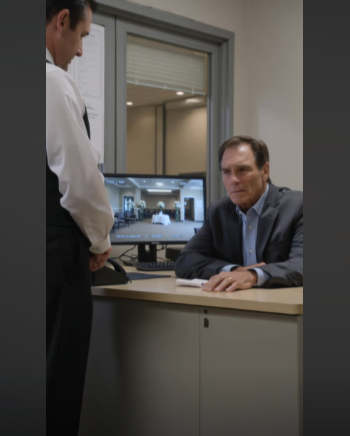
RESTAURANT CALLED: “Come ALONE, DON’T Tell Your WIFE – SEE the FOOTAGE!” – I WENT and FROZE
TWO DAY AFTER MY SON’S WEDDING, THE RESTAURANT MANAGER CALLED ME AND SAID: “WE RECHECKED THE SECURITY CAMERA FOOTAGE. YOU NEED TO SEE THIS YOURSELF!” PLEASE COME ALONE AND…
DON’T TELL YOUR WIFE ANYTHING
Two days after I paid eighty thousand dollars for my son’s wedding, the manager of the reception venue called me and said:
“Mr. Barnes, are you alone?”
I was sitting at my kitchen table.
My wife of forty years was six feet away arranging white lilies in a vase.
“Yes.”
“Please don’t put me on speaker.”
Something in his voice made me sit straighter.
“Tony, what happened?”
He lowered his voice.
“We were reviewing security footage from the bridal VIP room after the reception.”
A pause.
“It involves your wife and your daughter-in-law.”
I looked at Beatrice.
She was humming a hymn.
“And, sir…”
Tony stopped.
Then:
“I’ve already contacted the police.”
My hand tightened around the phone.
“Why?”
“Because I think you may be in danger.”
That was the last normal morning of my marriage.
—
My name is Elijah Barnes.
I was seventy years old.
For more than thirty years, I built a regional logistics company from one used truck into a fleet of nearly three hundred.
I had employees who had been with me longer than some marriages last.
Warehouses.
Real estate.
Investments.
Enough money that people sometimes confused generosity with unlimited access.
I had recently stepped away from daily operations.
Beatrice and I were supposed to enjoy retirement.
Travel.
Church.
Grandchildren, eventually.
Ordinary things wealthy people discover cost no more than they do for anyone else.
The day before Tony called, our only son, Terrence, had married Megan Caldwell.
I had paid for most of the wedding.
Not because Terrence demanded it.
Because I wanted to.
During the reception, I also announced that Beatrice and I intended to give the couple our lake property once the transfer paperwork was complete.
Terrence cried.
Megan hugged me.
Everyone applauded.
I thought I was watching my family begin its next chapter.
Apparently two women in that ballroom were waiting for mine to end.
—
When I hung up, Beatrice turned.
“Who was that?”
“Pharmacy.”
The lie came easily.
That frightened me.
She studied my face.
“Everything okay?”
“Prescription mix-up.”
“I can drive you.”
“No.”
She moved closer.
For forty years, that face had meant home.
She had been there when I drove nights because we could not afford another employee.
There when our first warehouse flooded.
There when Terrence was born.
There when my mother died.
There when I nearly lost the company during a recession.
Now I looked at her and thought:
Danger.
That transformation happened in less than one minute.
“I’ll be back.”
I kissed her forehead.
My lips touched the skin of the woman a stranger had just warned me might be involved in hurting me.
Then I walked out.
—
Tony met me at a side entrance of the Gilded Oak.
He looked terrible.
No polished suit.
No restaurant-manager smile.
He took me directly to a security office.
Two people were waiting.
One was the venue’s general manager.
The other introduced herself as Detective Cara Lewis.
That was when the situation became real.
“I asked Tony not to send you the video,” she said.
“Why?”
“Because we need to preserve the original system and chain of custody.”
Good.
I had spent thirty years in business.
Nothing reassures me like someone respecting procedure.
She pointed toward a chair.
“Watch first.”
—
The video began at 11:43 p.m.
Most guests had left.
The room was a private lounge used by the wedding party.
Beatrice entered.
Then Megan.
For a moment, nothing happened.
Then Beatrice opened champagne.
Poured two glasses.
Handed one to Megan.
Megan raised hers.
“To the easiest wedding gift in Atlanta.”
Beatrice laughed.
I had never heard that laugh.
Megan continued.
“Did you see his face when he gave us the lake house?”
“It isn’t yours yet,” Beatrice said.
“It will be.”
“Then you sell after the transfer is recorded.”
They laughed again.
My stomach tightened.
Painful.
But not dangerous.
Then the conversation changed.
Megan complained about Terrence.
Said he was financially overwhelmed.
Said he believed every promise she made.
Beatrice told her to be patient.
There were discussions about my estate plan.
Not exact numbers.
Enough to tell me Beatrice had shared information I considered private.
Then Megan touched her stomach.
And said something about the pregnancy making Terrence “secure.”
I felt Tony look away.
Beatrice responded:
“Just keep him calm until everything is settled.”
Then Megan asked:
“And Elijah?”
My wife took a drink.
“What about him?”
“How long do we keep waiting?”
Beatrice’s face changed.
So did Detective Lewis’s beside me.
On the recording, Beatrice said:
“He’s already getting weaker.”
My hands went cold.
Megan asked:
“From the medication?”
Beatrice nodded.
Then said:
“He thinks it’s his heart.”
The room around me disappeared.
—
I had a cardiac condition.
Mild.
Managed.
For months, I had experienced increasing fatigue.
Nausea.
Occasional dizziness.
My doctor had adjusted medication twice.
Beatrice made me a breakfast smoothie almost every morning.
Always insisting I drink it because:
“You don’t take care of yourself unless I make you.”
I thought that was love.
Now I watched Megan ask:
“How long?”
And my wife answer:
“I don’t know. I’m being careful.”
The detective stopped the video.
I stared at the frozen image of Beatrice.
“Play the rest.”
“Mr. Barnes—”
“Play it.”
She did.
—
The women discussed what would happen if I became incapacitated.
Who could handle finances.
Whether Terrence could be persuaded to support a power of attorney.
Whether an emergency hospitalization would accelerate family control over certain assets.
They never said:
Let’s murder Elijah tonight.
Real conspiracies are often less theatrical than stories make them.
They spoke in euphemisms.
Timing.
Health.
Control.
“Once he can’t manage things.”
“Once someone else has authority.”
“Once the family stops waiting.”
That was worse.
Because it sounded rehearsed.
Normal to them.
Then Beatrice said something about Pastor Silas.
My oldest friend.
The man who married us.
Baptized Terrence.
Ate Sunday dinner at our house for three decades.
Megan laughed.
“You still haven’t told Elijah?”
Beatrice replied:
“There is nothing to tell him now.”
Then:
“He raised Terrence. That’s what matters.”
I stopped breathing.
Megan said:
“You mean Silas really is—”
Beatrice cut her off.
“Keep your voice down.”
I heard no more.
I did not need more.
—
Detective Lewis paused the video.
“Mr. Barnes.”
I stared at the screen.
“My wife is poisoning me.”
“We don’t know that yet.”
“She said medication.”
“She said enough that we have concerns.”
“And my son may not be mine.”
She did not respond.
Good detective.
Stayed in her lane.
“Here’s what happens next,” she said.
“You do not go home.”
“I live there.”
“Not tonight.”
“I need evidence.”
“That is our job.”
I looked at her.
“What do you need from me?”
“First?”
She closed the laptop.
“A hospital.”
—
I hated that answer.
Still went.
Bloodwork showed abnormalities that my physicians could not immediately explain by my prescribed regimen.
The emergency physician consulted toxicology.
More tests followed.
I gave detectives a list of my medications and authorized access to relevant medical records.
My cardiologist became involved.
No one declared in fifteen minutes that Beatrice had definitely poisoned me.
They did something better.
They documented.
The police obtained a warrant.
My house was searched while I remained in the hospital.
Investigators collected medication containers.
Blender components.
Supplements.
Kitchen items.
Computer and phone evidence under the warrant.
That night, I slept in a hospital bed with a police officer outside for part of the evening.
At seventy, I discovered there are few experiences more humiliating than being told your own kitchen may be a crime scene.
—
My attorney arrived at seven the next morning.
Her name was Evelyn Sterling.
Sterling was sixty-one, small, terrifying, and incapable of pretending something was less complicated than it was.
She had handled corporate work for me for more than twenty years.
The first thing she said was:
“You need separate lawyers.”
“I have you.”
“For the business and immediate coordination.”
She held up one finger.
“You also need criminal counsel to communicate with investigators where appropriate.”
Second.
“And family counsel.”
Third.
“Possibly trust and estate counsel.”
I stared at her.
“How many lawyers does it take to dismantle a marriage?”
“As many as necessary to stop you from doing something stupid.”
Fair.
—
I wanted to freeze everything.
Every account.
Every card.
Every property.
Sterling refused.
“You may secure accounts you lawfully control.”
“What about Beatrice?”
“She has marital rights.”
“She tried to kill me.”
“That allegation does not erase due process.”
I hated that sentence.
Which meant I probably needed to hear it.
She continued.
“We change passwords where appropriate.”
“Notify financial institutions of the suspected fraud.”
“Add verification procedures.”
“Preserve records.”
“Seek court orders if necessary.”
“But we do not make your wife penniless by private decree because you’re angry.”
“I’m beyond angry.”
“Even more reason.”
—
The estate plan came next.
Years earlier, I had created trusts for descendants.
Nothing automatically handed twenty million dollars to the first biological grandchild.
That would have been foolish drafting.
But a grandchild would become a beneficiary class member.
Beatrice knew that.
Apparently Megan did too.
Sterling asked:
“Do you want to revise your estate plan?”
“Yes.”
“In rage?”
“Yes.”
“Then wait.”
I looked at her.
“You’re earning every dollar today.”
“I know.”
We did make emergency changes.
Removed Beatrice from fiduciary roles where I had legal authority to replace her.
Named independent trustees.
Changed health-care agents.
Adjusted powers of attorney.
Restricted account access.
But decisions about ultimate inheritance waited until I was medically stable and thinking clearly.
That was less satisfying than revenge.
Also wiser.
—
Terrence came to the hospital the second day.
Alone.
He stood in the doorway.
“Dad.”
I looked at him.
For thirty-two years, that word had meant something absolute.
Now I did not know whether we shared blood.
And I discovered something surprising.
That was not the first question I wanted answered.
“Did you know?”
His face changed.
“Know what?”
“About your mother doing something to my medication.”
“No.”
“Do not answer quickly.”
“I didn’t.”
“About Megan?”
He looked away.
That was different.
“What did you know?”
His eyes filled.
“Money problems.”
“What money problems?”
He sat down.
His architecture firm had been struggling worse than I knew.
Megan’s spending had increased.
Student loans.
Credit cards.
A condo reservation in Florida they could not afford.
He had borrowed privately.
He had not told me.
“Why?”
“Because you always fix things.”
That stopped me.
“You didn’t want me to fix this?”
“I didn’t want you to know I still needed fixing.”
There is pride so sharp it becomes stupidity.
My son had inherited plenty of mine.
—
“Did Megan pressure you about my estate?”
“Yes.”
“Did your mother?”
“Sometimes.”
“Did they ask you to get power of attorney?”
He began crying.
“Yes.”
“Why?”
“They said you were slowing down.”
“And?”
“That we needed a plan.”
“Did you agree?”
“No.”
Then:
“Not exactly.”
I leaned back.
“Terrence.”
“I signed some preliminary papers.”
My stomach turned.
“What papers?”
“I don’t know.”
“Then you did agree.”
He cried harder.
“I thought it was contingency planning.”
“Did you know I had not approved it?”
Silence.
That was my answer.
—
Then I asked the question I had been avoiding.
“Did your mother ever tell you Pastor Silas might be your father?”
Terrence stared at me.
“What?”
I believed that reaction.
Not because fathers always know.
Because thirty-two years teaches you the difference between a son shocked and a son performing shock.
“What are you talking about?”
“Beatrice said something on the video.”
He stood up.
“No.”
“Terrence.”
“No.”
He backed toward the door.
“You’re my father.”
I felt something inside me move.
Despite everything.
Despite DNA.
Despite betrayal.
“I raised you.”
“You are my father.”
He was crying openly now.
And I realized the original question had already become less important than I expected.
Biology could tell us something.
It could not retroactively erase Little League.
Graduation.
Broken arms.
First jobs.
Funerals.
Thirty-two years.
Whatever test eventually said, those years remained mine.
—
Police arrested Beatrice several days later after toxicology, seized evidence, and digital records gave prosecutors what they believed was sufficient probable cause.
Not at church.
Not during a livestream.
At her attorney’s office.
Quietly.
She surrendered.
Megan was investigated separately.
Her involvement appeared broader in financial planning than in administering anything to me.
But messages showed she knew I was being made ill and discussed taking advantage of that condition.
Prosecutors eventually charged her in connection with conspiracy and financial exploitation.
The exact charges changed as the case developed.
That happens in real cases.
Evidence determines labels.
Not my anger.
—
Pastor Silas became a different problem.
Beatrice’s phone records showed an intimate relationship that had continued intermittently for decades.
Financial transfers also existed between them.
Some from legitimate church reimbursements.
Others less clear.
The church hired independent counsel and forensic accountants.
I stayed out of it.
I wanted to expose him publicly.
Badly.
Sterling said:
“If church funds were misused, auditors will find it.”
“What about my wife?”
“That is not church governance.”
“He stood at my dinner table for thirty years.”
“I know.”
“I paid for half that building.”
“I know.”
“I want everyone to know.”
Sterling looked at me.
“Do you want truth?”
“Yes.”
“Or audience?”
I hated her.
Again.
—
Terrence requested a paternity test himself.
That mattered.
I did not steal hair.
Did not take Silas’s coffee cup.
Did not pull strings at a private lab.
Terrence confronted Beatrice through counsel.
She admitted there had been a relationship around the time of conception.
Silas initially refused testing.
Eventually, during related litigation, he agreed.
The result confirmed he was Terrence’s biological father.
Terrence brought the report to me.
We sat in Sterling’s conference room.
He placed it on the table.
“I guess that settles it.”
I looked at the paper.
Then at him.
“No.”
He frowned.
“It settles biology.”
His face crumpled.
I continued.
“It does not settle us.”
He looked down.
“I failed you.”
“Yes.”
“I knew Mom and Megan were trying to get control.”
“Yes.”
“I told myself it was estate planning.”
“Yes.”
“I should’ve asked you.”
“Yes.”
Every answer hurt.
Then he whispered:
“Are you still my father?”
I thought about it carefully.
“I was your father before this paper.”
His eyes lifted.
“And I am still the man who raised you.”
He began crying.
“But whether we can have a relationship now depends on what you do next.”
That was harder than disowning him.
It left responsibility where it belonged.
—
Megan’s pregnancy turned out not to be Terrence’s.
That truth emerged through their own marital proceedings.
Not because I secretly tested a fetus.
Terrence asked for testing after learning about an affair.
The result devastated him.
He called me from his lawyer’s office.
“I have nothing.”
I almost said:
You have me.
Old habit.
Instead:
“You have yourself.”
He was quiet.
“I don’t know what that means.”
“Neither did I at seventy.”
Then:
“You’ll learn.”
—
The lake house transfer never completed.
Not because I magically snatched back a gift.
The deed had been prepared, but the closing attorney had not yet recorded the transfer because tax and title paperwork remained outstanding.
After learning of the investigation, I instructed counsel to stop the transaction.
Terrence did not fight me.
Megan did.
Her attorney eventually abandoned the claim.
One disaster avoided because bureaucracy happened to move slowly.
There is a sentence nobody puts on inspirational posters.
—
My divorce from Beatrice took more than a year.
Forty years of marriage does not disappear because one spouse commits a terrible act.
There were assets.
Ownership issues.
Separate property.
Marital property.
Retirement interests.
Real estate.
Tax questions.
Court orders.
Her criminal case complicated everything.
Sterling did not handle the divorce herself.
A family-law specialist did.
He told me:
“Mr. Barnes, the criminal allegations are serious.”
“Yes.”
“But property division is not a public execution.”
“I know.”
“Do you?”
Not yet.
Eventually I did.
Beatrice received what the law required after valid claims, offsets, and settlements were resolved.
She did not leave with nothing.
Neither did I.
Justice and impoverishment are not synonyms.
—
Her criminal case ended in a plea.
The evidence showed repeated interference with my medication and conduct intended to make me ill enough that control over my affairs could shift.
Whether she intended my death at every stage became heavily litigated.
I did not need the final charge to express my emotional conclusion.
She had deliberately endangered me.
That was enough to end us.
Her sentence reflected the charges she admitted and the evidence prosecutors could prove.
I attended sentencing.
Only once.
She looked smaller than the woman from the kitchen.
Not evil.
Human.
That somehow made it worse.
—
The judge allowed me to speak.
I stood.
Looked at Beatrice.
Then said:
“For forty years, I believed marriage meant there was one person in the world who could see you weak without seeing opportunity.”
My voice nearly broke.
I continued.
“You saw my age.”
“My health.”
“My trust.”
“And you turned them into tools.”
She began crying.
I did not feel triumphant.
“I do not want revenge.”
That was true by then.
“I want the rest of my life to belong to me.”
Then I sat down.
That was enough.
—
Megan’s case ended separately.
She faced consequences for the financial scheme and her participation in discussions exploiting my illness.
She and Terrence divorced.
I did not contact her.
I did not publish recordings.
I did not release video to the church.
The venue footage became evidence.
Not entertainment.
That distinction mattered more to me as time passed.
The worst day of my life did not need a comment section.
—
Silas resigned from the church after its independent investigation found financial conflicts and after his affair with Beatrice became known to church leadership.
Some members defended him.
Some did not.
Human communities rarely react as one dramatic mob.
There were meetings.
Arguments.
Lawyers.
Audits.
Resignations.
People choosing other churches.
People staying.
I never stood at the pulpit to expose him.
Part of me regrets that.
A larger part does not.
Public humiliation would not have returned thirty years.
Truth existed without me performing it.
—
The hardest relationship was Terrence.
He had not poisoned me.
He had not known everything.
He had, however, participated in discussions about taking control of my finances without talking to me.
He had benefited from my habit of rescuing him.
He had allowed Megan and Beatrice to tell him dependence was concern.
He had looked away because looking directly would have required courage.
I knew something about that.
I had looked away from problems in my own marriage for years.
Not murder.
Not fraud.
Distance.
Secrecy.
Resentment.
I had been busy building an empire and often assumed providing money was equivalent to being present.
That did not cause what Beatrice did.
It did help explain how a marriage could contain entire rooms I never entered.
Responsibility is not the same thing as blame.
Another expensive lesson.
—
Terrence went to therapy.
Not because I ordered him.
Because he finally reached a point where excuses stopped working.
He sold his interest in a luxury car.
Moved into a smaller apartment.
Restructured his firm.
Started paying his own debts.
The first time he asked me for money afterward, he stopped himself halfway through.
“Dad, I was going to ask…”
I waited.
Then he shook his head.
“No.”
“What?”
“I’ll handle it.”
That was one of the proudest moments I had experienced with him in years.
I did not offer.
That was my work.
—
We did not become close immediately.
For almost a year, we had lunch once a month.
Public restaurant.
No money discussions unless necessary.
Sometimes awkward silence.
Sometimes baseball.
Sometimes Beatrice.
Sometimes nothing important.
One day he said:
“I hate Silas.”
I answered:
“Understandable.”
“I hate Mom.”
“Also understandable.”
“I hate Megan.”
I waited.
“And mostly I hate myself.”
There it was.
I leaned forward.
“That one will destroy you if you let it.”
“What am I supposed to do?”
“Take responsibility.”
“That sounds the same.”
“No.”
I shook my head.
“Shame says you are permanently what you did.”
“Responsibility says you did something and now you have work.”
He stared at me.
“Can you forgive me?”
“Not as a project.”
“What does that mean?”
“Stop auditioning for forgiveness.”
Then:
“Become someone trustworthy.”
“If forgiveness comes, fine.”
He nodded.
That became our agreement.
—
I changed my estate plan eventually.
Not in the hospital.
Not the week of the arrests.
Months later.
Clear head.
Independent counsel.
Most of my company interests had already been transitioned under a long-term succession plan to management and investors.
I did not liquidate an operating company to punish relatives.
Employees are not props in family revenge.
I retained substantial wealth.
More than enough.
I increased charitable giving.
A logistics-training scholarship.
Housing support for young adults aging out of foster care.
Community health programs.
Some church-related gifts moved to organizations with independent oversight.
Terrence remained a beneficiary of a limited trust.
Not because blood entitled him.
Not because thirty-two years entitled him.
Because after everything, I still loved the man I had raised.
But the trust had an independent trustee.
No blank checks.
No automatic rescue.
That was love with architecture.
—
People were surprised I left him anything.
One friend said:
“After what he did?”
I answered:
“I am not writing an estate plan to punish him from the grave.”
Then:
“I am writing one that does not require pretending he has judgment I no longer trust.”
Those are different.
—
The strangest part was my relationship with money afterward.
For forty years, I thought providing was my identity.
Truck driver.
Owner.
Employer.
Husband.
Father.
Donor.
Everything moved through the same verb.
Give.
Give.
Give.
Then betrayal made me want to give nothing.
That was not freedom either.
That was still letting other people define my relationship with what I had built.
So I learned a new verb.
Choose.
Give when I choose.
Help when I choose.
Say no when I choose.
Keep something simply because I want it.
At seventy-one, I bought a car Peter—my first business partner—once told me I was too sensible to own.
A vintage convertible.
Dark red.
Not because I drove away from a church after destroying my family.
Because six months after the cases settled, I walked past it at an auction and thought:
I like that.
That was reason enough.
—
Tony remained in my life.
The restaurant manager who made the call.
I offered him money.
He refused.
Twice.
So I did something else.
When his restaurant group opened a second location, I invested through ordinary paperwork on ordinary terms.
No reward for saving my life.
A business decision involving someone whose character I respected.
At the opening, he raised a glass.
“To Mr. Barnes.”
I stopped him.
“Elijah.”
He smiled.
“To Elijah.”
I raised mine.
For one second, I looked at the champagne.
He noticed.
Then quietly said:
“I opened that bottle myself.”
I laughed.
So did he.
Healing sometimes requires a sense of humor or it becomes unbearable.
—
Years later, Terrence asked me something I had been expecting.
“If the DNA test had said I was yours, would you have forgiven me faster?”
“No.”
He looked surprised.
“Why?”
“Because biology had nothing to do with what happened.”
I took a drink.
“You were my son when you made those choices.”
“You’re still my son while you deal with them.”
He looked down.
“That means more than you think.”
“I hope it eventually means enough that you stop asking the question.”
He smiled.
Small.
Real.
We were getting there.
—
I never reconciled with Beatrice.
That is another thing people dislike about real endings.
They want forgiveness to produce reunion.
Sometimes forgiveness, if it comes, produces distance without poison in it.
Years after the divorce, she sent me a letter.
Not asking for money.
Not asking to come home.
She wrote:
**I spent decades believing your work meant you loved the business more than me. Instead of leaving honestly, I built a private life around resentment. Then resentment became entitlement. By the time money entered it, I had made myself capable of things I once would have condemned.**
I sat with that.
Then:
**There is no explanation that makes what I did forgivable. I am sorry.**
I did not answer immediately.
Months later, I sent one sentence through her attorney.
**I hope you use the rest of your life truthfully.**
That was all I had.
It was enough.
—
The original venue video still exists.
Stored as part of the case records.
I never kept a copy in my house.
I do not need to watch Beatrice raise champagne to my stupidity.
I remember.
Memory is enough.
But the part I remember most is not what they said after the wedding.
It is Tony asking:
“Are you alone?”
At the time, I thought the terrible answer was yes.
My wife had betrayed me.
My son had failed me.
My closest friend had lied to me.
The family I believed in was collapsing.
I felt completely alone.
I wasn’t.
There was a restaurant manager willing to make an uncomfortable call.
A detective who told me not to play hero.
Doctors who documented instead of guessing.
Lawyers who stopped me from turning pain into bad decisions.
Employees who kept a company functioning while my private life burned.
And eventually a son who, although badly compromised, decided he did not want to remain the man fear and dependence had made him.
Family did not disappear.
My definition of it became less lazy.
—
For most of my life, I thought legacy was what I left behind.
Company.
Property.
Trusts.
Money.
A surname.
A son.
A grandchild.
At seventy, I learned legacy can become another word for possession if you are not careful.
Terrence did not belong to me because I raised him.
His blood did not become worthless because it came from another man.
My money did not belong to him because he called me Dad.
Beatrice did not belong to me because we had shared forty years.
And I did not belong to any of them simply because I had spent a lifetime providing.
Love is not ownership in either direction.
That may be the most useful thing betrayal ever taught me.
—
Today, I still drive a truck sometimes.
A newer one.
Not because I need to look poor so people stop asking for money.
Because I like trucks.
I still attend church.
A different one.
Smaller.
No building wing with my name on it.
No one knows what I gave last year.
I prefer it that way.
Terrence comes to dinner occasionally.
He brings something now.
Sometimes dessert.
Once a terrible bottle of wine.
I drank it anyway.
He has not called me Elijah.
Not once.
Still Dad.
I let him.
Because fatherhood was never hidden in a laboratory result.
It was in thirty-two years of showing up.
His betrayal injured that.
It did not erase history.
Whether the future earns the same word is something we are still deciding together.
—
People ask what I would have done differently if Tony had never called.
I do not like the question.
Maybe the medical problem would have worsened.
Maybe someone eventually would have discovered it.
Maybe Beatrice would have stopped.
Maybe she would not.
Imagining alternate deaths is not how I spend retirement.
I prefer the fact I have.
A man I barely knew well enough trusted his discomfort.
He saw something.
He preserved it.
He called the proper authorities.
Then he called me.
No trap.
No gun.
No fake death.
No church full of people cheering while a family was publicly destroyed.
Just one person deciding:
This is serious enough that I cannot look away.
That saved me.
—
I once believed the strongest move a man could make was taking control.
Building the company.
Signing the check.
Owning the property.
Solving the problem before anybody else entered the room.
The week after my son’s wedding taught me the opposite.
Sometimes strength is handing evidence to someone whose job is evidence.
Letting doctors treat you.
Letting lawyers slow you down.
Letting courts distinguish what you know from what you can prove.
Letting your adult son face consequences you cannot purchase away.
And admitting that the life you built may contain truths you were too busy to see.
That is not weakness.
It is what control looks like after ego leaves the room.
—
Two days after I spent eighty thousand dollars celebrating my son’s marriage, I learned my wife had discussed making me sick so other people could control what I owned.
For a few hours, I thought the story was about revenge.
I wanted everyone ruined.
Penniless.
Exposed.
Humiliated.
I wanted to burn the whole structure down because discovering rot makes fire feel reasonable.
I am grateful I had people around me who would not hand me matches.
The people who betrayed me faced consequences.
Serious ones.
I changed my estate.
My marriage ended.
My friendships changed.
My son had to rebuild his life without using my wallet as scaffolding.
But I did not have to become cruel to prove they had been.
That became the only legacy I still care about.
I survived people who tried to turn my trust into an asset.
And afterward, I learned to trust again—
just with better paperwork.
