Two days before Christmas, my husband texted me, “Plans changed. Emily
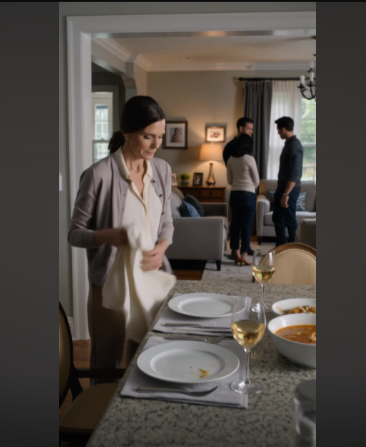
My Husband Said His Daughter Wanted Her “Real Mom” for Christmas—Then I Learned Who Really Invited H
Two days before Christmas, my husband texted: “Plans changed-you’re not coming to the cabin. My daughter wants her REAL MOM instead.” I replied, “Of course.” Then I canceled the reservation, stopped every payment, and left town. When they arrived on Christmas Eve…
Two days before Christmas, my husband texted me:
Plans changed. You’re not coming to the cabin. Emily wants her real mom instead.
I stared at the screen.
Then I laughed.
Not because anything was funny.
It was one of those short, strange laughs your body makes when something is so absurd your brain hasn’t caught up yet.
I was sitting in my Subaru in a Kroger parking lot at 8:17 on a Saturday morning.
My keys were still hanging from my fingers.
Six grocery bags sat in the back seat.
Ham.
Eggs.
Coffee.
Cinnamon rolls.
Two bottles of wine.
Enough food to make Christmas breakfast for five adults.
Apparently I was useful enough to feed everyone.
Just not useful enough to be there.
I read the message again.
Plans changed.
That was Mark’s phrase.
He used it when a restaurant reservation moved.
When one of his golf buddies changed a tee time.
When somebody canceled Thanksgiving at the last minute.
Not when he removed his wife from Christmas.
I called him.
He answered on the fourth ring.
“Hey.”
“Hey.”
A pause.
“What?”
I looked through the windshield at a woman loading rolls of wrapping paper into a minivan.
“Am I reading this correctly?”
Another pause.
“Diane, don’t start.”
That told me exactly where he was emotionally before the conversation even began.
“I’m not starting anything.”
I kept my voice flat.
“I’m asking whether you just told me I’m not going on the trip I booked.”
“It isn’t like that.”
“It looks exactly like that.”
He sighed.
That sigh.
The one he used when I turned something “simple” into something inconvenient.
“Emily’s having a rough time.”
“Okay.”
“She wants one Christmas with me and Susan.”
Susan.
His ex-wife.
“Just the three of us like when she was younger.”
I frowned.
“Josh is going.”
“Well, obviously Josh is going.”
Josh was Emily’s husband.
I almost said:
And I’m yours.
Instead, I asked, “So Susan is taking my place?”
“No one is taking your place.”
That answer was almost impressive.
I could hear office noises behind him.
A printer.
Voices.
Someone laughing.
Mark lowered his voice.
“She misses her mom.”
“Emily is twenty-nine.”
“Diane.”
“She’s married.”
“You know how she gets around the holidays.”
Around Mark, Emily could become twelve years old whenever it was emotionally useful.
I sat there in silence.
Then asked:
“Where exactly am I supposed to spend Christmas?”
“Come on.”
“No. I’m serious.”
“It’s four days.”
Four days.
Christmas Eve through the twenty-seventh.
Then he said the sentence that finally broke something loose in me.
“Just be the bigger person.”
I put one hand on the steering wheel.
A year earlier, we had been at Emily’s house after dinner.
She handed me her phone.
“Can you get one of just family?”
I knew what she meant.
Mark.
Susan.
Emily.
Josh.
I took the photograph.
I even told them to move closer together because a lamp was sticking out behind Susan’s head.
Then I handed the phone back and went into the kitchen to wrap leftovers.
That memory returned so clearly I could almost smell the turkey.
I asked Mark one question.
“Who’s paying for the cabin?”
Silence.
“Mark?”
“Diane.”
“I’m asking a practical question.”
“We’ll work it out later.”
There it was.
They wanted me gone.
My credit card could stay.
The cabin had been my idea.
I found it in August outside Gatlinburg.
Three bedrooms.
Fireplace.
Big porch with rocking chairs nobody sane would use in freezing December weather.
I had paid the deposit because Mark said one of his commission checks was coming later that month.
Later became September.
Then October.
Then:
We’ll settle everything after Christmas.
I also paid for the catered Christmas dinner package.
And tubing reservations Emily specifically requested.
I looked again at the grocery bags.
“Okay.”
Mark sounded relieved immediately.
“Thank you.”
That hurt more than I expected.
“Of course.”
I swallowed.
“Have a good Christmas.”
“Diane—”
I hung up.
For about five minutes, I just sat there.
I wish I could tell you I instantly became strong and decisive.
I didn’t.
I opened the cabin confirmation email.
Closed it.
Opened it again.
The cancellation policy sat in black and white.
Cancel now and lose $1,200.
Twelve hundred dollars is not nothing.
It is a property-tax payment.
A transmission repair.
Months of electricity if you’re careful.
I thought about letting them have it.
Let them go.
Let Susan sleep in my room.
Let Emily have her childhood Christmas reenactment.
Let Mark enjoy the trip I had organized.
Then his voice returned.
Be the bigger person.
I called the rental company.
A young woman named Kayla answered.
I gave her the reservation number.
She pulled it up.
“You would forfeit the deposit.”
“I understand.”
“You still want to cancel?”
I looked at the bags behind me.
“Yes.”
A few clicks.
“Okay. That reservation has been canceled.”
Just like that.
No music.
No dramatic thunder.
Twelve hundred dollars disappeared in under a minute.
I canceled the dinner package.
Then tubing.
I did not touch our joint checking account.
Did not move Mark’s money.
Did not call his family.
I simply stopped paying for a Christmas I was no longer invited to.
By the time I drove home, I felt sick.
Not powerful.
Not victorious.
Sick.
I carried in the groceries.
The house looked exactly the same.
Garland on the mantel.
Christmas cards on the piano.
Mark’s boots by the back door.
I stood in the kitchen for a while.
Then went upstairs and pulled down a suitcase.
I had no real plan.
Lexington.
Louisville.
Indianapolis.
Anywhere I didn’t have to sit in that house while my husband spent Christmas in Tennessee with his ex-wife.
I packed jeans.
Sweaters.
Toiletries.
Then went downstairs for my charger.
Mark’s iPad was on the counter beside the coffee maker.
The screen lit up.
I wasn’t trying to snoop.
I saw the notification anyway.
Susan:
Does Diane know what you told me?
I stopped.
The kitchen suddenly felt very quiet.
I read it again.
Then looked toward the stairs.
Then back at the iPad.
For the first time that day, I realized the cabin might not be the worst thing Mark had kept from me.
I stood there for ten seconds before touching it.
I wish I could claim I wrestled nobly with the ethics of privacy.
I didn’t.
My husband had just uninvited me from Christmas by text and replaced me with his ex-wife.
The moral high ground suddenly felt narrow.
His passcode worked.
Same four digits he had used for years.
I opened the message thread.
There was nothing explicit.
No flirting.
No sexual language.
No heart emojis.
In some ways, that made it worse.
It was familiar.
Comfortable.
Nostalgic.
Susan:
Emily keeps talking about Christmas when she was little.
Mark:
Yeah. She misses that version of us.
Susan:
Sometimes I do too.
I stopped reading.
Told myself not to turn nostalgia into infidelity.
Then kept going.
That was the thing about Mark.
He was good at staying just this side of whatever line mattered.
He didn’t need a hotel affair.
He could make me feel excluded without technically cheating.
There were messages going back weeks.
Susan asking if she should really come.
Mark saying Emily wanted it.
Susan asking about me.
Mark answering:
She’ll understand.
Then another message.
She booked everything. She won’t cancel this close to Christmas.
I read that one three times.
Then sat down.
That sentence hurt more than anything else.
Not exactly because of the money.
Because of the certainty.
Mark knew me.
Or thought he did.
He expected me to be hurt.
Maybe angry.
But ultimately compliant.
I would keep everything moving.
Pay the bill.
Absorb the awkwardness.
Make sure everyone else remained comfortable.
For years, that had been our unwritten arrangement.
Mark worked in sales.
His income was uneven.
Good months.
Bad months.
I had a steady salary managing three dental offices for a regional group.
And I handled details.
Bills.
Insurance.
Birthdays.
Warranties.
Appointments.
All the boring infrastructure of adult life.
At first, that felt like love.
When Emily’s transmission died one winter, I paid $1,700.
Mark said he’d reimburse half when his commission came.
He forgot.
I didn’t mention it.
At Emily’s wedding, the photographer suddenly needed an $850 deposit that day.
Mark said:
“I’ll send it Friday.”
He didn’t.
I let it go.
Christmas was the same.
I bought gifts.
Wrapped them.
Wrote:
Dad and Diane
on the tags.
Most years, I knew what Emily wanted.
Mark got thanked first.
I told myself that didn’t matter.
Maybe some of it truly didn’t.
But sitting there with his iPad, I began seeing those moments differently.
Not just generosity.
Training.
I had trained everyone to believe Diane handles it.
A knock sounded at the back door.
I nearly jumped.
Carol from next door stood there with a Kroger bag.
“You left these on your porch.”
Frozen dinner rolls.
Of course.
“Thanks.”
Carol looked past me.
The suitcase sat open in the hallway.
“Going somewhere?”
“Apparently.”
Carol was sixty-eight and retired from the county clerk’s office.
She had a face that could make a teenager confess to something from three years earlier.
“What happened?”
I leaned against the counter.
“Mark is taking Susan to the cabin.”
She blinked.
“His ex-wife Susan?”
“Yes.”
“For Christmas?”
“Yes.”
“And you’re staying home?”
“Apparently not.”
Carol looked at the suitcase.
“Did you pay for the cabin?”
I nodded.
She snorted.
“If my husband took his ex-wife on a Christmas vacation I paid for, that cabin would be the least of his housing problems.”
I laughed despite myself.
“Where are you going?”
That stopped me.
“I don’t know.”
Her face softened.
“Figure that out before you get on the highway angry.”
“I’m not angry.”
Carol stared.
“Fine.”
I sighed.
“I am extremely calm and making excellent decisions.”
“There she is.”
After Carol left, I opened my laptop.
Cincinnati felt too close.
Nashville felt like too much.
Lexington was far enough to feel like leaving without feeling like escape.
I booked one night at a Holiday Inn Express.
Maybe two.
I still didn’t know.
By evening, Mark had texted once from the road.
Traffic’s bad.
As though we were still a normal married couple giving travel updates.
I didn’t answer.
At 6:43, another message appeared.
Send me the cabin confirmation.
I was sitting in the hotel room with coffee that tasted like heated cardboard.
I ignored it.
Another message.
Address isn’t coming up.
Then:
Diane?
Then:
Did you cancel it?
I stared.
My phone rang.
Mark.
I let it ring once.
Twice.
Then answered.
“What?”
“What the hell did you do?”
I leaned against the headboard.
“You’ll have to be more specific.”
“The cabin.”
“Yes.”
“You canceled it?”
“Yes.”
“Why would you do that?”
For a second, I genuinely thought he had lost his mind.
“Because I’m not going.”
“That doesn’t mean you cancel it for everyone else.”
I looked around the room.
Beige walls.
Horse print.
Overnight bag on a chair.
“Mark.”
“What?”
“I paid for it.”
“We were going to pay you back.”
“When?”
“Don’t do this.”
“There it is again.”
“What?”
“That thing where the problem becomes me asking.”
He exhaled.
“Emily is already upset.”
“I’m sure.”
“This is Christmas.”
“I know.”
“You’re punishing her.”
“No.”
I stayed calm.
“I’m not paying for her vacation.”
“That’s the same thing.”
“No, Mark.”
I looked toward the dark window.
“It really isn’t.”
Silence.
Then he said:
“You’re acting crazy.”
That landed.
I didn’t raise my voice.
“You told Susan I wouldn’t cancel because you knew I’d keep paying.”
Nothing.
I could almost hear his brain moving.
Finally:
“How do you know that?”
I closed my eyes.
Interesting.
Not:
That isn’t true.
Not:
You misunderstood.
How do you know?
“Good night, Mark.”
“Diane, wait.”
I hung up.
For the first time all day, something settled inside me.
Not peace.
Certainty.
The cabin wasn’t the problem.
It was only the first bill I had finally stopped paying.
Christmas Eve was worse than I expected.
Mostly because nothing dramatic happened.
I woke up in a Holiday Inn Express with a stiff neck and fourteen missed texts.
Mark started angry.
This is unbelievable.
Then practical.
We need the reservation information.
Then angry again.
You stranded us two days before Christmas.
Then guilt.
Emily is crying.
Finally:
I hope you’re happy.
I wasn’t.
That is the part nobody tells you about boundaries.
Sometimes the boundary is correct.
And standing behind it still hurts.
Emily called that morning.
“You really canceled everything?”
“I canceled what I paid for.”
“You knew we were already driving.”
“Yes.”
“So you wanted us to arrive with nowhere to stay?”
“No.”
I looked at the hotel curtains.
“I wanted you to understand that if I’m excluded from a trip, I’m not financing it.”
“You’re making this about money.”
“No.”
I rubbed my temple.
“Your father made it about money when he assumed I would keep paying after telling me not to come.”
“That isn’t what happened.”
“Then tell me what happened.”
Silence.
Then her voice softened.
“I wanted one Christmas with my mom.”
“And you got one.”
“You know what I mean.”
“I do.”
“No, you don’t.”
For one second, I heard the child she had been when Susan and Mark divorced.
Then the adult returned.
“You always act like you do everything for everybody.”
I waited.
“Then you hold it over our heads.”
That hurt because there was just enough truth inside it to make me examine myself.
Had I expected appreciation?
Of course.
Had I sometimes become resentful because generosity wasn’t acknowledged?
Probably.
But I said:
“I’m not holding anything over your head.”
“I’m simply not paying for this.”
“Well, congratulations.”
Emily’s voice went cold.
“This is exactly why you’ll never be my mother.”
I went still.
I had never demanded that title.
But she knew where to place the knife.
“I never asked to be.”
Then I hung up.
And cried anyway.
Quietly.
Sitting on the edge of a hotel bed with a tissue box beside me.
At noon, I bought soup from the restaurant near the lobby.
Families surrounded me.
Matching pajamas.
Children carrying stuffed animals.
A grandfather wrestling a huge gift box onto a luggage cart.
Their ordinariness made everything worse.
My sister Beth called.
I told her the short version.
After a pause, she said:
“Couldn’t you have waited until after Christmas?”
I put down my spoon.
“Seriously?”
“I’m not saying Mark was right.”
“That sounds exactly like what you’re saying.”
“I’m saying you lost twelve hundred dollars and left everybody scrambling.”
“Everybody except me.”
“I know.”
“No, Beth.”
I looked at my soup.
“I don’t think you do.”
She sighed.
“I’m just wondering whether you reacted while angry.”
That stayed with me.
Because maybe I had.
Canceling the cabin was one thing.
Then Mark sent another message.
You also messed up the insurance payment.
I stared.
The day before, I had removed my personal card from several recurring charges without checking each one carefully.
One was linked to Mark’s truck insurance.
Nothing catastrophic had happened.
But the mistake scared me.
I was angry enough to become careless.
I opened the notes app.
Typed:
Call lawyer after Christmas.
Then:
Do not touch anything else.
That was probably the most sensible decision I had made all day.
Around three, Josh texted.
Emily’s husband.
Quiet.
Sensible.
We had never been especially close.
I know this isn’t my business.
Then:
For what it’s worth, I told Emily this whole thing was a bad idea.
I didn’t reply.
Ten minutes later:
They’ve been fighting since breakfast.
Despite myself, I smiled.
Then:
Susan says Mark still snores.
Mark says Susan still leaves wet towels everywhere.
Emily is mad because they’re not acting like a Hallmark movie.
I laughed.
Actually laughed.
Then Josh sent a photograph.
Mark and Susan.
Sitting together in a restaurant booth.
The date on Josh’s phone:
December 4.
I stared.
Why do you have this?
He replied immediately.
Saw them near my office. Sent it to Emily as a joke.
Then:
She said it was part of the Christmas surprise and told me not to tell you yet.
I read that twice.
Did you think I knew?
Yes.
Then:
I’m sorry. I really did.
I typed:
Was Susan already invited then?
Typing dots appeared.
Stopped.
Appeared again.
Then:
Diane, there’s something else.
What?
Longer pause.
Emily didn’t invite Susan.
Mark did.
I called him.
“Mark invited Susan?”
Josh lowered his voice.
“Give me a second.”
I heard a door close.
Then:
“Okay.”
“What happened?”
“Emily was talking about Christmas.”
He explained slowly.
She had become sentimental.
Old memories.
Breakfast with both parents.
Driving to grandparents’ houses.
The kind of childhood people remember more perfectly than it probably happened.
Emily said she missed those Christmases.
Mark took it from there.
He contacted Susan.
Then told Emily her mother might come to Tennessee.
Emily’s first question had apparently been:
“What about Diane?”
Mark said:
“She’ll understand.”
Of course he did.
“And Emily eventually agreed?”
“Yes.”
“So she isn’t innocent.”
“No.”
I appreciated that Josh didn’t pretend otherwise.
“But your husband was the one pushing it.”
For the rest of Christmas Eve, I called no one.
Not Mark.
Not Emily.
Not Susan.
For once, I let them manage their own Christmas.
I drove home the day after Christmas.
Columbus was gray in that flat Ohio winter way where four in the afternoon feels like evening.
The house smelled faintly of the tree.
I put my suitcase upstairs.
Made coffee.
Then opened the filing cabinet.
Mark had teased me for years about keeping paper statements.
That day, I was grateful.
I wasn’t looking for a crime.
There wasn’t one.
What I found was more ordinary.
And in some ways, more revealing.
Years earlier, when we replaced the roof and remodeled the kitchen, we opened a home-equity line.
I knew it remained active.
I had not realized how large the balance had become.
Small amounts.
Car repair.
Something for Emily.
Travel.
Household expenses.
Temporary things Mark said he would cover after his next commission.
Temporary had become permanent.
Not through one dramatic betrayal.
Through a thousand ordinary delays.
The next morning, I called an attorney.
Rachel Feldman.
A coworker had used her during a divorce two years earlier.
Rachel’s office was above a bank in Worthington.
Fake ficus.
Peppermints on the conference table.
I told her enough.
When I mentioned changing recurring payments, she stopped me.
“Don’t do anything else.”
“I figured that out.”
“Good.”
She leaned forward.
“Don’t move money because you’re angry.”
“I won’t.”
“Don’t empty accounts.”
“I won’t.”
“Don’t lock him out.”
“I’m not trying to ruin him.”
“I believe you.”
Her voice remained matter-of-fact.
“I’m telling you how not to accidentally ruin your own position.”
That was exactly what I needed.
Documents.
Statements.
Copies.
Records.
No dramatic revenge.
No secret transfers.
Just information.
Mark came home the next afternoon.
I was at the kitchen table with coffee and a legal pad.
He walked in carrying his bag.
We stared at each other.
He looked exhausted.
“Well.”
“Well.”
He dropped his keys.
“You really did a number on Christmas.”
“Sit down.”
He remained standing.
“Nothing happened with Susan.”
I looked at him.
“That’s interesting.”
“What?”
“I didn’t ask.”
His face changed.
Only slightly.
“Diane, this whole thing has gotten completely out of control.”
“Who invited Susan?”
He rubbed his forehead.
“Emily wanted her.”
“That isn’t my question.”
“It was a family thing.”
“Who called her?”
Finally, he sat.
“I did.”
There it was.
Two words.
No confession scene.
No shouting.
“I want to understand something.”
Mark looked tired.
“Why did you tell me Emily did it?”
“I didn’t say she did.”
I actually laughed.
“You texted me that your daughter wanted her real mother instead.”
“She did after I invited her.”
He looked away.
“What did you tell Susan about me?”
“Nothing.”
“Try again.”
He got offended.
That was Mark’s favorite defensive posture.
Not angry exactly.
Insulted that I knew enough to question him.
“I told her things had been difficult.”
“Were they?”
“You know they were.”
“No.”
I leaned toward him.
“I didn’t.”
That stopped him.
Because before December twenty-third, if someone had asked whether my marriage was ending, I would have said no.
Imperfect?
Yes.
Ending?
No.
Mark looked toward the ceiling.
“I was trying to keep everybody happy.”
“No.”
I shook my head.
“You were trying to keep yourself comfortable.”
“That isn’t fair.”
“Neither was Tennessee.”
Then, for the first time, he said something that sounded completely true.
“I didn’t plan all of this.”
I waited.
He rubbed his face.
“I kept thinking I could fix the next part before you found out.”
I stared.
“How many next parts were there?”
He didn’t answer.
The doorbell rang.
Susan stood on the porch.
Still wearing her coat.
Furious.
Not at me.
At Mark.
She walked into the kitchen and pointed at him.
“You told me she knew.”
Mark stood.
“Susan—”
“You told me your marriage was basically over.”
“That isn’t what I said.”
“That is exactly what you said.”
He looked toward me.
And suddenly his whole method became visible.
Mark had not told one giant lie.
He told small ones.
Different versions to different people.
Then relied on us never comparing notes.
Susan looked at me.
“For the record, I do not want him back.”
I was too tired to filter my response.
“That makes two of us.”
Susan laughed.
So did I.
Mark did not.
Then Susan’s expression changed.
“I’m sorry.”
I nodded.
“I believed him.”
“So did I.”
“For eight years.”
That ended the humor.
Susan explained that Mark had spent Christmas calling relatives.
His version:
I became jealous.
Had a breakdown.
Canceled everything to punish Emily.
Apparently, Emily planned a belated Christmas dinner the following night.
Mark intended to “clear everything up.”
I looked at him.
He looked away.
“All right.”
Susan raised an eyebrow.
I picked up my coffee.
“Then I guess I’ll be there too.”
I almost didn’t go.
At fifty-two, you eventually learn that being right does not automatically make an event worth attending.
But Carol came over around four and found me staring at the ham I had originally bought for Tennessee.
“You’re dressed.”
“I haven’t decided.”
She looked at the ham.
“You taking that?”
“I don’t know.”
“Take the ham.”
I laughed.
“Why?”
“No reason an innocent pig should suffer because Mark’s an idiot.”
So I took the ham.
Emily opened her door at six.
For half a second, she only stared.
“You came.”
“I was invited.”
Technically Josh had texted me that morning.
She stepped aside.
Mark was already there.
So was Susan.
Mark’s brother Tom and his wife Linda sat in the living room with drinks.
For forty minutes, everyone performed Christmas.
Josh carved ham.
Emily reheated mashed potatoes.
Tom discussed the Browns.
Susan asked Linda about her new grandchild.
Mark behaved as though nothing had happened.
That was one of his talents.
Give him ten minutes in a room and he could persuade himself that anything before those ten minutes no longer counted.
Then Tom said:
“Well, at least everyone made it home in one piece.”
Silence.
Mark put down his fork.
“I think we should probably clear some things up.”
Susan looked at me.
I looked at her.
Neither spoke.
Mark continued.
“What happened in Tennessee got blown way out of proportion.”
Emily stared at her plate.
“Diane was understandably hurt by the change in plans.”
Understandably.
How generous.
“But canceling the cabin while everybody was already traveling was an emotional decision.”
I let him continue.
I had been hurt.
I overreacted.
He had been stuck in the middle.
Emily only wanted her mother.
Susan’s involvement had been misunderstood.
By the end, Mark sounded less like a husband who had lied to multiple people and more like a park ranger explaining severe weather.
When he finally stopped, I reached into my purse.
Three sheets of paper.
I placed them beside my plate.
Mark looked at them.
“What’s that?”
“I have three questions.”
“Diane, we don’t need to turn Christmas dinner into a courtroom.”
“It’ll be faster if you answer.”
His jaw tightened.
“Did Emily ask you to invite Susan?”
He looked toward Emily.
“She wanted her mother.”
“That wasn’t my question.”
“It wasn’t that simple.”
Emily spoke before he could continue.
“No.”
Mark turned.
“Em—”
“No, Dad.”
She looked at me.
“I didn’t ask him to call Mom.”
Nobody moved.
“Second question.”
I looked at Mark.
“Did you tell Susan our marriage was basically over?”
His jaw tightened.
“I told her we had problems.”
Susan reached for her phone.
“No.”
“Susan.”
“You told me Diane knew things were ending.”
“That isn’t what I meant.”
Susan gave him a look I imagined she had perfected during seventeen years of marriage.
“I was married to you for seventeen years.”
Her voice was dry.
“I know the difference between what you said and what you wish you said.”
Tom stopped eating.
“Third.”
I slid one screenshot toward Mark.
“Did you tell Susan I would keep paying for the cabin?”
He didn’t answer.
Susan did.
“Yes.”
Josh spoke from the far end.
“He did.”
Tom stared at his brother.
“Tell me they’re wrong.”
Mark looked at the table.
That was it.
No thrown drink.
No screaming.
Only silence.
Emily pushed her plate away.
Her eyes filled.
“Dad.”
Mark looked at her.
“Why?”
“I was trying to give you what you wanted.”
“I didn’t ask you to lie to everyone.”
“No, but you wanted your mother there.”
I saw it happen.
Mark trying to give some of the responsibility back to Emily.
Her face changed.
Then she looked at me.
“Why didn’t you tell me?”
I blinked.
“Tell you what?”
“That Dad invited Mom.”
“I didn’t know until Josh told me.”
“No.”
She shook her head.
“I mean after.”
“Why didn’t you call?”
I thought about it.
“Because you are twenty-nine years old.”
She flinched.
“I shouldn’t have to convince you that excluding me from a Christmas vacation I paid for was cruel.”
“I didn’t know everything.”
“No.”
“I thought Dad had talked to you.”
“I know.”
She looked down.
I could have stopped.
Maybe I should have.
But I needed her to understand one thing.
“Wanting your mother there wasn’t what hurt.”
Emily looked up.
“Deciding I was disposable was.”
She wiped one cheek.
Nobody rescued either of us from the discomfort.
For once, I was grateful.
Mark pushed his chair back.
“So this is what we’re doing.”
I looked at him.
“Everybody is against me now.”
“No.”
“You brought printouts to Christmas dinner.”
“You’ve been telling relatives I had a breakdown.”
“Because look at this.”
He gestured around the table.
I almost smiled.
“You told a different story to every person sitting here.”
My voice stayed calm.
“I just put them in the same room.”
His face reddened.
“You’re trying to humiliate me.”
“No.”
I folded my hands.
“I stopped explaining you to everyone.”
That silenced him.
Then I said:
“There’s something else.”
Mark looked at me.
“I spoke with an attorney.”
Emily closed her eyes.
“What does that mean?”
“It means I’m filing for divorce.”
For the first time all evening, Mark looked truly shocked.
“Over a cabin?”
“No.”
I didn’t explain further.
If he still thought it was about a cabin, no speech was going to help.
He stood.
“So what am I supposed to do?”
“Where am I supposed to go?”
Susan answered before anyone.
“Not my house.”
Josh coughed into his napkin.
Even Tom smiled.
I didn’t.
I thanked Emily for dinner.
Put on my coat.
Left before dessert.
Inside the Subaru, I tried to insert the key and missed.
My hands were shaking.
So I sat.
Through the window, I could see shadows moving behind Emily’s curtains.
Mark crossing the dining room.
Susan going into the kitchen.
Josh clearing dishes.
Eight years.
That was what didn’t fit into my clean explanations.
Eight years of Sunday breakfasts.
Grocery lists.
Thermostat arguments.
Knowing exactly how Mark took coffee.
Knowing which knee hurt when rain was coming.
I had told the truth.
I had protected myself.
And three days after Christmas, I sat alone in my car crying too hard to drive.
That was when I learned:
Winning and being happy are different things.
The divorce took seven months.
There were no millions.
Just a house.
Two cars.
Retirement accounts.
Credit-card balances.
The home-equity line.
Eight years of decisions separated into columns.
Mine.
His.
Ours.
Disputed.
Rachel warned me early.
“You’re not getting back every dollar you spent during the marriage.”
“I know.”
“Do you?”
I didn’t answer.
She was right.
Some part of me had kept an invisible ledger.
Emily’s transmission.
Photographer.
Trips.
Gifts.
Meals.
Every time Mark promised to reimburse me.
Most of that money was gone.
That hurt more than I expected.
Not because I desperately needed it.
Because each unrecoverable dollar felt like proof I should have noticed sooner.
Rachel finally told me:
“Stop trying to make old decisions come out differently.”
I wrote that down.
Mark did not lose everything.
Neither did I.
He moved into a two-bedroom apartment fifteen minutes away.
I remained in the house while finances were settled.
There was no triumphant scene with cardboard boxes and dramatic music.
Mostly emails.
Forms.
Signatures.
One ridiculous argument about a television neither of us particularly liked.
That is what ending a marriage looked like.
Administrative.
Expensive.
Strangely boring.
The painful part came on Sundays.
Mark used to make pancakes.
Bad ones.
Too thick.
The first pancake always raw in the middle because he refused to let the skillet preheat.
Every Sunday I complained.
Every Sunday he told me:
“You’re welcome to take over.”
I never did.
After he moved out, I sometimes woke on Sunday expecting to hear him downstairs.
I missed him.
There.
I said it.
I missed the man I was divorcing.
I missed the version who complained about prices at Home Depot.
The man who once drove forty minutes in rain to repair my mother’s porch railing.
The man who knew I hated pulp in orange juice and never bought the wrong bottle.
Those things were real too.
That confused me.
Until I understood:
Missing someone is not the same as wanting them back.
By late spring, Emily and I barely spoke.
Happy birthday.
Thank you.
Small messages.
Then one afternoon in May:
Would you meet me for coffee?
I stared at it.
Then replied:
Okay.
We met at a Panera near Dublin.
I arrived three minutes late on purpose because I didn’t want to sit waiting.
Emily was already there.
Two coffees.
She pushed one toward me.
“One cream.”
“No sugar.”
I looked at the cup.
“You remembered?”
She shrugged.
“Yeah.”
For some reason, that got me more than flowers would have.
We sat quietly.
Then Emily said:
“I don’t expect you to forgive me today.”
“Good.”
She looked up.
“Because I’m not there yet.”
She nodded.
“Okay.”
No argument.
No immediate tears.
Just okay.
Then she told me the year had been difficult.
Work stress.
She and Josh had begun talking about having a baby.
That made her think about childhood.
About the years before Susan and Mark divorced.
“I know it sounds stupid.”
“It doesn’t.”
“I wanted one Christmas where I could pretend none of it happened.”
I took a sip of coffee.
“Wanting your parents together doesn’t make you bad.”
Relief crossed her face too quickly.
So I continued.
“But I still don’t understand why I had to disappear for that to happen.”
The relief vanished.
“I know.”
“You could have asked me.”
“I should have.”
“You could have told your father no.”
“I should have done that too.”
I waited for the excuse.
None came.
Emily looked at her hands.
“I liked the idea, Diane.”
I stayed silent.
“Even after I knew it would hurt you.”
That may have been the first completely honest statement either of us had made about Christmas.
“I know.”
“I’m sorry.”
I believed her.
Believing an apology did not mean pretending everything was repaired.
We finished coffee.
A few weeks later, she called about a recipe.
In July, she invited Beth and me to a cookout.
We remained careful for a long time.
That was probably healthier than pretending one apology erased everything.
The divorce became final in August.
Mark sent one message.
I’m sorry it ended like this.
I typed three responses.
Deleted each one.
Finally:
So am I.
That was enough.
In early December, I received a Christmas card from Susan.
We had not become friends.
I want that clearly understood.
We had lunch once during the divorce because there were a few facts both of us needed to straighten out.
It was surprisingly pleasant.
But two women do not need to become soulmates merely because they married the same difficult man.
The card had a snowman.
Inside Susan wrote:
Merry Christmas. No husbands included.
I laughed so hard Carol came over to make sure I was all right.
That Christmas, I rented another cabin.
Smaller.
Beth came.
Carol came.
Two women from work brought their husbands.
Everybody paid their share.
Without being asked.
Carol brought enough food for a church basement.
Beth handled breakfast.
Someone else brought wine.
Nobody handed me a grocery list.
Nobody assumed I would organize every hour.
The morning of December twenty-third, I sat on the porch with coffee.
My phone buzzed.
I looked at the time.
8:17.
Exactly one year.
A message from Mark.
Hope you’re doing well.
I read it.
For a second, I considered answering.
Nothing cruel.
Maybe:
I am.
Then I realized I did not need him to know.
I placed the phone face down.
Went inside for more coffee.
For a long time, I thought what I had done that first Christmas was revenge.
Canceling the cabin.
Stopping the payments.
Letting Mark explain himself in a room where everyone could compare stories.
It wasn’t.
The biggest change was quieter.
I stopped making things easy for people who were willing to make me uncomfortable.
I stopped paying for peace when peace required my disappearance.
I stopped cleaning up Mark’s explanations.
And I stopped trying to prove I belonged in a family I had spent eight years helping hold together.
I lost twelve hundred dollars when I canceled that first cabin.
At the time, it felt like an expensive way to make a point.
Looking back, I think it was the first money I ever lost that truly bought me something.
Clarity.
I did not ruin their Christmas.
I simply stopped financing a version of Christmas where everybody else got to be comfortable because I had agreed to vanish.
And sometimes, stopping is enough.
