Two weeks after my wife went to stay with our daughter and son-in-law, I
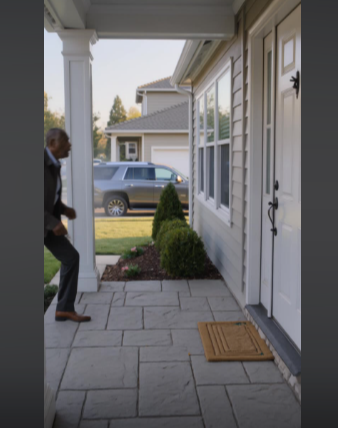
“Stop!” Said My Daughter’s Neighbor As I Tried To Open The Door He Revealed The Truth To Me!
TWO WEEKS AGO, MY WIFE WENT TO VISIT OUR DAUGHTER AND SON-IN-LAW. I DECIDED TO SURPRISE THEM AND WENT TOO. WHEN I APPROACHED THE DOOR OF THEIR HOUSE, THEIR NEIGHBOR RAN UP TO ME AND SHOUTED, “WAIT, I HAVE SOMETHING TO TELL YOU…” FIVE MINUTES LATER, POLICE ARRIVED!
My name is Louis Harrison. I was seventy one years old when I learned how dangerous certainty can be.
For most of my life, I thought being decisive was one of my strengths.
I had spent forty two years in city planning. Roads, utilities, zoning, public projects. I was trained to look at incomplete information and find the structure underneath it.
Then one afternoon I stood outside my daughter’s house, heard a neighbor tell me he had called 911, and decided within seconds that I already knew what had happened.
That decision nearly destroyed an innocent man.
I had driven to Maya’s house to surprise her and my wife Evelyn.
Evelyn had been staying there for nearly two weeks.
The reason Maya gave us was a miscarriage.
She said she needed her mother.
Maya was thirty five and had always been strong willed, dramatic, and stubborn in ways that reminded me of myself.
Her husband, Jason Powell, was someone I had never warmed to.
He came from money.
He worked in investment management.
He drove an expensive car.
Wore an expensive watch.
Spoke carefully.
Too carefully, I used to think.
He called me Louis instead of Mr. Harrison or Dad.
He had a restrained little smile that I interpreted as arrogance.
The truth was that I had judged him within ten minutes of meeting him and spent years collecting evidence to support a verdict I had already reached.
I did not know that yet.
That afternoon I had barely reached the porch when the man from next door came running across his lawn.
He was older, broad shouldered, moving faster than a man his age looked capable of moving.
He held up both hands.
“Stop.”
I froze.
“Don’t go inside.”
“That’s my daughter’s house.”
“I know.”
“My wife is in there.”
“I called the police.”
My stomach dropped.
“What happened?”
He looked toward the house.
“I heard shouting.”
“What kind of shouting?”
“A bad kind.”
“Who?”
“A man. Then women. Something broke. Then somebody screamed.”
My heart began pounding.
The neighbor continued.
“I heard a woman say, ‘Please stop. You’re hurting her.’ Then everything went quiet.”
I grabbed his arm.
“My wife’s name is Evelyn.”
He looked at me.
“Sir, let the police get here.”
The sirens arrived seconds later.
Two officers came out quickly.
The neighbor identified himself as David Henderson and explained what he had heard.
The officers approached the house.
They announced themselves.
No answer.
Again.
Nothing.
One officer forced the door.
I was told to remain outside.
I did not.
I followed before anyone could stop me.
The first thing I noticed was the broken lamp.
Then an overturned chair.
Glass across the floor.
Then blood.
My wife lay near the bottom of the staircase.
Her gray hair was dark with it.
Her body was twisted on the tile.
For one second, I believed she was dead.
“Evelyn.”
I do not remember crossing the room.
An officer stopped me before I could touch her.
“She has a pulse.”
Those four words gave me my body back.
Paramedics were called in.
Then I heard Maya crying.
She was sitting on the upstairs landing.
Her knees pulled to her chest.
Her face streaked with mascara.
I shouted, “Maya, are you hurt?”
She raised her head.
Her eyes moved past me.
Then she pointed.
“He did it.”
I followed her finger.
Jason stood several feet away.
His shirt collar was torn.
Three red scratches ran down the side of his face.
He was staring at Evelyn.
Not at Maya.
Not at the police.
At Evelyn.
Maya screamed again.
“He pushed her. He attacked Mom.”
The officer ordered Jason to show his hands.
Jason lifted them immediately.
“No.”
The officer moved toward him.
“No, listen.”
Jason was turned toward the wall and temporarily detained.
He did not fight.
He looked stunned.
I shouted from below.
“You did this.”
Jason looked at me.
“No.”
“You put your hands on my wife.”
“No.”
Maya was sobbing.
Jason suddenly said, “Check her laptop.”
The officer told him to stop talking.
Jason twisted just enough to look toward me.
“Louis, check Maya’s laptop. Please.”
I heard desperation.
At the time, I interpreted it as guilt.
I had already made my decision.
Jason was the monster.
Maya was my daughter.
Evelyn was my wife.
Everything else had to fit around that.
At the hospital, Evelyn went directly into surgery.
Head trauma.
A fractured hip.
Bleeding around the brain.
The doctors placed her in a medically induced coma while they controlled the swelling.
Maya and I sat together for hours.
She cried until her voice became raw.
Eventually she whispered, “Dad, there’s something I should have told you.”
I put my arm around her.
“What?”
“Jason has a gambling problem.”
The statement fit my existing picture of him so perfectly that I barely questioned it.
She told me he had lost eighty thousand dollars from their joint savings.
Money Evelyn and I had contributed years earlier toward their first home.
She said she discovered online gambling accounts.
She confronted him.
He promised to stop.
Then she admitted the miscarriage had been a lie.
That part shocked me.
“There was no pregnancy?”
She shook her head.
“I needed Mom.”
“Why lie?”
“I was scared.”
“Of Jason?”
She nodded.
“I thought if I told her the truth, she’d confront him too quickly.”
I stared at her.
“So your mother came here because you were afraid of your husband.”
“Yes.”
“And today?”
Maya covered her face.
“Mom found the statements.”
Her story came in pieces.
Evelyn confronted Jason downstairs.
Jason became angry.
Evelyn threatened to call the police.
Jason grabbed her.
She tried to get away.
He pushed her.
She fell.
Maya said she saw everything.
I believed every word.
A detective named Miller spoke with us later.
He listened carefully.
Then said, “We have another account we need to reconcile.”
“From Jason?”
“From the neighbor.”
I frowned.
“What did he say?”
“He says he heard Mr. Powell shouting your daughter’s name.”
“So?”
“He says he heard, ‘Maya, stop. You’re hurting her.’”
I stared at him.
“That’s wrong.”
“He also recalls Mr. Powell saying something about calling 911.”
“He heard wrong.”
“Possibly.”
“He did.”
Detective Miller looked toward Maya.
She had become completely still.
Then he asked me about Jason.
I gave him everything I thought mattered.
Expensive car.
Financial work.
His attitude.
His apparent secrecy.
The scratches.
The gambling allegation.
The detective asked, “Have you personally seen any gambling records connected to him?”
“No.”
“But your daughter has?”
“Yes.”
Maya nodded.
Miller wrote something down.
I remember being irritated by his lack of certainty.
I wanted the police to feel what I felt.
Rage.
He wanted evidence.
At the time, I thought that made him cold.
Two days later, I returned to Maya’s house to collect clothes for Evelyn.
The property had been released enough for limited access.
I was carrying a small overnight bag toward my car when Henderson came across the lawn.
“Mr. Harrison.”
I stopped.
“I want to thank you for calling.”
He nodded.
“How is your wife?”
“Alive.”
His shoulders dropped slightly.
“Thank God.”
I started toward my car.
Then he said, “I spoke with Detective Miller.”
I stopped again.
“What about?”
“What I heard.”
“I already know.”
Henderson studied me.
“No, sir. I don’t think you do.”
I felt anger rise.
“My daughter watched her husband attack her mother.”
“With respect, I don’t think that’s what happened.”
I looked at him.
“Be careful.”
“I am.”
He stood his ground.
“I’ve lived next to them three years.”
“So?”
“I hear arguments.”
“You listen to their arguments?”
“My porch is twenty feet from their side windows. I don’t need to press a glass to the wall.”
I said nothing.
He continued.
“The shouting usually comes from Maya.”
My stomach tightened.
“She gets loud about money.”
“You’re mistaken.”
“I may be mistaken about plenty of things. I’m not mistaken about voices I’ve heard every week for three years.”
“What does Jason do?”
“Mostly tries to calm her.”
I almost laughed.
“You expect me to believe that?”
“No.”
Henderson looked at me.
“I expect you to tell the police what I’m telling you and let them decide.”
That stopped me.
He was not asking me to trust him.
He was asking me to stop preventing myself from considering him.
Then he repeated what he heard the day Evelyn fell.
Evelyn was shouting.
Maya was shouting.
Jason yelled, “Maya, stop.”
Then, “You’re hurting her.”
Then, “Give me the phone. I’m calling 911.”
Then a crash.
Then the sound of someone falling.
Then Maya screaming that Jason had pushed her mother.
Henderson said quietly, “Sir, the accusation came after the fall.”
I could not speak.
As I reached my car, Jason’s words came back.
“Check her laptop.”
I sat behind the wheel for nearly twenty minutes.
Everything I believed was still possible.
Jason might have been a clever liar.
Henderson might have misheard.
Maya might still be telling the truth.
But for the first time, I understood that I did not know.
That frightened me more than certainty ever had.
I called Detective Miller.
“I want to give you another statement.”
He met me the next morning.
I repeated Henderson’s account.
Then said, “Jason said something about Maya’s laptop.”
Miller nodded.
“We heard him.”
“Did you check it?”
“We obtained a warrant for digital devices at the residence based on conflicting statements and the financial allegations. The forensic team is working through them.”
My throat tightened.
“So you already suspected something.”
“We investigate everyone’s version.”
I felt foolish.
“What about Jason?”
“He has not been charged with attempted murder.”
“What?”
“He was detained while we established probable cause and processed the scene. The prosecutor has not filed that charge.”
I sat back.
In my mind, he had already been convicted.
Reality had not moved as fast as I had.
“Where is he?”
“His attorney arranged his release while the investigation continues.”
I should have felt angry.
Instead, I felt relieved.
I did not know why.
The investigation unfolded over the next several days.
Not dramatically.
No private lawyer pulled secret bank records in twenty four hours.
No one hacked offshore websites.
Police obtained financial records through legal process.
Jason voluntarily provided some documents through his attorney.
The couple’s bank records showed the eighty thousand dollars was gone.
That part of Maya’s story was true.
The money had gone to gambling platforms.
That part was also true.
The lie was who had placed the bets.
Account access logs pointed repeatedly to Maya’s personal devices.
Transfers were initiated when Jason was documented elsewhere.
His employer provided badge records and meeting logs.
His phone location data, obtained through proper process, supported the same timeline.
Then investigators found email.
Jason to Maya.
“Maya, the account is empty again. You promised you stopped.”
Another.
“I cannot keep covering this.”
Another.
“We need help.”
Then Maya.
“I can win it back.”
“Please don’t tell my parents.”
“Ask your father for money.”
And finally Jason.
“No more lies. I’m telling them. You need treatment. I love you, but I will not keep helping you hide this.”
Sent the afternoon Evelyn fell.
I read copies later.
By then the detective had already told me enough.
I sat in my car outside the police station and felt physically sick.
I had spent years treating Jason like a man trying to exploit my daughter.
It was possible he had spent years doing the opposite.
Evelyn woke the following afternoon.
When I reached her ICU room, Maya was already there.
She sat beside the bed holding her hand.
“Mama, you’re okay.”
Evelyn’s eyes moved slowly.
Medication.
Pain.
Confusion.
Maya leaned closer.
“They caught Jason.”
I stopped in the doorway.
“He can’t hurt you anymore.”
Evelyn’s heart rate rose.
Not dramatically.
Enough.
Her eyes widened.
She looked frightened.
Not relieved.
Maya continued.
“You’re safe.”
Evelyn tried to pull her hand away.
Barely.
But I saw it.
I stepped in.
“Maya.”
She turned.
“You should go eat.”
“I’m fine.”
“You’ve been here all day.”
“I want to stay.”
“I’ll stay.”
She hesitated.
That hesitation told me something.
“Maya.”
She finally stood.
“I’ll be downstairs.”
When the door closed, I moved beside Evelyn.
“Evie.”
Her eyes found mine.
I held her hand.
“I know there’s more.”
She began crying.
“Don’t try to talk fast.”
Her voice came out as a rasp.
“Maya.”
“I know about the gambling.”
She shook her head.
“More.”
“What?”
She swallowed painfully.
“The will.”
I frowned.
“Our will?”
“No.”
Her eyes sharpened.
“My will.”
I did not understand.
Then my wife of forty five years told me a secret she had carried for two decades.
Her aunt Josephine had left her approximately one point two million dollars.
I almost laughed because it sounded impossible.
Evelyn bought clothes on sale.
Clipped grocery coupons.
Complained when I wanted to replace a perfectly functioning car.
But the money had existed.
She invested it.
Left it untouched.
Over the years it grew.
“Why didn’t you tell me?”
Her eyes filled.
“My father.”
Evelyn rarely spoke about him.
I knew he died when she was young.
That was almost all.
Now she told me the rest.
He had been a compulsive gambler.
Charming.
Generous when he had money.
Desperate when he did not.
He lost savings.
Jewelry.
Their home.
Her college money.
Then took his own life when she was seventeen.
She found him.
I sat holding her hand, suddenly understanding forty five years of behaviors I had classified as thrift.
It was fear.
When Josephine’s money came to her, Evelyn hid it.
Not because she wanted power over me.
Because in her mind large amounts of money came with catastrophe attached.
Then Maya began showing the same signs.
Small lies.
Borrowing.
Unexplained debt.
Financial emergencies.
Evelyn suspected gambling before anyone else.
Months earlier, she quietly changed her estate plan.
Not our joint property.
Only her separate inherited assets.
She directed most of them to a charitable foundation focused on gambling treatment and family recovery.
She did not do it to punish Maya.
She thought removing the expectation of inheritance might force her daughter to confront the addiction.
I disagreed with the secrecy.
Even then.
But disagreement vanished when Evelyn told me what happened on the day she fell.
She had brought a copy of the new estate documents with her.
Maya found them.
Maya came downstairs furious.
Evelyn and Jason were already discussing the missing savings.
Jason wanted to call me.
Maya demanded Evelyn change the documents.
Evelyn refused.
Maya tried to take the papers.
They struggled.
Jason stepped between them.
Maya shoved Evelyn.
Hard.
Evelyn fell backward.
Jason ran toward the phone.
Maya grabbed a kitchen knife.
She went after him.
The scratches on his face were not proof that Evelyn fought him.
They were not even simple scratches.
They were shallow cuts and abrasions from Jason blocking Maya’s attack.
He had been trying to call for help.
I closed my eyes.
I thought of myself shouting at him.
Calling him trash.
Telling police I always knew what kind of man he was.
I whispered, “I’m sorry.”
Evelyn tightened her fingers around mine.
“You didn’t know.”
“I chose not to know.”
That difference mattered.
Detective Miller came to the hospital later that day.
Evelyn gave a formal statement once doctors determined she was alert enough to do so, with breaks and medical staff present.
Police then arrested Maya based on the totality of evidence.
Not because she raised a hand in a hallway.
Not because a detective happened to overhear a confession.
Because they had Evelyn’s statement.
Henderson’s 911 account.
Financial records.
Digital evidence.
A knife recovered at the scene.
Jason’s injuries.
Physical evidence inconsistent with Maya’s first version.
And now a motive involving both gambling losses and the estate document.
Maya was taken into custody.
I did not confront her first.
I did not get a dramatic confession.
She asked for a lawyer.
That was her right.
I respected it.
I had finally learned that facts matter more than the satisfaction of a scene.
Jason agreed to meet me two days later.
We sat in a conference room at his lawyer’s office.
He looked exhausted.
The cuts on his face were healing.
I had rehearsed what I wanted to say.
None of it survived seeing him.
“I was wrong.”
Jason said nothing.
“I judged you before I knew you.”
Still nothing.
“I accused you of hurting Evelyn.”
He looked at the table.
“I told police you were dangerous.”
His jaw tightened.
“I’m sorry.”
The words felt ridiculously small.
Jason finally looked at me.
“You hated me before this.”
“Yes.”
“Why?”
I could have softened it.
I didn’t.
“Partly because of money.”
He waited.
“Partly because you were quiet in a way I interpreted as smug.”
Another pause.
“And partly because you were a white man from a wealthy family marrying my daughter, and I had already decided that meant you would never understand us.”
Jason’s expression did not change.
“That’s ugly.”
“Yes.”
“At least you know.”
“I know now.”
Silence filled the room.
Then I asked the question that had begun to haunt me.
“How long?”
“The gambling?”
“Yes.”
“Five years.”
Five years.
He told me everything.
Online poker first.
Then sports betting.
Then casinos.
Small losses.
Then bigger.
Three years earlier, she emptied their savings.
He used money from his own inheritance to keep the mortgage current.
She promised to stop.
He believed her.
Then she opened new accounts.
Borrowed.
Hid credit cards.
Used Jason’s identity without his knowledge for some applications.
He spent years covering debts because he was ashamed.
Ashamed he could not fix his marriage.
Ashamed to tell us.
Ashamed that I already thought so little of him.
He said, “I thought if I told you, you’d take her away and say you’d been right about me.”
I almost laughed from the pain of it.
“I would have.”
“I know.”
“So you protected her.”
“I thought I was protecting everyone.”
“Were you?”
“No.”
His answer came immediately.
“I was enabling her.”
That was the first moment I respected him for something other than surviving.
He understood his own failure.
He did not turn himself into a saint.
The case took more than a year to resolve.
There was no courtroom surprise involving a magical reflection in a bay window.
Henderson did have a security camera.
It captured the front portion of the property and several important movements around the time of the incident.
It did not show the push clearly.
What mattered more was the combined evidence.
The 911 call recorded Henderson reporting a violent argument before any accusation against Jason had been made.
His description of the voices was consistent from the first minute.
The digital forensic evidence showed Maya’s gambling activity.
Jason’s emails established he intended to disclose it.
The new estate documents provided a financial trigger.
A forensic examination of the scene supported Evelyn’s account of where everyone had been.
Jason’s injuries were consistent with defensive movement.
Maya’s statements changed in significant ways over time.
Most importantly, Evelyn survived.
She testified.
Walking into court cost her more than any of us understood.
Months of physical therapy had helped, but her balance remained poor.
She used a cane.
Her left hand still trembled.
When she took the witness stand, she looked small.
Then she began speaking.
And my wife became enormous.
She told the truth about everything.
Including her own mistakes.
She admitted hiding the inheritance.
Admitted she never told me.
Admitted she had changed her estate plan secretly.
The defense used that against her.
“Mrs. Harrison, you kept more than a million dollars secret from your husband for twenty years?”
“Yes.”
“You lied to him.”
“I kept something from him.”
“That is a lie, isn’t it?”
Evelyn looked toward me.
Then back at the lawyer.
“Yes.”
I felt the admission in my chest.
She continued.
“I was wrong.”
The lawyer seemed almost disappointed.
He wanted defensiveness.
She gave him responsibility.
“Yet you want this jury to believe you now?”
Evelyn said, “Yes.”
“Why?”
“Because lying about money does not mean I am lying about being pushed down the stairs.”
The courtroom became very quiet.
Jason testified too.
He told the jury about Maya’s addiction.
His attempts to cover it.
His shame.
His own enabling.
He did not make himself innocent of every bad decision.
Only of attacking Evelyn.
Henderson testified.
No medals displayed.
No theatrical speeches about war.
Just a neighbor.
He explained where he was sitting.
What he could hear.
How often the couple argued.
What he heard that afternoon.
“Maya, stop.”
“You’re hurting her.”
“Give me the phone.”
“I’m calling 911.”
His testimony mattered because he had no financial interest.
No family loyalty.
No history with us.
He had called emergency services before Maya created her version of events.
The financial evidence completed the picture.
Maya was convicted of serious offenses related to the attack on Evelyn and the assault on Jason.
I will not pretend the verdict felt good.
She was my daughter.
The same child whose bicycle I held upright while she learned to ride.
The girl who fell asleep on my chest during thunderstorms.
The teenager whose college acceptance letter I carried in my wallet for months because I was proud.
Human beings do terrible things without erasing the children they once were.
That is one of grief’s cruelest truths.
The judge imposed a substantial prison sentence.
Not because she was a monster.
Because she had committed serious violence and then tried to place responsibility on an innocent person.
When she was led away, she did not look at me.
I did not call after her.
Evelyn cried.
Quietly.
Jason stared at the floor.
I held my wife’s hand.
After court, nothing became easy.
That is another lie stories tell.
A verdict does not repair a hip.
It does not cure addiction.
It does not restore a marriage.
It does not erase an old man’s prejudice.
It simply answers a legal question.
The rest remains.
Evelyn spent months in rehabilitation.
She relearned balance.
Stairs terrified her.
The first time a therapist asked her to practice a single step, she froze.
Jason happened to be visiting.
He stood several feet away.
Did not touch her.
Did not push.
Simply said, “You can stop.”
Evelyn looked at him.
Then lifted her foot.
One step.
Then another.
She cried afterward.
So did he.
So did I.
We became an odd group.
A husband.
A wife.
A son in law whose marriage had ended in the worst possible way.
Jason stayed in a hotel at first.
Then an apartment.
He did not move into our house because I declared him our new son.
Trauma does not create instant families.
He needed distance too.
So did we.
He visited.
Helped with appointments when asked.
Sometimes sat with Evelyn while I bought groceries.
Sometimes we ate dinner.
Sometimes nobody spoke.
Over time, he became part of our lives in a different way.
Not replacement for Maya.
No one can replace a child.
But family of another kind.
I apologized more than once.
Jason finally told me, “You don’t have to keep apologizing every time I walk through the door.”
“I might.”
“It’s exhausting.”
“Good.”
He laughed.
That was the first time we had ever laughed together.
Evelyn and I had our own reckoning.
The money.
One point two million dollars.
Twenty years.
I loved her.
I understood her fear.
I was also angry.
Both were true.
One evening after she came home from rehabilitation, we sat on the porch.
I asked, “Did you really think I would become your father?”
“No.”
“Then why hide it from me?”
She looked at the yard.
“Because once you live through something like that, fear stops caring whether the new person deserves it.”
That answer hurt.
“I would have understood.”
“I know.”
“You didn’t give me the chance.”
“No.”
She looked at me.
“I was wrong.”
I took a long breath.
“So was I.”
About Jason.
About Maya.
About the kind of man I thought strength required me to be.
Our marriage had survived forty five years.
Survival did not mean no damage existed.
It meant we had finally reached an age where pretending damage was not there felt more foolish than admitting it.
We went to counseling.
At seventy one.
I complained about the chairs.
Evelyn told the therapist I complain about all chairs.
Marriage continued.
The inherited money remained Evelyn’s separate property.
Her estate plan became her decision.
She did not immediately donate everything.
That had been an emotional response made during fear.
With independent estate counsel, she created a more thoughtful structure.
A significant portion would eventually support gambling addiction treatment, family counseling, and prevention programs.
Another portion was reserved for her own care.
Some remained invested.
Jason had no control over it.
Neither did I.
That was appropriate.
We also stopped using the word Maya’s inheritance.
It had never been Maya’s.
Expectation is not ownership.
That difference had nearly killed my wife.
Nearly destroyed Jason.
And perhaps helped feed Maya’s belief that every resource around her existed to solve whatever crisis she created.
A year after the trial, Maya sent us a letter from prison.
We did not burn it.
We gave a copy to our attorney because it contained angry language and vague threats about what would happen when she was released.
Not because we wanted another war.
Because responsible people document credible threats.
Then the three of us read the original together.
Maya blamed Evelyn.
Blamed Jason.
Blamed me.
Blamed the judge.
Blamed her lawyer.
Blamed money.
Blamed everyone except herself.
The letter hurt.
But it did not terrify me.
Evelyn folded it.
Jason stared at the floor.
I said, “She still thinks this happened to her.”
Evelyn nodded.
“That is addiction.”
I looked at her.
“Addiction didn’t push you.”
“No.”
She answered firmly.
“Maya did.”
That distinction mattered too.
Compulsion can explain behavior.
It does not erase agency.
We stored the letter.
No fire.
No dramatic ashes.
Just evidence placed inside a folder and then a drawer.
Life continued.
Evelyn became strong enough to walk without the cane inside the house.
Outside, she still used it.
We moved eventually.
Not because Maya’s house was haunted.
That property belonged to Maya and Jason and had its own debt and legal complications.
It was resolved through their divorce, creditors, and court process.
We sold our Atlanta home because it was too large.
Too many stairs.
Too much maintenance.
We bought a smaller single story place forty minutes away.
Evelyn chose the kitchen.
I chose the garage.
Jason helped us move but did not move in.
He rented a place nearby.
That was healthier.
He found another job.
Not immediately.
Investigations had affected his reputation even after he was cleared.
Some employers did not want complications.
Eventually a smaller financial firm hired him after conducting its own background review.
He started over.
The expensive car disappeared.
He sold it.
Bought a used SUV.
One afternoon I said, “I like this better.”
He looked at me.
“Because it’s cheaper?”
“Because now I don’t have to dislike you for the car.”
He laughed.
“You could try not disliking people based on vehicles.”
“One reform at a time.”
He shook his head.
We were building something.
Slowly.
Not father and son exactly.
Something close enough that labels mattered less.
My friendship with Henderson developed too.
He never asked for gratitude.
That made me more grateful.
I invited him to dinner once.
He said, “Is this because I saved your wife?”
I said, “Partly.”
“What’s the other part?”
“I owe you an apology.”
“For what?”
“I dismissed you because believing you would have required reconsidering my daughter.”
He nodded.
“People hear what they’re ready to hear.”
“You weren’t offended?”
“Oh, I was offended.”
I laughed.
He continued.
“But offended people still need dinner.”
We became friends.
He told me stories from his Army years.
I told him city planning stories he pretended to find interesting.
Once I asked him why he kept insisting even after I brushed him off.
He said, “Because your wife couldn’t speak.”
Simple.
That sentence stayed with me.
A year and a half after everything happened, Evelyn and I attended a family support meeting at a gambling recovery center.
Jason came too.
Not because we were donors expecting recognition.
Because the counselor told us family members often need recovery almost as much as the person with the addiction.
We sat in folding chairs.
Bad chairs.
I was right.
A man in his thirties stood and spoke.
He had lost his marriage.
Borrowed from his parents.
Lied.
Stolen.
Reached a point where even he no longer believed his own promises.
He said, “The day my wife stopped giving me money felt like betrayal. Now I know it was the first honest thing anybody did for me.”
Evelyn took my hand.
I knew exactly what she was thinking.
Maya had never reached that point.
Maybe someday she would.
Maybe she would not.
Recovery was not something we could arrange for her from outside prison.
Love had reached its limit.
That was painful to admit.
We contributed money to the center later.
Privately.
Not the full estate.
Not with a foundation bearing our names.
Just enough to help expand family counseling and treatment access.
When the director thanked us, Evelyn said, “Don’t put our names anywhere.”
He smiled.
“We can do anonymous.”
“Good.”
Driving home, Jason said, “You know, Maya would hate that.”
Evelyn looked at him.
“What?”
“That the money is helping people and nobody knows it’s yours.”
For the first time in months, she laughed.
A real laugh.
Maybe that was healing.
My daughter is still my daughter.
That is the part people struggle with.
They want a clean ending.
Maya became evil.
Jason became good.
Louis learned a lesson.
Everyone moved on.
Life does not organize itself that politely.
I still remember Maya at five years old asleep in my arms.
I remember teaching her multiplication.
Walking her down the aisle.
I also remember Evelyn at the bottom of the stairs.
Both exist.
I can love the child she was and protect myself from the adult she became.
I can hope she eventually seeks treatment and still refuse contact while threats continue.
I can believe addiction damaged her judgment without pretending it removed responsibility.
Contradictions are not hypocrisy.
Sometimes they are adulthood.
I also had to accept something uglier about myself.
I had been prejudiced against Jason.
Not only because he was wealthy.
Not only because I thought he was soft.
Race was part of it.
I had spent my own life dealing with people who underestimated me as a Black man.
I had built a career fighting to be taken seriously in rooms where I was often the only person who looked like me.
Somewhere along the way, I convinced myself that experience made all my judgments righteous.
It did not.
I looked at Jason and saw privilege before character.
Then I treated everything he did as evidence supporting the man I had invented.
His expensive car became arrogance.
His quietness became weakness.
His discomfort around me became superiority.
His exhaustion became guilt.
When evidence contradicted me, I dismissed the evidence.
That is not wisdom.
That is bias wearing experience as a disguise.
Jason never asked me to confess any of that publicly.
I told him privately.
He listened.
Then said, “I knew.”
That was almost worse.
“I’m sorry.”
“I know.”
“Does that fix anything?”
“No.”
“Fair.”
Then he handed me a wrench because we were fixing a shelf.
That was forgiveness in the form I could accept.
Not absolution.
Continuation.
Evelyn still sometimes wakes from nightmares.
So does Jason.
So do I.
Recovery has not erased what happened.
It has made the memories less powerful.
There is a difference.
The tremor in my hand faded eventually.
Not completely.
When I am tired, it returns.
Evelyn notices and places her hand over mine.
She never says anything.
Neither do I.
Some nights Jason comes over for dinner.
Henderson occasionally joins us.
The first time all four of us sat together, I looked around the table and thought about how absurd life had become.
The man I once hated.
The neighbor I dismissed.
The wife who kept a million dollar secret.
And me.
Four people who had each been wrong about something important.
Four people still eating dinner.
That felt more meaningful than any perfect family I had imagined before.
I used to think strength meant certainty.
My father apologized constantly.
He avoided conflict.
People took advantage of him.
As a boy, I swore I would become the opposite.
So I became decisive.
Hard.
Certain.
I thought hesitation was weakness.
Then my daughter pointed at Jason, and certainty almost helped send an innocent man to prison.
Now I understand strength differently.
Sometimes strength is saying, “I don’t know yet.”
Sometimes it is allowing evidence to embarrass you.
Sometimes it is apologizing to someone you despised.
Sometimes it is admitting your wife’s secret hurt you while also holding her hand through rehabilitation.
Sometimes it is refusing to rescue your child from consequences she created.
And sometimes it is believing a neighbor when every part of your heart wants him to be wrong.
The day outside Maya’s house, Henderson stopped me before I entered.
At the time I thought he had saved me from seeing something terrible too soon.
He had done more than that.
He eventually stopped me from spending the rest of my life believing the wrong story.
I had thought Jason was the monster because I already had a place in my mind shaped like him.
The truth did not fit.
So I almost rejected it.
That may be the lesson that frightened me most.
People do not always ignore truth because it is hidden.
Sometimes truth stands directly in front of us.
We simply prefer the story we already know.
I do not trust certainty the way I once did.
I trust evidence.
Time.
Patterns.
People willing to tell me things I do not want to hear.
And the humility to say five words I wish I had learned much earlier.
“I may have been wrong.”
Those words would not have prevented everything.
Maya still had an addiction.
Evelyn still had a secret.
Jason still spent years trying to fix what one person could not fix.
But perhaps I would have listened sooner.
Perhaps he would have asked for help sooner.
Perhaps my wife would have trusted me with her fear sooner.
I cannot rebuild that past.
City planners understand something about old structures.
When the foundation fails, you do not save the building by painting the walls.
You inspect everything.
Remove what is unsafe.
Reinforce what can still carry weight.
And sometimes you build again.
That is what we are doing now.
Not forgetting.
Not pretending.
Building again.
This time, I am finally looking at the right blueprint.
