Two weeks before my only son’s wedding, I bought a dark blue dress, had
I Came To The Wedding, But My Son Said: “I’m Sorry, You Weren’t Invited, Go Away!”. But I…
I CAME TO THE WEDDING, BUT MY SON SAID: “I’M SORRY, BUT YOU WEREN’T INVITED, GO AWAY!”. I SILENTLY LEFT, BUT 2 HOURS LATER ALL PAYMENTS FOR THE WEDDING WERE CANCELED. MY SON DIDN’T KNOW THAT I WAS THE MAIN SPONSOR OF THE WEDDING. HE STARTED CALLING ME, BUT MY ANSWER SHOCKED HIM…
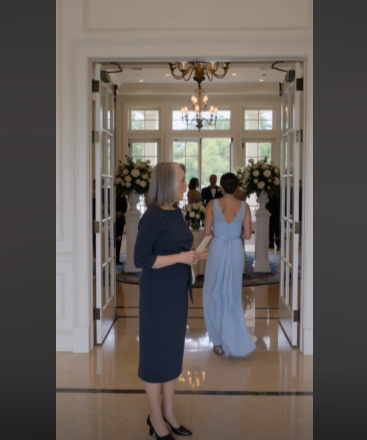
Two weeks before my only son’s wedding, I bought the most expensive dress I had owned in twenty years.
Dark blue.
Simple.
Elegant enough that I hoped no one would look at me and immediately see what my son apparently saw whenever he looked at me.
Laundry.
Work shoes.
Forty years of steam and detergent.
A woman who had spent most of her life with rolled-up sleeves instead of manicured hands.
The saleswoman stood behind me in the fitting-room mirror and adjusted the fabric at my waist.
“It suits you beautifully, Mrs. Thorndike.”
I almost turned around to see whether she was speaking to someone else.
At sixty-seven, I had become accustomed to practical compliments.
You look healthy.
That color is nice.
Your hair is still so thick.
Beautiful was not a word people used much anymore.
I looked at myself again.
Silver hair.
Blue eyes.
A body that had changed with age but still belonged to me.
My son Leon was getting married.
Whatever had happened between us over the years, I wanted to look dignified when I watched him say his vows.
“I’ll take it.”
I had no idea then that I would never make it past the hotel lobby.
My name is Leslie Thorndike.
I had lived in Wilmington, North Carolina, nearly my entire life.
I married there.
Raised my son there.
Buried my husband there.
Built a business there.
Derek and I opened our first laundromat with one bank loan, two used commercial washers, and a level of optimism I now consider medically questionable.
He handled machines.
I handled books, scheduling, payroll, customers, and nearly everything that required keeping three problems from becoming twelve.
When Derek died suddenly at fifty-four, Leon was twenty-six.
I thought I would sell the business.
Instead, I kept going.
One laundromat became three.
Three became five.
Eventually seven.
I was never a glamorous businesswoman.
No office tower.
No magazine profiles.
No executive assistant bringing me espresso.
Most mornings, I wore sneakers and carried a screwdriver in my purse because coin mechanisms had a sense of humor.
But the business worked.
Employees depended on it.
Customers trusted us.
And ten years after Derek died, I sold the chain for a little more than $2.3 million.
After taxes and transaction costs, I invested most of what remained.
I stayed in the same house.
Kept the same Toyota.
Bought better health insurance.
Replaced the kitchen cabinets.
That was about as extravagant as I got.
Leon knew I had sold the company.
He never asked much about the details.
Except once, when a friend of his was raising money for a startup.
“Two hundred thousand,” he told me.
As casually as someone suggesting lunch.
“What does the company do?”
“It’s complicated.”
“Then simplify it.”
He became irritated.
“You wouldn’t understand the technical side.”
“Then I definitely shouldn’t invest.”
That argument damaged something between us.
Or maybe it revealed damage that had already happened.
Leon had changed long before then.
College did not make him ashamed of me.
I want to be fair about that.
People do not enter universities as one person and emerge magically transformed into snobs.
The change was slower.
New friends.
Corporate work.
Different social circles.
Restaurants where the menus had no prices.
Conversations about neighborhoods where houses cost more than my entire first business.
Somewhere along the way, Leon began treating his childhood as something to edit.
His father became “an entrepreneur.”
I became “semi-retired from the service industry.”
The laundromats disappeared from the story.
I noticed.
I pretended not to.
That was one of my specialties where Leon was concerned.
Pretending not to notice things because noticing them might force us to talk.
His first marriage ended badly.
I paid some of the attorney fees.
Helped with Eloise’s school tuition when money became tight.
Loaned Leon money twice.
Covered a credit-card problem once.
Helped with his apartment down payment years earlier.
Not because he forced me.
Because he was my son.
That distinction mattered.
Until one day it stopped mattering because I could no longer remember which help I had offered and which help had quietly become expected.
Eloise was different.
Leon’s daughter was twenty-two by the time he announced his engagement to Pauline Redgrave.
She called me every week.
Sometimes twice.
She came over for dinner without needing a reason.
She knew where the extra key was.
She still called the room she had slept in as a child “my room,” even though she had not lived there in fifteen years.
When Leon told me about Pauline, Eloise sounded uncertain.
“She’s nice.”
“That sounded enthusiastic.”
“She’s very polished.”
“Ah.”
“You know what I mean.”
I did.
Pauline was thirty-eight.
Beautiful.
Worked in luxury real estate.
Her parents, Jeffrey and Margaret Redgrave, moved in circles I knew mostly from newspaper society pages and charity galas I had never attended.
Leon seemed transformed around them.
Straighter posture.
More expensive suits.
Suddenly interested in wine.
I was happy for him.
Or tried to be.
When he told me the wedding would be at the Belvedere Hotel, I asked:
“That place by the river?”
“Yes.”
“Beautiful.”
“It’s expensive.”
“I imagine.”
A pause.
Then:
“Pauline has expectations.”
I should have heard the request before it arrived.
“I want her to have the wedding she wants.”
“Of course.”
Another pause.
“We’re stretched.”
There it was.
I asked how much.
He avoided the number.
Then said:
“Her parents are helping.”
I eventually contacted the wedding planner myself.
Pearl Weddings.
That was how I learned there was a large gap between the celebration Leon described and what he could actually fund.
I should have told him directly:
I can help, but only if we discuss it openly.
Instead, I made a mistake familiar to mothers everywhere.
I tried to solve the problem without making my child uncomfortable.
The planner, Carrie, helped arrange a confidential contribution.
Not a fantasy arrangement where I could secretly erase an entire wedding after people had already eaten.
Real contracts do not work that way.
Deposits had to be paid.
Some amounts became nonrefundable on specific dates.
Vendors had cancellation provisions.
I understood all of that.
I signed the documents.
Paid the initial deposits.
Authorized the planner to draw scheduled balances for several remaining services.
The total commitment, including a honeymoon package Leon and Pauline had added through the agency, was just over $86,000.
A ridiculous amount of money.
I knew that.
I could afford it.
I also knew Leon would refuse if I offered openly.
Or worse, accept while making me feel as though I had embarrassed him by being able to help.
So the planner listed me as a confidential contributing sponsor.
The couple believed the funding had been arranged through a mix of family sources.
I assumed Leon thought the Redgraves were paying more than they really were.
The Redgraves apparently assumed Leon was covering more than he really was.
That misunderstanding would matter later.
At the final planning meeting, Carrie asked:
“Are you sure you don’t want your son to know?”
“Yes.”
“Even afterward?”
“I’ll tell him someday.”
She looked doubtful.
I signed anyway.
Two weeks passed.
Leon did not call to confirm when I should arrive.
I did not receive a printed invitation.
I told myself the invitation had been lost.
Then I told myself immediate family probably did not need one.
Then I stopped asking myself questions because the answers were starting to feel uncomfortable.
On the wedding day, I got dressed early.
The blue dress fit perfectly.
I pinned a small brooch near my shoulder.
Derek had bought it for me on our thirtieth anniversary.
I put a check for Leon and Pauline inside a cream envelope.
A honeymoon gift.
Yes, even after paying most of the wedding, I was still planning to give them more.
Love can make intelligent people financially repetitive.
I drove my Toyota to the Belvedere.
The parking lot looked like a luxury-car dealership.
For one foolish moment, I considered parking farther away so nobody would see what I drove.
Then I became angry with myself.
The Toyota was paid for.
Ran perfectly.
Started every morning.
There are worse things in life than reliability.
Inside the hotel, guests gathered beneath chandeliers.
Most were strangers.
Elegant women.
Men in tailored suits.
People greeting each other with the confidence of people accustomed to rooms like that.
Then:
“Grandma!”
Eloise hurried toward me.
She wore a pale blue bridesmaid dress.
She hugged me tightly.
“You came.”
I laughed.
“Of course I came.”
Something in her expression changed.
Before I could ask, Leon appeared.
My son looked handsome.
Dark suit.
Silver beginning in his beard.
Derek’s eyes.
When he saw me, those eyes widened.
“Mom?”
Not:
You look beautiful.
Not:
I’m glad you’re here.
Just:
“Mom?”
“What?”
He looked around.
Then took my arm.
“Can we talk privately?”
The pressure of his fingers told me everything before his mouth did.
He guided me toward a quieter corridor near the lobby.
“What are you doing here?”
I stared at him.
“At your wedding.”
“Mom.”
“What?”
He lowered his voice.
“I thought you understood.”
“Understood what?”
“You’re not on the guest list.”
For a second, I genuinely believed I had misheard.
“We never discussed that.”
“I assumed—”
“You assumed your mother knew she wasn’t invited to your wedding without you ever telling her?”
His jaw tightened.
“Don’t do this.”
“Do what?”
“Make it dramatic.”
The irony nearly impressed me.
“Leon, explain to me why I’m not invited.”
He looked toward the ballroom doors.
“This is a very particular crowd.”
I said nothing.
“Pauline’s family.”
Still nothing.
“Business people. Clients. Friends.”
“And?”
“You wouldn’t be comfortable.”
There it was.
Not quite honest enough.
So I helped him.
“You’re embarrassed by me.”
“No.”
Immediate.
Too immediate.
“You don’t want your mother from the laundromat standing beside you in front of Pauline’s friends.”
“Mom.”
“Say it.”
“That isn’t fair.”
“Then tell me what is fair.”
He rubbed his forehead.
“We just wanted everything to go smoothly.”
“We.”
Pauline approached then.
Wedding gown.
Perfect hair.
Perfect makeup.
A beautiful woman on the most carefully controlled day of her life.
“Everything okay?”
Leon answered before I could.
“Yes.”
Then:
“Mom was just leaving.”
Pauline looked at me.
A polite smile.
No surprise.
That was how I knew she already knew.
“Oh.”
Then, with the graceful cruelty of someone closing a business meeting:
“I’m sorry you can’t stay, Mrs. Thorndike. Perhaps we can have dinner sometime after the honeymoon.”
I looked at Leon.
He looked away.
I waited.
Some absurd part of me still expected him to correct her.
He finally said:
“I’m sorry, Mom.”
Then:
“Please go.”
I did not cry.
That surprised me.
Maybe there are humiliations so complete that tears cannot find enough room.
Eloise caught up with me near the doors.
“Grandma.”
She was crying.
“Stay.”
“I can’t.”
“I want you here.”
I touched her cheek.
“I know.”
“This is wrong.”
“Today isn’t your fight.”
I kissed her forehead.
“Go be with your family.”
She looked toward her father.
“So are you.”
That nearly broke me.
I walked outside.
Sat inside my Toyota.
Placed both hands on the steering wheel.
Then I laughed once.
A terrible sound.
Because inside that hotel, my son was beginning a celebration largely funded by the woman he had just removed from it.
I looked at the envelope containing his additional gift.
Put it back in my purse.
Then drove home.
For twenty minutes, I did nothing.
I sat in my living room surrounded by photographs.
Leon at eight with a missing front tooth.
Leon in his soccer uniform.
Graduation.
His first wedding.
Eloise as a baby.
Derek on the beach.
Our whole ordinary life arranged across a mantelpiece.
I picked up a photograph of Derek.
“What would you say?”
Of course, photographs give poor advice.
So I put it down.
Then called Carrie.
She answered immediately.
“Mrs. Thorndike? Is everything all right?”
“No.”
Silence.
I told her what happened.
She sounded genuinely horrified.
“I had no idea.”
“I know.”
“I assumed you would be seated with family.”
“So did I.”
Then:
“I need to know exactly what I can still cancel legally.”
That word mattered.
Legally.
Not:
Stop everything.
Not:
Destroy the party.
I had signed contracts.
Vendors had performed work.
Deposits were earned.
My humiliation did not entitle me to refuse payment for services already delivered.
Carrie pulled up the schedule.
“The venue deposit is nonrefundable.”
“Fine.”
“Catering minimum too.”
“Fine.”
“Florals are already installed.”
“Pay them.”
“Photographer is on site.”
“Pay whatever I contracted for.”
She became quiet.
Then:
“There are still several balances that have not been charged.”
“What are they?”
“The open-bar upgrade after dinner.”
“Cancel it if permitted.”
“Late-night food service.”
“Cancel.”
“Band extension until midnight.”
“Whatever cancellation fee applies.”
“Luxury car service tomorrow.”
“Cancel.”
“Post-wedding brunch enhancement.”
“Cancel.”
Then she hesitated.
“The honeymoon package is still within the cancellation window, less the agency charge and airline penalties.”
My hand tightened around the phone.
Italy.
Two weeks.
Hotels.
Private transfers.
Excursions.
I had funded that too.
“Cancel it.”
“Are you sure?”
“Yes.”
“I need to warn you that the couple may still incur some fees.”
“Then send me an itemized accounting of whatever I’m contractually responsible for.”
“Of course.”
“And Carrie?”
“Yes?”
“Do not pretend the Redgraves canceled anything.”
She became very quiet.
“If they ask who withdrew the optional funding?”
“Tell the truth.”
I called my bank afterward only to revoke future payment authorizations that had not yet been processed and to flag any attempted charges beyond the planner’s revised invoice.
The banker did not magically reverse money already owed.
He simply documented my instructions.
That was enough.
The wedding did not collapse.
No waiters ripped plates from tables.
No florist marched in and removed centerpieces while guests screamed.
Reality is usually less theatrical.
The ceremony happened.
Dinner happened.
The cake was cut.
But the evening became considerably less luxurious than Leon had promised.
The premium bar ended earlier.
The band finished at the contracted base time.
The late-night food never arrived.
The luxury transportation was canceled.
The next-day brunch became whatever the couple chose to pay for themselves.
And the honeymoon vanished.
More importantly, the planner had to ask Leon and Pauline whether they intended to cover the remaining optional balances.
That was when everyone learned who had really been paying.
Eloise called me from a hotel terrace.
“Grandma?”
“Hi, sweetheart.”
“Did you pay for the wedding?”
I closed my eyes.
“Yes.”
“All of it?”
“Most.”
Silence.
“Why?”
“Because your father wanted to give Pauline a beautiful wedding and could not comfortably afford the one they planned.”
“Did he know?”
“No.”
“Why would you hide that?”
Because mothers sometimes confuse protecting someone’s pride with loving them.
I did not say that.
Instead:
“I thought it would make him happy.”
Eloise became quiet.
Then:
“They just found out the honeymoon is canceled.”
“Yes.”
“Dad is furious.”
“I imagine.”
“Pauline’s parents are furious too.”
“That I canceled it?”
“No.”
Pause.
“At Dad.”
That surprised me.
“Why?”
“He told them he was paying for most of the wedding.”
There it was.
Another small truth finally reaching daylight.
Jeffrey Redgrave believed Leon had funded the main event himself.
Apparently Leon had allowed that impression to stand.
Now the planner’s revised billing exposed the reality.
Eloise whispered:
“Grandma, he’s calling you.”
My phone showed another call.
Leon.
I let it ring.
“I’m not speaking to him tonight.”
“Probably smart.”
“I’m sorry you’re in the middle of this.”
“I’m not.”
“You are.”
“No.”
Her voice became firmer.
“He put me in the middle when he kicked you out.”
I closed my eyes.
“Eloise.”
“What?”
“Love your father if you want to love him.”
Silence.
“You don’t have to choose teams to love me.”
She started crying.
“I love you.”
“I love you too.”
Leon arrived at my house at seven the next morning.
He did not knock.
He pounded.
“Mom!”
I stood inside the hallway listening.
Then opened the door.
He looked awful.
Wrinkled suit.
Red eyes.
Unshaven.
“What did you do?”
“Good morning.”
“Don’t.”
He stepped toward the door.
I blocked him.
That surprised both of us.
“You don’t come into my house shouting.”
His mouth opened.
Then closed.
“Fine.”
He lowered his voice.
“What did you do?”
“I withdrew funding from the optional services and honeymoon I was still legally permitted to cancel.”
“You humiliated me.”
I almost smiled.
“What did you do yesterday?”
His expression hardened.
“That is different.”
“Of course.”
“You destroyed my wedding.”
“No.”
“The ceremony happened.”
“Dinner happened.”
“Your marriage exists.”
Then:
“I stopped paying for things I no longer wished to give you.”
He stared at me.
“You planned this.”
“No.”
“When I signed those contracts two months ago, I assumed I would attend my son’s wedding.”
He looked away.
“You should have told me you were paying.”
“Would you have accepted?”
Silence.
“Leon?”
“That isn’t the point.”
“It is exactly the point.”
I walked into the kitchen.
He remained in the doorway.
Eventually followed.
I made coffee.
He paced.
“Pauline is furious.”
“I’m sorry.”
“Her parents think I lied to them.”
“Did you?”
“I never said they were paying.”
“That wasn’t my question.”
He stopped.
I looked at him.
“Did you let them believe you were funding the wedding yourself?”
His jaw tightened.
“It wasn’t their business.”
“Apparently it mattered enough that you wanted them impressed.”
“You don’t understand that world.”
There.
Even now.
“Your world?”
“Yes.”
“The one I wasn’t good enough to attend?”
“Mom.”
“You said it was an elite event.”
He rubbed his face.
“I handled it badly.”
“You removed your mother from your wedding because you thought my presence lowered the quality of the room.”
“That isn’t—”
“Stop.”
My voice surprised him.
“Just once, don’t explain my humiliation back to me until it sounds reasonable.”
He became quiet.
Then asked:
“How much did you actually spend?”
I looked at him.
That was his first practical question.
Not:
How badly did I hurt you?
“How much?”
“The original commitment was about eighty-six thousand dollars including the honeymoon.”
His face went blank.
“What?”
“Some deposits are gone.”
“I will still pay whatever cancellation charges I legally owe.”
“The vendors will be paid for work performed.”
“But the unearned optional balances and honeymoon are canceled.”
He sat down.
“You have eighty-six thousand dollars to spend on a wedding?”
“I did.”
“Where did that come from?”
That question hurt in a different way.
“You know I sold the business.”
“Yes, but…”
“But what?”
“I didn’t know you still had that kind of money.”
“You never asked.”
He looked at me differently.
I recognized the expression.
Calculation.
That was worse than contempt.
At least contempt had been honest.
His voice softened.
“Mom.”
I almost laughed.
There she was.
The affectionate version of me.
Activated by net worth.
“I know I messed up.”
“Yes.”
“I was under pressure.”
“Okay.”
“Pauline wanted everything perfect.”
“Okay.”
“Her parents are difficult.”
“I imagine.”
“I shouldn’t have excluded you.”
“No.”
“Obviously.”
“Obviously?”
He winced.
“I mean now I understand how bad it looked.”
I stared at him.
“How it looked?”
“How it was.”
Better.
Barely.
Then came the request.
“But we can fix it.”
Of course.
“How?”
“Restore the honeymoon.”
“No.”
“Mom.”
“No.”
“Pauline and I planned this for months.”
“So did I.”
His expression changed.
“The money is yours, yes. Fine. But you gave it to us.”
“I committed money toward a wedding celebration.”
“The celebration happened.”
“You’re splitting hairs.”
“No.”
I shook my head.
“I am learning where the lines actually are.”
He stood.
“So what are you doing with the rest?”
That question answered whatever uncertainty I still carried.
“The rest?”
“The money you canceled.”
I put down my coffee.
“Not your concern.”
His face reddened.
“You were going to spend it on me.”
“Yesterday.”
“Because I’m your son.”
“Yes.”
“I still am.”
“Yes.”
“And you’re going to punish me forever over one mistake?”
I looked at him.
“One mistake?”
“You were ashamed of me before I arrived.”
“You removed me after I arrived.”
“You accepted my help when you thought it came from someone more respectable.”
Then:
“And this morning, after apologizing for perhaps thirty seconds, you asked where the unused money is going.”
He had no answer.
I did.
“To Eloise.”
His head snapped up.
“What?”
“I’m meeting with my estate attorney next week.”
“I intend to fund a 529 education account for her graduate studies and create a separate education reserve under professional advice.”
“You can’t just—”
“I can use my money for my granddaughter’s education.”
“She is my daughter.”
“Yes.”
“And an adult.”
“She’s twenty-two.”
He stared at me.
“You’re doing this to hurt me.”
“No.”
I surprised myself with how sure I was.
“I’m doing it because she has a future she’s working toward.”
“She wants graduate school.”
“She worries about the cost.”
“I can help.”
“You could help me.”
“I have.”
That stopped him.
I began listing.
“Down payment.”
“Divorce attorney.”
“Credit cards.”
“Eloise’s school.”
“Two personal loans.”
“The wedding.”
His face changed with every item.
“You have been helped, Leon.”
Silence.
“What you haven’t learned is where help ends.”
He stood abruptly.
“This isn’t over.”
“Maybe not.”
“You’re going to regret choosing money over your son.”
I looked at him for a long time.
Then said:
“I’m choosing the right to decide what happens to my own money.”
“That’s not the same thing.”
He walked out.
He did not smash a cup.
Did not sweep things from counters.
Did not threaten to destroy me.
Real anger is often less cinematic.
He simply left.
That was worse in some ways.
Because when the door closed, I was alone in a quiet kitchen with no villainous spectacle to protect me from the fact that I loved him.
I cried then.
Hard.
Not because I regretted the boundary.
Because boundaries do not anesthetize grief.
The wedding money did not become an instant irrevocable trust that afternoon.
Financial planning deserves more thought than anger does.
I met with my attorney.
Then my financial adviser.
We reviewed what I could reasonably give Eloise without compromising my own retirement, health care, and long-term needs.
I funded a 529 plan sufficient to cover a substantial portion of graduate education.
I also revised my estate documents.
Not to punish Leon.
To reflect reality.
Eloise would receive assets in trust under professional administration.
Leon remained a beneficiary of part of my estate.
But not the person responsible for managing my affairs if I became incapacitated.
That role went to an independent fiduciary with Eloise as a later alternate if she was willing.
My attorney asked:
“Are you sure you want your son removed from the power-of-attorney documents?”
“Yes.”
“Because of the wedding?”
“No.”
I thought.
“Because the wedding finally made me admit what had been true for years.”
Four months later, I sold my house in Wilmington.
Not in three miraculous days above asking price.
It took seven weeks.
There were inspections.
A roof issue.
A buyer who wanted a credit for an air-conditioning unit that worked perfectly well but apparently lacked spiritual confidence.
Eventually it sold.
I bought a smaller house in Savannah.
One story.
Small garden.
Covered terrace.
Enough guest space for Eloise.
Not enough space for anyone to move in permanently without an awkward conversation.
Perfect.
People in Wilmington thought moving at sixty-seven was strange.
Maybe it was.
I had spent my whole life there.
But I discovered that familiarity is not always the same as belonging.
In Savannah, nobody knew me as Leon’s mother.
Nobody knew me as Derek’s widow.
Nobody knew me as the laundromat woman.
I was Leslie.
Just Leslie.
I signed up for watercolor classes.
I had loved painting when I was sixteen.
Then work happened.
Marriage.
Child.
Business.
Life has a way of taking temporary sacrifices and quietly converting them into forty-year arrangements.
The first painting I made was terrible.
A bowl of oranges.
One orange looked like a pumpkin.
Another resembled a damaged tennis ball.
I framed it.
Eloise came to visit a month later and laughed for five straight minutes.
“You paid someone to teach you this?”
“Respect your elders.”
“I respect you enough to tell you the truth.”
That sounded like Derek.
I loved her for it.
The education money helped her enter a master’s program in architecture.
She still worked part-time because she wanted to.
That pleased me.
Money should create options.
Not remove all responsibility.
We spoke regularly.
But I made one rule.
“Do not report on your father unless there is something I genuinely need to know.”
She looked surprised.
“Why?”
“Because I don’t want you carrying messages between us.”
“But what if he asks about you?”
“Tell him I’m fine.”
“What if you ask about him?”
“I’ll try not to.”
She smiled.
“You’re definitely going to ask.”
“I’m your grandmother.”
“Exactly.”
She was right.
I asked occasionally.
But I tried to stop using her as a window into Leon’s life.
That relationship belonged to them.
Not me.
Leon and Pauline did marry.
They did not need an eighty-six-thousand-dollar spectacle to do it.
Three weeks later, they held a smaller ceremony at a restaurant.
About thirty guests.
I was not invited.
That hurt.
I let it.
I did not cancel anything because there was nothing of mine left to cancel.
I did not send a sarcastic gift.
I mailed a simple card.
Congratulations. I hope you build something kind together.
Leslie.
Not Mom.
I regretted that as soon as I mailed it.
It was petty.
Small cruelties remain small cruelties even when the other person hurt you first.
I could admit that.
Pauline sent a thank-you card.
Leon did not.
Months passed.
I traveled.
Not because I needed to show anyone I was thriving.
Because Derek and I had spent decades saying:
Someday.
Someday we’ll travel.
Someday when the business is stable.
Someday when Leon is older.
Someday when we have more money.
Derek died with plenty of somedays unused.
I booked a Caribbean cruise.
Before leaving, I bought a swimsuit that made me deeply uncomfortable in the fitting room.
The saleswoman said:
“You look lovely.”
I laughed.
“Apparently saleswomen are conspiring to improve my self-esteem.”
She had no idea what I meant.
On the ship, I watched Wilmington become very far away.
Then Charleston.
Then ocean.
For the first day, I felt guilty.
That surprised me.
Lunch in the sun.
Guilt.
Cocktail.
Guilt.
Massage.
Absolutely catastrophic guilt.
Then I realized I had spent my entire adult life connecting enjoyment with responsibility.
If I had time for myself, someone else must be waiting.
A child.
A husband.
An employee.
A broken dryer.
An invoice.
A son who needed money.
Nobody needed me on that ship.
The emptiness of that responsibility felt almost frightening.
Then it began to feel like rest.
I met a woman named Martha in watercolor class before the trip.
Sixty-one.
Divorced.
Freelance photographer.
Had been everywhere.
She became my first real friend in Savannah.
Not a church friend.
Not a business acquaintance.
Not someone connected to Derek.
Mine.
When I returned, she asked:
“Best part?”
“Standing somewhere nobody needed me.”
“That sounds sad.”
“It wasn’t.”
She understood.
About nine months after the wedding, Leon emailed.
Not called.
Email felt safer, apparently.
The subject line read:
I owe you an apology.
I did not open it for two days.
Then I did.
Mom,
I’ve written this several times.
Most versions were explanations.
I deleted them.
I was ashamed of where I came from, and I made you carry the shame instead of admitting it was mine.
I stared at that sentence.
Then continued.
I wanted Pauline’s family to see me a certain way.
Successful.
Independent.
Sophisticated.
You reminded me of everything I thought would make them see through me.
That was not your failure.
It was mine.
I removed you from my wedding because I was afraid of being judged.
Then when you withdrew the money, I was more upset about losing the image I had built than about what I had done to you.
I’m sorry.
No request followed.
That mattered.
No:
Can you restore the honeymoon?
No:
Can you help with the mortgage?
No:
When can I visit?
Just:
I’m sorry.
Then:
I don’t expect you to answer.
I did anyway.
Thank you for saying it.
I need more time.
He responded:
I understand.
That was the beginning.
Not reconciliation.
Beginning.
Three months later, he called.
I answered.
We talked for nine minutes.
Weather.
Work.
Eloise.
He did not ask about my investments.
I noticed.
Of course I noticed.
Two months after that, he asked if he could visit Savannah.
I said no.
He became quiet.
Then:
“Okay.”
That surprised me.
“I’m not ready.”
“I heard you.”
No argument.
That mattered too.
Later that year, I invited him.
Without Pauline.
Not because I disliked her.
Because the first conversation needed to belong to the two people who had broken it.
He arrived in a rental car.
No expensive suit.
No gift except a bag of coffee beans from Wilmington.
We sat on my terrace.
For several minutes, neither of us spoke.
Then he looked toward the garden.
“You really left.”
“Yes.”
“I thought you’d come back.”
“Why?”
He laughed sadly.
“Because you always did.”
That may have been the most honest sentence he ever gave me.
“You were angry.”
“I assumed you’d cool off.”
“I did.”
“You still didn’t come back.”
“I cooled off enough to understand what I wanted.”
He nodded.
Then:
“Was I really that bad?”
A dangerous question.
It invited me either to absolve him or destroy him.
I chose neither.
“You weren’t bad all the time.”
His eyes filled.
“That almost sounds worse.”
“It shouldn’t.”
I leaned back.
“You were my son.”
“You could be loving.”
“Funny.”
“Generous.”
“You were a good father to Eloise in many ways.”
“And you also became ashamed of me.”
His face tightened.
“Both are true.”
We sat quietly.
Eventually he said:
“I’m trying to understand why I cared so much.”
“About status?”
“Yes.”
“Have you figured it out?”
“No.”
“Good.”
He looked confused.
I smiled.
“People who find one neat answer for forty years of behavior are usually lying.”
That got a laugh.
A small one.
But real.
We spent three hours together.
He left before dinner.
No dramatic hug.
At the car, he said:
“Can I call you?”
“Yes.”
“How often?”
I almost laughed.
“Start with when you actually want to know how I am.”
He nodded.
“That seems fair.”
“It is.”
Our relationship is still different.
Maybe it always will be.
Pauline and I have had coffee once.
She apologized for the hotel lobby.
Specifically.
Not:
I’m sorry if you felt unwelcome.
She said:
“I knew Leon didn’t invite you, and I agreed because I was worried about what my parents and friends would think.”
That was painful.
It was also useful.
I said:
“Thank you for telling the truth.”
She asked:
“Do you forgive me?”
“Somewhat.”
She laughed nervously.
“At least that’s honest.”
“I’m working on it.”
She nodded.
“So am I.”
We did not become close.
That is okay.
Not every relationship needs to end in Sunday dinners and matching Christmas pajamas.
Civility can be a successful outcome.
I still have the blue dress.
For a long time, I associated it with the hotel lobby.
With Leon’s face.
With Pauline saying:
“What a shame you can’t stay.”
Then Martha invited me to a gallery opening.
I wore the dress.
She looked at me and said:
“Wow.”
I almost told her the story.
Then decided not to.
That evening belonged to something else.
I drank wine.
Looked at paintings.
Talked to strangers.
Came home after ten.
Hung the dress in my closet.
And realized it had become just a dress again.
I liked that.
The wedding was never really about money.
It would be easy to tell the story that way.
Mother pays eighty-six thousand dollars.
Son humiliates her.
Mother withdraws money.
Son learns lesson.
Clean.
Satisfying.
Not true.
Money only made the relationship visible.
The real problem was that for years I had accepted a version of love where I kept giving and Leon kept deciding how close I was allowed to stand.
I thought generosity would eventually earn gratitude.
I thought patience would eventually earn respect.
I thought if I never made demands, he would someday notice how little I asked for.
That was my mistake.
Respect is not a loyalty program.
You do not collect enough sacrifices and redeem them later.
The day of the wedding, I did not become strong because I stopped paying for an open bar and a trip to Italy.
I became stronger when I accepted something far more painful.
My son was willing to take what I gave while keeping me outside the room.
Once I understood that, continuing the arrangement would have required my cooperation.
So I stopped cooperating.
Not with his marriage.
Not with his happiness.
With my own invisibility.
Eloise graduates next spring.
She sent me a photograph of her final project last week.
A community center designed around a central courtyard.
“Grandma,” she said on the phone, “I think I know what I want to do after graduation.”
“What?”
“Public-interest architecture.”
“Does that pay?”
She groaned.
“You sound like Dad.”
“Take it back.”
She laughed.
I did too.
Then she said:
“You know the money helped.”
“I know.”
“But that isn’t the biggest thing you gave me.”
“Oh?”
“You made me watch you start over.”
I became quiet.
“That sounds very inspirational.”
“Don’t ruin it.”
“Sorry.”
She continued.
“I think I used to believe being older meant your life just got smaller.”
“And now?”
“Now you’re learning Spanish badly and taking cruises.”
“My Spanish is excellent.”
“You ordered fish when you wanted coffee.”
“One time.”
She laughed again.
After we hung up, I went outside.
Savannah was warm.
Jasmine from the neighbor’s fence.
Martha had left a message asking whether I wanted to attend another watercolor workshop.
Leon had texted two days earlier:
How’s the shoulder?
I had mentioned it hurting on our previous call.
Small thing.
He remembered.
I answered:
Better.
Thank you for asking.
That was enough.
I no longer need him to become the son I imagined when he was eight.
He cannot.
I cannot become the mother I was then either.
Maybe what we build now will be smaller.
Less automatic.
More cautious.
Maybe that is not failure.
Maybe relationships repaired after damage should look different.
Otherwise, what exactly did anyone learn?
I used to believe the greatest humiliation of my life was being told to leave my only son’s wedding.
I was wrong.
The humiliation had happened slowly, over years, every time I accepted less love because I was afraid asking for more would leave me with none.
The wedding simply made it impossible to ignore.
And strangely, I am grateful for that.
Not for the cruelty.
Never that.
For the clarity.
I spent sixty-seven years being someone’s daughter.
Someone’s wife.
Someone’s mother.
Someone’s employer.
Someone’s emergency fund.
Now, when people in Savannah ask who I am, I say:
“Leslie.”
Sometimes that is enough.
Sometimes I tell them I used to own laundromats.
I no longer soften the word.
I say it proudly.
Seven of them.
Built from one.
Forty years of work.
Steam.
Detergent.
Payroll.
Broken machines.
Good employees.
Difficult customers.
My life.
Leon once thought that history made me unfit for an elite wedding.
I no longer need him to be ashamed that he thought that.
I only need him never to ask me to be ashamed of it again.
And I need the same from myself.
The blue dress still hangs in my closet.
My passport sits in the drawer below it.
Eloise’s graduation date is marked on my calendar.
There are watercolor brushes drying beside the kitchen sink.
And on my refrigerator is a photograph from the Caribbean.
Me.
Sun hat.
Terrible hair.
Laughing so hard my eyes are almost closed.
No son beside me.
No husband.
No business.
No proof of wealth.
Just a woman who finally understood that being excluded from somebody else’s perfect picture did not mean she had disappeared.
It only meant she was free to make another one.
