When my brother got married, my family decided I was “not well eno
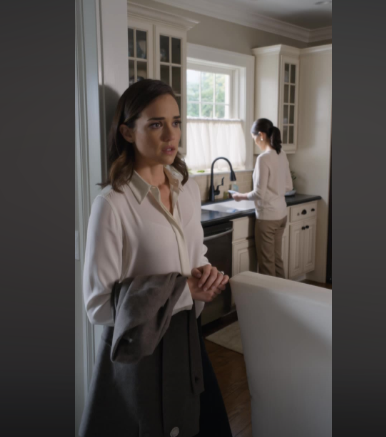
My Family Said I Was Too Sick For My Brother’s Wedding, Then Laughed When I Warned Them Not To Expect An Invitation To Mine, Until One Quiet Line At Grandma’s Birthday Table Made Every Empty Chair Matter And Changed How They Looked At Me
The phone call from Grandma came while I was parked outside my office, one hand still on the ignition and the other rubbing the ache between my eyes. It had been one of those March evenings in Columbus when the sky looked washed thin, all gray light and wet pavement, and I had been sitting there longer than I meant to because going home to silence felt heavier than staying in my car.
When her name lit up my screen, I smiled before I answered.
Grandma Mae rarely called during the week. She usually saved her updates for Sunday afternoons, when she told me about her church friends, her stubborn roses, and whichever mystery novel had offended her by making the wrong person guilty.
“Hi, Grandma,” I said, trying to sound less tired than I was. “Everything okay?”
Her voice came through soft, careful, and already worried.
“Celine, honey,” she said. “How are you feeling?”
I frowned at the windshield. “Feeling?”
“Are you any better?”
The cars on the road kept moving beyond the glass, red taillights sliding through drizzle, but something in me stopped.
“I’m fine,” I said slowly. “Why?”
Grandma did not answer right away. I heard her breathe in, then let it out like she was deciding whether kindness required silence or truth.
“Your parents told me you were very ill,” she said. “That was why you couldn’t make it to Damian’s wedding.”
For a second, I thought I had misheard her.
“What wedding?”
The words sounded too small for what they carried.
Grandma went quiet.
“Sweetheart,” she whispered. “Your brother’s wedding. Last Saturday.”
My fingers tightened around the phone. My brother had gotten married six days earlier, in the same city where I lived, with the same last name I carried, and my family had not forgotten to tell me. They had told people I was too sick to come.
I stared at my reflection in the windshield, my face pale in the evening glass, and the strangest part was that I did not cry.
Not then.
I only sat there while Grandma kept saying my name like she was trying to reach me through a locked door, and all I could think was that my family had not left a chair empty for me.
They had removed the chair before anyone could ask why I was missing.
By the time I got home, the rain had become a fine mist, clinging to my hair and coat as I climbed the stairs to my condo. I had bought that place the year before, a narrow two-bedroom with creaky floors, tall windows, and a view of a maple tree that turned the whole living room gold in October. It was the first home that had ever been mine alone.
That night, it felt like a waiting room.
I dropped my work bag beside the couch and walked straight to the kitchen because my body needed something ordinary to do. I filled the kettle, set it on the stove, and stood there listening to the low hiss of water warming while Grandma’s words repeated in my head.
Your parents told me you were very ill.
I made tea in the blue mug, the chipped one from a weekend trip to Lake Erie with Julian, and carried it to the couch without taking a sip. My hands stayed wrapped around it because the heat gave me a place to put the trembling.
Damian was married.
My little brother, who was thirty now but still managed to be called “the boy” by my mother whenever she wanted someone to forgive him, had stood at an altar. He had worn a suit. He had smiled for photos. Our father had probably clapped him on the back as though Damian had personally secured the family legacy by finding a bride with good posture and tasteful earrings.
And I had been nowhere.
I unlocked my phone, then locked it again.
Part of me did not want proof. Proof would turn pain into a shape I could not pretend away. But denial had kept me small for too many years, so I opened Instagram and searched Damian’s name.
The first photo loaded before I was ready.
Damian stood beneath an arch of white roses in a black tuxedo, shoulders broad, chin lifted, smile confident enough to make the whole world look like it had been arranged for him. Beside him stood Mara, his bride, in a lace dress with long sleeves and a veil that caught the light behind her like mist.
My mother, Evelyn, was in the next photo, dabbing tears with a white handkerchief. My father, Richard, stood beside Damian in another, chest puffed out, one hand on my brother’s shoulder as though presenting him to history.
I kept scrolling.
There were cousins from Pennsylvania. My mother’s book club friends. My father’s golf partners. Our old next-door neighbors, the Lees, whose kids I had babysat when I was sixteen. There was Aunt Lisa from Dayton, standing beside Grandma Mae, both of them smiling in the ballroom under a chandelier that looked too large for any ceiling.
A hundred people, maybe more.
One caption read, “The whole Callaway family came together for Damian and Mara.”
The whole family.
I looked at that sentence until the letters blurred.
It was not the first time my family had arranged a room around Damian and expected me to squeeze into whatever space was left. It was only the first time they had closed the door before I arrived.
I grew up understanding that love in our house had a direction. It flowed toward Damian first, then overflowed toward me if there was enough left and no one more interesting needed it.
When Damian was nine and I was eleven, he made the travel baseball team. My father acted as if the Boston Red Sox had personally called our house. Every Saturday became Damian Day. Mom packed coolers and sunscreen. Dad wore the team cap and shouted from behind the fence until his voice cracked. If I had a piano recital on the same afternoon, Mom would say, “Could you ask your teacher to move you later, honey? You know your brother’s games only happen once.”
His games happened every week.
My recitals happened twice a year.
By high school, I had learned to hand my report card across the dinner table quickly, before Damian walked in. Straight A’s earned a kiss on the forehead from Mom and a distracted “good job” from Dad. Damian’s B-minus in chemistry earned a family meeting, two tutoring referrals, and a speech about how smart people sometimes needed support to unlock greatness.
When I won a state debate award, Dad forgot the ceremony. When Damian scored the winning run in a regional tournament, Dad had the photo framed for his office.
I used to tell myself that none of it mattered. I was independent. I was responsible. I did not need applause. That was the story I built because wanting more from them made me feel foolish.
But there was a difference between not needing applause and being edited out of the program.
As adults, the old pattern became more polished, which somehow made it worse. Damian went to law school, and my father started saying “my son, the attorney” before Damian had passed the bar. Mom saved every newspaper clipping that mentioned his firm. She carried his business card in her purse like a relic.
When I became a project director at Hartwell Urban Design, managing teams and city redevelopment contracts, my father asked whether that meant I finally had an office with a door.
“It means I’m leading three departments,” I said.
He nodded without looking away from the basketball game. “That’s nice.”
Then Damian arrived late for dinner, and Dad turned the volume down so he could hear every word about a deposition that Damian was not even important enough to attend.
I bought my condo after years of saving, and Mom toured it once. She complimented the windows, then asked whether I planned to “upgrade eventually” because Damian and Mara were looking at townhomes near the river.
“You’re doing well for where you are,” she said, patting my arm.
For where I was.
That phrase followed me longer than she knew.
The one person who never made me feel like a consolation prize was Grandma Mae. She was my father’s mother, sharp-eyed, small-framed, and steadier than anyone else in the Callaway family. She remembered my debate trophy. She came to my college graduation with a homemade sign even though Dad complained that parking downtown was a nightmare. She called my condo “your home,” not “your starter place.”
So when she called me about Damian’s wedding, I knew she had not meant to hurt me.
She had simply refused to participate in a lie she did not understand.
After the Instagram photos, I sat motionless for a long time. The tea went cold between my hands. My engagement ring caught the lamplight every time my fingers shifted, a small flash against the ceramic, and I stared at it with an ache that was half grief and half bitter laughter.
Julian had asked me to marry him six months earlier.
My family had not noticed the ring.
That was the part no one would believe unless they had lived inside my family’s kind of neglect. It was not that I hid it carefully. I wore it to Sunday dinners. I wore it to Thanksgiving. I had worn it while helping Mom rinse dishes after Christmas, the diamond tapping softly against a wineglass while she complained that Mara’s mother was too opinionated about floral arrangements.
Not once had Evelyn looked down.
Not once had Richard asked.
Damian had glanced at my hand one evening, smirked, and said, “Trying out new accessories now?” before changing the subject to his bonus.
I had not announced the engagement because Julian and I had wanted a little privacy at first. His family owned the design firm where I worked, and though Julian was not my boss, I knew people liked to turn love into gossip if it came with a recognizable last name. He was thoughtful about that. He never wanted me treated as someone who had been given what I had earned.
But privacy was not the same as invisibility.
A family that saw me would have noticed.
I did not sleep that night. I moved from couch to bed to window, carrying my phone like it might explain itself if I held it long enough. Around two in the morning, I opened the family group chat.
The last message from Mom was three weeks old.
Sunday dinner canceled, lots going on. We’ll catch up soon.
At the time, I had thought she meant Damian’s firm schedule, or Dad’s dental procedure, or some church committee drama. Now I scrolled backward with new eyes.
Two weeks before that, I had texted a photo of my living room after I painted the bookshelves green. Aunt Lisa sent three heart emojis. Grandma said it looked warm. Mom never responded. Damian replied the next day with a picture of Mara holding fabric swatches and wrote, “Some people are doing real decorating.”
I remembered another wrong detail then.
The Sunday before Mom canceled dinner, I had stopped by my parents’ house to drop off a casserole because Evelyn said she had a migraine. There had been a calendar on the refrigerator, the kind Mom still bought every December from the animal shelter. In one square, written in her neat blue marker, I saw “D + M final count.”
I asked, “Final count for what?”
Mom moved faster than her migraine should have allowed. She opened the refrigerator door wide enough to cover the calendar and said, “Church luncheon. Nothing you need to worry about.”
Nothing you need to worry about.
Dad had walked in right then and asked whether I could help him set up his new streaming password. The question was so ordinary that I followed it out of the kitchen and let the calendar disappear behind the refrigerator door.
A week later, my cousin Teresa texted, “Hope you’re feeling better soon.”
I thought she had sent it to the wrong person.
I wrote back, “I’m fine, but thank you?”
She responded with a thumbs-up and nothing else.
At work that Friday, I noticed Mom had posted a photo of a manicure with the caption, “Busy weekend ahead.” I almost commented, “Have fun,” but something about the way Aunt Lisa liked the post within seconds made me feel as if I had walked near a conversation that stopped when I entered.
I dismissed it.
That was what I did. I made excuses on behalf of people who had never run out of reasons to minimize me.
By morning, the pattern was not a suspicion anymore. It was a ladder, every wrong detail another rung: the calendar hidden by the refrigerator door, Teresa’s strange text, the canceled Sunday dinner, Grandma’s worried call, and the photos of a ballroom full of people who had all been told I was too sick to attend.
I took a shower, dressed for work, and made it through two meetings without hearing a word anyone said. At lunch, Julian found me in the stairwell between the fourth and fifth floors, where I went when I needed quiet.
He was thirty-three, tall, dark-haired, and usually calm in a way that made rooms settle around him. That day, his expression changed as soon as he saw me.
“Celine,” he said. “What happened?”
I tried to answer like an adult. I tried to give facts. Grandma called. Damian got married. They lied.
But my voice broke on the third sentence.
Julian sat beside me on the concrete step without caring about his suit pants and took my hand. He did not rush me. He did not tell me I was overreacting. He did not search for a nicer interpretation so he could feel less uncomfortable.
He only listened.
When I finished, he looked down at my ring, then back at my face.
“Have they noticed?” he asked quietly.
I knew what he meant.
“No.”
His jaw tightened, but his voice stayed gentle. “Do you want me to go with you when you talk to them?”
I almost said no. My instinct was to protect everyone else from the mess my family made. But that instinct had kept me alone in rooms where I should have been defended.
“Not yet,” I said. “I need to hear them say it to me.”
He nodded. “Then don’t go there asking them to prove they love you. Go there knowing you deserve the truth.”
I carried that sentence with me all afternoon.
By six, I was standing in my parents’ driveway, staring at the white colonial house where I had learned to be quiet. The porch light was on. Mom’s hydrangeas were still cut back for winter, brown stems waiting for spring. Through the front window, I could see the glow of the television.
I let myself in because I had always let myself in.
“Celine?” Mom called from the kitchen. “It’s not Sunday.”
I found her at the sink, drying a serving bowl. She looked the same as she always did when caught unprepared: pearl earrings, soft sweater, lipstick still perfect from whatever afternoon errand she wanted to look effortless doing.
Her smile faltered before she rebuilt it.
“What’s wrong?”
I stood in the kitchen doorway. “Why wasn’t I invited to Damian’s wedding?”
The bowl slipped slightly in her hands.
Not enough to break. Just enough to betray her.
“What are you talking about?” she asked.
The first lie arrived so quickly that my grief sharpened into something cleaner.
“Grandma called me,” I said. “She asked whether I was feeling better.”
Mom set the bowl on the counter. “Oh.”
That was all.
Oh.
Dad’s recliner creaked in the living room. “What’s going on?”
I did not look away from Mom. “You told people I was too sick to attend a wedding I didn’t know existed.”
Mom pressed her fingers to her temple, as if I had given her a headache by mentioning the knife she had put in me.
“We thought it would be easier,” she said.
“Easier for whom?”
“For everyone,” she snapped, then softened her face as if the sharpness had been an accident. “Celine, you’ve never liked big social events. Damian’s wedding was very formal. There were important people there. We didn’t want you to feel uncomfortable.”
There it was.
Protection dressed up as erasure.
I took one step into the kitchen. “You didn’t ask me.”
Dad appeared behind me, heavy-shouldered, hair silver at the temples, annoyance already settling over his face. “Why are you making a scene?”
I turned to him. “Because my brother got married and you lied about why I wasn’t there.”
Dad looked at Mom, then back at me. He seemed less guilty than inconvenienced.
“You want the truth?” he asked.
“Yes.”
He folded his arms. “Damian has built a certain life. Mara’s family runs in certain circles. The wedding had judges, partners, clients, people who matter to his future.”
The words came measured, almost practical. That made them hurt more.
“And I don’t matter?”
Dad sighed. “Don’t twist it.”
“I’m asking.”
“You would’ve been out of place,” he said. “You always get stiff around people like that. You would’ve sat there looking uncomfortable, and then everyone would’ve asked questions. We spared you that.”
I almost laughed, but there was no humor in me.
“You told people I was sick.”
Mom spoke quickly. “What were we supposed to say?”
“The truth.”
“That we didn’t invite you?” Damian’s voice came from the hallway.
He walked in wearing a dress shirt with the sleeves rolled up, his expression more curious than ashamed. Married less than a week, and he already had the calm arrogance of someone who expected the room to rearrange itself around his comfort.
“Honestly, Celine,” he said, leaning against the doorway, “it would’ve been awkward.”
“For you?”
“For everyone.” He shrugged. “You don’t really fit that world.”
I looked at him, really looked.
He was my brother. I had tied his shoes when he was little because he got frustrated with knots. I had helped him study for vocabulary tests. I had taken the blame once for a broken hallway lamp because he cried so hard I panicked.
And he stood there telling me I did not fit at his wedding as though he was discussing a seating chart.
My hand curled at my side. The ring pressed against my palm.
“You didn’t invite me because you were embarrassed by me,” I said.
Mom’s face crumpled, but it was not grief. It was offense at being named.
“Celine, that’s unfair.”
Dad gave a short, humorless laugh. “Embarrassed is a strong word.”
Damian’s smirk answered for all of them.
Something in me went very still.
I had arrived wanting an explanation. Maybe, somewhere in the child part of me, I had arrived wanting them to panic, apologize, pull me into their arms, and say they had made a terrible mistake. But that child had been waiting outside locked rooms for too long.
I looked at each of them once.
“Then don’t expect an invitation to mine,” I said.
For half a second, the kitchen held its breath.
Then Dad laughed.
Not loudly. Not cruelly enough for anyone else to call it cruel. Just a quick chuckle, the kind he used when Damian made a joke at my expense and I was supposed to be mature enough to take it.
“Be serious,” he said. “You’ll never get married.”
The sentence landed harder than the wedding photos.
Not because I believed it.
Because he did.
Damian laughed under his breath. Mom looked down at the counter, and I knew then that silence could be agreement when it came from someone who knew better.
I turned and walked out.
No slammed door. No speech. No final plea.
By the time I reached my car, my hands were shaking so badly I could barely unlock it. I drove three blocks, pulled into the parking lot of a closed pharmacy, and called Julian.
He answered on the first ring.
“I’m coming,” he said after hearing my voice.
I did not tell him where I was. He already knew me well enough to ask, and twenty minutes later his headlights swept across the cracked asphalt. He got into my passenger seat, took one look at me, and said nothing for a while.
That was one of the reasons I loved him. He understood that comfort did not always begin with words.
When I finally told him everything, including Dad’s laugh, Julian stared through the windshield with an expression I had only seen once before, during a meeting where a contractor tried to blame an intern for his own mistake.
“What do you want to do?” he asked.
“I don’t know.”
“Yes, you do,” he said, not unkindly. “You just don’t want to be the person who has to do it.”
That made the tears come.
“I wanted them at my wedding,” I admitted. “Not them as they are. I wanted the version of them I kept waiting for.”
Julian reached for my hand. “Then grieve that version. But don’t hand the real ones a microphone on the day you’re supposed to be loved.”
Later, in my kitchen, he set the blue mug between my hands and made me drink the tea while it was still warm. We sat at my small table under the hum of the overhead light, two adults surrounded by the quiet aftermath of a family’s cruelty.
“I don’t want revenge,” I said.
“I know.”
“I don’t want to become like them.”
“You won’t,” he said. “A boundary isn’t a performance. It’s a door with a lock.”
I looked at my ring. “Then I don’t invite them.”
He did not smile. He knew the cost was too real for that.
“Then we choose who deserves to be in the room,” he said.
That became the sentence I returned to whenever guilt tried to dress itself up as duty.
Planning our wedding should have been joyful from the start, but for the first few weeks, every decision had a shadow. Julian’s mother, Marianne, suggested his aunt’s old estate in western Massachusetts, a stone house with gardens and ivy-covered terraces where the Hartwell family had held small weddings for years. She did it carefully, with no pressure, sliding photos across the table during dinner and saying, “Only if it feels like you.”
That was new to me.
Only if it feels like you.
In my family, events felt like whoever had the strongest opinion and the loudest disappointment.
The estate was beautiful, but what made me say yes was not the archway or the garden or the dining room with tall windows. It was the little library off the main hall where guests could sit if they felt overwhelmed. When Marianne showed it to me, she said, “Sometimes people need a quiet room during happy days too.”
I almost cried right there.
We decided on thirty-two guests. Grandma Mae. Aunt Lisa. My cousins Teresa and Nia, who had both called after Damian’s wedding with apology in their voices because they had not understood the story they were given until Grandma told them the truth. Three friends from college. Julian’s parents and siblings. A few people from work who knew our relationship without making it office gossip.
No Richard.
No Evelyn.
No Damian.
I wrote their names on a draft list once, because part of me needed to see them there before I crossed them out. My hand hovered over the page for a long time. I heard Mom’s voice saying, “We’re your parents.” I heard Dad’s laugh. I heard Damian calling me awkward.
Then I remembered the ballroom caption.
The whole family.
I drew one clean line through each name.
Not with rage.
With grief.
The news reached my mother before the invitations even went out. It happened through Grandma, though not maliciously. Grandma mentioned during her bridge club that she needed a dress for her granddaughter’s wedding, and one of Mom’s church friends overheard. By that evening, my phone was ringing.
I let it ring the first time.
The second time.
The third.
When I finally answered, Mom spoke before I could say hello.
“Celine, are you really getting married?”
Her voice was breathless, high with panic and something that sounded almost like excitement, though I no longer trusted her excitement when it needed an audience.
“Yes,” I said.
“To whom?”
I closed my eyes. “Julian Hartwell.”
There was silence.
Not the tender silence of a mother realizing her daughter had found love. The calculating silence of someone rearranging the value of a person in her mind.
“Hartwell,” she repeated. “From your company?”
“Yes.”
“Oh, Celine.” Her voice changed so quickly I felt embarrassed for her. “Honey, that’s wonderful. Why didn’t you tell us?”
I let the question sit between us.
She rushed on. “Well, obviously we’ll need details. Your father will want to know dates. Damian and Mara too. I assume you haven’t sent invitations yet, so there’s still time.”
“There is time,” I said. “But you’re not invited.”
The breath left her.
“Excuse me?”
“You made a decision about Damian’s wedding. You decided I didn’t belong there. Dad laughed when I said not to expect an invitation to mine.”
“You were angry,” she said. “People say things.”
“He said I’d never get married.”
“Your father has a blunt sense of humor.”
“No,” I said. “He has a pattern. You all do.”
Her softness vanished. “You are punishing us.”
“I am protecting my wedding.”
“From your own parents?”
“From anyone who thinks my presence is negotiable.”
Mom’s voice dropped. “You will regret shutting out family.”
I looked around my quiet kitchen, at the invitation samples spread across the table, at the life I was building one careful choice at a time.
“I already know what it feels like,” I said. “You taught me.”
I ended the call before she could cry. Not because her tears meant nothing, but because I had spent my whole life making her tears more important than my wounds.
Damian called two days later.
“So it’s true,” he said. No greeting. No apology. “You’re having a wedding.”
I stayed silent.
“Where?” he asked. “Backyard? Hotel conference room? VFW hall with plastic flowers?”
The insult was so lazy that I almost felt tired instead of hurt.
“Congratulations on your marriage, Damian,” I said. “I hope you and Mara are happy.”
That threw him off for half a breath.
Then he recovered. “Come on. Don’t be dramatic. Mom’s upset.”
“Mom was fine when I was the one missing.”
“She was trying to keep things smooth.”
“For whom?”
He exhaled sharply. “You know, this is why we didn’t invite you. Everything becomes about your feelings.”
I looked down at my ring and remembered him smirking at it without seeing me.
“No,” I said. “It became about my feelings when you asked me to disappear and expected gratitude.”
He laughed. “Good luck with your little wedding.”
I hung up.
That night, Dad sent one text.
Don’t embarrass yourself trying to make a point.
I read it once, then deleted it.
That was harder than answering. Answering would have let him keep me in the familiar rhythm: he minimized, I explained; he dismissed, I defended; he laughed, I tried to prove I was worth taking seriously.
Deleting the message felt like putting down a rope I had been pulling against for years.
Still, grief did not disappear because I made a decision. It just became quieter and showed up at inconvenient times.
It showed up when I chose flowers and heard Mom saying Mara’s bouquet had imported peonies.
It showed up when Marianne asked whether I had a song in mind for walking down the aisle, and I realized I had spent my childhood assuming my father would be beside me, even though he had rarely been beside me anywhere that mattered.
It showed up during my final dress fitting, when the seamstress pinned the hem and said, “Your mother must be so excited.”
Aunt Lisa, who had come with me, looked stricken.
I surprised us both by answering calmly.
“My grandmother is,” I said.
Aunt Lisa squeezed my shoulder.
In the mirror, I saw myself in ivory satin, my hair pinned back, my face older than I felt and steadier than I had expected. For the first time, I understood that being chosen did not always mean someone else chose you. Sometimes it meant you stopped volunteering for places where you were tolerated.
The wedding weekend arrived with rain on Friday and clean sunlight on Saturday. The estate looked unreal when Julian and I pulled up the long gravel drive. Ivy climbed the stone walls. White chairs stood in rows across the lawn. Lanterns hung from the trees, unlit in the afternoon but waiting for dusk.
Grandma Mae arrived in a navy dress and sensible shoes, carrying a garment bag she refused to let anyone else touch.
“I brought tissues,” she announced. “Enough for joy and nonsense.”
Julian hugged her. She patted his cheek and said, “You better know what you have.”
“I do,” he said, looking at me.
Before the ceremony, Grandma came into the small upstairs room where I was getting ready. My cousins were fussing with my veil, Aunt Lisa was trying not to cry, and Marianne stood near the window giving me the kind of motherly smile that asked for nothing in return.
Grandma waited until the others stepped out.
Then she took both my hands.
“I need to say something,” she said.
I braced myself, but her eyes were full of love, not pressure.
“I am sorry I was part of that day without knowing,” she said. “I sat in that ballroom and believed what your parents told me because I could not imagine they would do something else. That is on them, but I am sorry I did not call you sooner.”
My throat tightened. “You called when you knew.”
“I did,” she said. “And I’m proud of you for making a room where truth can breathe.”
That sentence stayed with me all day.
When the music started, I walked down the aisle by myself for the first stretch. Not because no one would have walked with me. Julian’s father offered. Aunt Lisa offered. Grandma offered, then said she would only do it if I wanted, not because anyone needed replacing.
I chose to start alone.
Halfway down, Grandma stepped from the first row and took my arm. It was not planned for tradition. It was planned for truth. I had carried myself through the part my parents made lonely, and then someone who loved me met me where I was.
Julian’s face changed when he saw us. His eyes shone. His hands were steady, but his mouth trembled just enough for me to know he was fighting tears.
We said our vows beneath the garden arch, and I did not think about Damian’s chandelier or my father’s speech or my mother’s handkerchief. I thought about Julian sitting on a stairwell floor in an expensive suit because I was hurting. I thought about the way he never confused quiet with weakness. I thought about how love felt when it did not ask me to shrink first.
At the reception, dinner was served under strings of lights. The tables were small, the flowers simple, the laughter real. Aunt Lisa gave a speech about resilience and said, “Some people bloom late because they spent too long growing in the shade.”
Grandma pretended to scold her for making everyone cry.
Julian and I danced beneath the trees after sunset. I could see phones glowing at the edges of the garden as cousins took photos. For one quick second, fear flickered through me. Those photos would travel. Mom would see. Dad would see. Damian would see.
Then Julian’s hand settled at my waist.
“Still with me?” he asked.
I looked around the garden, at the people who had come because they wanted to witness my joy, not measure it against anyone else’s.
“Yes,” I said. “I’m here.”
By the next morning, the photos had done what photos do. They had slipped from phone to phone, from cousin to aunt to church friend to country club acquaintance. My own phone looked like it had been dropped into an alarm system.
Twenty-three missed calls from Mom.
Nine from Dad.
Four from Damian.
One voicemail from Mara, who sounded uncomfortable enough that I almost felt sorry for her.
Mom’s messages began with disbelief.
How could you?
Then grief.
Your father is devastated.
Then accusation.
Do you know how humiliating it is to find out from Facebook that your daughter got married?
Dad’s messages were shorter.
Call me.
Then:
This was childish.
Then:
People are asking why we weren’t there.
Damian sent a photo from our wedding that someone else had posted, zoomed in on the estate behind us.
Guess it wasn’t the VFW.
I stared at that one for a long time, not because it hurt most, but because it showed me something important. Even confronted with proof that he had misjudged me, Damian did not regret the cruelty. He only adjusted the joke.
Julian found me sitting on the edge of the hotel bed with my phone in my hand.
“Do you want me to take that?” he asked.
“No,” I said. “I need to decide, not hide.”
He sat beside me.
I typed one message to the family group chat, the same group where my green bookshelves had been ignored and Damian’s wedding had been hidden.
I was not invited to Damian’s wedding, and you told people I was too sick to attend. When I asked why, Dad said I would have looked pathetic and then laughed when I said not to expect an invitation to mine. My wedding was not revenge. It was a boundary. Please do not contact me again unless you can speak honestly about what happened.
I read it three times.
My thumb hovered over send.
Julian did not tell me what to do.
Finally, I deleted the first sentence. Then the second. Then most of the rest.
I sent only this:
I will not discuss my marriage with people who lied about my absence from Damian’s. Please respect my space.
It was not because they deserved the gentler version. It was because I deserved not to spend the morning after my wedding building a courtroom in my phone.
Mom replied immediately.
That is not fair.
I set the phone face down.
For two weeks, they tried every door.
Mom posted vague things online about mothers being excluded from milestones. Aunt Lisa called her privately and told her to stop making grief into theater. Grandma made one comment under a post that said, “There is more to this than you know, Evelyn.” The post vanished within an hour.
Dad left a voicemail saying, “You’re letting that Hartwell family turn you against your own blood.”
That one almost made me answer.
The idea that Julian’s family had stolen me was easier for Dad than admitting he had pushed me out with both hands.
I saved the voicemail, not as evidence, but as a reminder for myself.
When I was tempted to soften too quickly, I listened to his tone. Not the words. The tone. The old certainty that I would eventually come back because daughters like me always did.
A month later, Damian tried a different route.
I was in my office on a Tuesday afternoon, reviewing budget revisions with my team, when our HR coordinator knocked gently and asked whether she could speak to me for a minute. She looked uncomfortable in that careful workplace way that meant personal mess had wandered into professional space.
In the hallway, she handed me a resume.
“Do you know Damian Callaway?” she asked.
I looked down at my brother’s name across the top.
My stomach tightened, but my voice stayed even. “Yes. He’s my brother.”
“He listed you as a professional reference. We wanted to confirm before proceeding.”
Of course he had.
The same brother who said I did not fit in his world had decided my name might help him step into mine.
I handed the resume back.
“I’m not available as a reference for him,” I said.
The coordinator nodded, relief flashing across her face because clarity was easier than awkwardness. “Understood.”
That evening, Damian showed up at my condo.
I saw him through the peephole and considered not opening the door. But I was tired of being haunted by people who only appeared when they needed something.
I opened it with the chain still on.
His face reddened when he saw it.
“Seriously?”
“What do you need?”
“You blocked a job opportunity for me.”
“I declined to be your reference.”
“You made me look bad.”
“You did that by listing me without asking.”
He laughed sharply. “You’re my sister. I shouldn’t have to ask.”
There it was again. Family as a key he expected to work in any lock, no matter how many times he had barred the door on me.
I looked at him through the narrow gap.
“You said I didn’t fit your world,” I said. “Don’t use me to enter mine.”
His mouth tightened.
“Still dramatic.”
“No,” I said. “Still accurate.”
He stared at me like he was waiting for the old version of me to appear, the one who explained until she apologized for taking up space. When she did not come, he stepped back.
“You’ll regret this,” he said.
“You keep saying that,” I answered. “But regret is not the same as obedience.”
I closed the door before he could respond.
My hands shook afterward, but less than before. That mattered. Progress, I was learning, did not always feel like confidence. Sometimes it felt like fear that no longer got to choose your behavior.
Summer came. The maple outside my window filled with leaves, and my life settled into a rhythm I had not known enough to want. Work was demanding. Marriage was ordinary in the best ways. Julian and I bought mismatched patio chairs because neither of us could agree on a set, then decided mismatched suited us. Grandma came over twice for dinner and declared my lasagna “respectable,” which from her meant excellent.
There were still hard days.
Mother’s Day was one of them.
I sent Grandma flowers and called Aunt Lisa. I did not call Mom. The guilt rose in me like a tide, and for an hour I sat with my phone in my hand, hearing every cultural rule about daughters and forgiveness and how mothers do their best.
Then I remembered Mom’s face in the kitchen when I asked why she lied.
Not sorry.
Cornered.
That difference helped me put the phone down.
In August, I found out I was pregnant.
The test sat on the bathroom counter while I sat on the floor and laughed into my hands until the laughter turned into tears. Julian knelt in front of me, saw my face, then saw the test, and for once in his life had no polished words ready.
“Oh,” he said.
Then he cried too.
We told only Grandma and Marianne at first. Grandma’s voice shook so hard on the phone that I had to ask whether she was sitting down.
“I am,” she said. “I’m just busy being happy.”
I wanted to keep that happiness clean for a while, untouched by performance. But families leak information through the smallest cracks. Aunt Lisa mentioned knitting patterns to Teresa. Teresa mentioned baby names near her mother. Someone mentioned something at church. By September, Mom knew.
The package arrived on a Thursday.
No return name, but I recognized the handwriting. Inside were tiny cream-colored baby booties, soft as breath, and a photo of Mom sitting in her armchair with yarn in her lap. No note. No apology. No acknowledgment. Just an object meant to say love without risking the vulnerability of words.
I sat on the nursery floor, which was still only an empty second bedroom with paint samples taped to the wall, and held the booties in my palm.
Julian leaned against the doorway.
“What do you want to do with them?” he asked.
“I don’t know.”
“That’s allowed.”
I hated that the booties were beautiful. I hated that my mother had made them. I hated that some part of me still wanted to believe a handmade thing meant a changed heart.
Then Nia sent me a screenshot.
Mom had posted online:
So excited to become a grandmother. Nothing matters more than family finding its way back to love.
Below it, people commented hearts and blessings and how wonderful it was that she would have a grandbaby to spoil.
I looked at the booties again, and their softness became complicated.
“She wants the role,” I said. “Not the repair.”
Julian came to sit beside me. “Then the role waits until the repair is real.”
That was easy to say and hard to live.
Two weeks later, Grandma called about her birthday.
“I’m turning eighty-two,” she said. “Which sounds ridiculous, because I feel fifty except when I stand up.”
I laughed.
“I’m having lunch here,” she continued. “Small. Family. I want you and Julian to come.”
My chest tightened. “Will they be there?”
“Yes.”
I closed my eyes.
Grandma did not rush to fill the silence. That was one of her gifts. She let people be honest without punishing them for needing time.
“I am not asking you to make peace for my sake,” she said. “I would never do that. But I am old enough to want all the people I love under one roof once in a while, even if they sit with space between them.”
“Grandma.”
“I know,” she said softly. “I know what they did.”
That sentence mattered. Not because it fixed anything, but because it gave me ground to stand on.
I agreed to come.
The week before her birthday, Mom called from a number I did not recognize. I answered because I was waiting for a contractor to confirm the nursery windows.
“Celine,” she said quickly, as if she knew I might hang up. “Please don’t make your grandmother’s birthday uncomfortable.”
I almost smiled at the old structure of it. My responsibility was not to be hurt. Their responsibility was never named.
“I’m coming for Grandma,” I said.
“So are we.”
“I know.”
“We should talk before then.”
“If you want to apologize, you can do that now.”
The silence was immediate.
Then Mom sighed. “I am sorry you felt left out.”
“No.”
“Excuse me?”
“I’m not accepting that sentence.”
Her voice cooled. “I am trying.”
“You are trying to make discomfort go away without touching the truth.”
On the other end, she made a sound like I had slapped etiquette itself.
“You have become very hard,” she said.
I looked down at my stomach, still easy to hide under loose sweaters, and thought about the child growing inside me. I thought about all the times I had been called sensitive, dramatic, difficult, intense, ungrateful, when all I had wanted was honesty.
“No,” I said. “I became less available for soft lies.”
I ended the call with my heart racing, but I did not shake.
On the day of Grandma’s birthday, the sky was bright and cold. Julian drove because I was nauseated in the mornings and because he knew I needed both hands free for courage. Grandma lived in a brick ranch on a quiet street lined with sycamores. A small flag hung from a bracket near her porch, faded from weather and barely moving in the wind.
Inside, the house smelled like lemon polish, roast chicken, and the cinnamon cake Aunt Lisa made every year. Family voices drifted from the dining room, careful and cheerful in the way people sound when a fragile thing is pretending not to be fragile.
Grandma met us in the hallway.
She hugged Julian first, then me longer.
“You look tired,” she whispered.
“I’m fine.”
She pulled back and gave me the look that had corrected three generations of Callaways.
“Fine is a word people use when they are deciding how honest to be.”
Despite everything, I laughed.
The dining room table was set for twelve. White plates. Cloth napkins. Grandma’s good silver. At the far wall, a sideboard held framed photos: Grandpa in his Navy uniform, Dad as a boy with missing front teeth, Damian and me in Halloween costumes when we were small enough to stand shoulder to shoulder without history between us.
There was one empty chair between my place and Dad’s.
I noticed it immediately.
Not because there were not enough people. Because Grandma had done it on purpose. A buffer. A kindness. A visible space where everyone else would have preferred pretending none existed.
Dad stood when we entered. He looked older than he had in March, though maybe I had stopped making him larger in my mind. Mom sat beside him in a cream sweater, pearls at her ears, eyes shining with emotion she had arranged before we arrived. Damian leaned against the sideboard, phone in hand, tie loosened, his smile already prepared.
Mara was not there. I never found out whether she had chosen to avoid us or had simply had other plans. I hoped, for her sake, she was somewhere peaceful.
“Celine,” Dad said.
“Dad.”
His eyes flicked toward Julian, then toward my stomach, then away. He had noticed something, or thought he had, but he did not ask. Asking would have required tenderness before leverage.
Mom stood and moved toward me as if to hug me.
I stepped slightly aside and touched her arm instead.
Her face tightened.
“Still doing this?” Damian murmured.
Julian’s posture changed beside me, but I gave his hand one small squeeze. Not yet.
Lunch began with Grandma insisting everyone eat before discussing anything that might ruin the chicken. For twenty minutes, the family performed normal. Aunt Lisa asked Julian about work. Teresa told a story about her son getting stuck in a playground tunnel. Grandma complained that the bakery made frosting too sweet now because “America has lost restraint.”
I almost relaxed.
Then Dad set down his fork.
“So,” he said. “Are we all going to keep pretending this is normal?”
The table stilled.
Grandma’s eyes sharpened. “Richard.”
“No, Mom.” Dad wiped his mouth with his napkin, calm and theatrical. “I came to celebrate your birthday. But my daughter got married without her parents, and now we’re supposed to sit here like that’s fine?”
My pulse kicked.
Julian’s hand rested near mine under the table, not grabbing, just there.
Mom lowered her eyes. Damian leaned back in his chair, ready for the show.
I could have answered quickly. I could have matched Dad’s tone, pulled out every old wound, named every photo, every lie, every laugh. The words were all there, lined up like matches.
Instead, I breathed once.
Grandma looked at me, and I realized she was not asking me to stay quiet. She was trusting me to choose.
“I didn’t bring it up,” I said.
Dad gave a short laugh. “No, you just brought your husband and your silence and expected that to punish everyone.”
“My marriage was not about punishing you.”
“Then why weren’t we there?” Mom asked, voice trembling now. “Do you know what it felt like to see your own daughter in a wedding dress online?”
I looked at her. “Yes.”
She blinked.
The word had slipped out calmly, but it landed hard.
“Yes?” she repeated.
“Yes,” I said. “I know what it feels like to find out online that someone in your family got married.”
Damian rolled his eyes. “Here we go.”
Aunt Lisa said his name warningly, but he ignored her.
“You’re comparing your little situation to my wedding?” he said. “Mom and Dad made a judgment call. You made a spectacle.”
My fingers curled around the napkin in my lap.
A wrong detail rose in my mind: Mom’s hand hiding the calendar behind the refrigerator door.
Another: Teresa’s strange text.
Another: Dad’s laugh in the kitchen.
The ladder was complete now. I could see every rung.
“You told Grandma I was sick,” I said.
Mom’s voice softened in public pain. “We didn’t know how else to explain it.”
“The truth would have fit in one sentence.”
Dad leaned forward. “The truth is you would’ve been uncomfortable. You always act like you’re above these things, then you get wounded when people don’t center you.”
I felt heat climb my neck, but my voice stayed level.
“I wanted to be invited to my brother’s wedding.”
“You wanted to be included in a world you never cared about until it excluded you,” Damian said.
That one hurt because it was clever enough to sound reasonable to people who did not know the history.
Mom seized the opening. “We were protecting you from feeling out of place.”
I looked at her pearl earrings, at the careful sadness on her face, and wondered how many times she had mistaken control for protection because control let her remain the mother in the story.
“You were protecting yourselves from explaining me,” I said.
Dad’s expression hardened.
Julian shifted beside me. Not forward. Not into the conversation. Just enough to remind the room that I was not alone.
Dad noticed and sneered. “I suppose he helped you come up with that.”
“No,” I said. “I learned it in your kitchen.”
For the first time, Dad’s confidence flickered.
Only for a second.
Then he recovered.
“Oh, please,” he said. “You came storming in, made some dramatic announcement about your imaginary wedding, and expected us to take it seriously.”
The word imaginary moved through the room like a match flame.
My mother’s hand froze near her water glass.
Damian’s smile twitched.
Grandma inhaled sharply.
Dad had not meant to say it that plainly. That was the problem with people who spent years being believed. Eventually, they forgot to edit themselves.
I looked at the empty chair between us.
For months, I had thought about the chair they never saved for me at Damian’s wedding. I had imagined a place card that did not exist, a table setting no one ordered, a seat removed before the room opened. But now, with one actual chair sitting between my father and me, I understood something that steadied me.
An empty chair could be an insult.
It could also be a boundary.
I placed my napkin on the table and stood.
Not abruptly. Not dramatically. Just enough that the conversation had to change its angle.
Damian sat up a little.
Dad leaned back, still trying to look amused.
“Celine,” Mom whispered, as if my standing were the problem.
I kept my hands at my sides.
“You keep asking why you weren’t at my wedding,” I said. “But none of you have asked why you thought you belonged there after making sure I did not belong at Damian’s.”
Dad’s smile thinned. “That is not what happened.”
“It is exactly what happened.”
“No,” he said, voice rising. “We left you out of one event because it was complicated, and you answered by humiliating your family.”
I let the silence stretch.
Not because I had nothing to say.
Because for once, I was not rushing to make my truth easier for him to swallow.
Then I looked straight at him.
“You didn’t leave me an empty chair, Dad,” I said. “You left me no chair at all.”
Nobody moved.
The sentence was quiet. That was why it worked. It did not beg. It did not accuse wildly. It simply placed the shape of the wound in the center of Grandma’s dining room where everyone could see it.
Dad’s mouth opened, then closed.
Mom’s eyes filled, but she did not look away this time.
Damian’s smirk faded in stages, like a light dimming.
I continued before any of them could pull us back into noise.
“And when I said not to expect an invitation to mine, you laughed and told me I’d never get married. I finally believed you.”
The room changed.
I felt it before I saw it.
Aunt Lisa lowered her eyes. Teresa’s hand stopped halfway to her glass. Grandma sat perfectly still at the head of the table, her face sad and proud at once. Julian looked at me as if he had watched a door open from the inside.
Dad’s face lost color.
Not enough for melodrama. Just enough for truth.
He looked smaller than he had a minute before, not because I had diminished him, but because I had stopped enlarging him.
“That was said in anger,” he muttered.
“No,” I said. “It was said with laughter.”
Mom covered her mouth.
Damian looked down at the table.
There were many things I could have said then. I could have listed every ignored achievement, every interrupted dinner, every time Damian’s life had been treated like the family’s main road and mine like a side street. I could have told them about the ring they had not noticed for six months. I could have mentioned the baby growing quietly inside me and watched their faces rearrange again.
I did none of that.
Some truths were not ready to be handed to people who had not learned how to hold them.
Grandma reached for her fork, then set it down with a soft click.
“Richard,” she said, her voice low. “I was the one who called Celine. I asked if she was better because I believed what you told me. Do not ask this girl to carry the discomfort of your lie.”
Dad looked at his mother, and for the first time in my life, I saw him absorb correction without a comeback ready.
Mom started crying silently. Not the polished tears from the phone calls and posts. These were different. Messier. Less useful.
“I didn’t know how to fix it,” she said.
I believed that.
It was not an apology, but it might have been the closest honest sentence she had offered.
“You start by not calling it protection,” I said.
She nodded once, barely.
Damian cleared his throat. “Celine, I—”
I turned to him.
He stopped.
That gave me more satisfaction than I wanted to admit.
“I hope you and Mara have a good marriage,” I said. “I mean that. But I am done being used as the person everyone can dismiss until my name becomes convenient.”
His face tightened, but he did not argue.
That was enough for one day.
Grandma looked around the table. “Now,” she said, voice still shaky but firm, “it is my birthday, and I would like cake before anyone else says something they cannot carry.”
A laugh broke from Teresa, nervous but grateful. Aunt Lisa wiped her eyes. Julian pulled my chair back for me, and I sat down because leaving would have made the moment about escape, and I was not escaping anymore.
I was staying on my own terms.
The rest of the lunch was strange, but not false. Dad barely spoke. Mom passed dishes with trembling hands. Damian helped Grandma carry plates to the kitchen without being asked, which might have been growth or might have been shock. I did not need to decide that afternoon.
Before we left, Mom caught me in the hallway.
She looked smaller too, but not in a satisfying way. More like someone who had spent so long arranging mirrors that she had forgotten which reflection was real.
“I did see your ring once,” she said.
I went still.
She swallowed. “At Christmas. When you were washing glasses.”
The old pain stirred, sharp and familiar.
“Why didn’t you ask?”
Her eyes filled again. “Because Damian and Mara had just gotten engaged, and I thought if I asked, it would become complicated.”
I stared at her.
There it was. Not ignorance. Not blindness.
A choice.
Even her confession had a wrong detail in it. She thought my joy was a complication because Damian’s had already been assigned the room.
“Thank you for telling me the truth,” I said.
Hope flashed across her face too quickly.
I had to be careful. Honesty was not repair. It was only the first tool.
“But that doesn’t fix it,” I added.
The hope settled into something humbler. “I know.”
I was not sure she did. But she had said the words, and I decided to let that be all for the hallway.
Dad did not approach me before we left. He stood near the sideboard, looking at the old photo of Damian and me in Halloween costumes. In the photo, Damian wore a plastic firefighter helmet and I wore cardboard fairy wings Grandma had painted silver. We were both grinning. Neither of us knew yet what roles the family would hand us.
For a second, I felt sad for all of us.
Then Julian helped me into my coat, and we walked out under the cold afternoon sun.
In the car, he started the engine but did not pull away.
“How do you feel?” he asked.
I watched Grandma’s front door, where the birthday wreath trembled in the wind.
“Like I put down something heavy,” I said. “But my arms still remember carrying it.”
He nodded. “That makes sense.”
“I didn’t tell them about the baby.”
“I noticed.”
“Was that wrong?”
“No,” he said. “That was yours to protect.”
I placed my hand over my stomach. For the first time that day, the gesture did not feel like hiding. It felt like shelter.
The weeks after Grandma’s birthday were quieter. Not fixed. Quiet.
Dad sent one message.
I have been thinking about what you said.
I did not answer immediately. The old me would have rewarded the bare minimum within seconds, terrified that any delay would make the offer disappear. The new me let the message sit for two days.
Then I wrote back:
Thinking is a start.
Mom sent a longer message, then deleted it before I opened it. Later, she sent a shorter one.
I am sorry we lied.
I read it three times.
The apology was incomplete. It did not name humiliation, favoritism, or the way she had used public sympathy as a shield. But it named the lie. That mattered, because all repair had to begin with the real broken thing, not the softer substitute.
I answered:
Thank you for saying that. I need consistency more than emotion right now.
She did not like that. I could tell by the three dots appearing and vanishing several times.
But she did not argue.
Damian did not text at all for almost a month. Then he sent:
Mara says I owe you an apology. She’s right. I was cruel.
I sat with that one longer.
Not because it healed everything. Because I had waited so many years for someone in my family to attach the right word to the right behavior.
Cruel.
He did not say awkward. He did not say dramatic. He did not say misunderstanding.
He said cruel.
I answered:
Thank you. I am not ready for more than that.
He replied:
Fair.
I stared at that single word and thought maybe Mara had more sense than all of us.
At Thanksgiving, we did not go to my parents’ house. We hosted Grandma, Aunt Lisa, Teresa, Nia, and Julian’s parents at our condo. The place was too small for the number of people, so everyone balanced plates wherever they could and laughed about it. I burned one tray of rolls. Grandma declared them “rustic.” Julian wore an apron that said The Boss Of Sauce, which he had bought as a joke and then took far too seriously.
After dinner, when everyone else was arguing gently about pie, Grandma found me in the kitchen.
“You look peaceful,” she said.
“I’m getting there.”
She glanced toward the living room, where Julian was pretending not to hear Marianne tell Aunt Lisa about baby names.
“Have you told your parents yet?”
“No.”
“Do you plan to?”
“Eventually.”
Grandma nodded. “Good. Eventually is a fine word when people have rushed you all your life.”
A week later, I sent Mom and Dad a message.
Julian and I are expecting a baby in the spring. We are sharing this because it is part of my life, not because it changes the boundaries. If you want a relationship with my child, it will have to begin with respect for me.
Mom called within thirty seconds.
I did not answer.
Dad called ten minutes later.
I did not answer.
Then Mom texted:
I understand.
I doubted that she fully did. But she did not post. She did not send a dramatic family announcement. She did not call Grandma to cry. At least, if she did, Grandma did not pass it to me.
Two days later, a new package arrived.
Inside was another pair of booties, this time pale green, with a folded note.
Celine, I am sorry I tried to claim joy before doing the work to earn trust. I made these because I was thinking of the baby. I am sending them because I am thinking of you too. You do not have to respond. Mom.
I sat at the kitchen table with the note open, the booties beside the blue mug, and cried in a way that did not feel like losing.
It felt like letting the truth be complicated without letting it control me.
I did not forgive everyone all at once. Life was not that kind of movie. Dad still struggled not to make everything about his own hurt. Mom still reached for performance when she felt ashamed. Damian still had a gift for saying the wrong thing and recognizing it three seconds late.
But something had shifted at Grandma’s birthday table that none of us could unhear.
The old rhythm had been interrupted.
I no longer explained my pain until the person who caused it felt comfortable. I no longer treated being related as a lifetime pass through every locked door. I no longer mistook an empty chair for proof that I was unwanted everywhere.
Sometimes an empty chair meant someone had erased you.
Sometimes it meant you had saved space for peace.
When our daughter was born in April, we named her Mae.
Grandma cried so hard when she heard that the nurse brought her water.
My parents met the baby three weeks later, in our living room, after agreeing to the boundaries Julian and I wrote down. No posting photos without permission. No rewriting history. No comparing milestones. No treating access to our child as proof that everything before had been forgiven.
Dad held Mae like she was made of moonlight. His eyes filled, and for once he did not make a speech. He only looked at me and said, “Thank you for letting me be here.”
I accepted the sentence for what it was.
Not a full repair.
A beginning.
Mom asked before taking a photo. That small question meant more than the photo itself.
Damian came by the next week with Mara. He stood awkwardly near the door, holding a stuffed rabbit and looking as if he would rather argue in court than navigate sincerity. Finally, he said, “I want her to know me better than I knew you.”
It was not perfect.
It was honest.
I let him sit.
Years of hurt did not vanish because people finally learned to lower their voices. Trust returned slowly, if it returned at all, in small repeated choices. A question asked instead of assumed. A visit requested instead of demanded. A memory named correctly instead of polished for public use.
My family did not become the family I had imagined as a child.
Maybe no family does.
But I became someone my younger self would have recognized and trusted. Someone who could stand in a dining room with her heart pounding and speak the sentence everyone else wanted buried. Someone who could build a wedding without inviting cruelty to sit in the front row. Someone who understood that dignity was not loud, and boundaries did not need applause to be real.
Sometimes I think back to that first phone call from Grandma, to the parking lot outside my office, to the moment she asked if I was feeling better and I did not yet know from what.
I was not sick.
I was waking up.
And when I finally stopped trying to earn a chair at tables built to exclude me, I found the strength to decide who deserved a place at mine.
Was I wrong to believe my family when they showed me exactly how little room they had saved for me?
