When my husband returned from a trip he had described as “stri
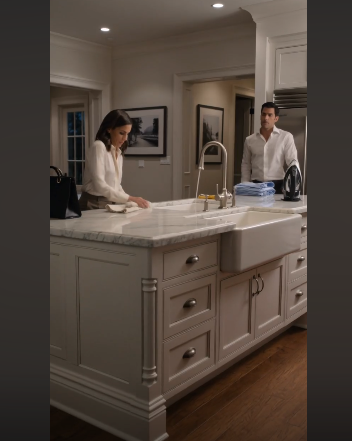
When My Cheating CEO Husband Came Home From His Secret Trip With Another Woman, Our Empty House, One Wrong Lunch Detail, And His Secretary’s Whisper Made The Hundred Million Dollars He Thought He Controlled Disappear Before He Could Ask Where I Had Gone
Sean’s suitcase scraped across the marble foyer while Samantha’s hand stayed on his sleeve, and I listened from my office as the house answered him with nothing.
For three seconds, nobody spoke.
The sound traveled through Oliver’s open call in small, broken pieces: the wheel of the suitcase bumping over the threshold, Samantha’s soft breath catching, Sean’s key ring tapping against the inside of the door. Then came the silence of a room that had once held a sofa, two armchairs, a glass coffee table, a wool rug, framed prints, and the false comfort of a marriage everyone thought was still intact.
“What the hell?” Sean said.
His voice did not sound afraid at first. It sounded offended, as if the empty house had failed to perform a duty.
I sat behind my desk at Vance Home Management, my phone faceup beside a stack of client folders, my thumb resting on the mute button. Outside my office window, afternoon traffic moved along the wet street in Northern Virginia, ordinary and gray. Inside my chest, everything was sharp and still.
“Sean,” Samantha whispered, “you said this was your house.”
That was the first wrong detail he had taught her.
He had probably told her that the McLean property was his, the way he told investors that my company was “aligned” with his platform, the way he told strangers online that he cooked with me every Sunday, the way he told me he loved the meals I packed while someone else ate them under fluorescent office lights.
Sean ignored her.
“Natalie?” he shouted into the hollow first floor. “Natalie, where are you?”
His voice bounced off bare walls and came back thinner.
Oliver shifted somewhere near the doorway. I knew the sound of his restraint by then. He always took one careful breath before choosing the safest sentence.
“Sir,” Oliver said, “Mrs. Vance asked me to meet you here.”
“Why would my wife ask you to meet me at my own house?”
Samantha made a small uncomfortable noise. It was not quite a laugh. It was the sound of a woman realizing she had walked into a scene that did not match the story she had been sold.
“My understanding,” Oliver said, “is that she wanted someone present.”
“Present for what?”
I closed my eyes.
On my desk sat a separation packet, a returned house key, and an unsigned letter to a client I had known for twelve years. None of those things had broken my marriage. They had only put a shape around what was already broken.
Sean’s footsteps moved fast now, traveling from the entryway into the living room, then toward the kitchen.
“Where is the furniture?” he snapped. “Where are my things?”
“Maybe she’s being dramatic,” Samantha said, her voice recovering just enough sweetness to be dangerous. “Some wives do that when they feel ignored.”
I almost laughed.
Not because it was funny, but because even then, with my marriage stripped down to drywall and echo, another woman still thought the easiest way to survive the room was to make me small.
Sean’s breath grew louder.
“She forgets herself when I’m patient,” he said. “That’s always been Natalie’s problem.”
Oliver said nothing.
I pressed my thumb harder against the edge of the phone, not enough to hurt, just enough to remind myself that I did not have to answer every insult the second it landed.
“Call her,” Sean ordered.
“She is already on the line,” Oliver said.
Another silence opened, tighter than the first.
I unmuted myself.
“Hello, Sean.”
He inhaled once, harsh and sharp.
“Natalie,” he said, dragging my name through his teeth, “what did you do?”
I looked at the office wall across from me, where a framed photograph showed my first five employees standing in front of our first company van. We had been young, underfunded, and exhausted in that picture, but every woman in it had stood straight.
“I’m ten minutes away,” I said. “Don’t touch anything that isn’t yours.”
The call went dead before Sean could answer.
I did not move right away. My hand stayed beside the phone. My coffee had gone cold. The office hummed around me with printers, distant voices, and the soft ring of a client line at reception.
Ten minutes was not long enough to prepare for the end of a marriage.
Then again, I had been preparing for months.
Before I became the woman who emptied a house without raising her voice, I was the girl who learned that love could sound sincere while packing a bag.
My father left my mother when I was five. I remembered very little about the day itself, only the practical things adults think children do not notice. The hallway smelled like rain and cardboard. My mother’s wedding ring sat on the kitchen counter beside an unpaid electric bill. My father kept saying, “It’s complicated,” which I later understood meant he wanted the comfort of sounding tortured without accepting the plainness of what he had done.
He had met someone else.
My mother was twenty-four and already tired in the permanent way that comes from being forced to become both parents before you have finished becoming yourself. Her own parents had money, but they had cut her off years earlier when she married my father against their wishes. Pride hardened on both sides. Nobody apologized. Nobody called.
So she worked.
She cleaned medical offices before sunrise, answered phones at a dental practice during the day, and folded laundry for neighbors at night. She did not complain often, but I knew the shape of sacrifice from watching her hands. The skin around her knuckles cracked every winter. She kept lotion in her purse, in the car, beside the kitchen sink, and still her hands looked like proof of a life that never let her rest.
When other girls talked about weddings, I thought about rent.
When teachers asked what I wanted to be, I said stable.
Stability sounded more romantic to me than flowers. It sounded like a paid mortgage, a working car, health insurance, a refrigerator with enough food inside that nobody had to calculate meals backward from Friday’s paycheck.
I built my life around that word.
I went to a state university on scholarships, worked in student housing, and took every operations class I could fit into my schedule. I liked systems. I liked knowing how many minutes a task should take, how many supplies a team needed, how to turn chaos into a process someone else could trust.
After graduation, I started Vance Home Management with two clients, one borrowed vacuum, and a used sedan that smelled permanently of citrus cleaner. The name sounded bigger than we were. That was intentional. I wanted people to see the structure before they saw the struggle.
At first we handled standard housekeeping for busy families in Arlington and Alexandria. Then one client asked if we could manage linen rotation for a rental property. Another wanted pantry inventory. Another needed pre-event setup, post-event reset, and a weekly checklist for a home office used by visiting executives.
I learned fast.
By thirty, I had built a premium home operations company with trained staff, corporate accounts, and a reputation for doing invisible work well. We did not just clean houses. We restored order. We managed the details that made busy people believe their lives were effortless.
That was how I met Sean Vance.
He was not my husband then. He was Sean Mercer, the soft-spoken founder of a startup called LatticePoint, a workflow platform for service-based businesses. We met at a small entrepreneur mixer in Arlington, the kind where everyone pretended not to be tired while balancing plastic wineglasses and rehearsed optimism.
He stood near the windows, looking uncomfortable in a blue suit that cost more than my first company van.
“You run Vance Home Management,” he said when we were introduced. “I’ve heard your onboarding system is terrifying.”
“Only to people who think ‘detail-oriented’ is a personality instead of a discipline,” I said.
He laughed at that. Not too loudly. Not performatively. He asked real questions and waited for real answers. When I described our checklist system for training new hires, he leaned forward like I was explaining a secret language he wanted to learn.
Most men I met at events wanted to talk over me. Sean listened.
That was the first thing I loved about him, and the first thing he later took away.
We began getting coffee after meetings. Then dinner. Then Sunday walks along the Potomac when my mother was first admitted to the hospital for a recurring condition the doctors said was manageable but serious enough to make every phone call feel like a warning.
Sean drove me to visit her when I was too exhausted to trust myself behind the wheel. He brought soup I had not asked for. He sat in the corner of her hospital room and let her talk about old movies, grocery prices, and the neighbor whose dog kept digging under her fence.
My mother liked him.
“He has kind eyes,” she said after he left one evening.
“Kind eyes do not guarantee kind behavior,” I said.
She smiled sadly. “No. But being afraid does not guarantee safety either.”
That sentence stayed with me.
Two years later, when Sean proposed in the small back garden of the McLean training property I used for staff development, I said yes with more hope than I admitted to anyone. The house had been part of my company portfolio for years, a beautiful modern property where we trained teams in everything from guest-room resets to kitchen inventory. Sean loved it the first time he saw it.
“This place feels like peace,” he said.
After we married, I converted it into our marital home. I kept ownership where it already was, under my company structure and my name, because practical habits do not disappear just because you put on a white dress. Sean never questioned it. He liked the house too much to care about paperwork.
At the beginning, he thanked me for everything.
Thank you for reviewing that vendor agreement.
Thank you for helping with the benefits plan.
Thank you for finding a caterer for the investor dinner.
Thank you for making this place feel like home.
I did not mind helping. That was the dangerous part. I loved being useful to someone who seemed to see the value in it.
His company grew quickly. LatticePoint landed regional clients, then national attention. Sean became the kind of CEO who got profiled in business newsletters with photographs taken in glass conference rooms. He learned to speak in phrases like “operational clarity” and “market capture.” He hired people with sharper résumés than his own and took credit for their polish.
At home, though, he still sighed into the couch and said, “You’re the only place I can breathe.”
I believed him.
My own company was growing too, but I treated his pressure as heavier than mine because his was louder. He had investors, board expectations, staff turnover, product delays. I had teams, clients, payroll, properties, schedules, supply costs, insurance, and the quiet discipline of making sure no family noticed when a system prevented disaster.
Somehow his work became ambition.
Mine became support.
It happened gradually enough that I did not resist at first.
One Tuesday morning, Sean stood in the kitchen doorway while I packed fruit for myself before a site visit.
“Could you make me lunch during the week?” he asked.
I looked up. “Lunch?”
“I’m eating garbage between meetings. You already plan meals so well. It would help me stay healthy.”
There was nothing cruel in the request. He looked sheepish, almost boyish, and I felt the old reflex of care rise before caution could speak.
“Sure,” I said. “We can try it.”
That weekend, I bought the blue lunchbox from a kitchen store in Bethesda because it had neat compartments, a tight seal, and a small fork that clicked into the lid.
The first Monday I filled it, Sean kissed my cheek.
“You’re saving my life,” he said.
It embarrassed me how happy that made me.
I planned his meals the way I planned client systems, with color, nutrition, and efficiency in mind. Turkey meatballs with roasted zucchini. Ginger salmon with brown rice. Chicken salad with grapes and walnuts. Leftover herb potatoes tucked beside crisp green beans.
For a while, he sent texts at noon.
This is amazing.
Best part of my day.
How did you make carrots taste expensive?
I saved those messages longer than I should have.
Then the texts stopped.
The compliments faded into a distracted “thanks” tossed over his shoulder. Then even that disappeared. He began leaving the empty meal box on the kitchen island without rinsing it, sometimes beside his coffee mug, sometimes beside crumbs from toast he had made only for himself.
I told myself he was busy.
Busy explained everything when you wanted it to.
One evening, I came home from a Fairfax client emergency to find Sean standing in the living room, his tie loosened and his jaw tight.
“Look at the shelves,” he said.
I followed his gaze.
A faint line of dust sat along the built-in bookcase, visible only because late sunlight hit it directly.
“I had three inspections today,” I said. “I was going to dust tomorrow morning.”
“Tomorrow morning,” he repeated, as if I had said something absurd.
“Yes.”
He turned to me slowly. “Natalie, this is basic.”
I still had my work bag on my shoulder. My feet hurt. I had not eaten since eleven.
“It’s dust, Sean.”
“It’s our home.”
“I know what it is.”
“Do you?” he said. “Because sometimes it feels like you treat this place like one of your client properties.”
The unfairness of that caught me off guard.
“This place runs as well as it does because I know how to manage properties.”
He gave a humorless laugh. “That is your problem. You think everything is a business system. A wife should care because it is her home, not because it is on a checklist.”
I stared at him.
He had admired my systems before he relied on them.
“Are you saying I do not care?”
“I’m saying maybe your priorities are off.”
There was the first blade, wrapped in reasonable language.
A month later, he stopped putting his laundry in the hamper and left shirts draped across chairs, the back of the sofa, the edge of the bathtub.
When I asked him to use the hamper, he said, “You’re better at sorting it than I am.”
When I pointed out that better did not mean responsible, he frowned.
“Why are you turning everything into conflict?”
I was not turning everything into conflict.
I was beginning to notice the conflict that had been living comfortably under my silence.
The yellow rubber gloves came from a client supply order. A vendor had shipped the wrong size, and I brought one pair home, thinking I would use them for deep cleaning the oven. They sat under the kitchen sink for months, bright and ordinary, beside dishwasher tablets and microfiber cloths.
I forgot about them.
Sean did not.
He saw every object connected to maintenance as part of my natural habitat.
The first time he used the phrase “wife duty,” I was rinsing a skillet.
He stood behind me, scrolling through his phone.
“Can you start ironing my shirts again?” he asked.
“I can send them out with the laundry service.”
“I don’t like the way they press the collars.”
“Then you can show them exactly what you want.”
He looked up as if I had spoken in another language.
“I don’t have time for that.”
“Neither do I.”
He smiled, but it was cold. “Come on, Natalie. You run a home management company. This is literally wife duty in your wheelhouse.”
I turned off the faucet.
“Do not call it that.”
“What?”
“Wife duty.”
He sighed. “You know what I mean.”
“I know exactly what you mean.”
For a second, I thought we might finally have the conversation we had been avoiding. I thought he might hear himself. Instead, he put his phone in his pocket and walked out of the kitchen.
“You have become very difficult lately,” he said.
Difficult meant I had started answering.
Around that time, I noticed Sean had become oddly protective of his phone. Not secretive in a dramatic way, but careful. He turned the screen down when he set it on tables. He angled his body away when typing. He started saying “client dinner” in a tone that discouraged follow-up questions.
I did not snoop.
I had learned from my mother’s life that desperate searching can become its own cage. If someone wants to lie, they will. The question is not whether you can catch every lie. The question is how long you are willing to live inside the version of reality they require.
The first real crack came through Oliver Brooks.
Oliver was Sean’s executive assistant, though that title did not cover half of what he did. He managed Sean’s calendar, repaired his mistakes, softened his moods before meetings, sent apology notes to employees Sean had insulted, and remembered birthdays Sean used to pretend he had chosen gifts for.
Oliver was thirty-two, careful, tired, and unfailingly polite.
One Thursday afternoon, he appeared at my front door holding a slim leather folder.
“I’m sorry to bother you, Mrs. Vance,” he said. “Mr. Vance left materials for tomorrow’s investor prep.”
“He’s not home.”
“I know. He asked me to retrieve them from his office.”
I let him in.
He found the folder within two minutes, but he did not leave. He stood near the foyer with one hand around the strap of his messenger bag, looking at the floor.
“Oliver?”
He swallowed. “May I say something inappropriate?”
“That depends.”
“It is about the meals you pack for him.”
Every part of me became still.
“What about them?”
His face flushed with embarrassment that did not belong to him.
“I did not know whether to tell you. I kept hoping he would stop.”
“Tell me.”
“He takes a photograph almost every day. Then he throws the food away.”
The house seemed to narrow.
Oliver spoke quickly, as if speed might make the words less painful.
“I confronted him once. It bothered me. I said it was wasteful and disrespectful, and he told me if I cared so much, I could eat it. Since then, he has been giving it to me after he photographs it.”
I did not answer.
“I am sorry,” he said. “You deserve to know.”
My mind did not go first to anger. It went to logistics.
The empty meal box. The missing feedback. The sudden social media angles I had not known existed. The way he came home and said, “Great lunch,” on days Oliver now told me he had eaten every bite.
That evening, the blue lunchbox sat empty in my sink while Sean walked past me and said, “The chicken was perfect today.”
Oliver liked chicken. Sean did not.
I rinsed the fork.
“Glad it worked,” I said.
My voice sounded calm enough to belong to another woman.
After Sean went upstairs, I sat in my office and searched the account Oliver had quietly mentioned before leaving. It took me less than fifteen minutes to find it.
The handle was bland, almost laughable: TheCorporateHomebody.
Sean had hidden his CEO title and recast himself as a humble corporate employee trying to build an equal marriage. The grid was filled with my meals, my kitchen, my table settings, my weekend dinners, my flowers in vases, my clean counters, my labor framed as his character.
Wifey made salmon today, but I did the prep because marriage is teamwork.
Sunday reset with my favorite person. We split every chore fifty-fifty.
Packed lunch hits different when you both work hard and still show up for each other.
The comments adored him.
Couple goals.
Protect this man.
A husband who actually helps? Rare.
I stared at the screen until the words stopped meaning anything.
The posts did not hurt because strangers praised him. Strangers know only what they are given. They hurt because he had built an audience out of the exact work he mocked in private. He turned my care into a costume for himself and then came home to call that same care basic.
I scrolled farther.
A different pattern emerged.
When the posts featured meals, cleaning, laundry, or domestic life, he used “wifey.” When they showed restaurants, rooftop bars, weekend resorts, or expensive desserts, he used “my favorite person,” “my partner,” or, once, “my queen.”
I had not been to those places.
I stared at a photograph of two champagne flutes beside a hotel window. Only one hand appeared in frame, slim fingers with pale pink nails touching the base of a glass.
My nails were short and unpolished because I worked with my hands.
The caption read, Some people make the grind worth it.
It was an ugly feeling, not surprise exactly, but confirmation arriving before I had allowed myself to ask the question.
There was another woman.
Maybe more than one, but one was enough.
I did not confront him that night. Or the next.
I watched.
I watched the way he changed cologne for “late meetings.” I watched the way he began criticizing my clothes, my schedule, my tone. I watched the way he performed exhaustion when he needed me and superiority when I needed anything from him.
The bell peppers came three days after Oliver’s visit.
Sean had hated bell peppers since I met him. He picked them out of stir-fry with surgical focus. He once told my mother that eating them was like chewing wet grass.
So I roasted red and green strips with olive oil, garlic, and black pepper, then placed them directly in the center of his packed meal beside lemon chicken and rice. I did not hide them. I wanted them obvious.
At noon, his fake account posted the photograph.
Fueling up with wifey’s healthy lunch. Going heavy on the veggies today because we both believe in balance.
At seven, he came home and put the empty meal carrier on the counter.
“Good lunch,” he said.
I dried my hands on a towel. “You ate the bell peppers?”
His expression flickered so fast someone else might have missed it.
“What?”
“The bell peppers. I know you hate them.”
He recovered with a small shrug. “I’m not a kid anymore.”
“No?”
“I eat whatever keeps me healthy.”
I nodded.
“That’s mature.”
He watched me for a second, searching my face for accusation. I gave him none. Accusation would have given him a fight he could twist. Quiet gave him a mirror, and he did not like mirrors.
The bell peppers were not evidence in any formal sense. They were something smaller and more devastating. A wrong detail. A place where his story snagged on reality.
After that, I stopped asking myself whether Sean was lying.
I started asking what his lies were protecting.
My mother saw the change in me before I described it.
I visited her every Saturday morning at the rehabilitation center where she was recovering after a difficult stretch. She was better by then, walking short distances with a therapist and complaining that the oatmeal tasted like damp paper.
“You look polished,” she said one morning.
“I always look polished.”
“No. You look like a locked drawer.”
I sat beside her bed and placed a bag of oranges on the table.
“That is very specific.”
“I raised you. Specific is my reward.”
For a while we talked about her exercises, my company, the nurse she liked, and the neighbor who had finally fixed the fence. Then she reached for my hand.
“How is your marriage?”
I looked at our joined hands. Her knuckles were swollen from arthritis. The skin still looked dry no matter how much lotion she used.
“It is changing,” I said.
“That is not an answer.”
“It is the only honest one I have.”
Her thumb moved once over my fingers.
“Natalie,” she said, “do not stay because you think leaving would make my life sadder.”
My throat tightened.
“I never said I was staying.”
“You never have to. I know guilt when it is sitting in a chair.”
I looked away.
She sighed. “When I married your father, I thought endurance was proof of love. Then I endured until there was nothing left of me but function. I do not want that for you.”
“I am not you.”
“No,” she said. “You are better with money and worse at admitting pain.”
I laughed before I could stop myself.
She smiled.
Then her face softened in a way that made me feel five years old again.
“I worried my choices taught you that marriage was a trap,” she said. “So when you married Sean while I was sick, I wondered if you were trying to prove to me that you were not afraid.”
“I chose him.”
“I know.”
“I chose wrong.”
Her grip tightened. “Then choose again.”
That sentence did what weeks of suspicion could not. It gave me permission without telling me what to do.
I drove back to the office that afternoon and worked until nine. Not because work numbed me. Because work reminded me who I was when nobody was shrinking me.
The next week, Oliver called.
His voice sounded strained.
“Mrs. Vance, do you have a moment?”
“Yes.”
“I am going to say something carefully.”
“That usually means Sean has done something carelessly.”
A tired laugh left him.
“LatticePoint is preparing for the final stage of the hundred-million-dollar backing package from Harriman Lane.”
“I know. Sean mentioned it every time he needed to feel taller.”
“There is a customer reference section. Your company is in it.”
I sat straighter.
“My company?”
“Yes. The materials describe Vance Home Management as a committed long-term integration partner and operational validation account.”
“That is not accurate.”
“I suspected as much.”
We had tested LatticePoint software in a limited, early pilot two years earlier. It was clunky, overpromised, and unsuitable for our field teams. I had given Sean private feedback and declined further integration. He had been irritated, then brushed it off.
Apparently, he had not brushed it off. He had repackaged my company’s name into investor confidence.
Oliver continued. “The fund has other concerns. Turnover, missed deadlines, culture issues. But your company is one of the few concrete service businesses in the deck that makes the growth story look stable.”
I closed my eyes.
There it was.
Not just marriage. Not just lunch. Not just another woman. He had stretched his hand into the business I built before him and used my reputation as furniture in his house of mirrors.
“Can you send me the exact language?” I asked.
“I can send what I am authorized to forward from the investor prep packet. Nothing confidential beyond what was circulated to external advisers.”
“Stay within policy,” I said.
“I intend to.”
That was one of the reasons I trusted Oliver. He was angry, but he was not reckless.
When the materials arrived, I read them twice.
Strategic household operations partner.
Founder-level spouse alignment.
Proven service-sector adoption pathway.
My name did not appear in the boldest line, but my company did. My work did. My credibility did. Sean had found a way to turn even my refusal into support.
I did not sleep much that night.
At three in the morning, I stood in the kitchen and looked at the under-sink cabinet. The yellow rubber gloves were still there, bright and cheap and waiting for the kind of work nobody applauded unless a man claimed he had done it.
I shut the cabinet.
By sunrise, I knew my next steps.
First, I called our company attorney and asked for a clean separation packet. Not dramatic. Not punitive. Just practical.
Second, I called our property team and scheduled a full removal of all furnishings I personally owned from the McLean house during the week Sean would be away.
Third, I requested a meeting with Miriam Price.
Miriam was a partner at Harriman Lane, the lead firm behind Sean’s pending backing package. She had also been a client of Vance Home Management for nine years. Her family used our services at two properties, and she knew exactly how my company ran because she had once watched me reorganize a holiday disaster in her home while a senator waited in her dining room and a caterer cried in the laundry room.
Miriam answered my email within an hour.
We met two days later in a quiet conference room at her firm. She wore a gray suit, no jewelry except a thin gold watch, and the expression of a woman who had survived too many founders who thought charm was governance.
“Natalie,” she said, “I assume this is not about housekeeping.”
“No.”
I placed one printed page on the table. It was not a dramatic file, not a trap, not a secret. It was a simple letter withdrawing any use of Vance Home Management as an investor reference, adoption partner, operational case study, or implied supporter of LatticePoint.
Miriam read it without moving her face.
“I also want to make it clear,” I said, “that my company did not agree to any current integration. We tested the product years ago and declined continuation.”
“I suspected there was inflation.”
“There is inflation in several areas.”
Her eyes lifted.
I did not tell her about Samantha first. I did not lead with betrayal, because betrayal can sound personal even when it reveals character. I spoke about what I knew professionally: missed vendor commitments Sean blamed on staff, client demonstrations built on manual work his team hid, employee complaints Oliver had already filed internally, and my own experience with how he treated labor he considered beneath him.
Miriam listened.
When I finished, she tapped the letter once with her finger.
“You understand this may affect his financing.”
“I understand.”
“And your marriage.”
“My marriage affected my business first.”
For the first time, something like respect softened her expression.
“Are you safe?”
“Yes.”
“Are you certain?”
“Yes.”
Miriam nodded. “Then we will conduct our own review. We were already uncomfortable.”
I believed her.
People like Sean rarely collapse because of one truth. They collapse because a thousand small contradictions finally stop being subsidized by other people’s silence.
Sean announced his “business trip” that evening.
“Denver,” he said while choosing cuff links at the dresser. “Investor relations. Founder presence matters.”
“Of course,” I said.
He studied himself in the mirror. “Don’t schedule anything complicated while I’m gone. The house got messy last time.”
“I’ll manage the house.”
The phrase meant something very different to me than it meant to him.
His phone buzzed. He turned it over too quickly.
“Anything important?” I asked.
“Board stuff.”
“Must be intense.”
“You wouldn’t understand.”
I looked at his reflection.
Once, that line would have stung. Now it sounded like a door closing from the inside.
On the morning he left, I made coffee and toast. No packed meal.
He noticed immediately.
“No lunch?”
“You’re flying, aren’t you?”
“Yes, but—”
“I assumed you’d eat at the airport lounge.”
His mouth tightened. He had probably planned a final photograph before leaving, another little fiction for strangers.
“Right,” he said. “Of course.”
Samantha’s name flashed briefly on his phone before he turned it away. I saw only the first letter and the pink heart beside it. That was enough.
At the door, he paused.
“Try not to spiral while I’m gone,” he said.
I smiled.
“Travel safely.”
The second his car disappeared, my house stopped pretending.
The movers arrived at ten. My operations director, Lena, came with inventory sheets and three staff members who had volunteered without asking questions. We moved furniture carefully, labeled boxes, separated Sean’s personal items, and arranged for them to be delivered to a storage unit in his name with access information sent to his email.
I did not break anything. I did not throw his clothes onto the lawn. I did not stage a spectacle for neighbors. Revenge makes a mess someone else usually has to clean.
I preferred clean exits.
By sunset, the house sounded different. Each footstep landed with a small echo. The rooms looked larger and less kind. Without rugs, lamps, books, bowls, chairs, towels, photographs, and all the ordinary objects that convince people a life exists, the house became what it had been before Sean: a property.
My property.
Lena stood in the kitchen, looking around.
“You okay?”
“No.”
She nodded. “Good. I would be worried if you said yes.”
I smiled faintly.
She picked up the yellow rubber gloves from under the sink.
“Keep these?”
I looked at them.
“Leave them.”
Lena’s eyebrows lifted, but she did not ask.
I spent the rest of the week at my condo downtown, the one I had owned since before the marriage and kept mostly for late work nights. I slept badly at first, then deeply. Nobody left dishes beside the sink. Nobody asked where his blue tie was. Nobody told me dust had become an indictment of my devotion.
On Friday, Miriam called.
“Natalie,” she said, “we are pausing the backing package.”
I sat down.
“I see.”
“No,” she said. “You should hear the full sentence. We are pausing because our independent review confirmed serious concerns unrelated to your personal situation. Your withdrawal of reference removed the last clean support point, but it did not create the underlying problem.”
“I appreciate you saying that.”
“Do you want me to notify Sean before his return?”
“No.”
Miriam was silent for a beat.
“Are you sure?”
“Yes. Let the formal notice go through the proper channel. I do not want drama.”
A dry note entered her voice. “Founders experiencing consequences often describe proper channels as drama.”
“He’ll survive the vocabulary.”
She almost laughed.
Oliver texted Saturday morning.
They land at 2:10. He is bringing her.
My hand closed around the phone.
Bringing her where?
To the house, Oliver replied. He told me to be there with the week’s briefing materials.
Of course he had.
Sean did not just want an affair. He wanted an audience. He wanted to walk through the door with Samantha and make me absorb the new arrangement without disturbing his comfort. He wanted to see whether I would cry, rage, beg, or scrub the kitchen harder. He wanted to prove to himself that even betrayal could be organized around his convenience.
Instead, he opened the door to nothing.
After I hung up from the first call, I drove to McLean without rushing. The sky was low and damp, the kind of summer afternoon that made every tree look heavy. I parked at the curb rather than in the driveway.
For a moment, I sat with both hands on the steering wheel.
Through the front windows, I could see movement inside: Sean pacing, Samantha near the kitchen, Oliver in the foyer with his shoulders squared. The house looked staged for an argument nobody had rehearsed well enough.
I thought about my mother telling me to choose again.
Then I stepped out.
Sean opened the door before I knocked.
He had removed his suit jacket. His sleeves were rolled up badly, one cuff higher than the other. Panic made him look younger and meaner. Samantha stood behind him in a cream travel dress, her makeup still perfect except for the tightness around her mouth. Oliver remained near the staircase, holding his tablet against his chest like a shield.
I walked inside.
No one greeted me.
The empty foyer held all of us without mercy.
Sean pointed toward the living room. “Explain.”
I set my tote bag down by my feet.
“No.”
His eyes flashed. “No?”
“You can ask a specific question in a normal voice.”
Samantha’s mouth parted. She was not used to women who did not raise their volume when insulted.
Sean laughed once.
“You disappear, empty my house, embarrass me in front of my assistant, and now you want etiquette?”
“Your house,” I said.
The words landed softly.
He heard them anyway.
“My home,” he corrected.
“Better.”
His face darkened. He moved past me into the kitchen, yanked open the cabinet below the sink, and came back holding the yellow rubber gloves. For a strange second, the color looked almost cheerful against the stripped gray room.
He tossed them at my feet.
They slapped against the bare tile.
“If you’re done with your little performance,” he said, “start by cleaning up the dust you left behind.”
Samantha let out a short laugh.
Oliver looked down at the floor.
I did not bend.
Every muscle in my body wanted to react. Not violently, not theatrically, but with the old urgency to prove I was not what he had just implied. I wanted to list payroll, clients, properties, contracts, revenue. I wanted to tell Samantha she was standing in a house I owned while laughing at gloves she had never earned the right to mock.
Instead, I breathed once and let the gloves stay where they were.
That was the first time Sean saw that I would not pick up what he threw down.
His smile twitched.
“Nothing to say?” he asked.
“I have a question.”
He snorted. “Of course you do.”
“How were the bell peppers?”
The room shifted.
Not dramatically. No one gasped. No music swelled. But Oliver’s eyes lifted, and Sean’s attention sharpened despite himself.
“What?”
“Tuesday’s lunch. The roasted bell peppers you said were good.”
Samantha blinked between us.
Sean recovered quickly. “Are you seriously talking about lunch right now?”
“Yes.”
“My God, Natalie. This is why you are exhausting.”
“Were they good?”
He spread his hands, performing disbelief for the room. “Fine. They were fine. Everything you cooked was fine. Is that what this tantrum is about? You need applause for vegetables?”
I kept my eyes on him.
“You hated bell peppers.”
“I got over it.”
“No,” I said. “Oliver did.”
Sean turned his head sharply.
Oliver’s face went pale, but he did not retreat.
Samantha’s laugh died so completely it was almost visible.
“What is she talking about?” she asked.
Sean’s jaw worked. “Nothing.”
“It is not nothing,” I said. “For months, you photographed the meals I made, posted them online so strangers could praise you, handed the food to Oliver or threw it away, then came home and lied to my face.”
Samantha looked at Sean. For the first time, uncertainty cracked her polished expression.
“You posted lunches?” she asked.
Sean snapped, “Stay out of this.”
I almost pitied her then. Almost. She had believed she was the chosen escape from a dull wife. Instead, she was standing in an empty kitchen learning she had been another prop in a man’s performance.
Sean pointed at me.
“You are blowing up our life over a lunch routine.”
“No,” I said. “I am ending my part in a lie.”
He stepped closer.
“You do not get to end anything unilaterally. I am the one with a company in the middle of a major raise. I am the one with obligations. Do you have any idea how childish this looks?”
“Childish to whom?”
“To everyone.”
“Name them.”
He opened his mouth, then closed it.
That was another thing I had learned as a business owner. Vague authority collapses when asked for specifics.
Samantha shifted near the island. Her hand slid off the handle of her designer suitcase.
Sean’s eyes narrowed.
“You think you can shame me?” he asked. “You think taking furniture makes you powerful? You are good at organizing closets, Natalie. Do not confuse that with strategy.”
The line was designed to put me back inside the old shape.
Useful, but not equal.
Efficient, but not important.
Competent, but only in rooms he did not respect.
I looked at the gloves on the floor.
Then I looked at him.
“You used to ask me to explain my systems,” I said. “Do you remember that? At the mixer where we met, you asked how I built trust with clients.”
His face tightened.
“I built trust by telling the truth about what I could support. I can no longer support you.”
Sean’s expression changed before he understood why.
Oliver moved closer, careful and quiet.
“Sir,” he said.
“Not now,” Sean snapped.
Oliver swallowed, then leaned toward him.
His voice was low, but the empty room carried it.
“Your wife pulled the hundred-million-dollar backing.”
Sean froze.
Samantha whispered, “What?”
The words seemed too large for the bare kitchen.
Sean turned slowly toward Oliver.
“What did you just say?”
Oliver did not look at me. He kept his eyes on Sean.
“The Harriman Lane package. The support tied to Vance Home Management. It is gone.”
Sean’s face drained of color so fast it looked painful.
I did not enjoy it the way I thought I might. The moment was not sweet. It was clean, and clean things can still cut.
“You,” Sean said, barely audible.
“No,” I replied. “You.”
His head jerked toward me.
“You had no right.”
“To stop my company from being used in a story that was not true?”
His mouth opened, but no argument came out.
I picked up the yellow gloves at last.
Samantha’s eyes followed my hand, expecting surrender because women like her were taught that bending was weakness only when someone else did it.
I did not put them on.
I set them on the bare kitchen island between Sean and me.
“This is the part you never understood,” I said. “Work does not become worthless because you benefit from it quietly.”
Oliver’s shoulders loosened by a fraction.
Sean stared at the gloves as if they might explain how the room had turned against him.
“Harriman Lane was already reviewing your leadership,” I continued. “Employee turnover. Missed deliverables. Inflated customer references. My letter did not create those problems. It removed my name from them.”
“You wrote to Miriam?” His voice cracked around her name.
“I told the truth.”
“You told my investors private marriage drama.”
“I told a client and investor that my company had not agreed to be represented as your adoption partner. I also told her I would not vouch for your judgment. The rest came from their own review.”
Samantha stepped back from Sean.
The movement was small, but he felt it.
“Sam,” he said.
She did not answer.
He turned on me again because anger needed somewhere familiar to land.
“You planned this while I was gone.”
“Yes.”
“You moved my things.”
“Your personal belongings are in storage. Details are in your email.”
“You sold the furniture?”
“No. I moved my furniture.”
“This was our home.”
“It was a property I let become our home. There is a difference.”
He took one step toward me, then stopped when Oliver moved too. Not aggressively. Just present.
Sean noticed.
The betrayal on his face would have been funny if it had not revealed how deeply he believed loyalty meant silence.
“You too?” he said to Oliver.
Oliver’s expression remained calm.
“I have been loyal to the work for a long time, sir. You made it difficult to stay loyal to you.”
Sean looked as if someone had slapped him.
Samantha finally found her voice.
“Sean, is the money really gone?”
“Shut up,” he said.
The softness vanished from her face.
I watched her see him without the lighting he had arranged.
There are moments when a person’s charm falls off not because someone rips it away, but because the room becomes too bright for it to survive.
Sean rubbed both hands over his face.
“Natalie,” he said, forcing his voice lower. “Let’s talk privately.”
“No.”
“We are husband and wife.”
“We were husband and wife in private when you lied to me. You invited an audience today. We can finish with one.”
Samantha crossed her arms. Oliver looked at the floor again, but this time not out of fear. Out of mercy.
Sean’s posture changed. His shoulders dropped. Panic entered the spaces arrogance had occupied.
“What do you want?”
“A clean separation. Cooperation. No use of my company name, my property, or my work in your materials. No contact except through the channel listed in the packet.”
His eyes darted to my tote bag.
“You brought papers?”
“I brought clarity.”
“You think a packet scares me?”
“No,” I said. “I think reality does.”
He flinched.
For a second, I saw the man from the mixer. Not the gentle listener exactly, but the insecure founder beneath him. The man who had once been afraid his company would fail and had asked me how to build something that lasted.
I had mistaken need for tenderness.
That was my part.
I would carry it, but I would not live under it.
Sean tried again.
“I made mistakes.”
“You made choices.”
“I was under pressure.”
“So was I.”
“You never understood what it takes to be me.”
The sentence landed with a dullness that surprised me. There was no new pain in it. He had said some version of it for years.
“You are right,” I said. “I do not understand needing to make other people smaller so I can feel in control.”
His eyes hardened.
Samantha picked up her suitcase handle.
Sean noticed.
“Where are you going?”
“I need air,” she said.
“You are staying.”
Her mouth tightened. “Do not talk to me like that.”
I almost smiled. Consequences were contagious.
She moved toward the door. Sean looked between us, calculating which woman still offered him leverage. For the first time since I had known him, neither did.
The front door closed behind Samantha.
The sound was soft.
Sean stared at it anyway.
Oliver’s tablet chimed. He checked it, then looked at me.
“Miriam’s office confirmed formal notice was sent.”
Sean turned back sharply.
“No. No, call her.”
“Why would I call her?”
“Because you caused this.”
“I stopped preventing it.”
He grabbed for the old tone. “Natalie, this is my company.”
“Yes,” I said. “That is why its condition belongs to you.”
He breathed through his mouth.
“I can fix this.”
“Then fix it without me.”
He looked around the empty room, and I watched the final understanding arrive. Not remorse. Not yet. Maybe not ever. But recognition that the house, the meals, the investor confidence, the polished domestic brand, the quiet wife who smoothed his edges, the assistant who absorbed his chaos, the woman who brought warmth into rooms he only occupied—none of it had been guaranteed.
He had mistaken support for ownership.
“I loved you,” he said.
I wanted that sentence to matter.
I wanted it to reach some surviving place in me and prove the whole thing had not been a waste.
Instead, I heard the missing word.
Loved me how?
Loved me useful?
Loved me quiet?
Loved me available enough to become scenery?
“I loved you too,” I said. “That is why this took so long.”
His eyes filled, but I no longer trusted tears that arrived only after comfort was threatened.
I lifted my tote bag.
“Oliver will remain here long enough to make sure you have the storage information and the packet. After that, this property is closed to you.”
“You cannot just lock me out.”
“I can. I own it.”
His face twisted.
There it was again, the wrong story colliding with a fact he had ignored because the fact had served him anyway.
I walked toward the door.
“Natalie,” he said.
I paused without turning.
“What am I supposed to do?”
The question was so naked that for one second I felt the old impulse to solve it for him.
Then I remembered my mother’s hands.
“Start with the truth,” I said.
I left him in the empty house.
For the first hour afterward, I felt nothing.
That is not poetic. It is simply true. I drove to my condo, parked in the underground garage, rode the elevator to the twelfth floor, set my bag on the kitchen counter, and stood there while the refrigerator hummed. My body had spent so long preparing for impact that peace felt like another form of shock.
Then my phone began ringing.
Sean called seventeen times.
He sent messages that moved through stages like bad weather.
Answer me.
This is insane.
We need to talk.
You are humiliating me.
I did not deserve this.
I can explain Samantha.
You are making a mistake.
Natalie, please.
I did not answer.
At nine, Oliver texted.
He left. I locked up.
Then, a minute later:
Are you all right?
I stared at the question.
It had been so long since someone asked without needing something afterward that I had to sit down.
I wrote back:
Not yet. But I will be.
The next morning, Sean sent a long email with no subject line. It began with blame, moved into wounded nostalgia, shifted into financial panic, and ended with a paragraph about how divorce would “damage both brands.” He attached a spreadsheet estimating the costs of separation as if marriage were a subscription he might negotiate.
I forwarded it to the proper channel and did not respond.
By Monday, the formal notice from Harriman Lane had landed. They were not merely pausing the package anymore. They were withdrawing the pending hundred-million-dollar backing and converting their position to a much smaller bridge arrangement contingent on leadership changes. The language was clean and corporate, but the meaning was brutal.
Sean called again.
This time, I answered because our advisers had scheduled a structured conversation and I wanted no confusion about boundaries.
His voice was hoarse.
“You have to call Miriam.”
“No.”
“She respects you.”
“She respects accurate information.”
“Tell her you overreacted.”
“I did not.”
“Tell her we reconciled.”
“We have not.”
“Then say we might.”
“We will not.”
He made a sound like he had been struck.
“You are enjoying this.”
“No.”
“You are.”
“I am not responsible for making consequences feel comfortable.”
“You think you are better than me now?”
“No,” I said. “I think I am finally separate from you.”
That silenced him longer than anger had.
When he spoke again, his voice changed. Smaller. Less polished.
“I need more time.”
“For the separation?”
“For everything.”
“You can discuss timing through the channel I gave you.”
“Natalie.”
“Yes.”
“I do not know how to live in that apartment.”
I closed my eyes.
There it was. Not I miss you. Not I am sorry I made you feel invisible. Not I understand what I did.
I do not know how to live without the systems you built.
“You are an adult,” I said. “Start learning.”
He hung up.
I cried afterward.
I want to be honest about that. Strength did not make me dry-eyed. Dignity did not mean I floated above grief. I cried on the kitchen floor of my condo with my back against the cabinets because the man I had married had finally said the quiet part plainly, and even though I had known it, hearing it still hurt.
I cried for the woman who packed meals with care.
I cried for the first year, when his gratitude had felt real.
I cried for my mother’s relief when I told her I was leaving.
I cried for every time I had translated disrespect into stress because stress sounded kinder.
Then I got up, washed my face, and joined a ten o’clock staffing call.
Life does not pause respectfully for heartbreak. Payroll still runs. Clients still need schedules. Employees still need decisions. A vendor still sends the wrong mop heads. A storm still knocks a branch onto a driveway in Chevy Chase, and someone still has to reroute a team before a client’s guests arrive.
Work saved me, not because it distracted me, but because it reminded me that care and competence had value outside Sean’s opinion.
Oliver resigned from LatticePoint two weeks later.
He came to my office on a rainy afternoon with a cardboard box of desk items, looking both exhausted and ten years younger.
“I did it,” he said.
“How do you feel?”
“Like I walked out of a room that had been running out of oxygen for three years.”
I nodded. “That sounds familiar.”
He smiled.
I offered him coffee. He accepted. We sat in the small conference room overlooking the street while rain streaked the windows.
“I want to thank you,” he said.
“For what?”
“For believing me. For not asking me to become reckless. For reminding me that loyalty is not supposed to require self-erasure.”
I looked down at my mug.
“I did not do it perfectly.”
“Nobody does.”
He studied the room, the schedules pinned on the glass board, the staff moving past with clipboards and tablets.
“This company feels healthy,” he said.
“It feels busy.”
“That too.”
Three months later, he became our Director of Client Systems. I did not hire him as a reward for helping me. I hired him because he was excellent. There is a difference. He built calmer scheduling protocols, improved team communication, and taught new supervisors how to identify unreasonable client demands before they became staff burnout.
He also insisted we create a real meal break policy.
“We cannot run a company built on domestic labor while pretending people do not need to eat,” he said.
He was right.
So we built one.
Every field team got protected break windows, meal stipends for long shifts, and a staff kitchen at headquarters stocked with actual food instead of leftover granola bars and emergency coffee. The policy cost money. It also reduced turnover, improved morale, and made me wonder why I had waited for pain to teach me something I already knew.
Sean did not improve as efficiently.
After the funding withdrawal, LatticePoint’s board replaced him as CEO. The announcement described it as a strategic leadership transition. I read the sentence once and closed the article. I did not need to watch the fall frame by frame.
He moved into a short-term rental near Tysons. For a while, he posted vague inspirational quotes about resilience. Then he deleted TheCorporateHomebody. Screenshots remained, of course, because the internet is not sentimental. Former employees began speaking openly about the culture under his leadership. Not scandalously. Not explosively. Just steadily.
That was worse for him.
A spectacle can be dismissed as drama. A pattern, calmly described by multiple people, is harder to wave away.
Samantha disappeared from his public orbit. I heard through Oliver that she had tried to contact Sean after learning the backing was gone, then stopped when it became clear there was no luxury life to step into. I did not pursue her. She had made choices, but she was not the center of my story. Sean had invited her into my house. Sean had lied to her too. That did not absolve her, but it kept me from wasting energy on a woman who had already learned the prize was hollow.
My mother recovered enough to move back home by fall.
The day I brought her to my condo for dinner, she walked through the rooms slowly, touching nothing, taking everything in.
“This place feels like you,” she said.
“Organized?”
“Peaceful.”
I almost argued. Then I let the word stand.
She sat at the counter while I cooked. I made lemon chicken, rice pilaf, and roasted vegetables. No bell peppers. I was not ready to make symbols into side dishes.
Halfway through dinner, she put down her fork.
“Do you miss him?”
I looked at the window, where the city lights trembled against the dark glass.
“I miss who I thought I married.”
“That counts.”
“Yes.”
“But?”
“But I do not miss the version of myself who kept trying to earn basic respect.”
My mother nodded.
Her hands looked better. Still worn, still hers, but less angry at the world. She had started painting her nails pale pink just because she wanted to. The first time I saw them, I cried in the parking lot where she could not see.
Winter came early that year.
The McLean property returned to company use after a full reset. We refurnished it for training, not marriage. New hires practiced room turnovers in the guest suite. Supervisors ran timing exercises in the laundry area. The kitchen became a teaching space again, full of laminated checklists, labeled supplies, and the busy, purposeful sound of people learning skilled work.
One afternoon, I stopped by during a training session.
A young employee named Maya was teaching two new hires how to clean stainless steel without streaking it. She looked nervous until she noticed me watching.
“Am I doing it right?” she asked.
“Beautifully,” I said.
Her face brightened.
I went upstairs alone afterward. The primary bedroom no longer looked like the room where I used to fold Sean’s shirts while he complained about investor calls. It held two neatly made training beds, a supply cart, and a clipboard hanging from the door.
A house can release a memory when you give it a new purpose.
In the kitchen, I opened a lower cabinet to check supply labels and found the yellow rubber gloves tucked in a clear bin with three other pairs. Someone had written Medium on the label in black marker.
I laughed quietly.
Objects lose their power when they go back to being objects.
Months later, while cleaning out a storage closet at headquarters, I found the blue lunchbox inside a sealed plastic bin of old personal items Lena had packed from the house.
For a long moment, I just held it.
The lid still clicked neatly into place. The little fork was missing. A faint scratch ran along one side. It looked too ordinary to have carried so much humiliation, tenderness, denial, and finally recognition.
Lena found me standing there.
“Do you want me to toss it?”
I thought about Sean photographing meals he never ate. I thought about Oliver eating quickly at his desk until someone’s care made him sit down. I thought about my younger self in a kitchen before sunrise, believing love meant anticipating hunger.
“No,” I said. “Put it in the staff kitchen.”
“For what?”
“Someone always forgets a meal box.”
She smiled. “That is aggressively practical.”
“I am healing in character.”
She laughed and took it from me.
The next week, I saw Maya carrying leftovers in it after a long training day. She had no idea where it came from. She only knew it was useful, clean, and available.
That felt right.
Not everything that belonged to a painful chapter has to be burned. Some things can be returned to their proper size.
My separation from Sean became final quietly. No dramatic hearing. No hallway confrontation. No last-minute speech. Just signatures, settlement terms, and the strange administrative calm that follows emotional weather.
When I received confirmation, I did not celebrate with champagne. I took my mother to breakfast at a diner she loved because the waitress called everyone honey and never let coffee cups sit empty. My mother ordered pancakes, bacon, and fruit, then pretended the fruit made the rest responsible.
“To choosing again,” she said, lifting her mug.
“To choosing again,” I replied.
She studied me over the rim of her cup.
“You look lighter.”
“I feel older.”
“That is not always bad.”
“No,” I said. “It is not.”
After breakfast, we drove past the Potomac. The trees were bare, their branches black against a pale sky. I used to think starting over meant becoming new. Now I understood it meant becoming accurate.
Accurate about what happened.
Accurate about what I gave.
Accurate about what I would not give again.
Sean tried to reach me one final time in March. The message came from an unfamiliar number.
I know I handled things badly. I hope someday we can talk like adults.
I read it twice.
Handled things badly was the language of a man trying to fold a whole pattern into a small mistake. Like adults meant he wanted access to my calm because he had exhausted everyone else’s patience.
I deleted the message.
Not in anger.
In completion.
That spring, Vance Home Management signed three new corporate contracts and leased an expanded headquarters. At the opening, our staff gathered in the new training kitchen, laughing too loudly over catered sandwiches and sparkling water. Oliver gave a short speech about systems that protect people, not just productivity. Lena cried and denied it. My mother sat in the front row, clapping until her hands hurt.
At the end, someone asked me to say something.
I had prepared remarks on growth, standards, and gratitude. Sensible remarks. Founder remarks.
But when I stood in front of the people who had built the company with me, I thought of empty rooms, yellow gloves, bell peppers, a whispered sentence, and my mother’s hands.
So I put the notes down.
“For a long time,” I said, “I thought invisible work became valuable only when someone powerful noticed it. I was wrong. The work was always valuable. The care was always valuable. The people doing it were always valuable.”
The room grew very still, not with discomfort, but with attention.
“Our job is not to make ourselves disappear so other people can feel effortless. Our job is to build lives and systems that respect the human beings inside them.”
Oliver looked down.
Lena wiped her cheek.
My mother smiled at me in a way that made every hard choice feel less lonely.
I took a breath.
“We will grow,” I said. “But we will not grow by shrinking anyone.”
That was the promise I kept.
Not to Sean.
Not to the marriage.
To myself.
Sometimes people ask whether I regret emptying the house.
I regret needing to.
I regret every morning I packed care into a meal for a man who wanted the image of devotion more than the reality of being loved. I regret the years I spent translating disrespect into stress, ego, ambition, pressure, anything but what it was. I regret the moments I made myself smaller because I thought peace was the same as safety.
But I do not regret leaving.
I do not regret taking my name off a lie.
I do not regret letting a man stand in an empty house and feel, for once, the actual weight of what he had not built.
The house was never the revenge.
The money was never the revenge.
Even the truth was not revenge.
The truth was just the first clean room I had stepped into in years.
What would you have done when the person who called your care a duty finally learned that your quiet work had been holding his world together?
