While I was recovering in the hospital, my mother came into my ro
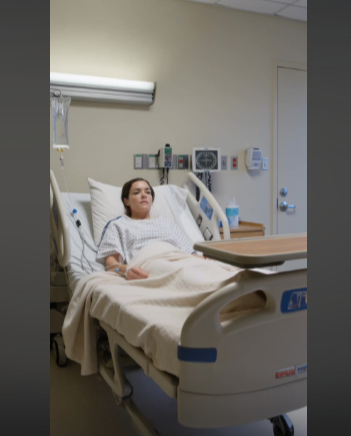
When I Was Fighting Kidney Failure In A Hospital Bed, My Mother Demanded My $250,000 Savings For My Brother, Yanked A Blood Pressure Monitor From The Wall, And One Quiet Button Beside My Pillow Changed Everything Before Anyone Else Could Speak
The moment my mother threw the papers onto my hospital blanket, I understood she had not come to see if I was scared.
She had come because I was useful.
The pages slid across my lap, catching on the IV line taped to my hand. My father stood near the door with his jaw clenched, not beside me, not behind me, but in the exact spot where he could block the window from the hallway. My mother, Brenda, kept one hand on the bed rail and the other wrapped around the edge of a folded page she had already creased until the paper looked tired.
“Sign it, Chloe,” she said.
Her voice did not shake. That was the part I remembered most later.
The blood pressure monitor mounted on the wall beside my bed hummed quietly, its cuff dangling like something waiting to be used properly. My mouth tasted like metal. My whole body felt borrowed, stitched together by hospital tape, plastic tubing, and the stubborn part of me that refused to disappear.
“I need that money for treatment,” I said.
My mother’s eyes narrowed like I had insulted her.
“No,” she snapped. “You need to stop being selfish before you ruin your brother’s future.”
My brother was not in the room. Austin never was when hard words had to be spoken. He waited for our parents to do the pushing, then appeared later to enjoy whatever had been taken from me.
I looked at the folded page again.
At the top, in Brenda’s tight handwriting, were three words: family recovery plan.
My name was nowhere near the word family.
I was thirty-two years old when my kidneys failed, but the truth was, I had been tired since I was nine.
That was the year my mother first told me I was “the dependable one.” She said it in the kitchen of our small Queens house while I stood on a chair washing dishes because she had a migraine and my father was working late. Austin was three, sitting on the floor with cereal stuck to his pajama shirt, crying because the blue bowl was in the dishwasher and the red bowl made his oatmeal taste wrong.
“Just help me keep the peace, Chloe,” Mom whispered, rubbing her temples. “You’re old enough to understand.”
So I understood.
I understood when Austin cried at birthday parties and I gave him the bigger slice of cake. I understood when my father forgot parent-teacher conferences and Mom asked me not to make him feel worse. I understood when Austin broke the neighbor’s window with a baseball and I was told to say I had been watching him, because “your brother is sensitive.”
By high school, dependable had become a job title.
By college, it had become a debt.
By adulthood, it had become a cage with my name painted on it in neat family lettering.
I built my life the way careful people build a bridge over water they do not trust. I took scholarships. I worked campus jobs. I interned in finance because numbers made more sense to me than people did. Numbers did not ask for loyalty while draining your checking account. Numbers did not call you selfish for being exhausted. Numbers did not pretend love and obligation were the same thing.
After graduation, I found work as a financial analyst at a midtown firm where the lights came on before sunrise and nobody admitted being tired until their body forced them. I was good at it. I was very good at it. I could sit in a room full of men twice my age and find the missing line in a model before they finished clearing their throats.
My boss, Ellen, once told me, “Chloe, you have a gift for seeing what everyone else wants to round down.”
At the time, I thought she meant spreadsheets.
Later, I realized she meant people.
My mornings began at 5:10 with the same routine. I tied my hair back with a blue hair tie, filled a travel mug with coffee strong enough to argue with me, and took the train into Manhattan while most of the city was still deciding whether to wake up. I wore sensible shoes and kept my good heels in a drawer at work. I answered emails before the sun hit the glass towers. I ate lunch at my desk more often than I ate at a table.
Every other Friday, my paycheck landed.
Every other Friday, pieces of it vanished.
The mortgage on my parents’ house. The water bill. The gas bill. The phone plan. Austin’s car insurance, which my mother insisted was temporary even though temporary had lasted four years. Groceries. Prescriptions. A credit card my father said he would pay down once his “consulting thing” picked up, which it never did.
I had my own apartment, a narrow walk-up in Astoria with radiator heat, crooked floors, and a window that faced a brick wall. I loved it anyway because it was mine. But even there, my family reached through the walls. Their bills arrived in my inbox. Their emergencies filled my voicemail. Their needs became calendar reminders.
The one thing I kept private was the savings account.
I started it after a winter night when I sat on my bathroom floor with my laptop open on my knees, calculating whether I could cover Austin’s latest “temporary setback” and still afford my own dental bill. I had cried so hard that night my face felt bruised the next morning.
Then I opened a separate account.
At first, it was $50 here, $100 there. Money I did not mention. Money that did not belong to a family meeting, a crisis, a promise, or Austin’s next reinvention. Over the years, as my salary grew and my discipline hardened, the balance climbed. I skipped vacations. I bought coats at end-of-season sales. I kept my old car long after my coworkers gently suggested I was underestimating rust.
The account reached $250,000 in late September.
I stared at the number on my screen for a long time that night. It was not just money. It was air. It was an exit door. It was a future where I could choose a quiet apartment with sunlight, take a month off between jobs someday, pay for medical care if I needed it, or simply know that if my family pulled the floor out from under me, I would not fall all the way down.
I did not tell them.
Not Brenda, who believed anything I had was something the family had earned through the inconvenience of raising me. Not Arthur, my father, who avoided direct demands until Mom made them and then stood behind her like a tired bailiff. Not Austin, who had turned “finding himself” into a full-time lifestyle funded by other people’s guilt.
Austin was twenty-six, handsome in the careless way of men who had never been made to clean up after themselves. He changed dreams the way other people changed playlists. One month he wanted to be a personal trainer. The next month he was studying cryptocurrency videos. Then he was designing sneakers. Then he was going to launch a luxury streetwear brand because, in his words, “working for someone else kills genius.”
He had never held a job longer than six weeks.
My mother called that ambition.
When I pointed out that ambition usually involved effort, she said I had become cold.
The first wrong detail that year came at Sunday dinner.
I arrived late from the office with a rotisserie chicken, salad, and a pharmacy bag my mother had asked me to pick up. The house smelled like furniture polish and old heat. The dining room table was set for four, but my plate was not at the table. It was on the kitchen counter beside a stack of unpaid envelopes.
I noticed it before anyone spoke.
Austin lounged in my father’s chair, scrolling on his phone. My dad sat stiffly at the end of the table, pretending to read the sports section. My mother took the chicken from my hands and said, “Thank God. Your brother has been starving.”
“I came straight from work,” I said.
“We all work in different ways,” Austin muttered without looking up.
I started to answer, but Mom shot me that look she used when I was ten and about to make the baby cry.
So I swallowed it.
I moved my plate from the counter to the table myself. It was a small thing, almost silly, but my hand shook when I did it. My mother watched me like I had staged a rebellion.
During dinner, Austin announced he had found “the thing.”
“It’s not just clothes,” he said, leaning back with his fork untouched. “It’s culture. Limited drops. High-end basics. People pay for identity now.”
My father nodded as if Austin had discovered oxygen.
“What do you need to start?” Dad asked.
Austin glanced at me then, quick and practiced.
“Realistically? Two hundred fifty.”
I laughed because I thought he meant dollars.
No one else laughed.
“Two hundred fifty thousand?” I said.
Austin shrugged. “You have to spend money to make money.”
Mom reached for her water glass. “Your sister understands that.”
I stared at her. “No, I don’t.”
The room tightened.
My father folded the newspaper too carefully. “Chloe, nobody is asking you tonight.”
That was the second wrong detail: tonight.
Not never. Tonight.
I let the word settle in my mind like a stone dropped into a jar. I did not argue because I could feel the old pattern waking up. If I pushed too hard at the table, Mom would clutch her chest and say I was attacking her. Dad would ask why I had to ruin a nice meal. Austin would smirk into his phone because the scene itself would serve him.
Instead, I changed the subject.
“How much is the mortgage short this month?”
My father looked relieved. My mother smiled.
Austin went back to scrolling.
The consequence came three days later when my mother called during a staff meeting. I silenced the phone twice. The third time, I excused myself and stepped into a glass-walled hallway where I could still see my team moving through a presentation without me.
“Mom, I’m working.”
“And I’m panicking,” she said. “The insurance draft for Austin’s car bounced.”
“I sent you money Friday.”
“That was for the mortgage.”
“No, the mortgage autopay cleared already.”
Silence.
Then she said, “Well, your father must have moved things around. Your brother has an interview tomorrow, Chloe. He needs the car.”
The wrong detail was easy to miss unless you knew Austin.
“What interview?”
Mom exhaled. “Don’t cross-examine me.”
I looked back through the glass at my colleagues. Ellen was watching me, not angry, just aware. I had built a reputation at work for never bringing personal mess into the office, and there I was, pinned between a quarterly forecast and my brother’s imaginary interview.
“I’ll handle it tonight,” I said.
I hated myself the moment I said it.
That evening, I transferred the money and sat in my apartment without turning on the lights. A dull ache pulsed low in my back. I pressed my fist there and told myself it was the train, the chair, the hours. I drank water. I opened my laptop. I worked until midnight.
The second pattern scene unfolded at my mother’s birthday brunch in Long Island City.
I booked the restaurant because Mom wanted “something bright,” paid the deposit because Dad said his card was acting up, and arrived early because no one else in my family knew how to be responsible without applause. The hostess led me to a table near the window. There were balloons, yellow napkins, and a small dessert menu with “Happy Birthday Brenda” printed across the top.
I should have felt proud.
Instead, I noticed the place cards.
Dad. Mom. Austin. Aunt Linda. Cousin Mark.
No Chloe.
My name was not misspelled. It was not misplaced. It was missing.
The hostess apologized and brought me a blank card. I wrote my own name on it with the restaurant’s cheap pen while my relatives walked in laughing around Austin, who had arrived twenty minutes late wearing sunglasses indoors.
When Mom saw the table, she clapped. “Austin, did you pick this place?”
He smiled like he had been caught being wonderful.
“Chloe set it up,” Aunt Linda said.
Mom blinked. “Well, Chloe is good at logistics.”
There it was again. I was not celebrated. I was infrastructure.
During brunch, Mom made a toast.
“To family,” she said, lifting her mimosa. “To the people who show up, who sacrifice, who believe in the future of this family.”
She turned toward Austin.
My hand tightened around my water glass.
Aunt Linda looked at me and then looked away.
Austin gave a little speech about his brand. He used words like vision, elevation, market gap. When the check came, the server placed it near my father. He did not touch it. My mother kept talking louder. Austin excused himself to take a call outside.
I picked up the folder and slid my card inside.
That was my restraint. Not silence, exactly. A transaction. I paid because arguing in front of the server felt worse than being used in front of my family.
But when I got home, I opened my savings account and increased the automatic monthly transfer.
It was the first time my obedience created a boundary, even if nobody else could see it.
The third pattern scene happened in my office lobby near Christmas.
My father showed up without warning, wearing his brown wool coat and the embarrassed smile he used when he wanted money but wanted to pretend he wanted advice. I found him downstairs after security called my desk.
“Dad, why are you here?”
He held a paper coffee cup in both hands. “Can’t a father see his daughter?”
“Not usually at 2:15 on a workday.”
He looked around the lobby with its marble floors and tall glass doors. “You’re doing well.”
I heard the accusation underneath the compliment.
“I’m working hard,” I said.
He nodded. “Your mother worries that work has made you hard.”
I almost laughed. “That why you came?”
He rubbed his thumb over the cup lid. “Austin’s landlord needs a deposit.”
“Austin lives at home.”
“For a studio he might use as a design space.”
I stared at him.
Dad’s eyes dropped. “He’s trying, Chloe.”
“No,” I said quietly. “He’s dreaming at my expense.”
My father flinched, but not because I was wrong. He flinched because I had said the sentence in a public lobby where a security guard might hear it.
“Don’t talk about your brother like that,” he said.
“Then stop asking me to pay for him like that.”
The wrong detail was his coffee.
He never bought coffee in Manhattan. He complained about city prices like it was his religion. But that day, the cup had the logo of a boutique café across from my office, the kind that charged seven dollars for oat milk and atmosphere. My father had bought himself comfort before asking me to fund Austin’s fantasy.
I looked at the cup, then back at him.
He followed my gaze and shifted it behind his coat.
“I can’t do it,” I said.
“You mean you won’t.”
“For once, yes. I won’t.”
His face changed then. The soft father mask slid sideways, and something colder showed through. “Your mother said you might be difficult.”
The word difficult followed me back upstairs.
I did not give him the deposit. That should have felt like victory. Instead, my phone lit up all afternoon.
Mom: Your father came home humiliated.
Mom: You embarrassed him in public.
Austin: Congrats, big banker. Hope your bonus keeps you warm.
Dad did not text.
By evening, my back ached again. My ankles looked puffy above my shoes. I blamed salt, stress, winter, the office chair, anything except the possibility that my body was no longer willing to carry the life I had built.
Maya noticed first.
Maya Patel was a senior associate on my team, sharp, funny, and allergic to emotional nonsense in a way that made me feel safe. She had grown up in Jersey with three brothers and could read family guilt from across a room. One afternoon in January, she found me gripping the edge of the copy machine while a wave of dizziness passed through me.
“Chloe,” she said. “Sit down.”
“I’m fine.”
“You are the color of printer paper.”
“I skipped lunch.”
“You always skip lunch. That is not a medical plan.”
I tried to smile, but the hallway tilted.
Maya took my arm and guided me into a small conference room. She closed the door and sat across from me. “You need a doctor.”
“I have deadlines.”
“You have a body.”
That line stayed with me.
I made an appointment and canceled it when my mother called about a utility shutoff notice she had ignored for two months. I rescheduled and canceled again when Austin needed money to fix a bumper he swore someone else had damaged. The third time, I did not even bother rescheduling.
That was how the pattern worked. It never shouted at first. It simply placed someone else’s inconvenience beside my need and waited for me to choose wrong.
The trigger came on a Tuesday morning in March.
Rain smeared the office windows and turned the city below into a blur of brake lights and umbrellas. I was at my desk before most of the team, building a revised forecast for a client who wanted miracles by noon. My coffee had gone cold. My inbox showed eighteen unread messages. Four were from my mother.
I opened the first.
Mom: Need to talk about Austin’s launch timeline.
Second.
Mom: Don’t ignore me.
Third.
Mom: Family meeting soon. Important.
Fourth.
Mom: You are not the only person under pressure.
The words swam a little. I blinked, rubbed my eyes, and noticed my hands looked swollen. The ache in my back had become a deep, internal pressure, like something inside me had been filling with wet sand.
I stood to get water.
The floor moved.
At first, I thought I had tripped. My knee hit the underside of the desk. My monitor blurred into streaks of blue and white. Somewhere nearby, a phone rang. I reached for the edge of the cubicle wall and missed.
“Chloe?”
Maya’s voice came from far away.
I remember the carpet rising fast. I remember someone saying my name with real fear in it. I remember being annoyed because I had not saved the latest version of the model.
Then everything went black.
When I woke, the world had become light, plastic, and beeping.
A fluorescent ceiling panel glared above me. My left arm was taped to an IV. A blood pressure cuff squeezed and released around my right arm. Something dry sat under my tongue. I tried to turn my head and found Maya asleep in a chair near the wall, her coat still on, her hair falling out of its clip.
The sight of her there broke something open in me.
Not because she was family.
Because she was not.
A nurse noticed I was awake and smiled with professional warmth. “Chloe, you’re at St. Catherine’s in Manhattan. You collapsed at work. You’re safe right now.”
Safe right now.
People only used right now when later was uncertain.
A doctor came in after rounds. His name was Dr. Han. He pulled a chair close to my bed and did not stand over me, which I appreciated before I understood why.
“Your kidneys are not functioning the way we need them to,” he said gently.
I watched his mouth form the words. Kidney failure. Dialysis. Transplant evaluation. Aggressive treatment. Care planning. Time-sensitive.
The sentences did not land in order.
I was thirty-two.
I did not smoke. I barely drank. I worked. I paid bills. I answered calls. I ate salads over spreadsheets. People like me did not end up in hospital beds with specialists speaking softly.
My first thought, humiliatingly, was the mortgage.
My second thought was my mother.
I asked for my phone.
Maya woke when she heard me crying. “I’m here,” she said, leaning forward.
“I need to call my mom.”
Her expression flickered, but she did not argue. She handed me the phone.
Brenda answered on the fourth ring.
“Chloe, finally. We need to talk about Austin before your father loses patience.”
“Mom,” I whispered. “I’m in the hospital.”
A pause.
Then a sigh, sharp and annoyed. “What happened now?”
I told her what Dr. Han had said as best I could. My voice broke halfway through kidney failure. Maya turned toward the window, giving me privacy she probably knew would not protect me.
When I finished, my mother said nothing for three full seconds.
Then she said, “Are you going to lose your job?”
I closed my eyes.
“Mom.”
“Don’t Mom me. I am asking a practical question. The mortgage comes out next week. Your brother’s insurance is due. Your father cannot handle another crisis.”
“I’m scared,” I said.
“Well, so are we.”
The wrong detail was the word we.
Not you. Not my daughter. Not Chloe.
We, meaning the household whose bills depended on my body continuing to cooperate.
“I need you,” I said, hating how small I sounded.
My mother’s voice hardened. “What we need is for you to stop making everything dramatic and tell us what happens to the money.”
“What money?”
“Don’t play innocent with me.”
I stared at the IV tape on my hand.
Behind Mom, I heard Austin say, “Ask her if the account is transferable.”
The room inside my chest went still.
“How does Austin know about my account?”
Mom did not answer.
“Mom.”
“You have been hiding family resources while your brother has been trying to build something.”
My breathing changed. The monitor beside me noticed before I did.
Maya stood.
“I’m hanging up,” I said.
“You will not hang up on your mother.”
I pressed the red button on the phone screen with my thumb.
For the rest of that day, I waited for her to call back.
She did not.
My father texted once that night.
Dad: Your mother is upset. Best not to make this harder.
That was all.
No asking what the doctor said. No asking if I was alone. No telling me he loved me. Just a warning that my pain had inconvenienced Brenda.
I placed the phone face down and cried without making noise because Maya was still in the chair, and I did not know how to be that openly broken in front of someone who had shown up.
The next morning, I learned how Austin had found out.
A bank notice had gone to my parents’ house by mistake after an old mailing preference updated during a security change. It did not show everything, but it showed enough. A partial balance. My name. The institution. The proof that I had not poured every possible dollar into the family sinkhole.
Maya brought me oatmeal I could barely eat and sat while I called the bank. My voice was thin but steady as I changed the mailing address, added extra authentication, and confirmed no one else had access.
“Good,” Maya said.
I looked at her.
“What?”
She shrugged. “You sounded like yourself for a minute.”
“I don’t know who that is.”
“You will.”
That afternoon, a hospital social worker named Tessa came by. She wore soft gray shoes and had the calm patience of someone used to meeting people on the worst day of their lives. She asked about my home, my support system, my emergency contacts, my insurance, my job.
I answered automatically until she asked, “Who do you trust to make calls if you are unable to?”
My mouth opened.
No name came out.
Tessa did not rush me.
Finally, I said, “I used to think my mother.”
“Used to?”
I looked at the door.
“She asked about money before she asked if I was going to live.”
Tessa nodded in a way that held the sentence without judging it. “Then we plan around what is true now, not what you hoped was true before.”
That became the first clean line in the fog.
What is true now.
The truth was that my kidneys had failed.
The truth was that my body needed treatment.
The truth was that my family knew I was in a hospital bed and had turned my diagnosis into a budget meeting.
The truth was that my $250,000 was not greed. It was survival.
Over the next week, I endured tests, dialysis, consultations, and the strange humiliation of needing help to do things I used to do while answering emails with one hand. Ellen visited once with flowers and a folder of leave paperwork. She did not ask when I would return. She said the firm had medical leave policies, insurance support, and a human resources team that would walk me through the next steps.
“You are not a machine we are parking for repairs,” she said. “You are a person who works here.”
That sentence did more for me than she probably intended.
Maya came every other evening. She brought clean socks, lip balm, and gossip from the office carefully edited so I did not feel forgotten or needed. She also brought my apartment keys and mail.
On the fifth evening, she placed a small envelope on my tray.
“This came to your place,” she said. “From your parents’ address.”
Inside was a photograph.
It was an old family picture from my college graduation. I stood in my cap and gown between my parents. Austin, sixteen at the time, leaned against my mother, bored and sunburned. On the back, my mother had written years ago: Our bright future.
Now, beneath that, someone had added in Austin’s messy handwriting: Don’t forget who made this possible.
I stared at it until the words blurred.
Maya’s face tightened. “That is ugly.”
“It’s how they think,” I said.
“No. It’s how they trained you to think.”
I put the photograph in the drawer beside my bed, not because I wanted to keep it, but because I wanted to remember the exact shape of the lie.
The family pressure escalated without their bodies entering the room.
Mom left voicemails from blocked numbers. Some were cold. Some were tearful. Some shifted mid-sentence from concern to accusation like she could not hold the performance steady.
“Chloe, sweetheart, we’re worried,” one began.
By the end she was saying, “Do you know how cruel it is to sit on that kind of money when Austin finally has a real chance?”
Dad sent short texts.
Dad: Let’s not make permanent decisions while emotions are high.
Dad: Your mother is having chest pains from stress.
Dad: We can discuss a fair division.
Fair division.
I showed that one to Tessa, who had returned to help me update my contact list.
“What do you want to do?” she asked.
The old Chloe would have asked what would make everyone least angry.
The new, not-yet-steady Chloe asked a different question.
“What happens if I do nothing?”
“Then nothing changes,” Tessa said. “For them or for you.”
That night, I stared at the ceiling and made my first written boundary list.
I wrote it in the notes app on my phone with my thumb because my hand shook too much for a pen.
No transfers.
No medical information to family without permission.
No family visits unless I request them.
No discussion of Austin.
No apologizing for being sick.
The last line made me cry.
I did not know how much shame I had carried until I saw that sentence and felt my body release a fraction of it.
Still, restraint was not a single decision. It was a muscle I had never used properly.
When my mother left a voicemail sobbing that Austin was depressed because I had “turned my illness into a weapon,” I almost called back. My finger hovered over the number. I pictured Austin pacing dramatically in the kitchen while Mom rubbed his shoulders and Dad pretended not to notice the manipulation.
Then I pictured the hospital ceiling.
My body, finally unable to keep paying the price.
I put the phone down.
The next wrong detail came through Aunt Linda.
She called on a Friday afternoon while I was half asleep after treatment. Her voice was gentle but careful, the way people sound when they are carrying someone else’s message in tissue paper.
“Sweetheart, I heard you’ve been very sick.”
“Yes.”
“Your mother is beside herself.”
“I’m sure she is.”
“She said there has been some misunderstanding about money.”
My eyes opened.
“What did she tell you?”
Aunt Linda exhaled. “That you had promised to help Austin years ago, and now you are using your condition to punish him.”
The ceiling sharpened above me.
“I never promised him $250,000.”
Silence stretched.
Then she said, softer, “She used the exact number?”
There it was. Another wrong detail. My mother had not told Aunt Linda “help.” She had told her the amount. She had turned my private savings into a family talking point while I was too weak to sit up without assistance.
“Aunt Linda,” I said, “did she tell you what my diagnosis is?”
A pause.
“She said stress complications.”
Stress complications.
I almost laughed. It came out as something smaller and uglier.
“My kidneys are failing.”
Aunt Linda made a sound like the air had left her.
“She didn’t say that?”
“No.”
For the first time, someone in my family heard the truth without Brenda standing beside it to translate. Aunt Linda cried. She apologized. She offered to visit. I told her I was not ready. She respected that, which made me cry harder after we hung up.
The consequence was immediate.
That night, my mother sent a message.
Mom: Stop spreading private family business.
I typed three responses and deleted them all.
Finally, I wrote: My diagnosis is not your private business to edit.
She did not answer.
Two days later, Dr. Han told me I was responding to treatment, but the long road ahead remained serious. There would be evaluations, a transplant process, and months of careful care. I would need rest, follow-through, and reduced stress.
Reduced stress.
I laughed when he said it.
He smiled sadly. “I know. But I still have to say it.”
“What if stress is related to people?”
“Then those people become part of the treatment plan.”
That sentence landed like permission.
I asked Tessa to update my visitor list. Maya stayed. Ellen could visit. Aunt Linda could leave messages but not come in yet. Brenda, Arthur, and Austin were removed unless I gave direct approval.
The hospital system asked for a reason.
I said, “They are pressuring me financially while I am in treatment.”
Tessa typed without flinching.
That was the strategy shift. I stopped arguing with feelings and started naming behavior.
For two days, the quiet held.
Then, on the third afternoon, a volunteer delivered a small plant from my office team. It had glossy green leaves and a card signed by people who had seen me work late, skip lunch, and pretend I did not need anyone. I placed it on the windowsill and felt a strange, embarrassed warmth.
My phone buzzed.
Austin: Heard you’re blocking family now. Classy.
I did not answer.
Austin: Mom says you’re being dramatic because you know we found your stash.
I stared at the word stash.
Not savings. Not emergency fund. Not treatment money.
Stash.
Austin: You always acted like you were better than me. Now prove you’re not.
The old guilt twitched, looking for a doorway.
I closed the app.
Later, Maya visited and found me staring at nothing.
“Do you want me to say something mean about your brother?” she asked.
“Yes.”
“He has the emotional range of a wet receipt.”
I laughed so hard my side hurt.
Then I cried.
Maya pulled the chair closer but did not touch me until I nodded. That was another kind of love I was learning: the kind that asked before entering.
“Do you think I made them this way?” I whispered.
“No,” she said. “But I think they benefited from you believing that.”
The words sank deeper than comfort. They had edges. They cut a rope.
The following morning, Brenda and Arthur tried to visit and were turned away at reception.
I only knew because Dad left a voicemail.
“This is ridiculous,” he said, voice low and furious. “Your mother was humiliated downstairs. We are your parents. You do not get to put guards between us and our daughter.”
Guards.
He made boundaries sound like violence.
I kept the voicemail. Not for evidence. For clarity.
That night, I dreamed I was nine again, standing on the kitchen chair, washing dishes while Austin cried over the wrong bowl. In the dream, the sink filled and filled until water spilled over the counter, down the cabinets, across the floor. My mother stood behind me saying, “Keep the peace, Chloe.” My father stood in the doorway with the newspaper. Austin sat dry in the middle of the room.
I woke with tears on my face and a nurse checking my vitals.
“You’re okay,” she said.
I almost said I was fine.
Instead, I said, “I’m not.”
She nodded. “Then we’ll start there.”
The dark night of that hospital stay was not the worst pain. It was the quiet after I stopped performing strength.
For years, I had believed exhaustion was proof of love. If I could just give enough, pay enough, fix enough, my family would finally look at me and see a daughter instead of a solution. But lying there, with machines doing some of the work my body could no longer do, I had to face the possibility that there was no amount enough.
Not because I had failed.
Because the hunger was not meant to end.
The last wrong detail arrived the morning before the confrontation.
A nurse brought in my breakfast and said, “Your mother called the front desk again.”
I set down my spoon. “Did she say why?”
“She said there was a signed family agreement we were interfering with.”
I looked at her.
“There isn’t.”
“I figured,” the nurse said carefully. “We did not give her anything.”
Signed family agreement.
Brenda had invented a document before she even had my signature. In her mind, my consent was a detail to be collected after the decision had been made.
That was when I stopped hoping the next conversation would be kinder.
I asked Tessa what would happen if my parents arrived with papers.
“You do not have to accept them,” she said.
“What if they cause a scene?”
“Then you press the call button. Staff will come.”
She placed the small gray remote near my hand. It had buttons for the bed, the television, and one red emergency button slightly raised under my thumb.
I looked at it for a long time.
A button was such a small thing.
So was a boundary.
Both only worked if you used them.
That evening, I rolled the blue hair tie against my thumb and practiced one sentence until it no longer shook.
“No. This money is for my treatment and my life.”
Maya made me say it again.
“No. This money is for my treatment and my life.”
“Again.”
“Maya.”
“Again.”
By the fourth time, I sounded less like I was asking permission.
By the sixth, I sounded like someone who might survive more than an illness.
The next morning, rain tapped softly against the hospital window. Manhattan looked gray and distant beyond the glass. My plant sat on the sill. The room smelled faintly of antiseptic and oatmeal.
I had just finished speaking with Dr. Han when I heard raised voices beyond the door.
Brenda’s voice cut through everything.
“I am her mother.”
The door opened before anyone knocked.
My mother entered first, cheeks flushed, purse swinging from her elbow like a weapon she had decided not to use yet. My father followed, carrying a manila folder under his arm. He would not meet my eyes. That told me he knew exactly what they were doing.
For one foolish second, my heart reached for them anyway.
Mom looked older than she had in my memory, but not softer. Her hair was sprayed into place. Her lipstick was perfect. She had dressed for a negotiation, not a hospital visit.
Dad wore his good coat.
No flowers. No card. No worried faces.
Just the folder.
“Chloe,” Mom said, like my name was a mess she had found on the floor.
“You’re not on my visitor list.”
“Don’t start,” Dad said.
That was his role. He did not open with cruelty. He opened with weariness, inviting me to feel guilty for making cruelty necessary.
Mom came straight to the bed and dropped the papers onto my blanket.
“Sign.”
The sound of paper hitting the thin hospital sheet was soft, but my body reacted like thunder had cracked above me.
I looked down.
There were forms I did not fully read, a printed transfer authorization, and the folded page from Brenda’s notebook. The family recovery plan.
It listed columns.
Austin: product samples, website, marketing, launch event, living expenses.
Parents: mortgage cushion, utilities, credit cards.
Chloe: insured treatment, reduced needs, no dependents.
I stared at reduced needs.
Not daughter. Not patient. Not person.
A reduced need.
The wrong detail ladder ended there, on my blanket, in ink.
Mom tapped the page. “This is what makes sense.”
My thumb found the red button under the blanket.
I did not press it yet.
“You wrote this before you came,” I said.
“Of course I wrote it before we came. Someone had to think clearly.”
“Before you asked me what my doctors said today.”
She blinked once. “Do not deflect.”
Dad stepped closer to the door. The hallway narrowed behind him.
“Your brother has investors waiting,” he said.
“What investors?”
Mom snapped, “People who believe in him.”
“Names.”
Austin’s absence filled the room like smoke.
Dad’s mouth tightened. “This is not a business interrogation.”
“No,” I said. “It’s my hospital room.”
Mom leaned over the rail. “It is a room paid for by insurance from the job this family helped you get.”
I almost smiled. Not because it was funny, but because the sentence was so perfectly wrong. They had not helped me get that job. They had resented every hour it took from their needs while spending every dollar it produced.
“My job is mine,” I said.
“Your money is family money.”
There it was.
The old phrase.
The chain.
I looked at her hand flat on the bed rail, at my father guarding the doorway, at the folded page turning my life into a footnote. I thought of the missing place card. The coffee cup in my father’s hand. Aunt Linda learning my diagnosis after everyone else had learned my balance. The invented family agreement. The word stash. The kitchen chair. The wrong bowl. The years of being told I understood because someone had to.
I did understand.
Finally.
“No,” I said. “This money is for my treatment and my life.”
Mom’s mouth opened slightly.
For one second, I saw surprise before anger covered it.
“You rehearsed that,” she said with disgust.
“Yes.”
That single word changed my own posture. I was not ashamed of preparing to protect myself. I was not ashamed of needing practice. I was not ashamed of being scared and doing it anyway.
Mom straightened. “Arthur.”
Dad moved closer to the bed.
“Chloe,” he said, lowering his voice. “Your mother is under tremendous stress. You need to stop escalating.”
“I am lying in a hospital bed.”
“And still making this all about you.”
The words should have crushed me. Instead, they clarified the room.
I smoothed the folded page on my blanket with two fingers, careful not to disturb the IV line.
“Show me where my life appears on this page,” I said.
Mom frowned. “Don’t be dramatic.”
“Show me where you wrote daughter.”
Dad looked at the page despite himself.
“Show me where you wrote recovery. Not Austin’s recovery. Mine.”
Mom’s face tightened.
The monitor beeped faster.
I could feel my pulse in my throat, but my voice stayed level because the sentence had already become bigger than fear.
“You wrote down my savings, my insurance, my reduced needs, and my brother’s future. You came into this room with math where love was supposed to be.”
For the first time, my father looked away.
Mom did not.
She leaned in until I could smell her perfume.
“You ungrateful girl,” she said. “After everything we sacrificed.”
My thumb pressed the emergency button.
It made the smallest click.
Mom did not hear it.
Dad did not hear it.
I did.
That tiny sound moved through me like a door unlocking.
Mom grabbed the top sheet of papers and shoved them toward my hand. “You are signing before we leave.”
“No.”
“You will not destroy this family.”
“I am not the one who built it on my paycheck.”
Austin would have laughed if he had been there. Dad would have warned me. Mom did something neither of them had ever done before.
She lost the rhythm.
Her face flushed dark. Her hand left the papers and reached toward the wall beside my bed, fingers closing around the blood pressure monitor’s loose mounted unit and cord. For half a second, I thought she meant to point at the machines, to make some cruel speech about what I cost now.
Then she yanked.
The unit jerked hard against its bracket, cracking loose with a plastic snap. The cuff swung down. Dad said, “Brenda,” but he did not step toward her. He stepped more fully in front of the door window.
That was the clearest thing he had ever said without words.
My mother swung the monitor down toward me. The edge struck the side of my forehead hard enough to burst white light across my vision. Pain flared hot and immediate. I cried out, more from shock than volume, and my hand went to my head.
Mom froze for one breath, as if even she had not expected the sound.
Then anger rescued her from recognizing herself.
“Look what you made me do,” she said.
I tasted salt. Tears, maybe. Fear, definitely.
But beneath it, there was something steadier.
The button had been pressed.
I kept my eyes open.
Dad moved closer, voice low and urgent. “Chloe, don’t make noise.”
That line did something to me I still cannot fully explain.
Not because it was cruel, though it was.
Because it was familiar.
Every terrible thing in our family had always ended with someone telling me to keep quiet so the wrong person could stay comfortable.
My mother lifted the monitor again, not as high this time, but enough that my whole body tensed.
I looked at her and said, “No more.”
The door opened so hard it hit the wall.
Two nurses entered first, followed by a hospital security officer and Tessa, whose calm face changed the moment she saw the room. The charge nurse took in my mother holding the monitor, my father blocking the door, the papers on my bed, and my hand pressed to my forehead.
“Step away from the patient,” she said.
Brenda’s expression flipped from rage to performance with terrifying speed.
“She’s confused,” Mom said. “She’s on medication. We were trying to help her.”
The security officer moved between her and my bed.
Dad lifted both hands. “This is a family misunderstanding.”
I laughed once.
It hurt.
Tessa came to my side. “Chloe, did you press the emergency button?”
“Yes.”
“Do you want them removed?”
My mother stared at me.
In that stare were thirty-two years of instructions. Fix this. Soften this. Protect me. Protect Austin. Protect your father from having to choose. Protect the family story. Keep the peace.
My voice came out rough, but it came out mine.
“Yes. I want them removed.”
Mom inhaled like I had struck her.
The officer took the monitor from her hands. The nurse checked my forehead with careful fingers. Dad started explaining again, words piling over each other, but no one in the room was listening to him as the authority anymore.
That was the real reversal.
Not the button. Not the staff. Not even the fact that my mother had been caught doing something she could not spin quickly enough.
The reversal was that I stopped translating their behavior into something less ugly.
I stopped helping them hide from themselves.
Tessa picked up the folded page from my blanket. She did not read it out loud. She simply saw enough, folded it once, and placed it on the tray beside my untouched oatmeal.
Mom saw her do it.
Something in her face flickered then. Not regret. Not yet. But calculation.
“You are going to regret this,” she said as security guided her toward the door.
“No,” I said.
Everyone paused.
Even I did not know I had another sentence in me.
I looked at my mother, then at my father, and finally at the papers they had carried like my consent was already inside them.
“The money you came to take is staying with the person who almost died earning it.”
My father’s shoulders dropped.
My mother’s mouth parted, but nothing came out.
The room held still around that sentence.
Then they were escorted into the hallway, still protesting, still insisting that private family matters were being exaggerated, still trying to turn witnesses into embarrassment. The door closed behind them with a soft mechanical click.
For a few seconds, nobody spoke.
The nurse finished checking me. Tessa asked if I wanted the hospital to file an incident report and keep the visitor restriction in place. Maya arrived fifteen minutes later, breathless, hair half-pinned, eyes wide with fear. She saw my face and stopped in the doorway.
“What happened?”
“My family came to visit,” I said.
Maya’s eyes filled.
I expected to crumble then, but I did not. I was shaking, yes. My head throbbed. My body felt wrung out and hollow. But beneath the shock was a quiet space I had never felt before.
It was the space where obligation used to live.
The hospital barred my parents from returning without my direct approval. Tessa helped me document what had happened in plain language. Not dramatic language. Not revenge language. Just behavior.
They entered after being restricted.
They demanded access to personal savings.
They pressured me while I was under medical care.
My mother pulled equipment from the wall and struck me.
My father blocked the door window.
I requested removal.
Seeing it written that way changed something. There were no excuses in those sentences. No childhood stories. No sacrifices. No golden child. No “she meant well.” Just actions.
The next day, I made the calls I should have made years earlier.
I removed my parents from every account where their names, addresses, or bills touched mine. I canceled automatic payments connected to their house. I separated the phone plan. I froze the shared card Austin had used for gas, food delivery, and whatever else he called networking. I emailed my father one sentence through a new address Tessa helped me set up.
I will no longer pay expenses I did not create.
He replied twelve times.
I did not read them.
Maya read the subject lines and said, “You don’t need to open any door just because someone bangs on it.”
So I did not.
The consequences came slowly, which made them feel more real than revenge.
The mortgage did not vanish overnight. My parents had options. They could sell. They could refinance. They could get jobs that matched their bills. They could ask Austin to contribute. They could do what I had done for years: look at numbers honestly and make choices.
They did not.
At first, they called relatives and blamed me. Aunt Linda called once, not to pressure me, but to say, “Your mother is telling everyone you abandoned the family.”
“What are you telling them?” I asked.
“The truth I know,” she said. “That you are sick and they demanded money.”
I cried after that call too, but it was a different kind of crying. It was not the sound of a person begging to be believed. It was the sound of being believed and not knowing where to put the relief.
Austin emailed me a week later.
Subject: Seriously?
Body: You’re really going to ruin everyone because you’re mad?
I waited a full day before answering.
I am not ruining a life by refusing to fund it.
He wrote back within minutes.
Must be nice to be heartless.
I did not answer again.
That was one of the hardest parts. Not the first no. The second silence. The refusal to turn every insult into a courtroom where I defended my humanity.
My treatment continued. Some days were frightening. Some days were boring. Some days I felt strong enough to answer work emails and then cried because I could not walk to the bathroom without help. Dr. Han reminded me that recovery was not a straight line. Ellen reminded me my job was waiting but not demanding. Maya reminded me that rest was not laziness just because my family had treated every pause like theft.
One afternoon, Tessa asked what I wanted after the hospital.
The question confused me.
“What do you mean?”
“Not what you need. What do you want?”
I almost said a plan. Then I almost said sleep. Then I pictured sunlight on a floor that did not come with someone else’s bills stacked by the door.
“I want a quiet place,” I said.
Tessa smiled. “That is a start.”
When I was stable enough to leave acute care, I did not go to my parents’ house. That decision seemed obvious to everyone except the old version of me still hiding somewhere under my ribs. She kept whispering that maybe Mom would soften if she saw me walking slowly. Maybe Dad would apologize if he realized I was not being dramatic. Maybe Austin would understand if he saw the bruised exhaustion in my face.
But the old Chloe had nearly worked herself to death chasing maybes.
The true Chloe needed a lease, a care schedule, and peace.
With Maya’s help, I found a small accessible apartment not far from the clinic where I would continue treatment while the transplant process moved forward. It was not the dream apartment I had once imagined when I stared at my savings account. It had no skyline view, no glossy kitchen, no dramatic movie-window moment. It had a bedroom that caught morning light, an elevator that worked, and neighbors who nodded without asking for anything.
I signed the lease from a hospital discharge desk.
My $250,000 did not disappear into Austin’s brand, my parents’ mortgage cushion, or another round of family recovery plans. It became medication, rent, transportation to appointments, food I could tolerate, help during the weeks I could not lift a grocery bag, and the priceless ability to say no without wondering if I could survive the fallout.
Three months later, I walked into the apartment alone for the first time after a long clinic visit. The place smelled like lemon cleaner and cardboard boxes. Maya had stocked the refrigerator. Ellen had sent a plant that looked suspiciously like the one from the hospital windowsill. Aunt Linda had mailed a quilt with a note that said only, Rest here.
I sat on the edge of the bed and untied the blue hair tie from around my wrist, placing it in the top drawer beside my new keys.
It felt like setting down a rope.
My parents’ house eventually went on the market. Not because I forced it. Because the numbers had always been true, even when I was the one hiding them with my paycheck. My father found part-time consulting work that required actual invoices. My mother moved in with a cousin for a while and sent me one letter that began with “After all we did for you,” so I did not finish reading it.
Austin got a job at a warehouse in Secaucus.
Aunt Linda told me by accident, then apologized for mentioning him. I told her it was fine. And it was, mostly. I did not feel joy at his discomfort. I did not imagine him suffering and call it justice. I simply felt a quiet, distant certainty that adulthood had finally reached the person my parents had spent decades hiding from it.
That was enough.
One evening in late summer, after a good lab report and a day where my body felt almost like mine, I took a slow walk around the block. The air smelled like rain on pavement. A little girl in pink sneakers hopped over sidewalk cracks while her father carried groceries behind her. A woman on a stoop watered red flowers in a chipped pot.
My phone buzzed.
Unknown number.
I almost ignored it, but something in me was no longer afraid of hearing a voice and keeping my boundary anyway.
I answered without speaking.
Mom said, “Chloe?”
I stopped under the awning of a closed bakery.
Her voice sounded smaller than I remembered. Not soft. Smaller.
“I heard you’re doing better.”
I waited.
She filled the silence quickly. “Your father thinks you should come by. We need to discuss what happened. There are things you don’t understand.”
The old rhythm offered itself like a familiar staircase.
I could climb it.
I could ask if she was okay. I could apologize for worrying everyone. I could agree to meet, then sit in a room where my pain would be cross-examined until it became inconvenient for them and shameful for me.
Instead, I looked at my reflection in the bakery window.
I looked tired. Thinner. Older in the eyes.
But I was standing.
“I understand enough,” I said.
Mom breathed hard into the phone. “So that’s it? You’re just done with your family?”
“No,” I said. “I’m done being used as proof that this family works.”
She was quiet.
For once, I did not rush to rescue her from it.
“I almost died,” I said. “And you came for my money.”
“That is not fair.”
“It is true.”
The line crackled with city noise.
“I was scared,” she said finally.
I closed my eyes.
For a second, I let myself hear the part of that sentence that might have been human. Maybe she had been scared. Maybe fear had twisted itself into control because control was the only language she trusted. Maybe she had looked at my illness and seen the collapse of every bill, every story, every excuse she had stacked on my back.
But fear did not excuse what she had done with it.
“I was scared too,” I said.
She started to cry then, or tried to. I could not tell anymore where her grief ended and her strategy began.
“I’m still your mother.”
“I know.”
“You only get one.”
“I know that too.”
The quiet after that was not empty. It was full of every dish I had washed, every check I had written, every birthday brunch where my name had been missing, every office call, every hospital beep, every piece of myself I had tried to trade for love.
Then I said, “Being my mother did not give you the right to spend my life.”
She hung up.
I stood under the awning until the rain began again, soft and steady. I expected the old panic to rise. It did not. There was sadness, yes. Real sadness. The kind you feel when you finally stop pretending a locked door is a home.
But there was also relief.
I walked back to my apartment slowly, careful with my energy, grateful for the body still carrying me. When I got inside, I made tea, sat by the window, and watched the city blur silver in the rain.
My life did not transform into perfection. Healing was not cinematic every day. Some mornings I woke angry. Some afternoons I missed the family I wished I had so badly that I nearly confused that longing with wanting the family I actually had. There were bills, appointments, insurance calls, medication alarms, and nights when fear sat at the foot of my bed like an animal.
But I was no longer paying for my own erasure.
That mattered.
I learned to let people help me without handing them ownership. Maya drove me to appointments and complained about parking like a normal friend instead of a martyr. Ellen sent work updates only when I asked. Aunt Linda visited with soup and did not mention reconciliation. Tessa checked in once after discharge and said, “You sound different.”
“I feel different,” I said.
“How?”
I thought about it.
“Less available to harm.”
She laughed softly. “That is a beautiful clinical goal.”
I returned to work part-time months later, with doctor-approved limits and an office chair that actually supported my back. The first day, I stood in the elevator holding my laptop bag with both hands, terrified the doors would open and I would become the old version of myself again: useful, silent, and proud of how much pain I could hide.
But when the doors opened, Maya was there with two coffees.
“Decaf for you,” she said.
“Tragic.”
“Doctor-approved tragedy.”
I laughed and stepped into the lobby.
The office looked the same. The glass, the marble, the security desk, the rush of shoes and badge swipes. But I was not the same person who had collapsed there. I was not a ghost powered by obligation. I was a woman with limits. A woman with savings. A woman with a body that had finally forced the truth to the surface because my heart had been ignoring it for too long.
At my desk, I opened a new spreadsheet.
Not for my parents.
Not for Austin.
For me.
The first tab was labeled Treatment. The second was labeled Home. The third was labeled Future.
I did not label anything Family Recovery Plan.
Some words do not deserve to be reused.
Months after the hospital room, I found the folded page in a file Tessa had given me with my discharge paperwork. I had forgotten she placed a copy there. Seeing it again made my stomach tighten, but not the way it had before. The columns looked smaller outside that room. Austin’s future. Parents’ cushion. Chloe’s reduced needs.
I took out a black marker and crossed through reduced needs.
Above it, I wrote: Living.
Then I put the page through my shredder.
The sound was ordinary. A small motor. Paper teeth. Strips falling into a bin.
No thunder.
No applause.
No audience.
Just me, in my apartment, choosing not to preserve the document that had tried to reduce me.
That night, I slept better than I had in years.
People sometimes ask whether I hate my mother. The answer changes depending on the day. Hate is too heavy to carry daily, and I am done carrying things just because my family handed them to me. I hate what she did. I hate what my father allowed. I hate that Austin learned to confuse love with exemption from consequence. I hate the years I spent believing my worth depended on how much I could absorb without complaint.
But I do not live inside that hatred.
I live in a small apartment with morning light. I live in a body I am learning to protect. I live with phone numbers blocked, payments canceled, boundaries written, and a savings account that finally serves the woman who earned it. I live with people who ask before visiting and listen when I answer. I live with a quiet that no longer feels like abandonment.
It feels like space.
And space, after a lifetime of being crowded by other people’s needs, feels like mercy.
When I think back to that hospital room, I do not remember my mother’s rage first. I do not remember the impact first, or my father by the door, or the papers on my lap.
I remember the tiny click of the emergency button beneath my thumb.
One small sound.
One small choice.
One moment when I stopped waiting for the people hurting me to decide I was worth protecting and protected myself instead.
That was the beginning of my real recovery.
Not the diagnosis. Not the treatment plan. Not even the money, though the money mattered because survival costs more than people admit.
The beginning was the moment I stopped explaining why I deserved to live my own life.
What would you have done when the people who were supposed to protect you treated your survival money like someone else’s chance?
