At a family dinner, my mother told everyone I was an embarrassment, and my brother dismissed me as
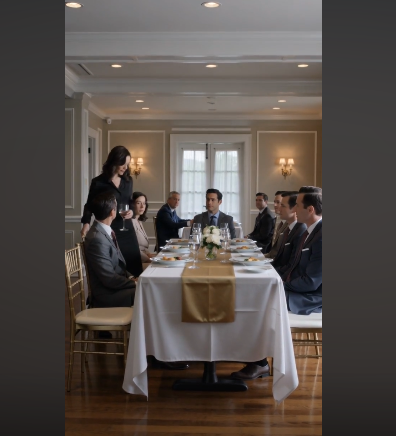
Family Called Me a Deadbeat—Then My Sister’s Husband, a Highly Decorated Navy Officer, Saluted Me
“YOU’RE EMBARRASSING THIS FAMILY,” MOM SAID IN FRONT OF EVERYONE. EVEN MY BROTHER SNEERED. “DEADBEAT.” THEN, AS DINNER STARTED. MY SISTER’S HUSBAND ARRIVED IN UNIFORM-AND FRONZE. HE SALUTED ME… AND SAID, “MA’AM.” DAD’S FORK CLATTERED TO THE FLOOR.
MY SISTER TURNED PALE.
My name is Regina Anderson.
I was thirty-four years old the night my family called me a deadbeat in front of a room full of people.
For years, they believed I was the daughter who never quite found her direction.
The one who “worked from home.”
The one who “consulted.”
The one who never wore a uniform, never collected medals, never framed prestigious degrees on the wall.
What they did not know was that my work sat behind systems important enough that most of the people using them would never know my name.
I had spent years in computer science, engineering, cybersecurity, and defense-related research.
Much of it confidential.
Some of it classified.
Almost none of it something I could explain over Thanksgiving dinner.
So I stopped trying.
That was how I became invisible inside my own family.
I was the oldest of three.
Our family had a very specific definition of success.
It needed evidence.
Uniforms.
Badges.
Awards.
Diplomas.
Titles you could announce at dinner.
My father spent twenty-two years in the Navy.
Retired with honors.
My mother was a high-school principal.
Structure mattered to both of them.
Discipline.
Status.
Respectable professions.
My younger brother Billy understood the assignment perfectly.
He entered law enforcement directly after high school.
Uniform.
Cruiser.
Badge.
Short answers.
Firm handshake.
Our parents loved everything about the image.
Billy could walk into Thanksgiving wearing his work jacket and Dad would look at him as though somebody had personally pinned another medal onto the family name.
My sister Jenna chose a different route, but one just as legible to our parents.
Straight A’s.
Debate.
Student government.
Top graduate program in international relations.
Then she married Adam, a Navy officer whose career advanced steadily.
That sealed it.
Jenna had become the accomplished daughter with the accomplished husband.
And then there was me.
Computer science.
Engineering.
Research internships.
Small technology companies nobody in my hometown had heard of.
Then government-adjacent security work.
Then defense contractors.
Systems analysis.
Infrastructure resilience.
Threat mitigation.
The kind of work governed by enough nondisclosure agreements that I sometimes joked I dreamed in redacted paragraphs.
It paid well.
It mattered.
People inside the field respected it.
At home?
“What exactly do you do again?”
Mom once asked.
“Nothing you’d recognize.”
I told her.
It was true.
If I said I had helped design security controls for critical infrastructure, the next question would probably have been:
“So why didn’t you just join the Navy?”
I didn’t mind being quiet.
I never needed applause.
What hurt was that my family did not simply fail to understand me.
They rewrote me.
I became:
The daughter who had not figured things out.
The one still “doing projects.”
The one who apparently never developed a real career.
At family dinners, Dad asked Billy about the precinct.
Mom asked Jenna about graduate work.
Everyone asked Adam about his latest assignment.
Then someone would turn toward me.
“You still working from home?”
“Mostly consulting.”
I would answer.
Safe enough.
Technically true enough.
I could not tell them about the secure briefings.
The restricted systems.
The projects that never appeared on public résumés.
Eventually:
I stopped expecting questions.
But I kept helping them.
That was my mistake.
When Billy got arrested after driving when he should not have been behind the wheel, I was the person who sent money for bail and later helped cover legal expenses.
He did not thank me.
Within weeks:
Family story restored.
Billy in uniform.
Incident quietly buried beneath polite silence.
When Jenna’s husband was deployed and she panicked during graduate-school finals, I stayed awake three nights helping her restructure two major papers.
She graduated with distinction.
Gave a speech.
No mention of me.
When Mom’s insurance unexpectedly failed to cover a hospital procedure:
Almost nine thousand dollars.
She called me crying.
Mom almost never cried.
“Don’t worry.”
I said.
I paid it.
She never brought it up again.
I did not do those things because I wanted credit.
At least that was the story I told myself.
I said:
Love means showing up.
Even when people don’t notice.
I did not want bitterness to make me cold.
So I kept giving.
And my family kept taking.
Meanwhile, their language about me became more casual.
More dismissive.
Billy said at one dinner:
“Some of us have to wake up for real work.”
Mom laughed.
Dad began sending me job postings.
Full-time “real jobs.”
Positions I was overqualified for.
Salaries that would have cut my income dramatically.
He thought he was helping.
That somehow hurt more.
Jenna rarely mocked me directly.
Her exclusion was quieter.
Bridal shower:
Not invited.
Promotion dinner:
Not invited.
Pregnancy announcement:
I found out through a cousin’s social-media post.
That was when I began recognizing the pattern.
If your life did not look impressive in the way our family understood:
You did not belong in the official story.
Still:
I showed up.
Birthday gifts.
Holiday dinners.
Questions about everyone else’s lives.
Polite listening.
One day, Adam asked:
“What kind of work do you actually do?”
A real question.
I looked at him.
“Security systems.”
“What kind?”
“Threat mitigation.”
His expression changed slightly.
“Cyber?”
“Something like that.”
He nodded.
Did not press.
He understood enough to recognize when someone was telling him everything they were allowed to tell him.
I thought that moment would disappear.
It didn’t.
A year before everything finally broke, Billy made sergeant.
Big party.
Banners.
Speeches.
Someone handed him a microphone.
“Thank the people who helped you get here.”
Billy thanked:
Mom.
Dad.
Jenna.
His old lieutenant.
Several colleagues.
Not me.
I had helped keep one of the worst mistakes of his life from defining his future.
He never mentioned me.
Driving home that night, I understood the equation.
I was useful.
Not visible.
They valued what I provided.
Not who provided it.
I told myself it shouldn’t matter.
I had:
Mentors.
Colleagues.
Good contracts.
Teams who respected me.
Yet family operates in a part of the brain where logic has very limited jurisdiction.
It still hurt.
Thanksgiving came next.
Two-hour drive through rain.
Bottle of wine in my hand.
Hope I should have stopped carrying years earlier.
I entered my parents’ house.
No one noticed.
Adam stood near the fireplace in formal Navy uniform.
Dad beside him.
Proud.
Retelling stories of Adam’s service as though they were family legends.
I remained by the coat rack holding the wine until Mom finally saw me.
“There you are.”
Then:
“Put that in the kitchen, will you?”
No hello.
No:
How was the drive?
Dinner:
Loud.
Billy.
Jenna.
Dad.
Adam.
Politics.
Careers.
Family plans.
When I tried to speak, Billy interrupted.
“So…”
“Still unemployed?”
Then:
“Or just between coffee breaks?”
Mom laughed.
Not hard.
Just enough.
The kind of laugh that tells you the insult has been accepted as family fact.
I drank water.
No one corrected him.
At the time, I had spent most of that week working late on a confidential security assessment for a major contractor.
To my family:
I might as well have been watching television in sweatpants.
I helped wash dishes afterward.
Stayed for pie.
Drove home in the rain.
The problem wasn’t that they didn’t understand my work.
It was that they never tried.
That became clearer over the following months.
Dad’s birthday brunch:
I learned about it the day before.
Jenna texted:
Are you coming after all?
I checked the thread.
No invitation.
When I told her:
Didn’t know about it.
Her reply:
👍
I attended anyway.
Dad opened a ceremonial plaque from Adam.
He became emotional.
“This means a lot.”
My gift:
A signed first edition of a naval-history book Dad quoted constantly.
He glanced at it.
Set it aside.
Billy said something about certain gifts collecting dust.
More laughter.
I sat there.
Again.
Then:
Adam’s promotion dinner.
Formal.
Important.
I was not invited.
I found out because the caterer texted the wrong Regina.
When I explained:
“Oh, sorry.”
She said.
“I thought you were one of the sisters.”
I did not correct her.
I stayed home.
Worked.
Ordered takeout.
Reviewed internal audits that would eventually help shape policy.
The next morning:
Photos online.
Dad giving a toast.
Mom emotional.
Billy with his badge.
Jenna beside Adam.
Family.
Accomplished.
Respectable.
I did not appear in the caption.
By then, my family had stopped merely misunderstanding me.
They had edited me out.
Then came Jenna’s birthday dinner.
Rented banquet hall.
Polished floor.
Gold table runners.
Military colleagues.
Graduate-school friends.
Extended family.
My invitation came two days before.
Group text.
Obligation disguised as inclusion.
I nearly declined.
I had a project deadline Monday.
But something made me go.
I bought Jenna a hardcover book she once mentioned.
Simple blue paper.
No bow.
Arrived fifteen minutes early.
Mom spotted me.
“You came.”
There was surprise in her voice.
Not joy.
I held out the gift.
She took it.
Then leaned closer.
“Just don’t make tonight about you.”
I stared.
“What?”
“Don’t get sensitive.”
“It’s Jenna’s night.”
Then:
“We already have enough freeloaders in this family.”
Before I could process that:
Billy walked past with a drink.
“Look who left her apartment.”
He smirked.
“Deadbeat made it.”
Several people laughed.
Not loudly.
Enough.
I walked away.
Found a seat near the back.
Club soda.
Strangers around me.
Dinner line formed.
Military people unconsciously clustered near one another.
Family near the head table.
I waited.
Filled my plate.
Sat near a window.
Adam had not arrived.
Everyone discussed his promotion.
Mom said it repeatedly.
Dad praised his leadership.
Jenna spoke about how much people trusted him.
I ate salad.
Said nothing.
Then the doors opened.
Adam walked in.
Formal Navy uniform.
Decorations aligned across his chest.
The room shifted.
People noticed.
He scanned the tables.
Then:
Saw me.
Stopped.
Straightened.
Walked directly toward my table.
At first I thought I was imagining the seriousness in his face.
Then he stopped several feet away.
“Ma’am.”
Clear.
Loud.
And saluted me.
Silverware touched plates.
Conversation died.
Someone inhaled sharply.
Dad dropped his fork.
Jenna froze.
Billy stared.
The gesture was formal.
Deliberate.
Directed at:
Me.
I returned a restrained acknowledgment.
Adam lowered his hand.
“Wasn’t expecting to see you here.”
“Likewise.”
He glanced toward the empty chair beside me.
“May I?”
I nodded.
He sat.
The room did not immediately recover.
Nobody understood.
Why would the decorated officer they treated as a family benchmark publicly recognize the woman they called a deadbeat?
Adam offered no explanation.
Neither did I.
Jenna approached.
Stiff smile.
“You made it.”
“Wouldn’t miss it.”
Adam replied.
She squeezed his shoulder.
Walked away.
Dad did not speak to me afterward.
Mom didn’t either.
Billy kept staring at Adam as though trying to solve an equation.
I stayed until cake.
Watched the recalibration happen in real time.
Voices quieter.
Fewer jokes.
People avoiding my eyes.
Whispers behind napkins.
For the first time in years:
They did not know how to describe me.
That silence felt better than an apology.
I left.
No goodbye.
Cold air outside.
Car.
Locked doors.
Stillness.
No crying.
No anger.
Just one word repeating in my head.
Ma’am.
Not because the title itself mattered.
Because of who said it.
And how.
Recognition from someone who understood enough about my field to understand what I could not say.
A week later:
Jenna texted.
What exactly do you do?
I stared.
Did not answer.
What could I say?
I help evaluate systems your husband’s work may depend on?
I contribute to programs that do not appear in public records?
Even that crossed lines I would not cross.
The truth was simpler.
Adam knew just enough.
Over several years, I had worked on high-level security assessments, infrastructure resilience, remote systems reviews, and secure communications projects.
One of those projects intersected indirectly with systems his unit relied upon.
He had encountered my name in professional context.
Not every detail.
Enough.
When he saw me:
He knew.
That changed something inside me.
Not because I finally received approval from a man in uniform.
Because his recognition forced me to see how much disrespect I had accepted.
The jokes were theirs.
The exclusions were theirs.
The false narrative was theirs.
But my constant shrinking?
That part belonged to me.
I had tolerated every remark because explaining was difficult.
I had smiled through humiliation because arguing seemed pointless.
I continued showing up after exclusion because being forgotten felt less painful than openly rejected.
Silence eventually became permission.
I had given a lot of it.
Mom called.
“Things got tense.”
“We should have dinner.”
“Talk things through.”
As though years of dismissal were one awkward misunderstanding.
I did not return the call.
Jenna sent:
Adam won’t tell me much, but I think I messed up.
If you ever want to talk.
I read it.
Deleted it.
Not revenge.
Not punishment.
I simply had no energy left to translate myself.
Easter brunch invitation arrived.
I ignored it.
Then:
Please let us know.
Mom is stressed.
Ignored.
Easter morning:
Family thread.
Billy grilling.
Beer.
Jenna with Mom.
Dad making a toast.
Caption:
STRONG FAMILY. STRONGER TRADITIONS.
I muted the thread.
That evening:
Jenna.
Did we really do something that bad?
No response.
Then the usual sequence began.
Mom sent a childhood scrapbook photo.
“Look what I found.”
“Your science project.”
“You were always our little genius.”
No acknowledgment.
No apology.
No mention of:
Deadbeat.
Freeloader.
Years of exclusion.
Just nostalgia.
Billy posted a training photo.
Caption:
Some of us serve.
Some of us are too busy for family.
I recognized the message.
Did not engage.
Jenna tried again.
Ignoring people isn’t a solution.
Then:
You’re being dramatic.
That word.
Dramatic.
The family emergency brake whenever I stopped being agreeable.
I did not argue this time.
Mom sent a long message.
Family sticks together.
Everyone makes mistakes.
We can’t change the past.
Don’t throw away family over one bad night.
One bad night.
Years compressed into one convenient evening.
I went back to work.
During the day:
Contractor meetings.
Systems reviews.
Analyst interviews.
At night:
Reports.
Risk modeling.
Briefing material.
People with serious responsibilities used the protocols my teams built.
Nobody in those rooms needed me to show them a trophy.
That was enough.
I started filling my calendar with people who actually knew me.
Colleagues.
Mentors.
Friends.
Quiet dinners.
Weekends.
No waiting for invitations.
No checking family group chats.
Their absence did not create emptiness.
It created space.
By midsummer:
Two long-term job offers.
One remote.
One requiring relocation.
I chose the move.
New state.
New organization.
New chapter.
LinkedIn announcement:
More than two thousand reactions.
Former colleagues.
Classmates.
Mentors.
Congratulations.
Billy:
Nothing.
Jenna:
Nothing publicly.
Mom:
Silence.
A week before moving:
Card.
No return address.
Jenna’s handwriting.
I think I finally understand.
I’m sorry for all the times I didn’t ask.
I’m sorry for not seeing what was directly in front of me.
I know it may be too late.
I’m proud of you.
And I hope someday I can earn back even part of your trust.
No defense.
No explanation.
I placed it inside my desk drawer.
Did not frame it.
Did not throw it away.
Maybe someday.
Maybe not.
The new agency occupied an unremarkable industrial building.
Gray carpet.
Minimal signage.
Nothing glamorous.
Inside:
Serious work.
Quiet people.
No one needed to advertise importance.
Three weeks after arriving:
I was asked to lead a special security review.
Two-week deadline.
High stakes.
Fourteen-hour days.
Early Sundays.
No micromanagement.
Only:
We trust you.
Handle it.
I did.
The report identified three critical weaknesses others had missed.
Two were addressed almost immediately.
The third prompted a broader procedural rewrite.
The following Monday, my director stopped me in the hallway.
“We’re moving you up.”
“Because of the report?”
“Because of how you handled it.”
New title:
Lead systems adviser.
Not bad for a woman whose brother thought she worked in customer support.
By autumn, apparently the family narrative began cracking.
I heard this secondhand.
Another dinner.
Another joke about me.
Adam interrupted.
“You do know what she actually does, right?”
One question.
Room quiet.
Dad stopped talking.
Billy reportedly left early.
I felt no triumph.
Just neutrality.
For years, their equation had been:
Quiet = unsuccessful.
Remote work = unserious.
No uniform = no service.
No public title = no authority.
Adam introduced new information.
The equation failed.
Meanwhile, my own life kept growing.
Closed professional summits.
Panels on information integrity.
Supply-chain resilience.
Secure operating environments.
At one event:
Phones stayed outside.
Names limited.
No public marketing.
I presented under restricted identification.
Afterward:
Three women approached.
Questions.
Connections.
One eventually asked for help preparing a proposal.
I mentored her.
Months later:
She joined one of the strongest defense-analytics organizations in the country.
That felt better than being invited to Easter brunch.
I began protecting one hour every Friday.
Mentorship.
If somebody booked it:
They got my full attention.
If nobody did:
I wrote.
Systems.
Leadership.
Risk.
How quiet people get overlooked.
How good organizations fail when they mistake confidence for competence.
Then one winter evening:
Email.
Adam.
No subject.
Just wanted you to know they’re starting to listen.
Slowly.
But they are.
I did not reply.
I also did not delete it.
Around that time, a junior analyst asked:
“Does it ever get easier?”
I thought.
“It gets different.”
I said.
“And you get better at trusting your own weight.”
She nodded.
Not fully understanding yet.
That was fine.
Confidence usually arrives after you need it, not before.
Almost spring:
Jenna emailed again.
I know you don’t owe me a reply.
I’m sorry for everything.
I left it unread for two days.
Then answered.
What exactly are you sorry for?
Her reply came quickly.
For believing what was easier to believe.
For letting everyone minimize you because it made the rest of us comfortable.
For laughing when I should have asked.
For not knowing how much you carried.
For never trying to find out.
No emoji.
No “but.”
No:
You misunderstood us.
I agreed to a phone call.
Two nights later:
Silence at first.
Then:
“I should have seen it.”
Jenna said.
“Adam told me enough after the banquet.”
“Not details.”
“He couldn’t.”
“But he said he’d seen your name connected to secure work.”
“That if I understood even half of it…”
“I never would have called you a deadbeat.”
“You didn’t.”
I said.
“Billy did.”
“I didn’t stop him.”
She answered.
“That matters too.”
Yes.
It did.
Then Jenna told me something I didn’t know.
On the drive home after her birthday:
Adam could not stop talking about the salute.
“He said you deserved that respect more than plenty of people with visible rank.”
I sat silently.
Jenna continued.
“I realized how much I relied on the easy version of you.”
“Works online.”
“Has projects.”
“Doesn’t do much.”
“I never asked.”
“And when Mom or Billy said things…”
“I stayed quiet.”
Then:
“I’m sorry.”
I took a breath.
“I’m not angry.”
I said.
“But I’m not who I was either.”
“I don’t have space anymore for managing everyone’s comfort.”
“I understand.”
“If we have a relationship…”
“No digs.”
“No pretending the past didn’t happen.”
“And when somebody else minimizes me…”
“You do not sit silently.”
“Okay.”
No argument.
No bargaining.
We talked another twenty minutes.
Carefully.
She had begun volunteering with an organization helping military spouses transition into civilian life.
“It turns out…”
Jenna said.
“A lot of people do invisible work.”
“Sound familiar?”
“A little.”
I said.
After that:
Occasional calls.
Articles.
Podcasts.
Small exchanges.
No instant reconciliation.
No dramatic healing.
Something more credible.
Respect being rebuilt slowly.
At one point, Jenna asked:
“Would you ever come to another family dinner?”
“Not now.”
“Okay.”
No pressure.
Then:
“You’d be welcome if you ever wanted to.”
That mattered because she was not asking me to return to the old role.
She was offering a new one.
I sent her a photograph from a leadership panel.
Four women.
Small plaque.
Only initials.
No public project name.
She replied:
They’re lucky to have you.
I did not need the validation.
But it mattered differently.
Because she was finally looking at me without comparing herself.
These days:
My life is quiet.
Not small.
There is a difference.
The work remains confidential.
Names shortened.
Projects restricted.
People sometimes enter meetings whose public biographies say almost nothing about what they actually know.
I like that environment.
People listen when you demonstrate competence.
Not when you show them enough symbols.
My office has no view.
No impressive skyline.
Just:
Clean light.
Desk.
One framed photograph of a coastline from a trip I took alone.
Inside one drawer:
Jenna’s note.
Folded.
Still there.
We talk occasionally.
Not close.
But real.
I have not attended a full family gathering since the birthday dinner.
Maybe I never will in the old way.
I did see my parents once.
Unexpectedly.
I was speaking at a small professional panel in Washington.
Restricted attendance.
Agency people.
Contractors.
Technical leadership.
A logistics coordinator happened to be the daughter of an old neighbor.
Somehow:
My parents learned about it.
I walked into the room that morning with coffee and notes.
Then saw them near the back wall.
Mom.
Dad.
They did not wave.
Did not interrupt.
Just listened.
I doubt they understood much of the technical content.
That wasn’t the point.
They stayed.
Afterward:
Dad waited for the hallway to clear.
Walked toward me.
“You looked like you belonged up there.”
I nodded.
“I did.”
He looked at me for a long second.
“We didn’t know.”
“I know.”
I said.
“That was the problem.”
No hug.
No dramatic apology.
No tears.
But for the first time:
My father looked at me as somebody he did not need to categorize.
He simply respected what he had seen.
Billy never reached out.
That once would have hurt.
Now:
It doesn’t.
Some people build their identity by standing above others.
When you remove yourself from underneath them, their reaction is not your responsibility.
Adam and I occasionally email.
Professional mostly.
Once he asked for resources for an officer considering a move into private-sector security work.
I sent several recommendations.
Then added one line.
And thank you for that night.
His response:
Wasn’t doing you a favor.
Just showing the room who was actually holding part of the structure up.
I read that twice.
Real respect does not need much language.
It changes the temperature anyway.
When I remember Jenna’s birthday now:
I don’t remember Billy calling me a deadbeat first.
I remember the silence after Adam entered.
Dad’s fork touching his plate.
Mom staring.
Jenna frozen.
The room suddenly forced to confront the possibility that the story they told about me had never been true.
The salute mattered.
But not because uniforms automatically confer truth.
My family happened to trust that symbol.
So when someone from the world they respected recognized me, their certainty broke.
That was all.
The real transformation came afterward.
When I stopped waiting for their revised opinion.
When I stopped financing relationships that did not respect me.
When I stopped accepting late invitations as proof of love.
When I learned that walking away did not make me cold.
It simply stopped the bleeding.
I never wanted revenge.
I did not expose classified projects at family dinner.
I did not list salaries.
Did not send résumé screenshots.
Did not make Billy feel small so I could feel large.
I simply stopped volunteering to be the small person in everybody else’s story.
That was enough.
Sometimes justice is not a courtroom.
Not an inheritance.
Not someone losing their job.
Sometimes it is a quiet room.
Someone everyone respects walks in.
Looks past the people performing importance.
Sees the person nobody noticed.
And says one word.
“Ma’am.”
Then the whole story has to be rewritten.
I no longer need my family to understand every detail of my work.
I do not need them to know which systems I helped strengthen.
Which reports I wrote.
Which briefings used my analysis.
Those things belong where they belong.
What I need is simpler.
Basic respect.
Real questions.
No jokes disguised as family affection.
No silence when somebody reduces me.
Jenna learned that.
My parents are beginning to.
Billy may never.
That is acceptable.
My life no longer depends on unanimous recognition.
It belongs to me.
A quiet life.
A serious one.
Built without applause.
And finally lived without apology.
