My brother asked me to watch his eight-year-old daughter for four days while he
My Brother Asked Me To Watch His 8-Year-Old Daughter for 4 Days. What She Asked at Breakfast Brok…
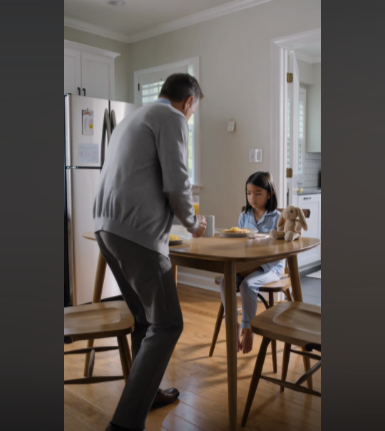
MY BROTHER WENT ON A TRIP AND ASKED ME TO LOOK AFTER HIS 8-YEAR-OLD DAUGHTER. I MADE HER BREAKFAST, BUT SHE JUST STARED AT THE PLATE. I ASKED, “WHY AREN’T YOU EATING?” SHE WHISPERED, “AM I IN TROUBLE?” AND BURST INTO TEARS
My brother called on a Thursday morning while I was pruning the rose bushes outside my house.
I almost didn’t answer.
The phone was inside.
My coffee was still hot.
And the roses had barely been touched since my wife Helen died two Octobers earlier.
But something made me put down the clippers.
When I reached the kitchen, Dennis’s name was flashing on the screen.
I answered.
“Frank.”
His voice was tight.
Dennis never clipped his words unless something was wrong.
Or he needed something.
Usually both.
“Hey.”
“I need a favor.”
I leaned against the counter.
“What is it?”
“Work situation.”
“Big one.”
“I need to fly to Denver tonight.”
“Back Sunday.”
Then:
“Can Maya stay with you?”
Four days.
My chest warmed despite everything between Dennis and me.
I had not seen my niece in three months.
She turned eight in April.
I mailed a birthday card because Dennis told me that weekend was not good for visitors.
“Of course.”
I said.
“What time?”
“I’m already on 71.”
“Twenty minutes.”
He hung up before I could ask:
School.
Medication.
Allergies.
Whether she still slept with the stuffed rabbit Helen gave her two Christmases earlier.
Twenty minutes was not much time.
I cleared the guest room.
Boxes I had avoided sorting since Helen died went into my office.
Clean sheets.
Fresh towel.
Juice boxes in the refrigerator.
At 4:42, Dennis’s truck entered my driveway.
Maya stepped out of the passenger side.
Backpack.
Small overnight bag.
And the rabbit.
One eye missing.
I remembered sewing that eye back once.
Apparently it had lost the argument again.
Maya looked smaller than I remembered.
That bothered me immediately.
Children usually seem bigger every time you see them.
Maya seemed diminished somehow.
“Hey there, sweetheart.”
She walked toward me.
Stopped close.
Did not hug.
Held the rabbit tightly against her chest.
Dennis pulled her bag from the truck.
“Clothes for four days.”
He handed it to me without meeting my eyes.
“She knows the rules.”
Then:
“No staying up past eight.”
“No snacks between meals.”
I looked at him.
New lines around his mouth.
Jaw fixed.
It reminded me unpleasantly of our father.
“Dennis.”
“Come inside.”
“Have coffee before you go.”
“Can’t.”
“Traffic.”
He touched Maya’s hair once.
Brief.
Mechanical.
“Be good.”
Then he was back in the truck.
Maya had not even answered before he reversed out.
She and I stood on the front walk.
Watching the truck disappear.
I looked down.
“You hungry?”
She shook her head.
No words.
That was fine.
I spent thirty-one years in pediatric emergency medicine.
One thing children teach you quickly:
You cannot force them to eat.
You cannot force them to talk.
You wait.
You pay attention to everything else.
That first night, Maya watched cartoons while I made pasta.
She ate half a bowl.
Moved the rest around.
I didn’t comment.
Kids have bad appetites.
New environments.
Tired days.
What bothered me was where she looked.
The kitchen doorway.
Not the television.
Not me.
Not her food.
The doorway.
Constantly.
Like she expected someone to come through it.
I slept lightly.
Friday morning, I made scrambled eggs.
Cheese.
Too much butter.
Helen used to say butter was my answer to every culinary question.
I poured orange juice.
Set the plate in front of Maya.
Sat opposite her with coffee.
“You want toast too?”
Nothing.
Her hands stayed in her lap.
She stared at the eggs.
Not like a child who hated breakfast.
Like a child who wanted breakfast and was unsure whether touching it was permitted.
“Maya.”
She looked up.
“Go ahead.”
Her hand moved toward the fork.
Stopped.
Returned to her lap.
Something cold settled in my chest.
I placed my coffee down carefully.
“Hey.”
“Everything okay?”
She looked at me.
Dark eyes.
Careful.
Older than eight-year-old eyes should look.
“Uncle Frank?”
“Yeah?”
“Am I in trouble?”
I went completely still.
“Why would you be in trouble?”
Her lower lip moved slightly.
“I didn’t finish my dinner last night.”
I breathed in.
Slowly.
Thirty-one years of trauma rooms had taught me that adults’ panic becomes children’s panic very quickly.
So I kept my hands relaxed.
My face neutral.
Voice ordinary.
“You’re not in trouble.”
I told her.
“You’re staying with me.”
“You eat as much or as little as you need.”
“If you are hungry later…”
“You tell me.”
“No one is going to punish you for leaving food.”
She looked at the plate again.
Then picked up the fork.
And ate.
Fast.
Much too fast.
The first plate disappeared.
Then she looked toward me.
Not satisfied.
Relieved.
That was the part that frightened me.
Relief did not belong on an eight-year-old’s face because an adult had given her permission to eat breakfast.
I made more eggs.
She finished those too.
After Maya went to wash up, I remained at the kitchen table.
Outside:
Sprinkler.
Passing car.
Ordinary Columbus morning.
Inside me:
Thirty-one years of instincts turning on.
I was sixty-three.
I had delivered unbearable news to parents in hospital hallways.
I had helped examine children with accidental injuries and children whose injuries were not accidental.
I knew fear when I saw it.
Maya was afraid.
I went into my office.
Bottom desk drawer.
Yellow legal pad.
A habit from my final years of practice.
I opened to a blank page.
Started writing before I consciously decided to.
Subject:
Maya.
Female.
Age eight.
Observed significant hesitation before initiating eating despite visible hunger.
Asked whether she was “in trouble” because she did not finish dinner the night before.
Appeared visibly relieved after being told food was freely available.
Consumed two servings rapidly.
Then:
Father’s drop-off instruction:
“No snacks between meals.”
I read everything once.
Set down the pen.
Refilled my coffee.
Then called my son Thomas in Austin.
He answered quickly.
“Dad?”
“What’s wrong?”
“When did you last see Maya?”
Pause.
“July.”
“That cookout.”
“How did she seem?”
Another pause.
Longer.
“Quiet.”
“I figured she was tired.”
“Dennis was tense too.”
“What do you mean?”
Thomas exhaled.
“He has rules.”
“A lot.”
“Don’t interrupt.”
“Don’t make noise.”
“Finish the food or something happens.”
“I figured he was being strict.”
I closed my eyes.
“She is here for the weekend.”
I said.
“I need you available.”
“Dad…”
“What is happening?”
“I don’t know yet.”
“But I’m paying attention.”
Later, I found Maya sitting on the guest bed with a notebook.
Drawing.
I knocked on the doorframe.
“What are you making?”
She held it up.
House.
Dark walls.
Small windows.
Tree drawn with heavy black lines.
Gray sky.
One small figure inside a window.
“Your house?”
She nodded.
“That’s a good tree.”
Maya studied the page.
“Not really.”
“It lost all its leaves in August.”
“Dad says it’s dead.”
I sat on the edge of the bed.
“You draw at home?”
She hesitated.
“If everything else is done.”
“Homework?”
“Chores.”
Then, quieter:
“Being quiet.”
That answer stayed with me.
I kept my questions simple.
Non-leading.
Ordinary.
“What is your room like?”
“Okay.”
She shrugged.
Then:
“I have a lock.”
I kept my face still.
“A lock?”
“Dad put one on the door.”
“Outside?”
“So I don’t wander at night.”
She said it like every bedroom had one.
Like it was part of the architecture.
I stood.
“Want to help me make lunch?”
Her entire expression changed.
“Yes.”
We made sandwiches.
She cut them carefully into triangles.
Helen used to do that.
While Maya worked, I kept conversation light.
School.
Teacher.
Favorite books.
Friends.
She told me about Kayla.
Best friend.
Moved to Cincinnati.
“You two talk?”
Maya looked down.
“I’m not supposed to call.”
“Why?”
“It distracts from homework.”
Again:
Normal tone.
Unnormal content.
That afternoon, I called Patricia Okafor.
Patricia had spent nearly twenty years supervising child-protection cases in Franklin County.
We worked around the same children more times than either of us liked.
She answered:
“Frank Coleman.”
“What are you doing calling me on a Friday?”
“You’re retired.”
“I have a situation.”
Silence.
Then:
“How unofficial?”
“My niece is staying with me.”
Patricia’s tone changed.
“Tell me.”
I went outside where Maya could not hear.
Food behavior.
Fear of punishment.
External bedroom lock.
Patricia did not interrupt.
That was when I knew she was concerned.
Finally:
“Frank…”
“The lock alone concerns me.”
“Combined with food anxiety…”
“I know.”
I said.
“I know what it looks like.”
“I need to do this correctly.”
“Document.”
“Do not interrogate.”
“Do not lead.”
“If she volunteers something, preserve exactly what she says.”
“Photograph visible injuries if you see any, but don’t manufacture an examination.”
“I know.”
“You know clinically.”
Patricia replied.
“This is family.”
“Different rules emotionally.”
Then:
“Don’t wait too long.”
Saturday morning, Maya was awake before six.
I found her sitting at the kitchen table in the dark.
Pajamas.
Rabbit.
Hands folded.
Not playing.
Not getting food.
Simply waiting.
I switched on one small light.
Made oatmeal.
Put brown sugar on the table.
“As much as you want.”
She added a heroic amount.
We ate as sunrise entered the kitchen.
She told me about a second-grade book involving a girl who could speak to horses.
I told her about Walter, the beagle Helen and I owned when Thomas was young.
Walter liked sitting on the mail as it came through the slot.
Would not move.
Maya laughed.
A real laugh.
The first since she arrived.
Later, I found my old Canon camera.
Helen bought it at an estate sale years earlier.
She used to tease me:
“You only photograph medical evidence.”
“Learn to photograph something beautiful.”
So that morning:
I did.
Maya in the yard.
Rabbit under one arm.
Maya at the bird feeder.
Maya holding a roly-poly bug in both hands.
Then, when her sleeve moved upward:
A bruise on her right forearm.
Fading.
Yellow-green.
The general shape immediately concerned me.
I did not question her about it.
I photographed what was visible in an ordinary context.
Then went inside.
Wrote:
Bruising observed on right forearm.
Fading coloration.
Pattern concerning for possible grip-type restraint.
Age appears older rather than acute.
No spontaneous complaint from child.
I stopped there.
Because medical experience teaches another important lesson:
Concern is not certainty.
You document what you see.
Not what you want it to prove.
That evening, Maya fell asleep during a movie.
I carried her to bed.
Put the rabbit under her chin.
The bedroom door remained open.
No lock.
No outside bolt.
Just:
Yellow walls.
Open doorway.
Window cracked two inches.
Child asleep.
I called Thomas.
“She is scared.”
I said.
“You can see it everywhere once you know to look.”
“I know.”
Thomas answered.
“What are you going to do?”
“Whatever protects her.”
Sunday morning:
Biscuits.
Helen’s old biscuit cutter.
Butter.
Honey.
Maya ate four.
She looked happy.
Then Dennis’s truck entered the driveway at 11:30.
The change was immediate.
The happiness disappeared from Maya’s face.
She packed herself.
Backpack.
Rabbit.
Shoulders pulled inward.
Voice gone quiet.
Eight years old.
Already practiced at becoming smaller.
Dennis knocked twice.
Then entered.
“Maya.”
“Ready?”
She nodded.
He looked at me.
“She behave?”
“She was wonderful.”
I said.
“Stay for coffee.”
“We need to talk.”
“Can’t.”
He had his keys in his hand already.
“Say goodbye.”
Maya faced me.
“Thank you for having me, Uncle Frank.”
Formal.
Rehearsed.
Nothing like the child who laughed about Walter the beagle.
I knelt.
Hugged her.
Her arms stayed around me one second longer than necessary.
Only one.
Then:
Gone.
I stood in the kitchen.
Biscuit cutter on the counter.
Honey along one edge.
And called Patricia.
By Monday:
Three copies of my documentation.
One for child protection.
One for counsel.
One stored securely.
Then:
Ellen Marsh.
Family-law attorney.
Twenty-two years of experience.
I had seen her in custody cases when I was still practicing.
Smart.
Thorough.
Never theatrical.
She read my file for several minutes.
“This is careful work.”
“I had practice.”
She examined the bruise photograph.
“You documented this as concerning for grip restraint.”
“Yes.”
“But not definitive.”
“Correct.”
“The color is consistent with an older injury.”
“Yes.”
She moved to the behavioral notes.
“The food.”
“The door lock.”
She stopped there.
“The external lock concerns me most.”
“Me too.”
“Do you know duration?”
“No.”
“Any prior documented concerns?”
“Not from me.”
Ellen leaned back.
“If we proceed…”
“Dennis will know immediately who started it.”
“I understand.”
“This will become a family war.”
“I know.”
“You have been in family court.”
“Not as petitioner.”
She stared at me.
I stared back.
“If Maya goes home and I’ve done nothing…”
“I won’t be able to live with that.”
“I don’t care about keeping the family comfortable.”
“I care whether she’s safe.”
Ellen picked up her phone.
“Clear my three o’clock.”
The investigation formally opened.
Patricia arranged an unannounced home visit.
School staff were contacted through proper channels.
Dennis learned about it earlier than we expected.
Before Patricia even reached the house:
Renee arrived at mine.
Dennis’s girlfriend.
Expensive coat.
Dark hair.
Anger radiating from the porch.
“Frank.”
“We need to talk.”
“I don’t think we do.”
She walked inside anyway.
“I know about the report.”
I stayed near the doorway.
“Dennis is falling apart.”
“You have any idea what you’ve done?”
“I have a very specific idea.”
“He’s trying.”
Renee’s hand shook when she pointed at me.
“He has had terrible years.”
“Diane left.”
“He had to rebuild his life.”
“He locks Maya’s bedroom because she sleepwalks.”
“It’s safety.”
“She is afraid to eat without permission.”
I said.
“Kids exaggerate.”
“She ate at my kitchen table like she believed food might disappear.”
“I’ve treated children with nutritional deprivation.”
“I know the warning signs.”
“You’re punishing Dennis.”
She said.
“You’ve always had issues with him.”
“That is irrelevant to what I observed.”
“I’ll tell the court you’re estranged.”
“That you barely know Maya.”
“Do that.”
I said.
“I’ll provide the documentation.”
Then:
“The bruise?”
Her expression changed.
“Photographed.”
“Clinically reviewed.”
“Concerning for grip-type restraint.”
“It could be from anything.”
“It came from something.”
I replied.
“The investigation can determine what.”
For several seconds:
Neither of us spoke.
Then Renee said quietly:
“If you continue…”
“You will never see Maya again.”
“Dennis will make sure.”
“He can try.”
Renee picked up her bag.
“You don’t know everything.”
“I know enough to keep asking.”
She left.
I called Thomas.
“Dennis knows.”
“Renee was here.”
“What did she want?”
“Me to stop.”
“Are you?”
I pictured Maya sitting in my kitchen at six in the morning, waiting in darkness for someone else to decide whether the day could start.
“No.”
The home visit happened Thursday.
Patricia called afterward.
Professional voice.
No wasted words.
“Cabinets are locked.”
“Combination locks.”
“One accessible cabinet contained cereal and granola bars.”
I sat down.
“Maya’s bedroom?”
“Slide bolt outside.”
“Recently installed.”
“The room is sparse.”
Then Patricia paused.
“Frank…”
“Her weight.”
“Fifteenth percentile.”
“Medical evaluation ordered.”
“Teacher reports she’s been carrying crackers in her pockets.”
“Keeping apple cores.”
I lowered myself all the way onto the kitchen floor.
“She is hoarding.”
“Yes.”
“The teacher noticed earlier.”
“Thought it was a quirk.”
“It isn’t.”
“No.”
Patricia said.
“It isn’t.”
Dennis retained counsel.
Gerald Holt.
Experienced.
Aggressive without being foolish.
His counterstrategy was predictable:
Frank barely knows Maya.
Frank is estranged from Dennis.
Frank holds old family resentment.
Frank is overinterpreting normal childhood behavior because he is a former pediatric physician.
And:
Perhaps the bruise happened at Frank’s house.
Ellen read the motion.
“We expected this.”
She said.
“We need people who observed Maya before she stayed with you.”
Teacher.
School counselor.
Neighbors.
Thomas flew from Austin.
Mrs. Holloway agreed to testify.
Twenty-three years teaching second grade.
And she had records.
“I’ve been writing things down.”
She told us.
Since the beginning of the school year:
Maya pocketing food.
No packed lunch.
Free school meal every day.
Extra crackers disappearing into pockets.
School staff initially wondered whether the family lacked money.
Mrs. Holloway tried discussing it with Dennis.
His explanation:
“School lunch is enough.”
“Extra food makes kids soft.”
She wrote that down.
More than once.
The school counselor, David Rearen, had already made a mandatory report before Maya ever stayed with me.
Observed food-hoarding behavior.
Child’s description of home meal rules inconsistent with ordinary norms.
Attempted contact with father.
Father described child as dramatic and imaginative.
Important.
Independent.
Earlier than my weekend.
Then Barbara, a neighbor near Dennis.
August evening.
Maya on the front steps after dark.
Trying the door.
Dennis’s vehicle in the driveway.
Someone eventually opened the house from inside.
Maya hurried in.
Barbara had assumed:
Child accidentally locked out.
Nothing more.
Now:
She looked ashamed.
“I should have wondered.”
“You saw what you knew how to see at the time.”
I told her.
“Tell the truth now.”
The medical evaluation came next.
Low weight percentile.
Mild nutritional deficiencies.
Growth pattern concerning for prolonged insufficient caloric intake.
Not days.
Not one weekend.
A longer pattern.
Ellen placed the report in front of me.
“Frank?”
“You okay?”
“Fine.”
I wasn’t.
But that did not matter.
Dennis’s lawyer deposed me.
Two hours.
He was good.
He pressed every vulnerable point.
“You and your brother were distant?”
“Yes.”
“You had concerns about Dennis before this?”
“General concerns about his increasing control after his divorce.”
“Specific evidence of child mistreatment?”
“No.”
“So you entered the weekend already suspicious.”
“I entered the weekend as an adult responsible for an eight-year-old.”
“You photographed her arm.”
“I documented a concerning visible finding.”
“You were not acting as her physician.”
“No.”
“I was acting as her uncle.”
Then:
“You reported your own brother to child protective services.”
“Yes.”
“Knowing it could cost him custody.”
“Knowing that doing nothing could leave Maya unsafe.”
Holt wrote that down.
“We’ll continue in court.”
The hearing was October ninth.
Franklin County Family Court.
Brown carpet.
Fluorescent lights.
Floor wax.
The sort of building where everybody entered carrying a version of a life that had gone wrong.
Thomas stayed with me the two nights before.
We ate bad takeout.
Played cards.
Barely discussed court.
Coleman men historically handled fear by discussing absolutely anything else.
The night before:
I sat inside Maya’s guest room.
Yellow walls.
Window cracked.
I looked through the photographs.
Garden.
Biscuits.
Rabbit.
My phone rang.
Unknown number.
“Frank.”
Dennis.
I nearly ended the call.
“Please don’t hang up.”
His voice was different.
No tension.
Only fatigue.
“I need you to know something before tomorrow.”
I waited.
“I’ve been in therapy.”
“Three weeks.”
He swallowed.
“My therapist asked me to write down every rule I had for Maya.”
“And why.”
“I wrote four pages.”
“Four.”
Then his voice broke.
“Every reason…”
“Every phrase…”
“Was Dad.”
“Our dad.”
“Word for word.”
I closed my eyes.
“I thought I was teaching her strength.”
Dennis said.
“I thought I was making sure she wasn’t weak.”
“The way he said we were weak.”
“I didn’t know I was becoming him.”
That did not excuse anything.
Dennis seemed to know that.
“I’m not fighting tomorrow.”
“What?”
“If the judge says Maya should stay with you…”
“I won’t fight.”
“I can’t say I’m safe for her right now.”
“I want to be.”
“But wanting isn’t enough.”
He told me therapy had helped him recognize the generational pattern.
Our father.
His father perhaps.
Rules passed down as virtue.
Fear renamed discipline.
Control renamed strength.
“Then do the work.”
I said.
“I am.”
“Do it whether the court rewards you or not.”
“I will.”
Then I told him something I had not planned to.
“Maya asked about you.”
Silence.
“She asked whether you’d be there when she went home.”
Dennis made a broken sound.
“Take care of her.”
He said.
“Please.”
Then hung up.
Some conversations are not evidence.
Some are simply between brothers.
Court began the next morning.
Holt went first.
Dennis:
Grieving father.
Divorce.
Stress.
Good intentions.
Three character witnesses.
Neighbor.
Coworker.
Pastor.
Good man.
Hard years.
Then Ellen.
Photographs.
Clinical records.
Independent school reports.
Home-visit findings.
No drama.
No exaggeration.
Facts were already heavy enough.
Then twelve seconds of audio.
Maya’s small voice.
“Am I in trouble?”
Silence afterward.
Mrs. Holloway testified.
Food hoarding since early in the school year.
Twenty-three years in second grade.
She had seen similar behavior in children who did not reliably believe food would remain available.
Counselor Rearen testified.
His report predated my weekend.
Patricia testified.
Locked cabinets.
External bedroom bolt.
Low weight.
Sparse room.
Then Dennis.
He took the stand.
Looked smaller than I had seen him since childhood.
Holt asked about:
Structure.
Rules.
Safety.
Dennis answered.
Then Ellen stood.
“Your daughter asked her uncle whether she had permission to eat.”
“Why?”
Dennis’s hands tightened.
“She had been disciplined the night before.”
“How?”
“Breakfast was restricted.”
The room seemed to contract.
“So she had not eaten since the previous evening.”
Pause.
“Yes.”
Ellen referenced the medical findings.
“Do you dispute that Maya shows evidence consistent with chronic insufficient nutrition?”
“No.”
“When did meal restriction become discipline?”
“I don’t remember.”
“After Diane left…”
“Things became hard.”
“I needed her to take rules seriously.”
“Did it work?”
Long silence.
“No.”
Then:
“Was food ever used as discipline in your childhood?”
Holt stood.
“Objection.”
Judge Katherine Welch looked toward him.
“Overruled.”
Dennis stared downward.
“Yes.”
He whispered.
“My father did that.”
Ellen stopped.
No further questions.
Dennis remained there.
Shoulders shaking.
Eyes wet.
Then said something nobody had asked him to say.
“I learned this from him.”
He looked toward no one.
“I told myself I was different.”
“But I wasn’t.”
Judge Welch called recess.
Thomas sat beside me in the hallway.
Hand on my shoulder.
Neither of us spoke.
Later, Maya was interviewed privately by a qualified forensic interviewer.
The adults did not crowd her with questions.
We received the permitted account through the court process.
When asked where she felt safe:
“At Uncle Frank’s house.”
Three words.
They landed somewhere behind my sternum.
Judge Welch took several days to rule.
When we returned:
Same carpet.
Same lighting.
Thomas behind me.
Ellen beside me.
Dennis alone across the aisle.
Renee absent.
Judge Welch reviewed the findings.
Food restriction.
Physical confinement.
Environment of fear-based discipline.
Documented nutritional concerns.
Psychological distress.
Then she looked toward Dennis.
“Your acknowledgment matters.”
She said.
“Your participation in therapy matters.”
“It does not erase what occurred.”
“It may affect what becomes possible later.”
Temporary full custody:
Granted to me.
Effective immediately.
Dennis:
Supervised visitation.
Continued therapy required.
Review in six months.
Possibility of graduated contact if progress was demonstrated and Maya’s welfare supported it.
The gavel came down.
Thomas released a breath.
Ellen touched my arm.
“It’s done.”
“No.”
I said.
“It starts now.”
Maya moved in on a Saturday.
Two bags.
Box of books.
Rabbit.
I finally learned his name.
Gerald.
I decided Gerald Holt never needed to know that.
Some things belong to a child.
Maya stood in my hallway.
Looked around carefully.
Like someone staying temporarily.
Not someone who believed she could belong.
I showed her the yellow room.
“Shelves are yours.”
“Put anything anywhere.”
“This is your room.”
She looked toward the window.
“Can Gerald sit there?”
“Gerald can have the entire windowsill.”
She placed him facing outside.
One eye watching the backyard.
The first week:
Quiet.
She ate everything.
Still watched doorways sometimes.
One night at two in the morning:
Kitchen.
Dark.
Maya sitting at the table.
I sat opposite her.
Did not switch on the light.
“Can’t sleep?”
Head shake.
We listened to a car pass.
Neighbor’s motion light turned on.
Then off.
“Uncle Frank?”
“Yeah?”
“Are we going to have biscuits again?”
“Whenever you want.”
“Can they be breakfast?”
“Regular breakfast?”
“Not special?”
I thought.
“Nothing about biscuits requires a special occasion.”
She considered this like constitutional law.
“Okay.”
Then went back to bed.
Week two:
Crackers under the nightstand.
Granola bars inside her winter coat.
Apple core wrapped inside a sock drawer.
I did not confiscate them.
Did not ask:
Why are you hiding food?
Instead:
Snack basket.
Dresser.
Crackers.
Dried fruit.
“You can keep this here.”
“In case you’re hungry at night.”
No lecture.
Basket disappeared into the nightstand the next day.
Fine.
Over several weeks:
The hidden food stopped replenishing.
A Ziploc bag became emptier.
Then stayed empty.
One morning:
Maya walked into the kitchen without Gerald.
“Can we have oatmeal?”
“The brown-sugar kind?”
Small victory.
I learned to count those.
Thomas called every other night.
Sometimes Maya spoke with him.
Short conversations.
Afterward, she held the phone carefully.
Nightmares:
Twice weekly.
Then once.
I slept lightly.
My back hated me.
I bought a better mat for the floor near her bed.
After the third nightmare, Maya said:
“You know you have a bed.”
“I know.”
“Then why do you stay here?”
“Because I want to.”
She did not argue.
In November:
Patricia called.
“Dennis completed six weeks of intensive therapy.”
“He is requesting supervised contact.”
I sat with that.
“What does Maya want?”
“She knows he is getting help.”
“She asked if he was sad.”
“She asked whether he’s learning.”
“Does she want to see him?”
“She hasn’t said no.”
“That is not yes.”
“No.”
Patricia replied.
“But she’s eight.”
“Love and fear can exist together.”
“Family bonds can remain complicated.”
“And indefinite total separation does not automatically make that complexity healthier.”
I thought about Dennis’s four pages.
Our father’s voice living inside his parenting.
“Schedule it.”
I said.
“My house.”
“I stay.”
Dennis arrived late November.
Different car.
Smaller.
He sat inside for a minute before getting out.
He looked thinner.
His jaw no longer carried our father’s shape.
Maya held Gerald.
Dennis entered.
Saw her.
Stopped.
“Maya.”
Quiet.
“Hi, sweetheart.”
“Hi, Daddy.”
He sat on the floor.
Not couch.
Floor.
Several feet away.
Made himself physically smaller.
“I am sorry.”
He said.
“I know sorry isn’t enough.”
“I’ve been learning why I did things.”
“And how to do them differently.”
“I hurt you.”
“I told myself it was discipline.”
“It wasn’t okay.”
Maya looked at Gerald.
Then Dennis.
“Mrs. Holloway says sorry means you try to change.”
Dennis nodded.
“Your teacher is right.”
“Are you trying?”
“Every day.”
The visit lasted an hour.
Cartoons.
Dog stories.
Gerald.
Dennis did not ask for forgiveness.
Did not ask:
Do you love me?
Did not demand a hug.
When time ended:
He stood.
“Goodbye, sweetheart.”
Then, near the door:
“Frank.”
I looked at him.
“Thank you.”
I thought about our childhood.
Our father’s belt.
Four pages of rules.
Maya’s locked door.
“Do the work.”
I said.
“For yourself.”
“Not visitation.”
“Not the judge.”
“For you.”
“So this stops.”
He nodded.
After he left:
Maya remained sitting on the floor.
“Is Daddy going to be okay?”
I thought.
“He might be.”
I said.
She considered it.
Then returned to her cartoon.
Perhaps that was enough for one day.
December came cold.
Leaves.
Hot chocolate.
Carol waving across the street.
Biscuits became ordinary Saturday breakfast.
The snack basket remained.
But Maya gradually stopped hiding every item.
One evening:
She entered the kitchen while I washed dishes.
Stood in the doorway.
Kids do that when they have something to say but need the adult to make room for it.
I shut off the water.
“Yes?”
She sat at the table.
Gerald rotating between her hands.
“Can I ask something?”
“Always.”
“Why did you do all this?”
“Because you’re my niece.”
“But you hadn’t seen me much.”
“That was my mistake.”
She looked toward me.
“How did you know?”
“That something was wrong.”
“Just from breakfast?”
I thought about:
Fork.
Hands in lap.
Relief.
“I spent a lot of years paying attention to children.”
I said.
“I got good at noticing when something didn’t fit.”
Then:
“And you’re very easy to care about.”
Maya looked down.
“I wrote letters.”
“For a school thank-you thing.”
“One for Mrs. Holloway.”
“One for Mr. Rearen.”
“And one for you.”
Purple crayon visible along the folded edge.
She placed it on the table.
I did not immediately touch it.
“Whenever you want me to read it.”
“Now.”
I unfolded it.
Careful second-grade handwriting.
Dear Uncle Frank,
Thank you for making eggs.
Thank you for not being scary.
Thank you for the basket.
Thank you for the biscuits.
I feel safe here.
Love,
Maya
P.S. Gerald says thank you too.
I folded the letter.
My throat felt too narrow.
“Tell Gerald he’s welcome.”
Maya smiled.
Small first.
Then real.
The same smile that came with Walter the beagle.
I placed the letter beside the dish rack.
Outside:
December darkness.
Neighbors’ lights.
Quiet street.
Nothing cinematic.
The six-month review was still coming.
Dennis was still in therapy.
Custody was temporary.
There would be evaluations.
Questions.
Possible changes.
I was sixty-three.
My back hurt.
A floor mat stayed rolled in the corner of Maya’s room.
A snack basket was still necessary, though less necessary every week.
None of this was finished.
Then I looked across the table.
Maya.
Gerald.
Warm kitchen.
Biscuit cutter still on the counter from Sunday.
“Hot chocolate?”
I asked.
“Yes, please.”
No hesitation.
Not:
Am I allowed?
Not:
Will I be in trouble?
Just:
Yes, please.
I stood and reached for two mugs.
And for that night, that was enough.
More than enough.
It was everything.
