At my brother’s birthday party, what he called a “prank” left me on the ground
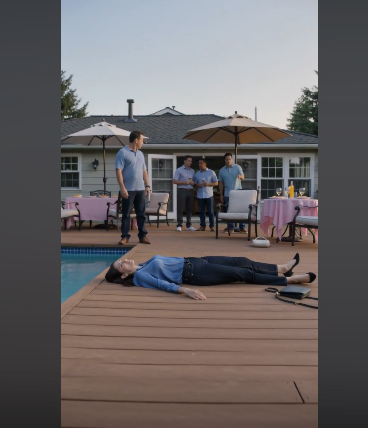
My Brother’S Prank Left Me Paralyzed—Parents Called Me Dramatic. The Mri Results Made Them Criminals
“WALK IT OFF, STOP BEING A BABY,” MY FATHER YELLED AS I LAY MOTIONLESS ON THE GROUND. MY BROTHER STOOD SMIRKING WHILE MOM ACCUSED ME OF RUINING HIS BIRTHDAY. BUT WHEN THE PARAMEDIC SAW I COULDN’T MOVE MY LEGS, SHE IMMEDIATELY CALLED FOR POLICE BACKUP.
THE MRI WOULD REVEAL…
THE DAY THEY TOLD HER TO WALK IT OFF
My name is Audrey Matthews.
At twenty-eight, I still believed there was a limit to how far my family would go before somebody finally said, Enough.
I had been wrong about that for most of my life.
The day I learned it began at my brother Jason’s thirty-first birthday party in my parents’ backyard in Massachusetts.
By sunset, I was lying beside the pool unable to feel my legs.
Jason stood over me insisting it had been a joke.
My father told me to walk it off.
My mother said I was ruining the party.
And twenty minutes passed before the first person who truly looked at me understood that I might have suffered a spinal cord injury.
People later asked whether that was the moment my family changed.
It was not.
The family had been the same for years.
That afternoon simply made the consequences impossible to hide.
Growing up in the Matthews house had taught me to doubt my own pain.
From the outside, we looked ordinary and successful.
Two-story colonial.
Trim lawn.
Family photographs every Christmas.
My father, Douglas, worked in accounting and wore seriousness like a uniform.
My mother, Eleanor, stayed home while we were young, then volunteered everywhere people might notice.
Jason was three years older than me.
Athletic.
Funny when he wanted to be.
Confident enough that adults mistook confidence for honesty.
My father’s favorite sentence was:
“Toughen up.”
He said it when I scraped my knee.
When I cried after a friend stopped speaking to me.
When I had pneumonia at thirteen and asked to stay home an extra day.
Pain, in his mind, was a test of character.
If you acknowledged it too openly, you failed.
My mother’s language was softer but the message was similar.
“Your brother never complains.”
“You are too sensitive.”
“Do not make everything bigger than it is.”
Jason learned quickly what that system rewarded.
He discovered that if he hurt me and smiled afterward, the family called it teasing.
If I reacted, the reaction became the problem.
When I was seven, he pushed me off my bicycle.
I broke my wrist.
He said I fell.
My parents believed him.
At the emergency department, Dad lectured me about balance while Mom worried about the deductible.
No one asked whether Jason had been involved.
At twelve, he locked me in the basement during a thunderstorm because he knew I was afraid of dark enclosed spaces.
I screamed until my throat hurt.
He finally opened the door and told our parents I had hidden there for attention.
They believed him again.
At fourteen, he replaced some of my shampoo with a harsh depilatory cream.
Not enough to remove all my hair.
Enough to leave patches.
I wore hats to school for weeks.
My mother said I should stop being dramatic.
My father told me hair grew back.
Jason laughed whenever he saw the hats.
At sixteen, he sabotaged my science project the night before it was due.
When I confronted him, he shrugged.
Dad said I should have kept a backup copy.
That sentence taught me more about my place in the family than any argument could have.
Jason’s behavior was unfortunate.
My reaction was irresponsible.
By eighteen, I understood distance better than confrontation.
I left Massachusetts for college.
Stayed away except holidays.
Built friendships slowly.
Became an elementary school teacher.
Started therapy in my mid-twenties after a coworker gently pointed out that apologizing whenever someone disagreed with me was not normal.
Therapy gave names to things I had treated as personality flaws.
Hypervigilance.
Invalidation.
Golden-child and scapegoat patterns.
Boundary erosion.
I learned to breathe before answering.
To ask myself:
What actually happened?
Not:
What will my family say happened?
Still, family ties are complicated.
You can know a system is unhealthy and still feel guilt when your mother says:
“It would mean so much if you came.”
That was how I ended up driving two hours for Jason’s birthday.
I had not seen them in six months.
That felt like progress.
I booked a hotel rather than stay in my childhood bedroom.
Another boundary.
Small but important.
Mom called the week before.
“We’re doing a backyard barbecue.”
“Your father finished the new pool deck.”
“Everyone will be there.”
I knew what everyone meant.
Jason’s friends.
People who thought his cruelty was charisma.
Relatives who had learned to laugh because resisting the family script created discomfort.
“Please dress nicely.”
Mom added.
“Your father notices these things.”
I almost said no.
Instead:
“I’ll be there at two.”
The plan was simple.
Arrive on time.
Stay three hours.
Give Jason a card.
Drink water.
Leave before people became drunk.
No arguments.
No old stories.
No emotional archaeology.
Just survival.
I wore dark jeans.
A blue blouse.
Comfortable flats.
The outfit passed Mom’s visual inspection when she opened the front door.
Barely.
“Audrey.”
She air-kissed my cheek.
“You made it.”
“Everyone’s out back.”
Inside, the living room looked like Christmas.
Expensive gifts.
Golf clubs.
Designer boxes.
A photograph of a jet ski Dad had ordered for Jason.
I placed my envelope on the table.
Two hundred dollars.
More than I wanted to give.
Less than my guilt originally suggested.
Mom pointed proudly toward the jet ski picture.
“Your father finally gave in.”
“Jason has wanted one for years.”
I nodded.
For my thirtieth birthday, my parents mailed me a department-store gift card.
I had told myself not to compare.
Comparison happened anyway.
Then we went outside.
About thirty guests filled the yard.
Beer coolers.
Music.
Smoke from the grill.
The new deck wrapped around the in-ground pool.
Jason stood near the water surrounded by friends.
He looked older than the brother in my childhood memories.
Heavier.
Face slightly flushed even at two in the afternoon.
Still charming.
Still dangerous when bored.
He saw me and spread his arms.
“Little sis.”
“You came.”
He hugged too hard.
A familiar move.
Physical affection used to remind me he controlled the pressure.
“Happy birthday.”
I stepped back.
He gestured toward the deck.
“Dad spent almost twenty grand.”
“Brazilian hardwood.”
“Custom.”
“It looks good.”
“Good?”
Jason laughed.
“Best material you can buy.”
There it was.
The performance had begun.
I got water.
Stayed near two women I barely knew who seemed equally uninterested in Jason’s drinking stories.
For almost an hour, the strategy worked.
Then beer loosened everyone’s judgment.
Jason started telling childhood stories.
Not his embarrassing ones.
Mine.
“Remember when we told Audrey the neighbor’s Labrador had rabies?”
His friends laughed.
Jason pointed toward me.
“She stayed inside for a week.”
I had been eight.
The fear had been real.
Tyler, Jason’s oldest friend, added:
“What about the shampoo?”
More laughter.
My face burned.
I looked toward my parents.
Dad kept grilling.
Mom smiled weakly, as if hoping not reacting would make the moment harmless.
Therapy had taught me one useful rule.
You are allowed to leave.
So I did.
Or tried.
I picked up my bag.
Jason intercepted me near the sliding door.
“Leaving already?”
“Yes.”
“Party’s just starting.”
“I have a drive.”
“Have a drink.”
“No, thanks.”
His face changed.
The playful expression disappeared.
“Still uptight.”
“I’m going home.”
I stepped around him.
To reach the house, I had to cross the new deck.
The first step felt normal.
The second did not.
My flat slid forward.
The wood had a sheen.
Not water.
Not something visible unless light hit it.
For one split second, I knew the surface had been made slippery.
Then both feet went out from under me.
I fell backward.
My lower back struck the concrete pool edge.
My head hit a fraction later.
Pain exploded white through my spine.
Then vanished below my waist.
That absence terrified me more than pain ever could.
I remember the sky first.
Blue.
Sharp.
Cloudless.
I was flat on my back staring upward while voices moved around me.
Some laughing.
Some confused.
Some annoyed.
I tried to sit.
My arms moved.
My torso tried to follow.
My legs did nothing.
Not weak.
Not painful.
Nothing.
“Help.”
The word barely came out.
Jason appeared above me.
He was smiling.
“Nice fall.”
He looked toward Tyler.
“She always was dramatic.”
“I can’t feel my legs.”
Jason rolled his eyes.
“Come on.”
“Get up.”
“I can’t.”
I heard my own voice change.
Fear makes the body honest.
“I cannot move my legs.”
People gathered.
No one touched me.
That may have saved me from additional injury.
But not because they were careful.
Because they did not believe me.
Dad pushed through.
“What happened?”
“I slipped.”
“I hit the edge.”
“I can’t feel anything below my waist.”
His face tightened.
Not concern.
Irritation.
“The deck is brand new.”
As though expensive wood made injury impossible.
“Dad.”
“I need an ambulance.”
“For God’s sake, Audrey.”
He looked around at the guests.
“Walk it off.”
“Stop being a baby.”
“You’re making a scene.”
Even now, years later, that sentence can still make my chest tighten.
Not because it was the cruelest thing anyone had ever said.
Because I believed, for a few seconds, that maybe he was right.
Maybe I was exaggerating.
Maybe the numbness would disappear if I tried harder.
That was how deeply they had trained me to mistrust my body.
Mom knelt.
She looked nervous.
Not about me.
About everyone watching.
“Audrey.”
She lowered her voice.
“That is enough.”
“You’re ruining Jason’s birthday.”
“I can’t move.”
“I think I hit my spine.”
“You are always jealous when your brother gets attention.”
The humiliation mixed with terror.
I wanted to scream.
My breathing had become shallow.
My lower back felt as if something hot were buried inside it.
My head throbbed.
Nausea rose.
Jason told someone:
“She’s probably drunk.”
I had consumed only water.
No one corrected him.
That was the family pattern in its purest form.
Jason supplied the story.
Everyone else found a place inside it.
I closed my eyes.
“Please.”
“I need help.”
Then another voice entered.
Female.
Firm.
“Move back.”
The crowd shifted.
A woman I did not know knelt beside me.
Dark hair pulled into a ponytail.
Simple summer dress.
Focused eyes.
“I’m Rachel Cooper.”
She said.
“I’m an emergency nurse.”
“Do not move.”
That sentence changed everything.
Someone believed my body before knowing my history.
Rachel checked my pulse.
Asked my name.
The date.
Whether I had lost consciousness.
Where I hurt.
Whether I could feel pressure in my legs.
She touched my thigh.
“Feel that?”
“Barely.”
Lower leg.
“No.”
Foot.
“No.”
“Wiggle your toes.”
I tried.
Nothing.
Rachel’s face remained controlled.
But her voice sharpened.
“I’m calling 911.”
Mom objected immediately.
“She doesn’t need an ambulance.”
Rachel looked up.
“She has loss of motor function and sensation after spinal trauma.”
“Moving her could worsen an injury.”
Mom stepped back.
Those were medical words.
My family respected institutional language more than my pain.
Dad came over.
“What’s this about an ambulance?”
Rachel did not soften it.
“Your daughter needs emergency spinal evaluation.”
Dad stared at me.
For the first time, fear entered his face.
“How?”
Then I remembered the sheen.
“The deck.”
I whispered.
“It was slippery.”
Dad frowned.
“I had it sealed.”
Rachel touched the board near where I had fallen.
Rubbed her fingertips together.
Her expression changed.
“This feels oily.”
All eyes turned toward Jason.
He had gone pale.
Tyler looked at him.
Jason muttered:
“It was a joke.”
The yard went silent.
Dad said:
“What?”
Jason stared at the ground.
“I put a little deck oil on a few boards.”
“I thought she’d slip.”
“Maybe fall in the pool.”
“I didn’t know she’d hit the concrete.”
Nobody laughed.
Not one person.
The sirens arrived minutes later.
Those minutes felt longer than the twenty-eight years before them.
Rachel stayed beside me.
“Keep breathing.”
“Do not try to move.”
“You’re doing well.”
Doing well.
I almost laughed.
But her voice gave me something to hold.
The paramedics entered through the side gate with equipment and a stretcher.
Their team leader, Sarah Patel, knelt near my head.
“Hi, Audrey.”
“I’m Sarah.”
“We’re going to protect your spine and get you to Massachusetts General.”
She asked about pain.
Sensation.
Breathing.
Then instructed the others.
A cervical collar.
Manual stabilization.
Careful transfer using a scoop stretcher and vacuum mattress rather than the old-style rigid backboard the stories always mention.
Everything deliberate.
No one yanked me upright.
No one told me to help.
They controlled the movement.
When they shifted me, pain tore through my back so violently that I cried out.
Sarah said:
“I know.”
“We’ve got you.”
My blood pressure had dropped.
Heart rate high.
They started IV access.
Pain medication.
Monitoring.
Then Sarah asked:
“What made the surface slippery?”
Rachel answered.
“Brother admitted putting deck oil down as a prank.”
Sarah looked at Jason.
“Is that accurate?”
Jason swallowed.
“Yes.”
“I didn’t mean for this.”
Sarah nodded once.
Intent and outcome were different questions.
Her job was not to decide criminal liability.
She documented.
The police would do the rest.
One paramedic photographed the immediate hazard after asking the homeowner not to alter the scene until officers arrived.
Another requested police because the injury involved an intentionally created hazard and a delayed emergency call.
Dad bristled.
“This was an accident.”
Sarah looked at him.
“The police will determine what matters legally.”
“We are treating a serious injury.”
That shut him up.
As they rolled me toward the ambulance, I saw a cruiser enter the driveway.
Lights on.
No siren.
Jason stood beside the pool.
His birthday banner moved in the breeze behind him.
HAPPY 31ST.
For once, nobody was looking at the birthday boy.
The ambulance doors closed.
I expected relief.
Instead, terror.
Sarah sat beside me.
“Can you feel this?”
She touched my thigh.
“Some.”
“Foot?”
“No.”
“Can you move your ankle?”
“No.”
I turned my head slightly.
“Am I paralyzed?”
Sarah did not lie.
“We do not know yet.”
“We need imaging.”
“Your job is to stay still.”
The ride blurred.
Sirens.
Streetlights.
Pain.
Questions.
At the trauma center, the room filled with people.
Emergency physician.
Trauma nurses.
Neurologic exam.
CT.
MRI.
No one rushed carelessly.
Everyone moved fast.
That difference mattered.
Hours disappeared.
At some point, Dr. Sofia Martinez, a spine surgeon, stood beside my bed.
“There is a fracture-dislocation around the T12-L1 region.”
She explained.
“Bone fragments and swelling are compressing the spinal cord.”
“We are taking you to surgery to decompress and stabilize the spine.”
I stared.
“Will I walk?”
“I cannot answer that yet.”
“Is the cord severed?”
“No.”
“That is important.”
“But the injury is serious.”
I signed consent with shaking hands.
The last thing I remember before anesthesia was thinking:
My father told me to walk it off.
Then darkness.
When I woke, machines were beeping softly.
My mouth was dry.
My back felt as though it had been replaced with metal and fire.
A nurse named Carlos leaned over.
“Welcome back.”
I whispered:
“My legs.”
He looked at me carefully.
“You have some sensation returning in the upper legs.”
“Movement is still limited.”
“Dr. Martinez will explain.”
Minutes later, she came in.
The surgery had removed pressure and stabilized the vertebrae with instrumentation.
The spinal cord had not been completely transected.
The injury was incomplete.
That was good news.
Also not a promise.
She showed me the MRI.
Explained swelling.
Contusion.
Neurologic deficits.
Then used the words:
“Incomplete spinal cord injury.”
I asked again.
“Will I walk?”
Dr. Martinez pulled her chair closer.
“Some people with injuries like yours regain meaningful motor function.”
“Some regain limited function.”
“Some remain primarily wheelchair users.”
“We will learn more over months, not hours.”
“So I may never walk normally again.”
“Yes.”
She did not say forever.
She did not sell hope.
She gave me reality with room inside it.
Then she added:
“Police investigators would like to speak with you when you are ready.”
I closed my eyes.
For the first time since the fall, the physical injury and the family story merged.
Jason’s prank.
My parents’ delay.
The witnesses.
The police.
Consequences.
I had spent my whole life begging my family to believe me.
Now institutions were building records that did not require their belief at all.
The detectives came the next afternoon.
Two women.
Detective Sullivan and Officer Chen.
Neither entered with accusations.
They asked whether I felt well enough to talk.
I did.
Not because I wanted Jason arrested.
Because for once, I wanted the sequence documented exactly as it happened.
Sullivan began with basics.
Arrival time.
Alcohol.
Interaction with Jason.
Where I had been standing.
What I saw on the deck.
What I felt when I fell.
Then the part that mattered most.
“After you told your family you could not feel your legs, what happened?”
I looked at the ceiling.
“My brother told me to get up.”
“My father said walk it off.”
“My mother said I was ruining the party.”
“How long before anyone called 911?”
“I don’t know exactly.”
“Maybe fifteen minutes.”
“Maybe twenty.”
“Rachel, the nurse, called.”
Officer Chen made notes.
“Did anyone try to move you?”
“No.”
That fact mattered medically.
Delay was serious.
Improper movement could have been worse.
“Did Jason admit placing oil on the deck?”
“Yes.”
“In front of others?”
“Yes.”
“Who?”
I gave names I remembered.
Rachel Cooper.
Tyler.
My parents.
Several party guests.
Sullivan nodded.
“We have already interviewed witnesses.”
“She paused.”
“Your brother acknowledged putting deck oil on the walking surface intending you to slip.”
“He says he expected you to land in the pool.”
I stared.
“That was supposed to make it okay?”
“No.”
Her tone stayed neutral.
“That is simply his statement.”
Good.
The police were not there to give me moral validation.
They were there to preserve facts.
Then Sullivan addressed my parents.
“Several witnesses describe a delay after you reported inability to move.”
“Yes.”
“Your parents say they believed you were exaggerating and did not understand the emergency.”
“That sounds like them.”
Officer Chen looked up.
“Do you want a no-contact request while the investigation proceeds?”
I thought.
“Yes.”
The answer surprised me.
Not because I was afraid they would attack me in the hospital.
Because I could not survive another conversation in which they explained what had happened to me.
Sullivan explained that formal restrictions depended on legal process, but the hospital could limit visitors immediately.
I asked staff to remove my parents and Jason from the visitor list.
For the first time, I controlled access.
The detectives did not tell me everyone was “going to jail.”
They explained the investigation would be reviewed by prosecutors.
Jason could face charges related to recklessly creating a hazardous condition that caused serious injury.
Whether my parents’ delay met a criminal standard would depend on what they knew, what a reasonable person would have understood, the length of delay, and whether prosecutors could prove the required mental state.
That was less dramatic than the version people later told.
Also fairer.
My father’s cruelty was obvious to me.
Criminal liability required something more specific.
The next two weeks belonged mostly to medicine.
I learned that a hospital room has its own calendar.
Medication times.
Vital signs.
Rounds.
Position changes.
Imaging.
Bowel programs.
Bladder management.
Physical therapy evaluations.
Questions you never imagine needing until your body stops behaving automatically.
Dr. Martinez repeated the neurologic exam several times.
Light touch.
Pin sensation.
Hip flexion.
Knee extension.
Ankle movement.
At first, almost nothing below the injury level responded.
Then sensation began returning unevenly.
A faint pressure in my thighs.
Pins and needles along one calf.
A twitch in the left quadriceps.
Tiny changes.
The rehabilitation team celebrated them without promising what they meant.
That taught me a new kind of patience.
Not the patience my parents demanded when they wanted me to tolerate mistreatment.
Medical patience.
Watch.
Repeat.
Adapt.
At day five, a rehabilitation physician named Dr. Nwosu explained the ASIA Impairment Scale.
My examination was consistent with an incomplete injury.
Preserved sensory function.
Some motor activity below the neurologic level, but not enough yet to be functional.
“Classification can change.”
He said.
“Recovery is not linear.”
“You may gain more strength.”
“You may plateau.”
“We plan for independence now while continuing to work toward recovery.”
That philosophy saved me.
If everyone had made walking the only measure of success, I might have spent months treating every wheelchair skill as failure.
Instead, occupational therapy taught me how to transfer.
How to dress from bed.
How to protect my skin.
How to manage fatigue.
How to navigate a bathroom safely.
The first time I transferred from bed to wheelchair with only minimal assistance, I cried harder than I had after surgery.
Not because the chair represented loss.
Because I had moved myself.
Carlos, the nurse, pretended not to see.
Then said:
“Again tomorrow.”
Yes.
Again tomorrow.
A hospital social worker named Marcus Bell joined the team.
He asked where I lived.
“Second-floor apartment.”
“Elevator?”
“No.”
He wrote something.
“Work?”
“Elementary school teacher.”
“Classroom?”
“Yes.”
He looked at me.
“We need a transition plan.”
The practical losses arrived one by one.
My apartment stairs.
My bathroom doorway.
My car.
The classroom where I moved constantly between desks.
The rug where first-graders sat during reading time.
My life had been built around walking without ever noticing that walking was infrastructure.
Marcus explained options.
Temporary accessible housing.
Home modifications if the landlord agreed.
Vocational rehabilitation.
Disability accommodations.
School-district alternatives.
Insurance coverage.
Equipment.
It was too much.
I turned my face away.
“I don’t want a new life.”
He did not say:
You’ll love it.
He said:
“I know.”
That was exactly the right answer.
Friends from school came.
My colleague Nina brought a tote bag filled with things I had not known I needed.
Lip balm.
Long charging cable.
Soft blanket.
Hair ties.
Dry shampoo.
A notebook.
The entire second-grade team sent cards.
One student wrote:
MISS MATTHEWS, I HOPE YOUR BACK GETS BETTER. WE ARE BEING MOSTLY GOOD.
I laughed until my incision hurt.
Those visits exposed another truth.
I had people.
For years, my family made me feel isolated because their approval occupied so much emotional space.
The hospital showed me the people who appeared without obligation.
Nina.
My principal, Ms. Alvarez.
Rachel Cooper, the nurse from the party, who visited once after her shift and apologized for not reaching me sooner.
“You saved me.”
I said.
She shook her head.
“I called for help.”
“That should have happened before I got there.”
Her anger was controlled.
“I’m sorry nobody believed you.”
I cried then.
Because belief can be a form of care.
My parents did not visit.
Their attorney contacted the hospital about retrieving my belongings from their house.
My attorney—yes, I had one now—handled it.
Michael Greenberg specialized in catastrophic-injury civil cases.
I disliked the phrase catastrophic injury.
He said:
“It is an insurance category.”
“Not your identity.”
I hired him.
He reviewed the police report, medical records, photographs of the deck, and witness statements.
He explained civil liability separately from criminal prosecution.
Jason created the hazard.
The property owner’s insurance might cover some aspects of premises liability.
Intentional-act exclusions could complicate coverage for Jason.
My parents’ conduct could create separate negligence questions.
Damages would require expert projections.
Medical care.
Rehabilitation.
Lost income.
Future care.
Equipment.
Accessible housing.
Not punishment.
Need.
“This is not about taking your parents’ house because they hurt you.”
Michael said.
“It is about identifying responsible parties and available coverage so your future care is funded.”
I nodded.
That framing mattered.
I agreed to proceed.
Ten days later, the district attorney’s office sent a victim advocate.
Not to celebrate charges.
To explain them.
Jason had been charged initially with reckless conduct causing serious bodily injury and related offenses under Massachusetts law, subject to later amendment as prosecutors reviewed evidence.
My parents had not been charged yet.
Their delay was under review.
The advocate warned me not to build my healing around a particular sentence.
“Cases change.”
“Charges change.”
“Plea agreements happen.”
“Acquittals happen.”
“Your recovery has to continue regardless.”
That was painful advice.
And excellent.
Because I had spent childhood waiting for someone to finally punish Jason enough that he would understand.
The state might hold him accountable.
It could not repair my family for me.
After fourteen days in acute care, I transferred to a spinal cord injury rehabilitation center.
The first morning, my physical therapist introduced himself.
“David Kim.”
He held out his hand.
I shook it.
He did not crouch.
Did not speak slowly.
Did not use the sympathetic voice some people had already begun using around my wheelchair.
I liked him immediately.
“Our goals have two tracks.”
He said.
“Recovery.”
“And independence.”
“I want recovery.”
“Good.”
“So do I.”
“But independence starts today.”
That irritated me.
Which meant he was probably right.
Physical therapy began with things I had never imagined counting as achievements.
Sitting balance.
Core control.
Transfers.
Protecting my shoulders.
Strengthening every muscle that still responded.
Standing in a frame with support.
Monitoring blood pressure because spinal cord injuries can change how the body regulates itself.
Learning which pain meant effort and which pain meant stop.
Occupational therapy was equally humbling.
Showering.
Dressing.
Kitchen tasks from a seated position.
Wheelchair setup.
Car transfers.
Pressure relief.
Adaptive equipment.
The therapist, Maya, had a talent for turning frustration into engineering.
“If the old method no longer works, that does not mean the task is impossible.”
She said.
“It means the method changed.”
I wrote that sentence down.
The rehab center was full of people whose lives had divided into before and after.
Car accidents.
Falls.
Sports injuries.
Illness.
Gunshot wounds.
Different stories.
Same disorientation.
That was where I met Tara Bennett.
Thirty-four.
Injured two years earlier in a highway crash.
She used a wheelchair most of the day and forearm crutches with braces for short distances.
The first time I saw her walk in therapy, I stared.
She noticed.
“Do not turn me into your prognosis.”
She said.
I flushed.
“Sorry.”
She smiled.
“Everybody does it.”
“I did it too.”
Then she sat beside me.
“Your body will write its own version.”
That became our friendship.
Tara did not sell inspiration.
She complained.
About spasms.
Airline transfers.
People grabbing wheelchair handles without asking.
Accessible hotel rooms with beds too high to transfer into.
She also dated.
Worked.
Traveled.
Had a terrible sense of humor.
Her life contained disability without being organized entirely around it.
That helped more than motivational speeches ever could.
My body changed slowly.
At week three, I could activate both quadriceps weakly.
At week five, hip flexion improved.
Sensation returned in patches.
Left more than right.
At week six, with braces, a harness, and two therapists, I stood between parallel bars.
The room spun.
My hands shook.
David said:
“Do not look at your feet.”
“Why?”
“You used to trust them automatically.”
“Now you need to trust the process.”
I hated that too.
I stood for thirty seconds.
Then sat.
Cried.
David handed me water.
“Tomorrow.”
Again tomorrow.
There were setbacks.
A urinary tract infection.
Neuropathic pain that felt like electrical heat in muscles I could barely move.
One week when progress seemed to disappear.
A pressure spot on my heel that forced us to modify positioning.
Depression.
Real depression.
Not sadness with a lesson attached.
I began seeing Clare Donovan, a psychologist who specialized in trauma and disability adjustment.
She asked about the fall.
Then kept asking about childhood.
I resisted.
“My brother injured my spine.”
“I know.”
“Why are we talking about my father telling me not to cry when I was ten?”
“Because your nervous system learned what to do with pain long before this injury.”
I stared at her.
“That sounds annoyingly reasonable.”
“It is my specialty.”
Clare helped me separate grief from gratitude.
I could be grateful I had some recovery potential and still furious I was injured.
Grateful for friends and still mourn my family.
Proud of wheelchair independence and still wish I had never needed to learn it.
Two truths at once.
That skill mattered during the legal case too.
Three months after my injury, the criminal matter began resolving.
Not exactly as the first headlines suggested.
Jason’s attorney challenged intent.
The prosecutor did not claim he intended spinal cord injury.
He intended a dangerous prank.
That distinction mattered legally.
Witnesses confirmed he applied deck oil to create a slipping hazard.
His own admission was recorded in police body-camera footage after officers arrived.
The medical seriousness was undisputed.
Jason eventually entered a guilty plea to a felony reckless-endangerment-related charge and a lesser count tied to the intentionally created hazard.
The negotiated sentence included incarceration followed by probation, counseling, and restitution obligations.
He ultimately served two years before release under the terms of the sentence and correctional rules.
Not ten years.
Not life.
Enough to make the consequence real.
My parents’ case was different.
Prosecutors struggled with the criminal threshold.
Being cruel is not automatically a crime.
Failing to understand a medical emergency is not automatically criminal negligence.
But witnesses described me repeatedly saying I could not move or feel my legs.
Rachel Cooper testified that my parents actively discouraged calling an ambulance until she intervened.
The delay became central.
My parents accepted responsibility through a plea resolution to misdemeanor-level neglect-related offenses rather than the more serious felony theories initially considered.
Probation.
Community service.
Required counseling.
No prison.
When my victim advocate told me, I felt angry.
Then guilty for being angry.
Clare asked:
“What sentence would make your body whole?”
“None.”
“Then do not ask criminal court to perform a medical miracle.”
That stopped me.
Accountability had happened.
It did not need to satisfy every emotional need.
The civil case took longer.
Michael Greenberg hired a life-care planner.
Vocational expert.
Rehabilitation physician.
Economist.
The projected costs frightened me.
Future medical follow-up.
Wheelchairs replaced over time.
Braces.
Possible vehicle modifications.
Accessible housing.
Personal assistance during bad periods.
Lost earning potential if classroom teaching became impossible.
Insurance.
Therapy.
Medication.
Complications nobody could predict exactly.
“This is why we calculate.”
Michael said.
“Not because your life is a bill.”
“Because future care costs money whether anyone feels guilty or not.”
The homeowners carrier investigated.
Coverage questions were complicated because Jason intentionally created the hazard, even if he did not intend the resulting injury.
Separate negligence allegations against my parents triggered other parts of the policy.
Mediation took months.
No one simply wrote me a three-million-dollar check because the facts were sad.
The settlement eventually combined insurance proceeds with contributions from family assets and structured payments.
My parents did sell their large house later, but not solely because a lawyer seized it.
They downsized as part of the settlement and because legal costs had made the property impractical.
A special-needs and care trust was established to protect funds for long-term medical, housing, equipment, and support needs.
The total recovery was substantial.
Enough to give me security.
Not enough to make any of it worth happening.
Michael said that explicitly.
“Compensation is not equivalence.”
“No amount makes this fair.”
“It makes care possible.”
That was the correct purpose.
By eight months, I was discharged from inpatient rehab.
My old apartment no longer worked.
Second floor.
Narrow bathroom.
No elevator.
I moved into an accessible ground-floor unit with wide doors, roll-in shower, lowered counters, and a small patio.
The first night, I sat alone in my wheelchair looking at boxes.
No family.
No hospital staff.
No therapists.
Just me.
I panicked.
Called Tara.
“I made a mistake.”
“What?”
“Living alone.”
“Are you bleeding?”
“No.”
“On fire?”
“No.”
“Then you are scared.”
“That is different.”
I laughed despite myself.
She stayed on speaker while I unpacked one box.
Then another.
That night, I learned chosen family does not always rescue.
Sometimes they remain present long enough for you to rescue yourself.
Returning to the classroom was not simple.
My school district offered accommodations, but my old classroom sat in a building with narrow interior routes and a schedule built around constant movement.
I tried visiting three months after discharge.
Children rushed toward me.
Stopped when they saw the wheelchair.
Then one of them, Mateo, asked:
“Does it have brakes?”
I laughed.
“Yes.”
“Can I see?”
Within five minutes, the chair stopped being tragedy and became equipment.
Children are often better at reality than adults.
Still, the classroom exhausted me.
Transfers.
Pain.
Fatigue.
Bladder scheduling.
The unpredictability of neuropathic symptoms.
My principal, Ms. Alvarez, met with me afterward.
“We can make this work.”
She said.
I wanted to believe her.
Then she added:
“Or we can make something else work.”
That sentence gave me permission to stop treating my old job description as proof of recovery.
The district had an opening in curriculum development.
Remote work most days.
Teacher training.
School visits several times each month.
Less physical demand.
More design.
I took it temporarily.
Then loved it.
I had always enjoyed the part of teaching where you ask:
Why does this lesson work for one child and fail another?
Now I had time to study that question.
Trauma-informed education became especially important to me.
Not because every struggling child comes from abuse.
Because children carry invisible context into classrooms.
Fear.
Instability.
Caregiving.
Neglect.
Grief.
Pain.
And adults often label the behavior before asking what the child is carrying.
I knew that experience intimately.
My family remained absent.
Court orders and attorneys created distance at first.
Then habit did.
My parents moved to Florida after the civil settlement and sale of their house.
I heard through a cousin that they told people I had suffered “a terrible accident.”
Accident.
The word irritated me for months.
Then Clare asked:
“Why do you need their social circle to use the correct noun?”
“Because they’re rewriting it.”
“Yes.”
“Does their rewrite change the police report?”
“No.”
“Medical record?”
“No.”
“Witness statements?”
“No.”
“Your memory?”
I hesitated.
“No.”
“Then what are you protecting?”
I understood.
My family had spent my childhood controlling reality through repetition.
If everyone agreed Audrey was dramatic, then Audrey’s pain became less real.
I still believed their version could erase mine.
It could not.
That realization was liberation.
Near the one-year anniversary, a letter arrived from Jason.
Prison mail.
I left it unopened for three days.
Put it on the kitchen counter.
Moved it to a drawer.
Took it back out.
Finally, after therapy, I opened it.
His handwriting looked the same as when we were children.
Large.
Impatient.
Audrey,
I am not writing to ask you to forgive me.
The first sentence stopped me.
I kept reading.
Jason wrote about therapy.
Not vaguely.
He described the exact moment on the deck.
How he had applied oil because he wanted to embarrass me.
How he expected laughter.
How he enjoyed making me nervous because it restored the role he understood.
Him powerful.
Me reacting.
He admitted he heard me say I could not feel my legs and chose not to believe me because believing me would have required facing what he had done.
He wrote:
I keep thinking about all the times I hurt you before that and everyone told me it was funny.
I liked that.
I liked being the person whose version became the family version.
I used it.
I had to stop.
Breathe.
Then:
Dad taught me pain was weakness.
Mom taught me family image mattered more than conflict.
But I chose what I did with those lessons.
That part is mine.
That was the sentence.
No blaming childhood.
No “we were both kids.”
No “you know how I am.”
He named choice.
At the end:
You deserved a brother.
I treated you like an audience and a target.
I am sorry.
If you never answer, I understand.
I cried for hours.
Not because I forgave him.
Because acknowledgment can reach places compensation cannot.
I did not respond immediately.
Months later, I sent one sentence.
I received your letter.
I am not ready for contact.
Do not interpret silence as hatred.
He never pushed.
That mattered.
My parents did not write.
No apology.
No acknowledgment.
Occasionally a relative passed along something.
Dad had health problems.
Mom asked about me.
They were “heartbroken.”
I felt compassion.
Also distance.
Clare asked whether I wanted contact.
“No.”
“Because you are punishing them?”
I thought.
“No.”
“Because I do not trust what contact would require from me.”
That was clearer.
Healing did not mean performing reconciliation.
It meant choosing what supported stability.
At the rehabilitation center, Tara invited me to a peer-support meeting.
I almost declined.
Group therapy had always sounded like everyone taking turns saying inspirational things.
I was wrong.
The first meeting contained complaints about wheelchair tires, insurance denials, bowel routines, inaccessible restaurants, sex, work, dating, and strangers saying:
“You’re so inspiring.”
I laughed more than I cried.
Eventually, I became a peer mentor.
Twice a week at first.
Then less formally.
Newly injured patients asked:
“Does life get normal again?”
I never answered yes.
Normal is a dangerous promise.
I said:
“Life gets larger than the injury.”
That was what Tara had given me.
Not hope that my old life would return.
Hope that the new one would stop feeling like a hallway with no doors.
Through advocacy work, I met Thomas Reed.
Physical therapist.
Not my therapist.
That distinction mattered.
He worked in another program and volunteered with adaptive recreation.
We became friends first.
He had a dry sense of humor and an almost offensive dislike of inspirational slogans.
The first time someone at an event called me “brave,” Thomas whispered:
“You also ate two doughnuts.”
“Heroic.”
I laughed so hard I snorted.
That was the beginning.
Dating with disability brought new fears.
Would he see me as fragile?
Patient?
Project?
He did not.
He also did not pretend disability vanished because attraction existed.
If a restaurant was inaccessible, he got annoyed at the restaurant.
Not at my body.
If pain forced us to cancel plans, we rescheduled.
No martyrdom.
No praise for “overcoming.”
Just adjustment.
Healthy love was astonishingly untheatrical.
Two years after the fall, my life looked nothing like the life I had expected at twenty-eight.
That sentence used to sound tragic.
Eventually, it became simply factual.
I moved again.
Not because the first accessible apartment was bad.
Because I learned what accessibility meant in real life.
A roll-in shower is useful.
So is a parking space wide enough to transfer without someone parking six inches from your door.
So is a kitchen where every important cabinet can be reached.
So is a building manager who does not treat a broken elevator as a minor inconvenience.
My new apartment was on the ground floor.
Wide hallways.
Lever handles.
Accessible bathroom.
Small patio.
Nothing luxurious.
Everything usable.
I bought a car with hand controls after completing adaptive-driving training.
The first time I drove alone, I sat in the parking lot for ten minutes after arriving.
Hands on the wheel.
Crying.
Not because driving restored my old identity.
Because it expanded my choices.
My body had continued changing.
By the second year, I could stand with braces and take short distances using forearm crutches under good conditions.
Not graceful.
Not effortless.
Not something I did every day.
The wheelchair remained my primary mobility tool because it was faster, safer, and less exhausting.
That distinction confused people.
“If you can walk, why use the chair?”
Because walking ten meters with braces and concentration is not the same as walking through a grocery store, school building, airport, or city block.
Because function matters more than performance.
Because a wheelchair is not evidence of giving up.
It is equipment.
I had regained more sensation too.
Not normal sensation.
Patches.
Pressure.
Pins and needles.
Areas of hypersensitivity.
Sometimes my feet felt as though they were freezing even when warm.
Neuropathic pain had its own strange vocabulary.
Burning.
Electric.
Buzzing.
There were complications.
UTIs.
Spasms.
Fatigue.
One pressure injury caught early.
Bad days when transferring felt harder than it had the month before.
Good days when I forgot to think about movement for an hour.
Dr. Martinez told me:
“The biggest neurologic gains often occur early.”
“But recovery can continue more slowly for years.”
I learned not to make every twitch into prophecy.
That was another form of emotional discipline.
My professional life expanded.
The temporary curriculum role became permanent.
Then larger.
I completed graduate coursework in educational psychology with an emphasis on trauma-informed practice.
Not because my injury transformed me into a saint.
Because my experience sharpened questions I already cared about.
What happens when a child says something hurts and adults call it attention-seeking?
What happens when one sibling is believed automatically and another is pathologized?
How does chronic stress affect learning?
How can teachers notice without pretending to be therapists?
Those questions became my work.
The school district eventually created a consulting position that allowed me to train educators across multiple schools.
I worked from home most days.
Visited campuses several times each month.
Some were beautifully accessible.
Others taught me that ADA compliance on paper and accessibility in practice are different things.
I learned to advocate without apologizing.
“I need the meeting moved to the first floor.”
“The ramp is blocked.”
“I cannot use that restroom.”
“Please speak to me, not the person pushing the door.”
Simple sentences.
No shame.
Six months before the two-year anniversary, the spinal cord injury advocacy group asked me to mentor newly injured patients.
The first woman I met was twenty-four.
Motorcycle crash.
Terrified.
She asked me:
“When do you stop thinking about the wheelchair?”
I looked at mine.
“Sometimes I forget about it.”
“Sometimes I hate it.”
“Sometimes I’m grateful for it.”
“All in the same day.”
She laughed weakly.
That was enough.
I never told new patients trauma makes you stronger.
Sometimes trauma makes you injured.
Exhausted.
Poorer.
Angrier.
Afraid.
Growth may happen.
It is not owed.
That distinction mattered because people loved turning my life into a lesson.
“You’re stronger because of what happened.”
Maybe.
I would still prefer Jason had never touched the deck oil.
Resilience does not make the harm necessary.
Clare helped me protect that truth.
One afternoon, she asked:
“Who are you if the injury is not the first sentence?”
I hated the question.
Then spent weeks answering it.
Teacher.
Sister, even if estranged.
Friend.
Mentor.
Woman who likes mystery novels.
Terrible cook.
Good listener.
Person who cries at animal-rescue videos.
Girlfriend.
Eventually, yes.
Thomas and I had begun dating.
Slowly.
He asked before helping.
That seems small until you have spent months having strangers touch your chair, move your legs, grab doors, or decide what your body needs.
“Want help?”
Sometimes yes.
Sometimes no.
He accepted either answer.
The first time we traveled together, we spent forty minutes arguing with an airline about damaged wheelchair equipment.
Thomas was angrier than I was.
I said:
“You can stop glaring at them.”
“No.”
“Why?”
“Because you filled out the mobility form correctly.”
“This is systems failure.”
I laughed.
He sounded like me.
At dinner that night, he said:
“I don’t love you despite disability.”
I froze.
That phrasing had been used around me too often.
Then he continued.
“I also don’t love you because of it.”
“It is part of your life.”
“So is teaching.”
“So is your terrible taste in hotel art.”
“That painting is objectively bad.”
“Exactly.”
I smiled.
Healthy love kept surprising me with how ordinary it felt.
No pedestal.
No rescue.
No punishment.
Presence.
The criminal sentence had ended for Jason by then.
He served the custodial portion required under his plea and entered probation.
His attorney notified mine before release.
No surprise contact.
No showing up at my apartment.
He wrote again.
Shorter this time.
I am out.
I will follow your boundaries.
I still mean what I wrote before.
No response required.
I appreciated the final sentence most.
My parents remained in Florida.
They had completed counseling and community service.
A cousin told me Dad described the party as “the worst mistake of our lives.”
Not:
Jason’s mistake.
Our lives.
Closer.
Still not enough.
Mom reportedly kept a photograph of me on her dresser.
That detail hurt.
People can miss you and still be unsafe for you.
Both can be true.
I did not reconnect.
Not yet.
Maybe never.
The uncertainty stopped frightening me.
Family used to feel like a question I had to answer immediately.
Now I could leave some questions open.
The second anniversary of the party fell on a Saturday.
For weeks, I had been aware of the date approaching.
Not counting toward it exactly.
Feeling it in my body.
Trauma keeps calendars even when the mind tries not to.
The night before, my back spasms worsened.
I slept badly.
At six in the morning, I woke from a dream in which I was on the pool deck again, except this time I knew the surface was slick and could not warn myself.
I lay still until my breathing slowed.
Then I transferred into my chair.
Made coffee.
Opened the patio door.
Summer air moved into the apartment.
The day did not look like an anniversary of anything.
People walked dogs.
Someone watered flowers.
A child rode a scooter badly down the sidewalk.
Normal life.
That helped.
Thomas arrived around ten carrying bagels.
No flowers.
No solemn face.
He knew I did not want the date transformed into a memorial.
“You want company?”
He asked.
“Yes.”
“You want to talk about it?”
“Not yet.”
“Good.”
“We have cream cheese.”
That was how the morning began.
Later, Nina came over.
Then Tara.
Then Rachel Cooper, the emergency nurse from the party.
Not because I had invited everyone to honor the injury.
Because we had gradually become friends.
Rachel had testified in the criminal and civil cases.
Afterward, she kept checking in.
At first through formal channels.
Then birthday messages.
Then coffee.
She remained one of the people I trusted most because she had believed my body before knowing anything else about me.
Sarah Patel, the paramedic, could not come.
She sent a message:
Two years.
Still glad you yelled for help.
I stared at it.
Then wrote:
Still glad someone listened.
We spent the afternoon eating too much food and arguing over a board game.
No speeches.
No inspirational soundtrack.
At one point Tara rolled toward the kitchen, hit the corner of the rug badly, and swore.
Everyone laughed.
Not at disability.
At Tara, because she had spent the previous ten minutes bragging about being the best wheelchair driver in the room.
That was the kind of normal I had wanted.
After everyone left, I found an email from the university.
Degree requirements completed.
Master of Education in Educational Psychology.
Official conferral pending.
I read it three times.
The program had taken longer than planned.
Pain flares interrupted coursework.
Medical appointments.
Work.
One semester lighter than the rest.
I almost quit twice.
Not because I lacked ability.
Because disability makes time expensive.
Tasks require planning.
Recovery.
Transportation.
Rest.
Still, I had finished.
The following fall, I would begin a district-wide role training teachers on trauma-informed practice and accessible learning.
Not a heroic reinvention.
A job.
A good one.
Work that used what I knew without requiring the injury to justify itself.
I printed the email.
Put it on the refrigerator.
Then noticed another envelope on the counter.
Jason.
My attorney had forwarded it.
The third letter.
I sat at the table.
Opened it.
Audrey,
I know today is two years.
I do not expect you to want contact.
I wanted to tell you I remembered without asking you to carry what I feel about it.
I am working.
Still in therapy.
Still on probation.
I have not told anyone the story in a way that makes the deck an accident.
I put the oil there.
You were hurt because of a choice I made.
Mom and Dad failed you after.
Those facts do not change because I wish they did.
If one day you want to meet, I will come on whatever terms make you feel safe.
If not, I will respect that too.
Jason
I folded the letter.
No tears.
Not because it meant nothing.
Because apology had stopped being a crisis.
I could receive it without deciding what came next.
That felt like healing.
A week later, Clare asked:
“Do you want to meet him?”
“I don’t know.”
“Good.”
I frowned.
“Good?”
“You used to think uncertainty was dangerous.”
“You had to know whether people loved you.”
“Whether they believed you.”
“Whether they approved.”
“Now you can say I don’t know and keep living.”
I hated therapists when they were right.
I did not meet Jason that year.
Maybe someday.
Maybe not.
The choice remained mine.
That was enough.
My parents never wrote letters like Jason’s.
Mom sent a birthday card through a relative.
Dad signed his name beneath hers.
The message said:
We love you.
We think of you every day.
I believed that too.
Love does not automatically create a safe relationship.
That was one of the hardest truths to learn.
You can love someone.
Miss them.
Pray for them.
Still keep distance.
I put the card in a drawer.
No reply.
Not punishment.
Boundary.
My chosen family kept growing.
Tara.
Nina.
Rachel.
Sarah.
David.
Clare.
Thomas.
My school colleagues.
People from the advocacy group.
Some relationships were close.
Some occasional.
All shared one quality my biological family rarely had.
My reality did not require argument.
If I said pain was bad, they believed me.
If I said I needed help, they asked what kind.
If I said no, the no remained a complete sentence.
That should not have felt revolutionary.
It did.
I also became careful with the story I told about recovery.
People wanted a clean arc.
Injury.
Despair.
Hard work.
Triumph.
Walking again.
That was not my life.
I could walk short distances with braces and forearm crutches.
Yes.
Some days.
Under good conditions.
With concentration.
My wheelchair remained the tool that gave me the most freedom.
I did not “graduate” from it.
I used what worked.
Some sensation returned.
Some did not.
Pain remained.
Bladder and bowel management remained.
Fatigue remained.
So did joy.
Those facts lived together.
I refused to let anyone turn my ability to stand into proof that the injury had somehow become acceptable.
Jason’s prank did not become meaningful because I learned resilience.
My parents’ dismissal did not become necessary because I found chosen family.
Trauma does not earn retroactive permission because a person later grows.
That belief protected me from the worst version of inspirational storytelling.
At the rehabilitation center, I tell newly injured patients:
“You do not owe anyone a beautiful lesson.”
“You are allowed to be angry.”
“You are allowed to grieve.”
“You are allowed to build a good life without calling what happened a gift.”
Sometimes that is what people need.
Not hope.
Permission to stop performing hope for everyone else.
My own life is good now.
Not because the fall secretly improved it.
Because I worked hard to build around what remained.
I drive with hand controls.
Teach.
Consult.
Mentor.
Travel selectively.
Complain about accessibility.
Laugh.
Love.
Get tired.
Cancel plans.
Try again.
Thomas and I are still together.
Tentatively became seriously somewhere along the way.
No dramatic proposal.
No promise that he healed what my family broke.
He did not.
I did.
With help.
That distinction matters.
One evening, we sat on my patio after dinner.
My crutches leaned against the wall.
Wheelchair beside me.
The air warm.
Thomas asked:
“Do you ever think about what your life would be if the party never happened?”
“Yes.”
“What do you imagine?”
I looked out toward the parking lot.
“Standing while teaching.”
“Running errands without planning.”
“Not knowing what neuropathic pain feels like.”
“My old apartment.”
“Maybe my old car.”
“Maybe still trying to make my parents believe me.”
He waited.
I continued.
“I would take that life back physically.”
“No question.”
“But emotionally?”
I shook my head.
“I don’t want to go back to doubting myself.”
Thomas nodded.
That was the closest I have come to understanding what changed.
I did not need the injury to become stronger.
I needed to stop handing other people authority over my experience.
The injury forced that issue into the open.
I wish it had happened another way.
It did not.
So I live from here.
If someone asks what the worst part was, they expect me to say paralysis.
Sometimes it was.
Sometimes pain.
Sometimes dependence.
But one memory still cuts deeper than most.
Lying beside the pool.
Looking at my father.
Saying:
I cannot feel my legs.
And watching him decide I was exaggerating.
That was the old family in one moment.
The new life began when Rachel Cooper knelt beside me and said:
Do not move.
I believe something is wrong.
Belief did not heal my spine.
It got help.
Sometimes that is the difference between compassion and dismissal.
Not magic.
Action.
Today, I trust my body more than I did before the injury.
That sounds strange.
My body is less predictable.
More complicated.
But when it says stop, I stop.
When pain changes, I pay attention.
When fatigue arrives, I rest.
I no longer hear my father’s voice saying:
Walk it off.
Not often.
And when I do, another voice answers.
Mine.
No.
Something hurts.
It matters.
At twenty-eight, that should not have been revolutionary.
For me, it was.
I do not know whether my biological family will ever become part of my daily life again.
Jason may keep changing.
My parents may one day write something more honest than a birthday card.
Or not.
My future does not depend on it.
That is the freedom I did not know I needed.
My pain is real without their agreement.
My life is valuable without their approval.
My family is defined not only by blood, but by who shows up when reality becomes inconvenient.
And my body, altered as it is, still belongs completely to me.
That is where the story ends for now.
Not with revenge.
Not with perfect forgiveness.
Not with me rising dramatically from a wheelchair and walking away.
With a life.
Complicated.
Accessible.
Hard-earned.
Mine.
Months after I finished the degree, I returned to the elementary school where I had taught before the injury. Not as the classroom teacher I once expected to be, but as a district consultant leading a workshop on trauma, behavior, and student trust.
At the end, one teacher asked:
“How do we know when a child is really hurting and when they are just seeking attention?”
The room became very quiet.
I looked at the question on the screen.
Then answered:
“Attention-seeking is still communication.”
“If a child says something hurts, start by taking the report seriously.”
“You can investigate without humiliating them.”
“You can verify without teaching them that pain must be performed perfectly to deserve help.”
The teacher nodded slowly.
I did not tell the room why the question mattered to me.
I did not need to.
Afterward, I wheeled through the old hallway.
Children’s artwork on the walls.
The smell of crayons and floor cleaner.
For a moment, grief returned.
Then a little girl held the door for me and said:
“Your chair is fast.”
I smiled.
“Only downhill.”
She laughed.
I kept moving.
That was enough too.
