I was sitting in my own living room when my son-in-law turned off the television and
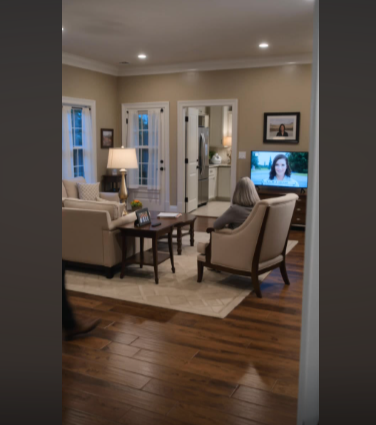
My Son-In-Law Ordered Me Out of My Own Living Room—So I Let the Law Speak
I WAS WATCHING TV IN MY OWN LIVING ROOM WHEN MY SON-IN-LAW TURNED IT OFF AND SAID “GO TO YOUR ROOM, OLD WOMAN. THIS IS MY HOUSE NOW.” MY DAUGHTER LOOKED AWAY. I TOOK MY KEYS AND LEFT. THE NEXT DAY… A MAN IN A SUIT RANG THE DOORBELL
THE HOUSE HE THOUGHT WAS HIS
The moment Evan turned off the television and said, “Get out, old woman,” I knew my life inside that house was over.
The remote clicked once.
The screen went black.
The room fell silent so suddenly it felt louder than shouting.
I had been sitting in my chair by the window, the same chair I had used every evening for years, watching the local news. Not because I cared much about the headlines. That half hour simply belonged to me.
At sixty-nine, you learn to appreciate anything that belongs only to you.
A cup of tea.
A quiet room.
A favorite chair.
Thirty minutes when nobody asks where the extra towels are or whether you can pick up groceries or why the electric bill is higher this month.
Evan stepped in front of the television.
He did not look at me at first.
He reached for the remote, switched it off, then turned.
“Go to your room.”
I stared.
“This living room is mine now.”
For one second, I honestly wondered whether I had misunderstood him.
Age teaches you that cruelty often arrives disguised as bad phrasing.
Then I looked toward the kitchen doorway.
My daughter Rachel stood there holding two grocery bags.
The plastic handles stretched against her fingers.
Our eyes met.
I waited.
Mom, this is your house.
Do not speak to her like that.
Anything.
Rachel lowered her eyes.
That silence told me more than Evan’s words.
He dropped onto the couch I had paid for and turned up the volume on his phone.
In his mind, the matter was finished.
I stood.
My knees complained.
I ignored them.
Walked to the hallway.
Reached into the ceramic bowl beside the door.
My keys lay exactly where I always left them.
Cold metal.
Solid.
Real.
Behind me, Evan laughed.
“Don’t forget your glasses.”
Rachel did not move.
At the door, I looked around once.
The framed desert photograph hung crooked.
The rug I vacuumed every Saturday was flattened where Evan always dropped his shoes.
The walls were the same warm cream I had chosen after my husband died.
Nothing in the room looked different.
I was the one who had changed.
For four years, I had been shrinking around Evan.
Moving carefully.
Speaking carefully.
Paying quietly.
Calling it peace.
That evening, I finally understood the difference between peace and surrender.
I stepped outside and closed the door gently.
Not dramatically.
Not with a slam.
Like placing a period at the end of a sentence.
The desert air had cooled.
Dust.
Night-blooming flowers.
A faint smell of someone grilling two streets away.
I locked the gate from the outside, walked to the corner, and called a cab.
The driver asked where I was going.
I gave him the name of a hotel downtown.
Only after I sat in the back seat did my hands begin to shake.
Not fear.
Release.
My name is Margaret Cole.
I had spent thirty-two years working at the county land records office.
Deeds.
Liens.
Transfers.
Easements.
Property disputes.
Families smiling politely at a counter until one line on a title report proved the house did not belong to the person who had spent twenty years acting like it did.
I retired knowing one rule better than most.
People can remember history however they like.
Recorded ownership does not.
That night, in a quiet hotel room, I opened an old leather folder I had not touched in years.
Inside were copies of the documents for my house.
The deed.
Property-tax records.
Insurance.
A title report.
My name appeared exactly where I knew it would.
Margaret Cole.
Sole owner.
The house had never transferred to Rachel.
Never transferred to Evan.
Never become “theirs” because they lived there.
My husband had died five years earlier.
A year after that, Rachel asked if she and Evan could stay for a while.
They were struggling.
Evan’s business investments had “temporary liquidity problems.”
Rachel had been between jobs.
They needed six months.
I had an extra room.
I said yes.
Six months became one year.
One year became four.
No written lease.
No rent.
At first, I did not mind.
Rachel cooked.
Evan fixed things.
We ate together.
Then the balance shifted.
I began paying more.
Utilities.
Groceries.
Internet.
Rachel’s car insurance for several months.
A supplementary credit card I gave them for household purchases.
I told myself it was temporary.
So did they.
The difference was that they stopped noticing when temporary became normal.
I poured hotel coffee.
It tasted terrible.
I drank it anyway.
Then I called Daniel Price.
Daniel and I had worked across the street from each other for years.
He handled property disputes.
I handled the records people later argued about.
He answered on the third ring.
“Margaret?”
“Yes.”
“It’s late.”
“I know.”
“Are you all right?”
“I am now.”
That got his attention.
I explained.
No embellishment.
My son-in-law ordered me out of my own living room.
My daughter said nothing.
They had lived in my house for four years.
No written lease.
No rent agreement.
I wanted them out legally.
Daniel asked:
“The house is still solely in your name?”
“Yes.”
“Any written promise they could stay permanently?”
“No.”
“Any ownership contribution documented as equity?”
“No.”
“Any deed transfer?”
“No.”
“Then this is not about ownership.”
He paused.
“But four years of occupancy means we do not improvise a lockout.”
“I know.”
That was exactly why I called him.
Depending on state law and the facts, Rachel and Evan might be treated as tenants, licensees, or family occupants.
The label mattered less than the procedure.
Notice.
Time.
No self-help eviction.
No changing locks while their belongings remained.
No shutting off utilities to force departure.
Daniel said:
“We terminate permission to occupy in writing.”
“Thirty days is likely appropriate, but I want to confirm the local rule in the morning.”
“Good.”
“You stay away tonight.”
“Yes.”
“No arguments.”
“Yes.”
“No canceling essential services before we review what is in your name.”
I smiled despite myself.
“You know me.”
“I know angry property owners.”
“I’m not angry.”
“That worries me more.”
I slept better than I had in months.
The next morning, pale light came through the hotel curtains.
At eight-thirty, Daniel texted.
Thirty-day notice prepared.
Associate will serve today.
Do not return yet.
At nine-twelve, Rachel called.
I let it ring twice.
Then answered.
“Mom.”
Her voice shook.
“There’s a man at the door.”
“I know.”
“He says he’s serving legal papers.”
“Take them.”
Evan’s voice exploded somewhere behind her.
“What the hell is this?”
Rachel moved away from him.
“Mom, it says termination of occupancy.”
“Yes.”
“Thirty days.”
“Yes.”
“You can’t do this.”
I looked at the hotel window.
Cars moving below.
People going to work.
“I can end permission to occupy my property.”
“This is our home.”
“It is the home I allowed you to use.”
Silence.
Then Evan grabbed the phone.
“You think a piece of paper makes you powerful?”
“No.”
“I think a piece of paper makes the deadline clear.”
“You can’t throw us out.”
“I am not throwing you out today.”
“You have thirty days under formal notice.”
“You will have time to find housing.”
“If you believe the notice is invalid, your lawyer can contact Daniel.”
“I’m not arguing with you.”
He swore.
I ended the call.
That was the first boundary.
The second came later that morning.
The supplementary household card.
It was my account.
Rachel and Evan were authorized users.
For four years, I had let them use it for groceries, household items, gas, and whatever else they gradually decided qualified.
I called the issuer.
Removed both authorized users.
No fraud report.
No claim the card was stolen.
Simply:
End permission.
The representative confirmed existing legitimate charges remained.
Future use would decline.
Then I reviewed utilities.
Electricity and water were in my name.
Daniel had been explicit.
Do not shut off essential services during the notice period.
So I did not.
I changed future billing so that after the move-out date, service would revert to my sole control.
Internet was different.
The account was mine, but nonessential.
Still, rather than cutting it immediately, I scheduled cancellation for the end of the notice period.
No tricks.
No pressure tactic.
Just an end date.
At eleven-forty, Rachel texted.
The card doesn’t work.
I replied:
Correct.
Your authorization ended today.
Use your own accounts for personal spending.
Utilities remain active during the notice period.
Three minutes later:
Evan says you’re trying to control us with money.
I looked at the screen.
Then typed:
No.
I am stopping voluntary financial support.
That is different.
He called.
I answered once.
“What the hell did you do?”
His voice was so loud I held the phone away from my ear.
“The grocery card is dead.”
“It is not dead.”
“Your authorization ended.”
“We need food.”
“You both have bank accounts.”
Silence.
Then:
“That money is tied up.”
“Where?”
“You wouldn’t understand.”
“I spent thirty-two years reading financial claims.”
“Try me.”
Rachel’s voice appeared faintly.
“He said we were saving.”
I asked:
“Saving what?”
No answer.
Evan’s anger changed.
Fear underneath.
“You are overreacting.”
“No.”
“You cannot pull the rug out from under us.”
“I did not create your dependence.”
“You did.”
“You paid everything.”
“I offered help.”
“You chose to build a life around it.”
The sentence stayed between us.
Then I ended the call.
I did not feel victorious.
Only steady.
Daniel called that afternoon.
“Expect escalation.”
“I already have it.”
“Money?”
“Yes.”
“Good.”
“What?”
“Not good for you.”
“Useful diagnostically.”
He was right.
When free access ended, the relationship changed immediately.
That told me something.
Two days later, we met at Daniel’s office.
Not court.
Not yet.
A conference room.
Neutral.
Daniel sat beside me.
Rachel and Evan arrived together.
Evan looked exhausted.
Rachel looked frightened.
Daniel had requested documents because Evan had begun claiming they held “rights” in the property.
He did not.
But housing rights and ownership rights are different things.
We were there to separate them.
Evan began before Daniel finished introductions.
“We’ve lived there four years.”
“Yes.”
Daniel said.
“You have occupancy rights until terminated according to law.”
“That is why notice was served.”
“We have adverse possession.”
I almost laughed.
Daniel did not.
“No.”
He said.
“Adverse possession generally requires possession that is hostile to the owner’s rights, among other elements.”
“You lived there with Margaret’s permission.”
“You did not pay property taxes.”
“You did not claim ownership against her.”
“You did not exclude her.”
“You lived with her.”
“That argument goes nowhere.”
Evan looked at me.
“She’s turning you against us.”
Daniel said:
“I am her lawyer.”
“That is literally my job.”
Rachel nearly smiled.
It vanished quickly.
I placed only three things on the table.
Deed.
Notice.
Account summary showing what I had been covering.
Not Evan’s private brokerage records.
I did not have those.
The source-story version of this meeting would have me somehow produce his confidential statements and expose margin calls.
Reality required a different path.
I asked Rachel:
“Do you know your household budget?”
She hesitated.
“Mostly.”
“Do you know what Evan earns?”
“Yes.”
“How much?”
She gave a number.
Evan interrupted.
“That is not relevant.”
“It is relevant to whether you can afford another home.”
Daniel said.
Evan’s jaw tightened.
Rachel looked at him.
“Why are you angry?”
“I’m not.”
“You are.”
The room shifted.
I asked one question.
“Rachel, do you have access to your joint bank statements?”
She looked embarrassed.
“Evan handles investments.”
“That is not what I asked.”
She looked at him.
Then back at me.
“No.”
There it was.
Not proof of theft.
Not proof of fraud.
Proof of opacity.
Daniel explained:
“Margaret is not asking you to disclose your marriage finances to her.”
“She is telling you the housing support ends in thirty days.”
“If you want independent legal or financial advice, get it.”
Rachel nodded slowly.
Evan slammed one hand on the table.
“Family helps family.”
I looked at him.
“Family does not order the homeowner out of her own living room.”
His face changed.
“That was one argument.”
“No.”
“It was one clear moment in a four-year pattern.”
I stood.
“Thirty days.”
“No extension promised.”
“Utilities remain through the notice period.”
“No new spending on my accounts.”
“No harassment.”
“When I retrieve my private belongings before the final move, it will be scheduled.”
“After you leave, locks change.”
“That is all.”
Rachel whispered:
“Mom.”
I looked at her.
“What you do about your marriage is your decision.”
“I will not finance that decision either way.”
Her eyes filled.
That hurt.
Still necessary.
Outside the conference room, Daniel said:
“You handled that well.”
“I feel terrible.”
“Both can be true.”
That became a theme.
Boundaries can be correct and painful at the same time.
The fallout came quickly.
Rachel called two nights later.
“I didn’t go home.”
I sat upright in the hotel bed.
“Where are you?”
“A friend’s.”
“Are you safe?”
“Yes.”
“What happened?”
She was quiet.
Then:
“I asked Evan to show me the accounts.”
My stomach tightened.
“And?”
“He got angry.”
“He said I was choosing you.”
“Did he show you?”
“No.”
“That is information.”
Rachel cried.
Not loudly.
“I think I’ve been letting him decide everything.”
I said nothing.
She continued.
“If I leave him, will you still be my mother?”
My chest tightened.
“Yes.”
“Always.”
“But I will not become your emergency bank account.”
“I know.”
“I mean it.”
“I know.”
“No.”
I said.
“Say it.”
She took a breath.
“You will be my mother.”
“You will not pay for my choices.”
“Correct.”
She laughed through tears.
“That sounds harsh.”
“It is clear.”
The next week, Rachel opened her own bank account.
Met with a family-law attorney.
Reviewed tax returns.
Learned the investments Evan kept calling “tied up” had performed badly.
Not criminally.
Badly.
Aggressive trades.
Losses.
Debt.
A story of future recovery used to justify present dependence.
She did not tell me every number.
Good.
Those finances were hers to understand now.
She filed for legal separation first.
Later divorce.
I did not push.
The decision needed to belong to her.
Thirty days passed.
Daniel handled everything.
The move-out happened under a written surrender agreement after Rachel moved to a small apartment near work and Evan found temporary housing with a friend.
No sheriff drama.
No screaming.
A moving truck.
Inventory.
Keys.
Minor wall damage.
One broken interior door.
Security deposit did not exist because there had been no lease.
Daniel documented the condition anyway.
At eleven-thirty on the final day, I received a text.
Possession surrendered.
Keys returned.
House vacant.
I drove back that afternoon.
The gate opened.
The front key still worked.
Inside, the house felt stale.
Not damaged beyond repair.
Just exhausted.
I opened every window.
Warm desert air moved through.
I stood in the living room where Evan had turned off my television.
The couch was gone.
His.
The entertainment system gone.
His.
Good.
I did not want his things.
My chair remained by the window.
I sat.
Turned on the television.
Set the volume exactly where I liked it.
Then turned it off again.
Because I wanted quiet.
The next morning, painters came.
I chose peach for the family room.
Warm.
Soft.
Not a color Evan would have approved.
That made me smile.
A cleaning crew handled the heavy work.
I cleaned some things myself anyway.
Baseboards.
Shelves.
Kitchen drawers.
Not because I had something to prove.
Because reclaiming a space sometimes happens through ordinary motions.
Wipe.
Rinse.
Dry.
Return.
A week later, Rachel knocked.
Not entered.
Knocked.
I opened the door.
She stood on the porch holding nothing.
No suitcase.
No request.
“May I come in?”
I stepped aside.
“As a guest.”
“Yes.”
She looked around.
Peach walls.
Sunlight.
Quiet.
“It feels different.”
“It is.”
We sat at the table.
Tea between us.
For several minutes, neither spoke.
Then Rachel said:
“I’m sorry.”
I waited.
“For what?”
Her eyes filled.
“For looking down when he spoke to you.”
That was the apology I needed.
Not for the money.
Not for Evan’s losses.
For the silence.
“Thank you.”
She nodded.
“I thought keeping him calm was keeping peace.”
“So did I.”
That surprised her.
“We both got smaller.”
I said.
“In different ways.”
She looked toward the living room.
“Can I ask something?”
“Yes.”
“Why didn’t you make us pay rent?”
I laughed softly.
“Because I thought love meant making life easier.”
“And?”
“It can.”
“But if help removes every consequence, sometimes it makes life less honest.”
Rachel stared into her tea.
“I’m learning that.”
Good.
We did not fix everything that day.
Trust should not return faster than behavior changes.
Rachel kept her apartment.
Paid her own bills.
Built a budget.
Never asked to move back.
That mattered more than tears.
A month later, I hosted tea for four women from the neighborhood.
Widows.
Retirees.
One woman caring for an adult son.
Another whose daughter wanted her added to the deed “for convenience.”
We sat around my table.
Pie.
Coffee.
Documents.
Not legal advice.
Questions.
I told them:
“Do not sign something because refusing feels unloving.”
“Ask what it changes.”
“Ownership.”
“Access.”
“Control.”
“Emergency authority.”
“Love does not require confusion.”
One woman said:
“My son says if I trust him, his name should be on the house.”
I answered:
“Trust and title are different things.”
That sentence became a little rule among us.
Later, Rachel began visiting once a week.
Always called first.
Always knocked.
No key.
Eventually I gave her one for emergencies.
Months later.
Not immediately.
The key was permission.
Not inheritance.
That distinction mattered.
Evan contacted me twice.
The first time:
Angry.
The second:
Quieter.
He apologized for the living-room incident.
I accepted the apology.
Did not invite him back.
People sometimes think forgiveness restores access.
It does not.
Access is a separate decision.
Daniel told me the property case was finished unless Evan challenged the notice or claimed damages.
He did not.
Probably because his own lawyer explained the same thing Daniel had.
Long occupancy can create procedural rights.
It does not create ownership by magic.
The deed had remained mine.
The house had remained mine.
More importantly, my life had remained mine.
I had simply stopped acting like those facts required someone else’s agreement.
One evening, months later, I sat in my chair by the window.
The news played quietly.
Rachel had left after tea.
The house smelled faintly of peach paint and cinnamon.
I picked up the remote.
Plastic.
Buttons.
Nothing powerful.
Evan had made it feel like a symbol because he used it to tell me I no longer belonged in my own room.
Now it was just a remote again.
I turned the volume up one click.
Then down.
My choice.
That was the whole lesson.
Not revenge.
Not eviction.
Not cutting cards.
Choice.
I had spent years thinking patience made me loving.
Sometimes it did.
Sometimes patience simply gave disrespect more room.
I had thought silence kept peace.
Sometimes silence only teaches other people that your boundaries are optional.
I had thought helping family meant being available until they no longer needed me.
Instead, I taught them not to notice the cost of my help.
The correction was not cruelty.
It was clarity.
This house is mine.
This money is mine.
This help is voluntary.
This room is shared because I choose to share it.
This relationship can continue.
This behavior cannot.
Those sentences changed my life.
At sixty-nine, I did not become harder.
I became visible to myself again.
That was enough.
The hardest part of explaining those four years later was that there had been no single moment when I agreed to support an entire household.
It happened one bill at a time.
Rachel and Evan first arrived with boxes in the back of a borrowed pickup.
Evan promised six months.
Rachel said they only needed time to recover from a bad investment and rebuild savings.
I believed them.
The first winter, Evan mentioned the electric bill had jumped because of an unusually cold month.
I paid it.
The next month, Rachel was between jobs.
I paid again.
Eventually the utility account simply remained in my name because changing it back seemed unnecessary.
Internet followed.
Then groceries.
Then the supplementary card.
It was never described as an allowance.
Only convenience.
“Use this for the house.”
That was what I said.
At first, Rachel sent photographs of receipts.
Evan thanked me.
Then receipts became less consistent.
Then absent.
The card paid for household food, fuel, takeout, home supplies, and occasionally things I had never discussed.
Nothing catastrophic.
That was how entitlement became difficult to identify.
If Evan had spent ten thousand dollars in one week, I would have noticed.
Instead, support expanded by twenty dollars here, eighty-seven there, a utility payment, a repair, an insurance renewal.
Every transaction was small enough to explain.
Together, they formed a life.
I also began carrying more of the physical household.
Cooking.
Cleaning.
Waiting for repair people.
Taking deliveries.
Rachel worked long days.
I wanted to help.
Evan claimed he was building an investment portfolio that would eventually create “real freedom.”
He spent hours at a laptop.
Charts.
Financial news.
Online forums.
He spoke constantly about opportunities.
When I asked whether the investments produced income, he answered with words like position, cycle, leverage, and timing.
I understood property records better than markets.
So I stopped asking.
That was another mistake.
Not because I had a right to control his investments.
Because I had a right to know whether the adults living free in my home were actually moving toward independence.
By the second year, Evan had stopped speaking as though the arrangement were temporary.
He referred to the den as his office.
The garage as his workspace.
The family room as the place where he liked to unwind.
He bought nothing substantial for the house because, he said, cash needed to stay invested.
Rachel apologized for him often.
“He’s stressed.”
“The market is rough.”
“He just needs one good year.”
I accepted those explanations partly because challenging them threatened my relationship with her.
That is an uncomfortable truth.
I was not only helping my daughter.
I was protecting access to her.
The night Evan told me to leave the living room stripped that bargain down to its actual terms.
Stay useful.
Stay quiet.
Stay small.
Then you may remain close.
Once I saw it, I could not unsee it.
The hotel gave me three days of distance before the conference-room meeting.
During those days, I did things I had almost forgotten were ordinary.
I ate breakfast without preparing anyone else’s food.
I left a towel on the bathroom rack without wondering whether Evan would complain it looked untidy.
I watched an old movie at midnight.
I called two former coworkers.
One of them, Helen, said:
“We thought you disappeared.”
The sentence embarrassed me.
“I was busy.”
“With what?”
I started listing household tasks.
Then stopped.
Helen heard the silence.
“Margaret.”
“I’m all right.”
“Are you?”
I looked around the hotel room.
For the first time in years, I answered accurately.
“I think I’m becoming all right.”
That conversation mattered almost as much as Daniel’s legal advice.
Evan’s power had grown partly because my world had narrowed.
Rachel.
The house.
His moods.
Their needs.
Once I started calling people outside that system, the house stopped feeling like the only place I could exist.
I booked lunch with Helen for the following week.
Called another retired coworker.
Rejoined the library group I had quietly stopped attending because Evan disliked driving me when the weather was bad.
None of those changes required money.
They required remembering that a life can have more than one center.
Rachel eventually told me what she learned after opening the accounts herself.
Evan had not committed some spectacular fraud.
That would have made the story easier.
He had done something more ordinary.
He lost money.
Then refused to admit it.
A series of leveraged trades performed badly.
He borrowed against positions he believed would recover.
Some did.
Others fell further.
He covered losses with new credit.
Told Rachel the accounts were “temporarily down.”
Then relied on my support to keep household costs low while he waited for the market to prove him right.
When the supplementary card ended, the math became visible.
Rachel said:
“I thought we had savings.”
“You had statements.”
“He only showed me the summary screen.”
“Did you ask for access?”
“No.”
“Why?”
She looked ashamed.
“Because he said questioning him meant I didn’t believe in him.”
I understood that sentence too well.
Control often survives by changing the subject from information to loyalty.
“What will you do differently?”
I asked.
“Know where my money is.”
“Good.”
“Not because I need to manage everything.”
“But because not knowing is not trust.”
That answer told me she was changing.
Months later, after the divorce filing became real, Rachel asked whether I regretted the thirty-day notice.
“No.”
“Even though it ended my marriage?”
“The notice did not end your marriage.”
“It removed one support holding it in place.”
She stared at me.
“That sounds cold.”
“It is not meant to.”
I reached across the table.
“You chose what happened after.”
“You could have stayed with Evan.”
“You could have found another house together.”
“You could have continued the marriage without my money.”
“You did not.”
“That was your decision.”
She nodded slowly.
“I think that is why I’m less angry now.”
“Because I’m not blaming you for choosing.”
That was growth too.
When she eventually rented a better apartment, she showed me photographs before signing.
Not for approval.
Because she was excited.
One bedroom.
Small balcony.
Laundry room downstairs.
Close to work.
She paid the deposit herself.
The first night there, she texted:
I bought my own kettle.
Ridiculously proud.
I wrote:
You should be.
I did not offer furniture.
That took discipline.
Helping had been my reflex for decades.
Instead, I waited until her birthday and bought one thing she had specifically wanted.
A reading lamp.
Gift.
Not rescue.
The difference felt small.
It was not.
My own house changed with me.
After the painters finished, I moved only what I wanted back into the family room.
My chair.
A smaller sofa.
One bookshelf.
Harold’s photograph.
No oversized entertainment center.
No furniture arranged around Evan’s habits.
I moved the television lower because my neck had always hurt at the old angle.
Such a ridiculous detail.
For four years, I had tolerated a television mounted too high because Evan said that was how modern rooms looked.
The first evening after it was lowered, I watched the news without tilting my head.
I laughed out loud.
Freedom is not always a legal notice.
Sometimes it is a television mounted where you can actually see it.
One night, I turned off the television because I was tired.
Not because someone told me to leave.
I locked the door.
Made tea.
Walked through the family room.
The house was quiet.
Not empty.
Not tense.
Home.
And for the first time in years, I did not feel like I was staying there.
I felt like I belonged.
