At Christmas dinner, my daughter-in-law handed me a mop in front of twelve guests
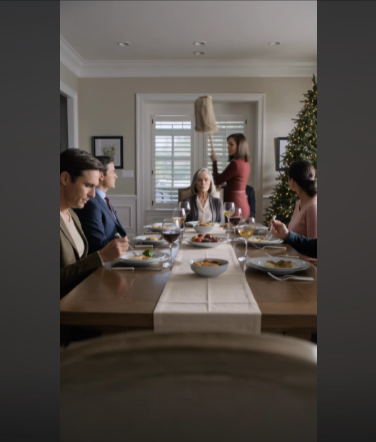
“Stop Faking It And Clean,” She Said. The Next Morning, The Doctor Walked In—And They Went Silent
AT CHRISTMAS DINNER, MY DAUGHTER-IN-LAW HANDED ME A MOP.
“STOP PRETENDING YOU’RE SICK AND CLEAN,” SHE YELLED. MY SON ADDED: “STOP USING YOUR AGE AS AN EXCUSE…” THAT NIGHT, I PACKED MY CLOTHES IN A SUITCASE AND DISAPPEARED.
BUT WHAT I DID THE NEXT DAY LEFT THEM PALE WITH FEAR
My name is Eleanor Herrera.
I was sixty-eight years old when my daughter-in-law handed me a mop for Christmas.
Not as a joke.
Not because I had asked for one.
She wrapped it in gold paper, carried it into the dining room in front of twelve guests, and placed it across my lap like a prize.
“Stop pretending you’re sick and clean properly.”
Jessica smiled when she said it.
My son Mark sat beside her.
The child I had carried for nine months.
The boy whose fevers I once measured every hour through the night.
The young man whose college tuition Arthur and I helped pay while we postponed repairs to our own house.
I looked at him.
“Mark?”
He stood.
For one foolish second, I expected him to defend me.
Instead:
“Mom, my wife is right.”
His voice was calm.
Prepared.
“Stop using your age as an excuse.”
Then, in front of everyone:
“You eat here for free every day.”
“The least you can do is make the guests happy for us.”
The room became silent.
One guest looked at the floor.
Another pretended to check his phone.
Jessica’s cousin stared at her wine.
Nobody laughed anymore.
I looked down at the mop.
Gray cotton strands.
Wooden handle.
Cheap chemical smell.
Something inside me froze.
I did not shout.
Did not throw it.
Did not slap anyone.
I stood.
“Excuse me.”
Then carried the mop down the hallway.
For three years, that hallway had been my world.
Photographs of a family that looked happier than we were.
A living room Jessica told me not to sit in because it was “for guests.”
A dining room where she once said:
“Only people who work should eat at the table.”
My room was at the back.
Former storage room.
Twin bed.
Small nightstand.
Rosary.
Photograph of my late husband Arthur.
Tiny closet.
Water stains across one wall nobody bothered repairing because, as Jessica once said:
“That room isn’t a priority.”
Three years earlier, after Arthur died, Mark came to me with tears in his eyes.
“You can’t live alone, Mom.”
“Come stay with us.”
“We need you.”
“We’re family.”
Family.
I closed the door.
Outside:
Christmas dinner continued.
Glasses.
Eggnog.
Muted laughter returning once the uncomfortable old woman disappeared.
I opened my closet.
Pulled out an old fabric suitcase.
The same one Arthur and I took to Florida on our honeymoon forty-six years earlier.
Then I began packing.
Slowly.
Sweaters.
Blouses.
Shoes.
The shawl Arthur gave me for our twenty-fifth anniversary.
Every piece of clothing unlocked another memory.
Not only good ones.
Jessica telling me not to use her shampoo.
“It costs thirty dollars.”
“Buy the cheap one.”
Jessica checking my closet because she believed I might be taking things.
Mark refusing to help with a doctor’s visit.
“If you go, you’re paying.”
Being expected to wake at five and clean the kitchen.
Laundry.
Ironing.
Cooking.
Their groceries arranged perfectly while my own food was thrown away because it “smelled.”
I had sold my gold earrings once to pay for medicine.
They had ordered sushi that same week.
For three years:
I told myself they were stressed.
Young.
Busy.
Struggling.
Every explanation protected them.
None protected me.
Then, while reaching toward the back of the closet, I knocked over a rusty tin box.
Documents spilled onto the floor.
Old photographs.
Receipts.
A manila envelope carrying an attorney’s seal.
I opened it.
Property deeds.
Thirty years earlier, my parents had left me a plot of land on the north side of the city.
My brother Robert contested the inheritance.
Legal disputes followed.
Then:
Marriage.
Work.
Mark.
Arthur’s illness.
Life became louder than old paperwork.
I stopped thinking about the property.
Now I stared at my father’s handwriting in the margin of one page.
FOR MY DAUGHTER ELEANOR.
MAY THIS LAND GIVE YOU THE FREEDOM YOU DESERVE.
I placed the papers in my purse.
Finished packing.
At two in the morning:
Coat.
Suitcase.
Purse.
I opened the door.
No note.
No goodbye.
The Christmas lights still blinked in the front window.
Perfect house.
Perfect family.
Perfect lie.
I walked away.
Four blocks later, my legs gave out.
Bus-stop bench.
December cold.
Suitcase at my feet.
And something I had not felt in years.
Freedom.
Painful.
Terrifying.
Mine.
I called my younger sister Carol.
Fifth ring.
“Hello?”
“Carrie.”
Silence.
Then:
“Eleanor?”
“What happened?”
“I need somewhere to stay.”
“Where are you?”
“Morello Street.”
“Don’t move.”
Twenty minutes later:
Old red Chevy.
Carol jumped out wearing a floral robe under her coat.
Hair wild.
Furious.
She hugged me.
“I swear…”
She whispered.
“I am going to kill that son of yours.”
I almost laughed.
Almost cried.
Instead:
I let her hold me.
At Carol and David’s house, coffee waited.
David placed a blanket over my shoulders.
“You’re safe here.”
No questions.
No judgment.
Carol sat across from me.
“Tell me everything.”
“And don’t defend Mark.”
So I did.
Three years.
Food scraps while they ordered expensive meals.
Cleaning.
Laundry.
Humiliation.
Jessica’s rules.
Mark’s silence.
The mop.
When I finished:
Carol hit the table hard enough to rattle the cups.
Then she said something unexpected.
“The land.”
“What?”
“Mom and Dad’s property.”
“You never sold it.”
I pulled out the envelope.
“I forgot about it.”
“Robert fought me.”
“Robert died five years ago.”
She said.
“Whatever was unresolved may have changed.”
Then:
“Eleanor…”
“Do you know what happened to that area?”
“No.”
“Commercial development.”
“Malls.”
“Apartments.”
“Offices.”
“That land may be worth serious money.”
The next morning:
Mr. Henderson.
Arthur’s old attorney.
Eighty years old.
Cane.
Sharp eyes.
His office smelled like old paper and furniture polish.
I handed him the documents.
He read for five minutes without speaking.
Then:
“Eleanor…”
“Do you know what you own?”
“The land?”
“More than that.”
He explained that Robert’s competing claim had ended after his death and that subsequent estate and title proceedings had ultimately cleared ownership into my name.
Carol had never pursued an independent claim.
The parcel was mine.
Legally.
Entirely.
Then he produced current maps.
Five thousand square meters.
Two blocks from the new Galleria Mall.
Commercial frontage.
Current approximate value:
$8.5 million.
I stared.
Carol whispered:
“Eight and a half million dollars.”
Then Mr. Henderson said:
“There is more.”
Arthur.
My husband had quietly created long-term investment certificates in my name.
They matured ten years after his death.
Arthur died eleven years earlier.
The investments had matured the previous year.
Current value:
Approximately $2.3 million.
“You sent me letters?”
“Three certified letters.”
He said.
“The last four months ago.”
I felt cold.
“What address?”
“Mark’s house.”
Then:
“Did Mark come here?”
Mr. Henderson frowned.
“Yes.”
“Four months ago.”
“He said you were in poor health.”
“He wanted information about your financial position.”
“What did you tell him?”
“Nothing.”
“He became angry.”
“Threatened legal action.”
“But client confidentiality is client confidentiality.”
Four months.
That was when life in Mark’s house became noticeably worse.
The burden comments.
Food restrictions.
Jessica’s cruelty escalating.
They knew something existed.
They simply did not know how much.
Mr. Henderson looked toward me.
“To summarize…”
“The land is worth approximately eight and a half million.”
“Arthur’s investments approximately two point three.”
Roughly:
$10.8 million.
For years, I believed I had:
A seven-hundred-dollar monthly Social Security check.
A suitcase.
Worn shoes.
A storage room.
Instead:
I had assets worth more than ten million dollars.
“What do I need to do?”
I asked.
“Access the investment account?”
“Sign verification documents.”
“The land?”
“If you wish to sell…”
“I have developers already interested in that corridor.”
I looked toward Carol.
Then back.
“Sell it.”
“And nobody knows yet.”
Mr. Henderson smiled.
“Arthur always said when Eleanor decides something…”
“Moving a mountain becomes the easier option.”
For two hours:
Signatures.
Authorizations.
Bank paperwork.
Identity verification.
Then we left.
Outside:
Cold air.
Traffic.
People going to work.
Living ordinary lives.
Carol hugged me.
“What are you planning?”
“First?”
“Sleep.”
“Then?”
I looked toward downtown.
“I’m going to learn how to live again.”
My phone showed:
52 missed calls.
38 messages.
Mark.
The first ones:
Where are you?
Stop being dramatic.
You’re embarrassing us.
Come home.
Then:
We’re worried.
Jessica feels terrible.
Let’s talk.
Then:
If you don’t come back, we may have to report you missing.
After everything we’ve done for you?
I sent one photograph.
Me.
Guest bed.
Tea.
Blanket.
Calm.
Message:
I’M SAFE.
STOP LOOKING.
Mark answered immediately.
Where are you?
We need to talk.
I turned off the phone.
Three days passed.
I slept.
Walked with Carol.
Ate breakfast without somebody counting what I used.
Then Carol entered the bedroom holding her phone.
“Look.”
Jessica had posted publicly.
Christmas photograph.
Me sitting tired at the table.
Caption:
My mother-in-law abandoned our home on Christmas Eve after we asked her to contribute to normal household chores. We supported her for three years. We are worried about her.
Comments divided.
Poor Jessica.
Difficult mother-in-law.
Older generations expect everything.
Then:
Wait. I attended that dinner. You gave her a mop.
I’ve known Eleanor for thirty years. She is kind. If she left, something serious happened.
I recognized the last commenter.
Betty.
Old neighbor.
Every Sunday, she used to sell me flowers for Arthur’s grave.
“Are you responding?”
Carol demanded.
“No.”
“Why?”
“Because Jessica wants an argument.”
“She can have silence.”
That afternoon:
Mark arrived at Carol’s house.
David blocked the door.
“I need to see my mother.”
“She decides that.”
“She is my mother.”
“She is also an adult.”
Then Mark threatened:
Legal action.
Carol appeared.
“Legal action for what?”
“She didn’t steal.”
“She didn’t damage anything.”
“She left because you treated her like trash.”
Mark snapped.
“All this over one stupid Christmas gift.”
Carol’s voice became ice.
“One gift?”
“Three years, Mark.”
Then:
“Leave.”
The door slammed.
From the window:
Mark’s new black pickup.
Chrome.
Expensive.
I remembered him telling me:
“Image matters, Mom.”
My shoes had been falling apart at the time.
Later, I looked through Jessica’s public social media.
Restaurants.
Designer clothing.
Spa days.
Luxury gym.
Beach trips.
Then:
OUR HOME.
Living room.
Dining room.
Kitchen.
And my storage room.
Caption:
FUTURE WALK-IN CLOSET.
ALMOST EMPTY.
Carol read it.
“They were waiting for you to leave.”
I closed the laptop.
Something shifted.
Not rage exactly.
Clarity.
The following day:
I rented a small apartment.
One bedroom.
Park view.
Integrated kitchen.
Clean bathroom.
Nothing luxurious.
Everything mine.
Then Mark sent another message.
Their house carried approximately $320,000 in mortgage debt.
They were falling behind.
He needed money.
Maybe Arthur had left me something?
Loan.
Family.
Please.
I answered:
WHEN YOU GAVE ME A MOP, YOU TAUGHT ME THAT MY VALUE TO YOU DEPENDED ON WHAT I COULD DO.
NOW YOU NEED MONEY.
DO YOU SEE THE PATTERN?
I AM NOT YOUR RESOURCE.
SOLVE YOUR OWN PROBLEMS.
Then:
Off.
A week later:
Mr. Henderson called.
“Come in.”
Mark had attempted something far worse.
Conservatorship.
He and counsel had explored having me declared mentally incompetent so he could gain financial control.
Mr. Henderson rejected the premise immediately and began documenting the attempted interference.
Then he showed me their real finances.
Mortgage:
Four months delinquent.
Foreclosure moving forward.
Jessica:
Approximately $70,000 in credit-card debt.
Personal loan application:
Denied.
The timing aligned.
My mistreatment intensified once Mark suspected I had assets.
“They wanted access.”
Mr. Henderson said.
“When they couldn’t get it…”
“They tried control.”
We acted.
New will.
Independent witnesses.
Medical capacity evaluation.
Recorded statement.
Explicit documentation that I was mentally competent and acting voluntarily.
The land sale accelerated.
A developer accepted:
$8.5 million.
Arthur’s matured investment funds:
$2.3 million.
Total:
Approximately $10.8 million.
Mr. Henderson looked at me.
“What are you going to do?”
“Live.”
I said.
“With dignity.”
The money arrived on a Tuesday.
$10.8 million.
I stared at the bank notification for five minutes.
Then went in personally.
Private banking.
Diversified accounts.
Term investments.
Savings.
Liquidity.
I did not feel powerful because a banker suddenly stood straighter when she saw the balance.
I felt powerful because:
Nobody could decide whether I bought medicine anymore.
Nobody could tell me which shampoo I was allowed to use.
Nobody controlled whether I had a roof.
I bought:
Clothes.
Comfortable shoes.
Wine-colored coat.
Then:
Haircut.
Shoulder-length bob.
Fresh color.
When I saw myself in the elevator mirror:
I recognized something.
Not wealth.
Posture.
I had stopped apologizing for occupying space.
Book club.
Library.
Beatrice.
Seventy-two.
Sharp humor.
Instant friend.
Then more information.
Neighborhood WhatsApp group.
Jessica:
MY MOTHER-IN-LAW STOLE MONEY AND DISAPPEARED.
WE MAY PRESS CHARGES.
Comments again divided.
Some believed her.
Others remembered the mop.
The public lies became increasingly reckless.
Mark threatened Carol.
Then a lawyer contacted me.
Mr. Torres.
Reconciliation.
Pending financial issues.
I forwarded everything to Henderson.
No direct response.
Then my cousin Margaret called from Arizona.
“Mark says you have advanced dementia.”
I closed my eyes.
He was calling relatives.
Creating a narrative.
Runaway mother.
Cognitive decline.
Medication.
Need for supervision.
Same conservatorship groundwork.
I told Margaret the truth.
She cried.
“Arthur would be furious.”
Two days later:
Mark found my apartment.
He looked exhausted.
Thin.
Wrinkled shirt.
Dark eyes.
He tried hugging me.
I did not return it.
“Why are you here?”
“To apologize.”
Tears.
Stress.
Jessica’s therapy.
House pressure.
Mistakes.
Family.
I waited.
Then:
“Tell me the real reason.”
He looked down.
Foreclosure.
$180,000 needed within three weeks.
“What do you want from me?”
“Loan.”
There.
Not love.
Liquidity.
I could have said no.
Instead:
“I’ll think about it.”
Hope illuminated him immediately.
“One week?”
“Yes.”
He left.
I called Henderson.
“I am going to lend them the money.”
Silence.
Then:
“With protections?”
“Every one you can legally build.”
We prepared a secured family-loan agreement.
$180,000.
Two-year term.
Ten-percent interest.
House pledged as collateral under the agreement.
Default provisions.
Representations about financial condition.
No deception about material finances.
No significant luxury expenditures inconsistent with the hardship representations.
Formal signatures.
Witnesses.
Notary.
When Mark returned:
Jessica came too.
No makeup.
Simple dress.
Repentant voice.
“I don’t deserve forgiveness.”
“I’ve changed.”
“I’m in therapy.”
I placed the contract down.
“Loan.”
“Not gift.”
“Agreed.”
“House as collateral.”
Mark paled.
Jessica squeezed his hand.
“Fine.”
“Miss a payment or materially breach the agreement…”
“Enforcement rights apply.”
They signed.
Every page.
Mr. Henderson witnessed.
Carol and David present.
I transferred:
$180,000.
They left believing I had rescued them.
Then my investigator completed a lawful financial-background review based on public records and permitted sources.
Jessica:
Roughly $12,000 in cosmetic treatments, designer items, and trips over the previous year.
Mark:
$8,000 motorcycle hidden at a friend’s house.
Luxury renovation:
Approximately $20,000.
They had begged for survival money while protecting lifestyle purchases.
Six weeks later:
Jessica posted her new walk-in closet.
My old room.
Caption:
FINALLY FINISHED.
SOMETIMES CHANGE IS NECESSARY.
BLESSED.
That was enough.
I invited them to Casa Bella.
Saturday.
Eight o’clock.
Mr. Henderson sat discreetly across the dining room.
Mark and Jessica arrived.
Polite.
Hopeful.
We ordered.
Then:
“The loan.”
I placed a folder between us.
Screenshots.
Lawful financial findings.
Luxury expenses.
Walk-in closet.
Restaurants.
Spa.
Mark tried:
“Mom…”
“No.”
I pointed toward the contract.
“You represented yourselves as financially desperate.”
“You accepted money from me based on those representations.”
“Then continued discretionary luxury spending.”
Jessica went white.
Under the agreement, the breach accelerated the debt.
Principal.
Contractual surcharge.
Amount claimed:
$234,000.
Thirty days.
Or:
Collateral enforcement.
“You can’t.”
Jessica whispered.
“You signed it.”
I replied.
Then I told them:
“The mop was the best gift you ever gave me.”
Mark stared.
“It woke me up.”
“It taught me that I had allowed you to turn me into a resource instead of a mother.”
Then:
“And I discovered something else.”
“Mr. Henderson told me you tried to have me declared incompetent.”
Mark’s face collapsed.
“I was worried.”
“No.”
“You were worried about money.”
Jessica stood.
“I’m leaving.”
Then a voice behind her:
“Sit down, Mrs. Herrera.”
Mr. Henderson approached.
Briefcase.
Calm.
“I represent Eleanor.”
“And the documentation supporting this matter is complete.”
Jessica sat.
Mark looked at me.
“What do you want?”
“Revenge?”
“To make us homeless?”
“No.”
“I want consequences.”
I stood.
“You have thirty days under the current agreement.”
Then left.
The fallout was loud.
Mark called constantly.
Jessica posted a crying TikTok.
Fifty thousand views.
Extortion.
Toxic mother-in-law.
Pro bono lawyer request.
Some commenters believed her.
Others asked:
Why did you sign the contract?
Where is the document?
Aren’t you the woman who gave her a mop?
I did not respond publicly.
Instead:
I asked Henderson for one final structured solution.
Formal office meeting.
Recorded.
Notary.
Everything transparent.
Mark and Jessica arrived exhausted.
I said:
“I am giving you one last chance.”
Hope again.
“Original principal.”
“$180,000.”
“The surcharge is waived.”
“Ninety days.”
“If you repay…”
“Collateral releases.”
“If you cannot…”
“The house transfers according to the secured agreement without another fight.”
Then:
“You receive six additional months to relocate.”
“And during that transition…”
“I will provide $3,000 per month for basic housing support.”
Jessica stared.
“Why?”
“Because I do not enjoy watching people suffer.”
I said.
“But I also refuse to absorb the consequences of your choices forever.”
Mark read the revised agreement.
“You know we probably can’t pay this.”
“I know.”
“That is why the relocation provisions exist.”
Jessica whispered:
“That house was where we wanted to start a family.”
I looked at her.
“That house was also where you put an older woman in a storage room.”
“Where she wasn’t allowed to sit in the living room.”
“Where you converted her bedroom into a closet before she was fully gone.”
“Do not lecture me about family.”
They signed.
Ninety days began.
I returned to my own life.
Painting class.
Yoga.
Morning walks.
Santa Fe with Beatrice.
Coffee with Carol.
My first painting sold:
$300.
More meaningful to me than some investment statement.
Then:
June ninth.
One day before deadline.
Henderson called.
“Eleanor…”
“They paid.”
“What?”
“Two hundred thousand.”
“More than required.”
I called Mark.
“Where did you get it?”
Silence.
Then:
“We sold everything.”
Motorcycle.
Jessica’s car.
Jewelry.
Furniture.
Designer bags.
Shoes.
Even the luxury closet fixtures.
Mark borrowed from friends.
Employer advanced salary.
“Jessica agreed?”
“She is in real therapy now.”
He said.
“When we finally had to choose between the house and the things…”
“Something changed.”
Then:
“Mom…”
“Those ninety days were horrible.”
“And necessary.”
“For the first time…”
“I understood what it felt like to have no easy option.”
“To need somebody else’s mercy.”
“I understood what we did to you.”
I cried.
Quietly.
He continued.
“I don’t expect forgiveness.”
“I only hope one day you can see me without hurting.”
Then ended the call.
Three months later:
September.
Henderson asked me to come in.
Mark and Jessica had continued depositing:
$50 per week.
Voluntarily.
Small.
Consistent.
Then he handed me a letter.
Mark’s handwriting.
Mom,
A letter cannot erase three years.
Money cannot purchase forgiveness.
But I need you to know what we did.
Jessica and I sold the house.
Even after paying you.
We couldn’t stay there.
Every room reminded us of what happened.
The dining room.
Living room.
Your storage room.
The place itself had become evidence.
Sale price:
Approximately $700,000.
Mortgage paid.
Then:
$200,000 donated to a shelter serving older adults escaping family abuse.
In my name.
ELEANOR’S HOUSE.
Mark continued.
They bought a modest two-bedroom apartment.
Jessica began baking from home.
Cakes.
Pies.
Mark kept working.
No luxury lifestyle.
No major debt.
Then:
Every night I remember the mop.
Your face.
How we humiliated you.
I cannot reverse it.
I can only become somebody different from the man who did it.
I am not asking you to forgive me.
I am asking that if we ever pass each other on the street…
You do not cross to the other side.
With love and shame,
Mark.
I could barely see.
“Is the shelter real?”
I asked.
“Yes.”
Henderson said.
“I helped with the legal work.”
“Ten residents already.”
I left.
Walked downtown.
Past the cathedral.
Market.
Places Arthur and I walked when we were young.
Then sat on a bench.
Two weeks later:
Apartment 3B.
I pressed the buzzer.
Jessica’s voice:
“Who is it?”
“Eleanor.”
Silence.
Then:
Door release.
Upstairs:
Small apartment.
Simple furniture.
Coffee.
Something baking.
Mark stood in the living room crying.
Jessica behind him.
“Mom.”
I did not hug him.
Not yet.
But I did enter.
“I read your letter.”
“I didn’t think you’d come.”
“I need to say something.”
They remained standing.
“What you did to me was unforgivable.”
I said.
“I will carry parts of it for the rest of my life.”
“You don’t erase three years because you sold a house.”
Mark nodded.
Tears running.
“But…”
“I cannot carry hatred either.”
“That is heavy too.”
Jessica whispered:
“What does that mean?”
“I won’t forget.”
“But I am going to try to forgive.”
“Not because you deserve automatic forgiveness.”
“Because I deserve peace.”
I told them I had seen:
The shelter.
Deposits.
Lifestyle change.
Effort.
Not proof.
Effort.
Then:
“I’ll give you my new number.”
Mark looked stunned.
“You may write.”
“I may not answer.”
“Visits are not guaranteed.”
“But the door is not completely closed.”
“Just ajar.”
“If change is real over time…”
“Maybe it opens farther.”
Mark collapsed onto the sofa.
“Thank you.”
“Don’t.”
I said.
“This is not a reward.”
“It is an opportunity.”
“One lie…”
“One act of disrespect…”
“One attempt to control me…”
“The door closes.”
They both nodded.
At the exit:
“One more thing.”
“What?”
“I want to volunteer at Eleanor’s House.”
Six months later:
I was there.
Helping a seventy-five-year-old woman settle into a clean room.
Her children had kept her isolated and dependent.
She held my hand.
“I don’t know if I can recover.”
“I didn’t know either.”
I told her.
“But look at me.”
That evening:
Tea.
Balcony.
Paintings on my walls.
Carol and Beatrice had visited for dinner.
We were planning Charleston in December.
My phone vibrated.
Mark.
For six months:
One respectful message each week.
No requests.
No money.
No guilt.
This one said:
Mom,
Jessica baked apple pie using your recipe.
It came out perfectly.
We thought about you.
Sending love.
For months:
I read.
Never replied.
That night:
I typed.
I’m glad the recipe worked.
Take care.
Three short sentences.
Not reconciliation.
A step.
That entire year taught me something about forgiveness.
Forgiveness is not:
Pretending the harm never happened.
Restoring access immediately.
Erasing consequences.
Giving someone another opportunity to exploit you.
Forgiveness can exist beside:
Distance.
Memory.
Legal boundaries.
Suspicion earned by experience.
Sometimes forgiveness simply means:
I refuse to spend the rest of my life carrying you inside my anger.
Arthur taught me true love does not humiliate.
It does not make somebody earn food.
It does not tell an older woman she eats for free while relying on her labor every day.
And strangely:
Arthur protected me even after he was gone.
Not only through $2.3 million in investments.
Through my father’s land too.
Through documents.
Through the life we had built.
But the money was never the strongest part.
The most important change happened before Mr. Henderson told me the land was worth $8.5 million.
It happened around two in the morning.
When I closed a suitcase.
Walked out the door.
And finally decided:
Enough.
If the property had been worthless…
I still needed to leave.
If Arthur’s investments did not exist…
I still deserved respect.
If there had been no millions waiting…
The mop would still have been cruel.
The storage room would still have been degrading.
Mark’s silence would still have been betrayal.
Money gave me options.
It did not give me value.
That distinction became the center of my new life.
I painted.
Travelled.
Joined a book club.
Volunteered.
Made friends.
Bought shoes when mine wore out without apologizing.
Sat wherever I wanted in my own apartment.
Used whatever shampoo I preferred.
Small freedoms.
The kind wealthy people rarely understand until someone removes them.
I also rewrote my estate plan.
Carefully.
Competency documented.
Independent witnesses.
Clear instructions.
No ambiguity about who controlled my assets while I lived.
Most of my future estate would support purposes I chose.
Programs protecting older adults.
Education.
Community support.
Whatever contact I eventually rebuilt with Mark would never again equal access to my finances.
Those were separate things.
Love:
Possible.
Money:
Protected.
One evening, almost a year after the Christmas dinner, I opened the little closet in my apartment.
My suitcase sat on the top shelf.
The old honeymoon suitcase.
Fabric worn.
Handle scratched.
I ran my hand across it.
That suitcase had carried:
Honeymoon clothes.
Family vacations.
Arthur’s shirts.
Then:
My escape.
I decided not to throw it away.
Not because I enjoyed remembering pain.
Because it reminded me that dignity sometimes begins with a very ordinary action.
Pack.
Stand.
Walk.
At sixty-nine, people sometimes acted surprised that I had started again.
New apartment.
Travel.
Painting.
Volunteering.
Friends.
A cautious relationship with the son who once humiliated me.
As if rebuilding belonged only to young people.
It doesn’t.
There is no age at which disrespect becomes mandatory.
No age at which somebody loses the right to say:
This is not how I will live.
The Christmas mop remained vivid in my memory.
I never kept the actual mop.
I left it at Mark and Jessica’s house.
But sometimes I thought about it.
Something designed as humiliation became the object that finally clarified my life.
Not because cruelty was secretly good.
It wasn’t.
Jessica’s act was cruel.
Mark’s words were worse.
But after years of smaller humiliations, that moment became impossible to excuse.
The mask finally came off.
And once I saw clearly:
I could no longer pretend.
That was the gift.
Not the mop.
Clarity.
Mark and Jessica still had work ahead.
So did I.
Forgiveness did not turn the story into a fairy tale.
Some weeks, I answered his messages.
Some weeks, I didn’t.
Sometimes Jessica sent a photograph of a cake.
Sometimes I could look.
Sometimes I could not.
They respected that.
That mattered more than dramatic apologies.
Change is repetition.
One decent choice.
Then another.
Then another.
Eventually, perhaps:
Trust.
Or perhaps only peace.
Both were acceptable.
One night, I sat outside with hot tea.
Stars above the park.
Paintings drying behind me.
Arthur’s photograph inside.
My phone silent.
Nobody demanding anything.
Nobody counting what I ate.
Nobody asking me to earn my right to stay.
I whispered:
“Thank you, Arthur.”
Not for money.
Not even for planning.
For forty-six years of teaching me what love felt like before I forgot.
That memory had eventually led me out.
My name is Eleanor Herrera.
I am sixty-nine years old.
And the best thing that happened to me was not discovering I had nearly eleven million dollars.
It was discovering that even after three years of being treated as though I had no value…
I still believed myself when I finally said:
Enough.
Everything good came after that.
