At dinner, my son looked at an old Treasury bond in my hand and said, “Dad, stop
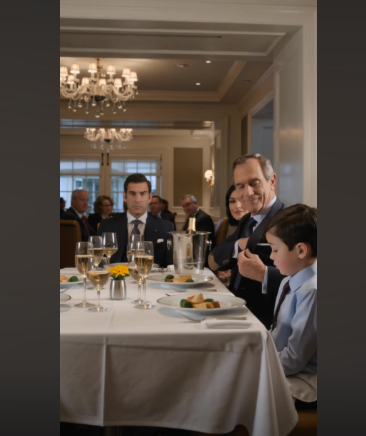
My Son Said Stop Wasting My Money The Next Day, I Emptied His Accounts And I Disappeared…
“Dad, stop wasting my money on garbage like this.”
My son Jason held the old Treasury bond between two fingers as if it were something dirty.
Then, in the middle of one of Boston’s most expensive restaurants, he crumpled it and dropped it into the champagne bucket.
Fifty dollars.
That was all the paper said.
To Jason, that made it worthless.
Then he pointed at me.
“Starting tomorrow, your allowance is zero.”
“No more driving around.”
“No more embarrassing me.”
“You stay home unless I say otherwise.”
My daughter-in-law Valerie lifted her wine glass to hide a smile.
Around us sat:
Investors.
Executives.
Socialites.
People Jason desperately wanted to impress.
My grandson Sammy stared at his plate.
It was his tenth birthday.
The bond had been meant for him.
I said nothing.
I pushed my chair back.
Stood.
And walked away.
Jason believed the money I was “wasting” belonged to him.
The company.
The house.
The cars.
The credit lines.
The private jet.
The lifestyle.
Everything.
He believed I had become an elderly dependent living on his generosity.
He was wrong.
My name is Conrad King.
And the fifty-dollar bond Jason threw into an ice bucket ended up costing him almost everything he thought he owned.
The restaurant was called The Emerald.
Crystal chandeliers.
Marble floors.
A wine list thicker than some law textbooks.
Jason had reserved a private section to celebrate Sammy’s birthday.
Not because a ten-year-old cared about truffle foam or French vintages.
Because Jason’s business partners would be there.
Valerie’s friends would be there.
Photos would circulate.
Status mattered to them more than the occasion.
I sat near the end of the table wearing the same dark suit I had owned for years.
The elbows were beginning to shine.
Jason wore Italian tailoring that probably cost five thousand dollars.
He occupied the head of the table.
Of course.
Sammy sat near me.
He pulled gently at my sleeve.
“Grandpa.”
“Did you bring it?”
I smiled.
“I did.”
The tradition came from my father.
When I was a boy, he gave every grandchild a small savings bond.
Not because fifty dollars made anybody wealthy.
Because waiting mattered.
Saving mattered.
Patience mattered.
Value was supposed to grow quietly.
I had purchased Sammy’s bond when he was born.
Ten years earlier.
I reached inside my jacket.
Beige envelope.
“Happy birthday.”
I told him.
“This is for later.”
Sammy smiled.
Not polite-child smile.
Real smile.
Then Jason’s hand reached across.
He took the envelope before Sammy could.
“What is this?”
He tore it open.
Looked at the paper.
Then laughed.
“Fifty dollars?”
The table quieted.
“Dad.”
“Seriously?”
“It isn’t cash.”
I said.
“It’s a Treasury bond.”
“It teaches him—”
“Value?”
Jason interrupted.
He raised the paper.
“You want to teach my son about value?”
He gestured toward the restaurant.
“This dinner costs ten thousand dollars.”
“That is value.”
“This?”
He shook the bond.
“This is embarrassing.”
“Jason.”
I kept my voice low.
“It is his gift.”
“No.”
He crumpled it.
“You’re giving my son garbage.”
Then he dropped it into the ice bucket beside a bottle of champagne.
“Stop wasting my money.”
That phrase stayed with me.
My money.
Valerie leaned toward another guest.
“You have to forgive him.”
She said, loud enough for me to hear.
“He’s getting a little senile.”
“We let him stay with us.”
“He doesn’t understand money anymore.”
A few guests shifted uncomfortably.
One laughed.
Then another.
Pity moved around the table.
Conrad King.
Once one of the most feared shipping executives on the East Coast.
Now:
Old man living off his successful son.
Sammy looked down.
His cheeks were red.
I saw his fingers tighten around the edge of the table.
I stood.
“Where are you going?”
Jason asked.
“Home.”
“Cake hasn’t come.”
“I’m tired.”
Jason rolled his eyes.
“Fine.”
“But the driver is busy.”
“Take the bus.”
Then:
“Cheaper.”
“More your style.”
I walked through the restaurant.
Past the maître d’.
Past the valet podium.
Into the cold Boston night.
My old Ford sat at the far end of the lot.
Jason hated that car.
Said it made us look poor.
I had just unlocked the driver’s door when footsteps came behind me.
Fast.
“Dad.”
For one foolish second:
Hope.
Maybe he had come to apologize.
Parents can be very stupid about hope.
Even when evidence says otherwise.
Jason held out his hand.
“Keys.”
“What?”
“Give me the car keys.”
“This is my car.”
“And who pays the insurance?”
He stepped closer.
“Repairs?”
“Gas?”
“I do.”
That wasn’t entirely true.
But truth had become optional for him.
“You live in my house.”
He continued.
“You eat my food.”
“You drive because I allow it.”
“Tonight you humiliated me.”
He took the keys from my hand.
Then:
“You’re grounded.”
He actually used that word.
“Starting tomorrow…”
“No allowance.”
“No leaving the estate.”
“No car.”
“If you’re going to act like a child…”
“I’ll treat you like one.”
I looked at him.
Forty years old.
Five-thousand-dollar suit.
Standing in a parking lot confiscating his father’s car keys.
“You’re making a mistake.”
“The mistake was not putting you in assisted living years ago.”
He replied.
“Walk home.”
“Maybe the cold will help you appreciate how good you have it.”
He walked back toward the restaurant.
I remained beside the Ford.
Five miles separated me from the Brookline estate.
I started walking.
And somewhere during those five miles:
The last excuse died.
For years, I had blamed:
Stress.
Valerie.
Corporate pressure.
His mother’s death.
My own failures as a father.
Anything except Jason.
Five years earlier, I had stepped away from King Logistics.
The company I built from one used truck.
I had started with:
A borrowed warehouse.
Two drivers.
One shipping contract.
No investors.
No rich father.
Nothing.
Four decades later:
Ports.
Warehouses.
Freight contracts.
Aviation assets.
Property.
Thousands of employees.
I handed Jason the CEO title because I believed a son should have the opportunity to continue what his father built.
But I did not hand him unrestricted ownership.
That distinction was the only reason King Logistics survived him.
My attorney and oldest friend, Arthur Sullivan, had insisted on it.
“Give him responsibility.”
Arthur told me.
“Not the detonator.”
So the controlling shares remained inside the King Family Trust.
I remained grantor.
I retained voting control.
Certain major assets—including the family residence, company vehicles, aircraft, and large investment pools—remained trust-owned.
Jason had broad privileges while he served properly.
But privileges were not ownership.
Jason apparently stopped reading after the word beneficiary.
When I finally reached the estate after midnight, I entered through the side door.
Jason and Valerie lived upstairs.
Ten bedrooms.
Marble bathrooms.
Heated floors.
Wine cellar.
I lived downstairs.
A converted service apartment near the mechanical room.
Valerie had called it practical.
“No stairs for Conrad.”
She said.
The real reason was obvious.
They wanted me near enough to:
Babysit.
Answer doors.
Make coffee.
Solve problems.
But not near enough to interfere with their beautiful life.
My room was small.
Concrete wall.
Single bed.
Old desk.
Furniture discarded from upstairs renovations.
I sat on the bed.
Then reached beneath a loose panel in my old document case.
Inside:
A secure storage token containing copies of my trust documents, voting certificates, and authorization records.
Nothing magical.
Nothing capable of “wiping out” bank accounts with a keystroke.
What mattered was authority.
I opened my old laptop.
Then called Sullivan.
One ring.
“Conrad.”
He sounded awake.
Of course he did.
Arthur Sullivan had spent forty years treating sleep like an administrative inconvenience.
“It’s time.”
Silence.
Then:
“What happened?”
“Jason crossed the line.”
I told him about the restaurant.
The bond.
The keys.
The allowance.
The assisted-living comment.
Arthur listened.
Finally:
“You are certain?”
“Yes.”
“What do you want executed?”
“Revoke his trust privileges.”
“Suspend corporate cards.”
“Remove his access to trust-owned accounts.”
“Call an emergency board meeting.”
“And the CEO position?”
“Terminate it if the board confirms the financial violations you’ve been documenting.”
Arthur exhaled.
That told me enough.
There were violations.
More than I knew.
“And the house?”
“Formal notice.”
“No midnight lockout.”
“No theatrics.”
“Give him whatever process the trust and state law require.”
Arthur sounded almost disappointed.
“You’ve become less dramatic in retirement.”
“I have a grandson upstairs.”
I said.
“Sammy doesn’t need his electricity cut off because his father is an idiot.”
“Good.”
Arthur replied.
“I was hoping you’d say that.”
Then:
“What about funds Jason actually owns personally?”
“They remain his.”
I said.
“I am taking back what belongs to the trust.”
“Not stealing from my own son.”
There was another pause.
“Conrad…”
“You may discover his actual personal net worth is much smaller than he thinks.”
“Then he gets an education.”
“Company liquidity?”
“Protect operations.”
I said.
“Payroll gets paid.”
“Vendors get paid.”
“No employee suffers because Jason and I are at war.”
“His discretionary authority ends.”
“Understood.”
“And me…”
I said.
“I am leaving tonight.”
“Where?”
“Somewhere he cannot order me around.”
Before hanging up, I returned to the bond.
I had retrieved it before leaving the restaurant.
A waiter had pulled it from the ice bucket for me.
Wet.
Wrinkled.
Still intact.
I smoothed it on the desk.
Then wrote a note.
Jason,
You said it was your money.
It wasn’t.
You were trusted with it.
There is a difference.
I left the note beside the bond.
Then packed:
Three suits.
Shirts.
Medication.
Photograph of my late wife Catherine.
Nothing else.
I walked out before dawn.
By eight the next morning, King Logistics had changed.
Not collapsed.
Changed.
The board met.
Arthur presented internal accounting reports.
Jason’s authority was suspended pending review.
Trust-funded cards stopped working.
Company expense privileges vanished.
Access to trust-owned investment pools was removed.
The mansion was still standing.
Water still ran.
The child still had heat.
But Jason could no longer confuse the King Family Trust with his personal wallet.
I sat inside a diner eating eggs when Arthur called.
“Done.”
“CEO?”
“Removed for cause pending final governance review.”
“Evidence?”
“Substantial.”
He listed categories.
Personal travel coded as business.
Luxury vehicles paid through corporate structures without proper justification.
Valerie’s jewelry appearing inside questionable promotional budgets.
Private parties.
High-end gambling activity.
Other expenses.
The final forensic audit would determine what was:
Waste.
Policy violation.
Civil recovery.
Or criminal misconduct.
But there was enough to remove him immediately.
“How is payroll?”
“Protected.”
“Good.”
Arthur continued.
“He has already called me eleven times.”
“I imagine he is unhappy.”
“That would be a restrained interpretation.”
I paid cash for breakfast.
Left a generous tip.
Then went to a private airfield.
My Gulfstream G650 remained legally mine.
Jason had tried repeatedly to convince me to sell it.
Too old, he said.
Embarrassing.
The plane was newer than his marriage.
Arthur waited beside the stairs.
He handed me a tablet.
Not hacked surveillance.
Legitimate feeds from security systems covering trust-owned common areas, configured under the property’s lawful security policy.
Jason stood inside the living room.
Pacing.
Valerie beside him.
He read the notice.
His face changed.
CEO authority suspended.
Corporate cards canceled.
Trust privileges revoked.
Formal demand for financial accounting.
Residential notice forthcoming.
Valerie looked horrified.
“What does this mean?”
Jason said nothing.
“What does this mean?”
She repeated.
Finally:
“It means Dad still controlled the trust.”
Valerie stared.
“I thought you owned everything.”
“So did I.”
There.
The sentence that explained his entire life.
So did I.
Jason went to my basement apartment.
Found it empty.
Suitcase gone.
Closet empty.
Then the bond.
He picked it up.
Read my note.
According to the camera feed:
He threw the note.
Kicked the bed.
Then stopped.
He looked around the little room.
For the first time, perhaps he actually saw it.
Concrete.
Exposed pipe.
Cheap mattress.
Secondhand furniture.
The home he believed was generous enough for his father.
Valerie stood behind him.
Her voice changed.
“Is this how he lived?”
Jason snapped.
“He said it was fine.”
“No.”
She whispered.
“He stopped complaining.”
“That isn’t the same thing.”
For one fleeting second:
Maybe understanding.
Then:
“I’ll fix this.”
Jason said.
“I am still his son.”
“He loves me.”
He marched out.
Not toward remorse.
Toward lawyers.
Of course.
Arthur met him that afternoon at Sullivan & Moore.
Jason entered furious.
“You cannot do this.”
Arthur placed one page in front of him.
“Actually…”
“Your father already did.”
Formal board resolution.
CEO removal.
Jason laughed.
“For what cause?”
Arthur opened another file.
“Would you like alphabetical or chronological?”
Corporate accounting.
Cars.
Trips.
Misclassified personal expenses.
High-end entertainment.
Payments requiring explanation.
“Those were executive benefits.”
“Some may have been.”
Arthur said.
“Others appear not to be.”
“The auditors will determine that.”
Jason’s face went pale.
Then:
“The house.”
“Trust owned.”
“My cars?”
“Several are trust or company assets.”
“Investment account?”
“The investment account you call yours is a trust portfolio from which you had distribution rights.”
“What is actually vested personally to you remains yours.”
Arthur leaned back.
“Conrad did not steal from you.”
“He stopped subsidizing you.”
Jason stood.
“I’ll sue.”
“That is your right.”
“I’ll have him declared incompetent.”
Arthur’s expression changed.
“Careful.”
“What?”
“Your father anticipated that sentence.”
Then Arthur handed him formal notice.
Residence.
Reasonable period to vacate under the trust’s property procedures.
Inventory protections.
No removal of trust-owned property.
No dramatic twenty-four-hour illegal eviction.
Just paperwork.
Cold.
Valid.
Real.
Jason lunged verbally.
Threats.
Accusations.
Arthur finally called building security when Jason became aggressive.
He was escorted out.
Not beaten.
Not thrown into traffic.
Escorted.
He stood on the sidewalk with:
No CEO title.
No company car waiting.
No executive assistant.
No corporate phone service.
A wealthy man’s wardrobe.
And very little money actually under his sole control.
That evening:
He and Valerie checked into a modest roadside motel using personal cash and proceeds from selling one of Jason’s legitimately owned watches.
No King trust card.
No penthouse.
No staff.
No restaurant account.
Just:
A small room.
Thin curtains.
Highway noise.
For the first time in years, Jason and Valerie had to discuss what belonged to them rather than what they could access through me.
Their marriage changed almost immediately.
Valerie finally said what Jason had perhaps always known.
“I didn’t marry poverty.”
He stared.
“What?”
“I married a CEO.”
“You married me.”
“I married what came with you.”
The words landed.
Then came her second revelation.
She had hidden approximately half a million dollars.
Not in some magically untouchable secret account that I could simply seize.
Money accumulated through questionable transfers and undeclared marital funds over several years.
Our forensic team had already flagged much of it.
Because once the corporate investigation began:
Everything connected to trust and company money was reviewed.
Her “escape fund” became part of the inquiry.
Jason stared at her.
“You’ve been stealing too?”
Valerie laughed bitterly.
“You call it stealing.”
“I call it planning.”
She had also been seeing another man.
Marco.
Personal trainer.
A familiar cliché delivered with surprising efficiency.
Jason sat on the bed.
His wife.
His title.
His money.
Every relationship he believed permanent had depended on what he could provide.
He began to understand.
Not enough to change.
Enough to panic.
The following morning, Arthur called me.
“Jason is planning to challenge your capacity.”
“I expected that.”
“He has contacted a physician with disciplinary history.”
“Name?”
“Dr. Vane.”
I knew of him.
Questionable professional record.
Exactly the sort of person a desperate man might mistake for leverage.
Then something worse.
Private investigators retained through counsel had documented communications suggesting Jason wanted to find me and create a narrative that I was mentally incompetent.
If he could establish incapacity:
He believed he could attack my trust decisions.
The logic was poor.
The intent was worse.
Then Valerie said something during one recorded conversation that investigators later obtained lawfully through cooperation and court process.
“Your father will come out for Sammy.”
That stopped everything.
My grandson.
The bond.
The only innocent person in their house.
I immediately had Arthur contact a family-law specialist.
We did not “take Sammy.”
We could not.
His parents still had rights.
Instead:
We notified the school of an escalating family dispute.
Provided existing court filings.
Requested that any unusual pickup or welfare issue be documented.
Then Jason appeared anyway.
As Sammy’s legal father, he managed to remove him before temporary restrictions were entered.
The school contacted authorities once the circumstances became clear.
Then:
A video appeared online.
Sammy.
Crying.
“Grandpa…”
“Please come home.”
Jason’s caption said I was missing.
Confused.
Possibly suffering dementia.
He pleaded publicly for help.
The world saw:
Concerned son.
Heartbroken grandson.
I saw something else.
Sammy’s fear was real.
The child was not acting.
Then a still frame revealed a bruise near his arm.
I stared.
Arthur stood beside me.
“That needs to go to police.”
“Yes.”
My voice sounded unlike mine.
Cold.
“Now.”
The financial dispute ended in that moment.
This was no longer:
Trust.
Inheritance.
CEO title.
Money.
A child had been pulled into it.
I authorized full cooperation with law enforcement and child-protection authorities.
Every relevant communication.
Every video.
Every documented threat.
Every financial record tied to coercive plans.
No favors.
No bought judges.
No calling in political debts.
I had enough legitimate evidence.
I did not need corruption to fight corruption.
Investigators learned Jason was seeking me.
They also learned he had arranged for Dr. Vane to “evaluate” me outside normal procedures.
A controlled operation was proposed.
Public hospital.
Real security.
Police nearby.
No unnecessary confrontation.
The goal:
Separate Sammy safely.
Document any attempt to coerce or unlawfully medicate me.
Protect everybody.
Including Jason, if he chose not to cross that line.
A location was allowed to reach him through channels investigators were monitoring.
City General.
Conrad King undergoing medical evaluation.
Jason took the bait.
He arrived with:
Valerie.
Sammy.
Dr. Vane.
I watched from an administrative office.
My stomach twisted when Sammy entered.
Small.
Toy car clutched in one hand.
He looked exhausted.
Jason looked worse.
Same expensive clothes.
No sleep.
No confidence left.
Only obsession.
He approached reception.
“My father is here.”
“I am his son.”
“I need access.”
Hospital staff followed protocol.
Then I walked into the main lobby.
Charcoal suit.
Tie.
Steady posture.
No confused old man.
Jason saw me.
His face lit with relief.
Then uncertainty.
“Dad.”
“Thank God.”
“We’ve been looking everywhere.”
He moved toward me.
“You’re not well.”
“We brought a doctor.”
Dr. Vane stepped forward.
Medical bag.
No established treatment relationship.
No consent.
No legal authority over me.
“Mr. King…”
He began.
“I’d like to help you relax.”
“No.”
I replied.
One word.
Jason’s jaw tightened.
“Dad.”
“Stop.”
“You need treatment.”
“Come here, Sammy.”
I said.
The boy moved instinctively.
Jason’s hand tightened on his shoulder.
“Stay.”
That was enough for the officers watching nearby.
Not arrest yet.
But attention sharpened.
Then Jason said:
“Doctor.”
“Do it.”
Dr. Vane reached into his bag.
He produced medication he had no legitimate basis to administer without my consent.
Hospital security intervened immediately.
“Stop.”
The room changed.
Police entered.
Dr. Vane froze.
Jason spun around.
“What is this?”
An officer separated Sammy from him.
Valerie protested.
Jason shouted.
I walked to Sammy.
He ran toward me.
I held him.
His body shook.
“Grandpa.”
“I’ve got you.”
I whispered.
Jason was detained for questioning based on the accumulated evidence and what had just happened in front of witnesses.
Valerie too.
Dr. Vane’s conduct became a separate professional and criminal matter.
Nothing cinematic.
No broken bones.
No shattered glass.
No theatrical gunpoint arrest.
Just:
Cameras.
Witnesses.
Police.
Evidence.
And one son who had finally reached the point where his father’s money could no longer protect him from consequences.
The emergency family-court hearing came quickly.
Jason’s lawyers attempted to reframe everything.
Conrad King:
Paranoid.
Vindictive.
Manipulative.
An elderly founder suffering cognitive decline.
Jason:
Concerned son.
Responsible executive.
Victim of an irrational financial purge.
I sat beside Arthur.
Judge Halloway listened.
Jason testified.
“I love my father.”
He said.
“He has always been my hero.”
Then:
“He changed.”
“Became suspicious.”
“Angry.”
“He gave Sammy a fifty-dollar bond.”
“As if it were still another era.”
“He disappeared.”
“He froze everything.”
“He humiliated us.”
“I only wanted him safe.”
It was an extraordinary performance.
For a moment:
I remembered him at eight.
School play.
He forgot one line.
Improvised beautifully.
Even then:
He knew how to become whoever an audience needed.
Then Arthur stood.
“Your Honor…”
“We would like to address capacity first.”
Independent physicians had already evaluated me.
No dementia.
No psychosis.
No cognitive impairment.
Full decisional capacity.
That hurt Jason’s case.
Then:
Trust documents.
Company governance.
Asset ownership.
The estate was not “Jason’s money.”
The mansion was trust property.
Many accounts were trust accounts.
King Logistics shares were controlled through the trust structure.
I had lawfully retained voting authority.
Jason had been an executive.
Not the owner.
Then Arthur introduced properly authenticated evidence gathered during the corporate investigation.
Jason discussing ways to have me declared incompetent.
Communications with Dr. Vane.
Plans involving obtaining my signature under medically questionable circumstances.
Then:
The Sammy video.
Not for spectacle.
For custody.
The judge watched.
Sammy crying.
The visible mark on his arm.
The circumstances surrounding the pickup from school.
Valerie looked down.
Jason stared forward.
The motion to declare me incompetent was denied.
The request to restore Jason’s control over trust assets was denied.
Temporary protective orders remained.
Then prosecutors dealing with the separate criminal matter took over.
That should have ended it.
Instead:
Jason shouted.
“He isn’t even my father.”
The courtroom froze.
He meant it figuratively.
An insult.
But the sentence touched something I had carried for forty years.
Arthur looked toward me.
He knew.
Inside my jacket:
An envelope.
Old.
Private.
I had brought it because the trust litigation had forced me to revisit the one fact I had spent my entire adult life refusing to weaponize.
“Your Honor…”
I said.
“There is something relevant to the beneficial-interest dispute.”
The judge allowed counsel to approach.
Not some theatrical interruption of an arrest.
Properly.
Through the lawyers.
The old paternity report.
Jason was not my biological child.
Forty years earlier:
Catherine had an affair.
Brief.
She became pregnant.
She told me.
I stayed.
I raised Jason.
I loved him.
Biology never changed breakfast.
Homework.
Baseball games.
College tuition.
First car.
Wedding.
Holding him while he cried after his mother’s death.
For forty years:
He was my son because I chose him.
The King trust, however, contained succession provisions tied to biological descendants for certain future interests.
Arthur had long warned me that if the truth ever became legally relevant, the document could not simply pretend DNA did not exist.
Jason read the report.
Probability of biological paternity:
Excluded.
His face emptied.
“Mom?”
“Your mother made a mistake.”
I said.
“She was also the woman I loved.”
“I promised her you would never be treated as less.”
“And I kept that promise.”
Jason stared at me.
“So I was never…”
“Stop.”
I said.
“You were my son.”
“Every day.”
“Blood had nothing to do with it.”
Then:
“What changed was not DNA.”
“Your choices changed us.”
That mattered.
I would not tell a man I had raised for forty years that he had suddenly become “nobody” because of a laboratory report.
That would make me as cruel as him.
But legally:
His expectation of inheriting certain King family assets was not what he had assumed.
And personally:
I was done subsidizing his destruction.
Jason began crying.
Not theatrical this time.
Real.
“I have nothing.”
“You have a life.”
I replied.
“What you do with it is finally your responsibility.”
Then Valerie’s position collapsed separately.
Forensic accounting showed she had benefited from significant questionable company spending.
Some expenses might merely be recoverable civilly.
Others required investigation.
More importantly:
The custody evidence.
Security footage from the estate showed repeated verbal cruelty toward Sammy.
One clip:
Sammy at the kitchen island.
Cereal.
Homework.
Valerie entered angry.
Took the bowl.
Shouted.
Called him stupid.
Told him he ruined things.
The language was ugly.
The treatment was worse.
Combined with:
The staged video.
The bruise.
The school removal.
The hospital incident.
The judge ordered temporary emergency placement away from both parents while child-protection authorities completed their assessment.
I petitioned to become Sammy’s temporary guardian.
Not because I was rich.
Because:
Stable home.
Established bond.
No criminal exposure.
No involvement in the coercive plan.
The court granted temporary placement with me subject to continued review.
Valerie cried.
“He is my son.”
Judge Halloway looked at her.
“And that is exactly why his safety is the court’s concern.”
The criminal cases remained separate.
Nothing was magically decided in one morning.
Jason faced investigation involving:
Corporate misappropriation.
Fraud.
Coercion.
Attempted unlawful control over my affairs.
Conduct involving Sammy.
Dr. Vane faced his own scrutiny.
Valerie sought a cooperation agreement.
Predictably.
She offered:
Documents.
Dates.
Passwords to records lawfully obtained by investigators.
Details of Jason’s spending.
Details of the incompetency plan.
Whether prosecutors rewarded that cooperation was their decision.
Not mine.
When the hearing ended, I found Sammy sitting beside a court social worker.
Toy car in his hands.
He looked up.
“Grandpa.”
I knelt.
My knees complained.
I ignored them.
He hugged me.
Hard.
“Are Mom and Dad coming?”
“Not today.”
I said.
“Am I in trouble?”
My chest tightened.
“No.”
“None of this is your fault.”
“Where are we going?”
“Home.”
I said.
Then realized the word meant something different now.
Not the basement.
Not the mansion as it had been.
Somewhere safe.
I reached inside my briefcase.
The fifty-dollar Treasury bond.
Flattened.
Preserved.
Inside a simple protective frame.
“This belongs to you.”
Sammy studied it.
“Dad said it was worthless.”
“Your father was wrong.”
“Is it worth a lot?”
I smiled.
“Not because of the number.”
“Then why?”
“Because your great-grandfather taught me that some things become valuable because you protect them long enough to understand what they mean.”
Sammy considered that.
Then held it carefully.
A few weeks later:
The King Logistics board completed its review.
I did not return as full-time CEO.
That life was over.
Professional management took control.
Independent governance strengthened.
Corporate spending rules rewritten.
No family member would ever again be allowed to treat the company like a personal checking account simply because his last name was King.
That was another lesson.
Jason’s failure was partly his.
But part of it was mine.
I handed him too much authority because he was my son.
I confused succession planning with love.
I placed fewer controls around him than I would have placed around any unrelated executive.
Then when warning signs appeared:
I excused them.
Family.
Stress.
Marriage.
Mother’s death.
Anything.
Good governance exists precisely because love makes people irrational.
I understood that far too late.
The mansion remained in the trust.
I did not throw Jason’s furniture onto the lawn.
I did not humiliate him publicly.
Personal property legally belonging to Jason and Valerie was inventoried and released appropriately.
Everything else stayed.
The basement apartment?
Gone.
Not immediately.
But eventually, I had it renovated.
Light.
Windows.
Proper flooring.
Then turned it into a study for Sammy.
When he first saw it:
He stood in the doorway.
“This was your room?”
“Yes.”
“Why?”
I had no good answer.
So I gave him the true one.
“Because I forgot I was allowed to say no.”
Sammy frowned.
“To Dad?”
“Yes.”
“Parents can say no to grown-up kids?”
“Especially grown-up kids.”
That made him laugh.
The criminal proceedings took months.
I did not attend every hearing.
I had already spent too much of my life centered on Jason’s decisions.
Prosecutors eventually secured serious charges based on the corporate records, coercive conduct, and the hospital evidence.
Valerie cooperated to reduce her exposure.
Dr. Vane lost what remained of his professional standing and faced separate legal consequences.
Jason asked to meet me repeatedly.
I refused at first.
Then, months later, agreed to one attorney-supervised conversation.
Not for reconciliation.
For closure.
He looked different.
No custom suit.
No watch.
No executive posture.
“Did you ever love me?”
He asked.
That question hurt more than anything else he had done.
“Yes.”
I said.
“For forty years.”
“Even now?”
I thought carefully.
“I don’t know what form it has now.”
“But love is not access.”
“It is not money.”
“It is not permission.”
Jason looked down.
“I thought it was all mine.”
“I know.”
“You made me think it was.”
That accusation was not completely wrong.
“I did.”
I admitted.
“I gave you a title before you had earned the character required to hold it.”
“I protected you from failure.”
“I paid bills.”
“Fixed mistakes.”
“Opened doors.”
“I should have required more accountability.”
Jason looked surprised.
“You’re saying this is your fault?”
“No.”
I replied.
“Your crimes are yours.”
“Your cruelty is yours.”
“But my parenting mistakes are mine.”
“We can both be responsible for different things.”
Silence.
Then he asked about Sammy.
“He is safe.”
“Does he hate me?”
“No.”
I said.
“He misses the father he wishes you were.”
Jason closed his eyes.
That was enough.
I left.
Sammy and I did not escape to some fantasy island forever.
We took one trip.
A week in the Caribbean aboard the Liberty, a yacht I owned long before Jason became CEO.
Not to celebrate his parents’ collapse.
To give a frightened ten-year-old sunlight.
Water.
Quiet.
He fished.
Read comic books.
Asked difficult questions.
One afternoon:
He caught a small snapper.
Held it carefully.
“Can I let him go?”
“Of course.”
Sammy lowered the fish back into the water.
It disappeared.
“He wanted to be free.”
Sammy said.
I looked toward the horizon.
“Yes.”
I answered.
“Most of us do.”
At night:
I thought about the bond.
Fifty dollars.
Such a ridiculous object to begin a family war.
Except:
The war did not begin with the bond.
It began years earlier.
Every time I accepted disrespect to keep peace.
Every time Jason confused privilege with ownership.
Every time Valerie treated generosity as weakness.
Every time I allowed Sammy to watch adults measure human worth in money.
The bond simply revealed what was already there.
When Jason threw it away:
He wasn’t rejecting fifty dollars.
He was rejecting:
Patience.
Humility.
History.
The idea that something small could still matter.
The next generation.
Everything I had once hoped King Logistics represented.
I had spent my life building an empire.
Trucks.
Warehouses.
Ships.
Contracts.
Money.
I used to believe that was my legacy.
It wasn’t.
Wealth turned out to be a magnifying glass.
In my hands:
It gave me the ability to build.
In Jason’s:
It amplified entitlement.
In Valerie’s:
Status hunger.
In Sammy’s small hands:
Maybe it could become something else.
That became my job.
Not making him rich.
Teaching him what money was for before money taught him what people were worth.
The fifty-dollar bond went into a drawer in his new study.
Not displayed like a trophy.
Not worshiped.
Preserved.
On his eleventh birthday:
I gave him another.
Same amount.
Sammy laughed.
“Another fifty?”
“Tradition.”
“What am I supposed to do with all these?”
“Wait.”
“For what?”
“To learn patience.”
He rolled his eyes.
Exactly the way children should.
Then carefully placed it beside the first one.
I smiled.
That gesture meant more to me than every zero in the King Family Trust.
Jason once told me everything I had existed because of him.
The truth was almost the reverse.
But I no longer needed him to understand that.
The company survived.
The house remained.
The money remained.
Those things were easy.
The difficult part was breaking a family pattern before Sammy inherited it.
I could not rewrite Jason’s childhood.
Could not erase my mistakes.
Could not force him to become a different man.
But I could give his son:
Safety.
Boundaries.
Consequences that made sense.
And a definition of value larger than a bank balance.
That became the only inheritance I cared about.
One evening, Sammy and I sat at the kitchen table.
Not the formal dining room.
Just the kitchen.
He was doing fractions.
I was making coffee.
He looked up.
“Grandpa?”
“Yes?”
“When I’m grown up…”
“Will King Logistics be mine?”
The old Conrad would have said:
Someday.
Maybe.
If you work hard.
Instead:
“No.”
His eyes widened.
“No?”
“Not automatically.”
“Why?”
“Because being family doesn’t make you qualified.”
He thought about that.
“Then how do I get it?”
“You don’t get it.”
“You earn the chance to serve it.”
“What if I don’t want to?”
I smiled.
“Then do something else.”
“Will you be mad?”
“No.”
“Really?”
“Really.”
He returned to his homework.
I stood there holding a coffee mug.
Thinking about my father.
Catherine.
Jason.
Forty years of mistakes and victories mixed together.
Maybe that was the real end of the story.
Not Jason in court.
Not money disappearing from an app.
Not a mansion changing hands.
A ten-year-old boy learning that inheritance was not ownership.
That blood was not entitlement.
That love came with responsibility.
And that fifty dollars could still be worth something.
If you understood what it was trying to teach you.
