At my sister’s wedding, my family laughed when I arrived alone, and my father
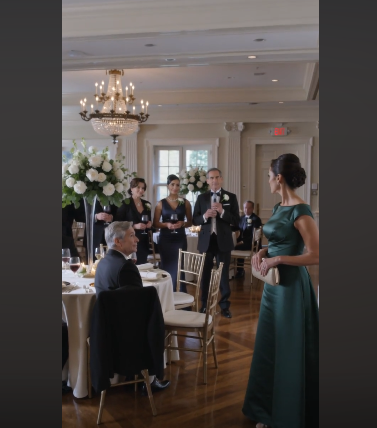
My Family Mocked Me at the Wedding, Then My Billionaire Husband Walked In and…
MY FAMILY LAUGHED WHEN I WALKED INTO MY SISTER’S WEDDING ALONE, “SHE COULDN’T EVEN FIND A DARE” MY FATHER SCREAMED, BEFORE PUSHING ME INTO THE FOUNTAIN. THE GUESTS CLAPPED. I SMILED THROUGH THE WATER AND SAID, ‘REMEMBER THIS MOMENT’ 20 MINUTES LATER, MY SECRET BILLIONAIRE HUSBAND ARRIVED, AND
THEY ALL WENT PALE.
My name is Meredith Campbell.
I was thirty-two years old when my father pushed me into a fountain in front of hundreds of guests at my younger sister’s wedding.
I still remember the exact moment the laughter changed.
I stood in waist-deep water wearing a soaked emerald designer dress, hair plastered against my face, mascara running down my cheeks while relatives pointed, whispered, and laughed.
My father looked triumphant.
My mother was trying to hide a smile.
My sister, Allison, looked delighted.
They believed they had finally put me where I belonged.
Below them.
Embarrassed.
Alone.
The family disappointment.
I smiled.
Not because anything was funny.
Because I knew something they didn’t.
They had no idea who I really was.
And they definitely had no idea who I had married.
Growing up inside the affluent Campbell family of Boston meant understanding one rule above all others:
Appearances mattered.
Our five-bedroom colonial home projected success.
My father, Robert Campbell, was a prominent corporate attorney.
My mother, Patricia, had once been a beauty queen and later transformed herself into the sort of socialite who knew precisely which charity board, designer, restaurant, and last name mattered during any given season.
And then there were their daughters.
Allison and me.
She was two years younger.
Somehow, she was always the one who got the light.
“Why can’t you be more like your sister?”
That sentence became the soundtrack of my childhood.
When I brought home straight A’s, Allison had straight A’s plus extracurricular accomplishments.
When I placed second in a science competition, my parents spent the weekend discussing Allison’s dance recital.
When I was twelve, my mother corrected my posture at family gatherings.
“Stand up straight, Meredith.”
“No one will ever take you seriously carrying yourself like that.”
Then she would place one proud hand on Allison’s shoulder.
“Your sister has natural grace.”
“You need to work harder.”
My sixteenth birthday remains one of the clearest memories.
My father stood for a toast.
I remember the anticipation.
For one foolish moment, I thought:
This one is mine.
Instead, he raised his glass and announced that Allison had been accepted into an elite summer program at Yale.
Everybody applauded.
My birthday cake stayed in the kitchen.
Forgotten.
College changed nothing.
I attended Boston University.
Maintained a 4.0 GPA.
Worked part-time.
My parents rarely attended anything involving me.
Meanwhile, they traveled across state lines for Allison’s performances at Juilliard.
At my graduation, my mother smiled tightly and told me my decision to pursue criminal justice was:
“Sensible.”
“At least you’re being realistic about your prospects.”
Allison’s arts degree was called:
Brave.
Passionate.
Special.
The pattern continued through adulthood.
A thousand small cuts.
Every holiday:
Comparison.
Every accomplishment:
Minimized.
Every flaw:
Magnified.
During my early career, I finally made a decision.
Stop telling them things.
I became emotionally distant.
Declined family events when I could.
Built a private life they could not evaluate.
The irony was that the life they assumed had become smaller was actually expanding faster than anything I had imagined.
I had found my calling in counterintelligence.
The work suited me.
Pattern recognition.
Patience.
Pressure.
Reading people who believed they were unreadable.
My career advanced quickly.
I learned to enter rooms without needing attention.
Make decisions without applause.
Keep secrets because lives depended on discretion.
By twenty-nine, I was leading specialized operations my family knew absolutely nothing about.
That was how I met Nathan Reed.
Not during some dramatic field operation.
At a cybersecurity conference.
I was representing the Bureau.
Nathan was presenting on emerging infrastructure threats.
He had built Reed Technologies from a college dorm-room project into a global security company worth billions.
His systems protected:
Government agencies.
Financial institutions.
Critical infrastructure.
International corporations.
But none of that mattered during our first real conversation.
What mattered was that Nathan listened.
Actually listened.
He didn’t compare me to anyone.
Didn’t look past me.
Didn’t ask what my parents thought.
On our third date, we walked beside the Potomac late at night.
He stopped.
Looked at me.
“I’ve never met anyone like you.”
I almost made a joke.
Instead, he said:
“You’re extraordinary, Meredith.”
“I hope you know that.”
Simple sentence.
It almost broke my heart.
Because I realized how rarely anybody in my biological family had said anything remotely similar.
Nathan and I married eighteen months later.
Private ceremony.
Two witnesses.
Marcus, my closest colleague.
And Nathan’s sister, Eliza.
We kept the marriage private for several reasons.
Our professional roles created legitimate security concerns.
Nathan was a high-profile technology executive.
My own work depended heavily on discretion.
But the deeper reason was mine.
I wanted one part of my life untouched by Campbell family commentary.
No comparisons.
No social analysis.
No questions about whether Nathan was “good enough” before they discovered his net worth.
No Allison.
Just us.
For nearly three years, that worked.
Then Allison’s wedding invitation arrived.
Gold embossing.
Heavy cardstock.
Exactly the kind of invitation Patricia Campbell would consider a reflection of moral character.
Allison was marrying Bradford Wellington IV.
He came from a banking family with old Boston connections.
To my parents, it was the perfect match.
Nathan was scheduled to be in Tokyo closing a major security contract involving Japanese government work.
When he saw my hesitation, he offered to move the trip.
“No.”
I told him.
“This contract matters.”
“I can survive one afternoon.”
“I’ll try to make the reception.”
He said.
“Even if it’s the end.”
So I drove alone to the Fairmont Copley Plaza.
Every mile closer tightened something inside me.
I had not seen most of my relatives in nearly two years.
At the valet, I checked myself in the mirror.
Emerald-green dress.
Diamond studs Nathan had given me.
Hair in a classic updo.
Minimal makeup.
I looked:
Successful.
Composed.
Untouchable.
Inside, I felt twelve years old again.
The ballroom had been transformed.
White orchids.
Roses.
Crystal chandeliers.
Gossamer drapery.
A visual announcement that the Campbells had successfully married into another important family.
I handed my invitation to the usher.
He checked the list.
“Miss Campbell.”
He frowned.
“Table nineteen.”
Not family table.
Of course.
My cousin Rebecca found me first.
“Meredith.”
“What a surprise.”
Her gaze moved deliberately to the space beside me.
“And you came alone.”
“I did.”
“How brave.”
Then came a completely invented family story.
Something about a professor I had supposedly dated.
According to my mother’s version, he left me for his teaching assistant.
None of it had ever happened.
I smiled.
“You must be confusing me with somebody else.”
More relatives arrived.
Same pattern.
Aunt Vivian commented on my “practical” haircut.
Uncle Harold asked whether I was still:
“Pushing papers for the government.”
Then wondered loudly whether those government jobs paid enough to attract a decent husband.
My cousin Tiffany, Allison’s maid of honor, greeted me with air kisses.
“Love the dress.”
“Discount retailer?”
“You always were amazing at finding bargains.”
Before I could answer:
“Allison wasn’t sure you’d show.”
“You missed the shower.”
“The bachelorette weekend.”
“The rehearsal dinner.”
Each had conflicted with work I could not discuss.
I had sent gifts.
Notes.
Apologies.
“Work commitments.”
I said.
Tiffany made air quotes.
“Your mysterious government job.”
Then:
“Bradford’s cousin works at the State Department.”
“He says administrative jobs can be so demanding.”
I smiled.
Let her believe I processed paperwork.
Truth did not owe everyone an introduction.
Then my mother appeared.
Pale-blue designer gown.
Perfect hair.
Perfect social smile.
“Meredith.”
“You made it.”
Her eyes performed a quick inspection.
Searching for weakness.
She found none obvious.
So:
“That color washes you out.”
“You should’ve consulted me before choosing something so bold.”
Before I could respond, the bridal party entered.
Allison looked spectacular.
Custom Vera Wang.
Cathedral train.
Bradford beside her.
My father looked at Allison as though she were proof that his entire life had been successful.
I could not remember him ever looking at me that way.
A maître d’ directed me toward table nineteen.
It was so far from the family table I could barely see them.
I sat with:
Distant cousins.
My mother’s former college roommate.
Several elderly relatives.
One great-aunt squinted at me.
“Are you one of the Wellington girls?”
“No.”
I said.
“Robert and Patricia’s daughter.”
“Allison’s sister.”
Her eyebrows rose.
“Oh.”
“I didn’t know there was another daughter.”
That one still hurt.
Dinner moved through elaborate courses.
Champagne.
Speeches.
From the edge of the ballroom, I watched my family celebrate.
Nobody looked toward me.
Family photographs had already been taken.
The schedule had supposedly been moved earlier.
Nobody informed me.
The maid of honor gave a speech about Allison being:
“The sister I never had.”
No one seemed to notice the actual sister sitting at table nineteen.
The best man called Allison:
“The Campbell golden child.”
People laughed.
I drank water.
Stayed clearheaded.
Then my phone vibrated.
Nathan.
LANDING SOON.
TRAFFIC HEAVY.
ETA 45 MINUTES.
When dancing began, I tried joining a group of cousins.
They subtly closed the circle.
I stepped back.
Went toward a quieter corner.
Just a little longer.
Nathan would arrive.
My mother found me.
“You could at least try to look happy.”
She whispered.
“Your sulking is becoming a topic of conversation.”
“I am not sulking.”
“I am observing.”
“Then observe with a smile.”
She glanced toward the Wellingtons.
“They’re important people.”
“Your sister has made an exceptional match.”
“Don’t embarrass us.”
Then:
“The least you could have done was bring a date.”
“Everybody is asking why you’re alone.”
I said nothing.
No point explaining that I was married.
No point explaining that my husband’s financial position dwarfed the Wellington fortune.
More importantly:
Nathan’s value had never been his balance sheet.
But that was the only part my mother would understand quickly.
Later, my father tapped a crystal glass.
The room quieted.
He stood beside an ice sculpture of intertwined swans.
“Today…”
He began.
“…is the proudest day of my life.”
I felt something old tighten inside me.
He praised Allison.
Her beauty.
Her discipline.
Juilliard.
Her charity work.
Then:
“She has never disappointed us.”
A direct sentence.
And an implied one.
I slipped toward the terrace doors.
Air.
Space.
Anything.
I had almost reached the courtyard when my father’s amplified voice stopped me.
“Leaving already, Meredith?”
Every head turned.
He stood approximately ten feet away.
Microphone still in hand.
My mother and Allison beside him.
“Just getting some air.”
“Running away.”
He said.
“Classic Meredith.”
Nervous laughter.
My skin burned.
“You’ve missed half the wedding events.”
He continued.
“You arrived alone.”
“Couldn’t even bring a plus-one.”
“I am sorry if attending by myself offended you.”
My father looked toward the crowd.
“She couldn’t find a date.”
Laughter.
“Thirty-two years old.”
“Not one prospect.”
“Meanwhile, her younger sister has married one of Boston’s most eligible bachelors.”
More laughter.
“Dad.”
I said quietly.
“This isn’t the time.”
“It is exactly the time.”
He stepped closer.
“This is a celebration of success.”
“Family achievement.”
“Something you would know very little about.”
Each word landed in the same places his words had landed since childhood.
I looked toward my mother.
Then Allison.
Neither intervened.
“You know why you’re alone.”
My father said.
“You hide behind that mysterious government job because you’ve always been jealous of Allison.”
Then:
“Always the disappointment.”
“Always the failure.”
He stood inches away.
Decades of resentment distorted his face.
“Please stop.”
“Stop telling the truth?”
His voice rose.
“The truth that you never measured up?”
“That you’re an embarrassment to the Campbell name?”
Something inside me changed.
Not anger.
Clarity.
“You have no idea who I am.”
I said.
“I know exactly who you are.”
Then he shoved me.
Both hands.
Shoulders.
Hard.
I stumbled backward.
No rail.
No chair.
Only:
Fountain.
Cold water swallowed me.
My hair collapsed.
Dress billowed around me.
Then clung.
Gasps came first.
Then laughter.
Applause.
Somebody whistled.
A man’s voice called something crude about my wet dress.
The photographer kept shooting.
I looked toward my family.
Father:
Pleased.
Mother:
Hiding amusement.
Allison:
Smiling.
That was the moment I stopped wanting anything from them.
I stood upright in the fountain.
Pushed wet hair from my face.
Looked at my father.
“Remember this moment.”
The courtyard quieted.
His smile faltered.
“Remember exactly how you treated me.”
I climbed toward the fountain edge.
“Remember what you chose to do to your daughter.”
Then:
“Because I will.”
I stepped out.
Water followed me across the expensive carpet.
Nobody helped.
That was fine.
At my high-school graduation, my father had interrupted my valedictorian speech to joke publicly that memorization was my only talent.
People laughed then too.
Seventeen-year-old Meredith shrank.
Thirty-two-year-old Meredith kept walking.
Inside the ladies’ room, I finally saw myself.
Mascara streaked.
Hair flat.
Emerald silk nearly black from water.
And yet:
I did not feel defeated.
Liberated.
My phone had remained inside my clutch at table nineteen.
A distant cousin had protected it for me.
I returned to the restroom.
Texted Nathan.
HOW CLOSE?
TWENTY MINUTES.
Then:
EVERYTHING OKAY?
I hesitated.
DAD PUSHED ME INTO THE FOUNTAIN IN FRONT OF EVERYONE.
Three dots.
Gone.
Back.
I’M COMING.
TEN MINUTES.
SECURITY ALREADY AT THE PERIMETER.
I stared.
Of course he had sent security.
Nathan planned for risk the way other men checked weather apps.
The bathroom door opened.
A young woman entered.
She stopped when she saw me.
“Oh.”
“Are you okay?”
“I’m fine.”
“Just wet.”
She hesitated.
“What your father did was awful.”
Unexpected kindness almost broke me more effectively than cruelty.
“Thank you.”
“I have a spare dress in my car.”
She offered.
“That is incredibly kind.”
“I have one too.”
Professional habit.
Backup clothes.
Then:
“Would you walk with me to the valet?”
“I don’t want to go through the ballroom alone.”
“Of course.”
She smiled.
“Emma.”
“Bradford’s stepsister.”
“Technically.”
“I’m the Wellington family outlier.”
“Meredith.”
I shook her hand.
“Campbell family scapegoat.”
Emma laughed.
She helped me use a side exit.
I retrieved a simple black sheath dress and flats from the Audi.
Ten minutes later:
Dry.
Fresh makeup.
Hair adjusted as well as possible.
I looked into the mirror.
Top of my class.
Quantico.
Operations leadership.
Senior officers who trusted my judgment.
A husband who respected me.
None of those people required Patricia Campbell’s approval.
That realization steadied me.
My phone vibrated.
Nathan:
IN POSITION.
I walked back inside.
My mother was speaking to friends.
“Always been difficult.”
“We tried everything.”
“The best schools.”
“Therapists.”
“Some people simply refuse to thrive.”
One woman sighed.
“Such a shame.”
“Especially with Allison doing so well.”
Then Patricia noticed me.
“Meredith.”
“You look dry.”
“Yes.”
“One of many professional habits.”
Her friends suddenly needed drinks.
I waited.
“Was humiliating me part of today’s schedule…”
“…or did Dad improvise?”
“Don’t be dramatic.”
“He lost patience with your antisocial behavior.”
“Pushing your adult daughter into a fountain is not a normal response to antisocial behavior.”
“Maybe if you had made an effort.”
She whispered.
“Brought a date.”
“Participated.”
I studied her.
No protection.
Only irritation because I complicated the wedding image.
“I have spent my entire life trying to take up as little space as possible in this family.”
I said.
“And somehow…”
“That was still too much.”
Then:
Car doors outside.
Several.
Security personnel entered.
My mother frowned.
“What is happening?”
I checked my watch.
“Right on time.”
A Maybach arrived.
Two security vehicles behind it.
The ballroom noticed.
Conversations slowed.
Nathan’s lead security men entered first.
Marcus and Dmitri.
Professional scan.
Perimeter.
My father approached, offended.
“This is a private event.”
Marcus barely acknowledged him.
Dmitri touched his earpiece.
“Perimeter secure.”
Then Nathan entered.
Six-foot-two.
Custom suit.
Wind in his hair from the rushed arrival.
He scanned the room once.
Then saw me.
His face softened.
People moved aside without being asked.
Nathan walked directly toward me.
“Meredith.”
He took both my hands.
“Sorry I’m late.”
“You’re right on time.”
He kissed me.
Not theatrically.
Like my husband coming home.
Then turned toward Patricia.
“Mrs. Campbell.”
“I’m Nathan Reed.”
“Meredith’s husband.”
My mother’s face moved through:
Confusion.
Disbelief.
Calculation.
Then artificial delight.
“Husband?”
“Three years next month.”
Nathan said.
“We keep our private life private.”
My father pushed through the crowd.
“What is this?”
“Some kind of prank?”
Then:
“Hiring security and an actor at your sister’s wedding?”
Nathan’s expression barely changed.
“Mr. Campbell.”
“I’m Nathan Reed.”
“CEO of Reed Technologies.”
Silence.
Even my father knew the name.
Global security company.
Government contracts.
Critical systems.
Estimated value in the billions.
“That isn’t possible.”
He whispered.
“We would have known.”
Nathan looked genuinely curious.
“Would you?”
Then:
“When exactly have you shown interest in Meredith’s actual life?”
Allison appeared.
Bradford beside her.
“What is happening?”
My mother answered weakly.
“Apparently…”
“Your sister has a husband.”
Allison scoffed.
“She is making this up.”
Nathan’s arm settled lightly around me.
“Mrs. Wellington.”
“Congratulations.”
“I apologize for missing the ceremony.”
“Business in Tokyo kept me away longer than expected.”
His manners made Allison’s behavior look even worse.
Somebody behind Bradford checked his phone.
Then:
“Oh my God.”
“That really is Nathan Reed.”
“Forbes.”
“Estimated net worth…”
The number spread.
Approximately twelve billion.
My mother gripped a chair.
“I don’t understand.”
“Why didn’t you tell us?”
For once, I answered gently.
“When have you ever wanted to hear about my success?”
She had nothing.
Nathan looked toward my father.
“I arrived in time to see what happened.”
Robert’s face changed.
“I saw you publicly humiliate your daughter.”
“I saw you push her into the fountain.”
Then:
“My security team was prepared to intervene.”
“Meredith signaled them not to.”
The room became completely silent.
Nathan continued.
“That is the person your daughter is.”
“Even after you assaulted and humiliated her…”
“She still did not want to destroy her sister’s wedding.”
My father tried:
“Now listen—”
“No.”
Nathan said.
“You listen.”
His voice remained controlled.
That made it more effective.
“Fortunately…”
“My wife is a better person than I am.”
“Because if somebody treats her that way again…”
“My response will be far less patient.”
I touched his hand.
Enough.
Then the ballroom doors opened again.
Marcus.
Sophia.
My Bureau team.
They approached.
Professional.
Focused.
“Director Campbell.”
Sophia said.
“I apologize for interrupting.”
“We have a developing situation requiring your authorization.”
Director.
The word traveled through the ballroom.
My father’s face wrinkled in confusion.
“Director of what?”
He almost laughed.
“Some little government office?”
Nathan smiled.
Sharp.
“Your daughter is the youngest deputy director of counterintelligence operations in Bureau history.”
Another silence.
Then whispers.
My mother looked faint.
Allison stared.
“That isn’t possible.”
I looked at her.
“What isn’t?”
“That I have a career?”
“That I succeeded?”
“That your disappointing older sister became something when nobody here was watching?”
No answer.
Marcus held out a secure tablet.
I read the summary.
“Proceed with option two.”
I said.
“Increase surveillance on the secondary target.”
“I want a full briefing in twenty minutes.”
“Yes, ma’am.”
Marcus took the tablet.
Simple exchange.
No performance.
Real work.
Real responsibility.
The room understood.
Nathan checked his watch.
“We should leave.”
I nodded.
Then looked toward Allison.
“Congratulations.”
“I genuinely wish you and Bradford happiness.”
She seemed unable to speak.
Bradford stepped forward.
To his credit:
Composed.
Respectful.
He shook Nathan’s hand.
Then mine.
“Director Campbell.”
“It is an honor.”
“I hope we get a chance to know each other better.”
The sincerity surprised me.
“I’d like that.”
My father finally found his voice.
“Meredith.”
“Wait.”
“We need to talk.”
Then came the rewrite.
“We’ve always wanted what’s best.”
“We’ve always been proud.”
“No.”
I said.
“You haven’t.”
Not angrily.
Just accurately.
“But that’s all right.”
Then:
“I don’t need you to be proud anymore.”
Nathan and I left.
Behind us:
Whispers.
Questions.
The Campbell family narrative was collapsing.
So was something inside me.
Something I had carried since childhood.
On the rooftop, a helicopter waited.
I felt lighter.
Nathan leaned close over the rotor noise.
“You okay?”
“Surprisingly…”
“Yes.”
Then Sophia approached.
“Director.”
“Development.”
“The ambassador is requesting you immediately.”
“Anomalous signals in the surveillance package.”
I switched automatically into work mode.
“Real?”
“Unfortunately.”
“Reroute us.”
“Alert duty analysts.”
“Full brief on arrival.”
“Already done.”
Nathan touched my arm.
“Go.”
“I’ll meet you there.”
That was our marriage.
Two serious careers.
Emergencies.
Schedules.
Interruptions.
But never competition.
Never punishment for having responsibilities.
Before we could move, Patricia appeared through the access door.
Breathless.
Hair no longer perfect.
“Meredith.”
“You cannot leave like this.”
“I have a work emergency.”
“National security will have to take priority over family reconciliation.”
She stared.
“National security.”
Then:
“You really are…”
“Yes.”
“Deputy director.”
“Eighteen months.”
“Assistant director before that.”
“But why hide it?”
“We would have been proud.”
I finished the sentence for her.
“Would you?”
She flinched.
“Or would you have said I got it through connections?”
“Compared it to Allison?”
“Found some way to make it smaller?”
No answer.
Then Patricia asked about Nathan.
Three years.
I could hear what mattered to her.
Not:
Is he kind?
Does he love you?
Only:
One of the wealthiest men in the country?
“Our marriage was private for security reasons.”
I said.
“And because I wanted one relationship untouched by Campbell family critique.”
The pilot signaled.
I needed to go.
Patricia’s voice changed.
“Will you come back?”
I looked at her.
“To talk.”
She continued.
“To let us know you.”
There was genuine uncertainty in her face.
“I don’t know.”
I said honestly.
“That depends on whether you’re interested in me…”
“…or the successful version of me that finally meets your approval.”
She had no immediate answer.
“Think about it.”
I said.
Then she stopped me once more.
“Your father…”
“He’ll never admit it.”
“But what he did today was wrong.”
Then, after a pause:
“Unforgivable.”
Not an apology.
But more acknowledgment than I had received from her in thirty-two years.
“Thank you.”
I said.
Then left.
The security issue was legitimate.
But manageable.
Encrypted communications.
Potential breach.
My team contained it within a few hours.
By eleven that night, Nathan and I stood on the terrace of our penthouse overlooking the Charles River.
He loosened his tie.
“Some wedding.”
“Not how I planned introducing you.”
“I thought it went well.”
I laughed.
“The look on your father’s face when they called you director…”
He smiled.
“Worth the trip from Tokyo.”
My phone buzzed.
Emma.
The family is in total meltdown.
Your dad keeps insisting there must be a mistake.
Your mom has gone weirdly quiet.
Allison locked herself in the bridal suite.
Also, I Googled your husband and holy crap.
Also, also, I’m sorry they’ve treated you terribly all these years.
Drink sometime?
— Your new favorite cousin.
I showed Nathan.
“Favorite cousin?”
“She helped me after the fountain.”
“Offered me clothes.”
“Walked me outside.”
Nathan nodded.
“Unexpected allies.”
The phone continued.
Relatives who had not contacted me for years.
Birthday wishes arriving months late.
Lunch invitations.
Distant cousins suddenly curious.
My father sent:
We should discuss recent developments at your earliest convenience.
I silenced everything.
“They aren’t reaching out to Meredith.”
I told Nathan.
“They’re reaching out to Director Campbell…”
“…wife of Nathan Reed.”
“Does that surprise you?”
“No.”
“But it clarifies things.”
Then I slept.
For perhaps the first time in years, I understood clearly that I already had family.
Nathan.
My colleagues.
Friends.
People who showed up.
People who knew me without requiring a prestigious title.
Three weeks later, Nathan and I sat inside Thinking Cup on Newbury Street.
Coffee.
Quiet corner.
Autumn outside.
He stirred his Americano.
“Your mother called again.”
“Third time this week.”
“I know.”
“Sunday dinner.”
“You considering it?”
I watched pedestrians pass outside.
“I don’t know.”
“Part of me thinks it’s damage control.”
The wedding story had traveled.
My father’s law partners were reportedly concerned about his judgment.
My mother had been quietly removed from leadership of one of her favorite charitable boards.
Publicly pushing your government-official daughter into a fountain while insulting her career did not play particularly well once people learned the fuller context.
“And the other part?”
Nathan asked.
“The other part wonders if this is the first time they are genuinely curious about who I am.”
The weeks had brought:
Calls.
Letters.
Emails.
My father alternated between defensiveness and awkward reconciliation attempts.
My mother apologized more directly.
Though even her apologies sometimes included:
“You should have told us.”
Allison sent one message from her honeymoon.
WE NEED TO TALK WHEN I’M BACK.
Emma and I had met for drinks.
She told me she had always felt like an outsider among the Wellingtons.
No agenda.
No sudden interest in my access.
Just:
Curiosity.
Friendship.
I liked her.
“I’ve been talking about this with Dr. Chin.”
I told Nathan.
A therapist I had started seeing.
“She said boundaries are not punishment.”
“They’re protection.”
“I like that.”
Nathan replied.
“I think maybe I can have some relationship with them.”
I said.
“But not the old one.”
“No comparisons.”
“No humiliation.”
“No making myself smaller.”
“And if they cannot do that…”
“I continue with the people who can.”
Nathan smiled.
“Sounds reasonable.”
My phone rang.
Marcus.
Work.
“We’ve got movement on Richardson.”
He said.
“Team is positioned.”
“I’ll be there in twenty.”
Nathan was already collecting his things.
“Need a ride?”
“I have the Bureau car.”
He kissed me.
Then we went in opposite directions.
Nathan to his technology work.
Me to mine.
No resentment.
No competition.
That evening, after the operation concluded successfully, I called Patricia.
“Sunday dinner.”
I said.
“Nathan and I will come.”
Then:
“But I have conditions.”
The old Patricia would have bristled.
This version said:
“Tell me.”
Dinner was awkward.
Predictably.
Robert moved between:
Defensive explanations.
Forced curiosity.
Actual curiosity.
Patricia overexplained every dish as though Nathan were an ambassador.
Allison and Bradford arrived late.
Bradford seemed genuinely pleased to see us.
Allison kept her distance.
Yet:
Small moments happened.
My father asked Nathan thoughtful questions about cybersecurity work with public agencies.
My mother brought out a box.
Inside:
My childhood achievements.
Debate trophies.
Science medals.
Academic certificates.
Things I assumed she had thrown away.
“I kept them.”
She said quietly.
I did not know how to answer.
The most unexpected moment came after dinner.
Allison asked me to walk into the garden.
The same garden where we played as children.
For once:
She struggled to speak.
“I didn’t know.”
She said.
“Your work.”
“Nathan.”
“Your life.”
“You never asked.”
I answered.
“I know.”
She twisted her wedding ring.
Then:
“I think I liked being the favorite.”
Honest.
Painfully.
“It was easier not to question why.”
I said nothing.
She continued.
“Bradford says I should examine why your success threatens me.”
“He thinks family therapy might help.”
I studied my sister.
Not the golden child.
Not the bride.
A woman who had spent her entire life being told she had to remain the one who shone brightest.
That role had damaged her too.
Not in the same way.
But damage nonetheless.
“I’ll consider it.”
I said.
“Eventually.”
It was not forgiveness.
It was an opening.
Months passed.
Slow progress.
Weekly dinners became less tense.
My parents learned some boundaries.
My father entered anger-management therapy.
Reluctantly.
Then, according to Patricia, with increasing seriousness.
My mother and I attempted occasional outings.
Sometimes:
Tension.
Sometimes:
Actual laughter.
Healing was not linear.
Old behaviors returned.
Then were confronted.
The difference was accountability.
My father could no longer explode and expect everyone to pretend the explosion never occurred.
My mother could no longer criticize and call it love without being challenged.
Allison could no longer treat comparison as normal sisterhood.
And I could no longer use silence as the only boundary I knew.
The biggest change was mine.
I stopped measuring myself through their eyes.
I stopped minimizing good things because I feared making someone uncomfortable.
I stopped accepting disrespect as the entry fee for family membership.
One year after Allison’s wedding, Nathan and I hosted a gathering at our home.
Not a grand society event.
The people mattered more than the room.
My Bureau colleagues.
Nathan’s sister and family.
Friends.
Emma and her boyfriend.
Some extended relatives.
And:
My parents.
Allison.
Bradford.
Chosen family mixed with biological family.
Not seamlessly.
Honestly.
Standing in the kitchen before dessert, I watched my father talking animatedly with Marcus about fishing.
Patricia was showing Emma photographs on her phone.
Allison laughed at something Bradford whispered.
Nathan came behind me.
Wrapped his arms around my waist.
“Happy?”
I leaned into him.
Looked through the doorway.
Not perfect.
Still complicated.
But real.
“Yes.”
I said.
“I am.”
For years, I believed family meant the people connected to you by blood.
Then I believed chosen family had to replace biological family entirely.
Now I understood something more nuanced.
Family is behavior.
Who shows up.
Who sees you.
Who celebrates your success without needing it to become smaller.
Who supports you when you fail without treating failure as your identity.
Sometimes those people share your DNA.
Sometimes they don’t.
And sometimes biological family can become family again only after they stop treating blood as permission to harm you.
The fountain was not the moment my family learned I had married a billionaire.
It was not the moment they learned my title.
It was the moment I stopped needing either fact to prove I deserved respect.
Nathan’s arrival changed what the room thought of me.
My career title changed it again.
But those things did not create my value.
They exposed how shallow everybody else’s measurement had been.
That difference mattered.
If Nathan had arrived in an old sedan instead of a Maybach, my father still would have been wrong to push me.
If I had worked an ordinary government desk instead of leading operations, my mother still would have been wrong to dismiss me.
If I had been single at thirty-two, Allison still would not have been more worthy of love.
I understood that now.
That was why reconciliation became possible.
Not because they finally learned I was impressive.
Because I no longer required them to believe I was impressive.
They could meet me honestly.
Or not.
Either way:
I remained myself.
Sometimes I still remember standing in that fountain.
Cold water.
Laughter.
Cameras.
My father looking pleased.
I remember saying:
“Remember this moment.”
For a while, I believed those words meant:
Someday you’ll regret humiliating someone powerful.
They didn’t.
What I meant—though I did not understand it yet—was something simpler.
Remember the moment I stopped participating in my own diminishment.
Everything after that was consequence.
The family learning the truth.
Nathan walking in.
My title being spoken aloud.
The rooftop conversation.
Therapy.
Boundaries.
Sunday dinners.
Repair.
But the real reversal happened before any Maybach arrived.
It happened while I was still soaking wet.
Standing alone.
When I realized I could climb out of the fountain without waiting for anyone in that room to offer me a hand.
