At our divorce hearing, my husband looked across the courtroom and said, “You’ll
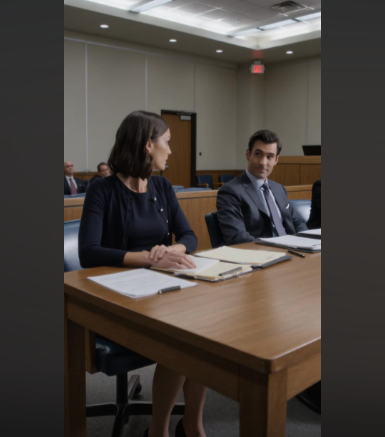
He Said, “You’ll Never Touch My Money Again.” the Judge Read My Letter and Couldn’t Stop Laughing
AT THE DIVORCE HEARING, MY HUSBAND LOOKED PROUD. “YOU’LL NEVER TOUCH MY MONEY AGAIN.” HIS MISTRESS SAID, “THAT’S RIGHT, SWEETHEART.” HIS MOTHER SMILED. “SHE DOESN’T DESERVE A CENT.” THE JUDGE OPENED MY LETTER, SCANNED IT, THEN LAUGHED HARD. HE SAID QUIETLY, “OH, THIS IS GOOD.” THEY LOOKED TERRIFIED.
THE LETTER THAT CHANGED THE ROOM
The wooden chair felt colder than it should have.
I sat with my hands folded in my lap because that was how Benjamin liked women to look when men with money were talking.
Still.
Contained.
Grateful.
Across the courtroom, my husband leaned toward his lawyer and whispered just loudly enough for me to hear.
“You’ll never touch my money again.”
He smiled after he said it.
That smile was familiar.
It was the same one he wore when he explained why I did not need my own checking account.
The same one he used when he told me grocery spending had to be approved.
The same one he gave me after cutting the limit on my household card and calling it “financial discipline.”
Behind him sat Veronica Hayes.
Blonde hair.
Red lipstick.
Designer bag positioned carefully on her lap.
She leaned forward.
“That’s right, sweetheart.”
Sweetheart.
My word once.
Now hers.
Beside her sat Benjamin’s mother, Dorothy Foster, silver hair pulled into the same severe knot she had worn for most of the eight years I knew her.
Dorothy looked at me as if I were an error the family had finally corrected.
“She doesn’t deserve a cent.”
Her voice traveled.
Judge Evelyn Hawkins looked up.
Mid-fifties.
Gray at the temples.
No visible patience for theatrics.
Dorothy lowered her eyes.
Benjamin did not.
He still believed the day belonged to him.
His legal team had spent the morning explaining why I should receive as little as possible.
Three attorneys.
Charts.
Schedules.
Financial summaries.
A story carefully built from selected facts.
Carmen Foster had not earned income in seven years.
True.
Carmen Foster had no current retirement account in her own name.
True.
Carmen Foster had limited liquid assets.
True.
Carmen Foster had depended financially on her husband.
Also true.
What they left out was how that dependence had been constructed.
I had a marketing degree.
I had worked at a small agency downtown.
I liked the work.
Local campaigns.
Brand strategy.
Copy.
Client presentations.
Nothing glamorous.
Mine.
Then Benjamin convinced me the salary was too small to matter.
He said he earned enough.
He said the house needed attention.
He said later we would have children and I would be grateful I had stepped away early.
Within a month of quitting, my paycheck disappeared.
Then my independent bank account.
Then my credit card.
Then most of my friends.
Not all at once.
Control rarely announces itself.
It arrives disguised as efficiency.
At first, Benjamin handled everything because he was “better with money.”
Then he questioned small purchases.
Eight dollars at a coffee shop.
Twenty-three dollars at a bookstore.
A blouse I bought without asking.
He called it budgeting.
I called it marriage.
Eventually, I stopped going out because every receipt became a conversation.
Dorothy called that maturity.
“She finally understands what it means to support a successful husband.”
She said it once over roast beef.
I remembered smiling.
That smile had probably looked obedient.
It was actually the beginning of disappearance.
Now Benjamin’s lead attorney stood.
“Your Honor, my client has offered a reasonable transitional-support package.”
He held up a binder.
“Mrs. Foster is thirty-six years old.”
“Healthy.”
“Educated only through a general marketing degree obtained more than a decade ago.”
I almost smiled at only.
“She has voluntarily remained outside the workforce.”
Voluntarily.
That word did a lot of work for Benjamin.
The attorney continued.
“Mr. Foster should not be punished for supporting his wife during the marriage.”
Judge Hawkins asked:
“Is anyone arguing support itself is misconduct?”
“No, Your Honor.”
“Then use less loaded language.”
The lawyer nodded.
Benjamin’s smile tightened.
My attorney, Daniel Peterson, sat beside me.
He looked nervous.
That was intentional too.
Not his nerves.
My misunderstanding of them.
For weeks I assumed Daniel was weak because he did not fight every accusation dramatically.
Then he taught me something useful.
A family court is not improved by turning every disagreement into performance.
He had been waiting.
Not for a surprise trick.
For authenticated records.
“Your Honor.”
Daniel stood.
“One final submission before temporary financial findings.”
Benjamin’s team looked over.
Daniel held a white envelope.
Inside was not a letter announcing federal crimes like a movie twist.
Inside was a short declaration from me and a set of notices already disclosed under seal to counsel.
The declaration explained three things.
First:
Certain accounts Benjamin characterized as separate had been placed under preservation review in a parallel federal investigation.
Second:
Several asset schedules provided in the divorce appeared incomplete when compared with third-party records lawfully obtained through discovery.
Third:
I had been interviewed as a witness in that investigation after financial institutions and Benjamin’s own business records raised questions unrelated to my divorce claims.
The envelope mattered because Judge Hawkins had not yet seen the sealed federal preservation notices.
The documents had arrived the previous afternoon.
Benjamin’s attorneys had received them too.
Their reaction told me Benjamin had not explained what they meant.
Daniel approached the clerk.
The clerk delivered the packet.
Judge Hawkins read.
Her expression changed slowly.
Not to delight.
Not laughter.
Judges do not usually celebrate one spouse’s possible indictment in the middle of a divorce.
Her eyebrows rose.
She read one page again.
Then looked over her glasses.
“Counsel.”
Benjamin’s lead lawyer stood.
“Yes, Your Honor.”
“Is your client aware that the United States Attorney’s Office has requested preservation of records tied to Foster Holdings and three related entities?”
The lawyer turned toward Benjamin.
Benjamin’s face went pale.
I knew then.
He had not told them.
The lawyer asked for a moment.
Judge Hawkins gave it.
Whispers at counsel table.
Veronica straightened in the gallery.
Dorothy stopped smiling.
Benjamin looked at me.
For the first time all day, there was no confidence in his face.
Only calculation.
Judge Hawkins said:
“This court is not a federal criminal forum.”
“Whatever is being investigated elsewhere will be handled elsewhere.”
She looked toward both legal teams.
“But if assets potentially subject to federal restraint or forfeiture are also being presented here as marital or separate property, I need accurate schedules.”
She closed the packet.
“Before anyone asks me to divide anything.”
That was the first crack.
Not an arrest.
Not a courtroom collapse.
A judge refusing to accept Benjamin’s financial narrative at face value.
The room changed anyway.
Because Benjamin had built his strategy around one assumption.
That I did not know enough to ask the right questions.
Three years earlier, I had believed he loved me too much to lie.
Six months earlier, I learned he was sleeping with Veronica.
Two months later, I learned he was hiding money.
And after that, the story became bigger than our marriage.
But the beginning was ordinary.
A receipt in a trouser pocket.
A lie told too smoothly.
And a wife finally deciding to pay attention.
The first time I knew Veronica’s name mattered, Dorothy said it over Sunday dinner.
“Veronica Hayes.”
She cut her roast beef into neat pieces.
“Interior designer.”
“Excellent family.”
“Country club.”
She said each fact as if reading qualifications from a résumé.
Then she looked at Benjamin.
“You should let her redo the guest rooms.”
Benjamin paused.
Not long.
Half a second.
Enough.
“I’ve heard of her.”
He said.
That was a lie.
I did not know it yet.
I only knew the way his face changed.
Interest pretending to be recognition.
By then, I had already spent weeks feeling like something in our marriage had gone slightly out of alignment.
Late nights.
Work calls taken outside.
New cologne.
Receipts disappearing before I could see them.
A distance I kept trying to explain as stress.
When you live under financial control long enough, you become very good at explaining away your own unease.
You tell yourself the marriage is complicated.
You tell yourself successful men work late.
You tell yourself maybe you are ungrateful.
Then one Tuesday, I found a restaurant receipt in Benjamin’s trouser pocket.
Dinner for two.
Champagne.
Lobster.
Chocolate soufflé.
The total exceeded the monthly personal allowance he had set for me.
That night, he told me he had eaten at his desk.
Something in me stopped defending him.
I did not confront him immediately.
That surprised even me.
Maybe years of silence had trained me for the one time silence became useful.
I began with ordinary things.
His public calendar.
Social events.
Restaurant reservations visible on joint-account statements.
Dates.
Nothing stolen.
Nothing hacked.
Nothing from his work systems.
I wrote down the discrepancies.
Tuesday:
claimed client meeting.
Restaurant charge.
Friday:
said construction conference.
Hotel parking near the country club.
A second card appeared in our mail once before disappearing into his office.
The statement envelope bore only his name.
That mattered.
I did not open it.
I photographed the outside.
Then, after weeks of uncertainty, I saw Benjamin and Veronica together.
Not because I broke into his phone.
I went downtown after Lisa, my old friend, agreed to meet me near my former office.
Benjamin’s building was two blocks away.
While I waited at a crosswalk, I saw him leave.
Veronica beside him.
Her red coat unmistakable.
They walked close enough that no explanation would have made sense.
At the next corner, she took his hand.
I stopped.
They entered Romano’s.
The same Italian restaurant Benjamin once told me we could no longer afford for anniversaries.
Through the front window, I saw them seated at a corner table.
Benjamin leaned across.
Veronica touched his face.
He kissed her palm.
That was enough.
I did not spend two hours in a parked car following them through the city.
I did not need more pain to prove what I had already seen.
I called Lisa.
“I need coffee.”
She heard my voice.
“Now?”
“Yes.”
Twenty minutes later, I sat across from the woman I had slowly lost contact with after quitting my job.
Lisa Martinez was an accountant.
Curly red hair.
Blunt questions.
The kind of friend Benjamin had always described as “a little intense.”
I now understood why.
She asked:
“Do you want comfort or strategy?”
“Strategy.”
“Good.”
I told her about the affair.
The financial restrictions.
The unknown card.
The fact that Benjamin controlled all marital information.
Lisa’s expression changed.
“First.”
“You need your own lawyer.”
“I don’t have money.”
“You have marital rights.”
“That is not the same as having cash.”
“True.”
She opened her laptop.
“We find counsel who handles financially controlling spouses.”
“Second.”
“You stop gathering information you are not entitled to access.”
I stared.
“I haven’t.”
“Good.”
“Keep it that way.”
“Third.”
“You request your own credit report.”
“Your own bank history.”
“Joint tax returns.”
“Joint-account statements.”
“Property records.”
“Public business filings.”
“Things you can lawfully obtain.”
That night, I opened a checking account in my own name with money from a small tax refund that had been issued jointly but divided by agreement after Lisa insisted I document it.
The amount was modest.
The feeling was not.
My own login.
My own card.
My own password.
I met attorney Daniel Peterson two days later.
He did not look impressive.
Brown suit.
Worn leather portfolio.
No intimidation.
He asked me to tell the story from the beginning.
Not affair first.
Control first.
When I finished, he said:
“Do not confront him yet.”
“Why?”
“Because if he is moving assets in anticipation of divorce, disclosure rules and subpoenas are more useful than whatever you can photograph in a private office.”
That sentence changed everything.
I admitted I knew Benjamin hid a key to his home office.
Daniel’s face hardened.
“Do not use it.”
“But if there are records—”
“Then we request them.”
“If he destroys them?”
“We send preservation notices once proceedings begin.”
“If there is criminal conduct?”
“We refer what we can support.”
“You do not become an investigator because your husband lies.”
I hated the restraint.
Then I understood it.
If Benjamin wanted to portray me as unstable, invasive, or dishonest, nothing would help him more than me trespassing through locked files.
So I stopped thinking like a betrayed wife.
I started thinking like a litigant.
Public filings came first.
Foster Holdings LLC.
Several property entities.
Two I had never heard named at home.
Then real-estate records.
Properties Benjamin once described as “client projects” were owned partly by entities he controlled.
That could be legitimate.
A real-estate developer can hold projects through LLCs.
The existence of shell entities is not a crime.
Lisa repeated that every time my imagination accelerated.
“What matters is what the money does.”
She said.
Daniel obtained our joint tax returns.
Those showed distributions from entities Benjamin had never disclosed to me.
Not necessarily criminal.
Important to divorce.
Then the financial affidavit Benjamin prepared after filing for dissolution omitted two of those entities entirely.
That was the first clear legal problem inside our case.
Daniel served discovery.
Bank statements.
Business valuations.
Entity ledgers.
Loan documents.
Credit-card records.
Benjamin’s lawyers objected.
Then produced partial responses.
Then more.
As months passed, the numbers became inconsistent enough that Daniel hired a forensic accountant.
Not Lisa.
Conflict and professionalism mattered.
The expert, Andrea Kim, found unexplained transfers between Foster Holdings and several companies with limited public operations.
One account showed large cash deposits.
Then property purchases.
Then rapid sales.
Again:
Potentially suspicious.
Not proof of laundering.
Andrea said:
“We identify the pattern.”
“Then let institutions with authority determine what it means.”
The divorce case had not created a criminal investigation yet.
But one bank had already filed internal suspicious-activity reports before we knew anything.
That became clear later.
Benjamin had been on someone else’s radar.
I was not the first person to notice.
I was simply the first person close enough to ask why.
The criminal side entered my life through a preservation request.
Not through a detective handing me a wire.
Not through a secret cooperation agreement promising I could keep forty percent of seized assets.
Real investigations do not bargain with spouses that way.
One afternoon, Daniel called.
“Do not panic.”
“That is never a good beginning.”
“A federal subpoena has been served on one of the banks involved in Foster Holdings.”
My hand tightened around the phone.
“Because of us?”
“No.”
“That is why I told you not to panic.”
The bank had already been reviewing unusual transaction patterns involving several real-estate entities.
A federal financial-crimes task force had opened a case.
The divorce discovery overlapped with records under separate investigation.
Daniel connected with an assistant United States attorney through proper channels.
I was asked to meet.
Not as an informant recruited to spy on my husband.
As a potential witness with firsthand knowledge of household finances and financial coercion.
Detective Antonio Rivera attended because his local financial-crimes unit had been reviewing related real-estate activity.
Assistant United States Attorney Sarah Chen led the interview.
She was precise.
“What documents did you obtain yourself?”
I listed them.
Joint statements.
Joint tax returns.
Public business records.
Court discovery produced through counsel.
“What private systems did you access?”
“None.”
“Work computers?”
“No.”
“Locked office files?”
“No.”
“Passwords?”
“No.”
She nodded.
“Good.”
Then:
“Did Benjamin ever ask you to sign business documents?”
“Yes.”
“Which?”
I did not know.
That embarrassed me.
For years Benjamin placed signature tabs in front of me.
Household tax forms.
Insurance papers.
Refinance packages.
Occasional acknowledgments.
I had trusted him.
Sarah did not shame me.
She said:
“We need copies of anything bearing your signature.”
Those came through discovery.
That was where another problem appeared.
Two property-entity documents showed me as having approved transactions I did not remember.
One listed me as a witness to a capital contribution.
Another contained a signature resembling mine beside language acknowledging source-of-funds information.
I stared at it.
“That looks like my signature.”
“Did you sign it?”
“I don’t know.”
Sarah looked at me carefully.
“Do not guess.”
I breathed.
“I do not remember signing it.”
“Would you normally sign a business certification without reading it?”
“Before this marriage, no.”
“During it?”
The question hurt.
“Sometimes Benjamin put papers in front of me and told me they were routine.”
She wrote.
That became another line of inquiry.
Not proof that Benjamin forged anything.
Authentication would decide.
The government did not ask me to plant recorders in his office.
They did not ask me to photograph cash exchanges.
They did not instruct me to follow him.
In fact, Sarah told me the opposite.
“Do not investigate him.”
“If he makes voluntary statements to you, tell your lawyer.”
“If you lawfully receive records, preserve them.”
“Otherwise, live your life.”
I almost laughed.
“My life is the problem.”
“No.”
She said.
“His conduct is the subject.”
That distinction mattered.
The federal investigation expanded through bank records, title records, tax records, subpoenaed corporate books, and later search warrants approved by judges based on probable cause.
My role remained limited.
I explained our household.
I identified property Benjamin called personal.
I described financial restrictions.
I identified Veronica.
I explained Dorothy’s involvement in social and family matters.
Nothing more.
The evidence became stronger without me risking anything illegal.
One entity had received large cash-heavy payments from companies later tied to illegal gambling and narcotics proceeds.
Another used real-estate purchases and resales to move funds through legitimate-appearing transactions.
Some of Benjamin’s project companies were genuine.
Some held mixed money.
That distinction mattered enormously.
The government’s forensic accountants traced which assets appeared connected to criminal proceeds and which had substantial legitimate funding.
No one said:
Everything will be seized.
No one could promise what I would keep.
Family court and federal forfeiture are different systems with different burdens.
Daniel explained it plainly.
“If an asset is marital but also criminal proceeds, the divorce judge cannot simply hand it to you.”
“If an asset is legitimate marital property, federal investigators do not get to take it because they dislike Benjamin.”
“So what happens to me?”
“We trace.”
I hated that word by then.
Everything depended on tracing.
Money.
Truth.
Responsibility.
Veronica entered the criminal case only when records tied gifts to accounts under review.
Her jewelry.
Trips.
Hotel stays.
A BMW down payment.
But receiving expensive gifts from a criminal boyfriend does not automatically make someone a money launderer.
Knowledge matters.
Intent matters.
Sarah said:
“Do not assume she knew.”
I did not like hearing that.
Still true.
Dorothy was even further outside.
She had encouraged the affair.
Humiliated me.
Helped Benjamin present a social image.
None of that made her part of financial crimes.
Pain does not convert people into co-conspirators.
That lesson irritated the angriest part of me.
It also kept me honest.
Meanwhile, Benjamin became more controlling as the divorce moved forward.
He closed the household card.
Daniel obtained an interim support order.
Benjamin complained I was “weaponizing the court.”
Judge Hawkins responded:
“Temporary support is not a weapon.”
“He controlled the only marital income.”
“Until equitable distribution is resolved, both parties need access to ordinary living expenses.”
For the first time in years, a neutral authority said out loud what Benjamin had convinced me not to believe.
Money used to control a spouse is not generosity.
It is leverage.
I returned to marketing work slowly.
Lisa introduced me to a nonprofit needing part-time communications help.
Ten hours a week.
Remote.
The first invoice I sent made me shake.
Not because it was large.
Because someone owed me money for my work.
Benjamin found out.
He laughed during a mediation session.
“Congratulations.”
He said.
“Carmen is making social-media posts now.”
I looked at him.
“I’m working.”
He smirked.
“With what skills?”
“My old ones.”
That answer surprised him.
He had spent years teaching me that skills decay when he stops valuing them.
They do not.
They get rusty.
Then they return.
By the time the federal preservation notices became visible in divorce court, I had been earning my own money for six weeks.
Not enough to support the old lifestyle.
Enough to remind me I had existed before Benjamin’s allowance.
That mattered more than any future settlement.
Then came the day Judge Hawkins read the sealed notice.
The courtroom did not laugh.
Benjamin was not arrested from counsel table.
Instead, the judge did something far more dangerous to his divorce strategy.
She stopped trusting his financial disclosures.
After reading the federal preservation notice, Judge Hawkins ordered both sides to submit updated sworn asset schedules.
No property transfers outside ordinary business operations.
No unusual withdrawals.
No new encumbrances without notice.
No destruction of financial records.
Standard restraints in a complicated divorce.
Benjamin looked as though she had ordered his execution.
His lawyer asked for a recess.
Granted.
In the hallway, Veronica cornered him before counsel could stop her.
“What does federal preservation mean?”
Her voice was low.
Angry.
Benjamin tried to move her aside.
“Not here.”
She grabbed his sleeve.
“Are my accounts involved?”
“I said not here.”
Dorothy arrived behind them.
“What is happening?”
I walked past with Daniel.
Did not slow.
Months earlier, I would have wanted to hear every word.
Now I understood something useful.
Not every conversation was evidence I needed.
The federal case would get what it was entitled to.
My divorce lawyer would get what our case required.
I did not need to stand in hallways collecting emotional scraps.
The updated disclosures changed everything.
Once Benjamin knew omissions could create contempt problems on top of an existing federal inquiry, his legal team became much more careful.
Foster Holdings appeared.
Then five related LLCs.
Then three investment accounts.
Then a cash-value insurance product.
Then a property interest in a warehouse partnership.
Not all hidden illegally.
Some simply undisclosed because Benjamin believed I would never know enough to ask.
Andrea Kim valued the legitimate businesses.
The numbers were less spectacular than Benjamin’s lifestyle suggested.
That was another surprise.
Benjamin was wealthy.
Not infinitely wealthy.
Debt sat behind several properties.
Cash flow depended on deals closing.
The expensive suits and country-club lunches had made abundance look more permanent than it was.
Veronica had seen the same performance I had.
Only from the other side.
Federal investigators later executed search warrants at two business offices and one storage facility.
Benjamin was not arrested that day.
Search first.
Review second.
Charges later.
The evidence produced by those searches showed that certain Foster entities had been used to accept funds from clients who wanted criminal proceeds integrated into real-estate transactions.
Properties purchased.
Improved.
Sold.
Profits distributed.
Some deals contained legitimate investor money beside tainted funds.
That mixture made tracing difficult.
Government accountants spent months reconstructing it.
Benjamin’s role appeared central.
Emails.
Instructions.
Beneficial-ownership records.
Private ledgers.
Veronica’s role looked different than my anger had wanted.
She knew Benjamin was married.
She knew he was hiding the affair.
She knew some gifts came through business accounts.
But prosecutors found no strong evidence she understood the larger criminal source of funds before the investigation became public.
She hired counsel.
Returned several high-value items voluntarily pending forfeiture review.
Cooperated.
No federal conspiracy charge.
That felt unfair for about three days.
Then I remembered:
Adultery is not money laundering.
Cruelty is not a substitute element of a criminal offense.
Dorothy was never charged with anything.
She had been awful to me.
That remained true.
The law was not designed to punish every awful person.
Also true.
Benjamin was indicted four months after the preservation notice appeared in our divorce case.
The charges included conspiracy to commit money laundering, substantive laundering counts tied to specified real-estate transactions, tax offenses, and false statements.
No giant list of every suspicious transaction.
Specific deals.
Specific money.
Specific intent.
He surrendered through counsel at the federal courthouse.
No agents bursting into Judge Hawkins’s courtroom.
No handcuffs beside Veronica.
He walked into the federal building wearing one of his expensive suits and came out several hours later under release conditions after a detention hearing.
Passport surrendered.
Certain transactions restricted.
Travel limited.
Business communications monitored through counsel where appropriate.
The photograph that circulated online showed him looking smaller.
I hated the satisfaction I felt.
Then let it pass.
The divorce case paused on some asset questions because the criminal forfeiture case had priority over property potentially traceable to offenses.
Judge Hawkins could not award me a house the federal government might later prove had been bought with tainted money.
Instead, the court divided what could be identified cleanly.
My premarital assets.
My current earnings.
Legitimate marital cash.
Retirement interests.
Household property.
Support.
Other issues reserved.
Benjamin’s lawyers stopped calling me a gold digger.
That was almost disappointing.
The narrative no longer worked when independent accountants showed I had not demanded his business.
I wanted accurate classification.
Daniel used the phrase over and over.
“Accurate classification.”
Not revenge.
Not half of everything.
Not whatever hurts him most.
Accurate classification.
I returned to work twenty-five hours a week.
Then thirty.
A former colleague hired me for a regional campaign.
My first larger client.
Then another.
I rebuilt slowly.
No secret marketing empire.
No overnight transformation.
I had been out of the workforce for years.
Technology had changed.
Platforms had changed.
I took online courses.
Made mistakes.
Asked younger people questions.
Updated my portfolio.
Some days I felt twenty-eight again.
Others I felt like a woman relearning a language she once spoke fluently.
Both were progress.
Benjamin hated it.
During one settlement conference, he said:
“You always told me you wanted to stay home.”
I stared.
“No.”
“You told me it made sense.”
“That is different.”
“You agreed.”
“Yes.”
“I agreed after you spent months telling me my work did not matter.”
His face tightened.
“That’s rewriting history.”
“Then we remember it differently.”
That was enough.
I no longer needed him to confess every piece of control for it to have been real.
The federal case moved toward trial.
Then Benjamin changed his plea.
The evidence was stronger than his lawyers expected.
One former business partner cooperated.
A real-estate closing attorney produced records.
A banking employee described compliance warnings Benjamin had overridden.
Forensic accountants traced specific criminal proceeds into three properties and several investment accounts.
Benjamin accepted a plea agreement covering the strongest counts.
No twenty-year sentence guarantee.
No promise that I would receive forty percent.
The agreement included restitution where victims could be identified, forfeiture of assets traceable to crimes, tax payments, and a prison recommendation subject to the judge.
At sentencing, the federal judge considered the amount laundered, sophistication, duration, acceptance of responsibility, and lack of prior record.
Benjamin received eleven years in federal custody.
Long.
Not forever.
His legitimate assets did not vanish automatically.
Some were used to satisfy tax obligations, debts, and divorce claims.
Some criminally derived property was forfeited.
Some mixed assets required negotiated resolutions.
The family home on Maple Street turned out to have been purchased mostly with legitimate inherited money and mortgage proceeds years before the laundering conduct charged in the case.
The government did not seize it.
Family court classified the marital interest separately.
That annoyed people who wanted perfect poetic justice.
I was relieved.
Truth should not bend for symbolism.
The house was eventually sold.
I received my lawful marital share after liens and costs.
Benjamin’s portion went partly toward obligations and legal expenses.
Dorothy hated that the house left the Foster family.
She blamed me.
I stopped caring.
Veronica left Benjamin before sentencing.
Not dramatically.
Her lawyer sent notice that she would not communicate except through counsel regarding disputed gifts.
I saw her once after that.
At a coffee shop.
She looked different without the courtroom performance.
We noticed each other.
Neither approached.
That was fine.
Not every woman connected to a bad man needs a reconciliation scene.
Sometimes distance is the healthiest shared conclusion.
The final divorce hearing happened almost a year after the morning Benjamin told me I would never touch his money again.
By then, the sentence sounded absurd.
Not because I had taken his money.
Because I no longer wanted my life defined by whether I could access it.
Judge Hawkins had the final asset schedules.
The federal forfeiture orders.
The valuations.
The support calculations.
My updated earnings.
Daniel’s proposed division.
Benjamin appeared by video from federal custody for the portions where his presence was required.
No tailored suit.
No Veronica.
No Dorothy sitting beside him like a board member.
Just a screen.
For several minutes, I could not reconcile the man on it with the husband who had once made me ask before buying shampoo at a different store because it cost two dollars more.
Judge Hawkins addressed property first.
Legitimate marital assets.
Separate assets.
Sale proceeds.
Retirement.
Debt.
The portions potentially connected to criminal proceeds had already been handled or reserved through federal process.
No windfall.
No punishment disguised as equity.
Then support.
Benjamin’s attorney argued that my return to work reduced long-term need.
Daniel agreed.
That surprised me.
He had always told me:
“Support is not a trophy.”
The court ordered a finite period of rehabilitative support based on the length of the marriage, years out of the workforce, and my current earning trajectory.
Enough to stabilize.
Not enough to remain dependent.
Exactly what I wanted.
Judge Hawkins turned toward me.
“Mrs. Foster.”
“Yes, Your Honor.”
“You understand the order does not guarantee the lifestyle you had during marriage.”
“Yes.”
“Your income will matter going forward.”
“Yes.”
“Good.”
Then she looked at Benjamin.
“Mr. Foster.”
He lifted his eyes.
“The court also finds that the financial disclosures in the early phase of this case were materially incomplete.”
His lawyer shifted.
Judge Hawkins continued.
“I am not making criminal findings.”
“Those belong elsewhere.”
“But nondisclosure increased litigation costs and required forensic work that would otherwise have been unnecessary.”
She awarded part of my attorney and expert fees from the legitimate marital estate.
That mattered more than revenge.
Financial secrecy had cost money.
The person who created the extra work would not force me to absorb all of it.
Then the marriage ended.
A few sentences.
Findings.
Orders.
Signature.
Eight years reduced legally to paper.
I expected something dramatic inside me.
Nothing.
Then relief.
Daniel packed his files.
“You okay?”
“Yes.”
“You sure?”
“No.”
He smiled.
“Better answer.”
Outside the courthouse, winter light reflected off the sidewalks.
I stood alone for a few minutes.
Not abandoned.
Alone.
Those had once felt like the same word.
They no longer did.
My apartment was smaller than Maple Street.
Two bedrooms.
Second floor.
No imported furniture.
No crystal chandelier.
No formal dining room nobody used.
The first thing I bought after moving in was a coffee table.
Three hundred dollars.
I paid with my own debit card.
No permission.
No receipt explanation.
I almost cried at the register.
Then laughed because crying over furniture felt ridiculous.
Lisa helped me choose a sofa.
She vetoed the white one.
“You are rebuilding your life.”
She said.
“You do not need upholstery that punishes red wine.”
Correct.
We bought dark blue.
I began hosting friends again.
At first, only Lisa.
Then two women from my old marketing agency.
Then a neighbor.
I had forgotten how ordinary friendship could feel when no one reported the bill afterward.
My career grew.
The nonprofit contract became a referral.
The referral became a local healthcare company.
Then a regional housing developer hired me for a six-month branding project.
I incorporated.
Not because I suddenly became a mogul.
Because invoices, taxes, insurance, and client contracts are easier when the structure is correct.
Carmen Foster Marketing.
The name felt strange.
Then mine.
I earned less in the first year than Benjamin once spent on watches.
That did not make my work small.
I understood that now.
Money matters.
So does authorship.
I had authored nothing in my old household except menus and apologies.
Now every proposal carried my name.
Every client decision required my judgment.
Every payment arrived because I created something another person valued.
I still made mistakes.
One campaign performed badly.
A client left.
Another paid forty days late.
I spent too much on software I barely used.
Independence is not a montage.
It is administration.
I loved even that.
Dorothy contacted me once after the divorce.
A letter.
Cream stationery.
Her handwriting looked exactly like I expected.
Carmen,
Whatever happened between you and Benjamin, I hope someday you understand that I only wanted the best for my son.
I stopped there.
Then continued.
I also understand now that I treated you unfairly.
I accepted his version of your marriage because it was easier than questioning him.
That was wrong.
Not a full apology.
Enough to be real.
I wrote back:
Thank you for acknowledging that.
I wish you well.
No reunion.
No Christmas dinner.
No need.
Forgiveness is not restoration of access.
That lesson applied to mothers-in-law too.
Benjamin wrote from prison.
More than once.
The first letter blamed everyone.
His partner.
The banks.
Federal prosecutors.
Veronica.
Me.
I read three paragraphs.
Stopped.
Put it away.
Months later, another arrived.
Shorter.
I made choices that I taught myself were temporary.
I told myself I was moving money, not hurting people.
I told myself controlling you was protecting the life I had built.
I know that sounds insane now.
That letter I finished.
He apologized for the affair.
The money restrictions.
The divorce strategy.
For calling my work insignificant.
For making dependence feel like love.
I believed parts of it.
Did not answer immediately.
Eventually, I sent one line through the approved prison correspondence system.
I hope you use the time to become more honest with yourself.
That was all.
He did not deserve cruelty.
He also did not deserve my labor repairing him.
That work belonged to him.
The letter that Judge Hawkins read became famous in my memory for the wrong reason.
For months, I thought of it as the moment Benjamin lost control.
Later, I understood it differently.
The letter did not expose him.
Institutions did.
Banks.
Subpoenas.
Forensic accountants.
Tax records.
Search warrants.
Prosecutors.
The letter simply told one judge that another legal process already existed and that she should not divide property using a financial story that might be incomplete.
That was all.
No laughter.
No instant arrest.
No federal agents waiting behind the courtroom doors for a dramatic cue.
The real power was that the room had to slow down.
Benjamin had spent years winning by moving faster than I could question him.
He controlled the account.
The receipt.
The explanation.
The timing.
Once courts and investigators entered the picture, speed stopped helping him.
Every statement had to match a record.
Every entity needed a purpose.
Every transfer needed a source.
Every claim could be checked.
That was the environment where his confidence failed.
Not because I became more ruthless.
Because facts became independent of him.
I carried that lesson into work.
One of my first major clients after the divorce was a family-owned manufacturing company run by two brothers and a sister.
The brothers controlled the books.
The sister handled marketing.
Sound familiar.
During a strategy meeting, one brother interrupted her repeatedly.
Explained her own customer research back to her.
Called her budget “support spending.”
I sat there feeling old anger rise.
Then stopped.
This was not my marriage.
It was their company.
My job was not to project.
I asked:
“Who owns the customer-acquisition data?”
Silence.
The sister opened her laptop.
She did.
The numbers showed her campaigns generated nearly half the company’s new wholesale leads.
The room changed.
Not because I defended a woman.
Because data did.
Afterward, she thanked me.
“For what?”
“For making them listen.”
“I didn’t.”
I said.
“You brought the numbers.”
That distinction mattered.
I had spent years wanting someone to rescue my credibility.
Now I understood credibility survives best when it does not depend on rescue.
I also rebuilt credit.
That detail sounds boring.
It was not.
Benjamin had kept most household accounts under structures he controlled.
My individual credit file was thin.
No catastrophic damage.
Just absence.
Lisa helped me understand it.
Secured card.
Then regular card.
Utilities in my name.
On-time payments.
Six months.
A year.
The first time a bank approved me for a modest car loan, I declined it.
Lisa stared.
“You spent months rebuilding so you could qualify.”
“I know.”
“Now you don’t want a car?”
“I live three blocks from the train.”
She laughed.
“Of course.”
I bought a used car later.
Cash plus a small loan I could easily pay.
Not because cars equal adulthood.
Because client travel made one useful.
That was the difference.
Usefulness.
Choice.
Not proof.
I kept one thing from the old house.
A small brass key bowl that used to sit by the front door.
Benjamin hated it because it looked inexpensive.
I had bought it at a street market for twelve dollars before we married.
Every apartment I had ever lived in contained it.
When the household property was divided, Daniel asked:
“Anything sentimental?”
“That bowl.”
He stared at the inventory.
“Not the china?”
“No.”
“Art?”
“No.”
“Jewelry?”
“What is mine legally, yes.”
“But sentimental?”
“The bowl.”
I put it beside the door of my apartment.
Keys.
Transit card.
Loose change.
Ordinary objects belonging to an ordinary life.
Perfect.
A year after the divorce, Judge Hawkins spoke at a bar-association event where Daniel was on a panel.
He told me later she mentioned the Foster case without names.
Her point was simple.
Family courts should not become criminal courts merely because allegations sound dramatic.
But they also should not ignore credible signs that financial disclosure may be unreliable.
Stay in scope.
Preserve.
Refer.
Verify.
I liked that.
The hardest thing about my story was how easily people wanted to turn it into a revenge fantasy.
Wife discovers affair.
Wife secretly becomes informant.
Wife traps husband in divorce court.
Judge laughs.
Agents storm in.
Mistress loses everything.
Mother-in-law is humiliated.
Weak wife wins.
That version is satisfying.
It is also less useful.
I did not win because Benjamin went to prison.
His sentence was not my trophy.
I did not win because Veronica returned jewelry.
I did not win because Dorothy apologized.
I did not even win because I received a fair marital settlement.
I won the first morning I opened a bank account Benjamin could not close with a phone call.
I won when Daniel told me not to enter the locked office and I listened.
I won when I allowed investigators to investigate instead of trying to become one.
I won when I sent my first invoice.
I won when I bought coffee without saving the receipt in case someone asked why.
Small things.
Boring things.
The kind of things control teaches you to stop noticing.
Now, when clients ask why I returned to marketing after so long away, I tell them the truth in one sentence.
“I missed making decisions.”
That usually confuses them.
Good.
The explanation belongs to me.
Some evenings, I still think about Benjamin’s whisper across the courtroom.
You’ll never touch my money again.
He meant it as humiliation.
What he did not understand was that by then, I had already stopped wanting access to his money more than I wanted access to myself.
My judgment.
My work.
My friends.
My name on an account.
My ability to say no.
Those things had no line on his asset schedule.
He never knew how to value them.
That was his final mistake.
And mine was believing for too long that because he could not value them, they had disappeared.
They had not.
They were waiting.
So was I.
There was one more practical step before I stopped thinking of the divorce as unfinished.
I reviewed every account carrying my name.
Not Benjamin’s.
Mine.
Old joint utilities.
Insurance contacts.
A forgotten store card.
Beneficiary forms.
A retirement account from the marketing job I had left years earlier.
Small balance.
Still mine.
I updated the emergency contacts.
Changed passwords.
Removed addresses that no longer belonged to my life.
None of it felt dramatic.
That was why it mattered.
Control had entered my marriage through ordinary administration.
Recovery did too.
One Saturday morning, Lisa sat at my kitchen table while I organized the final folder.
She held up an old credit-card statement.
“Keep?”
“No.”
“Tax?”
“No.”
“Litigation?”
“Closed.”
She fed it into the shredder.
The machine whined.
We both laughed.
Afterward, we walked to the coffee shop around the corner.
I ordered what I wanted.
No mental arithmetic about whether an eight-dollar drink would appear on someone else’s statement.
Lisa lifted her cup.
“To irresponsible spending.”
“It’s one latte.”
“Exactly.”
We sat by the window.
People passed.
Cars.
Buses.
A woman pushing a stroller.
Nothing in the scene knew what had happened to me.
I liked that.
For years, Benjamin’s approval had turned every small choice into a referendum on whether I was sensible enough, grateful enough, disciplined enough to deserve access to money.
Now a cup of coffee was just coffee.
That may sound like a very small freedom.
It was.
Small freedoms were the first ones I lost.
So I learned to recognize them when they came back.
I walked home carrying the brass key bowl I had found at a weekend market years before, the one object no lawyer had cared about. It held no investment value. No marital leverage. No forensic importance. It simply belonged to me.
That, I finally understood, was enough.
Not everything valuable needs to appear on a balance sheet before it becomes real.
