Everything at my best friend’s baby shower looked perfect until my husband leaned
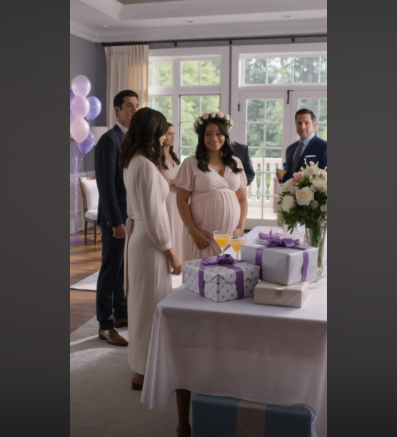
At My Best Friend’s Baby Shower, My Husband Said ‘We Have to Go’—Then Revealed What No One Else Did
EVERYTHING AT MY BEST FRIEND’S BABY SHOWER SEEMED PERFECT. BUT THEN MY HUSBAND LEANED IN AND WHISPERED, “WE HAVE TO GO. NOW.” I WAS STUNNED. “WHY? WHAT’S GOING ON?” HE WOULDN’T SAY A WORD UNTIL WE GOT TO THE CAR. HE FINALLY TURNED TO ΜΕ AND ASKED, “YOU… REALLY DIDN’T SEE IT, DID YOU?”
WHAT HE SAID NEXT MADE MY STOMACH DROP.
The lavender balloons looked almost too cheerful against the blue spring sky.
I remember thinking that as Bennett and I walked toward my best friend’s baby shower.
Twenty years of friendship with Colette had taught me her tells.
The slight curve of her mouth when she was hiding something.
The way she tilted her head when she wanted attention without admitting she wanted it.
The tiny pause before a lie she had already rehearsed.
But that afternoon, something felt different.
Wrong.
My husband noticed it before I did.
Bennett was a physician.
He had the annoying habit of seeing details other people ignored.
We had barely been at the shower an hour when his hand closed around mine.
Not casually.
Urgently.
“Sarah.”
He leaned close.
“We need to leave.”
I stared at him.
“What?”
“Now.”
I should have listened immediately.
Instead, I did what I had been doing for most of my life.
I made an excuse for Colette.
Because that was what I always did.
We had been friends since we were six years old.
Childhood sleepovers.
First periods.
First heartbreaks.
College anxiety.
Weddings.
Career changes.
Family deaths.
Every version of ourselves.
I believed knowing somebody that long meant knowing them completely.
I was wrong.
The Montgomery—no, Whitman—house had been transformed for the shower.
Lavender and cream streamers.
Professional floral installations.
A bartender serving mocktails and mimosas.
A photographer circulating through the crowd.
A glowing pink sign on the wall:
IT’S A GIRL.
The whole thing looked like something created for social media rather than a private family celebration.
“Half the town is here.”
Bennett said.
I laughed.
“You know Colette.”
“She has never done anything halfway.”
He nodded.
But his expression stayed tight.
Colette opened the door before we could knock.
“Sarah!”
She looked radiant.
Floor-length pale pink dress.
Blonde hair in loose waves.
Flower crown.
Perfect makeup.
And beneath the dress:
A large, rounded pregnancy belly.
Seven months, according to her.
“You look incredible.”
I said.
I handed Bennett the gift basket so I could hug her.
Colette angled her body away slightly.
“Careful.”
She laughed.
“Don’t crush the little one.”
I stepped back.
At the time, I thought nothing of it.
Later:
I would remember how carefully she controlled every hug.
Every photograph.
Every physical interaction.
Inside, the house looked even more extravagant.
Hand-painted signs.
Imported flowers.
Custom desserts.
Gift bags for guests.
“This must have cost a fortune.”
I said.
Colette waved one hand.
“Most of it was donated.”
“Vendors who support New Beginnings.”
New Beginnings Maternal Care was her nonprofit.
Small, but growing.
They provided prenatal support and medical referrals for women with limited access to care.
Bennett raised one eyebrow.
He said nothing.
Alaric appeared holding champagne.
Colette’s husband.
British.
Tall.
Publishing executive.
Always slightly uncomfortable around large groups despite being married to one of the most attention-loving women I had ever known.
He handed Bennett a glass.
“To the non-pregnant among us.”
He joked.
Bennett smiled politely.
“First child?”
“Big transition.”
“The biggest.”
Alaric answered.
Then his eyes moved toward Colette.
Something passed between them.
Quick.
Tense.
I did not understand it.
My old high-school circle arrived soon after.
Sierra.
Painter.
Paint still beneath her fingernails.
Opel.
Therapist.
Calm and observant.
Gage.
Colette’s younger brother.
Still carrying traces of the awkward boy who used to leave notes in my locker.
“Nice to see you.”
Gage said.
His eyes lingered for half a second too long.
Bennett noticed.
Of course he did.
Colette clapped her hands.
“Nursery tour.”
We followed her upstairs.
The room was beautiful.
Too beautiful.
A crystal chandelier.
Custom crib.
Hand-painted forest mural.
Designer armchair.
Shelves full of children’s books.
Soft pink and cream everywhere.
Sierra gasped.
“This is incredible.”
“It is.”
I agreed.
But the numbers bothered me.
Colette and Alaric did fine financially.
Not this fine.
“This room alone…”
I began.
“Donated.”
Colette said quickly.
“Brands supporting the maternal-health initiative.”
Opel tilted her head.
“Convenient.”
Colette’s smile tightened.
“Networking.”
The word came out sharper than necessary.
I noticed Bennett standing near the doorway.
Phone out.
Taking photographs.
Not of the room generally.
Specific things.
Boxes.
Labels.
Packaging.
When he saw me watching:
Phone away.
Downstairs, the shower continued.
Games.
Gift opening.
Advice cards.
More photographs.
Throughout all of it, Bennett stayed unusually quiet.
Then I saw him watching a man near the gift table.
Middle-aged.
Glasses.
Salt-and-pepper hair.
“Who is that?”
I asked Sierra.
“No idea.”
Bennett’s face had changed.
Recognition.
Then concern.
Shortly afterward, Colette’s mother Patricia raised a glass.
“When Colette told me she was finally expecting…”
Her voice trembled theatrically.
“…I thought of all the silence we’ve endured.”
“Of all the waiting.”
“This baby girl is truly a blessing after such a long silence.”
Applause.
Bennett went rigid beside me.
Then his hand closed around my wrist.
“Sarah.”
“We have to go.”
“Bennett…”
“Now.”
“I can’t leave in the middle of—”
“Please.”
Something in his face stopped me.
Not jealousy.
Not annoyance.
Certainty.
I invented a hospital emergency.
Apologized quickly to Colette.
She made me promise lunch.
Then we left.
Lavender balloons disappeared inside the rearview mirror.
I waited until we were halfway home.
“This better be good.”
Bennett stared at the road.
“It’s not.”
Silence.
Then:
“Colette isn’t pregnant.”
I laughed.
I genuinely thought he was joking.
“What?”
“She’s not seven months pregnant.”
“That’s insane.”
“You saw her.”
“You saw a belly.”
He said.
“Not a pregnancy.”
I turned toward him.
“I have known her since kindergarten.”
“I would know.”
“Would you?”
The question angered me.
“When did you last actually touch her stomach?”
I opened my mouth.
Nothing.
“She doesn’t like people touching her.”
I said.
“A lot of women don’t.”
“True.”
Bennett replied.
“Now answer something else.”
“The man by the gift table was Dr. Nathaniel Harmon.”
“Obstetrician at my hospital.”
“So?”
“He is not her doctor.”
“She told you she receives care through St. Elizabeth’s.”
“You told me that yourself.”
“She could have switched.”
“Maybe.”
He continued.
“But Harmon recognized me.”
“We made eye contact.”
“He looked disturbed.”
“Why?”
“I don’t know.”
Then Bennett told me what he overheard.
Alaric.
Hallway.
Phone.
“She is starting to believe it herself.”
Then:
“We need to speed this up.”
A chill moved through me.
“That could mean anything.”
“Maybe.”
Bennett said.
“And the lab paperwork I saw in her home office last week?”
I stared.
“You read her medical paperwork?”
“It was open on the desk while we moved furniture.”
He looked toward me briefly.
“I am not saying I conducted an examination.”
“I am saying the results I saw didn’t match what I expected in a woman supposedly seven months pregnant.”
“You’re accusing my best friend of faking a pregnancy.”
“I am telling you the observations don’t add up.”
I became defensive.
Angry.
“You have always disliked how close we are.”
“That is not fair.”
“You call her manipulative.”
“Because she manipulates you.”
“Pull over.”
Bennett did.
We sat beside the highway.
Cars moving past us.
“You’re wrong.”
I said.
“I hope I am.”
He sounded tired now.
“Look at her objectively.”
“Seven months.”
“Has anything changed besides her stomach?”
I pictured her.
Slim ankles.
Defined jaw.
No swelling.
No obvious fatigue.
No constant bathroom breaks.
No complaints.
No nausea stories.
No back pain.
Every pregnancy photograph:
Flowing clothes.
Strategic angles.
Perfect.
“She has always been thin.”
I whispered.
“Maybe.”
Bennett said.
“But think.”
“What does she say when you ask specific medical questions?”
I knew the answer.
She changed the subject.
Always.
“And the nursery.”
Bennett continued.
“Everything is still packaged.”
I remembered.
Crib pieces wrapped.
Mattress sealed.
Tags on baby clothes.
Display room.
Not lived preparation.
“Why would somebody do that?”
I asked.
Bennett shook his head.
“I don’t know.”
“Grief.”
“Attention.”
“Money.”
“The party looked incredibly expensive.”
“She claimed vendors donated everything.”
“What exactly are they getting in return?”
I thought about New Beginnings.
Maternal health.
Donors.
Publicity.
Then Patricia’s strange toast.
A blessing after long silence.
“What silence?”
I asked.
“Colette never told me she had fertility problems.”
Bennett looked toward me.
“Exactly.”
That night, I barely slept.
Every memory became evidence.
The announcement.
Shopping.
Photographs.
Prenatal conversations.
My offers to attend appointments.
Always refused.
The next morning, I texted Colette.
Left my pale blue shaw at your place.
Can I stop by?
Immediate answer.
Not home. Doctor appointment.
Merade is there though. She’ll let you in.
Merade was Colette’s younger sister.
Less polished.
Less guarded.
I invented a shaw that had never existed and drove over.
Merade answered wearing sweatpants and one of Colette’s old college shirts.
“Sarah?”
“What are you doing here?”
“Forgot my shaw.”
She let me inside.
Without the party:
The house felt staged.
Decorations remained.
Boxes.
Half-cleaned rooms.
On the dining table:
Red wine.
Steak.
“Late dinner?”
I asked.
“Alaric’s.”
Merade answered.
Then:
“Colette didn’t…”
She stopped.
“Didn’t what?”
“Nothing.”
“Pregnancy food restrictions.”
She said too quickly.
I asked about the doctor appointment.
“Special monitoring.”
“Everything okay?”
“Fine.”
Immediate.
Too immediate.
Upstairs, the nursery remained untouched.
Every package sealed.
Every tag attached.
While Merade searched the closet for my fictional shaw, I saw a small notebook wedged behind the changing table.
I made a bad decision.
I took it.
At the time, I justified it as protecting Colette.
In truth:
I was frightened and wanted answers.
Later I would return it through counsel.
But that day, I put it inside my purse.
As I left, I asked Merade:
“Is something wrong with your sister?”
Fear crossed her face.
“She is going through a lot.”
“Will she be okay?”
“She always is.”
Outside, I heard voices from the side yard.
Colette.
Phone call.
“I don’t care what he thinks.”
Then:
“This will be over once the donation clears.”
My blood went cold.
Donation.
She continued.
Too low for full sentences.
Fragments.
Not backing out.
Too much invested.
Then she appeared around the corner.
No hand on her stomach.
No protective posture.
Phone pressed to her ear.
Expression:
Cold.
Calculating.
I drove away.
Called Bennett.
“You might be right.”
At home, I opened the journal.
First page.
My dearest daughter,
Though you’re not yet in my arms, you’re already inside my heart.
They say it isn’t possible.
They tell me to accept reality.
But mothers know.
Mothers always know.
Your room is waiting.
Your family is waiting.
All we need is you.
The entry was dated three years earlier.
Three years.
I kept reading.
Letters to a daughter who did not exist.
Hope.
Anger.
Promises.
Then the most recent:
My miracle girl,
They finally believe you’re coming.
The donations are flowing.
Soon we’ll have everything we need to bring you home properly.
Just a little longer.
Then no one will ever take you away from me again.
I sat there shaking.
Three years earlier:
Colette and Alaric had just married.
Had there been a pregnancy?
A loss?
Something nobody knew?
My phone buzzed.
Colette.
Saw you leaving. Find your shaw?
Before I answered:
Another message.
Sarah, I need to tell you something.
Something I’ve kept secret.
Can we meet privately?
The cabin at Lake Morrison.
Noon tomorrow.
Come alone.
I showed Bennett the journal.
He read it slowly.
Then closed it.
“Be careful.”
“She is still Colette.”
I said.
“I know.”
Bennett looked at me.
“But someone can still be the person you love and be unsafe in a crisis.”
The Whitman family cabin sat on the eastern shore of Lake Morrison.
Colette and I had spent summers there as teenagers.
Swimming.
Talking about boys.
Planning futures that seemed simple because we had not lived them yet.
When I arrived:
Her white SUV was already there.
Colette opened the door.
No pregnancy belly.
No makeup.
No flower crown.
No performance.
“You knew.”
She said.
I nodded.
She let me inside.
The cabin smelled like cedar and old lake water.
Colette curled into the couch.
“Do you hate me?”
“No.”
I said.
“I don’t understand.”
She gave a brittle laugh.
“That makes two of us.”
Then:
“I was pregnant.”
I stared.
“A year ago.”
“Eight weeks.”
“We hadn’t told anyone.”
“Alaric was in London.”
“I miscarried alone.”
My anger collapsed for a moment.
“Why didn’t you call me?”
“You had just been promoted.”
“Everybody was celebrating you.”
“I didn’t want to steal the moment.”
That sentence carried twenty years of our friendship inside it.
Competing pain.
Competing attention.
Always.
“Afterward…”
Colette continued.
“I fell apart.”
“I talked to her.”
“The baby.”
“As if she were still there.”
“I bought things.”
“Planned.”
“Alaric thought it was grief.”
“When did the fake pregnancy start?”
“Three months ago.”
She looked down.
“I had to speak at a maternal-health fundraiser.”
“I had a panic attack.”
“I couldn’t go onstage.”
“I kept saying…”
“How could I stand there talking about motherhood when I couldn’t even…”
Her voice broke.
“Alaric found me.”
“And he said…”
“What if you don’t have to explain yet?”
Originally:
Just tell people she was newly pregnant.
Buy time.
Later announce a loss.
Private grief protected.
One lie.
Temporary.
Except the response felt good.
Congratulations.
Attention.
Sympathy.
Donors listening differently.
Then:
Another event.
Another photo.
Small bump.
Larger bump.
And money.
“Donations?”
I asked.
Colette brought out a folder.
New Beginnings Maternal Care.
Real nonprofit.
Real clinics.
Real prenatal services.
Real patients.
But donors were being cultivated through a false personal story.
Graves Foundation.
Williams Trust.
Hampton Healthcare.
“They connect with me because they think I understand.”
Colette said.
“Understand what?”
“Losing a child.”
I stared.
“You do understand that.”
“You actually had a miscarriage.”
“Yes.”
“But they believe you’re currently pregnant.”
Silence.
“The shower…”
I said.
“Was fundraising?”
“Not directly.”
She answered.
“Companies donated products.”
“They get exposure.”
“The clinics get supplies.”
“And you get photographs of yourself as a pregnant nonprofit founder.”
Colette looked away.
My phone buzzed.
Bennett.
Dr. Harmon filed a fraud concern with the relevant nonprofit oversight contacts. He says others have started asking questions.
I showed her.
Colette went pale.
“Who else knows?”
“Merade.”
“Alaric.”
“Maybe Harmon.”
She began breathing quickly.
“Sarah…”
“I cannot go to jail.”
“The foundation will collapse.”
“Women depend on us.”
“You should have thought about that.”
“I know.”
Tears appeared.
“Once the Graves donation clears…”
“I’ll announce the loss.”
“Everyone will sympathize.”
“No one will question it.”
That was the moment something shifted for me.
Miscarriage explained her grief.
It did not explain this sentence.
This was planning.
“What about everybody who loves you?”
I asked.
“The people buying gifts?”
“Praying for you?”
“Planning around a child who isn’t coming?”
“They’ll recover.”
Colette said.
“People always recover.”
My stomach tightened.
“I am not sure I will.”
For one second:
The old Colette returned.
Vulnerable.
Terrified.
“I need you.”
She whispered.
“You are the only person who won’t abandon me.”
Twenty years.
I felt every one of them.
“I’ll think about what I can do.”
Then:
“But the lie ends now.”
On my drive home, one name bothered me.
Graves.
Penelope Graves.
Widow.
Major donor.
I had met her at a charity gala.
I called.
Thirty minutes later:
I understood the deception more clearly.
Colette had promised Penelope that the baby would carry the name of Penelope’s late husband.
Edward if a boy.
A feminine variation if a girl.
A living memorial.
The promise had helped deepen Penelope’s emotional commitment to New Beginnings.
This was not merely donors misunderstanding a story.
Colette had tailored the story to grief.
Three days later:
A post appeared on a community forum.
LOCAL NONPROFIT DIRECTOR ACCUSED OF FAKING PREGNANCY TO SOLICIT DONATIONS.
I did not post it.
Neither did Bennett.
But once published:
Everything accelerated.
Screenshots.
Local news.
Donors asking questions.
Dr. Harmon providing a professional statement regarding his concerns.
The nonprofit board opening an internal review.
Alaric deleting social media.
Then:
Colette’s letter.
Sarah,
I know what you did.
I trusted you.
You betrayed me.
You were always jealous.
You destroyed everything I built.
No apology.
No:
I lied.
Only:
You exposed me.
A memory surfaced.
Junior year.
Colette’s boyfriend ended their relationship.
She collapsed dramatically inside the cafeteria.
Ambulance.
Attention.
A week later, she admitted privately:
“I needed everyone to see how much he hurt me.”
I had laughed.
Excused it.
I had excused many things.
Clothes borrowed and never returned.
Plans canceled when something more exciting appeared.
Crises that always happened during my important moments.
I called them quirks.
Friendship requires forgiveness, I told myself.
But forgiveness without boundaries can become training.
The doorbell rang.
Sierra.
She looked exhausted.
“I gave her three thousand dollars.”
“What?”
“For the nursery.”
“She said the contractor required money immediately.”
“There is no baby?”
“No.”
I answered.
“There was a real miscarriage last year.”
Sierra cried.
“Did she ask other people?”
That led me to Opel.
The therapist.
Opel had not given money.
Colette had instead tried recruiting her into a “mental-health initiative” connected to the foundation.
“I offered to volunteer.”
Opel said.
“She seemed disappointed.”
Then Opel said something important.
“I am not diagnosing her.”
“Not from secondhand information.”
“But the behavior you’re describing includes elements clinicians would associate with factitious presentation and serious identity disturbance.”
“Whatever the diagnosis…”
“She needs formal assessment.”
Not a label from a friend.
Real treatment.
Then Gage called.
Colette’s brother.
Voice ragged.
“The police are involved.”
“Multiple donor complaints.”
Then:
“She disappeared.”
Accounts emptied.
Gone.
Alaric claimed not to know where.
Bennett warned:
“She may come to you.”
“Why?”
“Because even when she blames you…”
“You’re still her emotional constant.”
That night:
Rain.
Bennett called into emergency surgery.
I was alone.
Near midnight:
A soft knock.
Colette stood outside.
Soaked.
No makeup.
No designer clothes.
No false belly.
Just a thin, exhausted woman.
She collapsed into my arms.
I brought her inside.
Blanket.
Tea.
Silence.
Hours later:
“Tell me what to do.”
She whispered.
“I’ll do it.”
Bennett came home near dawn.
He saw her.
Then took me into the kitchen.
“There is a warrant.”
“Fraud-related charges.”
“Multiple complaints.”
“Graves Foundation is cooperating.”
I looked toward the couch.
“She has nowhere.”
“Sarah…”
“She manipulated grieving people.”
“I know.”
“She cannot hide here.”
“I know.”
“By noon.”
I nodded.
When Colette woke, I told her.
She barely reacted.
“Where do I go?”
“Turn yourself in.”
“Start telling the truth.”
“They’ll put me in jail.”
“Running makes that more likely.”
Then, unbelievably:
“A documentary producer called.”
I stared.
“What?”
“They want to tell the story.”
“Deception and mental health in the social-media age.”
“They’ll pay.”
“You cannot be serious.”
“At least I’d control the narrative.”
There it was again.
Audience.
Performance.
“Colette…”
“This isn’t branding.”
“You cannot spin this.”
“You lied to everybody who loved you.”
“You used donors’ grief.”
“For the foundation.”
She corrected automatically.
“The foundation was real.”
“So was the power it gave you.”
I said.
“Reputation.”
“Access.”
“Attention.”
She stared.
“What do you want?”
“A confession?”
“Do you want me on my knees?”
“This is not about satisfying me.”
“Everything is about you.”
She snapped.
“Perfect Sarah.”
“Perfect marriage.”
“Perfect career.”
“Perfect moral compass.”
“Do you know what it is like living beside you?”
I went quiet.
Then:
“I have made plenty of mistakes.”
“One of them was allowing this friendship to become so uneven that you began believing every crisis you created automatically became my responsibility.”
“I never manipulated you.”
“Didn’t you?”
I asked.
“Emergency calls on nights I had milestones.”
“Constant reassurance.”
“Canceled plans.”
“Being punished if I couldn’t drop everything.”
“Friends support each other.”
“Yes.”
I said.
“Friends also allow each other to have lives.”
Silence.
Then her voice changed.
Small.
“I think something is wrong with me.”
I softened.
“I know.”
“I can’t tell when I’m performing anymore.”
She looked at her hands.
“I don’t know where the real thing ends.”
“That’s why you need treatment.”
“I just wanted to be special again.”
Before I could answer:
Knock.
Sharp.
Police cruiser outside.
Colette panicked.
Ran toward the back door.
I caught her arm.
“Don’t.”
“Sarah…”
“Please.”
“I can’t.”
“I will tell them you came here voluntarily.”
I said.
“I’ll tell them you’re willing to cooperate.”
“That matters.”
She sagged.
“You think I’m a monster.”
“No.”
I shook my head.
“I think you’re lost.”
“And I cannot keep pretending I know the way back for you.”
That morning:
Police.
Statements.
Colette transported without a dramatic struggle.
I gave investigators what I actually knew.
The cabin conversation.
The journal.
The donor information.
The miscarriage context.
I did not exaggerate.
I did not conceal material facts either.
If I wanted mercy for Colette, it had to come from truth.
Not another deception.
The case took months.
The nonprofit board dissolved New Beginnings under supervision.
Remaining legitimate assets and medical supplies were redirected to established maternal-health organizations where legally permitted.
Financial records were reviewed.
Some donors sought restitution.
Others declined.
Colette eventually accepted a plea agreement.
Probation.
Restitution.
Community service.
Mandatory psychiatric treatment.
No easy escape.
No prison fantasy either.
Consequences proportional to what prosecutors could actually establish.
The miscarriage mattered.
So did the subsequent planning.
Both truths existed.
I testified.
I described:
Her genuine pregnancy loss.
The grief.
The escalating false pregnancy.
The real nonprofit work.
The donor manipulation.
The promises made to Penelope Graves.
The journal.
The fact that some behavior appeared emotional and disorganized while other parts were highly calculated.
The court could decide what weight each fact deserved.
I would not rescue Colette by lying.
That was the last boundary our friendship taught me.
Six months after the baby shower:
A letter arrived.
Return address:
Treatment facility.
Sarah,
They tell me writing this is part of recovery.
Not performing regret.
Actually understanding it.
I am not sure I know the difference yet.
I don’t know who I am when nobody is watching.
That frightens me more than court did.
I used to think being seen meant being loved.
Maybe that’s why I kept making everything bigger.
Bigger pain.
Bigger celebrations.
Bigger lies.
If people were looking at me, I felt real.
When they weren’t, I didn’t know who I was.
I blamed you because blaming you was easier than admitting I had destroyed something I spent years telling everyone was important.
You did not destroy New Beginnings.
I did.
You did not destroy my marriage.
I helped do that too.
You did not make me lie to Penelope.
You did not make me borrow Sierra’s money.
You did not make me fake a child.
I did those things.
I don’t expect forgiveness.
I don’t expect us to go back.
Maybe going back would be another lie anyway.
You saved me from myself in the only way I was still capable of understanding.
You stopped protecting me from consequences.
For years, I thought friendship meant looking away.
Now I think maybe love is the person willing to make you look.
I finally understand something.
There is a difference between being seen and being known.
I spent my whole life chasing the first.
You gave me the second.
Even when I hated you for it.
Colette.
I read the letter twice.
Then folded it.
Not forgiveness.
Not yet.
But not nothing.
I placed it inside a memory box.
Childhood photographs.
Friendship bracelets.
Old concert tickets.
Birthday cards.
And a small piece of pale blue fabric.
Months earlier, I had invented a missing shaw as an excuse to investigate Colette’s house.
Later, I bought an actual pale blue scarf.
Cut one corner from it.
Ridiculous, maybe.
But memory rarely chooses elegant symbols.
That autumn, I drove back to the barn where the baby shower had been held.
No lavender balloons.
No neon sign.
No photographers.
Only wooden steps.
Fallen leaves.
Quiet.
I sat there alone.
For most of my life, I believed knowing somebody a long time meant understanding them.
Twenty years.
Surely that counted for something.
It did.
Just not immunity from truth.
I had seen Colette’s warning signs.
Not the fake pregnancy.
I could not have predicted that.
But smaller patterns.
The need for an audience.
The escalating crises.
The way my successes sometimes became the backdrop for her emergencies.
The friendships that revolved around reassuring her.
I saw them.
Then renamed them.
Sensitivity.
Passion.
Neediness.
Personality.
Because the alternative felt cruel.
Maybe this was the hardest lesson.
People we love are not helped by our refusal to see them accurately.
Compassion is not the same as denial.
And accountability is not automatically abandonment.
Bennett was right at the baby shower.
We needed to leave.
Not only the building.
The illusion.
The friendship I thought existed had already changed long before I recognized it.
Whether Colette and I would ever rebuild anything:
I did not know.
If we did:
It could not be based on me saving her.
Or her performing for me.
It would have to be smaller.
Quieter.
Honest enough to survive when nobody was watching.
A leaf landed beside my shoe.
Then another.
I looked at the empty entrance where six months earlier Colette stood beneath lavender balloons with her hands wrapped around a child who did not exist.
I did not feel anger anymore.
Mostly:
Grief.
For the real baby she lost.
For the person she became afterward.
For the friendship I had protected so fiercely that I sometimes protected it from reality.
Then I thought about her final line.
The difference between being seen and being known.
Maybe that was what the last twenty years had really been teaching both of us.
Colette wanted the world to see her.
I wanted to believe I knew her.
Neither of us had been completely honest.
Now, for the first time, we had a chance to become so.
Even if we never became friends again.
