I came home after my grandmother’s will reading ready to tell my husband that she
My Mother-In-Laws Tried To Steal My Grandmother’s Estate, Then The County Records Spoke…
I CAME HOME EXCITED AFTER THE READING OF MY GRANDMOTHER’S WILL TO TELL MY HUSBAND SHE HAD LEFT ME $7 MILLION AND HER ESTATE IN ASPEN.
DIVORCE SETTLEMENT
BUT MY HUSBAND AND M.I.L WERE WAITING ON THE PORCH WITH DIVORCE PAPERS.
THEY SAID: “THE HOUSE IS SOLD.
YOU’RE HOMELESS NOW.”
I SMILED: “WHAT’S SO FUNNY?”
“ACTUALLY. THE HOUSE YOU SOLD BELONGED TO…”
My name is Claire Whitfield.
I was forty-eight years old the day my husband tried to make me homeless on my own front porch.
Forty minutes earlier, an attorney had told me my grandmother left me nearly seven million dollars and her house in Aspen.
I drove home thinking I was bringing the best news our family had received in years.
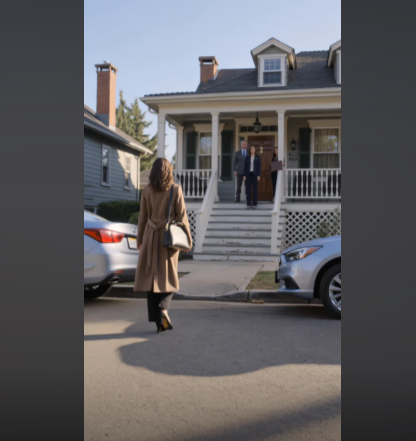
Instead, Wade was already standing on the front steps.
So was his mother, Marlene.
So was his sister, Tara.
And beside them stood a man I had never seen before holding an envelope with my name on it.
The stranger spoke first.
“Claire Whitfield?”
“Yes.”
He handed me the envelope.
“You’ve been served.”
Divorce papers.
On my own porch.
Wade finally looked up.
Barely.
“The marriage is over.”
He said it like he was announcing rain.
Then Marlene stepped forward because Marlene always stepped forward when Wade should have.
She wore her good coat.
Chin lifted.
Hands folded.
The expression of a woman who believed the only remaining task was explaining reality to someone too slow to understand it.
“The house has been sold.”
She said.
“Cash buyer.”
“Fast closing.”
“You have until the weekend to pack.”
Tara stood half a step behind her.
Almost vibrating with satisfaction.
Then Marlene smiled.
Slow.
Patient.
Cruel.
“The house is sold.”
“You’re homeless now.”
Across the street, Dot Hensley stopped watering her geraniums.
The hose continued running.
Water pooled around her shoes.
Nobody moved.
I stood on the porch of the house where my grandmother raised me, holding divorce papers in one hand and the news of a seven-million-dollar inheritance in the other.
And something inside me became very still.
Not panic.
Not rage.
Clarity.
The same feeling I get at work when a probate file makes no sense for twenty pages and then one clause suddenly explains everything.
I set my purse on the porch railing.
And smiled.
Marlene’s expression flickered.
Tara frowned.
“What is so funny?”
“Nothing.”
I said.
“Nothing is funny.”
Then:
“I need to read a few things before I respond.”
Marlene rolled her eyes.
“There is nothing to read.”
“The lawyers handled everything.”
“Everything is in order.”
I had worked as a probate paralegal for most of my adult life.
Twenty years of:
Wills.
Trusts.
Deeds.
Probate fights.
Families who stopped speaking over furniture worth less than the attorney fees.
People love saying:
Everything is in order.
Usually right before you discover they never read the document controlling the entire situation.
I looked at Wade.
For one brief moment, he looked back.
And I saw it.
He knew.
Maybe not every legal detail.
But he knew what they were doing to me was wrong.
He had known before I came home.
He had simply decided that doing nothing while his mother and sister destroyed me counted as staying neutral.
That look told me more than the divorce petition.
I picked up my purse.
“You should all read what you’ve signed.”
I said.
Then I walked back down my own steps.
No crying.
No yelling.
No begging.
I could feel them watching me leave.
Confused.
They had built a stage for humiliation.
And their victim had declined the performance.
That morning had begun ordinarily.
Which, in my experience, is how the worst days usually begin.
I made Wade coffee.
Two sugars.
Exactly the way I had for twenty-seven years.
I left his mug on the counter.
Then drove to work.
I had spent most of my career helping families organize the worst week of their lives.
Someone dies.
A will appears.
A child wants a house.
Another child wants the investments.
Someone insists Dad promised them the antique desk.
Somebody else suddenly remembers a conversation no living witness can confirm.
My job was order.
Dates.
Documents.
Signatures.
Recorded deeds.
What exists in writing?
What does not?
Wade used to call me the family thermostat.
“You keep everybody comfortable.”
He meant it as praise.
For years, I accepted it that way.
I paid the bills.
Drove Marlene to appointments.
Covered Tara’s rent twice.
Co-signed one of her business loans.
When the business failed, I quietly helped clean up the balance.
I hosted Christmas.
Cooked Thanksgiving.
Remembered birthdays.
Never kept score aloud.
There was always a reason the difficult thing needed to be handled by me.
Almost never a reason someone else could handle it instead.
My grandmother was the only person who consistently objected.
“Keep something back for yourself, Claire.”
She said it almost every time I visited.
The same sentence.
Again.
Again.
I thought it was simply one of those things elderly relatives repeat because they remember the lesson more clearly than the story that produced it.
She died six weeks before Wade served me on the porch.
Eighty-nine years old.
Peacefully.
Reading glasses on the nightstand.
She had raised me when my mother could not.
Same house.
Wide front porch.
Crooked steps.
Old cedar closet in the front hall.
She taught me how to balance a checkbook.
How to make tea.
And, most importantly:
Never sign a contract you haven’t read.
After her death, I missed her in a specific way.
Not simply grief.
I missed being fully seen.
The will reading took place at the firm where I worked.
That felt strange.
I usually sat on the professional side of those meetings.
That morning:
Client chair.
My mentor, Joan Puit, handled everything herself.
Joan was sixty.
Sharp.
Unsentimental.
One of the people who taught me that calm precision is usually more useful than righteous anger.
She opened my grandmother’s estate file.
Then read.
House in Aspen.
Land.
Financial accounts.
A little under seven million dollars in combined value.
All placed into a trust.
Beneficiary:
Claire Whitfield.
No one else.
I knew Nana had money.
I did not understand the amount.
She lived in cardigans.
Drove an old truck.
Reused glass jars.
Argued with grocery clerks over coupons worth fifty cents.
Seven million dollars seemed almost absurd.
Then Joan looked at me over her glasses.
“One more thing.”
She slid an envelope toward me.
Nana’s handwriting.
OPEN THIS WHEN YOU ARE ALONE.
NOT BEFORE.
The word alone had been underlined twice.
“Nana gave this to me two years ago.”
Joan said.
“She was explicit.”
“After the will is read.”
“Then Claire gets it.”
I turned the envelope over.
Thicker than a single page.
I almost opened it.
Didn’t.
Something about those two lines stopped me.
I put it inside my purse.
Thanked Joan.
Walked out.
Fifteen minutes from the office to home.
River road.
Old grain silo.
Two traffic lights.
I spent almost the entire drive imagining Wade’s reaction.
Seven million dollars.
Aspen property.
We could breathe.
Repair the porch.
Pay down things.
Help ourselves instead of everybody else for once.
Then smaller memories began surfacing.
Three weeks earlier:
Wade took a call inside the garage.
Closed the door.
When I asked:
“Realtor.”
“For a friend.”
Wade did not have friends buying property.
A week later:
Marlene called.
Very casually.
“Did your grandmother leave a will?”
“Who is handling it?”
Then Tara appeared after almost a year of absence.
Banana bread.
Questions.
How long probate takes.
Whether property can be sold before everything settles.
I had noticed.
I am not a woman who misses things.
The problem is:
Noticing suspicious behavior and believing your husband is capable of betraying you are two different rooms.
For weeks, I stood between them.
Then I turned onto our street.
Marlene’s sedan in my parking spot.
Tara’s truck behind it.
Three family members waiting on the porch.
Stranger with legal papers.
The door between suspicion and belief slammed shut.
After leaving them there, I drove back to the office.
Empty.
Late afternoon.
Copier humming.
Old coffee smell.
I sat behind my own desk.
Let my hands shake until they were finished shaking.
There is a version of this story where I went back up those stairs and screamed at Wade.
I understand that version.
I felt every word she would have said.
But after twenty years in probate law, I had watched too many people lose good cases by fighting them in the wrong room.
Porches.
Parking lots.
Text messages at two in the morning.
Family group chats.
They think the last word matters.
It rarely does.
I did not need the last word.
I needed the correct deed.
So I made terrible office coffee.
Opened a legal pad.
Wrote the date.
Then one question.
WHAT DO THEY THINK THEY ARE SELLING?
I started with the divorce filing.
Then timeline.
Nana died.
Nine days later:
Wade’s garage realtor call.
Then Marlene asking about the will.
Then Tara’s banana bread visit.
Then divorce filing.
Then house listing.
They had not simply decided to end my marriage.
They had selected the timing.
The narrow space between Nana’s death and the full administration of her estate.
They knew something was coming to me.
Maybe not how much.
But enough to make them hurry.
They thought:
Sell the house.
Push Claire out.
File divorce.
Create financial pressure.
Force fast settlement before the inheritance changed my ability to resist.
It was almost strategic.
Against somebody who knew nothing about property records, maybe even clever.
Then I searched the listing.
Found it immediately.
Our house.
My grandmother’s house.
Photographed in bright afternoon light three weeks earlier.
While I was at work.
Status:
UNDER CONTRACT.
Buyer:
A couple named Decker from Glenwood.
Earnest money:
$40,000.
Closing:
Following Friday.
Seller’s documents:
Signed by Wade.
Not:
Claire and Wade.
Wade.
Owner.
Seller.
He represented himself as the person authorized to convey the property.
Utility records showed his name.
Insurance documents showed his name as a resident.
Apparently, the listing agent accepted the explanation that he and his wife owned the property and I had already moved away.
The agent was connected to Tara.
Nobody had yet completed the final title search.
That would occur during escrow.
I stared at Wade’s signature.
Twenty-seven years of birthday cards.
Tax returns.
School forms.
Same handwriting.
He had taken money from strangers based on a promise to convey a house.
A real family.
Forty thousand dollars in escrow.
Moving plans.
A daughter preparing to attend school nearby.
This was no longer simply:
My husband wants to scare me.
He had entered a transaction.
With people who had no idea the person selling them the property might not own it.
Then I searched the county recorder.
Ninety seconds.
One result.
Grantor:
Vivian Whitfield.
My grandmother.
Grantee:
Claire Whitfield.
Only.
Recorded:
Fourteen years earlier.
Quitclaim deed.
No Wade.
No joint ownership.
No marital conveyance.
Just:
Claire.
I read it twice.
Then remembered.
Fourteen years earlier, Nana asked me to drive her to the courthouse.
Thursday morning.
Beige hallway.
Forms.
Then diner.
Pie.
“I want you to have the house.”
She said.
I laughed.
“You’re not dying.”
“This isn’t about dying.”
She replied.
“This is about having somewhere to stand.”
At the time, I treated the sentence as grandmotherly sentiment.
I did not understand.
Nana remained in the home.
Paid taxes.
Maintained it.
Lived there.
The deed existed in the back of my mind like some old piece of paperwork that would matter someday.
Then she died.
And “someday” arrived.
Wade had never owned one inch of the house he signed a contract to sell.
He could no more sell it than sell the courthouse.
Suddenly I understood the confidence on the porch.
They never checked.
They assumed:
Marriage meant Wade had rights.
Living there meant Wade owned it.
Nana’s house became “family property” simply because Marlene preferred that story.
People can become dangerously confident when no one around them has asked them to prove the premise.
I pulled the sealed envelope from my purse.
Alone.
Exactly as Nana instructed.
Three pages.
Both sides.
Her handwriting became shakier toward the end.
My dear Claire,
If Joan has given you this, then I am gone.
I am sorry I’m not there to make you tea while you read it.
I am going to tell you things I never said because saying them while there was still hope would have hurt you.
And I have always been a coward about your feelings in the same way you have been a coward about your own.
I stopped.
Continued.
I have watched that man let his mother run your life for twenty years.
I have watched you pay and pay and call it love.
I did not raise you to be a bank with a heartbeat.
That sentence went through me.
Nana wrote about Marlene.
The way she inventoried what other people had.
The way Wade became useless the moment his mother entered a conflict.
The way I financed the family and somehow remained the person expected to be grateful.
Then:
Keep the deed in your name, Claire.
Always.
Underlined.
Nana explained that she transferred the house to me alone fourteen years earlier because she never wanted anyone to stand on that porch and tell me I had nowhere to go.
She placed the inheritance inside a separate trust deliberately.
No husband.
No mother-in-law.
No family pressure.
Nothing could reach it simply because somebody believed marriage entitled them to my grandmother’s property.
Then page two.
Instructions.
Of course.
Nana never offered emotion without a practical step attached.
Do not put one cent of this inheritance into a joint account.
Do not pay their debts from it.
Do not mix it into the marriage.
Keep it separate.
Keep it clean.
Keep it yours.
She had clearly done legal planning.
Careful legal planning.
Then the line that finally broke me.
You will want to be kind.
You always do.
But there is a difference between being kind and being a doormat.
A kind woman keeps her door.
Do not spend the rest of your good years buying respect from people who were never going to give it to you.
Choose your peace.
It is allowed.
I sat inside the empty office.
Read it again.
Twenty-seven years.
I had believed:
Give more.
Help more.
Host more.
Pay more.
Stay calmer.
Eventually they will love me the way I love them.
Nana had stopped believing that long before I did.
And instead of forcing me to see it too early, she quietly made sure I had somewhere to stand when the truth finally arrived.
I called Joan.
She came back to the office wearing gardening clothes.
Reading glasses pushed into her hair.
I laid everything across the conference table.
Recorded deed.
Listing.
Purchase agreement.
Escrow.
Divorce papers.
Trust summary.
Nana’s letter.
Joan read silently.
Then removed her glasses.
“Claire…”
“This house was deeded to you alone.”
She explained what that meant in the story of my marriage.
Wade had no recorded title.
He had no authority to execute a sale as owner.
The contract depended upon a representation that was simply false.
“The title company was going to discover this.”
She said.
“When?”
“Thursday.”
“The week of closing.”
Then:
“The forty thousand dollars makes the situation more serious.”
“The buyers relied on a contract signed by someone claiming ownership.”
Joan did not make theatrical predictions.
She simply said:
“Wade needs his own attorney.”
The inheritance?
Protected.
Separate.
Still inside Nana’s trust.
Untouched.
Nothing mixed.
Exactly as she designed.
Joan asked:
“What do you want?”
I did not answer immediately.
“I want to do this once.”
I said.
“And correctly.”
Marlene refused to give me time to think.
Nine o’clock the next morning:
She appeared at my office.
Good coat.
Handbag on lap.
Posture straight.
She sat across from my desk as though I were a difficult employee.
“Claire…”
She began gently.
“I know this is emotional.”
“Endings are hard.”
“But you need to be practical.”
Then:
Offer.
$15,000.
“To help you get settled.”
Condition:
Sign the sale documents.
Do not interfere.
Do not make a scene.
Fifteen thousand dollars.
For the home my grandmother had deeded to me fourteen years earlier.
I said nothing.
The softness disappeared.
“Everyone in this town already knows you couldn’t keep a husband.”
She leaned forward.
“Don’t make them watch you fight over a house too.”
There it was.
Her real hierarchy.
Wade:
Value.
Marriage:
Status.
Claire without Wade:
Failure.
I looked at her.
For a moment, I remembered the story she had told every Christmas.
Marlene was thirty-one when her husband died.
Debt remained.
The bank took their house.
She stood on a curb with two children and watched strangers carry her furniture away.
For forty years, she repeated that story.
Always the same lesson.
Never let anyone take the roof.
I finally understood something about her.
Marlene was not some mythic monster.
Something more common.
Fear turned into entitlement.
She had decided control was safety.
And because she once lost a house, she eventually convinced herself she had moral permission to seize mine before I could somehow seize something from her family.
In her own mind:
She was not stealing.
She was getting there first.
I almost pitied her.
Then remembered Nana.
Pity is a door too.
I kept mine closed.
“I’ll give everyone an answer by the end of the week.”
I said.
Marlene smiled.
She believed she had frightened me.
She left.
That night, I decided.
I could let the title search kill the transaction quietly.
Walk away.
Keep house.
Keep trust.
Never speak to them again.
Part of me wanted exactly that.
Then I thought about the Deckers.
Forty thousand dollars in escrow.
Home already sold.
Daughter changing schools.
Moving truck planned.
They were innocent.
The kindest thing I could do was stop their damage immediately.
So the next morning:
I called the title company.
“My name is Claire Whitfield.”
“I am the sole owner of record.”
“The person who signed your purchase agreement as seller holds no title interest in the property.”
Silence.
Professional silence.
The most satisfying sound in transactional law.
I gave the recording information.
The closing officer pulled the deed.
Then:
“Ms. Whitfield…”
“We need to suspend this file.”
“Yes.”
“You should.”
Joan helped record formal notice asserting my ownership and disputing any unauthorized conveyance.
Recording fee:
$43.
That was it.
No dramatic confrontation.
No music.
Forty-three dollars.
A county stamp.
And the entire plan started collapsing.
Listing agent notified.
Escrow frozen.
Title review expedited.
Buyers informed.
The machinery of truth is usually boring.
That is why people underestimate it.
While Marlene screamed on telephones she did not control, paper moved through offices she could not intimidate.
I learned around then that Tara had been the person pushing the schedule.
Her failed business had left her buried.
Second mortgage.
Debt.
Bank pressure.
She saw Nana’s death and calculated:
Sell Claire’s house.
Split proceeds.
Solve Tara’s problem.
Then divorce Claire before inheritance administration gave her greater leverage.
Tara brought banana bread into my kitchen while participating in a plan to make me homeless.
That detail bothered me more than it should have.
I did not pity her either.
Drowning people are allowed to ask for help.
They are not allowed to shove somebody else beneath them so they can breathe.
Wade came to my office alone.
That was the bravest thing he did.
Even then:
Poorly.
He stood in the doorway.
Could not look at me.
“Claire.”
Nothing.
Then again:
“Claire.”
Finally:
“I didn’t think it would go this far.”
That was his apology.
Not:
I betrayed you.
Not:
I let my mother humiliate you.
Not:
I fraudulently signed a contract.
I didn’t think it would go this far.
As though the divorce papers and fake sale were weather.
Something that happened around him.
I looked at my husband of twenty-seven years.
For the first time:
Completely.
Marlene had force.
Tara had urgency.
Wade had neither.
He was simply the soft space between stronger personalities.
For decades, I mistook his inability to oppose his mother for kindness.
It wasn’t kindness.
It was avoidance.
And avoidance always chooses a side eventually.
Usually the side demanding the least courage.
“You signed a contract to sell property you do not own.”
I told him.
“You need your own lawyer.”
His face changed.
Fear.
Then something like pleading.
He had come for absolution.
Or maybe the old Claire.
The thermostat.
The woman who made uncomfortable things comfortable.
I gave him neither.
The Deckers learned from the title company.
Understandably:
They were furious.
They had already sold their own property.
Their daughter was supposed to start school near us.
They believed a signed contract represented reality.
Their attorney sent letters demanding explanation and return of funds.
The listing agent panicked.
Her broker became involved.
The title company issued its determination.
Plain language.
Owner of record:
Claire Whitfield.
Wade Hollis:
No recorded ownership interest.
No authority to convey.
Transaction:
Cannot close.
Decker escrow:
To be returned.
I read the determination twice.
Then placed it on my desk.
Quiet.
Marlene called four times that afternoon.
Voicemail.
Voicemail.
Voicemail.
Voicemail.
I answered none.
She could not bully a recorded deed.
Could not shame a title officer into inventing ownership.
The entire strategy depended on one thing:
Claire being too frightened to check.
There was only one confrontation left.
The walkthrough had originally been scheduled for Friday afternoon.
And by the time everybody realized the sale was dead, nobody had coordinated enough to stop everyone from appearing.
I did not correct that.
Maybe that was my one indulgence.
The Deckers arrived because they wanted answers.
Their agent arrived pale and apologetic.
Marlene arrived believing the problem was technical and temporary.
Tara arrived already spending money that did not exist.
Wade arrived because Marlene told him to.
Dot Hensley discovered urgent business involving geraniums again.
I arrived last.
On purpose.
One plain manila folder.
Inside:
Deed.
Trust summary.
Recorded notice.
Title-company determination.
In order.
Because order is what I do.
I climbed the same porch steps where the process server had handed me divorce papers eleven days earlier.
Then turned.
Marlene immediately began speaking.
Of course.
She smiled at the Deckers.
Said the situation involved an emotional family member.
Glanced toward me.
Told them everything would be resolved.
That lawyers would handle the “paperwork hiccup.”
That keys would be available.
Then she turned toward me.
She reused her favorite sentence.
Maybe she believed repetition could transform it into truth.
“The house is sold.”
Slow.
Clear.
“You’re homeless now.”
The porch became completely quiet.
Even Dot’s hose had stopped.
I waited one second.
Then opened the folder.
I looked at Mr. and Mrs. Decker first.
Not Marlene.
They deserved truth before she deserved embarrassment.
“I am sorry.”
I said.
“You were pulled into something that should never have happened.”
Then I held up the deed.
“This is the recorded deed to this property.”
“Look at the owner.”
Mr. Decker stepped closer.
His wife beside him.
I pointed.
“Claire Whitfield.”
“Only Claire Whitfield.”
“Recorded fourteen years ago.”
Then I looked at Wade.
“The man who signed your purchase agreement has never owned one inch of this house.”
The listing agent made a small sound.
Marlene’s smile disappeared.
Tara stepped backward.
Wade became absolutely still.
I laid the documents along the porch railing.
“This is the deed.”
“This is the notice recorded after I discovered the unauthorized sale.”
“And this is the title company’s written determination.”
I handed the final document toward the Deckers.
“The sale cannot close.”
“Your forty thousand dollars is already being returned.”
I looked at Marlene.
Finally.
“You cannot sell a house that was never yours.”
Twenty-seven years.
For the first time:
Marlene had nothing to say.
Then everything came at once.
“You liar.”
“You thief.”
“That is our family’s home.”
“You always thought you were better than us.”
Her voice rose.
Neighbors looked.
Tara kept moving toward her truck.
Mr. Decker called his lawyer.
His wife clutched his arm.
The listing agent stood as though wishing she could dissolve into the porch boards.
Wade remained exactly where he had always been.
Between us.
Doing nothing.
Marlene screamed at me.
He did not defend me.
Did not defend himself.
Did not ask his mother to stop.
And suddenly:
No pain.
Only recognition.
There was nothing left to save.
The Deckers left.
Their money returned.
They eventually bought another house that summer.
Their daughter started school normally.
The listing agent reported the matter to her broker and cooperated.
Wade’s conduct followed him socially because small towns remember people who sign as owners of property they do not own.
Marlene eventually ran out of breath.
Then left in her gray sedan.
The same woman who once stood on a curb after losing a home drove away from the house she had tried to take from another woman.
Tara returned to her own debt.
No rescue coming.
Wade came expecting keys.
Left empty-handed.
When everybody was gone:
I gathered the papers.
Put them back in order.
Walked up the final two crooked steps.
Unlocked my front door.
And went inside.
My grandmother’s house.
My house.
I closed the door gently.
No slam necessary.
Cedar.
Old paper.
Familiar quiet.
I stood in the front hall.
The place Nana used to hang her coat.
Marlene had told me:
You’re homeless now.
But I had been the only person in that entire argument who actually knew where home legally stood.
The divorce continued.
I did not contest the ending.
I had no interest in keeping a marriage that, looking back, sometimes felt like unpaid employment.
But the divorce proceeded in daylight.
Properly.
House:
Mine.
It had always been mine.
Nana’s trust:
Separate.
Protected.
Unmixed.
Seven million dollars.
Aspen property.
No joint accounts.
No paying Marlene’s bills.
No rescuing Tara.
No allowing Wade to attach himself to money my grandmother specifically protected from him.
Wade received the divorce he wanted.
Then moved into Marlene’s house.
There was something almost too perfect about that outcome.
Tara’s second mortgage problem eventually caught up with her.
Her house was lost that winter.
I did not celebrate.
I did not help.
Those are different things.
Marlene never apologized.
Never once admitted:
The deed says Claire.
She simply stopped telling her old curb story at family gatherings because the audience now knew how she had tried to recreate it for somebody else.
I sold the Aspen house.
Not because I had to.
Because I did not need it.
I kept the proceeds invested according to the trust and legal advice Nana had prepared.
I kept the house in town.
Wide porch.
Crooked steps.
I repaired the steps.
Paid the contractor in full.
No favors.
No family discount.
No debt of gratitude attached.
Then I framed part of Nana’s letter and hung it inside the kitchen.
A kind woman keeps her door.
Every morning:
Coffee.
One sugar.
I stopped making it with two the morning the locks were changed.
People occasionally ask whether I hate them.
No.
Hatred leaves a door open.
It says:
You still matter enough for me to keep arguing with you internally.
My door is closed.
A closed door is not necessarily anger.
Sometimes it is simply architecture for peace.
Dot Hensley still lives next door.
We talk over the fence.
Mostly:
Geraniums.
Weather.
Neighborhood repairs.
She became, without meaning to, the witness who corrected the story for half the street.
She saw both porch scenes.
The first:
Claire served divorce papers while Marlene declared her homeless.
The second:
Claire standing on a deed while Marlene discovered confidence cannot override title.
I stayed at the probate firm.
I still help people through the worst weeks of their lives.
Sometimes a woman sits across from me who reminds me painfully of the person I used to be.
She has paid everybody’s bills.
Her husband says paperwork is “handled.”
Her in-laws call everything family property.
Her name disappeared from decisions years before she noticed.
I never give her a revenge speech.
I ask:
“Whose name is on the deed?”
Then:
“Whose name is on the account?”
“Who is beneficiary?”
“What did you actually sign?”
“Where is the original document?”
Because that is what Nana taught me.
Not suspicion.
Not bitterness.
Read.
Know.
Keep something with your own name on it.
I am no longer the family thermostat.
I do not regulate everybody else’s comfort while quietly overheating inside my own life.
I am Claire Whitfield.
I have a house.
A quiet bank account.
A morning routine nobody else controls.
A front door I open when I choose.
And one framed sentence from the woman who understood me before I understood myself.
Keep the deed in your name, Claire.
Always.
For twenty-seven years, I thought peace meant making sure nobody around me was upset.
Now I know better.
Peace is knowing where you stand.
And sometimes the most important thing a woman can discover is that the ground beneath her feet has been hers all along.
