I was halfway through spending my thirty-fifth birthday alone when my ex-husband
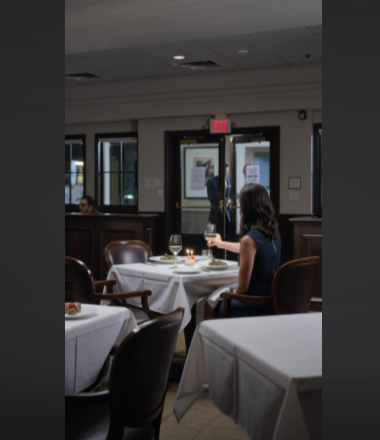
I Asked a Stranger to Fake Being My Boyfriend—My Ex Saw Him and Suddenly Stopped Smiling
I was sitting alone at a restaurant on my 35th birthday.
A man about my age was sitting by himself at the next table, so I walked over and asked,
“Would you pretend to be my boyfriend for five minutes?”
He laughed, but agreed.
We had barely sat down when my ex-husband and his new wife walked in.
He looked at the man beside me, and
suddenly stopped smiling.
I was halfway through a birthday dinner alone when I saw my ex-husband walk through the front door with the woman he’d left me for.
I had maybe ten seconds before they noticed me.
The man at the next table looked about my age.
Dark jacket.
Open collar.
Halfway through a steak.
Glass of iced tea beside his plate.
Alone.
So I did something completely unlike me.
I stood, walked directly to his table, and said:
“Would you pretend to be my boyfriend for five minutes?”
He stared.
Then laughed.
“Five minutes?”
He glanced toward the entrance.
“Maybe seven if they’re especially irritating.”
He followed my eyes.
Saw the couple approaching.
Then nodded toward the empty chair.
“Sit down.”
I had barely moved my wine glass to his table when Evan saw me.
My ex-husband smiled.
Then he looked at the man sitting beside me.
And the smile disappeared.
Not weakened.
Not faded.
Gone.
Evan stopped so abruptly Natalie nearly walked into him.
His eyes stayed fixed on my fake boyfriend.
“What are you doing here?”
The stranger calmly placed his fork beside his plate.
“Having dinner.”
That was the moment I realized I had accidentally chosen the one man in Columbus my ex-husband absolutely did not want to see.
And I had no idea why.
My name is Clare Bennett.
I was thirty-five years old that night.
Evan and I had been divorced for almost a year.
By then, I had learned the difference between loneliness and being alone.
Loneliness was lying beside a husband who turned his phone facedown whenever I entered the room.
Being alone was coming home to a quiet condo where nobody lied to me.
I preferred the condo.
My life was not glamorous.
I worked as a design manager for a small commercial-interiors firm outside downtown Columbus.
Medical offices.
Corporate suites.
Waiting rooms.
Workplaces somebody had neglected for twenty years.
I liked taking empty or exhausted spaces and making them feel useful again.
I paid my mortgage.
Had decent insurance.
Good friends.
Called my mother every Wednesday.
My life had changed.
It was not broken.
That Friday, my closest friend Melissa was supposed to take me to dinner.
Two hours before our reservation, her daughter called.
Melissa’s seven-year-old grandson had broken his wrist falling from a scooter.
She called me from the emergency room sounding more upset than the child probably was.
“Clare, I am so sorry.”
“Go be a grandmother.”
“We’ll do dinner tomorrow.”
“We will.”
I almost canceled the reservation.
Then I looked at the navy dress hanging from my bedroom door.
Bought specifically because I liked it.
Not because Evan would approve.
Not because it made me look younger.
Not because Natalie would wear something similar.
Just because I liked the way it looked on me.
And I thought:
Why should dinner for one feel like a punishment?
So I went.
The restaurant was comfortable rather than theatrical.
Low lighting.
Good steak.
Menus you could read without a flashlight.
I ordered Cabernet and a ribeye without apologizing to anybody about either one.
And I was enjoying myself.
Then I saw Evan.
Natalie held his arm.
She was thirty-four.
Polished.
Beautiful in a careful way.
The type of woman who looked as though she had checked every reflective surface between the parking lot and the host stand.
I knew more about her than I ever wanted.
She had not unknowingly dated a man who was “basically separated.”
Evan was still very much married to me when their relationship began.
Seeing them did not break my heart anymore.
But I knew Evan.
If he saw me sitting alone on my birthday, I knew the expression I would get.
Pity.
With satisfaction underneath.
Maybe later some little comment to Natalie.
Clare still hasn’t moved on.
That was when I noticed the man beside me.
No wedding ring that I could see.
Alone.
Close enough to borrow.
His name, I learned after sitting down, was Luke Mercer.
“Clare.”
He said.
“Actual boyfriend running late?”
“Ex-husband walking in.”
“Ah.”
He picked up his iced tea.
“That changes my rate.”
“You haven’t established a rate.”
“I’m still assessing the difficulty of the assignment.”
Despite myself, I smiled.
Then Evan reached us.
Natalie performed first.
“Clare.”
She smiled brightly.
“Wow.”
“Happy birthday.”
But Evan was not looking at me.
He was looking at Luke.
“What are you doing here?”
Luke’s answer was simple.
“Having dinner.”
Natalie’s expression shifted.
She looked between them.
“You two know each other?”
“Professionally.”
Luke said.
Evan’s jaw moved.
Then he finally looked at me.
No pity.
Suspicion.
“How do you know him?”
I almost told him the truth.
That I had known Luke for approximately forty seconds.
Instead, I took a sip of wine.
“It’s my birthday, Evan.”
“I’m not doing an interview.”
Luke hid a smile.
Natalie touched Evan’s arm.
“We should sit down.”
Evan remained there another few seconds.
Looking from Luke to me.
Calculating.
Then Natalie pulled him away.
For the next twenty minutes, Evan barely touched dinner.
He kept looking toward us.
Luke noticed.
“I’m beginning to think I’m excellent at this.”
“You’ve said maybe twelve words.”
“Presence.”
He said.
“Apparently, I have presence.”
That made me laugh far harder than it deserved.
Once Evan and Natalie finished and left, I moved back to my original table.
Luke did not object.
That mattered.
He had not mistaken five minutes of pretending for permission to own the rest of my evening.
Before I left, though, I asked:
“Why did Evan look like he’d just seen an IRS auditor?”
Luke hesitated.
“That comparison is not as inaccurate as you might think.”
He explained carefully.
Forensic accountant.
Outside financial-investigations firm.
Evan’s employer, a real-estate development company, had engaged Luke’s team after irregularities appeared in transactions tied to several projects.
Luke had recently interviewed Evan.
My stomach tightened.
“Is Evan in trouble?”
“I can’t discuss an active investigation.”
“Fair.”
Then:
“Did you know who I was before I came over?”
“No.”
“Did you know I was his ex-wife?”
“No.”
“So this actually was random.”
Luke smiled.
“Clare…”
“Ten minutes ago I was trying to eat a steak.”
He handed me a business card.
LUKE MERCER
FINANCIAL INVESTIGATIONS
“If Evan contacts you about seeing me tonight…”
“Don’t let him convince you this was something it wasn’t.”
I slipped the card into my purse.
“I haven’t voluntarily spoken to him in months.”
“Then hopefully you never need that.”
Three days later:
Monday.
5:30 p.m.
I walked out of my office carrying my laptop bag and saw Evan leaning against a black SUV beside my car.
No smile.
“We need to talk about Luke Mercer.”
I stopped.
Evan glanced toward the glass doors behind me.
As if checking who might be watching.
“You need to stay away from him.”
I almost laughed.
“For eight years…”
“You said that phrase whenever you wanted to make a decision for both of us.”
“I’m serious.”
“So am I.”
“You have no idea what Mercer does.”
“I know exactly what he does.”
That stopped him.
Only for a second.
Then:
“What did he tell you?”
“Nothing about you.”
A woman from our accounting department walked out behind me.
I smiled.
Said good night.
Waited until she reached her car.
Then faced Evan again.
“You came to my workplace to interrogate me?”
“I came because you’re getting involved in something you don’t understand.”
There it was.
The old tone.
Not quite yelling.
Worse.
The voice Evan used when explaining something to a child who should already know better.
“Luke is using you.”
He said.
“His people are going through transactions at my company.”
“You’re my ex-wife.”
“And suddenly he’s sitting beside you at dinner.”
“I approached him.”
“What?”
“He was eating alone.”
“I asked him to pretend to be my boyfriend because I saw you walk in.”
Evan stared.
“He didn’t know who I was.”
For one beautiful second, Evan had nowhere to go.
His conspiracy theory had begun because I didn’t want my ex-husband watching me eat birthday steak alone.
A reasonable person might have been embarrassed.
Evan became angrier.
“You expect me to believe that?”
“I don’t particularly care what you believe.”
I reached for the car door.
He stepped closer.
“Clare.”
“Move.”
“You always do this.”
I turned.
“Do what?”
“Pretend you don’t understand what’s happening.”
“Then act hurt when somebody explains it.”
Something old stirred inside me.
Recognition.
During the last years of our marriage, Evan had become very good at turning ignorance into one of my personality defects.
If I questioned a credit-card bill:
I didn’t understand executive expenses.
If I asked why money had moved out of savings:
I didn’t understand investing.
If I asked why he needed another account:
I was controlling.
And when I discovered Natalie:
Apparently, I had failed to understand how unhappy he was.
“I understood enough to divorce you.”
I said.
His face changed.
“So that’s what this is?”
“What?”
“Revenge.”
I stared.
Evan kept going.
“You couldn’t stand that I moved on.”
“You cheated on me.”
“Our marriage was already over.”
“That would have been useful information before you started sleeping with her.”
His mouth tightened.
Then he reached for the cruelest explanation available.
“You know what?”
“Maybe Mercer isn’t using you.”
“Maybe you’re using him.”
I said nothing.
“That makes more sense.”
“You find some investigator looking at my company…”
“And suddenly you’re dating him.”
“I am not dating Luke.”
“Then what are you doing?”
“Going home.”
I opened the car door.
Evan caught the edge.
“You were always clueless about money, Clare.”
“You signed those divorce papers without understanding what you were looking at.”
Everything inside me went still.
Evan smiled.
That smile was his mistake.
“You think sitting next to an investigator makes you smart?”
I slapped him.
Once.
The sound was too loud in the parking lot.
Evan froze.
I was not proud of that moment.
I should have gotten into the car.
I should have left.
But I will not rewrite myself into a calmer woman simply because calm sounds better later.
I had swallowed humiliation politely for years.
That afternoon:
I didn’t.
“If that’s what you think I’m doing…”
I said.
“Maybe I should.”
I got into the car.
Locked the door.
Drove away.
I did not look back.
But his words followed me.
Not Luke.
Money.
That evening, I barely touched dinner.
Around eight, I opened the small filing cabinet in my spare bedroom.
Taxes.
Insurance.
Mortgage.
Sale of our old house.
Divorce.
I had always kept paperwork.
Evan used to joke about it.
Later, when his career improved, he started telling me the paperwork had become too sophisticated for me.
I pulled out old bank statements.
One transfer:
$18,000.
Luxury SUV lease.
Evan insisted his company reimbursed it.
I never saw proof.
Weekend in Scottsdale.
Several thousand more than he had admitted.
Payments to companies I didn’t recognize.
I remembered sitting at our kitchen island with a calculator.
His salary.
Our bills.
The math didn’t work.
When I asked:
He kissed my forehead.
“Clare…”
“This is why I handle the finances.”
At the time, I felt stupid.
During the divorce, my attorney, Susan Parker, noticed inconsistencies too.
“We can ask for more records.”
She had said.
“If necessary…”
“We can bring in a forensic accountant.”
“How long?”
“Months.”
“Maybe longer.”
“And if we find more money?”
“We determine whether it’s marital.”
I remembered staring at Evan’s disclosures.
Thinking about transfers I could not explain.
“What if I don’t know where the money came from?”
Susan leaned across the desk.
“That’s exactly why we investigate.”
But I was exhausted.
My husband had been sleeping with another woman.
Every conversation with Evan became war.
Every document extended the marriage by another week emotionally.
And beneath that:
Fear.
I did not know what the money was.
Only that I could not explain it.
So I told Susan:
Secure what we can clearly establish.
Let everything else go.
She made me wait forty-eight hours before accepting that decision.
Evan apparently interpreted it as stupidity.
Maybe Natalie did too.
I sat on the spare-room floor surrounded by folders until nearly ten.
Then:
An envelope.
2023 TAX BACKUP.
Inside:
Flash drive.
I remembered creating it before the divorce.
Our household-finance folder copied from the home computer because Evan frequently deleted old records whenever he upgraded machines.
I connected it to my laptop.
Tax returns.
Mortgage.
Insurance.
Bank statements.
Spreadsheets.
Several spreadsheets had names I did not recognize.
I opened one.
Dates.
Abbreviated vendor names.
Account references.
Amounts.
Codes.
I understood more about money than Evan ever admitted.
But this?
No.
I did not know what it meant.
Then I remembered the business card.
Luke answered on the fourth ring.
“Mercer.”
“This is Clare Bennett.”
Pause.
“The five-minute girlfriend.”
“Boyfriend.”
I said.
“You were the boyfriend.”
“How could I forget?”
“My ex came to my office.”
Luke’s voice changed.
“What did he want?”
“He thinks you’re using me to investigate him.”
“I have never asked you a question about Evan.”
“I know.”
I looked around at the papers.
“He reminded me of something.”
“What?”
“I used to ask questions about our money.”
“And?”
“He always told me I wasn’t smart enough to understand the answers.”
Luke remained quiet.
I appreciated that immediately.
No fake reassurance.
No:
You’re obviously brilliant.
He simply let me continue.
“I kept records.”
I said.
“Old tax files.”
“Bank statements.”
“Some spreadsheets from our household computer.”
“What kind?”
“I don’t know.”
Another pause.
Then Luke became very careful.
“Clare…”
“Do not send anything to me tonight.”
“Do not rename files.”
“Do not organize them.”
“Do not open and save them again if you can avoid it.”
My stomach tightened.
“Why?”
“If they’re relevant…”
“We preserve them as they exist.”
I looked at the flash drive.
For the first time, those files stopped feeling like leftovers from a dead marriage.
They felt like evidence.
“I think you need to see some of this.”
Two days later, we met at a coffee shop on the west side of Columbus.
I arrived ten minutes early.
Luke was already there.
Legal pad.
Laptop.
Same calm face.
“You brought originals?”
“Copies.”
“The original flash drive is home.”
“Good.”
That became one of the first things I learned about Luke.
He did not try to impress me.
No dramatic language.
No promises to destroy Evan.
He asked exact questions.
Waited for exact answers.
Before opening anything, he said:
“I need boundaries clear.”
“Okay.”
“I cannot tell you confidential information from Evan’s company investigation unless I’m authorized to disclose it.”
“I also can’t make you part of our investigation.”
“I don’t want to be.”
“Good.”
“What can I do?”
“You can provide records you lawfully possess.”
“Household records.”
“Joint accounts.”
“Copies from devices or files you were authorized to use.”
“If something belongs exclusively to the company…”
“Different issue.”
I nodded.
“These came from our household computer and joint financial files.”
“That helps.”
Then:
“If this affects your divorce…”
“Call your attorney.”
“I am not your lawyer.”
I smiled.
“You are very bad at making this exciting.”
“Excitement is bad for investigations.”
That sounded exactly like him.
We started with ordinary records.
Tax returns.
Mortgage.
Joint bank statements.
Insurance.
Credit cards.
Emails about repairs.
Nothing cinematic.
Luke made notes.
I explained:
That transfer.
This account.
That trip.
A company name I remembered hearing once.
Eventually, Luke slid a statement toward me.
“Do you know Redwood Strategic Holdings LLC?”
I stared.
“I’ve seen that.”
“When?”
“Maybe two years before the divorce.”
“Evan said it was a private investment.”
“Jointly owned?”
“No idea.”
“Documents?”
“Never saw them.”
Luke wrote something down.
“What?”
“I can’t answer that yet.”
I leaned back.
“That will get annoying.”
“It already has.”
He almost smiled.
Over the next few weeks, that became our rhythm.
Luke asked.
I answered.
When I didn’t know:
I said I didn’t know.
He never encouraged guessing.
Meanwhile:
Susan Parker.
I called my divorce lawyer.
She remembered me immediately.
“Clare Bennett.”
“The woman who wanted out more than she wanted a financial war.”
“That still sounds accurate.”
“What happened?”
I explained:
Luke.
Evan confronting me.
Old records.
Susan became quiet.
Then:
“Bring copies.”
One week later, I sat inside the same office where I signed my divorce settlement.
Same framed degree.
Same ceramic mug full of pens.
Same artificial plant somehow still looking healthier than most real plants I owned.
Susan read.
Then removed her glasses.
“I told you his disclosure bothered me.”
“I remember.”
“And you told me you weren’t willing to spend a year chasing money you couldn’t identify.”
“I remember that too.”
She looked at me.
“Do you regret it?”
“No.”
The answer surprised both of us.
“It might have cost me money.”
I said.
“But I didn’t know what kind of money.”
Susan nodded.
“If Evan intentionally concealed marital assets…”
“That can be different from simply regretting a settlement.”
“Property issues potentially can be revisited.”
“Not the divorce itself.”
“Good.”
She smiled slightly.
“I assumed you wouldn’t want him back.”
“I’d rather marry my dental hygienist.”
Susan laughed.
Then became serious.
“If assets existed…”
“If they should have been disclosed…”
“There may be remedies.”
I said:
“I don’t want a windfall.”
“I don’t want company money.”
“I don’t want somebody else’s money just because Evan moved it somewhere near our marriage.”
Susan leaned back.
“Good.”
“Then we separate everything.”
“Your lawful share.”
“His.”
“Third-party money.”
“Company money.”
“Different piles.”
Exactly.
That became the line I refused to cross.
Life continued.
Work.
Contractors.
Clients debating beige paint for twenty minutes.
Grocery store Sunday.
Mother Wednesday.
Bathroom faucet leaking.
I did not wake each morning wondering whether Evan was going to prison.
Luke noticed.
One afternoon, after another batch of records, he said:
“Most people ask me the same question.”
“What?”
“When is he going down?”
I shrugged.
“I don’t know enough to ask that.”
“What do you ask?”
“What can you prove?”
He looked at me.
“That is the better question.”
Then:
One Friday evening.
Luke called unexpectedly.
“We found something.”
I sat at my kitchen table.
“What?”
“Several entities appearing in your household records overlap with entities already being reviewed in the company matter.”
My hand tightened around the phone.
“Redwood?”
Pause.
“Yes.”
The kitchen suddenly felt too quiet.
“So Evan was hiding money.”
“We’re not there yet.”
“But something connects?”
“Yes.”
“What does that mean?”
“Potentially two different issues.”
“Whether Evan concealed marital assets from you…”
“And where some of those funds originated.”
The question I had feared during my divorce.
Now:
Someone else had reached it.
Days later, Luke showed me an account reference.
Name attached:
Natalie.
I stopped breathing for a second.
“He hid money from her too.”
Luke shook his head.
“No.”
I waited.
He turned the document.
“Based on what we’re seeing…”
“Natalie may have understood at least some of what those accounts were being used for.”
And suddenly:
The affair stopped being the worst thing she had done to me.
The first thing I learned was that Natalie knew more than I had ever wanted to believe.
The second was that she still knew less than Evan needed her to.
That distinction eventually mattered.
Three days later, Luke brought a folder.
No laptop.
“I cannot give you internal company records.”
“But anything relevant to the divorce can move through your attorney by proper process.”
Then:
“The account was not incidental.”
“What does that mean?”
“Money connected to assets that may have belonged on your divorce disclosure moved through an account associated with Natalie.”
“So she knew.”
“I didn’t say that.”
“You didn’t need to.”
Luke watched me.
When I first discovered the affair, part of me had wanted Natalie to be another person Evan deceived.
Maybe he told her:
Marriage already over.
Separate bedrooms.
Only paperwork left.
People sometimes make betrayal smaller in their minds because one betrayer hurts less than two.
Eventually:
I learned Natalie knew I existed.
Knew we were married.
That had been enough.
Now:
More.
Susan called.
“Come in.”
No discussion over the phone.
On her desk:
Messages.
Some had become available through the financial review and the proper legal process.
First:
Natalie to Evan.
WHY SHOULD SHE GET HALF OF MONEY SHE DIDN’T EARN?
My stomach tightened.
Next:
MOVE IT BEFORE SHE FILES.
I read it twice.
Not because the sentence was complicated.
Because it wasn’t.
Susan stayed quiet.
“There is no reasonable innocent interpretation of this part.”
She said.
I leaned back.
“She thought I was stupid.”
Susan gave a tired smile.
“People hiding assets tend to assume everyone else is.”
More messages.
Natalie:
Can those accounts stay off the divorce paperwork?
Another:
Once it’s finalized, she can’t come back for more, right?
Evan:
Not if she doesn’t know where to look.
That sentence stayed with me.
He had been right about one thing.
I had not known where to look.
But I had known something was wrong.
Six months before our separation:
Dinner with two of Evan’s coworkers.
He paid for everybody.
Outside, he mentioned casually that he had invested more than twenty thousand dollars in a real-estate deal.
I stopped beside the car.
“Since when do we have twenty thousand dollars for investments?”
He laughed.
Not cruelly.
That might have been easier.
“Clare…”
“It isn’t coming from checking.”
“Then where?”
“Investment money.”
“What investment money?”
He kissed my cheek.
“Don’t worry.”
For years, I interpreted moments like that as proof I was financially unsophisticated.
Now:
The explanation was simpler.
He did not want me asking.
Then Luke said the sentence I had started hating.
“There’s another layer.”
At his office, he drew three boxes.
EVAN.
NATALIE.
COMPANY TRANSACTIONS.
Lines connected them.
“Natalie clearly knew about efforts to move marital assets away from you.”
“That part is established.”
“Yes.”
Luke tapped the third box.
“But transactions also moved through accounts associated with her that don’t appear related to hiding divorce assets.”
“What are they related to?”
“Still being determined.”
“Did she know?”
“That is the question.”
I frowned.
“You think Evan used her.”
“I think it is possible Natalie knowingly participated in one type of misconduct…”
“…while being deceived about another.”
I did not like that answer.
Mostly because it made sense.
I didn’t want Natalie’s victimhood in one area to erase what she did knowingly to me.
It didn’t.
Natalie typed:
Move it before she files.
Nobody forced that.
Her choice.
Evan’s separate deception?
His.
Another two weeks:
Natalie hired independent counsel.
Not the same attorney Evan was using for questions involving the financial review.
Their interests had split.
Susan called again.
“Natalie is claiming certain transactions through accounts connected to her were authorized by Evan without her understanding the source.”
“Do you believe her?”
“Some records support the possibility.”
“And the messages about hiding my money?”
“Still hers.”
That clarity mattered.
Natalie knew enough to help hurt me.
She simply did not know enough to protect herself from Evan.
Then Luke asked about the original flash drive.
“Still have it?”
“Yes.”
“Don’t modify it.”
“I haven’t.”
“One spreadsheet needs closer review.”
He gave me the filename.
The first strange spreadsheet I opened the night I called him.
“What about it?”
“One transaction identifier appears to match something under review in Evan’s company.”
Cold moved through me.
“So we’re not talking about divorce money anymore.”
“No.”
“What are we talking about?”
Luke met my eyes.
“That spreadsheet may connect funds Evan concealed from you with transactions his employer is trying to reconcile.”
For years, Evan said I wasn’t smart enough to understand those spreadsheets.
Now one might help everyone else understand him.
Luke’s team made a forensic copy.
Original stayed with me.
Nobody treated one spreadsheet like a magic answer.
Luke explained why.
“Real cases rarely turn on one spectacular document.”
“They’re usually ordinary facts agreeing.”
“Dates.”
“Account numbers.”
“Invoices.”
“Emails.”
“Bank statements.”
“Witnesses.”
“Then contradictions.”
The spreadsheet gave them another place to look.
One code matched something already appearing in company records.
That led to a vendor.
The vendor connected to an entity appearing around money moved during our marriage.
Luke still did not disclose more than he was authorized to.
One afternoon, I finally asked:
“Was Evan stealing from his company?”
Luke folded his hands.
“We have evidence of potentially improper diversion of company funds…”
“…and transactions inconsistent with their stated business purposes.”
I stared.
“That sounds like the longest possible version of yes.”
“It means we follow the evidence instead of writing the ending first.”
I nodded.
“What can you prove?”
A faint smile.
“You’re learning.”
Company invoices were matched against accounting data.
Bank records established destinations.
Emails showed approvals.
Witnesses filled gaps.
My old marital records were not the whole case.
They were a bridge into part of it.
That distinction mattered.
I did not uncover Evan’s company misconduct.
I did not build a trap.
I simply stopped withholding records because I was afraid of what they might mean.
About six weeks later:
Administrative leave.
I heard from Susan.
Not Luke.
That mattered too.
Luke did not turn an investigation into personal gossip because we had become friends.
Three weeks later:
Evan was terminated.
His company had substantiated serious financial misconduct.
Relevant materials were referred through counsel and to the appropriate authorities.
When Susan told me, I sat at my desk while two designers outside debated whether a reception counter needed one more electrical outlet.
Life continued with almost insulting normality.
“Are you okay?”
Susan asked.
“I think so.”
“You don’t sound happy.”
“Should I?”
I looked through the office glass.
“I thought I would feel something bigger.”
“Relief is often quiet.”
Maybe.
Or maybe I had stopped measuring recovery by Evan’s pain.
My divorce case moved separately.
Susan emphasized that constantly.
She pursued only:
Assets Evan should have disclosed in our marriage.
Not money belonging to his employer.
“If it’s company money…”
“I don’t want one dollar.”
“You won’t get company money.”
“If funds are mixed…”
“We trace them.”
“What if it takes longer?”
“Then it takes longer.”
Good.
I wanted clean money.
Nothing else.
Meanwhile:
Evan and Natalie began collapsing.
Separate lawyers.
Different stories.
Natalie claimed Evan used her accounts for transactions she did not fully understand.
Evan suggested she knew much more.
Possibly both true.
She may have been used by Evan.
She also knowingly helped him hide marital assets from me.
One truth did not erase the other.
Months passed.
Luke and I occasionally had coffee.
Not dates.
Coffee.
Once:
“You need a vacation.”
I told him.
“So do you.”
“I took one in 2019.”
I laughed.
We talked about his father refusing to replace a twenty-year-old refrigerator.
My mother calling every streaming service Netflix.
Work.
Life.
Rarely an entire conversation about Evan.
Luke said:
“You’re unusual.”
“That sounds dangerous.”
“Most people connected to cases like this fall into two categories.”
“What categories?”
“They want revenge.”
“Or they want to run.”
I stirred coffee.
“I already ran once.”
He waited.
“It worked.”
Luke laughed.
Then I added:
“This time…”
“I’m finishing the paperwork.”
Months later, the investigation had become much larger.
Transactions suggested significant diversion of company funds through intermediaries and entities whose legitimate purpose became increasingly difficult to support.
Some touched accounts or entities connected to Natalie.
Her defense narrowed.
She maintained she did not understand the source of certain corporate funds.
Part of the evidence supported that.
Then investigators confronted her with her messages concerning my divorce.
Those were impossible to explain away.
She had knowingly helped Evan hide marital assets.
She simply had not realized he had built another scheme beneath the one she agreed to participate in.
One evening:
Pasta on the stove.
Text from Evan.
Susan had advised me not to block him while financial issues remained active because communications might matter.
Six words.
YOU WANTED REVENGE. CONGRATULATIONS.
A year earlier, it might have destroyed my evening.
Instead:
Screenshot.
Forward to Susan.
No reply.
Later I mentioned it to Luke.
“He still thinks this started with me.”
Luke shook his head.
“It didn’t.”
“I know.”
Evan’s conduct predated Luke.
The hidden assets predated that birthday dinner.
Natalie’s messages predated Luke knowing my name.
Nobody created the facts.
We only stopped protecting Evan from them.
Two weeks later:
Susan’s office.
Meeting on reopened property issues.
I stepped into the hallway.
Evan stood by the elevator.
Alone.
Thinner.
His expensive suit did not fit the same.
When he saw me:
“You.”
He walked toward me.
“You destroyed my life.”
Loud enough that a receptionist looked up.
I studied him.
A year earlier, seeing him diminished might have satisfied me.
Instead:
I felt tired.
“No.”
He stepped closer.
“Don’t.”
“You met Mercer.”
“You gave him everything.”
“You reopened the divorce.”
“You fed them records until they had what they wanted.”
“You came to my workplace.”
I said.
His jaw tightened.
“If you hadn’t met Luke…”
“None of this happens.”
That was when I understood how completely Evan had rewritten the story.
Luke became the beginning.
I became the cause.
Everything Evan did before that restaurant vanished.
“If I hadn’t met Luke…”
“It would have happened later.”
“You don’t know that.”
“Yes.”
“They were already reviewing accounting discrepancies.”
“They didn’t have you.”
“You decided to play detective.”
“I never played detective.”
“You gave them records.”
“Records you created.”
Evan looked away.
Half a second.
Enough.
“I didn’t invent Redwood.”
I continued.
“I didn’t create vendors.”
“I didn’t move company money.”
“I didn’t tell Natalie to move assets before I filed.”
His face hardened.
“She told them whatever she needed to save herself.”
“Maybe.”
“You have no idea what she’s doing.”
“That’s between you and your wife.”
He laughed bitterly.
“My wife.”
I did not ask what that meant.
Separated.
Divorcing.
Living together.
Sleeping apart.
Not my business.
“You planned this.”
Evan said.
“No.”
“You expect me to believe you just happened to keep years of records?”
“I keep tax records.”
“Don’t act stupid.”
There it was.
That word.
Again.
The tool he always used when I got too close to questions he did not want to answer.
I almost smiled.
“You still don’t understand.”
“What?”
“You thought I left because I was too stupid to understand the money.”
His expression changed.
“I knew something was wrong before I filed.”
He said nothing.
“I knew the spending didn’t match your income.”
“I knew there were transfers you refused to explain.”
“I knew accounts existed I couldn’t reconcile.”
“You didn’t know anything.”
“I knew enough.”
“If you knew…”
“You would have gone after it.”
That sentence told me everything.
To Evan:
Intelligence meant taking money if money was available.
“I didn’t chase it because I could not tell where it came from.”
His face stopped moving.
“My attorney offered to hire a forensic accountant.”
“No.”
“You wanted out.”
“Yes.”
I paused.
“And I understood enough not to touch it.”
For once:
No answer.
“You and Natalie thought you’d beaten me.”
I said.
“You thought I signed quickly because I didn’t understand what I was giving away.”
His mouth tightened.
“I left because I wasn’t willing to spend another year tied to you while chasing money I couldn’t explain.”
“So now you want it.”
“I want what a court determines was lawfully mine.”
“And everything else can go back to whoever actually owns it.”
“You think that makes you better than me?”
“No.”
“This is revenge.”
I shook my head.
“No.”
“Walking away was mercy.”
He stared.
“Mercy?”
“I could have asked those questions during the divorce.”
“I didn’t.”
“I left you alone.”
Then I remembered him blocking my car.
Telling me Luke was using me.
Calling me stupid.
“You came looking for me again.”
Evan frowned.
“You came to my workplace.”
“You accused me of helping Luke investigate you when I wasn’t.”
Nothing.
“You told me I was too stupid to understand.”
His eyes narrowed.
“All I did after that…”
“Was finally take your advice.”
“What advice?”
I held his gaze.
“I stopped being stupid.”
The elevator opened.
Neither of us moved.
Susan stepped into the hallway.
“Clare?”
“I’m fine.”
She looked at Evan.
“You need to leave.”
He glanced at both of us.
Whatever he had come for:
Fear.
Confession.
Apology.
A statement that I had planned his downfall.
He received none.
He stepped into the elevator.
Doors closed.
I never saw him outside legal proceedings again.
The consequences took months.
No dramatic raid.
No handcuffs outside my office.
Real investigations move more slowly.
Records reconstructed.
Transactions traced.
Intermediaries examined.
Company lawyers reviewed.
Authorities built their case.
Evan faced the most serious exposure.
Evidence eventually showed that he had played a central role in improper diversion of company funds, movement of money through intermediary entities, and concealment of marital assets during our divorce.
Natalie’s case was different.
Her attorneys produced support for her claim that she had not understood the source or full purpose of some corporate transactions moving through accounts or entities connected to her.
But her own messages remained.
MOVE IT BEFORE SHE FILES.
She knowingly participated in hiding marital assets from me.
She could be deceived by Evan and still have chosen to deceive me.
Once their legal interests split:
Whatever loyalty remained disappeared.
Natalie cooperated in parts of the investigation.
Evan disputed her version.
Both eventually faced criminal consequences.
Evan’s sentence was substantially heavier.
Natalie’s narrower case resulted in a shorter sentence that still included incarceration and financial consequences tied to conduct she knowingly participated in.
Susan made another distinction clear.
Their criminal cases did not automatically make me wealthy.
My case concerned:
Undisclosed marital property.
Nothing else.
The company recovered what belonged to the company.
Other injured parties recovered through their own legal processes.
I received only the lawful marital share the court determined Evan should have disclosed during our divorce, plus appropriate adjustments and fees associated with the concealment.
Enough.
More than enough.
The strangest thing:
I did not attend sentencing.
Not Evan’s.
Not Natalie’s.
On the morning Evan was sentenced:
I went to work.
11:00:
Fabric samples for a medical-office renovation.
12:30:
Soup at my desk.
2:00:
Meeting.
Susan texted:
It’s done. I’ll call when you’re free.
I read the message.
Turned the phone facedown.
Finished the meeting.
For the first time, Evan’s consequences did not get to decide what happened next in my day.
That may have been the one kind of revenge he never understood.
Susan called at 5:15.
Late September sunlight made the buildings outside my office turn gold.
“I have final numbers.”
“All right.”
She explained the property resolution.
Which assets had been concealed.
Which did not belong to either of us.
What portion was lawfully mine.
Attorney fees.
Adjustments.
More money than I expected.
Not a fortune.
I was grateful for that.
A fortune might have made justice feel too much like a prize.
“What about everything else?”
“The company has its own recovery process.”
“Criminal judgments have separate orders.”
“None of that changes your share.”
“Good.”
Susan paused.
“Evan’s sentence is final.”
“Natalie’s case is resolved.”
I looked through the glass wall.
Most office lights were already off.
For nearly two years, I imagined one final moment when everything would feel:
Finished.
Instead:
Quiet.
“Is that everything?”
Susan paused.
“That’s everything.”
I leaned back.
“Good.”
Then:
“I’m done.”
She laughed softly.
“I think you are.”
I shut down the computer.
Went home.
No champagne.
No celebration.
Leftover chicken.
Phone call to Mom.
Old movie I had watched six times.
That ordinary evening felt more valuable than anything a court awarded me.
Because nobody could interrupt it anymore.
Evan could not call and explain why I misunderstood.
Natalie could not rewrite the affair.
I did not need to know what either thought about me.
Freedom turned out to be extremely ordinary.
A few weeks later:
Luke texted.
Dinner?
I answered:
As long as I don’t have to hire you as my boyfriend again.
His reply:
My rates have increased.
We returned to the same restaurant.
Not because either of us wanted symbolism.
Luke liked the steak.
I liked the Cabernet.
Sometimes a place acquires meaning without needing a speech.
We sat a few tables away from where I first saw Evan and Natalie enter.
Luke looked around.
“Technically…”
“My five-minute contract expired a long time ago.”
“You were terrible.”
He looked offended.
“Your ex seemed convinced.”
“That was fear.”
“Not jealousy.”
“Still counts.”
I laughed.
Dinner arrived.
No romantic tension waiting to turn into an ending.
No fake-boyfriend-becomes-real-boyfriend twist.
Luke had become something rarer.
A person who entered my life at exactly the wrong moment and still became part of the right future.
Not because he rescued me.
He did not.
I never needed him to.
He told me facts when facts existed.
He said:
I don’t know.
When they didn’t.
That was more valuable.
Halfway through dinner:
“Do you know what impressed me most about you?”
“I didn’t accidentally destroy evidence?”
“Close.”
I smiled.
Luke put down his fork.
“You never let what Evan did become the most interesting thing about you.”
That stayed with me.
For months, people knew me as:
Evan’s ex-wife.
The woman whose assets were hidden.
The woman whose old records connected to an investigation.
But that was never all I was.
I was still:
A designer.
A daughter.
A friend.
The woman who brought soup when someone was sick.
The woman who called her mother every Wednesday.
The woman who went alone to dinner on her thirty-fifth birthday because she finally decided solitude was not embarrassing.
“I learned something from you too.”
I said.
Luke raised one eyebrow.
“That sounds dangerous.”
“You never promised me justice before you knew what the facts were.”
He nodded.
“People dislike hearing that.”
“I like it now.”
After dinner, we walked outside.
Cool evening.
Luke went toward one side of the parking lot.
I went toward the other.
No kiss.
No meaningful pause.
No promise that someday the fake boyfriend would become something else.
We did not need that ending.
Friendship was not a consolation prize.
Neither was being single.
Driving home, I thought about the version of myself who sat inside Susan’s office during the original divorce and chose not to chase money she could not explain.
For a long time, I wondered whether that had been weakness.
Evan thought it was.
Natalie apparently did too.
Maybe someone hearing the story would say:
You should have fought for every dollar immediately.
Maybe that would have been right for them.
But I know why I made my choice.
I had already discovered one betrayal.
I was not willing to attach myself to another for another year because money might be waiting at the end.
Walking away protected me before I understood what I was protecting myself from.
And that taught me something I wish more people understood before they need it.
In a marriage:
Asking questions about finances is not greed.
Knowing what accounts exist is not control.
Keeping copies of:
Tax returns.
Mortgages.
Insurance.
Major account records.
Legal documents.
Is not distrust.
It is adulthood.
And when a spouse repeatedly tells you:
You’re too stupid to understand the finances.
That is not proof they are smarter.
Sometimes it is simply a strategy to stop you from looking.
Evan and Natalie thought being clever meant getting away with something.
First:
They hid money from me.
Then:
Evan hid another layer from Natalie.
Then:
When the structure collapsed, they turned on each other.
That was the inevitable ending.
A relationship built around using other people eventually teaches both people to expect betrayal from the person standing closest.
I don’t hate either of them.
That surprised me.
Forgiveness, for me, did not mean pretending they caused less harm.
It did not mean reconciliation.
It did not mean:
Let’s all have dinner someday and call it growth.
It meant:
I stopped carrying them into rooms where they no longer belonged.
I reconciled with someone else instead.
Me.
The woman who left.
The woman who doubted herself.
The woman who kept old tax files without knowing why.
The woman who looked at unexplained money and said:
I don’t know what that is.
So I’m not touching it.
For almost a year, I thought Evan and Natalie had won because they walked away from our marriage with more money than I did.
Now I understand something different.
Sometimes the thing you refuse to carry is exactly the thing that saves you.
They thought I left empty-handed.
I didn’t.
I walked away clean.
