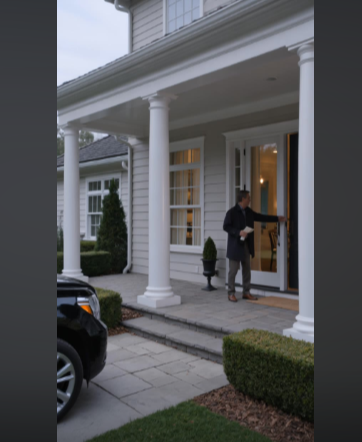
I was standing on my daughter Rachel’s porch with a bottle of wine and an
My Lawyer Wrote To Me “Call Me Immediately!” He Told Me The Terrible Truth About My Daughter
WHEN I WAS GETTING READY TO GO TO MY DAUGHTER’S FOR DINNER, MY LAWYER TEXTED ME: “CALL ME IMMEDIATELY!” I DIALED HIS NUMBER. WHAT HE TOLD ME ABOUT MY DAUGHTER SHOCKED ME.
I stood on the front porch of my daughter Rachel’s house holding a bottle of vintage wine in one hand and an anniversary card in the other.
Ten years of marriage.
That was what I thought we were celebrating.
Rachel and Jason lived in a sprawling suburban mansion with decorative columns that looked like marble until you knew enough construction to recognize hollow plaster.
I knew construction.
I had spent most of my life around concrete, steel, load calculations, permits, labor crews, foundations, cranes, and deadlines.
At seventy-one, most people simply called me Bernie.
Rachel preferred:
Dad.
Jason usually called me:
Old man.
Not to my face.
At least not then.
I reached toward the doorbell.
My phone buzzed.
Arthur Steinberg.
My lawyer for thirty years.
His message was short.
DO NOT SIGN ANYTHING.
CALL ME IMMEDIATELY.
I stepped away from the door.
Arthur answered on the first ring.
“Bernie.”
His voice was low.
Urgent.
“Rachel’s attorney sent paperwork to my office.”
“She is attempting to activate a durable power of attorney over your property.”
“She is alleging severe cognitive decline.”
My hand tightened around the phone.
“What property?”
“You know which one.”
Pause.
“The farm.”
Two hundred acres.
Forty years of my life.
Land Catherine and I bought when Rachel was still small enough to ride on my shoulders.
The place where I taught my daughter to ride a bicycle.
The place where my wife wanted us to grow old.
Arthur continued.
“There is already a buyer.”
“They intend to attempt a closing tomorrow morning.”
“Nine o’clock.”
My mouth went dry.
“They’re claiming you’re no longer competent to manage your affairs.”
“Bernie…”
“If they put anything in front of you tonight…”
“Do not sign.”
Suddenly:
Everything aligned.
Rachel asking about property taxes.
Jason worrying aloud about whether I remembered appointments.
The anniversary invitation.
The sudden interest in my health.
Not affection.
Preparation.
I looked toward the glowing windows.
Through the curtains, silhouettes moved.
My family.
Preparing dinner while preparing to take my land.
“They think I’m broke.”
I said.
Arthur exhaled.
“They think you’re a retired construction foreman living off a pension.”
That was deliberate.
For decades, I had kept my actual wealth private.
Most people in town knew Kowalski Construction.
They knew the initials BK on cranes across the skyline.
They did not know I still controlled roughly forty percent of the company through carefully structured holdings.
Rachel knew I had once worked in construction.
She did not understand what I owned.
I had wanted my family grounded.
Catherine and I agreed.
No trust-fund children raised believing money made them important.
Somewhere along the way:
I succeeded at hiding the fortune.
Failed at teaching the lesson.
I slipped a small recorder into my jacket only after Arthur confirmed the documentation strategy was lawful and useful for counsel.
Then I rang the bell.
Rachel opened immediately.
Gold earrings.
Designer dress.
Expensive perfume.
“Dad.”
She hugged me.
Too warmly.
“You made it.”
Jason emerged from the kitchen.
Forty-two.
Luxury sneakers.
Watch too expensive for a man whose finances, I would later learn, were already collapsing.
“Bernie.”
He looked me over.
“You look tired.”
Then:
“You feeling okay?”
First brick.
Foundation of the story they needed.
I let my eyes wander.
“I’ve had some trouble focusing lately.”
Jason’s face changed.
Only for half a second.
Satisfaction.
Rachel guided me toward the dining room.
Her hand clamped around my elbow.
Not affection.
Control disguised as assistance.
My granddaughter Brittany sat on the sofa.
Nineteen.
Phone in her hand.
“Hey, Grandpa.”
She never looked up.
I had already funded:
Her first car.
College savings.
Trips.
Electronics.
She regarded me the way people regard an old account that should continue paying automatically.
Dinner was elaborate.
Roast beef.
Truffled potatoes.
Wine.
But conversation had one subject.
Me.
“Dad…”
Rachel said.
“You didn’t answer Tuesday.”
“Did you forget to charge your phone?”
I had been inside a board meeting approving a corporate transaction.
Instead:
I rubbed my forehead.
“I think I misplaced the charger.”
“I looked in the kitchen.”
“I couldn’t remember where.”
Jason leaned in.
“That is concerning.”
He spoke slowly.
“Living alone on that much land…”
“What if you fall?”
“What if you forget the stove?”
Rachel placed her fork down.
“Mom has been gone five years.”
“You’re holding onto a ghost.”
There it was.
Catherine.
My wife of forty-two years.
Reduced to an argument for liquidation.
“We found a beautiful assisted-living community.”
Rachel continued.
“Meals.”
“Cleaning.”
“People your age.”
“You wouldn’t need to manage taxes or maintenance.”
I looked around.
Crystal chandelier.
Designer handbags.
Unopened envelopes shoved beneath magazines on a side table.
A house built exactly like its columns.
Expensive surface.
Hollow interior.
“I’ll think about it.”
I said.
Jason reached beneath the table.
Leather folder.
“This will help.”
He opened it.
“Standard paperwork.”
“Rachel handles utilities.”
“Insurance.”
“Mail.”
“No more worrying.”
I read enough.
It was not utility paperwork.
Durable power of attorney.
Broad authority.
Finances.
Property.
Medical matters.
The exact instrument Arthur warned about.
Brittany walked over.
Grabbed bread.
“Just sign it, Grandpa.”
“Mom’s been stressing for weeks.”
I looked at her.
Then the pen.
Montblanc.
Jason held it toward me.
Rachel barely breathed.
I took it.
Let my hand tremble.
Lowered the tip toward the signature line.
Rachel’s shoulders relaxed.
Then:
I knocked over my wine.
Red flooded the white cloth.
The document soaked instantly.
“Oh.”
I cried.
“Look at that.”
“I am sorry.”
I dabbed at the paper.
Wet fibers tore beneath the napkin.
Jason shot upward.
“Jesus, Bernie.”
Chair crashed backward.
For one second:
No concerned son-in-law.
Only rage.
Rachel flashed him a warning look.
Then turned toward me.
“It’s fine.”
“We’ll print another copy.”
“I feel dizzy.”
I stood.
“I forgot my heart medication.”
“I need to go home.”
Rachel blocked me.
“You shouldn’t drive.”
“Stay.”
“We’ll print it.”
“You can sleep here.”
I looked at her.
The little girl who once fell asleep on my shoulder at parades.
The teenager I comforted after heartbreak.
The woman now physically blocking her father from leaving until he signed away control.
“I need my medication.”
I said.
“If I collapse here…”
That changed her calculation.
If something actually happened before the documents were completed:
Probate.
Delay.
Uncertainty.
They needed speed.
“Fine.”
Rachel snapped.
“Go.”
“I’ll bring fresh papers tomorrow.”
I shuffled toward the door.
“Happy anniversary.”
I said.
Outside:
Truck.
Locks.
Recorder stopped.
Then I drove directly to Arthur Steinberg’s office.
One in the morning.
Lights still on.
Arthur sat behind a mahogany desk surrounded by financial reports.
Mike, the investigator he had used for years on corporate matters, arrived soon afterward.
Arthur did not waste time.
“Jason and Rachel are in worse shape than we suspected.”
Foreclosure notice.
Mortgage arrears.
Roughly half a million dollars of combined exposure once home debt, vehicle obligations, and other liabilities were considered.
Jason had poured money into a speculative cryptocurrency investment.
Lost almost everything.
Their house was approaching foreclosure.
“So that’s the farm.”
I said.
“They need liquidity.”
Arthur nodded.
“They need it fast.”
Mike placed additional material on the desk.
Public filings.
Credit information obtained lawfully.
Professional background on the doctor involved in their competency strategy.
Dr. Vance.
Prior discipline.
Ethical concerns.
Financial pressure.
Not the kind of doctor anyone should use for an objective capacity evaluation.
Then:
Messages preserved through lawful investigative channels.
One from Rachel to a friend.
The words were worse than the numbers.
Dad is useless now.
Just a bag of bones taking up space.
We’re waiting for him to die so we can live the way we deserve.
I read it twice.
My daughter.
Not:
Jason manipulating her.
Not:
A misunderstanding.
Her words.
Mike shifted uncomfortably.
“There’s more.”
Dr. Vance appeared financially compromised.
His debts made him vulnerable.
The proposed evaluation looked less like medicine and more like a purchased conclusion.
I walked toward the window.
City skyline.
Three buildings visible from Arthur’s office had been built by companies under my corporate umbrella.
Thousands of employees knew my signature.
My own daughter believed I could no longer manage a utility bill.
Arthur asked:
“What do you want?”
“Immediate injunction?”
“We can move now.”
“No.”
He frowned.
“Bernie…”
“If we block them tonight…”
“They learn nothing.”
“They rewrite the story.”
“They wait.”
I turned.
“I want the fraud documented.”
“I want every decision preserved legally.”
Arthur disliked the risk.
But he understood the strategy.
We protected my assets.
Restricted unauthorized access.
Flagged the land against improper transfer.
Moved certain liquid holdings according to legitimate estate-security advice.
Then I asked:
“Who owns the mortgage on Rachel’s house?”
“First National.”
“Can it be purchased?”
Arthur stared.
Then:
“Yes.”
“Through an entity.”
“Omega Holdings.”
“Buy it.”
The room became quiet.
“The debt?”
I said.
“Mortgage.”
“Vehicle paper if available.”
“Other distressed obligations we can acquire lawfully.”
Arthur’s mouth tightened.
“You want to become their creditor.”
“I want control of the paper they planned to use my farm to satisfy.”
Mike whistled.
Then I added:
“Tomorrow Rachel takes me to Vance.”
“They want incompetence.”
“I will give them enough rope to document exactly what they are doing.”
The next morning:
Rachel’s SUV.
Medical building beside a dry cleaner and payday lender.
Not my regular doctor.
Not a hospital.
Temporary-looking office.
Rachel spoke slowly to me.
“Dad…”
“Dr. Vance is going to help.”
I stared ahead.
“What about the chickens?”
Rachel sighed.
“You don’t have chickens.”
Good.
She heard dementia.
I heard evidence.
Inside:
Dr. Vance barely examined me.
No meaningful physical assessment.
No serious history.
Instead:
Orientation questions.
Memory questions.
Simple arithmetic.
I deliberately performed badly.
“What year is it?”
I squinted.
“Nineteen ninety-eight?”
Rachel smiled.
Dr. Vance wrote.
“Count backward from one hundred by sevens.”
I stared.
“I like seven.”
More notes.
He moved rapidly toward the result they wanted.
Severe cognitive impairment.
Unable to manage complex affairs.
Danger to estate.
Then:
Medication.
A strong psychiatric drug proposed without meaningful basis.
That was when I let the mask slip.
Only slightly.
I asked why he would prescribe such medication without a legitimate psychiatric indication.
Referenced concerns about chemical restraint and inappropriate use in older patients.
Nothing operational.
Nothing theatrical.
Just enough knowledge to tell him:
I knew.
Dr. Vance froze.
I mentioned his previous disciplinary history indirectly.
He turned pale.
Rachel rolled her eyes.
“See?”
“He rambles.”
Vance had a choice.
Stop.
Or commit.
He signed.
Declared me incapacitated.
Rachel accepted the paper with visible relief.
Then texted Jason.
Got it.
Call realtor.
I watched from the passenger seat.
Closed my eyes.
Phase complete.
The following morning:
Moving truck.
Rachel and Jason did not ask permission.
They arrived with furniture.
Boxes.
Movers.
Within hours:
My home changed.
My leather sofa dumped onto the grass.
Kitchen cleared.
Catherine’s travel mugs.
Old keepsakes.
Photographs.
Gone into trash bags.
Then:
Her porcelain angels.
Thirty years of collecting.
Rachel opened the hutch.
Grabbed them.
“Please.”
I said.
“Not those.”
“She loved those.”
Rachel held one by the wing.
“Mom is dead.”
Then dropped it into the garbage.
Porcelain shattered.
Something in me shattered with it.
But still:
I did not fight.
I needed the record.
Needed them confident.
Needed them to keep showing who they were.
By noon:
Their furniture occupied the rooms.
Glass.
Chrome.
Sterile.
Jason drank one of my beers.
“We took the master bedroom.”
He said.
“Office setup.”
“Estate management.”
“Where do I sleep?”
He pointed downward.
“Basement.”
The room beside the furnace.
Small window.
Concrete smell.
Storage space.
The owner of two hundred acres and part-owner of a major construction company was placed on a cot in his own basement by people who believed he was already legally dead.
I carried one suitcase down.
“Quiet is nice.”
I said.
That evening:
Party upstairs.
Brittany.
Friends.
Music shaking the floor.
I climbed up for water.
Brittany sat on the kitchen counter.
Martini.
“That’s Grandpa.”
She told a boy beside her.
“Basically the help.”
“He comes with the house.”
The boy laughed.
Another insult entered the recorder.
Then Jason on the phone nearby.
Buyer.
Preliminary signing Friday.
Don’t worry about Bernie.
Doctor says his heart is a ticking time bomb.
Stress might finish him.
Then:
“If not…”
“Accidents happen on farms.”
I stood perfectly still.
That sentence changed the case.
Not because I wanted revenge.
Because now the threat was no longer only financial.
Back downstairs:
I called Arthur.
“Keep everything.”
“Every recording.”
“Every document.”
“Every witness.”
“Understood.”
The next morning:
Rachel wore Catherine’s pearls.
South Sea.
Pink undertone.
Diamond rose clasp.
I bought them for our thirtieth anniversary.
Catherine had asked me to save them for Rachel.
Someday.
“When she’s ready to understand what they mean.”
Rachel touched them.
“Found them in the safe.”
“Combination was my birthday.”
I stepped closer.
“Take them off.”
“Please.”
“Those were your mother’s.”
“They are special.”
Rachel laughed.
“They are jewelry.”
“I might sell them.”
“I saw a purse.”
“Pearls are old-fashioned.”
That was the moment.
My last excuse for her died.
I stopped thinking:
Jason changed her.
No.
Rachel had become exactly what she was showing me.
“You’re right.”
I said.
“Your mother is gone.”
My voice was clear.
Rachel frowned.
For one second:
She heard me.
Then I let my shoulders fall.
“My head hurts.”
She relaxed.
“Go downstairs.”
“Tonight we’re having a party.”
Birthday party.
Mine.
Except:
My birthday had been three months earlier.
I texted Arthur.
TIME.
BRING EVERYONE TONIGHT.
By sunset:
The farm became a private club.
Tent.
Catering.
Floodlights.
Music.
Fifty guests.
Rachel came downstairs wearing gold.
Threw a cheap suit onto my cot.
“Put this on.”
Then buttoned it herself because I deliberately fumbled.
“Try not to drool.”
Upstairs:
Mayor.
Country-club members.
Businesspeople.
Rachel’s friends.
People who had no idea I owned a significant piece of one of the state’s largest construction companies.
To them:
I was a confused retired laborer.
Jason introduced me to a banker.
“Great genes.”
He joked.
“But mentally…”
“Lights on, nobody home.”
The banker nodded sympathetically.
“You’re saints for caring for him.”
Jason sighed.
“It’s a burden.”
Rachel whispered to another guest:
“He’s medicated.”
“He can become violent.”
The narrative grew.
Confused.
Dangerous.
Dependent.
Then dinner.
Filet mignon.
No knife at my place.
Rachel cut my steak into tiny pieces.
“We don’t want you hurting yourself.”
Fifty people watched.
I ate.
Every bite.
Then Rachel took the microphone.
“Thank you for coming.”
“Tonight is about Dad.”
Applause.
Banner:
HAPPY 75TH BIRTHDAY, DAD.
I was seventy-one.
She did not even know my age.
Or:
Seventy-five made the story better.
Rachel continued.
“Watching a parent decline is heartbreaking.”
“Jason and I moved here to provide care.”
“We sacrificed our own lives.”
Then:
“Dr. Vance confirmed yesterday that Dad requires full-time professional supervision.”
My stomach tightened.
“Next week…”
“We’ll move him to Golden Sunset.”
I knew the facility.
Underfunded.
Institutional.
Far away.
Then the payoff:
“And we’ll preserve the farm for his legacy.”
Applause.
People applauded my removal.
Rachel returned.
“You did well.”
She squeezed my hand.
“I am proud of you.”
I looked at her.
Then smiled.
Not senile.
Not vacant.
Boardroom smile.
She frowned.
“The cake is dry.”
I said.
“What?”
“Mom always made vanilla.”
Rachel froze.
“You remember?”
“I remember everything.”
I leaned closer.
“The cake.”
“The pearls.”
“Dr. Vance.”
“The papers.”
Her face turned white.
“Enjoy your party.”
I said.
“Very expensive.”
Jason appeared.
Pulled her toward the dance floor.
She kept looking back.
For the first time:
Fear.
My burner phone buzzed.
Arthur.
DONE.
SHERIFF BRIEFED.
DOCUMENTS SECURED.
9:00 A.M.
I ate another bite of dry chocolate cake.
Morning:
8:45.
Rachel pacing.
Jason on phone.
Buyer coming.
Cash transfer expected by noon.
“He’s sedated.”
Jason whispered.
I wasn’t.
The pills given with breakfast remained untouched.
Nine sharp:
Black sedan.
Mr. Sterling.
Quick-close property investor.
Another man with him.
Documents opened.
Title.
Inspection waiver.
Power of attorney.
Dr. Vance’s incapacity certificate.
Sterling asked:
“Medical attachment?”
Rachel produced it.
“She is authorized?”
Jason nodded.
Rachel lifted the pen.
I pressed one button.
The front door opened.
Sheriff Miller.
Two deputies.
Arthur Steinberg.
“Step away from the table.”
Rachel dropped the pen.
“What is this?”
“I called them.”
I said.
No tremor.
No slur.
I stood straight.
Rachel stared.
“Dad?”
Arthur laid documents across the table.
“Dr. Vance’s assessment has been challenged and referred for investigation.”
“Independent medical evidence contradicts it.”
“His conduct during yesterday’s evaluation has been preserved.”
“And there are serious questions regarding financial inducement.”
Rachel shook her head.
“No.”
Then the power-of-attorney problem.
The valid estate structure required independent safeguards before any incapacity authority could be activated.
One compromised physician could not legitimately hand Rachel my life.
Her attempted farm transfer lacked valid authority.
The sale stopped.
Sheriff Miller had warrants connected to the broader fraud investigation.
Jason tried running.
Made it to the kitchen.
Deputy caught him.
Rachel remained.
“Dad…”
“Tell them this is a misunderstanding.”
I looked at her.
“My daughter would never put me in a basement.”
“Would never destroy her mother’s things.”
“Would never hope I died fast enough to solve a mortgage problem.”
Tears came.
Not remorse.
Panic.
Then Sterling tried leaving.
Arthur stopped him.
“There are questions regarding your involvement in a knowingly distressed transfer.”
He sat.
The farm remained mine.
But I had more.
Rachel screamed:
“This is my inheritance.”
“You owe us.”
“You’re going to die eventually.”
I listened.
Then asked Arthur for the blue folder.
Inside:
Their mortgage.
Their loans.
Their debt.
Omega Holdings had purchased enough of it lawfully that I now stood in a completely different position.
Not revenge fantasy.
Creditor.
I showed Rachel.
“First National sold your distressed mortgage.”
“Who bought it?”
Jason whispered.
“Omega Holdings.”
I said.
“I control Omega.”
Silence.
Their mansion.
Vehicles.
Other secured obligations.
The paper they believed belonged to distant institutions now sat under a company I controlled.
“You wanted my farm to solve your debts.”
I said.
“Now your debts are mine to enforce.”
Rachel stared.
Then another revelation.
Jason’s employer had received notice of the fraud investigation.
His position had been terminated that morning according to the source outcome.
Emergency preservation orders froze certain assets while investigators and courts determined ownership and exposure.
No instant magical seizure.
But no quiet liquidation either.
Brittany arrived during the chaos.
Convertible.
Music.
Pearls.
Police cars changed her expression.
Then:
“Grandpa…”
“What about Paris?”
“Tuition is due.”
Not:
Mom?
Dad?
Why are they in handcuffs?
Paris.
Cash flow.
I felt something inside me sink.
Three generations.
Same disease.
Entitlement.
I handed her one sheet of paper.
Job application.
The Rusty Spoon.
Diner.
Morning shift.
She stared.
“You’re joking.”
“No.”
“I’m an influencer.”
“Then influence yourself into work.”
“No Paris.”
“Trust fund suspended.”
“If you want school…”
“Earn part of it.”
“Apply for aid.”
“Show me you can work.”
She crumpled the page.
“I hate you.”
“You’re ruining my life.”
“No.”
I said.
“I’m giving you one.”
She left.
I smoothed the application on the table.
Kept it.
Arthur asked:
“What about their mansion?”
“Sell it when legally available.”
I said.
“Any proceeds belonging to me after lawful debt satisfaction…”
“Put them toward elder-abuse legal support.”
Then:
“Brittany?”
“Watch.”
“If she works six months…”
“Really works…”
“We discuss tuition.”
“State school.”
“Not Paris.”
The house became quiet.
My own furniture was gone.
Catherine’s angels destroyed.
Pearls taken.
Basement cot still downstairs.
But:
Free.
That mattered.
The criminal process lasted.
It did not end in one dramatic morning.
Investigators reviewed:
False medical representations.
Financial conspiracy.
Attempted unauthorized transfer.
Elder exploitation.
Fraud-related conduct.
Dr. Vance faced professional and legal consequences arising from his role.
Rachel and Jason turned on each other almost immediately.
Each blamed the other.
Jason said:
“Her idea.”
Rachel said:
“He found the doctor.”
Exactly as Mike predicted.
Months later:
Final federal and state proceedings produced substantial sentences under the source’s outcome.
Rachel:
Eight years.
Jason:
Ten.
Arthur told me from the terrace of my new home.
Maine coast.
Atlantic below.
Salt air.
No tie on Arthur.
I had never seen him look so relaxed.
“They asked for you?”
I said.
“No.”
“Jason cried.”
“Rachel stared at the wall.”
I watched waves strike rocks.
Eight years.
My daughter.
People expect a father to say:
It broke me.
The truth was more complicated.
She had broken something long before sentencing.
Court merely named the consequences.
“And Brittany?”
Arthur smiled.
“Still at the Rusty Spoon.”
“Late twice.”
“Docked pay.”
“She stayed.”
“Worked extra shifts.”
“Pays rent.”
That warmed me more than I expected.
“Keep the education fund available.”
I said.
“If she makes it to Christmas…”
“If she shows up for a year…”
“Send her information for a state university.”
“Not Paris?”
“Not yet.”
Arthur laughed.
“You are hard.”
“No.”
I looked at my hands.
Veins.
Spots.
Old scars.
“I’m finished with soft lies.”
Three months earlier:
I sold the farm.
Some people could not understand why.
The land was safe.
I had won.
Why leave?
Because every room contained invasion.
Dining table:
POA.
Basement:
Cot.
Hutch:
Broken angels.
Bedroom:
Rachel’s takeover.
I wanted Catherine’s memories to remain ours.
Not contaminated permanently by the worst week of my family.
A young couple bought the property.
They wanted horses.
I left them the tractor.
Asked only that they keep one section of Catherine’s garden.
Then:
Maine.
Glass-walled house.
Ocean.
Boat.
Chef.
Not because I needed luxury.
Because I spent decades building enough wealth to choose comfort without shame.
For most of my life, I hid money to protect my family from entitlement.
After everything:
I stopped pretending poverty was morally superior.
Money wasn’t the problem.
Character was.
I also created:
The Catherine Kowalski Defense Fund.
Purpose:
Legal help for older adults being financially exploited by relatives.
Attorneys.
Independent competency assessments.
Forensic accounting.
Investigators operating lawfully.
Emergency housing support.
Every week:
Files.
Different names.
Same patterns.
Son siphoning pension.
Daughter pressuring deed transfer.
Caregiver isolating a parent.
Relative manufacturing incapacity.
Each case reminded me:
What happened to me was dramatic.
But the underlying abuse was ordinary enough to repeat everywhere.
So:
We became help.
Not vigilantes.
Not revenge.
Documentation.
Lawyers.
Courts.
Protection.
Arthur took another sip of iced tea.
“What now?”
I looked toward the Atlantic.
“Tomorrow…”
“Bring me the Ohio file.”
“Widow.”
“Three sons.”
He nodded.
The sun dropped lower.
Purple.
Red.
Silver water.
For decades, people told me:
Family is everything.
Blood is thicker than water.
Forgive because she is your daughter.
Maybe.
But biology is not behavior.
Family is the person who respects your autonomy when you become vulnerable.
The one who protects rather than extracts.
The one who does not see aging as an opportunity to seize control.
Arthur Steinberg had behaved more like family to me than my biological daughter.
Mike too.
Sheriff Miller.
Even the couple raising horses on land I once thought I would die owning.
I did not celebrate Rachel’s prison sentence.
I did not pray for her suffering.
I simply stopped volunteering to absorb the consequences of her choices.
That was the boundary.
I was seventy-one.
I lived alone.
But I was not lonely.
There is a difference between:
An empty house.
And peace.
I had cut away the part of my life that depended on pretending abuse was love.
Now:
Clean air.
Ocean.
Work that mattered.
A granddaughter who might still learn something because somebody finally told her no.
I stood.
“Stay for dinner.”
I told Arthur.
“Lobster tonight.”
He grinned.
“Your chef?”
“Yes.”
“I earned the right to let somebody else chop onions.”
We laughed.
Then I looked once more at the water.
I had built skyscrapers.
Factories.
Hospitals.
Schools.
Stadiums.
A fortune.
But the most difficult structure I ever reinforced was myself.
My daughter tried to convince a court, a doctor, a buyer, and eventually half her social circle that my mind no longer belonged to me.
She was wrong.
Age had slowed my knees.
It had not erased my judgment.
Grief had made me quieter.
It had not made me incompetent.
Patience had made me appear passive.
It had not made me weak.
That distinction saved me.
And perhaps it would save someone else now.
That was why Catherine’s name sat on the fund.
Not mine.
Because she had always understood something I learned too late.
A strong foundation is not the part of a building people admire.
It is the part that prevents everything above it from collapsing.
Catherine had been mine.
After she died:
I had to become my own.
I looked toward Arthur.
“Tomorrow morning.”
“The Ohio case.”
“Nine?”
“Eight.”
I said.
He laughed.
“Still a foreman.”
“Always.”
The ocean crashed below us.
And somewhere far behind me:
The farm belonged to people starting a new life.
Brittany was probably clearing breakfast plates at the Rusty Spoon.
Rachel was living with the consequences she had chosen.
Jason too.
And I was still standing.
Not because I destroyed them.
Because when they tried to take ownership of my life…
I finally remembered whose name belonged on the deed.
