My daughter brought her fiancé’s family to dinner, and his father spent most of the
My Daughter’s Future Father-In-Law Humiliated Me For 3 Hours. I Outrank Him By..
MY DAUGHTER BROUGHT HER FIANCÉ’S FAMILY TO DINNER AT MY HOUSE.
HIS FATHER, A NAVY CAPTAIN, SPENT 3 HOURS TALKING DOWN TO ME AT MY OWN TABLE.
AT 9PM HE TOLD HIS SON: “THAT FAMILY HAS NOTHING BEHIND IT.”
I’M A REAR ADMIRAL. THE NEXT MONDAY HE WAS IN FOR THE SHOCK OF HIS LIFE…
THE FATHER WHO NEVER EXPLAINED HIMSELF
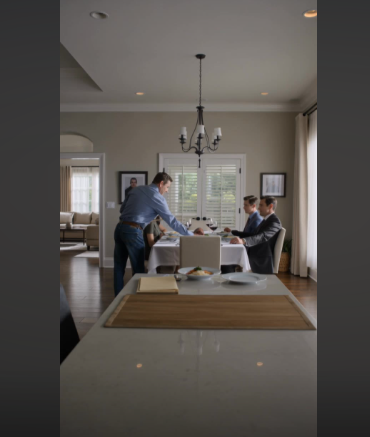
My daughter brought her fiancé’s family to my house for dinner on the fourteenth of September, and his father spent most of the evening explaining the Navy to me.
I let him.
I have let a great many people explain my own work to me over thirty-one years, and it has never once cost me anything.
That night it did.
Not because Captain Thaddeus Fenright Marsh misunderstood who I was.
Because my daughter sat four feet away and did not know enough about her own father to understand why he was wrong.
My name is Terrell Hayes. I was fifty-one that fall. I had served in the United States Navy since I was nineteen, first enlisted, then commissioned, and by 2021 I had reached rear admiral lower half, the first flag rank. Since 2023, I had served as deputy commander of a major operational readiness command in the Coronado area.
That is the formal version.
The version my daughter knew was shorter.
Dad works for the Navy in San Diego.
That was my fault.
Anka was twenty-nine. She worked in hospital administration in Chula Vista, coordinating staffing and scheduling for two surgical floors. She was very good at it. She had been promoted twice in four years, which I knew because she told me and because I listened when the subject was her life.
Apparently, I had never noticed how little I told her about mine.
Her fiancé was Grayson Fenright Marsh, thirty-one, a lieutenant. He was pleasant the first four times I met him. Nothing about him set off an alarm in me. In May, he asked for my blessing in a parking lot outside a restaurant in Coronado. His voice shook slightly, which I liked. Young men should understand the weight of a question before asking it.
I said yes in six seconds.
His father, Thaddeus, was a Navy captain with twenty-six years of service and a staff assignment in San Diego. A serious rank. A real career. His wife was Rosamund. Their younger son, Kelvin, was twenty-six and a junior officer.
The four of them were coming to my house for dinner before the wedding.
I wanted that dinner.
I had one child. Her mother, Vivien, had died in 2014 after fourteen months of ovarian cancer. Anka was eighteen.
Vivien had known exactly what I did for a living.
She had attended ceremonies. She had sat in folding chairs and watched me pin on rank. She had a habit at parties that used to irritate me. Someone would ask what I did. I would give my usual short answer. Vivien would wait four seconds, smile, and say, “He’s being modest,” before explaining enough to make me uncomfortable.
I told her I hated it.
She always answered, “Somebody in this house has to.”
I did not understand what she meant until years after she was gone.
After her death, Anka and I became a household of two adults who loved each other and shared almost nothing about the thing that occupied most of my waking life.
Part of that began as discipline. I had spent much of my career in operational environments where the correct amount to say at home was often very little. Then the habit outlived the need. Eventually, silence stopped being something I practiced and became something I was.
I drove a 2016 Tacoma. I lived in a three-bedroom house in Bonita that I bought in 2009 and had paid off. At home, I wore jeans and work shirts. I mowed my own yard.
None of that made me humble.
I am not a humble man.
I simply spent decades in a culture where talking about yourself is discouraged, then moved into senior jobs where nobody in the room needed an introduction. Somewhere along the way, I lost the equipment for explaining myself to people who actually mattered.
My parents had not raised me around prestige either. My father worked at a paper mill for thirty-four years. My mother cleaned motel rooms off Highway 98, then became head of housekeeping, then quietly bought a small ownership stake in the property.
Almost nobody knew.
She used to say, “A person measuring you is telling you what they think a person is worth.”
I heard that at fourteen and thought she was talking about rude hotel guests.
At fifty-one, standing in a pantry doorway with a serving platter in my hands, I finally understood her.
Anka called in August and asked whether we could host dinner with Grayson’s family.
“Yes,” I said immediately.
I had already put about eighty-one thousand dollars into the wedding by then. Venue in Rancho Santa Fe. Caterer. Photographer. Band. Dress-related expenses. The venue deposit alone was thirty-one thousand, nonrefundable.
Anka had asked twice whether it was too much.
Both times I told her not to worry about the number.
That, too, would matter later.
I cooked the dinner myself.
I cook four things well. One is a rib roast my mother taught me in Alabama around 1988. I bought a seven-pound roast. I made her potatoes and the green beans that take too long and are worth it.
At four that afternoon, I went to my bedroom and stood in front of my closet.
My service dress uniform hung in a garment bag.
A shadow box in my office held the pieces of a career I rarely explained. One photograph showed Vivien pinning a star on my shoulder in 2021.
I looked at that photograph for maybe eleven minutes.
Then I put it face down in a drawer.
Not out of modesty.
Because Anka had once asked, years earlier, whether I could “not be weird about work” around people, and I had never fully understood what she meant. I decided the safest version of me for dinner was the version with nothing on it.
Work shirt.
Jeans.
No uniform.
No biography.
No rank.
At six, the Fenright Marsh family arrived.
Thaddeus shook my hand while looking over my shoulder at the house.
I noticed.
I have shaken enough hands to know the difference between someone meeting you and someone evaluating the room behind you.
Rosamund complimented the entryway in a tone that suggested she had expected less.
Kelvin shook my hand and called me sir.
Grayson hugged Anka, touched the small of her back, and said something that made her laugh.
I looked at that and thought:
Good.
That is what I want.
The first hour was ordinary.
Drinks.
Wedding venue.
Anka’s hospital job.
A news story.
Then we sat down to eat.
Thaddeus asked what I did.
“I work at a Navy command in Coronado,” I said.
Completely true.
Completely useless.
He asked whether I was on the administrative side or operations.
“A little of both.”
He made a small sound.
“Sure. There’s a lot of that over there.”
Kelvin looked down at his plate.
He had heard something his father had not.
I passed the potatoes.
Ten minutes later, I mentioned a general manpower issue that had been discussed publicly for months.
Thaddeus put down his fork.
“That’s the perception,” he said. “The reality is more complicated.”
Then he explained the organization I helped run.
For about four minutes.
He got two factual numbers wrong.
Not opinions.
Numbers from a readiness brief I had personally reviewed that summer.
At the end, he said, “No offense, Terrell, but you’re seeing the support side. From where I sit, it looks different.”
From where he sat.
A captain in a staff billet.
From where I sat, I was the deputy commander of the enterprise he was describing.
“That’s fair,” I said.
At 7:15, he asked how long I had served.
“Thirty-one years.”
He nodded thoughtfully.
“And where does that put you? Senior chief?”
A senior chief is a distinguished enlisted rank. The people who reach it are often the reason large organizations function at all.
The insult was not the rank.
The insult was that he had already heard me say I had received a commission in 2003 and discarded the information because it did not fit the man he thought lived in my house.
“I received my commission in 2003, sir.”
Sir.
I called him sir at my own table without thinking.
He did not correct me.
He barely noticed.
Anka did.
She told me months later that she replayed it for days.
Rosamund smiled.
“Oh, you went the officer route. That’s wonderful.”
Thaddeus nodded.
“Mustang. Nothing wrong with that. Some of the best officers I know came up that way.”
“I’ve found the same thing,” I said.
Then I passed the potatoes again.
Around 7:25, the conversation moved from me to my daughter.
Rosamund asked what Anka did at the hospital.
Anka explained staffing and scheduling.
Two surgical floors.
A complicated job.
Rosamund smiled.
“And are you going to keep doing that after the wedding?”
“Yes.”
“Well, Grayson’s schedule will be the difficult one, so it’s good yours is flexible.”
Flexible.
My daughter managed people, coverage, emergency staffing, leave, and the daily chaos of surgery scheduling.
But Rosamund heard civilian woman marrying Navy officer and supplied the rest herself.
Anka smiled politely.
Ten minutes later, Thaddeus said something similar.
“My son tells me you’ve been patient about the moving possibilities. That’s not easy for a civilian.”
Anka looked at him.
“I grew up in it, sir.”
Born at Balboa.
Four moves before age nine.
A father gone for long stretches.
She knew military life in the way children know weather—without vocabulary, but with experience.
Thaddeus smiled.
“That’s not quite the same thing, but it helps.”
I looked at Anka.
She did not look at me.
At 7:40, the wedding money came up.
Rosamund asked the venue name.
Anka told her.
There was a pause.
“That is quite a place.”
Then she touched my daughter’s arm.
“Just make sure your father isn’t overextending himself. Men his age don’t always say when something is too much.”
I was fifty-one.
“We’re all right,” I said.
Thaddeus turned toward me.
“Terrell, if the numbers get tight, say something. There’s no shame in a smaller room.”
I had paid the thirty-one-thousand-dollar venue deposit from an account that would not notice it.
“I appreciate that.”
Anka looked at me for maybe a second and a half.
That look has stayed longer than everything Thaddeus said.
She knew the conversation had taken on the wrong shape.
She did not know why.
And I gave her nothing.
At eight, Kelvin asked a real question.
“Sir, what do you actually do day to day?”
I looked at him.
He was the only person at the table who had asked without building an answer first.
“I sit in a lot of meetings about people and money.”
“Resourcing?”
“Something like that.”
He laughed.
“That’s the whole Navy, sir.”
I laughed too.
For eleven seconds, it was simply two people in the same profession talking honestly.
Then Thaddeus said:
“Kelvin, let the man eat.”
That was the only time all night he stopped a conversation.
It was the one where somebody asked me who I was and waited for the answer.
At 8:15, Grayson told a story about a senior officer visit to a command he had served at two years earlier.
The story was funny.
The admiral had asked a question that revealed he had not understood a technical detail.
Everyone laughed.
Grayson ended with:
“That’s the thing. By the time people get that rank, they haven’t touched the actual work in fifteen years.”
Thaddeus corrected him.
“Twenty.”
Rosamund said:
“That’s why they need good staffs.”
I sat at the head of my own table and drank water.
Anka laughed too.
Not at me.
At the story.
She had no idea there was a flag officer sitting four feet from her.
Later, Grayson began talking about his own future.
Normal young-officer talk.
What assignment he wanted.
Where he hoped to be in ten years.
What mattered for promotion.
Thaddeus looked proud.
“The people who move early are the ones who make good choices about every assignment.”
Then he looked at me.
“Terrell can tell you that.”
“More or less,” I said.
Thaddeus turned back to Grayson.
“At the next level, who knows your name matters. Nobody gets there alone. You need a senior leader willing to put you in the right room.”
He pointed lightly with his fork.
“That’s what a father is for.”
A father.
He said it while a father two grades senior to him passed the potatoes.
That line stayed with me longer than I expected.
Not because he had underestimated my rank.
Because he was explaining fathers to me while my daughter sat there watching me offer no information about myself at all.
The final remark before dessert came from Rosamund.
“Are you giving a speech at the wedding?”
“I suppose.”
“Oh, good. Keep it short, though. Thaddeus is doing one and he’s excellent at speeches. He does them at command events all the time.”
I had spoken at more retirements and formal command ceremonies than I could easily count.
I had given the eulogy at Vivien’s funeral in 2014 in front of two hundred people without notes.
Anka had sat in the front row.
“I’ll keep it short,” I said.
My daughter said nothing.
Neither did I.
I want to be clear about why.
People have told me since that night that I showed restraint.
I did not.
At about 7:20, I understood what Thaddeus was doing.
I could have stopped the evening with one sentence.
I did not because I wanted to know how far he would go.
That instinct has served me well professionally.
Gather first.
Act second.
Do not interrupt a person while he is telling you exactly who he is.
It is useful in a briefing room.
It is a cold instinct at your daughter’s engagement dinner.
I know that now.
Then came the kitchen.
My pantry opens directly into it.
No door.
If you stand in the pantry doorway reaching for a platter, you are about four feet from the counter and mostly hidden from anyone facing the sink.
At nine, I went in for the cake platter.
Thaddeus and Grayson were at the sink with plates.
They believed they were alone.
Grayson said something about the wedding venue.
Thaddeus answered:
“It is a nice place. I’m not saying it isn’t.”
Then he lowered his voice.
“She is a nice girl, but that family has nothing behind it.”
I stopped moving.
“You’re going to be carrying them for thirty years.”
Water ran in the sink.
“Her father is fifty-one in a house he’ll probably die in. Think about fifteen years from now if he can’t work. There’s nobody else. That family has nothing behind it.”
Silence.
Four seconds, maybe.
Then Grayson said:
“Yeah.”
Just that.
Yeah.
I stood in the pantry with a serving platter in my hands.
Then I saw Anka.
She had entered from the dining room carrying plates.
She was about eleven feet behind Grayson.
She had heard everything.
I have been in bad rooms before.
What my body did in that kitchen surprised me.
No heat.
No pounding chest.
Nothing dramatic.
I looked at my daughter’s face.
She was not shocked.
She was recognizing something.
That is worse.
She was hearing a sentence that confirmed a thing she had been managing quietly for months.
Then she turned around and walked back into the dining room.
No sound.
No broken plate.
Nothing.
That discipline looked familiar.
I suspect she got it from me.
I stepped out of the pantry about eleven seconds later.
Thaddeus turned.
For half a second, I watched him calculate how long I might have been standing there.
Then he chose the answer that favored him.
“Terrell, great kitchen. Really functional.”
“Thank you.”
I put the platter on the counter.
“Cake is in front.”
The evening ended at 9:40.
Handshakes at the door.
Rosamund told me the roast was excellent.
She meant it.
Kelvin said, “Thank you for dinner, sir,” exactly as he had when he arrived.
Grayson hugged Anka.
She did not put her arms around him.
He did not notice.
Rosamund did.
The two cars pulled away.
Anka stayed in the driveway for several minutes.
I went inside and sat in the dark front room.
My hands shook.
That has happened only a few times in my life.
I put them flat on my knees until it stopped.
Then I went to the kitchen and washed dishes.
The rib-roast pan took most of my attention.
Anka came in at about 9:50.
“Dad.”
“I heard it.”
“I know.”
Then:
“I saw you.”
That was everything we ever said about the pantry.
She sat at the table.
I kept my back to her and washed the same roasting pan much longer than necessary.
She told me the remarks had been going on for a year.
Comments about my house.
Questions about whether I could help with a future down payment.
Assumptions about her career bending around Grayson’s.
Small comparisons.
Nothing alone large enough to end an engagement.
Together, a pattern.
And Grayson had never once pushed back.
Not in front of his father.
Not afterward in private.
Then she said the sentence that ended it for her.
“Dad, tonight wasn’t the worst thing anybody has said in front of him. It was just the first time I could see his face while he did nothing.”
I turned around then.
“I’m not marrying him.”
“Don’t decide tonight.”
She stared at me.
“You’re defending him.”
“No.”
I dried my hands.
“I’m making sure when you decide it, you decide it twice.”
She did.
On Sunday afternoon, Anka called Grayson.
They spoke for about ninety minutes.
I did not listen.
I worked in the yard because if my daughter was going to end an engagement, I did not want my presence turning her decision into a conversation about me.
She told me afterward that she gave him one direct question.
“Do you agree with what your father said in my dad’s kitchen?”
“Of course not.”
“Then why did you say yeah?”
There was a long pause.
Then Grayson said:
“Because he’s my father.”
Anka answered:
“And I was supposed to be your wife.”
He told her she was turning one night into a referendum on their entire relationship.
One night.
She had a year’s worth of small moments ready.
She went through them.
Questions about my money.
Comments about her job.
Jokes about our house.
The assumption that his family would be carrying mine.
And every time, Grayson’s silence.
She ended the engagement at the end of the call, not at the beginning.
That mattered to me.
She came outside around four and sat on the back step.
“It’s done.”
Then she cried for about eleven minutes.
I sat beside her.
I said almost nothing.
There was nothing useful I could say that would not make her loss about my pride.
Monday’s briefing had been on the calendar for eleven weeks.
Quarterly force-generation and manning review.
Large recurring meeting.
About two hundred officers, senior enlisted leaders, analysts, and staff representatives.
I presided over it because that was part of my job.
Captain Thaddeus Fenright Marsh was scheduled to present a short segment for his organization.
Grayson and Kelvin were both on the attendance list in support roles.
I had not arranged any of that.
That point matters.
Monday morning, at 6:40, I opened the read-ahead in my office and saw Thaddeus’s name on the presenter sheet.
I sat there with coffee looking at it.
Then I called my chief of staff, Captain Genevieve Otterberg.
“Do I need to recuse myself?”
“From what?”
“One of the presenters is the father of the man who was engaged to my daughter until yesterday.”
She thought for several seconds.
“Are you adjudicating anything about him?”
“No.”
“Promotion?”
“No.”
“Discipline?”
“No.”
“He is presenting readiness data?”
“Yes.”
“Then I don’t see a conflict requiring recusal.”
She paused.
“Does he know who you are?”
“He knows there is a relationship.”
“He does not know my rank.”
Another pause.
“Sir, is this going to be a problem?”
“No.”
She accepted that.
Then she offered me a kindness.
“Do you want me to give him a heads-up before you walk in?”
I said no.
Immediately.
I have had months to think about that answer.
There was no operational reason to deny him warning.
No strategic advantage.
Nothing to gain.
I said no because forty hours earlier that man had stood in my kitchen and told his son my daughter came from a family with nothing behind it.
At 6:50 on Monday, someone offered me a chance to make the next moment easier for him.
I did not take it.
I am not proud of that.
The briefing started at 7:30.
The room fills first.
The presiding flag officer enters last.
That morning, Thaddeus arrived late enough that he was still standing near the rear entrance at 7:29.
He was the senior officer nearest the door.
That meant he would call the room to attention when I entered.
I stood outside with Genevieve for about forty seconds.
Through the glass, I could see him.
I realized what was about to happen.
I could have waited ninety seconds.
He would have found a seat.
Someone else would have made the call.
I did not wait.
Genevieve opened the door.
I entered in service dress blues.
Stars on the shoulder boards.
Thaddeus looked at me.
There was a pause.
A second, maybe two.
Then twenty-six years of training took over.
“Attention on deck.”
Two hundred people stood.
I walked past him.
Past Kelvin, whose face had gone white.
Past Grayson, standing near the back with his mouth slightly open.
I reached the front.
Turned.
“Take your seats.”
Three words.
The same three words I had used every quarter since taking the job.
Everybody sat.
I opened the folder.
“Good morning.”
Then we began.
I never mentioned Saturday.
Not once.
That would have been abuse of the room.
Thaddeus presented at 8:11.
His voice was not steady for the first thirty seconds.
Then it settled.
His material was good.
I asked him two questions.
The first concerned a billet number that did not reconcile with the previous quarter.
The second asked whether his command had a plan or a request for support.
They were ordinary questions.
I know because I asked the presenter before him almost the same things.
Thaddeus answered.
His second answer was better than the first.
“Thank you, Captain.”
“Thank you, Admiral.”
That was the first time he had ever said my rank out loud.
At about 8:55, another commander asked about training throughput.
I answered with a comparison from 2007 because I happened to know the old number.
I had been there when the program was operating under that model.
I looked up and caught Thaddeus watching me.
Two nights earlier, his son had joked that senior officers had not touched real work in decades.
Thaddeus had added five years to the joke.
Now he was listening to the man from the “support side” explain from memory why an old number no longer applied.
He looked down at his notes.
The brief ended at 9:40.
Thaddeus tried to approach once immediately afterward.
A staff officer reached me first with a folder.
He stopped.
Later, in the passageway, he said:
“Admiral.”
I answered:
“Captain.”
Then continued walking because four people were with me and we were already discussing another issue.
At 11:20, my aide told me Captain Fenright Marsh had requested five minutes.
I declined.
Not as punishment.
A captain requesting a private personal conversation with a flag officer immediately after two hundred people had witnessed an unexplained moment would have created a second act.
I wanted none.
I told my aide any correspondence could come through the chief of staff.
On Wednesday, a handwritten letter arrived.
Two pages.
Genevieve read it first because that was her job.
Then she placed it on my desk.
“You should read this yourself, sir.”
She left.
The letter did not begin with my rank.
It began with my daughter.
That mattered.
Thaddeus wrote that he had spent two days trying to determine whether he was sorry because his assumptions were wrong or because he had been caught making them.
He concluded it was both.
He did not pretend otherwise.
He wrote about entering the academy as a young man surrounded by classmates whose fathers already had rank and influence.
He wrote that he had spent much of his career noticing pedigree.
Somewhere in those years, he realized, he had started doing to other people what he once resented being done to him.
Then he wrote the sentence I kept.
I did not insult a rear admiral in his own home. I insulted a man in his own kitchen after he had cooked for my family for six hours. The rank does not make the insult worse. It only made me find out.
That is an adult sentence.
A difficult one.
At the end, he asked for nothing.
No favor for Grayson.
No protection for Kelvin.
No concern about his own promotion prospects.
Nothing.
I kept the letter in a drawer for six days.
Genevieve asked once whether I wanted her to draft a response.
“No.”
Then she asked permission to say something.
That almost never happened.
“Whatever you send him, he is going to read it a hundred times. Don’t send four lines because four lines is easier than eight.”
I sent four lines.
She was right.
I did it anyway.
I wrote that I had received the letter.
I wrote that what he said about my daughter was the only part that mattered to me and that I accepted his apology.
I wrote that neither of his sons’ careers had ever been in danger from me and never would be.
And, at Anka’s request, I wrote that neither he nor Rosamund was to contact her.
That was it.
Thaddius understood.
There was no further contact.
People later assumed Thaddeus’s career ended because of me.
It did not.
He was eligible for promotion the following January and was not selected.
I did not sit on that board.
I did not call anyone.
I did not write anything.
Flag selection is competitive. Many qualified captains are considered and only a small number advance.
Thaddeus retired the following May after twenty-seven years.
A real career.
Command time.
Difficult assignments.
Work that mattered.
I did not attend his retirement ceremony.
I was not invited and would not have expected to be.
Genevieve asked whether our command should send the standard retirement letter.
“Exactly the standard letter,” I said.
“No more.”
“No less.”
That mattered to me.
Once you have power over people, restraint cannot be selective.
Grayson transferred to Norfolk in November.
Nobody forced him.
A lieutenant who wants distance can often find a billet that creates it.
He wrote Anka twice.
The first letter came in September.
Four paragraphs explaining that his father did not speak for him.
One line stayed with me.
I did not agree with what he said.
Not:
I should have said something.
Not:
I failed you by remaining silent.
I did not agree.
He defended the contents of his own mind instead of the absence of his voice.
Anka did not answer.
The second letter came months later.
Shorter.
Better.
She did not answer that one either.
Kelvin wrote to me too.
That surprised me more.
He used the official system correctly.
Four sentences.
He wrote that he had sat at my table and watched his father make assumptions.
He had asked me what I did.
His father had told him to let me eat.
He had thought about that moment more than the briefing room.
Then he apologized for saying nothing.
I answered him.
I wrote that a man who notices something in a room at twenty-six and cannot yet stop it may become the forty-year-old who can.
That this is roughly how people grow.
And that he owed me no apology.
He later transferred overseas.
Every Christmas, a brief note arrives.
That is all.
The wedding cost me money.
By mid-September, about eighty-one thousand dollars had already been committed.
I recovered roughly nineteen.
About sixty-two thousand disappeared into deposits, contracts, and cancellation terms.
I never cared about the money.
Anka did.
That became another lesson.
In February, she came to my house with an envelope containing four thousand dollars.
“The first payment,” she said.
“No.”
“Dad.”
“No.”
We had the largest argument we had had in almost a decade.
Then she said something that shut me up.
“You paid for a wedding and you never told me what you actually were.”
I stared at her.
“Both of those were you deciding what I could handle.”
She pushed the envelope toward me.
“So let me pay you because I’m thirty years old and I don’t want to be somebody who gets handled.”
I took it.
Hardest four thousand dollars I ever accepted.
She has sent several more payments since.
Each one arrives with a note.
Payment two.
Payment three—tell me about your day sometime.
Then one that simply said:
Payment four, Admiral.
I sat in my Tacoma outside a hardware store looking at that message for eleven minutes.
There is an account where I have placed those payments.
She does not know.
At some point, I will find a way to return the money to her.
I am aware this is exactly the sort of thing she accused me of doing.
I am apparently learning slowly.
The part of the story that has stayed with me most is not Thaddeus.
It is Anka.
After the engagement ended, she looked me up.
My own daughter typed her father’s name into a search field the way she might research a stranger.
There was an official biography.
Photographs.
Ceremonies.
Awards.
An old citation from 2009 describing a night I had never discussed with her.
She read it alone in her apartment.
Months later, at Christmas, she told me.
“Dad, I learned what happened to you in 2009 from a website.”
That sentence has done more damage to me than anything Thaddeus said at dinner.
She was not accusing me.
That made it worse.
Then she said:
“I wasn’t embarrassed of you.”
“I just didn’t have anything.”
When Rosamund talked about money, she had no facts.
When Thaddeus assumed I was a senior enlisted man, she did not know what that meant or why it was wrong.
When they implied she came from a family without resources, she could not tell them what I had spent my life doing because I had decided silence was somehow cleaner.
“You could have just told me,” she said.
“I know.”
In June, I finally invited her to a formal change-of-command ceremony.
I asked badly.
She said yes before I finished.
She wore a blue dress.
Afterward, at the reception, people came over.
A senior enlisted leader I have known for decades told her a story about me from the early 2000s that I would never have told her myself.
A commander’s spouse thanked me for helping with a family medical transfer years earlier.
A very young sailor, apparently dared by friends, came over and called me sir approximately eleven times.
Anka laughed, put him at ease, asked where he was from.
She drove me home because I had two drinks.
Crossing the Coronado Bridge, she said:
“Dad, all of that was just sitting there.”
“It’s been there a while.”
She looked at the road.
“I know.”
Then:
“I could have had it the whole time.”
That is what this story is actually about.
Everybody likes the Monday briefing.
I understand why.
Two hundred people standing.
A captain calling the room to attention for a man he had patronized over dinner forty hours earlier.
I would be lying if I said I felt nothing in that second.
But if that is the lesson, then I have told this badly.
The important moment happened Saturday at 7:20, when I realized what kind of room I was sitting in and chose to let it continue.
I told myself I was gathering information.
That habit had served me for thirty-one years.
At my daughter’s engagement dinner, it cost her three hours.
I could have ended it with one sentence.
I am a rear admiral and I help run that command.
Eleven words.
Everything would have changed.
Instead, I held the information because I did not need the room to understand me.
But Anka did.
That is the part I missed.
People who are comfortable being underestimated sometimes begin to think silence costs nothing.
It does cost something.
The people beside you do not have the information in your head.
They cannot see what you are absorbing.
They only see you absorbing it.
If that person is your child, they may spend years wondering whether you were being strong or whether you simply had nothing to say.
My daughter stood eleven feet from the man she planned to marry and heard his father say her family had nothing behind it.
She had no way to know he was wrong.
I had spent thirty-one years making sure of that.
I accepted Thaddeus Fenright Marsh’s apology because it was real.
He did not ask me to protect his career.
He did not blame rank.
He did not pretend his mistake became wrong only after he learned who I was.
He understood that the insult happened in my kitchen before any uniform appeared.
That mattered.
I forgave him.
What I am still working on is forgiving myself for making the truth harder for my own daughter to see.
There are people who need to talk less about themselves.
There are also people like me who have turned silence into a virtue long after it stopped being useful.
The difference is not humility.
The difference is who pays for your silence.
I know that now.
A few weeks ago, Anka came over for dinner.
Nothing formal.
Chicken on the grill.
Salad from a bag.
We sat at the same table where all of this started.
She asked how work had gone.
The old answer rose automatically.
Fine.
Busy.
Then I stopped.
I told her about a difficult staffing decision, a young officer who had impressed me, and a meeting that had gone longer than it should have.
Nothing classified.
Nothing dramatic.
Just my day.
She listened.
When I finished, she smiled.
“That wasn’t so hard, was it?”
It was harder than she knew.
I told her that too.
