My parents decided my health problems had become too much for them and left me
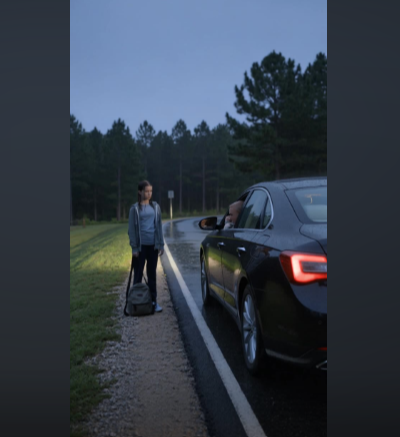
My Parents Threw Me Out for Being “Too Sick”—But What My Brother Did in Secret Changed Everything
“YOU’RE A BURDEN,” MY PARENTS SAID-AND LEFT ME ON THE SIDE OF THE ROAD IN THE RAIN. I COULDN’T WALK, I COULDN’T EVEN CALL FOR HELP. THEY DROVE OFF… BUT SOMEONE HAD FOLLOWED THEM-AND HE WAITED UNTIL THEY WERE GONE TO COME TO ME. “IT’S OKAY,” HE WHISPERED.
NEVER FORGOT YOU.”
Some families break slowly.
Cracks spread over years until one day the foundation finally gives way.
Mine shattered in a single night on a rain-soaked road.
My parents decided I had become too expensive.
Too sick.
Too complicated.
Too much.
So they drove me miles from home, stopped beside an empty country road, pulled me from the car, threw a backpack into the mud, and left.
They never looked back.
They never saw the headlights waiting far behind them.
And they never imagined the brother they had erased from my life nearly a decade earlier had finally found me.
My name is Laya Wells.
I was seventeen years old that night.
Rain hammered against the windows as our family sedan moved through unfamiliar countryside.
I sat in the back seat with my forehead against the cool glass.
Something was wrong.
Even through pain medication, I could feel it.
My father, Robert, gripped the steering wheel with both hands.
My mother, Ellen, stared straight ahead.
Neither had spoken to me for several miles.
“Dad?”
No response.
“Where are we going?”
Still nothing.
“It is pretty late for a doctor’s appointment.”
My father finally answered.
“We’re almost there.”
His voice did not sound like my father’s.
Flat.
Detached.
The neurological problems began when I was twelve.
At first:
Tremors.
Fatigue.
Pain.
Doctors suggested anxiety.
Growing pains.
Vitamin deficiencies.
Then the symptoms progressed.
By fourteen, I occasionally used a cane.
By sixteen, there was a wheelchair folded in our trunk for bad days.
Hospitals became familiar.
Specialists knew my name.
Medication schedules replaced school activities.
With every appointment, I watched something disappear from my parents.
Patience.
Money.
Sleep.
Eventually:
Warmth.
I understood that my care was expensive.
Children understand more than adults think.
I heard arguments about insurance.
Saw envelopes from hospitals.
Watched Dad stare at bills late at night.
Still:
They were my parents.
I believed that meant something permanent.
The car left the paved highway and turned onto a rougher road.
Pain moved down my spine.
“Mom…”
“I think I need my medication early.”
“The road is making the tremors worse.”
“You’ll be fine.”
She did not turn around.
Lightning illuminated her profile.
For a moment, I remembered another version of her.
My eighth birthday.
Chocolate cake.
Rainbow sprinkles.
Dad lifting me onto his shoulders and declaring me the tallest eight-year-old in the county.
My older brother Caleb laughing nearby.
He was nine years older than me.
That year, he gave me a bracelet made from colored string.
“One color for every year.”
He told me.
“I’ll add another one next birthday.”
He never did.
Caleb disappeared from our family when he was seventeen.
I was eight.
There had been an argument.
A terrible one.
Dad shouting.
Doors slamming.
Caleb gone.
Mom said:
“He needs to find his own way.”
For years, I believed he had chosen to leave me too.
The car stopped.
Not at a hospital.
Not at a motel.
Not even near a building.
Dirt shoulder.
Trees.
Rain.
Darkness.
Dad shut off the engine.
“Get out.”
I laughed nervously.
“What?”
“Get out of the car.”
“Take your backpack.”
Only then did I see it.
Small backpack near my feet.
Packed already.
“Mom?”
I whispered.
“What is happening?”
She finally faced me.
Her expression looked carved from something hard.
“We can’t do this anymore.”
“What?”
“Your medical care.”
“The bills.”
“The appointments.”
“The constant emergencies.”
Dad stared through the windshield.
“We have nothing left.”
“No savings.”
“No retirement.”
“No life outside hospitals.”
My mother continued.
“People stopped helping.”
“The fundraisers ended.”
“Insurance won’t cover everything.”
I stared at them.
“So…”
“What are you saying?”
Dad answered.
“You’re a burden.”
The sentence was so blunt my mind rejected it.
I almost expected somebody to laugh and reveal some awful misunderstanding.
Instead:
Dad opened his door.
Walked through the rain.
Opened mine.
“Dad…”
“Please.”
He reached for my arm.
My legs were already weak.
When he pulled me toward the road, they collapsed beneath me.
I landed in mud.
Pain surged through my hip.
He tossed the backpack beside me.
It landed in a puddle.
“Why?”
I asked.
Neither answered.
Mom looked away.
Dad returned to the car.
Doors slammed.
Engine.
Headlights swung.
Then:
Tail lights shrinking into rain.
I watched until they vanished.
My body began shaking harder.
Cold.
Fear.
My medication wearing off.
I tried standing.
Could not.
Crawled toward the ditch because the grass offered slightly more shelter than the open road.
Headlights eventually appeared.
I raised one arm.
The vehicle slowed.
Then continued.
After that, time stopped behaving normally.
Rain.
Pain.
Blackness.
Fragments of memory.
Hospital rooms.
My mother brushing my hair.
Caleb laughing.
Birthday candles.
Then:
Headlights again.
But these were different.
They had been behind me for a while.
Stationary.
Watching.
A door opened.
Footsteps through water.
A tall figure emerged from the rain.
For one terrifying second, I wondered whether whoever found me would make things worse.
Then the man knelt.
A hand moved wet hair from my face.
“It’s okay.”
His voice.
Older.
Deeper.
But familiar.
“I never forgot you.”
Arms lifted me carefully.
Warm chest.
“You’re safe now.”
“I promise.”
I tried to focus.
Brown hair.
Blue eyes.
The same shape I saw in my own face.
“Caleb?”
I whispered.
Then darkness took me.
When I woke:
Warmth.
Fire cracking.
Dry blankets.
Wooden ceiling beams.
A small stove glowing orange across the room.
An IV stand beside the bed.
Soft flannel nightgown.
My wet clothes gone.
Clean clothing folded nearby.
Rain still tapped against a metal roof, but now it sounded distant.
Safe.
A man appeared in the doorway holding tea.
“You’re awake.”
I stared.
Late twenties.
Broad shoulders.
Lean build.
Calloused hands.
Hair longer than I remembered.
Small scar across one hand.
But the eyes were Caleb’s.
“Caleb?”
My throat hurt.
He set down the mug.
“Hey, Laya Bean.”
Nobody had called me that since I was little.
I tried sitting.
Pain stopped me.
Caleb adjusted the pillows.
“Easy.”
“What happened?”
“You were unconscious a while.”
Then:
“They left me.”
My voice broke.
“I know.”
“You saw?”
He nodded.
“I followed them.”
I stared.
“How?”
“You’ve been gone for nine years.”
“Why now?”
Caleb sat on the bed.
“I didn’t leave you.”
He said.
“I left them.”
Memory returned in pieces.
Dad shouting.
Caleb at the front door.
If you walk out, don’t come back.
“Dad threw you out.”
I said.
Caleb looked toward the fire.
“You had just started getting sick.”
“There was a specialist in Boston.”
“Dad refused.”
“Said we couldn’t afford it.”
“I had some money from summer jobs.”
“I offered it.”
“He said I was undermining him.”
Then:
“I overheard him and Mom talking about moving somewhere cheaper.”
“Somewhere with fewer specialists.”
“I confronted him.”
“The argument exploded.”
Caleb shrugged.
“At seventeen, with almost no money and nowhere to go…”
“I lost.”
“But why didn’t you contact me?”
The question came out harder than I intended.
“You disappeared.”
“I waited.”
“For years.”
Pain moved across Caleb’s face.
“I tried.”
“Letters came back unopened.”
“Calls ended with Dad threatening police.”
“Once I came to your school.”
“They’d already told staff I wasn’t allowed near you.”
My chest tightened.
All those years:
I thought Caleb forgot.
In reality:
Someone had built a wall between us.
“Where did you go?”
“Everywhere.”
He smiled without humor.
“Shelters.”
“Cars.”
Construction jobs.
Restaurant kitchens.
Anything paying enough to survive.
Eventually:
GED.
Steadier work.
Then this property.
The cabin had been nearly unlivable when he bought it.
Three years of repair.
Remote.
Wooded.
Quiet.
“You were hiding.”
I said.
“Staying private.”
He corrected.
“There’s a difference.”
Then his expression darkened.
“Laya…”
“There is something else.”
While I slept, Caleb had begun checking the paper trail around my disappearance.
My parents had emptied a medical fund created years earlier from community fundraisers and donations.
Then:
Reported me missing.
But described me as a teenager who left voluntarily.
“They told people you ran away.”
He said.
I stared.
“They abandoned me…”
“And told everyone I ran?”
“Yes.”
“Why?”
“Probably to protect themselves.”
Caleb replied.
“And possibly to hide what happened to the money.”
He showed me the material he had preserved.
Account withdrawals.
Dates.
A dashboard recording from the road.
His own timeline showing when my parents drove away.
He had kept enough distance that they never knew another vehicle followed.
“I don’t want revenge.”
He told me.
“I want the truth documented.”
I started crying.
Not quietly.
Years of being sick.
Believing Caleb abandoned me.
Then my parents actually doing it.
Everything broke at once.
“Why didn’t you come sooner?”
I asked.
Caleb wrapped his arms around me.
“I tried.”
His own voice shook.
“I am sorry.”
“I should have found another way.”
When I finally stopped crying:
“What happens now?”
“You heal.”
He said.
“Body first.”
“Then everything else.”
He pointed toward a leather journal beside the bed.
“I found that in a storage unit your parents rented under Mom’s maiden name.”
I picked it up.
“Her journal?”
“Yes.”
“I think you should read it.”
“Why?”
“There is more.”
He said.
“Much more.”
Three weeks passed.
My body recovered slowly from the night on the road.
Not from the underlying illness.
That remained.
But from:
Exposure.
Dehydration.
Missed medication.
The physical crash.
Anna Kim visited three times each week.
Mid-thirties.
Short dark hair.
Former military medic.
Now working at a small clinic roughly thirty miles away.
She monitored my medication and helped with rehabilitation.
“Arms.”
She instructed one morning.
I raised them.
Tremors.
Burning muscles.
“Hold.”
Ten seconds felt like an hour.
When I lowered them, she nodded.
“Five degrees more shoulder mobility than when we started.”
“Doesn’t feel impressive.”
“Healing rarely does.”
She said.
“Especially while it’s happening.”
Caleb called the property his sanctuary.
Cabin.
Greenhouse.
Workshop.
Stream.
Solar power.
Backup systems.
A secure room beneath an old cellar where he stored records and emergency supplies.
He had built the place for privacy and resilience, not because he expected me to appear one rainy night.
But once I did:
It became ours.
One afternoon, I watched Caleb repair a section of greenhouse frame.
“How did you learn all this?”
“Necessity.”
He said.
“Also Frank.”
“Who?”
“Man I met in Colorado.”
Older.
Veteran.
Lived remotely.
Caleb had been sleeping in a car during a winter storm when Frank found him.
“He told me I could stay until spring if I worked.”
“How long did you stay?”
“Almost three years.”
Frank taught him:
Carpentry.
Gardening.
Repair.
Self-reliance.
But the lesson Caleb remembered most was simpler.
“Revenge burns you.”
“Justice gives you somewhere to walk.”
I looked toward Mom’s journal.
“Did you read all of it?”
“Enough.”
Caleb said.
“There are entries about a deal they made.”
My stomach tightened.
“A deal involving me?”
“I think so.”
That night:
Summer storm.
Fire.
Journal.
I began reading deeper.
Dates from early childhood.
Payments.
Doctors.
Protocols.
Words I did not understand.
Neurovance.
I asked:
“Do you think my illness isn’t natural?”
Caleb did not answer quickly.
“I don’t know.”
“That is why we need evidence.”
Anna had history of her own.
During one difficult rehabilitation session, my body simply stopped cooperating.
Tremors.
Exhaustion.
Frustration.
I cried.
“I hate this.”
“I hate being broken.”
Anna sat on the floor beside me.
She did not tell me:
You’re not broken.
She did not tell me:
Everything happens for a reason.
Instead:
“I once reached a point where I nearly stopped fighting for my own life.”
I looked at her.
She explained that military service had left her with both physical scars and severe trauma.
Friends lost.
Pain.
Years of pushing away help.
One night, she reached a crisis point and nearly harmed herself.
A sudden interruption—her dog knocking over a lamp—broke the moment long enough for her to seek help instead.
“Survival wasn’t the finish line.”
Anna said.
“I had survived before that night.”
“I just wasn’t living.”
She helped me back into the wheelchair.
“The real work begins when you decide you want a life…”
“Not just another day.”
That afternoon:
I decided I wanted my history.
Not the version my parents told.
Mine.
Caleb and I began organizing records.
Medical history.
Treatments.
Dates symptoms worsened.
Which doctors appeared.
Which disappeared.
Financial transfers already linked to my parents.
I did not need to know how to bypass systems or hide online.
What mattered was that the evidence we already possessed could be preserved and eventually reviewed by:
Lawyers.
Investigators.
Medical experts.
Certain patterns were disturbing.
Some interventions seemed followed by major symptom progression.
Some specialists remained in my chart only briefly.
Then Mom’s journal offered another piece.
One afternoon, I reached an entry written shortly after my third birthday.
Robert signed the final paperwork today.
Thirty thousand deposited immediately.
Quarterly payments afterward.
He says this solves our financial problems.
Doctor says risks are minimal.
That Laya will help other children.
I should have said no.
God forgive me.
I stopped breathing normally.
“Caleb.”
He looked up.
“They sold me.”
I slid the journal toward him.
He read.
Then opened one of the financial records.
Neurovance Research.
Private pharmaceutical company.
Neurological therapies.
Regular transfers.
Payments continued for years.
Until around the time my condition became visibly severe.
“You were enrolled in something.”
Caleb said.
I remembered.
Special appointments.
Medication with strange tastes.
Blood draws.
Being separated from my parents while adults spoke behind closed doors.
“You think they experimented on me?”
“I think…”
Caleb said carefully.
“…you were enrolled in a medical trial when you were too young to understand any of it.”
“And your parents were paid.”
Anna arrived that afternoon with a name.
Dr. Reena Voss.
Former Neurovance researcher.
Left abruptly three years earlier.
No clear public explanation.
Now teaching quietly at a community college.
“I contacted her.”
Anna said.
“What did she say?”
“Almost nothing.”
“But when I described your symptoms…”
“She agreed to meet.”
Dr. Voss chose:
Public state park.
Quiet picnic area.
No recording devices.
No unnecessary electronics.
Two days later:
We prepared.
Before leaving, Caleb noticed a dark SUV near the property road.
Two men.
Professional clothing.
Not neighbors.
Anna recognized the description.
“Similar to the men who asked about Laya at my clinic.”
Caleb made a decision.
“You two go to the meeting.”
“I’ll make sure they don’t follow.”
“Caleb—”
“I know these roads.”
He said.
“And I’m not letting them near you.”
We separated.
Later, Anna and I reached the park.
Dr. Reena Voss was in her early fifties.
Small.
Nervous hands.
Kind eyes.
The moment she saw my tremors:
Recognition.
“Phase three.”
She whispered.
I sat opposite her.
“What does that mean?”
She looked around.
“How much do you know?”
“My parents signed a contract when I was three.”
“They were paid.”
“Neurovance.”
Anna added:
“We suspect the trial produced iatrogenic neurological injury.”
Dr. Voss closed her eyes.
“It was supposed to regenerate damaged neural pathways.”
She said.
“Early studies looked promising.”
“Then investors started demanding faster results.”
“Safety margins narrowed.”
“Warnings were minimized.”
“What happened to the children?”
I asked.
“Twenty-seven enrolled in the phase-three cohort relevant to your records.”
Dr. Voss answered.
“Twenty-four developed serious adverse effects over the following years.”
My skin went cold.
“And the others?”
“One family left the country.”
“One teenager later died in circumstances I never felt were adequately explained.”
Then she looked at me.
“And you.”
“You survived.”
I almost laughed.
“That sounds like a strange thing to say.”
“It is.”
She replied.
“Based on the progression we observed…”
“You were not expected to reach this age.”
“Is that why someone is looking for me?”
“You are evidence.”
Dr. Voss said.
“Living evidence.”
Then she removed a flash drive.
“I kept copies.”
“Protocols.”
“Patient data.”
“Internal discussions about adverse events.”
“Risk concerns.”
“My resignation records.”
She pushed it toward me.
“This doesn’t repair what happened.”
“But it may help prove what happened.”
Before we could continue:
Her phone buzzed.
She looked down.
Turned pale.
Someone had appeared near her apartment asking about her.
The description was wrong for any relative she actually had.
We separated.
Carefully.
That night:
Caleb did not return.
Hours passed.
Anna stayed.
Near midnight:
A message arrived.
Caleb.
Short.
He had been detained on charges he insisted were false.
He included information about where additional evidence had been stored and told me not to come after him directly.
A lawyer was needed.
Anna immediately contacted one.
The following morning:
Storage unit.
Inside:
Everything Caleb had spent years gathering.
Financial files.
Medical records.
Photographs.
Journal copies.
Statements.
At the bottom:
Envelope.
My name.
Inside:
Prepared emancipation-related paperwork.
Evidence of abandonment.
Petition seeking emergency judicial protection.
Caleb had been preparing for the possibility that I would need legal independence from our parents.
Even before the night they left me.
Another message arrived later.
Court date.
Thursday.
Be ready.
For most of my life:
Other people decided what happened next.
Parents.
Doctors.
Hospitals.
Insurance.
Now Caleb was in custody.
The choice fell to me.
“I need to go to court.”
I told Anna.
“We need legal protection for him.”
“And I want a formal inquiry into Neurovance.”
Anna studied me.
“You’ll become visible.”
“Good.”
I said.
“I am tired of disappearing.”
That night:
Mom’s final journal entry.
If she ever finds this, run.
They know she survived longer than expected.
Robert lost most of the money gambling.
We failed her.
I thought accepting the money would save this family.
It destroyed it.
God forgive us.
I closed the journal.
No more ambiguity.
My mother regretted it.
Regret was not innocence.
County courthouse.
Three days later.
Cane.
Steep steps.
Reporters.
People had heard enough pieces that the case was attracting attention.
Caleb’s attorney believed visibility could create an additional layer of safety.
If powerful institutions expected silence, publicity changed the cost of intimidation.
I stepped toward the microphones.
“My name is Laya Wells.”
My voice shook.
Then steadied.
“Several weeks ago…”
“My parents drove me to an isolated road and left me there during a storm.”
“They later represented that I had left voluntarily.”
I continued.
“For years, I was told my neurological condition was simply an illness.”
“Evidence now indicates I was enrolled in an experimental Neurovance treatment protocol as a small child.”
“My parents received money.”
“I did not understand what was being done.”
Then:
“We now possess records raising serious questions about informed consent, adverse-event reporting, and what happened to other children in the same research program.”
I did not claim everything was proven.
That mattered.
Documents still needed authentication.
Experts needed review.
Investigators needed access.
But I was no longer asking people to believe only my memory.
There were contracts.
Payments.
Medical files.
A researcher willing to speak.
The story spread.
Other families contacted attorneys and journalists.
Parents described similar unexplained symptoms following Neurovance studies.
Caleb was released pending further proceedings after scrutiny weakened the case that had been used to hold him.
When he emerged from the courthouse:
I almost cried.
“You did it.”
He whispered.
“No.”
I said.
“We started it.”
Then:
Dr. Voss agreed to cooperate with investigators and testify.
Days before a major hearing, her home was destroyed in a fire initially described publicly as accidental.
She survived.
Badly injured.
Some records were lost.
Anonymous claims appeared questioning her reliability.
Caleb looked at me.
“They’re going after credibility now.”
“Then we stay with evidence.”
I said.
A respected national investigative program contacted our legal team.
Live interview.
The producer asked:
“Are you certain?”
No.
I was terrified.
But fear and refusal are not the same thing.
On set:
Bright lights.
Makeup.
Caleb beside me.
Host across from us.
I told the story.
Roadside.
Rescue.
Medical trial.
Journal.
Neurovance.
Dr. Voss.
Then the host asked:
“What supports these allegations?”
Caleb handed me the folder.
I removed the contract.
“This agreement bears my parents’ signatures.”
I said.
“It appears to authorize my enrollment in a Neurovance experimental protocol when I was three years old.”
“Records associated with it show significant payments.”
Then:
“Dr. Reena Voss has stated she worked on the relevant trial and has provided information about serious adverse outcomes among participants.”
The interviewer studied the document.
“Do you believe the treatment caused your condition?”
“I believe the evidence raises that possibility strongly enough to require an independent investigation.”
I said.
“That question should be answered by qualified experts examining the full record.”
That was more important than sounding dramatic.
The truth did not need exaggeration.
Near the end:
I stood.
Slowly.
Cane beside me.
Legs shaking.
The host looked alarmed.
“What are you doing?”
“For years…”
I said.
“Most days I needed a wheelchair.”
“Sometimes I still do.”
I stayed upright.
Pain moved through my legs.
“This is not proof that willpower cures neurological injury.”
I said.
“It doesn’t.”
Then I looked directly into the camera.
“But what happened to my body does not decide whether I get a voice.”
“That part is still mine.”
The image went everywhere.
Not because standing made me cured.
I was not cured.
Because the girl everyone had described as helpless finally spoke without allowing anyone else to narrate her.
The following day:
Neurovance’s stock fell sharply.
Soon afterward:
Federal authorities announced a formal investigation into the company’s trial practices and related conduct.
My parents’ attorney issued a statement claiming Robert and Ellen had been misled about the risks when they enrolled me.
That could be investigated too.
Justice is not the same thing as instant certainty.
It is:
Records.
Testimony.
Discovery.
Experts.
Courtrooms.
Time.
One year later:
Workers installed a sign near the edge of Caleb’s property.
WELLS FOUNDATION FOR MEDICAL ETHICS AND SURVIVOR SUPPORT.
The sanctuary had expanded.
Original cabin remained.
But now:
Therapy rooms.
Temporary housing.
Meeting spaces.
Medical-navigation support.
Survivor advocacy.
The legal and regulatory consequences surrounding Neurovance had grown substantially.
The company eventually collapsed under the combined weight of investigation, civil claims, lost confidence, and litigation.
Executives faced charges arising from the conduct investigators were able to prove.
A compensation fund was established for affected participants and families.
My parents also faced legal consequences related to:
My abandonment.
Financial activity.
And their involvement in the arrangements surrounding my childhood trial enrollment.
The exact consequences came through courts, not through me.
That mattered.
I had spent enough of my life having people make decisions for me.
I did not need to become the person making punishment my identity.
The foundation used settlement money, donations, and grants.
Anna left her old clinic position to lead trauma-recovery services.
Her former military experience mattered there.
Not because trauma from war and trauma from medical betrayal are identical.
They aren’t.
But she understood what it meant for a person to survive something and still not know how to live afterward.
The cabin where I recovered became her office.
One afternoon:
“Ryan’s session went well.”
I told Caleb.
Twelve-year-old boy.
Neurological impairment.
History that reminded me too much of my own.
“He stood almost a minute.”
Caleb smiled.
“Good teacher.”
“Stubborn student.”
“Runs in the family.”
Caleb looked younger than he had when he found me.
Twenty-nine.
Some of the tension around his eyes had softened.
He was no longer spending every waking hour searching for the little sister he lost.
He had found me.
Now we were both learning what came after.
Anna appeared on the porch holding mail.
“Laya?”
“Letter.”
The return address:
County Hospice Center.
I knew before opening it.
Mom.
One page.
Shaky handwriting.
Laya,
The doctors say I have very little time.
Lung cancer.
Too advanced for meaningful treatment.
I know you may never forgive me.
I am not asking you to.
Before I go, I need you to know something.
You were always the strongest person I knew.
What we did was unforgivable.
Your father called it survival.
It was greed.
Plain and simple.
The woman you became—the one who stood up, spoke, fought, and helped other people—that was not because of us.
That was you.
Always you.
Your mother,
Ellen.
I folded the letter.
Returned it to the envelope.
No tears.
No dramatic forgiveness.
Just:
Recognition.
Some apologies arrive too late to rebuild anything.
They can still contain truth.
That evening:
Porch.
Purple sky.
Fireflies beginning in the meadow.
I asked Caleb something I had wondered about for a year.
“How did you know?”
“That night.”
“How did you know to follow them?”
He watched the field.
“I’d been paying attention for weeks.”
He had seen changes.
Unusual financial activity around my medical fund.
My parents selling belongings.
Travel preparations.
Their increasingly secretive movements.
He did not know exactly what they intended.
Only that something was wrong.
“So you followed them.”
“Yes.”
“You could have called police.”
“And said what?”
He asked.
“That I had a bad feeling?”
“I needed to know what they were doing.”
His jaw tightened.
“When I saw them leave you…”
“I nearly lost control.”
Then:
“I saw you in that ditch.”
“And everything else stopped mattering.”
“Why?”
I asked.
“After nine years?”
“After everything?”
Caleb turned toward me.
No hesitation.
“Because you were never a burden to me.”
The words settled into the evening.
For most of my life:
Burden had been the word I feared becoming.
Medical bills.
Wheelchair.
Appointments.
Pain.
Help.
Needs.
My parents finally said it aloud on the road.
Caleb answered it a year later.
You were never a burden.
The following day:
Town ceremony honoring the foundation.
Small hall.
Local council.
Patients.
Families.
Volunteers.
They asked me to speak.
No notes.
I stood at the microphone with my cane.
“A year ago…”
“I was left on a road by the people who were supposed to protect me.”
“I was treated as though my illness made me disposable.”
I looked toward Caleb.
Anna.
Then the families we now served.
“In losing the family I thought I had…”
“I found a home.”
“In discovering what had been done to me…”
“I found a reason to protect other people from the same kind of silence.”
Then:
“I was left there as though my life had become a problem somebody could abandon.”
“But my life became the reason this foundation exists.”
Afterward:
Night.
I walked alone toward the edge of the property.
No wheelchair for those few minutes.
Cane.
Slow steps.
The moon high over the trees.
My legs trembled.
Not a miracle.
Fatigue.
Neurological damage still real.
But I stood.
A year earlier:
The world felt like something happening to me.
Now:
I had choices inside it.
Footsteps behind me.
Caleb.
“You okay?”
“Getting cold.”
I turned.
My brother.
My rescuer.
My family.
“I am more than okay.”
I said.
Then looked toward the cabin lights.
The therapy building.
The greenhouse.
The sign near the road.
Everything that grew out of the night my parents decided I had no future.
“I am home.”
Caleb stood beside me.
No speech.
Nothing needed.
Above us:
Stars.
Around us:
The sanctuary.
Ahead:
More medical appointments.
More legal proceedings.
More difficult days.
My condition had not disappeared simply because I survived betrayal.
The fight for accountability had not magically ended because one company collapsed.
Healing was not linear.
Anna had been right.
But for the first time in my life:
I was not simply surviving whatever somebody else decided.
I was living.
And that was enough.
